

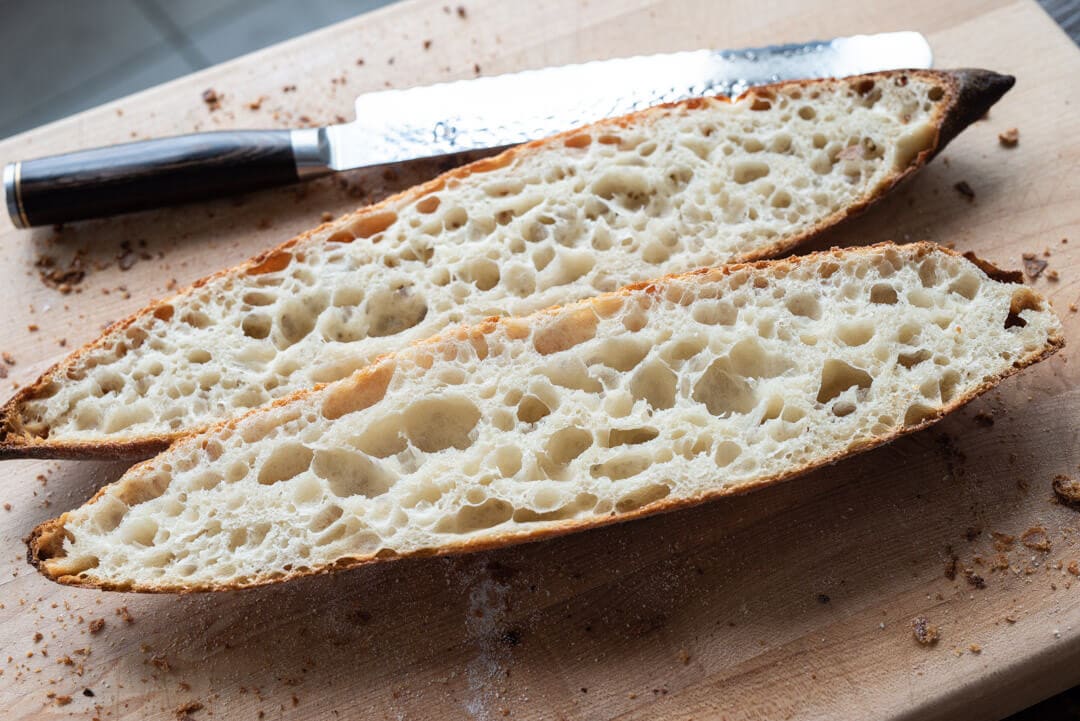
This page is a roll-up of all our naturally leavened sourdough bread baking recipes, plus anything else we’ve managed to concoct in the kitchen. Below, you’ll find baking recipes using fruit/nut/seed mix-ins, freshly milled flour, and recipes utilizing various grains (rye flour, Sonora wheat, spelt, Khorasan, and more). If you’re looking for something very specific, use the search button in the top right of the page to get right to it. Happy baking!
Baking Guides
Head over to the Baking Guides page for in-depth guides on creating your own sourdough starter, maintaining your starter, starter storage, tips on steaming a home oven, building a dough retarder, and much more.
Sourdough Starter Creation & Maintenance
- 7 Easy Steps to Making an Incredible Sourdough Starter from Scratch
- Keeping a Smaller Sourdough Starter to Reduce Discard Waste
- How to Store a Sourdough Starter
- Sourdough Starter Maintenance Routine
- Baking Sourdough Bread with a Stiff Starter
- My Sourdough Bread with a “Young” Levain
- Managing Starter Fermentation to Produce the Best Sourdough Bread Ever
Beginner Baking Recipes
- Beginner’s Sourdough Bread
- A Simple Focaccia
- Fifty-fifty Whole Wheat Sourdough Bread
- Easy No-Knead Sourdough Bread
- Sourdough Bread with All-Purpose Flour
- Tangzhong Sourdough Sandwich Bread
- Weekday Sourdough Bread
- The Perfect Loaf Custom Flour with Recipe
Sourdough Starter Discard Recipes
- Seeded Sourdough Discard Granola (bark-like!)
- Plum Cake (Torte)
- Seeded Sourdough Discard Crackers
- Baker’s Sourdough Discard Banana Bread
- Strawberry Shortcake with Sourdough Discard Drop Biscuits
- Clafoutis (with cherries, peaches, or any stone fruit!)
- Tangy Lemon Poppyseed Loaf
- Bread Baker’s Date and Banana Tea Cake (with Whole Grain Spelt)
- My Best Sourdough Waffles
- Sourdough Starter Discard Cake: Ciambella
- Sourdough Blueberry Muffins
- My Best Sourdough Pancakes
- Sourdough Pumpkin Pancakes
- Flaky Sourdough Pie Crust
- Whole Grain Peach, Blueberry, and Lavender Sourdough Galette
- My Top 3 Leftover Sourdough Starter Recipes (Pancakes, Waffles, Banana Bread)
Cookies and Brownies
- Cinnamon Toast Cookies (Sourdough Cookies with Vanilla and Cinnamon)
- Sourdough Oatmeal Raisin Cookies
- Sourdough Chocolate Chip Cookies
- Sourdough Sugar Cookies
- Fudgy brownies
Biscuits and Scones
See all the sourdough starter discard recipes →
Mostly White Flour Recipes
- My Best Sourdough Recipe
- Country Sourdough with Less Levain & Longer Autolyse
- High(er) Hydration Sourdough Bread
- High Hydration Sourdough Bread
- A Return to Basics
- Tartine Sourdough Country Loaf Bread Recipe #33
Mostly Whole-Grain Recipes
- The Best Honey Whole Wheat Bread Recipe (50% whole grain pan loaf)
- Spelt, Rye, and Whole Wheat Sourdough Bread (50% whole grain)
- Fifty-fifty Whole Wheat Sourdough Bread
- Ninety-Five Percent Whole Grain Sourdough
- Whole Wheat Sourdough (not 100%)
- Whole Wheat Sourdough Sandwich Bread
100% Whole-Grain Recipes
- Whole Wheat Sourdough Pita Bread
- Whole Grain Spelt Pan Loaf
- Honey Whole Wheat and Barley Pan Loaf
- Whole Grain Wheat and Spelt Pan Bread
- 100% Whole Wheat Sourdough
- Fresh Milled 100% Whole Wheat Walnut
Recipes with Specialty Grains
- 100% Einkorn Sourdough Bread
- Einkorn Miche
- Kamut Demi-Baguettes
- Multigrain Spelt Sourdough
- Spelt Sourdough
- Pane Siciliano (Semolina and Sesame Sourdough Bread)
- Kernza sourdough bread
Rye Flour Recipes
- Sourdough 90-Rye Bread (90% whole-grain rye)
- Light Deli Rye
- Rye Sourdough and Smørrebrød
Freshly Milled Flour Recipes
- Kernza Sourdough Bread Recipe
- Sourdough bread with 35% freshly milled flour (Yecora Rojo)
- Whole Grain Wheat and Spelt Pan Bread
- Multigrain Spelt Sourdough
- Spelt Sourdough
- Fresh Milled 100% Whole Wheat Walnut
- White Sonora Sourdough
- 50% Fresh Milled Whole Wheat Sourdough
- Baking Sourdough with Fresh Milled Flour
Recipes with Specialty Ingredients (Nuts, Seeds, and More)
- Scalded Buckwheat and Malt Sourdough Bread
- Hop Miche (Sourdough Beer Bread)
- High-fiber seeded sourdough pan loaf
- Brown rice and sesame sourdough bread
- Jalapeño-Cheddar
- Apricot and Thyme (50% whole wheat)
- Dark Chocolate-Cherry Sourdough Bread
- Green Olive and Herb
- Sunflower and Sesame Sourdough Bread
- Pumpkin Cinnamon Sourdough Bread
- Cinnamon Raisin Sourdough
- Sourdough with Roasted Potato and Rosemary (Potato Bread)
- Sour Cherry, Toasted Pecan and Buckwheat Levain
- Apricot, Lavender and Walnut Sourdough
- Seeded Sourdough
- Fresh Milled 100% Whole Wheat Walnut
- Fig and Fennel Sourdough (Plus a Little Family History)
- Natural Sourdough with Spent Beer Grains
- Golden Raisin and Fennel Seed Sourdough
- Seeded Whole Wheat Sourdough
- Walnut Cranberry Sourdough
- Tartine Olive Sourdough
- Stout Country Sourdough
- Tartine Country Sesame Sourdough
- Tartine Country Walnut Sourdough
- The Wheat Germ Experiment
Recipes with Sprouted Grains and Cereals
- Malted Wheat Sourdough Bread
- Sprouted Grain Sourdough Bread (sprouted whole white wheat)
- Sprouted Buckwheat Sourdough
Porridge Sourdough Recipes
- Soft Honey Buckwheat Sandwich Bread
- Polenta and Rosemary Sourdough
- Tartine Millet Porridge Sourdough
- Oat Porridge Sourdough
Baguettes
Specialty Bread Shapes
- Hop Miche (a large French-style loaf with beer)
- Einkorn Miche (a large French-style loaf)
- Green Olive Filoncini (Twisted Baguettes)
- Sourdough Friselle (Italian-style rusk)
- Fougasse
- Ciabatta
Buns and Rolls
- Fluffy milk bread hamburger buns (using tangzhong)
- Sourdough pumpkin dinner rolls
- Homemade hot dog buns
- Super Soft Sourdough Dinner Rolls (with Tangzhong)
- Soft Sourdough Potato Buns (great for hamburgers, as rolls)
- Brioche Hamburger Buns
Enriched and Sweet Dough Recipes
- Hot Cross Buns
- The Fluffiest Sourdough Challah
- Sourdough Chocolate Knots
- Shokupan (Japanese Milk Bread)
- Cardamom Rolls
- Sourdough Babka
- Pain de Mie (Pullman Loaf)
- Naturally Leavened Bomboloni (Sourdough Doughnuts)
- Sourdough Cinnamon Rolls
Sourdough Pizza, Calzone, and Focaccia Recipes
- Sourdough Pizza Dough and Recipes (for the home oven)
- Detroit-style Pizza (Pan pizza)
- A More Whole Wheat Sourdough Pizza Dough
- Sourdough Pizza al Taglio (Rectangular Sheet Pan Pizza)
- Wood-Fired Sourdough Pizza Dough Recipe
- A Simple Focaccia
- Focaccia Pugliese (focaccia with potato)
- Calzone Recipe
- Cornmeal Skillet Sourdough Pizza
See the guide to all things sourdough pizza for more →

430 Comments
I had an interesting conversation with two friend that are glucose intolerant. They were in Solvang at an Italian restaurant looking over the menu. The Italian chef came out to talk to them and said that his pizza and pasta were made with Italian Flour and they use no pesticides in Italy. They ordered pizza and suffered no problems. They were staying in Solvang and ended up eating in his restaurant three times with no GI or headache problems. The chef said that all USA flours are contaminated with pesticides used by the farms. I have never heard of this. What are your thoughts?
You’ve written glucose intolerant but given that this is a bread site & most of the intolerance discussion centers around *gluten* I’m thinking it might be a typo. If not, please disregard. 🙂
My husband has celiac disease so we’ve lived with & done much research on this. We can totally understand your friends’ desire to have great food but what they did is really dangerous for folks with gluten issues! First off, even when folks have gluten intolerance or even celiac they show GI symptoms only about 30-50% of the time, so *not having a GI reaction is *not* a good way to gauge if they’ve been affected. Biopsy-confirmed research shows that when folks do or don’t have a GI reaction it is in *no way* correlated to how severe the GI & immune system *damage* is, and that internal damage is the main problem. That damage can last 6 months or more, even from very small amounts of gluten. Finally, if they truly have gluten intolerance or celiac the research is clear: pesticide or other substances don’t cause the same sorts of breakdown or immune system reactions. Sorry, but that’s the reality. :/
Hey there! I’m assuming you meant “gluten intolerant,” but regardless, I haven’t heard of this correlation between pesticides and gluten sensitivities in people. It’s my understanding that these are not related at all. However, I personally am not gluten intolerant so I have very little knowledge of this! Sorry about that.
I handle my dough using the “Tartine’ turning method, my dough is usually very soft and difficult to handle. After the final rise in the banneton it wobbles like jello and then spreads out when I tip it into the cloche baker giving a flat loaf. How do I fix this. Roger
Roger — it sounds like your dough is likely not strengthened enough. You could do a little kneading before bulk fermentation (try doing 50 or so stretch and folds in the bowl right after you incorporate all the ingredients, or a technique I often refer to here: slap and fold). If the dough still feels very slack and weak through bulk fermentation, add in another set or two of stretch and folds there as well.
Finally, if the dough still feels weak despite all this, try reducing the hydration 10% — the reduced water will bring a lot of strength to the dough early on.
I hope that helps!
Is there some way to achieve a soft, rather than a crispy crust for a basic sourdough bread? Just not a huge fan of an ultra crispy crust.
Thanks, Andrea.
I prefer a softer crust as well, and the best method I’ve found so far is to brush or spray a little water on the outside of the dough just before it goes into the oven and then let it bake the first 30 minutes inside a dutch oven with the lid on. The moisture in the dough will cook off as it bakes, and dutch oven holds that moisture close to the bread to keep the crust softer.
Typically this can be achieved by baking at a lower temperature, perhaps for longer. However, there’s only so much you can do there, evntually it will harden off. You could also do as Jason suggested below: add a bit more water in the oven when you’re steaming to see if that helps. Finally, adding enrichments to a dough (such as butter or olive oil) definitely helps here — the added fat, even in small percentages, will make a big difference! Check out my pain de mie recipe for an idea along these lines!
I bake for 52 minutes to achieve an internal temp of 99c. For a dark crispy crust: 235c for 40 minutes lid on – then 215c for 12 minutes with the lid off. For a lighter crust 235c for 47 minutes and turn down to 215c and bake for 5 minutes lid off.
Ingredients weigh 1297 gms. Finished loaf weighs 1160 gms. Weigh everything. Keep temperature as close to 26c as possible from the start of mixing to oven entry.
I heat the Lodge Combo on the gas rings until the oven (electric) passes 150c then place empty Lodge Combo in the oven with oven set for 260c which provides a buffer for loading and unloading the oven. Bake at 235c reducing to 215c as above. Results are exactly the same for every bake because all parameters are exactly the same each time. Very satisfying. Experiment with ingredient size and weight and lid on/ lid off times to get your desired result. Using a closely fitted lid on cast iron will compensate for main oven irregularities because you are in effect using a small easily controlled oven with excellent temperature stability and excellent moisture control within an oven that may fall short in a number of areas.
Hello, Maurizio! It looks like you’ve already got quite a few suggestions here, but I was curious if you were thinking about trying out a croissant recipe? Would be interested to see your take on it, and maybe if it was a 100% naturally leavened recipe! Cheers
Hey there! Yes, that’s absolutely something I’m going to tackle — stay tuned 🙂
Hi there Maurizio
Thanks for your clarity and well designed site – I hope they reward you again !
I have a starter at day 5. Day 3 it was as happy as a clam – after feeding it went quiet – and at day 4 + 5 (today _ its as flat and unresponsive as a rock.
I’m doing the twice day feeds – no hooch or smell, except for a light sweet one.
Should I drop back to 24 hours and see if the microbes can finish their dinner ( or no icecream for them !)
thanks
jane
In my home baking experience sluggish starter needs much more food (water and flour) to starter proportionally. I have never fed twice a day unless I am getting ready to mix dough in the evening. Anyway, 100g each flour and water to 1T starter and another 100g each the next day seems to launch everything back to full vigor.
Thanks so much, Jane!
It’s normal to see a burst of activity in the beginning (possibly with lots of bubbles) only to see a decline the day(s) after. Stick with the starter creation process of feeding and discarding and it will eventually take hold. That initial activity is most likely a bacteria we don’t want to stick around in the long run, it will eventually die off when the bacteria/yeast we do want acidifies the culture to the point where other bacteria cannot survive. I’d say if you don’t have your starter going by now, yes, go back to feeding every 24 hours and keep rye flour in the mix.
Stick with it!
Ciao Maurizio, I would like to ask you if you consider to make in near future rosetta or michetta breads.As you know you need an italian biga and not sourdough for this kind of bread and I would like to know if you ever baked them home.Its rather challenging to get that hollow rosetta and even having the proper rosetta stamp and strong flour and biga and steam ,I cant achieve yet the internal best result.
I am sure that with your knowledge you could uncover all the secrets for achieving the proper rosetta.Ciao
Massimo — I’ve not considered making this bread; yes, I’ll definitely add it to my list of things to work on! I have planned to take a deep look at more Italian-style breads (and things like panettone) this year… Stay tuned and thank you so much for the suggestion!
Maurizio, for this time of the year, and assuming your Italian origin, a Sourdough Panettone recipe is a must!
I second this request!
I’ll be working on this soon!
Ahh, yes. This is definitely something I’m going to be tackling soon, I’m just not quite there yet. It’s going to take quite a bit of effort!
Thanks for this explanation. Your recipes simply state “mix” and don’t really give us much guidance. I got the impression that you were encouraging as little mechanical work to develop gluten as possible. So I think I have been under-working the dough a bit. One of your acolytes posted a video on Feedspot Today of him making your recipe for baguettes and he spent a lot more time slapping and folding that I would guessed from your recipes. Thanks again for your blog, it has again piqued my interest in baking.
It’s so hard to convey dough strength through a website, even with a video, but yes I’ve been making an effort lately to try and add more details around dough strength and fermentation level. A challenge but I’m working on it!
Cheers, Mark, happy baking!
So general sourdough question….I tend to do around – 35-40% fresh milled flour in most of my usual bakes for home and around ~80% hydration. My question is about gluten development, I typically do the slap/fold method on the counter because I just think its easier to bring dough together that way, but should I be concerned about developing “window-pane” gluten during that process when it hasn’t even begun bulk? If so, should I even bother doing turns during bulk? I am concerned the fermentation process (whole wheat, fresh milled starter that is pretty strong) is breaking down some of my gluten development…any thoughts on this, I haven’t found much luck when researching this. Cheers!
Hey, Brett. Your thinking is correct, you want to mix/knead upfront only to the point such that any remaining stretch/folds during bulk will finish off the dough strength you’re after. In other words, only slap/fold upfront enough so the dough is strong enough to still need some strengthening if you’re planning on doing stretch and folds. If you slap/fold very, very far and the dough is fully developed you wouldn’t really need any stretch/folds during bulk (although there is some benefit to still doing this very gently to regulate dough temperature and slightly degas).
Typically I’ll slap/fold the dough just until “medium” development, meaning I’m anticipating still performing 2-3 sets of stretch and folds during bulk. If you want to do less stretch/fold, then slap/fold more upfront — and vice versa.
Hope that helps!
I accidentally bought 5kg of atta flour, do you know if I can work this into the sourdough recipes in place of whole wheat? Or is it best to just use it up on chapattis instead? Thank you!
Yes, you could definitely work it into a sourdough recipe! I have some atta here, too, but I haven’t yet tried using it in bread, I typically use it for roti. I know some bakers who have worked atta into their recipes in varying percentages with great success. Since it is whole grain wheat flour you won’t get a super open interior but it should taste great!
Have you ever made Sourdough Pita bread? It is my understanding that using a starter culture was the traditional way of making it, since commercial yeast was not available – my Palestinian grandmother made it this way. Alas, she has passed into the spirit world. Any thoughts?
Yes! I have actually played with making pita bread and other types of breads like this (tortillas and naan, too). I’ll likely have a recipe for that up here at some point but a good starting place for me has been my pizza dough. Reduce the weight of one of those balls and just toss the shaped and proof round right onto a smoking hot baking stone — works pretty well so far!
Awesome, I’ll give that a try! Thanks.
Hey, I’m surprised you don’t have one already, but I would love to see your take on a semolina bread. Not a 100% durum loaf, but the kinds American bakeries make with some semolina and some soft wheat. They usually roll them in sesame seeds. Just a favorite of mine, and since you’re Italian…
I’ve been meaning to work more with semolina — that’s a great suggestion. Adding it to my list, thanks!
Hey, Eric! I’m sure you could use 100% natural leavening for those. You will likely have to give the dough more time to rise and find the right amount of leaven — probably more than 40% if you want to try and stick to the same timetable, or less with more time. These are something I will hopefully get to work on this year, I grew up eating them and they’re delicious!
Hi Maurizio,
Hope things are great in Albuquerque! This past weekend I made English muffins from a recipe in the Tartine Bread book, they were awesome! It uses Robertson’s recipe for baguette dough, which has equal volumes (40%) leaven and poolish. Since the poolish is made using 3 grams of active dry yeast, I was wondering if based on your experience you think this could be done using just leaven? Thanks for your thoughts!
Sure, a “discard” is basically a mature levain ready to be used in baking — so long as it’s not overly ripe!
I am waiting for this! I reckon discards would work in a focaccia?
Hello Maurizio,
Have you experimented with spices? I was thinking of trying a basic sourdough with maybe rosemary and thyme, but I wasn’t sure how that would affect the fermentation, or the end product. Thoughts?
Thanks!
Hey! Yes, I have experimented quite a bit with spices. Rosemary and thyme shouldn’t really do much to the dough, you should be able to add them without any issues. I have several recipes here at my site where I use rosemary, have a look at my recipes page for some ideas!
Thank you! I’ll take a closer look.
By the way, here is my first crack at your beginner sourdough:
https://imgur.com/lbaDFlc
Happy baking!
Those look fantastic, really nice work!
Maurizio, So much great info on your site! Thank you for your generosity. Do you make sourdough challah? If so, will you share your recipe?
You’re very welcome, Dana, glad to have you along! I have not tried making challah yet but it’s on my list of things to try this year. It will definitely be a sourdough variant. Keep a lookout here for when I get my take posted. Until then, happy baking!
Have you ever made sourdough foccacia???? I really want to make it and am looking for a recipe from a baking blog I trust! Let me know 🙂
I make it often! I’m still working on a recipe to post here, though — I haven’t been 100% satisfied with my results. Still working on it!
I baked my first two loaves. How do I store the second loaf to preserve freshness?
I usually use a bread box to store my bread after it’s been cut. If I’m using a bread box I won’t place the bread in anything — just straight into the box. The purpose of the box is to keep just enough humidity in there to keep the bread soft but not too soft. If I’m not using my bread box then I’ll either be sure to keep the crumb side of the loaf down on the cutting board so the crust naturally surrounds the entire loaf. Imagine cutting a loaf directly in half and then turning those halves down.
When freezing, I’ll wrap an entire loaf several times in plastic wrap and then place it into a freezer ziplock. When I want to eat it I’ll take it out the night before and let it thaw in the fridge. Then, you could pop it into the oven to warm up the next day or slice and toast the slices.
If you plan to eat it somewhat in the near term, you could slice the entire loaf then place the slices in a freezer ziplock back. Using a toaster (like this awesome toaster from Breville) you can thaw and toast the slices in one step and they come out fantastic.
I absolutely am enamoured with your recipes, your recipes are intuitive enough for me to go off and perform slight modifications and still have incredibly successful loaves to show for it.
I have done both beginners loaves and your favorite loaf, All of the loaves I’ve baked tasted complex and had the delicate intricacies of any of the best sourdough loaves I have ever tasted. Thanks so much
I’m looking to move your technique to pretzels next wish me luck.
Really glad to hear you’re finding such value in my website, Peter! Thanks for the kind words. Good luck on pretzels, that’s something I’ve had experience with lately and they’re delicious! Happy baking.
Ciao Maurizio! Love the website; very inspiring. I am only missing one thing in your recipe list: a sourdough focaccia… with your Italian roots and your love of amazing bread, it would fit right into the list in my opinion. Any plans to add a recipe?
Hey! Thanks so much for the kind words. Yes, definite plans to add a focaccia recipe and it’s something I’ve been working on for a while. I have really high expectations for focaccia so it’s going to have to be just right, but I am working on it. Happy baking!
Hi, I love your website! I decided that this is the year that I nail making sourdough and so far (5 loaves in) am loving it and finding your website super useful and detailed! I just have one question though that I can’t seem to find an answer to anywhere on the internet… The most recent loaf I baked yesterday on cutting open is baked through, however the inside of the bread seems quite sticky. Its not under-baked, but I can’t work out why the stickiness and slight chewiness in this loaf. Any ideas? I didn’t know if maybe the dough wasn’t hydrated enough, or if there was maybe too much starter used? Rough quantities I used I think were 40g starter + 80g flour + 80g water for levain, then an additional 500g flour + 350g water for the dough
What is the ratio to starter/flour/water for pizza dough?
All the information about my pizza dough is in the post! Have a look at my sourdough pizza dough and recipes.
I’m confused how I get from the starter to the Levain? I’ve scoured your post but no luck!
Victoria — a sourdough starter and a levain are essentially the same thing: they are both stable, fermenting mixtures of bacteria and yeast. Your starter continues and lives on in perpetuity. You feed it periodically to keep it going and use a bit of it to make a levain any time you want to make bread. However, a levain is an off-shoot of your starter that’s only used for a single bake.
To make a levain, take a portion of your mature (when it’s “ripe,” or risen to it’s maximal height) starter, place it in a new jar and add flour and water. Once this levain is ready, you use it in total in a single bake — it ceases to exist after it’s baked with the rest of the dough in the oven.
I hope that makes sense! To see more on how I maintain my sourdough starter, and when exactly I make a levain from it, have a look at my post on maintaining a sourdough starter.
Happy baking!
Also, what about combing the leftover leaven from a recipe to your old starter?
Leaven = 50g starter 200g wheat 200g water 200g, total 450g leaven.
So, 450 g leaven -250g for recipe= 200 g leftover leaven.
Can you do that? Is that a bad idea? When you make your other recipes, where do you get that starter/leaven?
Thanks again, Nina
Sorry for all the questions.
There’s no need to combine any leftover since that leftover will really be “spent” or fully fermented. You could use that leftover to perpetuate your starter (and thus not keep a separate jar with a starter in there) or use it in making waffles, pancakes, or banana bread (see my recipe for these above).
When I want to make bread I take a small portion of my starter (which, for me, is always in its own jar fermenting) and make what’s called a levain. The levain (leaven) is an off-shoot of my starter that will cease to exist when I bake my bread as it’ll be mixed into the dough in total.
Hope that makes sense!
Couple of thoughts:
1. I NEVER believed I would EVER be able to bake “professional” bread. Well, by following your instructions I finally have. Wow! It really works! I’m still in shock. Now baking bread (really well) is my obsession and I’ll be trying all of your recipes. Thank you!
2. It would be nice to have videos of how to handle the dough, with the folding shaping, etc. I YouTubed it, but you could have a link! Or you could show your very own hands doing the stuff!! Anyhoo,
3. How about a recommendation for a baking dish (cloche?) for a batard? I’ve been looking on Amazon, but I’m not sure which one would be good.
4. Do you already have a book?( I should have checked before I started question 4.) So, thanks for this great website!–Nina
Awesome, Nina, glad to hear your bakes have gone so well!
Yes, videos are something I’ve been meaning to get to… I understand how beneficial it would be to see actual, moving hands in the dough. Working on it, hopefully sometime soon.
I’ve never used a cloche, but I do know they have some over at the King Arthur store at their webpage. When I bake a batard I always steam my home oven this way.
I don’t have a book!
Thanks and happy baking 🙂
I only learn from the best, mostly you haha and Sarah and Chad Robertson. If you have any other recommendations of sourdough bakers and books I’d really appreciate it. One quick and final question for today. I’m having such great success with your Rye bread in the Pullman pans. But i just ordered 2 more pans and ordered the 13 inch pans by mistake this time. Any idea what I can bake in such a large pan or should I just return them? Its through Amazon.
Hah, thanks! My favorite books are listed over at my reading list!
I have 13″ pans also. I usually increase the dough weight to 1000g or even up to 1200g when baking in those. They’re nice pans and it really depends on what type of bread, and what size, you’re looking to make mostly!
Hi Maurizio,
Alot of friends are counting on me to deliver breads tomorrow. Here is my issue. I ordered more 10 inch round banneton proofing baskets from Amazon so I’d have enough. Due to the high volume of orders Amazon is late in my delivery, even with Prime. Argh!!
Anyway I do have 10 inch oval bannetons but they are only 6 inches wide. Ive never used them. Are they big enough to hold one of your country white tartine loaves in?
I am also waiting on the stone you reccomend which is also delayed. I have recently purchased a steam injected oven and am wondering can I put my bread in my Lodge dutch oven, lid off and use the lid as well for baking? So have them without lids so I can use the space in my oven better?
Hey, Sharon! Those bannetons should fit the dough, but it’s hard to say for sure since there are a lot of factors involved (how much rise there is, how tight they’re shaped, and so on). I would say try it out and keep an eye on them near the end of the proof just to make sure. They might rise up over the rim but as long as they don’t spill over you should be good. The alternative would be to use other bowls in your kitchen lined with towels, just in case. I’ve never used a banneton with a 6″ diameter!
You can definitely bake one loaf on each side of the Lodge combo cooker but then you won’t be getting the steaming effect when it’s sealed shut. If you go that route I’d recommend steaming your oven with my home oven steaming technique. This way, the Lodge will act as the baking stone and you’ll also get plenty of steam.
I hope that helps and good luck!
Thanks so much for getting back to me so quickly. I made Sarah Owens Oatmeal honey Spelt bread and used the small oval bannetons I mentioned and the bread turned out great. Great shape and crust. My oven comes with a resevoir for water and somehow traps moisture inside when I use the “steam bake” setting. So I was able to use both the dutch oven bottom and top separately side by side without a lid. All the breads look great. I’ll let you know once they’ve been tasted.
Very cool, I have Owens’ book and it’s great! That’s a really, really nice feature of your oven (jealous). Glad the bake turned out so well for ya!
Hey Maurizio, have you ever made panettone? Do you have a recipe for this? Hint hint 😉
Hey! I haven’t, yet. I plan on it for sure, but I know it’s quite challenging so I need to give myself some time before I dig into it — I’m hoping next year to really spend the time to make something incredible. Stay tuned!
Hi Maurizio,
I’ve been baking bread recently and playing with flavours but i’m having a problem with a specific bread.
My first question is, is it better to knead the dough in the kitchen aid until a good gluten strength is reach and then do the bulk fermentation, or use your way and build the gluten through folding ?
Now, i want to bake a confit garlic and rosemary sourdough. At the moment my recipe is :
472g White flour
18g Salt
190g Starter
365g Water
90g Confit garlic
8g Rosemary
The basic recipe only called for 315 water but i would like a more open crumb and less dense loaf hence the try on higher hydration.
I use the kitchen aid for the kneading. The bread come out all right with the basic recipe, but since i had more water i seem to only be harder to work with and didn’t improve the crumb so much.
Any suggestion ?
Thanks
Hey, Quentin. I actually like to do a mixture of both: mix some by hand (slap and fold or spiral mixer) until medium development, and then 2-3 sets of stretch and folds as needed.
Increasing hydration doesn’t guarantee a more open crumb necessarily, there are lots of factors in play to achieve a consistently open interior — the most important being strong fermentation. I’d say increase water until the dough is comfortable for you to handle, it much better to be able to shape gently and sufficiently with lower hydration dough than shape roughly with higher hydration dough. That’s my experience at least!
I hope that helps — happy baking, Quentin!
I was just wondering what your take would be on making rolls, dinner rolls to be specific. I wanted to make some for Thanksgiving and am wondering what technique I should implement for proofing them and baking them. I will probably use a mostly white recipe.
Ashley — I have been using my brioche hamburger bun recipe to make dinner rolls for a while now, they’re awesome! If you wanted to make them with 100% white flour that would work equally well. I don’t yet have a recipe up for dinner rolls that are not enriched with butter… That’s something for me to work on!
I just wanted to post and say thank you so much for taking the time to document your sourdough journey. Your site has helped me troubleshoot so many times and i’m forever thankful i stumbled across you! Thanks again!! 🙂
Bonnie — thanks so much, I really appreciate that! I’m glad my site has helped, happy baking!
Would love if you could adapt a sourdough recipe to a weekday schedule! Having trouble figuring out the timing.
Check out my Weekend Baking Schedule post!
I am on day five of the sourdough starter. I’m Planning on making the beginners sourdough bread, but I was wondering if you have a recipe for sourdough donuts?
That’s great, Ashley! I don’t have a recipe for sourdough doughnuts up, but that is definitely something I’m going to work on in the near future!
Thanks I used your cinnamon roll dough! Amazing!!!!
Hey, why didn’t I think of that!? Great idea! Now I’m going to have to try this myself 🙂