

As I was re-reading Tartine Bread the other week in preparation for my last post, I realized just how important managing your sourdough starter fermentation is after I stumbled on this quote:
A baker’s true skill lies in the way he or she manages fermentation. This is the soul of bread making.
Tartine Bread
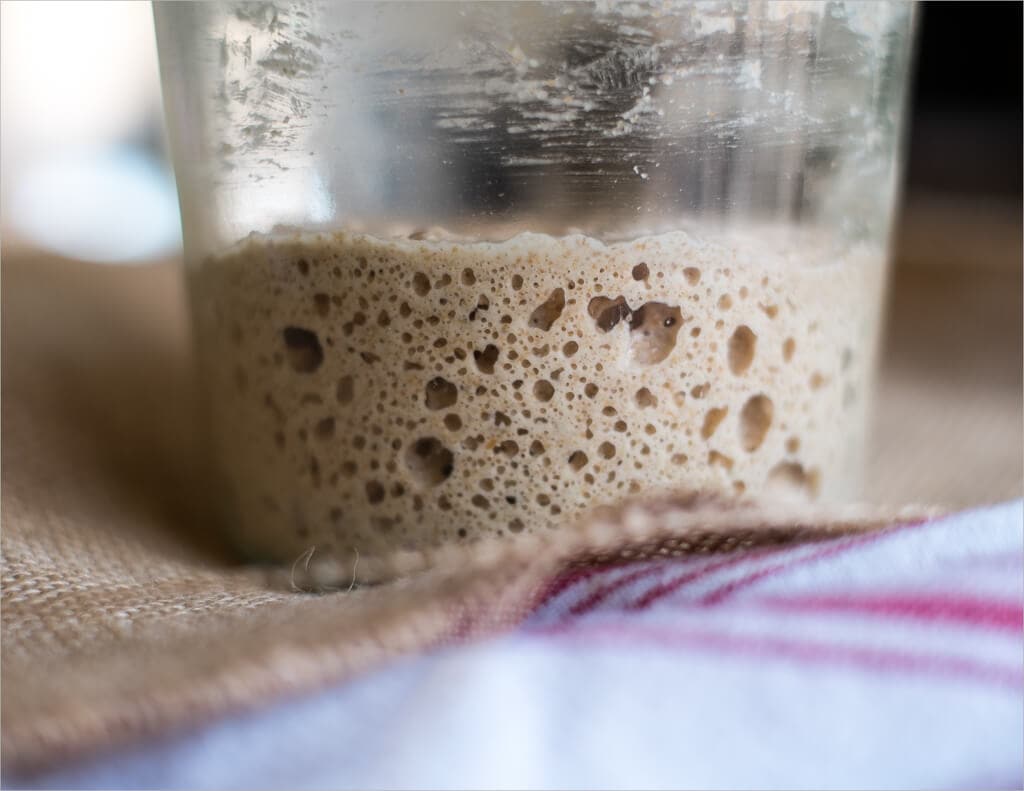
I think sometimes it’s easy for me to fall into the routine of blindly feeding my sourdough starter at set times during the day and forget that it and it’s strength are the keys to good bread. Feedings shouldn’t happen on a strict schedule, they need to be adjusted based on cues obtained by sight and smell (perhaps this sounds peculiar but it is one sure-fire way to learn the habits of your starter) until the starter is predictable. Visual cues such as large air pockets and smells like ripe fruit or vinegar are indicators of good fermentation and tell you if a feeding should happen soon. In this post, I’ll go into managing your sourdough starter fermentation to increase fermentation activity.
As an aside, I’ve always felt that my starter has “had a problem” and never displayed intense fermentation like I see in pictures online and images in Tartine Bread. It turns out, there are a few reasons my starter has been sluggish over the past almost 2 years, some of which I’ve only just discovered recently. I’ll go into a few of these later.
For this entry I decided to focus on my starter and to manage its fermentation until it became predictable and stable, feeding it not based on an arbitrary or convenient schedule but following its cues. Once my starter started showing signs of rising and falling consistency, I was going to use my previous bread formula and method and bake with it. Here are my results.
Flour Choices, Why Rye Flour?
One of the secrets to managing my starter is to refresh it with whole grain rye flour to keep its activity high. I’ve varied the amount of rye flour from 10% all the way up to 100% and have recently settled on 50% whole grain rye mixed with 50% unbleached all-purpose.
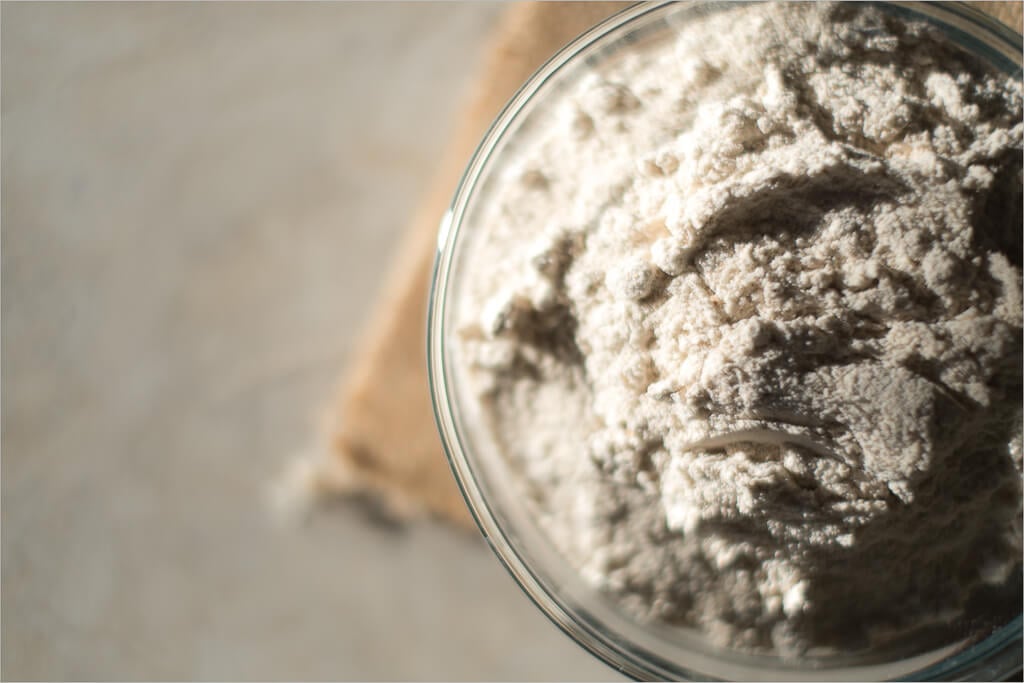
Whole wheat and rye flours provide more nutrients for your starter and ferment more actively, but working with rye flour makes starter maintenance easier than whole wheat. Rye provides increased fiber and nutrients similar to whole wheat flour, but because of its lower gluten amount it’s much easier to stir. I’ve noticed when I work with whole wheat if my feedings aren’t timed just right I will end up with a smelly soupy mess. Conversely, if I feed it too soon it will not build the required strength. Rye helps to alleviate some of these issues as it’s a bit more forgiving with its feeding times.
Managing Sourdough Starter Fermentation
The entire 2 weeks leading up to this bake I carefully fed my starter 3 times a day with 50% rye and 50% unbleached all-purpose. At the beginning of these two weeks, activity was slow and I could only manage 2 times a day (once in the morning and once before bed). After about half a week or so I was able to step it up to 3 times a day (morning, mid-afternoon, before bed). By the end of the first week, my starter began to expect these feedings and I noticed it started to strengthen. Again, I followed the cues. When I noticed it began to fall in mid-afternoon after consuming the sugars in the flour all morning and started to smell sour, I would feed it. It turns out my feeding times were 8:00 am, 4:00 pm, and 10:00 pm.
One important thing I noticed with these 3 times a day feedings: my starter no longer smelled like vinegar by the time its next feeding came around. I reduced the amount of acidity carried over at each feeding by frequently discarding 80% of my starter, removing that intense vinegar smell, and in the end, reduced the sourness of my bread enough that it only barely peeked through.
With a Strong Starter, Time to Bake My Tartine Sourdough
I followed the baking method listed in my previous post while only changing a few of the percentages in order to match Tartine Bread’s sourdough recipe more closely. The main difference is I prefer to use a 100% whole wheat leaven to spur even more fermentation.
Leaven:
- 55g ripe starter
- 200g whole wheat flour
- 200g water
Ingredients for bake:
- 250g (25%) leaven
- 900g (90%) King Arthur white bread flour
- 100g (10%) Great River whole wheat bread flour
- 20g (2%) salt
- 750g water (75%)
Thanks to my strong starter, by the end of the bulk fermentation step I noticed the dough was very aerated with lots of little air bubbles and correctly pulling from the sides of the container. The dough was definitely ready for shaping. I performed my usual shaping, one smaller chunk of dough as a boule and the other larger chunk as a batard. After shaping when the boule and batard were placed into their bannetons, they were jiggly and full of air. I knew I was on the right track with these two.
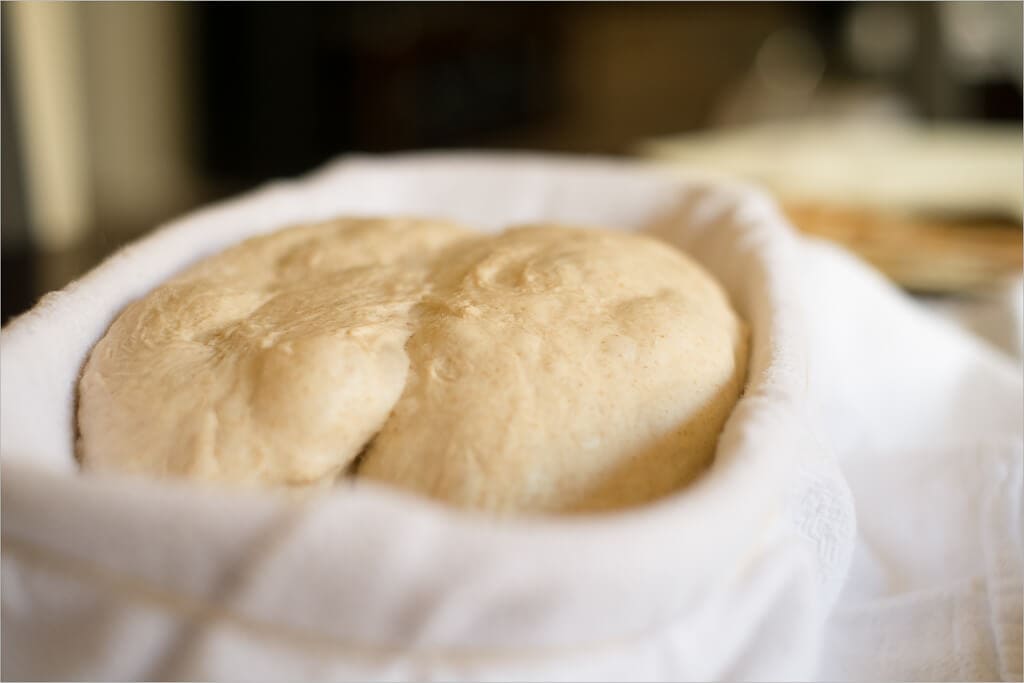
When I pulled out the bannetons from the fridge in the morning I could see the proof was moving along nicely. A quick “finger dent” test showed they were fully proofed and ready for baking.
Conclusion
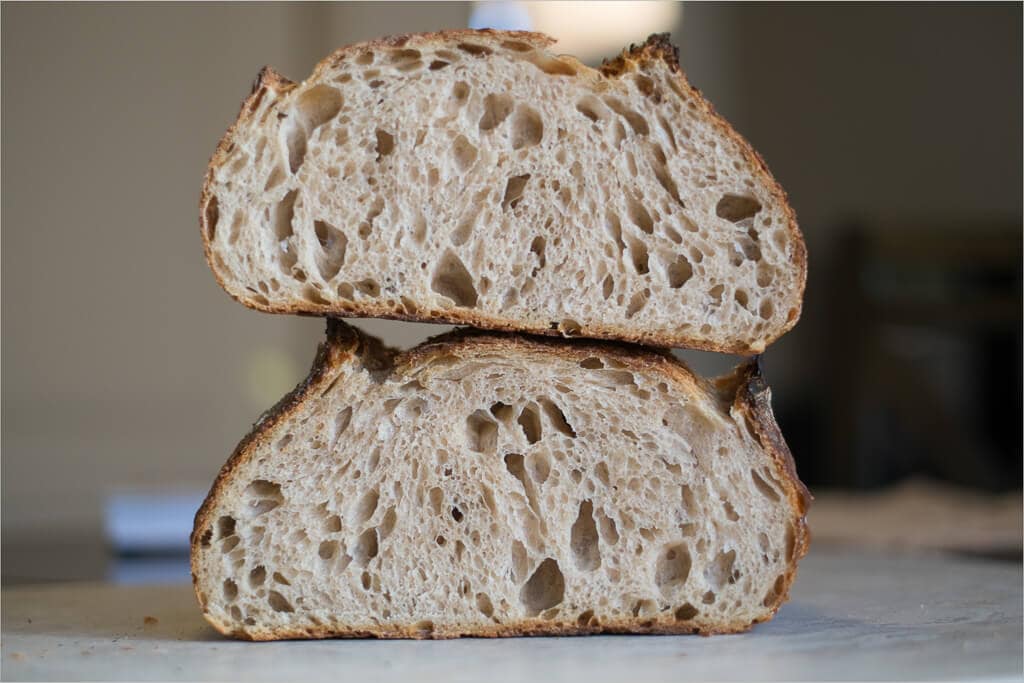
I think it’s safe to say, and you can just see in the pictures, this was hands down the best pair of sourdough loaves I’ve baked. There is just something so rewarding when these come out of your oven after spending more than a day coaxing them into existence. It turns out, managing your sourdough starter fermentation activity helps ensure is strong and lively when making your levain, which ultimately transfers to your end loaf of bread.
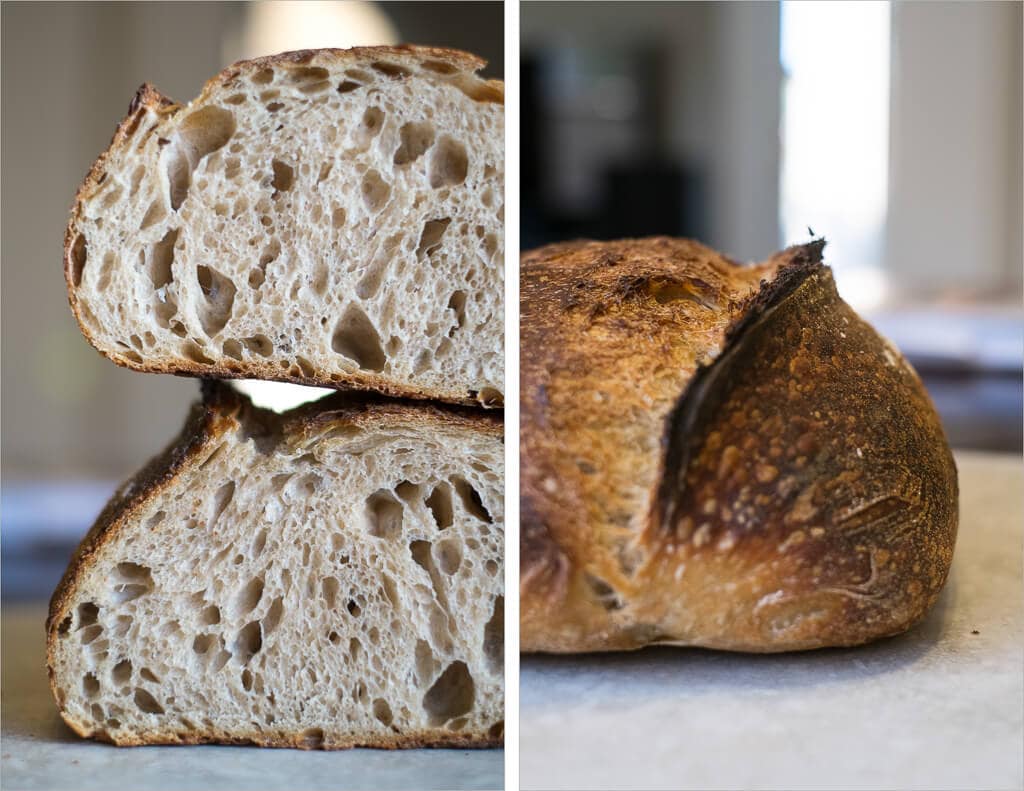
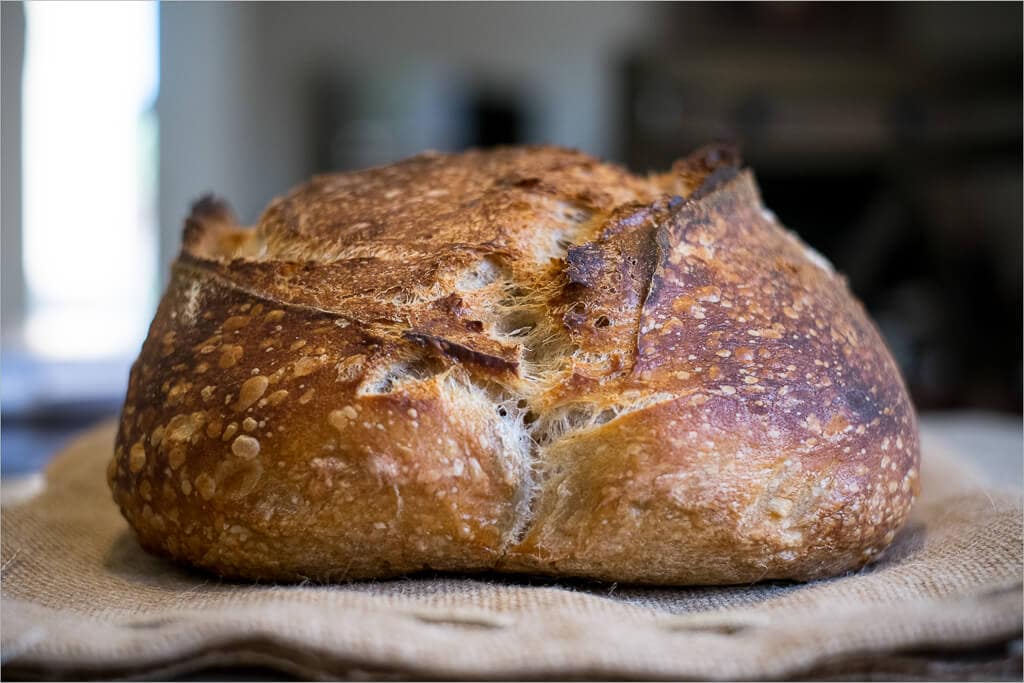
Crust
Shattered to the touch, brittle and flaky, this was the crust I have been after. The crust has beautifully dark colores where I scored in, and a lighter color in the fissure. With some more practice on shaping, I can improve here to create some more stretching and higher ears, but the blistery skin and thin crispy crust were very welcome.
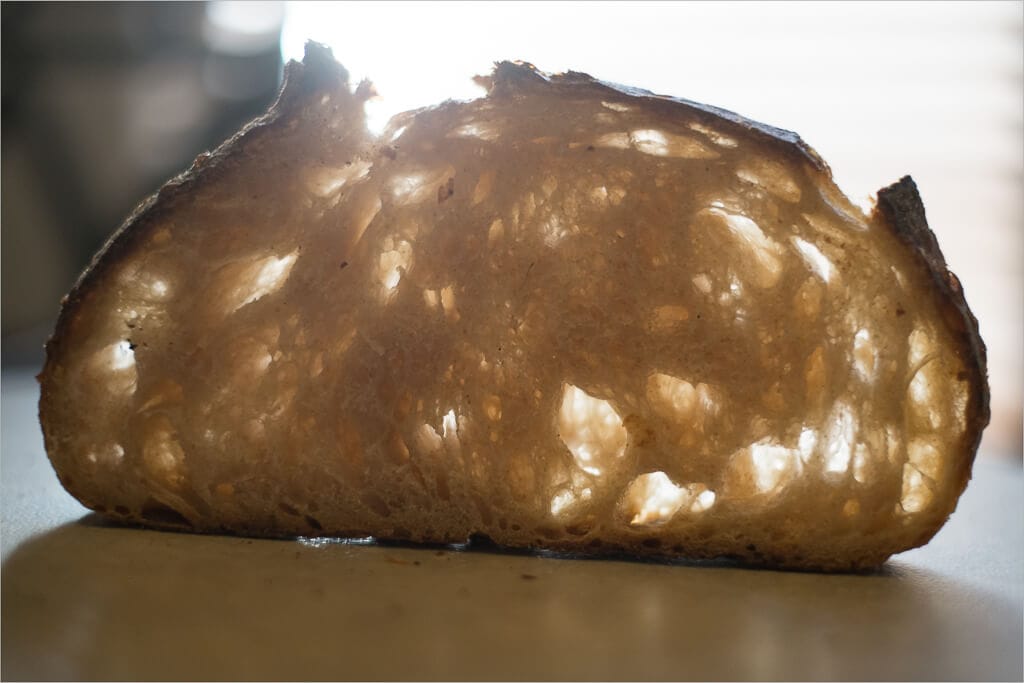
Crumb
Beautiful and soft, the crumb was so light I was shocked when first biting into it. You can literally see the oven spring movement from the bottom of the loaf to where the score was done down the middle. The soft and perfectly cooked crumb came the closest thus far to my ideal loaf.
Taste
Light and soft with only the smallest hint of sour. This is the sourdough I love. Slicing up the bread to make a grilled chicken, pesto, swiss, and tomato sandwich for lunch was a real treat indeed. Later that evening I enjoyed a thick pan-grilled slice with chopped avocados, cherry tomatoes, and a dab of extra virgin olive oil.
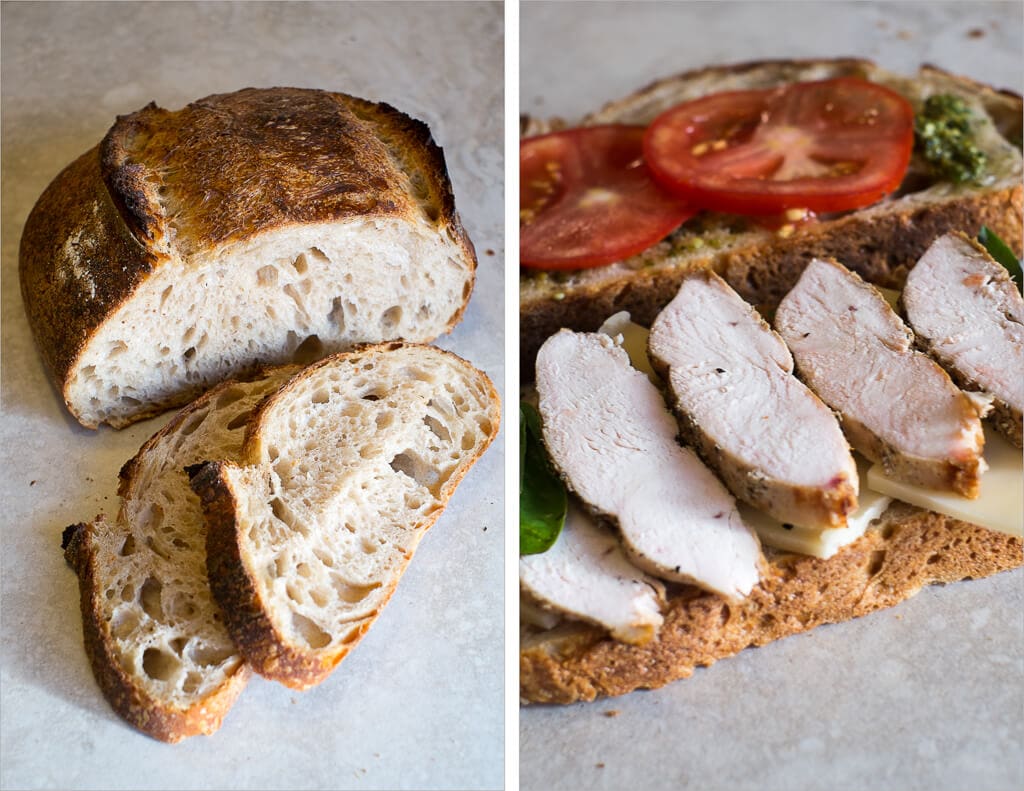
Buon appetito!
If you use this recipe, tag @maurizio on Instagram so I can take a look!


133 Comments
Hi Maurizio,
Is there a reason why you recommend feeding SD starter at a 1:5:5 ratio in your book? Is it because of the convenience or taste (a higher innoculation percentage would require more frequent feedings and have a less sour flavour) or does the feeding ratio also affect the overall activity of the starter? I've been changing feeding ratios based on the weather (using 1:1:1 in the colder months and 1:10:10 when it's hotter), and I'm curious to know if this has any bearing on the activity of the starter, too!
Hey! Check out the Levain section in the book, I go into detail on why I prefer that feeding ratio. But you can absolutely switch to any other ratio that works for me, that’s just the ratio that syncs up with my schedule!
Hi Maurizio,
Long time follower and got your book on release date! I immediately started building my starter according to your instructions on your book. (1:5:5 every 12 hours with flexibility depending on room temperature). It’s been 3 months since I built it and I’ve tried your beginner recipe about 10 times and I can never achieve decent fermentation and bulk rise. Now, my starter had no trouble doubling in 12 hours and I would always feed it at peak and before it smelled like alcohol. To find out if my starter was weak or not I got some starter from a friend, she fed it 1:1:1, every 24 hours with 100% bread flour. Immediately thought her starter was always hungry and weak, but it actually peaks in 4 hours with 1:1:1 and mine peaks at the same time with 1:1:1 or 1:5:5 which is 12 hours. I used her starter on your beginner recipe and had success at the first try, everything fermented at your recommended times and the dough actually increased in volume for the first time. This confirmed that my starter is VERY weak.
I’ve seen many people with strong starters that feed once a day 1:1:1 and theirs peak in 4 hours, how is this possible? I guess my question is, if a starter is fed 1:1:1, then it peaks in 4 hours, wouldn’t it be hungry the remaining 20 hours? Why aren’t those starters getting weaker if they are not fed at their peak?
Would it make sense to instead of following your 1:5:5 12 hour feeding cycle, I feed my starter 1:1:1 peak to peak, until it peaks in 4 hours, instead of 12+ like it does now? and slowly increase the ratio until it peaks in 12 ? Would that not interfere with it strength?
I know your starter peaks in 12 hours at 1:5:5, but if you fed it 1:1:1 once, how long will it take to peak? 4 hours?
I used 100% rye and whole wheat for my starter and fed according to usage and starter activity, no doubt about it, this starter was rocking. But I began putting 5% or rye flour in the recipe, (we use the Tartine country bread for our everyday bread, only with 150gm whole wheat and 350 gm white, 70% hydration) and the loaves started to not rise, lack of gluten strength. So we reduced rye, same thing. No rye in bulk dough ( just in starter, and the same thing). So removed the rye from the starter and loaves are rising well again, but the starter doesn’t have half the vigour of the when it was rye. I cannot imagine what chemistry has effected the gluten from such a small percentage of flour. I know with reduced acidity rye is subject to starch degradation by amylase but I thought wheat was immune to starch attack? The gluten is now good and strong, manageable again but the culture is lacking, but breads although quite acceptable, aren’t what I’m aiming for in rise and ‘bubbles’. Changed no other variable, except room temps with changing seasons. Oven is very new, very capable. I think the starter is lacking but how to go about it? Can you shed any light on this rye/gluten conundrum? I’m not in US, we get different flours here. Ps Maurizio, I love your website and passion,you’re ace, Thanks heaps for sharing.Amanda
Very strange, Amanda, I’ve never seen anything like this happen here. Is it possible your dough was over proofing on you with the added rye? While 5% is a small amount, it might shift the schedule a bit and require an earlier divide. Honestly, I have a hard time suggesting what might be the cause here with such a small addition of rye–which, by the way I do very, very often here. In many of my bakes I add 5% rye for added flavor and color!
Have you figured out the issue? I’m very curious.
Thanks Maurizio, it has stumped me too. Starter on wholewheat now, starter not a scratch on what it used to be but making pretty damn good bread. Now I want that rye flavour.. I’m suspecting you’re correct, it could only have been overproofed. Our house is usually 8- 18 degC, I compensate with 30 degC water and try to keep dough warmer, and often we do a long fridge overnight proof, (I want the terrifically sour flavours). So house is cooler, biological activity should be quite slower. Maybe it goes something like : early dough development- really work dough, get strong gluten bonds, work out weak ones. Turns 3,4, gentler turns, still developing gluten. turns 5 & 6, dough getting light and billowy, all going well. Fermentation continues, and eats out of available food source, starts producing acids and amylases. So we’ve left the dough looking good, in it’s long prove window acids and amylases go to town and break down gluten. Is this what happens in over proving? If so I don’t really understand while other people can do overnight proofs without this problem. I’ve read a bit about dough chemistry in which I realise I now nothing about dough chemistry (neither does anyone really). Anyway my partner is out of town for 4 weeks so I’m going to experiment again with rye. ( it’s a two baker democracy here) I’ll let you know. You’re ace.
Yes, generally, the longer the dough proofs the longer acids will build up as a result of fermentation, which ultimately weakens the gluten structure. Amylase will also continue to function but eventually activity tapers off as amylase does not function optimally at low pH (high acid), which becomes more and more the case as the dough ferments. Give it another go!
once you get that consistency and achieved a strong starter. Do you continue with the same feeding method?
Check out my post on how I feed my sourdough starter for all the details there, Geraldine!
Thanks!
Hi Maurizio,
Loving your site and lovely recipes.
I have a rye sourdough starter which i was gifted from a friend. Initially when I fed the starter with equal parts rye and water it had a pleasant and sweet smelling fragrance. In the last week however the smell is much more acidic and vinegary. I usually feed it once AM and once PM before the night, it is still growing with lots of bubbles on the sides of the jar, however the smell has changed. Any ideas?
Thank you,
Juliet
It might just need a refreshment earlier! Or, you can leave less ripe starter in the jar each time you give it a refreshment.
Hi Maurizio! I love this recipe and your blog and have been having a lot of success following your guides! I’ve been having a frustrating problem that I’m hoping you can help me troubleshoot. Recently, despite the fact that I have been sticking to the same recipe/ratios that I’ve been using to great success, the dough has been incredibly sticky and gloopy. I’ve baked successful loaves enough so I know what it should feel and look like. I just can’t seem to develop enough gluten or strength in the dough and I am frankly not at all sure why or what I’m doing wrong! I don’t deviate from the ratios, and sometimes it works and sometimes it creates gloopy gloop (what I’m assuming is essentially just a big container of starter? because maybe it’s over-proofed?). I have been doing a round of slap+fold after autolyse, building good strength, then letting it rest, adding the salt and remaining water, then doing another round of slap+fold until it’s strong again, then doing bulk fermentation. By the time I’m at the end of bulk fermentation though I’ve ended up with gloop. All the strength I created is totally gone, the dough is essentially sticky batter and I am completely unable to shape it. Do you think it’s over-proofed? My best guess is that my starter is too strong and I let it bulk ferment for too long? I can’t figure out why sometimes it works and sometimes I end up with gloop!
Hi!,
This to me sounds like an overproof. What is the temp of your kitchen and length of Bulk?
I had similar issues and just reduce the amount of levain if I knew I wasn’t going to get to it. I hope this helps 🙂
It does sound to me like your loaves were over proofed. There are a few indicators your dough could be going over: sluggish rise in the oven, the score on top of the dough might not open with a nice “ear” and instead just kind of fuse together, the interior will have lots of small holes and perhaps one or two large ones near the top (but no dense areas of unfermented flour), and finally the loaf could be a little on the sour side.
Hi Maurizio, my starter looks good and behaves predictably over twice daily feedings – so I think it’s good. (I can’t believe you said you fed it 3 times a day. Do you work? Have a family? A garden? Any other projects?). I am using your Beginner Sourdough recipe. The one that should be idiot proof – but isn’t, for this idiot. Twice, now, I have tried to get my superstar starter into an actual loaf of bread – and failed. The first time, I misunderstood the instructions and thought the folding cane after the bulk rise. I baked not a dough but a creeping sludge that produced hard flat discus for the 2021 Olympics. Second time, fixed that and created a dough (which is baking now and – but it was not pliable and didn’t rise much. Both times, i was skeptical of my Levain – which I created only minutes before refeeding the starter it was made with. Both times the starter took off and began to be active, while the Levain kind of just sat there, barely creeping up over the elastic band marker. Both times I gave it extra time to perform – but it felt like I would have had to wait an extra whole day. Your picture of your Levain (after a mere 6 hours, you say) looks like it is filling up a 500ml/2c. Weck jar. Mine gets to barely half of a 500ml canning jar. I’ve baked with it anyway. But hopelessly unsatisfactory loaves are the result. Can you advise? Could it be my Levain? I worry that the whole wheat flour is the culprit: old?, bad? Aside from the bread flour, which I know is fresh, it is the only different variable between my starter and my Levain. But could it also be that my starter, after lo these many weeks of time and care, is NOT the superstar I think it is?
Y. McIntosh, STRATFORD, ON, Canada
Hi Maurizio, Are you using whole grain Rye flour or just white Rye flour for your starter?
Always whole grain rye flour.
Hi Maurizio!
For a small bakery how many starter I’ll need to make my sourdough bread productions? What’s the calculation please?
When you say a “strong starter”, what does that mean exactly?
By strong I mean mature, rising and falling predictably each day. Further, it should be used when nice and ripe: strong sour aroma, lots of bubbles here and there, texture should be well broken down.
I’m new to all this. If I read correctly, make starter, feed every day, use when it smells sour, around 4 days. Is this correct?
You are looking more for the rise and fall over the sour.
Your rise needs to be 100% or greater increase in volume with the fall just above your starting point.
The amount of rise isn’t so important as much as consistent signs of fermentation each day. You want to see some rise, a sour aroma near the end of the refreshment cycle, a broken down texture. The consistency is important to ensure you have a stable mix of beneficial bacteria and wild yeast.
Hey Maurizio!
First off, I just wanted to say thank you, thank you, thank you for your guides to sourdough! I have tried and failed so many times with other methods, but I keep coming back to your recipes. While there is more handling and hands-on time, your recipes definitely create a loaf closer to my ideal than any other I’ve tried thus far.
My question: My ideal loaf differs from yours in the way that I like a stronger tang of sour in my loaves. I feed my mother a 50/50 AP and WW mix once a day (or once a week in the fridge). While it has a nice consistent hearty rise, it definitely doesn’t have the sour that I am wanting. Is it possible to feed my mother every two days or every 36 hours to increase the tang? Or will it reduce the strength too much? I prefer working with your ‘Best Sourdough Recipe’ at full hydration, so I would guess that the strength of the starter is particularly critical.
There are a few things you can do to try and increase the sourness of your bread. First, you want to use your starter, and levain, when it’s very ripe. That mature, ripe starter/levain has much more acidity than if used when it’s more on the “younger” side. Just be weary that your dough fermentation rate might be a bit faster than previous, keep an eye on it during bulk fermentation and divide the dough when it looks ready.
Additionally, you could try using some rye flour in your final dough mix. Just know that the more rye you include the more dense your loaf will be as rye does have the same gas-trapping capabilities as traditional wheat. It’s up to you on the percentage, but even 5% plays a big role.
Finally, if you can try to push the cold proof in the fridge. There’s a limit of course, but if you could go even a few more hours you should notice more sourness.
Back when I wrote this recipe (over 6 years ago!) I used to build a larger-than-needed levain which I no longer do in my bakes. I’d say use the same ratio of ingredients (meaning, the same percentages), but change the quantity to whatever you need to cover the recipe you’re working with. This way, you won’t have any excess but will still keep the levain build the same.
Hi Maurizo, Thanks for sharing all your knowledge!
I recently changed the rye flour I used for my starter with one from a different mill, and most likely a different farmer.
My starter needed about 5 days getting back to strength. I was thinking: Shouldn’t your starter be made with the same flour that you will use in your bread recipe? So your starter will be used that flour and get the best results in the fermentation of the dough?
Hey, Kasper! Originally I did use to think this, but over the years I’ve deviated from this. I’ve found that my starter performs just fine even if I change my flour in a single feeding. This is most notably evidenced by my levain creation in which I use my existing starter to create a levain with possibly completely new and different flour. It seems to work just fine!
hey, i wanted to know, did you recommend about sourdough starter from 100% rye flour for best results?
Sure, a 100% rye flour will work very well indeed! The ratio and type of flour you feed your starter is totally up to you and your preference — many flour types will work well.
Ciao, Carlos! Thanks so much, I appreciate that. It’s ok if your starter doesn’t pass the float test, that’s not a hard and fast test for whether your starter is performing well. It’s normal to see a drop in fermentation activity when you switch to a mostly-white flour (especially if you drop rye flour). Whole grain flour, and rye in particular, will provide your starter with lots and lots more nutrition, which in turn increases activity.
Have you had a chance to review my Starter Maintenance Routine post? I have lots of tips in there on how to maximize activity in your starter!
Ciao Maurizio!
Anche io sono parte italiano! 🙂 lol
Great blog man!! Quick question, hoping you can help. I’m trying to get a starter going. Following a different method, I switched to ap flour then tried to make the beginner sourdough recipe. It didn’t seem like there was much fermentation going on so I let it go longer. Eventually the dough got really sour and sticky and gluten was failing so I just tossed it. Figured my starter wasn’t active enough. The second time I used my original starter (pineapple juice and whole wheat flour method) and added your method (rye flour). My starter was much more active the second time around. I followed your method this time and everything was looking great. Now on my second day feeding only ap flour and it just seems like the starter has lost vigor again. It isn’t as sour and definitely has fewer bubbles. To be fair, it never had as many as in your pics, but certainly more when I was feeding rye flour. I know there is probably no easy fix, and I don’t even know if I’ve described the situation well enough. Hoping for some insight or other resources you can think of. Thanks. 🙂
p.s. I forgot to mention, it doesn’t pass the float test, but not sure that means anything…