

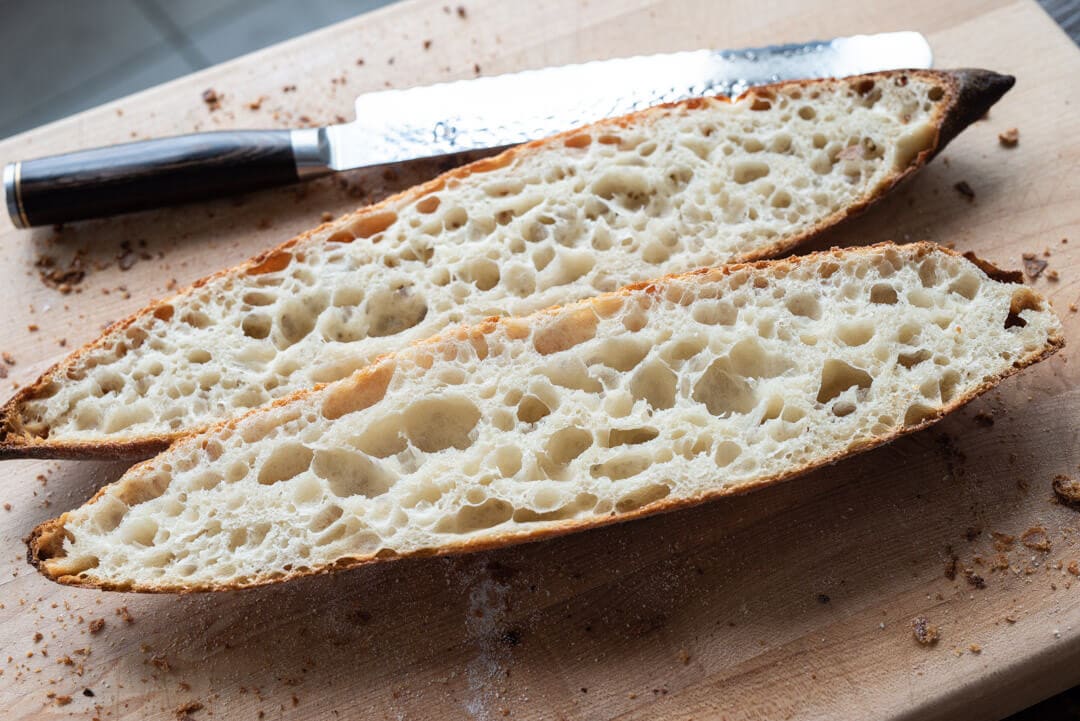
This page is a roll-up of all our naturally leavened sourdough bread baking recipes, plus anything else we’ve managed to concoct in the kitchen. Below, you’ll find baking recipes using fruit/nut/seed mix-ins, freshly milled flour, and recipes utilizing various grains (rye flour, Sonora wheat, spelt, Khorasan, and more). If you’re looking for something very specific, use the search button in the top right of the page to get right to it. Happy baking!
Baking Guides
Head over to the Baking Guides page for in-depth guides on creating your own sourdough starter, maintaining your starter, starter storage, tips on steaming a home oven, building a dough retarder, and much more.
Sourdough Starter Creation & Maintenance
- 7 Easy Steps to Making an Incredible Sourdough Starter from Scratch
- Keeping a Smaller Sourdough Starter to Reduce Discard Waste
- How to Store a Sourdough Starter
- Sourdough Starter Maintenance Routine
- Baking Sourdough Bread with a Stiff Starter
- My Sourdough Bread with a “Young” Levain
- Managing Starter Fermentation to Produce the Best Sourdough Bread Ever
Beginner Baking Recipes
- Beginner’s Sourdough Bread
- A Simple Focaccia
- Fifty-fifty Whole Wheat Sourdough Bread
- Easy No-Knead Sourdough Bread
- Sourdough Bread with All-Purpose Flour
- Tangzhong Sourdough Sandwich Bread
- Weekday Sourdough Bread
- The Perfect Loaf Custom Flour with Recipe
Sourdough Starter Discard Recipes
- Seeded Sourdough Discard Granola (bark-like!)
- Plum Cake (Torte)
- Seeded Sourdough Discard Crackers
- Baker’s Sourdough Discard Banana Bread
- Strawberry Shortcake with Sourdough Discard Drop Biscuits
- Clafoutis (with cherries, peaches, or any stone fruit!)
- Tangy Lemon Poppyseed Loaf
- Bread Baker’s Date and Banana Tea Cake (with Whole Grain Spelt)
- My Best Sourdough Waffles
- Sourdough Starter Discard Cake: Ciambella
- Sourdough Blueberry Muffins
- My Best Sourdough Pancakes
- Sourdough Pumpkin Pancakes
- Flaky Sourdough Pie Crust
- Whole Grain Peach, Blueberry, and Lavender Sourdough Galette
- My Top 3 Leftover Sourdough Starter Recipes (Pancakes, Waffles, Banana Bread)
Cookies and Brownies
- Cinnamon Toast Cookies (Sourdough Cookies with Vanilla and Cinnamon)
- Sourdough Oatmeal Raisin Cookies
- Sourdough Chocolate Chip Cookies
- Sourdough Sugar Cookies
- Fudgy brownies
Biscuits and Scones
See all the sourdough starter discard recipes →
Mostly White Flour Recipes
- My Best Sourdough Recipe
- Country Sourdough with Less Levain & Longer Autolyse
- High(er) Hydration Sourdough Bread
- High Hydration Sourdough Bread
- A Return to Basics
- Tartine Sourdough Country Loaf Bread Recipe #33
Mostly Whole-Grain Recipes
- The Best Honey Whole Wheat Bread Recipe (50% whole grain pan loaf)
- Spelt, Rye, and Whole Wheat Sourdough Bread (50% whole grain)
- Fifty-fifty Whole Wheat Sourdough Bread
- Ninety-Five Percent Whole Grain Sourdough
- Whole Wheat Sourdough (not 100%)
- Whole Wheat Sourdough Sandwich Bread
100% Whole-Grain Recipes
- Whole Wheat Sourdough Pita Bread
- Whole Grain Spelt Pan Loaf
- Honey Whole Wheat and Barley Pan Loaf
- Whole Grain Wheat and Spelt Pan Bread
- 100% Whole Wheat Sourdough
- Fresh Milled 100% Whole Wheat Walnut
Recipes with Specialty Grains
- 100% Einkorn Sourdough Bread
- Einkorn Miche
- Kamut Demi-Baguettes
- Multigrain Spelt Sourdough
- Spelt Sourdough
- Pane Siciliano (Semolina and Sesame Sourdough Bread)
- Kernza sourdough bread
Rye Flour Recipes
- Sourdough 90-Rye Bread (90% whole-grain rye)
- Light Deli Rye
- Rye Sourdough and Smørrebrød
Freshly Milled Flour Recipes
- Kernza Sourdough Bread Recipe
- Sourdough bread with 35% freshly milled flour (Yecora Rojo)
- Whole Grain Wheat and Spelt Pan Bread
- Multigrain Spelt Sourdough
- Spelt Sourdough
- Fresh Milled 100% Whole Wheat Walnut
- White Sonora Sourdough
- 50% Fresh Milled Whole Wheat Sourdough
- Baking Sourdough with Fresh Milled Flour
Recipes with Specialty Ingredients (Nuts, Seeds, and More)
- Scalded Buckwheat and Malt Sourdough Bread
- Hop Miche (Sourdough Beer Bread)
- High-fiber seeded sourdough pan loaf
- Brown rice and sesame sourdough bread
- Jalapeño-Cheddar
- Apricot and Thyme (50% whole wheat)
- Dark Chocolate-Cherry Sourdough Bread
- Green Olive and Herb
- Sunflower and Sesame Sourdough Bread
- Pumpkin Cinnamon Sourdough Bread
- Cinnamon Raisin Sourdough
- Sourdough with Roasted Potato and Rosemary (Potato Bread)
- Sour Cherry, Toasted Pecan and Buckwheat Levain
- Apricot, Lavender and Walnut Sourdough
- Seeded Sourdough
- Fresh Milled 100% Whole Wheat Walnut
- Fig and Fennel Sourdough (Plus a Little Family History)
- Natural Sourdough with Spent Beer Grains
- Golden Raisin and Fennel Seed Sourdough
- Seeded Whole Wheat Sourdough
- Walnut Cranberry Sourdough
- Tartine Olive Sourdough
- Stout Country Sourdough
- Tartine Country Sesame Sourdough
- Tartine Country Walnut Sourdough
- The Wheat Germ Experiment
Recipes with Sprouted Grains and Cereals
- Malted Wheat Sourdough Bread
- Sprouted Grain Sourdough Bread (sprouted whole white wheat)
- Sprouted Buckwheat Sourdough
Porridge Sourdough Recipes
- Soft Honey Buckwheat Sandwich Bread
- Polenta and Rosemary Sourdough
- Tartine Millet Porridge Sourdough
- Oat Porridge Sourdough
Baguettes
Specialty Bread Shapes
- Hop Miche (a large French-style loaf with beer)
- Einkorn Miche (a large French-style loaf)
- Green Olive Filoncini (Twisted Baguettes)
- Sourdough Friselle (Italian-style rusk)
- Fougasse
- Ciabatta
Buns and Rolls
- Fluffy milk bread hamburger buns (using tangzhong)
- Sourdough pumpkin dinner rolls
- Homemade hot dog buns
- Super Soft Sourdough Dinner Rolls (with Tangzhong)
- Soft Sourdough Potato Buns (great for hamburgers, as rolls)
- Brioche Hamburger Buns
Enriched and Sweet Dough Recipes
- Hot Cross Buns
- The Fluffiest Sourdough Challah
- Sourdough Chocolate Knots
- Shokupan (Japanese Milk Bread)
- Cardamom Rolls
- Sourdough Babka
- Pain de Mie (Pullman Loaf)
- Naturally Leavened Bomboloni (Sourdough Doughnuts)
- Sourdough Cinnamon Rolls
Sourdough Pizza, Calzone, and Focaccia Recipes
- Sourdough Pizza Dough and Recipes (for the home oven)
- Detroit-style Pizza (Pan pizza)
- A More Whole Wheat Sourdough Pizza Dough
- Sourdough Pizza al Taglio (Rectangular Sheet Pan Pizza)
- Wood-Fired Sourdough Pizza Dough Recipe
- A Simple Focaccia
- Focaccia Pugliese (focaccia with potato)
- Calzone Recipe
- Cornmeal Skillet Sourdough Pizza
See the guide to all things sourdough pizza for more →

430 Comments
Hi Maurizio I have been baking sourdough loaves successfully from theperfectloaf.com for 5 years now and just recently bought your wonderful and comprehensive book. Thank you ! I’ve tried the Rustico recipe several times but can’t work out if I’m over proofing or under proofing my breads. I use about 2/3 of water 2 ( perhaps this is too much?). I’ve tried the poke test, plus adjusted the water temperature carefully according to your formula for perfect DDT. Yet the dough always seems to flatten out too much during preshape, ..pancake 🙁 and the loaves are tasty but gummy with hardly any oven spring. 🙁 My ambient temp at this time of the year is 22 degrees Celsius.
It sounds like you likely over proofed the dough. There are a few signs your dough could have gone over: sluggish rise in the oven, the score on top of the dough might not open with a nice “ear” and instead just kind of fuse together, the interior will have lots of small holes and perhaps one or two large ones near the top (but no dense areas of unfermented flour), and finally the loaf could be a little on the sour side. Try reducing the proofing period.
Check out my guide to proofing for a bit more help, too:
https://www.theperfectloaf.com/guides/proofing-bread-dough/
Unfortunately, there’s no way to post it here, Lisa!
I am finishing up the stretch and folds for the No knead sourdough bread recipe right now (Monday) and I will proof overnight and I plan to bake one loaf in the morning (Tuesday)….my question is can I leave the second loaf in the refrigerator one more day and night and back on Wednesday? How will that affect the quality of the bread?
Yes, you can! It’ll make things a bit more sour most likely.
my dough is really sticky, nut bubbly. hard to shape. I use plant based milk.
Depending on the recipe, it should be ok with a plant based milk. I’d reduce the water/milk in the recipe a bit to have a stronger dough.
Heads Up: Central Milling “Beehive” organic all-purpose organic flour: @$13+ for 20# at CostCo-Abq Great deal
I’ve seen it there! Thanks, Don. I think I might just have to pick up a bag, that’s good stuff.
Maurizio, I have tried a couple of English muffin recipes. Most recently I used the recipe from the New York Times. Very hands off. Long bulk. Terrific English muffins. I did my bulk in a square Pyrex dish that fits in my proofer which made it easy to dump out for shaping and started me off with the square shape I wanted. I cold proofed it on a 1/4 sheet pan giving it a rectangular shape. I took a cue from Proof Bread and cut them into squares to reduce waste and avoid trying to reassemble the scraps to save the last muffin. Instead of a cast iron pan I used an electric griddle which held the heat well and held the entire batch of muffins at once without crowding.
Really great tips through there, Mark! I have a recipe for these in my book 🙂
I look forward to seeing it!
Hello Maurizio, If you don’t use freshly milled flour is there any adjustment when using bagged flour for your recipes that you used freshly milled flour?
Expect that it *might* need a little less water in the mix!
Hey Maurizio – Thanks for all the great instruction. I have managed to keep my starter alive for four years and have baked many great breads. Not sure if you have already published – but would request a recipe for sourdough English muffins and pan de cristal (the bread they use in Spain for tomato bread)
Cheers
You’re very welcome, John! I haven’t published recipes for either of those, but Eng Muffins are on my radar!
It wasn’t removed! Here is a link to my jalapeño sourdough!
Hi Maurizio, I have been following your recipes and made my original starter in Nov. 2021. I still haven’t produced the perfect loaf but each time it gets better. Thank you for all your detailed instructions. I am wondering if I have to proof the bread in fridge overnight or can I proof it on the counter for a few hours and then bake it?
So glad to hear it’s going well, Holly! Sourdough (and bread in general) is definitely always a work in progress, but the good news is, it’s almost always delicious 🙂
You can do a counter proof instead of retarding, yes. I usually say 1-3 hours depending on the temps in your kitchen. Bake when a poke slowly springs back.
Hi Maurizio,
I was wondering if there will be any in depth posts on making sourdough more sour? Thanks so much.
Yes, working on this!
Hi Maurizio! I have been following your page for about 2 years now and have learned so much about sourdough baking. I come here trying out new recipes and coming back to some of my favorite go-to’s. One thing I’d love to see your take on is a German traditional Bauernbrot, or “farmers bread”. These are incredibly lovely loaves with a deep rye and sourdough flavor. I grew up in Germany and their breakfast and dinners are centered around this type of bread that I cannot find anywhere, thus wanting to make it myself. It is incredibly complex and my few attempts ended up in rock-hard, cardboard renditions. Most recipes online use yeast instead of traditional sourdough which is what I would prefer. Interested to hear your thoughts!
Hey, Haleigh! Thanks so much for following along for such a long while. That bread sounds incredibly delicious and interesting! I will add this to my list of things to explore this year—I am planning to do more work with rye here coming soon. Stay tuned!
Hello Maurizio! I just made this recipe for the first time and am wondering if it is “normal” for a loaf of this style to be a bit flatter. I held back a bit on hydration to get a good shape and it looked great going in to the oven. I haven’t played around with additions too much but assume they could play a role in weighing a loaf down a bit? Can’t wait to slice in to it!
Hey there! Which loaf? But yes, inclusions can definitely weigh dough a dough. I hope it was delicious!
Oops I thought I posted that question on the recipe’s page! It was the Oat Porridge Sourdough, and yes it was delicious but not much oven spring. I will definitely make it again because the crumb was crazy tender.
Ah, yes! That can come out on the dense side. You can reduce the amount of oat porridge mix-in if it was a bit too much, that’ll help lighten it up. It is a beautiful texture, though. Enjoy!
Hi Maurizio, have loved every recipe of yours that I have made! I’m wanting to make a Fruit Sourdough Pain de Mie or a straight Fruit Loaf. I can’t seem to find any recipes online. Could fruit & spices be added to your Pain de Mie Sandwich Bread or could your Cinnamon Batard be baked in a loaf pan? Thank you for all of your recipes!
Happy to hear that, Lisa! I think fruit could be a great addition to the Pain de Mie! Start small then increase the fruit as desired–I usually start around 5-10% to total flour weight. Also, be aware adding sugar (cane sugar) and cinnamon can affect fermentation negatively at certain levels, but adding fruit won’t be an issue.
Thank you…I’ll start at 10% & see how I go!
Hi Maurizio. I’m a new baker and so appreciate your phenomenal efforts to turn people like me on to sourdough baking. I’ve been dying to try making Cubano sandwiches and am wondering whether you might consider working on a recipe for Cuban bread. Thanks so much for all you do!
Hey, David! Glad my site has helped 🙂 That is something I’ve thought about, though I’ve made bread like that very rarely. I’ll add this to my list of things to work on!
Thank you, Maurizio. Keep on doing great things!
I try other sourdough recipes from other blogs and I’m never impressed as I am when I try your recipes. So! I’m hoping you’ll wow us with recipes for English muffins and pita pocket bread in the near future. Also, your measurements for ingredients seem very very precise. So when I’m measuring out my ingredients, how imperative is it that I remove and add tiny amounts to get the exact measurements? Im an engineer, so I’m programmed to be very exact with all of my measurements, but I find it to be quite time consuming when baking. Am I doing something wrong? Do I need a new scale? Am I completely overthinking this? Thank you so much for your website!!
So glad to hear that! I’m working on Eng. muffins and pita—keep an eye out! I am an engineer as well and am usually pretty precise. The reason the numbers are not even is because of how I calculate baker’s percentages. I try to get within a few grams of the weights as best I can—no need to be super, super concerned with any of the ingredients except for salt, try to be as precise there as you can 🙂
Happy baking!
I’ve been using your sourdough pizza dough for pita for over a year now, and it works! Because my oven never gets hot enough, I make it on the stove in my cast iron skillet with a lid and it puffs up beautifully 😀
Hi, could you suggest a recipe for beetroot and horseradish bread as in post link. These guys are a bakery in Dublin called Arun bakery, https://www.facebook.com/BakeryArun/posts/3771414829632401
I did a beetroot sourdough right here!
thanks, in that recipe on facebool he uses horseradish in the mix, presumably a sauce? what amount would you suggest to add to bread mix?
I’d have to test with that, I have never considered adding something like that to a dough!
thanks again, the guy answered and said he puts grated horseradish with the beets, i know its a hot ingredient but might be good. thanks for all your wonderful recipes.
thanks again, the guy answered and said he puts grated horseradish with the beets, i know its a hot ingredient but might be good. thanks for all your wonderful recipes.
Hi Maurizio. What do you think to explore Australian bread likes Outback Steakhouse but using Levain, of course and another recipe to gluten free bread using Sarraceno wheat?
I have never had, nor baked, either! But anything is possible 🙂
Hi Maurizio. I wanted to say how much I enjoy your blog and how amazing your recipes are. So far everything I have tried has turned out fabulous. My family really likes English Muffins and would love to make some for them. Do you have a recipe you recommend? I have looked around and found very different methods. Since I have never made them before I would love to hear from a pro like you. Thank you in advance
Glad to hear that, thanks for the feedback, Maribel! I’ve been working hard on an English muffin recipe, it will be out here at some point! Those are a little finicky 🙂
Hi! I just want to say Thank you!! After reading through a lot of your tips and trying your recipes for High Hydration and the Cranberry walnut loaves my bread is coming out so delicious! You have helped my sourdough baking SO much! Thank you for everything! Also, I am a close neighbor to the south of you in Belen, and I am wondering, have you tried to put some Chile and cheese in a loaf? Was thinking of trying it, maybe cooking the Chile a little before because it holds so much moisture? Anyways just an idea! 😊 Thanks again!
So glad to hear all that, Rae! I have not tried a cheese and chile loaf, but it’s on my list 🙂 Yes, you could cook it down if you’d like, or mix right in after it was roasted. Happy baking!
Hi Maurizio! Do you have a recipe to bake panini bread?
For panini, I’d likely use my sourdough focaccia. Happy baking, Oliver.
I would love to see a brioche recipe. I followed by letter a French recipe without any success, my dough was hard as brick coming out of the refrigerator and didn’t rise at all.
Naturally leavened brioche is definitely a task! I’ve had success and have been working on a recipe. Keep an eye out 🙂
The tartine version with levain and poolish works great!
Hi Maurizio! Hoping to make some sourdough bread bowls for chowder. Thinking a ~200g loaf would be about the size for a good portion. Not sure which recipe you might recommend for this, and the best baking method. On a baking stone or nestled together in my dutch oven? Assuming after mixing and the first bulk, would portion and then resume rise & retard in fridge. Let me know if you have any tips to point me in the right direction. Thanks for all your bread wisdom keeping us going this year!
Hey, Kate! Yes, 200g sounds pretty good. I’d bake them with space around, so they get nice and crusty. Basically just a loaf of bread as usual, but smaller! I’d probably use my Beginner’s Sourdough or perhaps my AP sourdough! Either would be great. Let me know how it goes, I’ve been meaning to do this myself 🙂
Hi Maurizio, awhile ago I came on a SourDough you made in 24 hrs. I need to trim whatever I can to save time. You pre-mixed wet dough while building Levain and had it ready to bake the next morning or evening. Still have it on the sight?…no can locate.
Ken—check out my all-purpose sourdough recipe, it’s baked all in a single day!
Hi Maurizio! I’ve got a fun challenge I’m just starting to work on, and I’d love your thoughts. My friend with diabetes is looking for a good sourdough bread using low net carb flours. That would be walnut, almond, flaxseed, spelt, and then a bit of whole wheat, but hopefully not much more than 25%. Any ideas on what to look out for or ways to accommodate the different flours?
Usually those flours have low gluten so you’ll have to drastically reduce the hydration of the dough. You could check out some of my spelt pan loaf recipes (see my recipes page), then start to sub out some of that spelt for an alternate flour. I’d keep as much spelt as possible as the others have no gluten and will make the loaf more and more dense as their percentage increases.
Approaching the holiday season I would love to see a recipe or two of sourdough crackers (if not too complicated!)
Been working on this!
Ciao Maurizio! What happened to your recipe for Sourdough bread with olive and sun-dried tomato? I no longer see it on the page? I hope you’re just tweaking it and bringing it back soon! Stay safe and Happy Holidays!!
Hey, Jeanne! That was a recipe I developed over at Food52, you can find it here! Happy holidays 🙂
I remember now! Thanks!!
Hi guys, cosidering Christmas next and many people at home, what do you think about go deeper in a Panettone recipe?
That’s something I’ve been working on, but I don’t have a recipe ready just yet. I was hoping to attack that a little more this year, but other recipes and things have come up! I will get there.
I was just searching for a recipe, too! Maybe next year. I thought I remember you trying a recipe a while ago…
Hi – Maurizio – Have been making your weekday sourdough and it’s been SUBLIME….. I wonder if you have a Struan recipe? It’s such great bread – I like it even better than Anadama (but I’d take that recipe too!)…. Love Beard on Bread, and Uncle John’s Bread Book —- but no Struan recipe there either…. Stay well! Thank you!
So glad to hear that, Nancy! I’ve not made Struan, I’ll have to look that one up! I’ll do some research and then add that one to my to-bake list 🙂 Happy baking!
Maurizio do you think you will ever publish a Panettone recipe? I reckon I would trust yours!!
Saluti.
Ciao, Paula. Yes, absolutely. I’ve been working on a recipe for a long time off and on, it’s an extremely difficult thing to make and I want to do it absolutely right (I grew up eating panettone so it has a special place!). I’ll post it here when I get there! Ciao ciao!
Today I finally tried the SAF (slap and fold) technique. Wow! The dough feels beautifully smooth and stretchy.
I keep getting flat baguettes, so I thought I’d try changing it up.
I’m using SAF from now on.
Glad to hear it worked well for you, Nina! It’s definitely my go-to method 🙂 Happy baking!
Hi Maurizio,
Just wanted to say thank you! I am baking the best breads with your recipes. When I started my sourdough journey years ago, I relied on the Tartine book and was terribly discouraged everytime I got breads flat as a frisbee. It was largely due to your website that I discovered the joy of sourdough baking during the first lockdown this year. Cheers, Annika!
You’re very welcome, Annika, and thank you so much for the kind words! Happy baking 🙂
Hi Maurizo! Do not want to spam you with lots of questions, but still one about different flours from protein/gluten aspect, and the way the gluten % affects the texture and crumb (if we work with 75-80% hydration). Where I live DE and FR flours are mostly available. Their gluten % is 10-11.1 usually – not really “strong bread flours”. I have noticed that some (experienced) bakers from Germany and Finland (the same “issue” in FI – soft wheat) bake their sourdough breads with Italian semolina and manitoba which are very high percentage of high protein flours, at least the specific brands’ IT semolina and manitoba they have referred to in their blogs. I am under impression that very high % protein flours aren’t your favos? The result would be less tender and more gummy crumb? (Yet, another source comments that manitoba gives especially pillowy-soft bread.) I believe you have some experience with Italian flours due to your background. I would try and test myself if only Italian flours were easily available here (except typo 00). The only option is to order bulk abroad and delivery is awfully expensive. I’d rather get the comment from a reliable source first – helps me to decide whether worth the trouble of switching flours and maybe should try to bake with the “softies” I have at hand instead. (Especially if the only thing I could achieve is bigger and more alveoli/holes and stiff crumb – which is not my aim.)
I actually have not had much experience in working with Italian flour aside from Caputo for pizza. It’s hard to get here in the USA where I live, and like you, would be very expensive to import. Also, I have so many great sources near me here for wonderful flour! Perhaps when travel is allowed again, I can finally get back to Italy and do some baking out there 🙂
In my experience, using a lot of high protein flour leads to a chewy interior, but it really depends on the bread and the process. If it’s well-fermented, which I believe any bread should be, the impact will be reduced, but I still find going with 100% high protein flour to be less desirable for me. With stronger flour you will definitely see the potential for a more open interior, more rise, and that “pillowy” look to the loaf. Sometimes I blend in some high protein flour to help keep a loaf’s structure, especially if I’m dealing with lots of mix-ins, high hydration, or extra long proof times.
If I were you, and this is just my personal opinion, I’d definitely explore the flour you have access to first. While your flour might be “softer,” my feeling is the flavor and texture will be very, very good. And that’s what’s most important!
Hope this helps, Terje. Let me know how you get on with all this!
Hello Maurizo!
I’m a beginner baker, I’ve made some things such as croissants and focaccia, before, and I make sourdough sandwich bread pretty regularly.
Do you have any tips for when sourdough starter dies in the winter time? Mine keeps dying and I don’t know the reason, it will be big and beautiful one day, and then the next will have no bubbles and flat even if I’ve fed it that day.
Thanks!
Hey, Lydia! I’ve never had my sourdough starter die on me in the winter! In fact, I have my same sourdough starter since I started baking almost 10 yrs ago. But what you might be seeing is a reduced activity in your starter due to the cold temperature. Try to keep it warm! Check out my baking tools page where I list a dough proofer, something like that will help you keep your starter warm 24/7. Alternatively, you could warm the mixing water you’re using to refresh your starter.
Hello Maurizio! Great work, big fan! I have been using your sourdough pizza recipe, but I wanted to get a crispier crust instead of chewy. What can I change? I am using a Roccbox, around 62% hydration and 00 flour. Thanks a lot!!
Thanks, Oscar! To get a crisper crust, try lowering the heat in the RB but cook the pizza for longer. Also, be sure the bottom deck of the RB is fully saturated with heat before sliding in your dough, I’ve noticed with that oven it needs a little time to get back up to full heat between pies!
Great, thanks so much Maurizio. I thought I was underproofing the dough. Thanks, again!