

The following reading list of baking books has helped me start baking bread at home and continue to inform, challenge, and surprise me even after reading them for the second and third time. Many of them have inspired me to bake with freshly milled flour, work with ancient grains, and even naturally leavened pastry and sweets. If I had to choose a set of books to take with me to a deserted island with nothing but flour, water, salt, yeast, and an oven, these would be them.
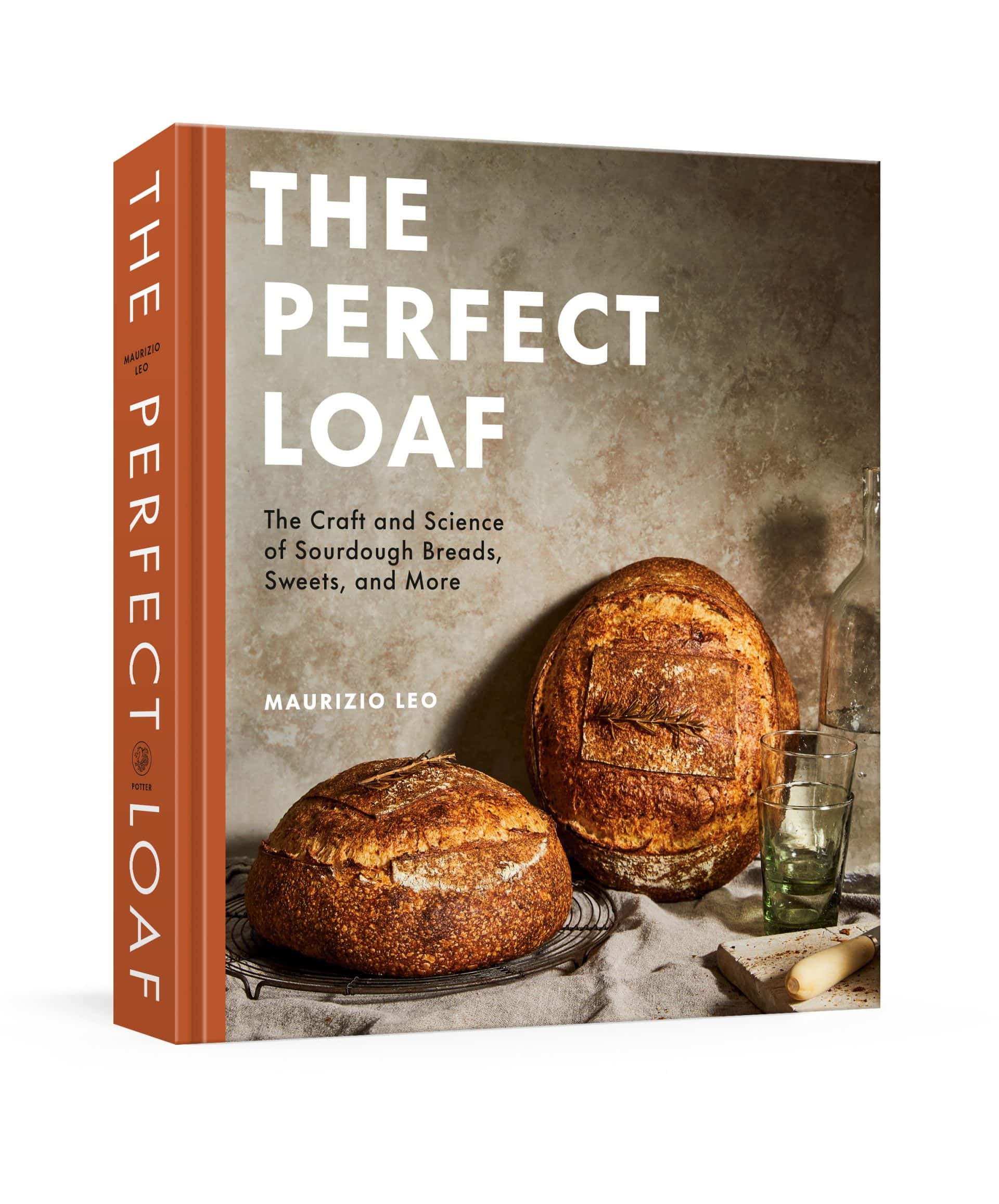
I’d be remiss if I didn’t recommend my own cookbook here!
In addition, I hope the following books provide you with as much insight and instruction as they have for me.
- The Taste of Bread (Le Goût du Pain) by Raymond Calvel
- Bread: A Baker’s Book of Techniques and Recipes by Jeffrey Hamelman
- The Bread Builders by Daniel Wing and Alan Scott
- Southern Ground by Jennifer Lapidus
- Tartine Bread by Chad Robertson
- Tartine Book No. 3 by Chad Robertson
- The Tivoli Road Baker
- Flour Water Salt Yeast by Ken Forkish
- Bread Science: the Chemistry and Craft of Making Bread
- Bread Baking for Beginners by Bonnie Ohara
Click here to see a list of all these books on this reading list and many more exceptional reads.

11 Comments
Hello Maurizio, I have 2 books, 1 is on your big list on Amazon, The Bread Baker’s Apprentice, but I also have one that you might want to check out as she taught me how to make bread. The book is called The Bread Bible by Rose Levy Beranbaum. She taught me how to make sourdough and other breads, but Peter Reinhart teaches me how to create and be creative in my bread bakes
Hey Zachary! Sorry for the delay. I have a book by Rose, but surprisingly, not her bread one! I'll pick this up next. Thank you!
You're welcome!
Hi Maurizio, which book do you recommend for 100% whole grain sourdough recipes? Your recipe for whole wheat bread is my new go-to, but I want to branch out (especially into more rye bread and pumpernickel).
There are many recipes for rye style bread and whole wheat breads in BREAD by Hamelman (the first on the list)!
If You had to choose between 1, which one would it be?
I think the most versatile and expansive book is BREAD by Hamelman — that’d definitely be the one I’d pickup.
Have you looked at “The Handmade Loaf” by Dan Lepard? I doubt it would make your above list as I suspect in terms of instruction, there won’t be anything new for you as that section is aimed at sourdough virgins and newbies. But I think you’d enjoy the recipes. Dan Lepard travelled around Europe meeting pro and expert home bakers, tasting their bread and collecting recipes from Denmark, Ireland, Russia, the Ukraine and a number of others.
I have most of the books you list. I’d like to recommend one more “In Search of the Perfect Loaf: A Home Baker’s Odyssey” by Samuel Fromartz. It rekindled my love for baking bread and is just a wonderful read.
Love to know when your book is coming? I have baked sourdough bread for years and stuck mainly to one method and loaf. That is of course until I found your blog. I have been obsessed ever since. It pushed me way out of my comfort zone and got me experimenting and having fun! So informative, well written and inspirational. My next project is to make a sourdough loaf that has as least sourdough taste as possible. My teenage daughter is at that age.. Enough said. Starting to feed my starter at room temperature to keep it mild and making the dough with a “young levain”. Is it possible to skip the proofing time in fridge and let i proof at room temperature? I will find a way. One day soon I will write back and say she loves my bread 🙂 Thank you so much for the time and effort you have put into these pages. Allison
No book plans currently in the works, maybe sometime in the future 🙂
Thanks so much for all the comments, I really appreciate that! I think pushing out of one’s comfort zone is definitely a good thing — it’s how we grow and learn. Even if it can be frustrating at times!
You can definitely skip the overnight proof in the fridge and proof right on your counter. At around 75ºF I’d guess somewhere between 2-4 hours would work, but use the “poke test” to determine the right time to cut proof as there are a lot of factors that go into this (Google that if you haven’t read about it, makes it easier to determine when your dough is ready!).
Thanks again for the comments, really appreciate that! Happy baking, Allison.