

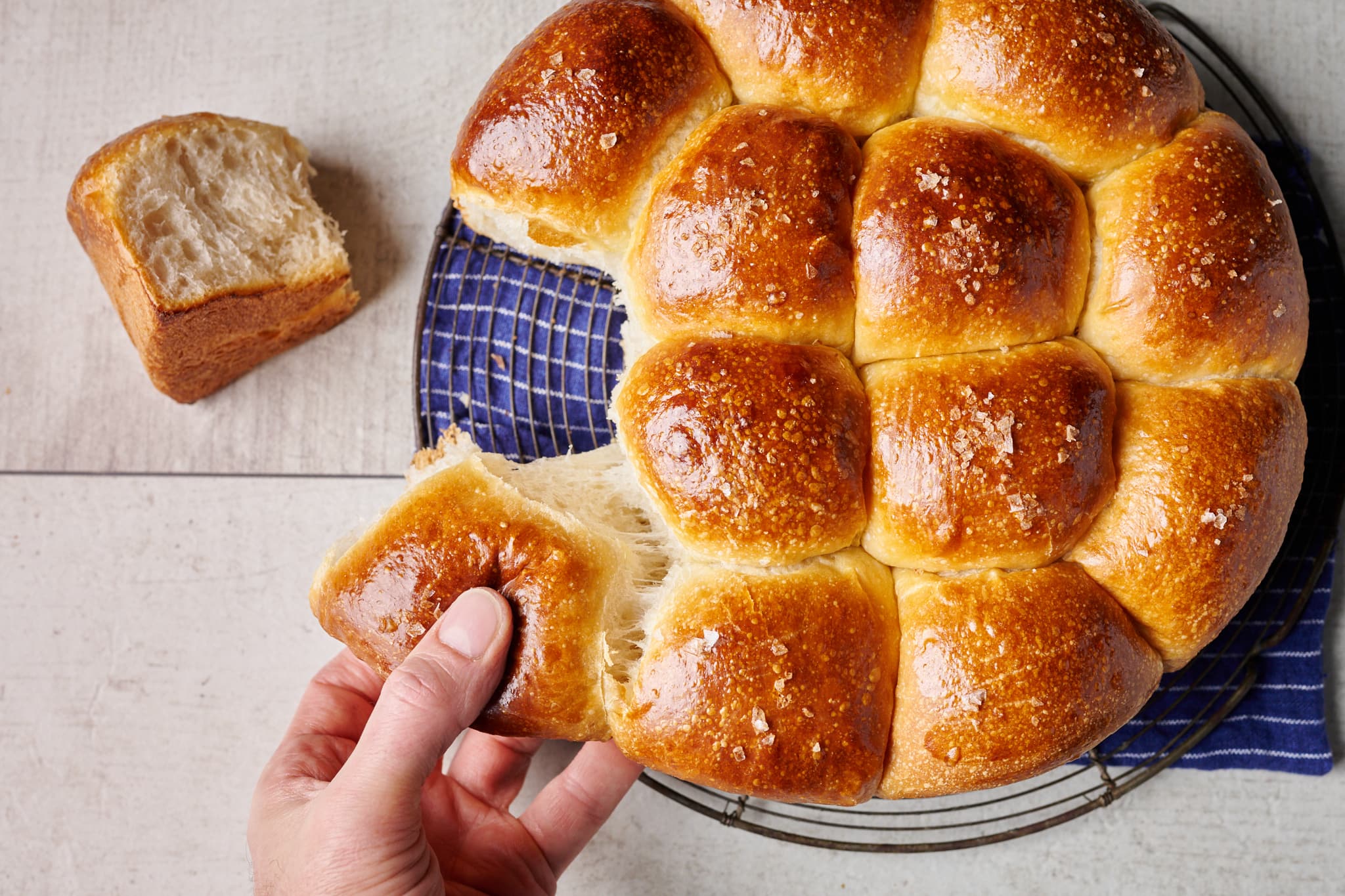
The holidays are the best excuse for binge baking. The end of the year is marked by that unique time when being chained to your oven is considered normal—nay, it’s even encouraged! As you might imagine, it’s my favorite time of the year. As Thanksgiving and Christmas approach, I can’t seem to help myself as all kinds of bread-baking ideas swirl in my imagination, taking me in this direction and that, and lengthening my “Things to Bake” list to unhealthy measures.
For the great meals of the holiday season, I always have a favorite loaf of bread or two earmarked for the dinner table, but often I also include a (sourdough) pie, sometimes a sweet bread, and always an experimental loaf. Last year, I served a variation of this roll recipe, and while they were great, they’ve come a long way through subsequent tests and trials. They’ve matured into these soft sourdough rolls, firmly on the menu for this year’s holiday meals (especially Thanksgiving).
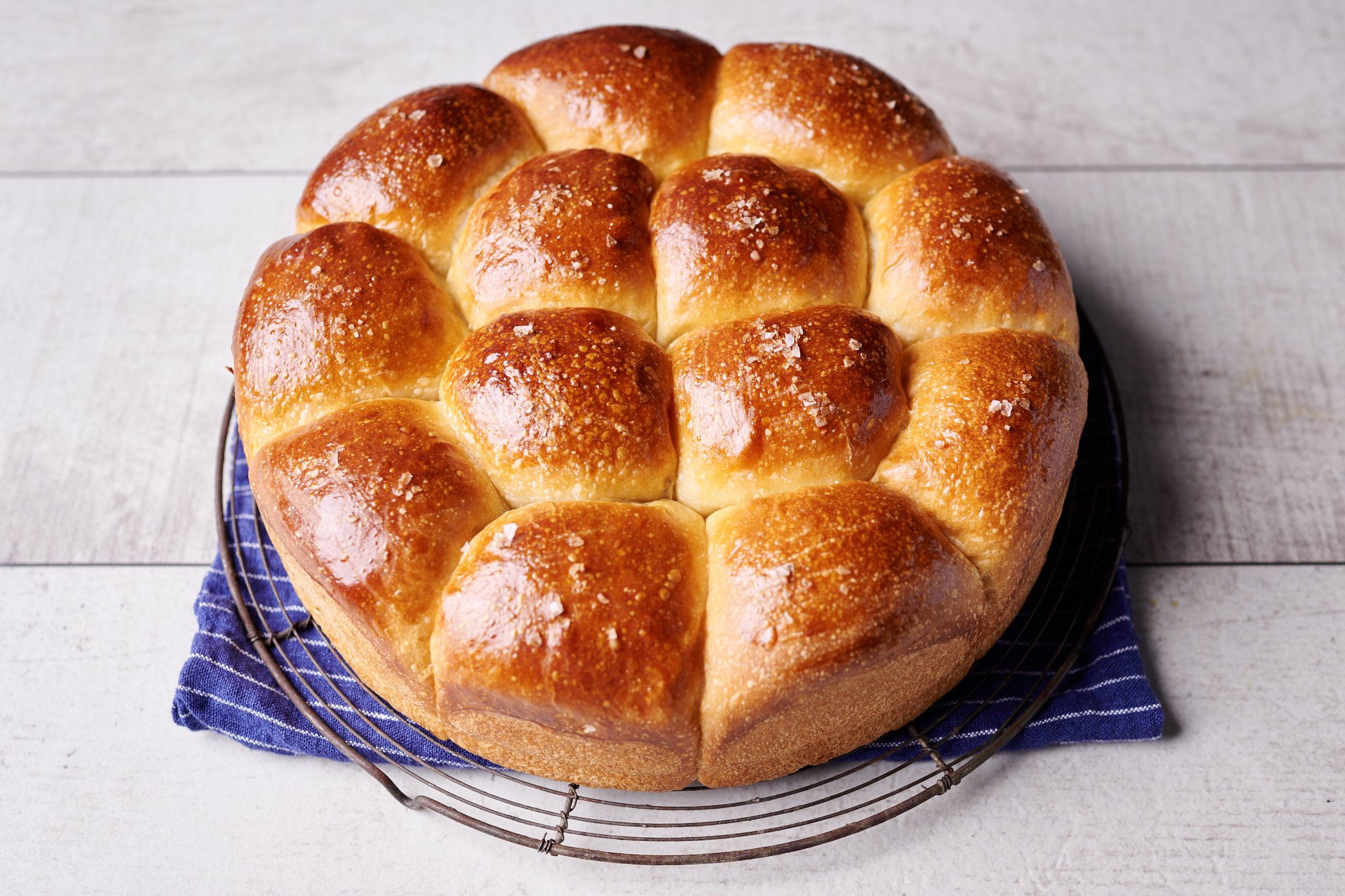
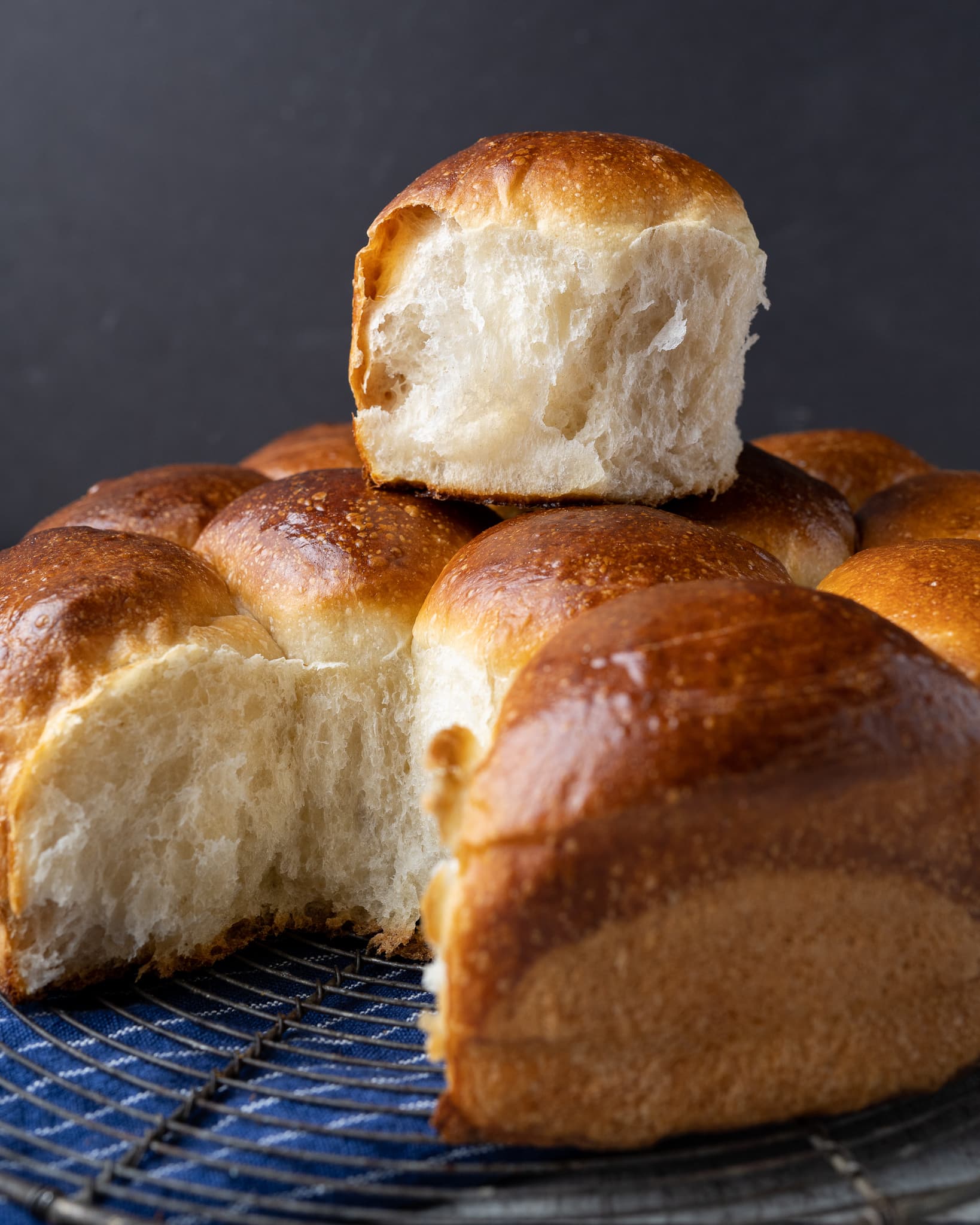
These soft sourdough dinner rolls (which are also in my cookbook!) are incredibly light and, for lack of a better adjective, squishy. Let me take you on a quick trip.
Remember your last visit to the state fair, where you ordered that massive cone of cotton candy—for me, this was many years ago, yet the memory is still quite vivid. Now pull off a large tatter of that soft, cloud-like sugar puff and watch it come apart into thick sheets, floating in front of your face. This image is similar to the delicate, yielding texture of buttery dinner rolls.
Video: Watch Me Make These Sourdough Rolls
Here’s my video of me making these rolls from start to finish!
Flavorwise, these rolls are what you want and expect from a dinner roll: slightly buttery, a smidgen sweet, and with only the slightest touch of sourness (if any). The flaky salt on top is like a lightning bolt to the taste buds, waking them up and sharpening the bread’s flavor. And let’s not forget a very important purpose of rolls at any meal: to soak up all sauces (gravy! salad dressing! au jus!) on the dinner plate. And yet, they also shine when you keep it simple and plain, enjoying them as-is or simply with a pat of warm butter.
Let’s look at which flour I used for this recipe and how tangzhong helps us achieve that cotton-candy-like tenderness.
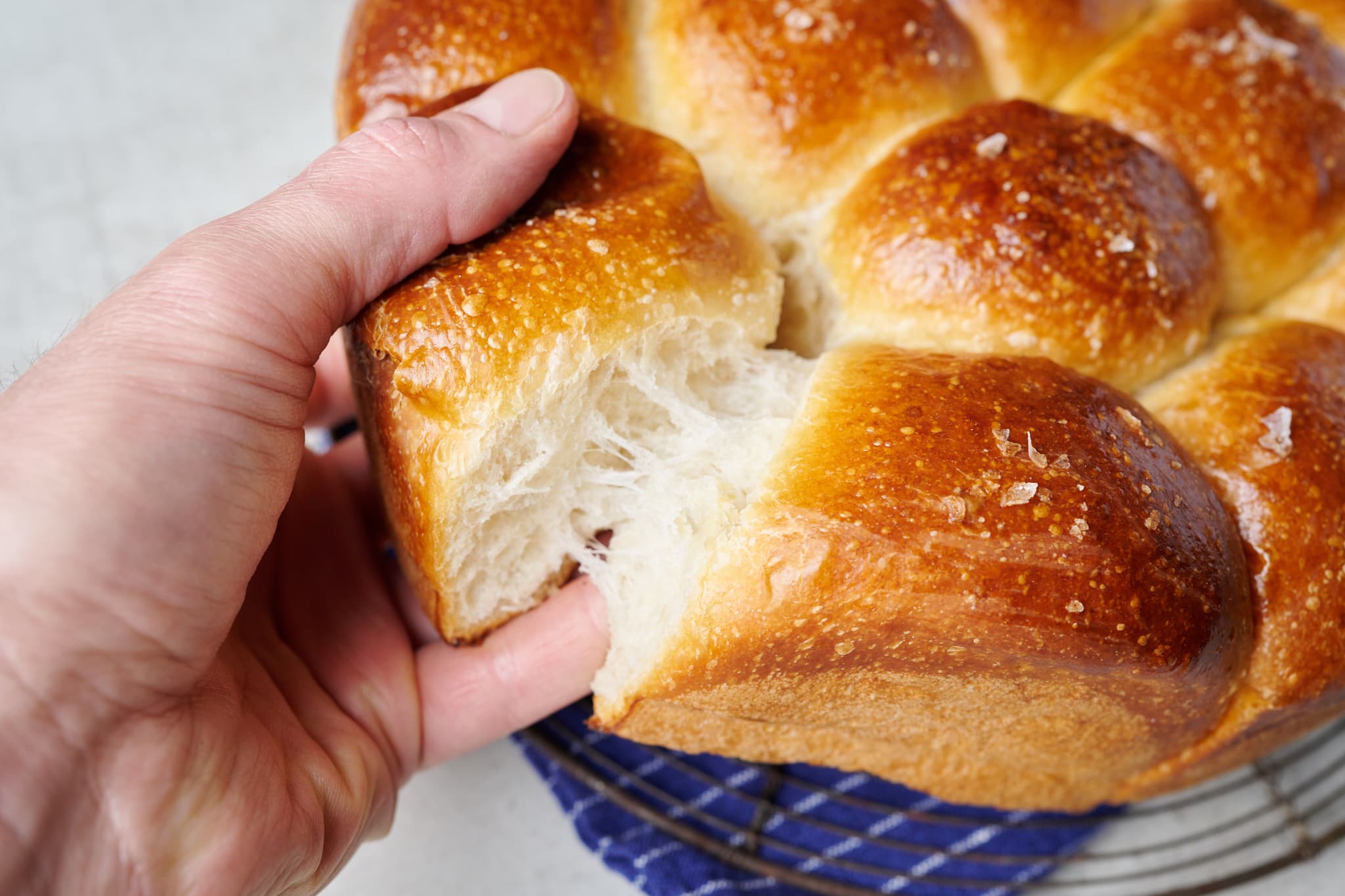
Flour selection and tangzhong
This recipe calls for standard all-purpose flour and higher protein bread flour (King Arthur brand will work well for both). The bread flour brings extra protein and strength to the mix that helps these rolls rise a little higher and have more structure. But also, using only white flour helps keep the sourness to a minimum. In testing, the rolls were even softer and more tender without the bread flour, but I found that the added high-protein flour helps keep them sturdy when used for dipping.
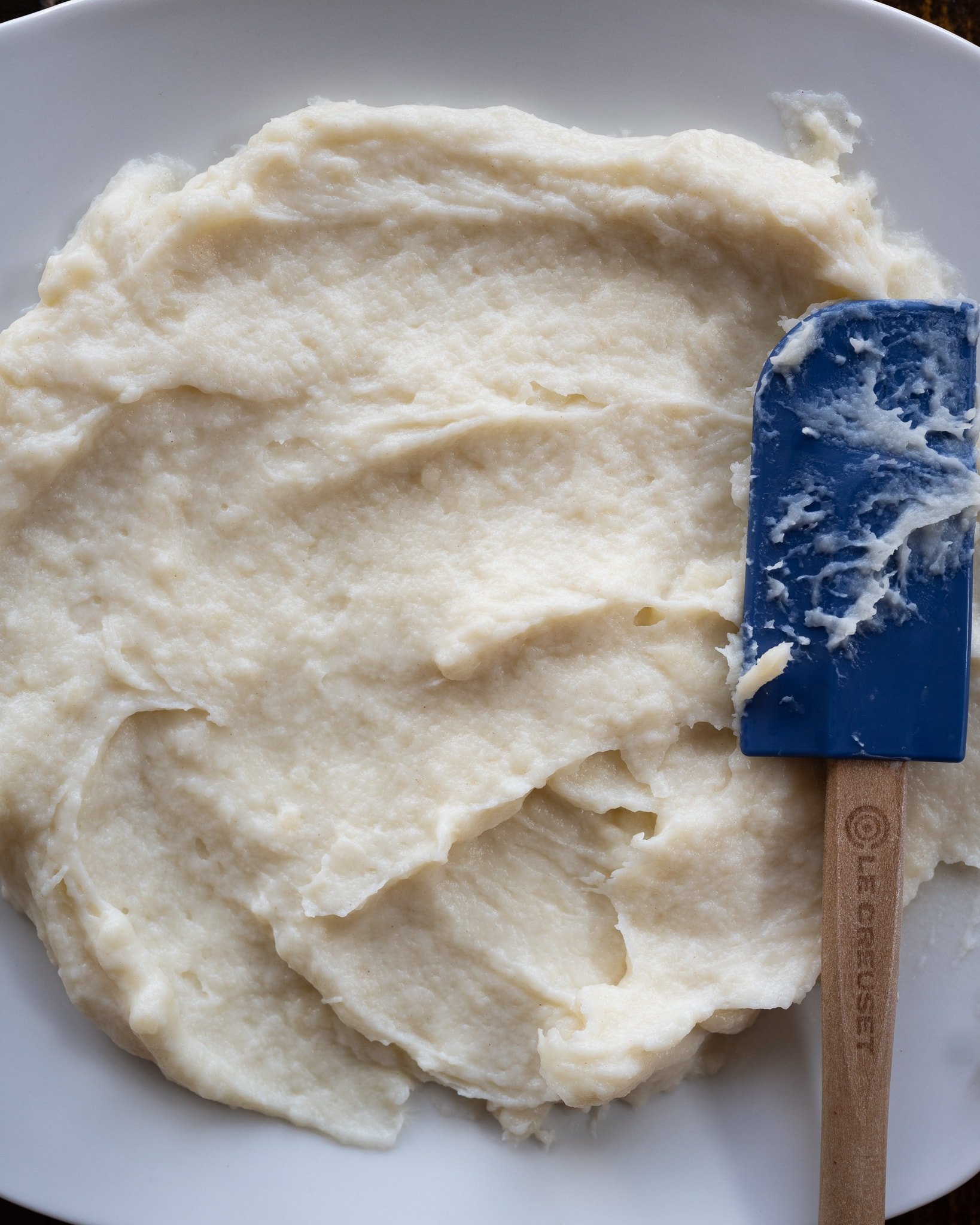
This sourdough dinner roll recipe uses a pre-cooked flour mix-in, also called tangzhong, to add extra tenderness. I use this same technique in my Hot Cross Buns and Sourdough Shokupan. The tangzhong technique is straightforward and takes only a few minutes in the first steps of the breadmaking process: you warm the flour and milk in a saucepan over medium heat until the mixture thickens, then let it cool. Then add this cooled gel paste (similar to a milk roux) to your mix as you would any other ingredient.
See my guide to the Tangzhong technique for a more in-depth discussion →
Baking Schedule

These super-soft sourdough rolls can be made in a single day (skipping the overnight levain) or they can be retarded (refrigerated) in proof to bake the next day, right before dinner. This recipe is extremely flexible, and you can adjust the timeline to fit the rolls into your cooking schedule.
For example, if you’re making these for Thanksgiving, you can make the rolls the day before and proof them in the fridge. Then on Thanksgiving day, take them out a few hours before the big meal, finish proofing on the counter if necessary, and bake them so that the rolls are warm for dinner.
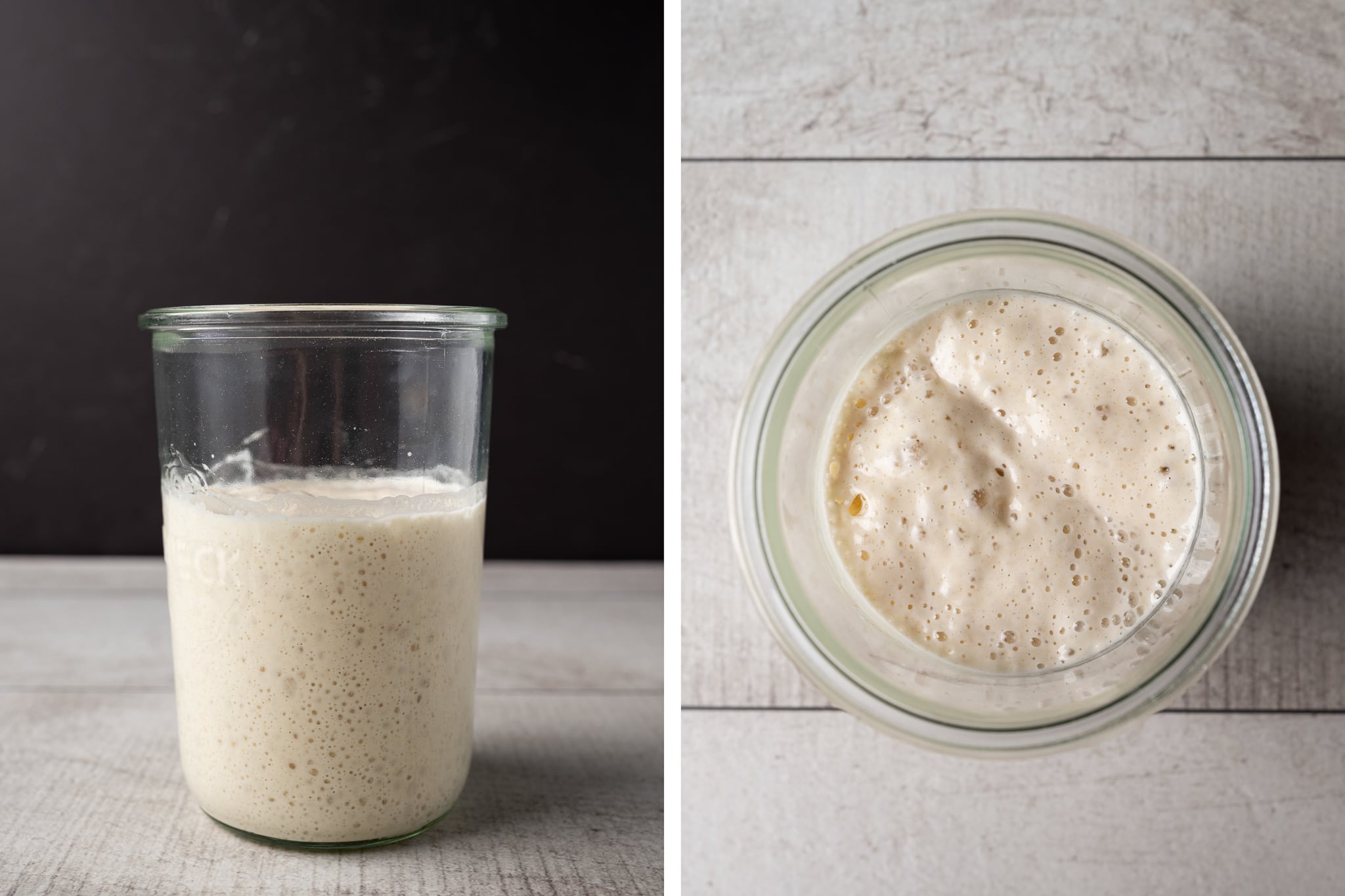
Be sure to use your levain when it’s ripe: it should be extremely bubbly, frothy, and well-risen. As mentioned in my guide to baking dough in the winter, the cold weather may slow the dough’s proofing; give it extra time if necessary.
Baking equipment
I’ve tested these super soft sourdough rolls with several baking pans, and below are my two favorites.
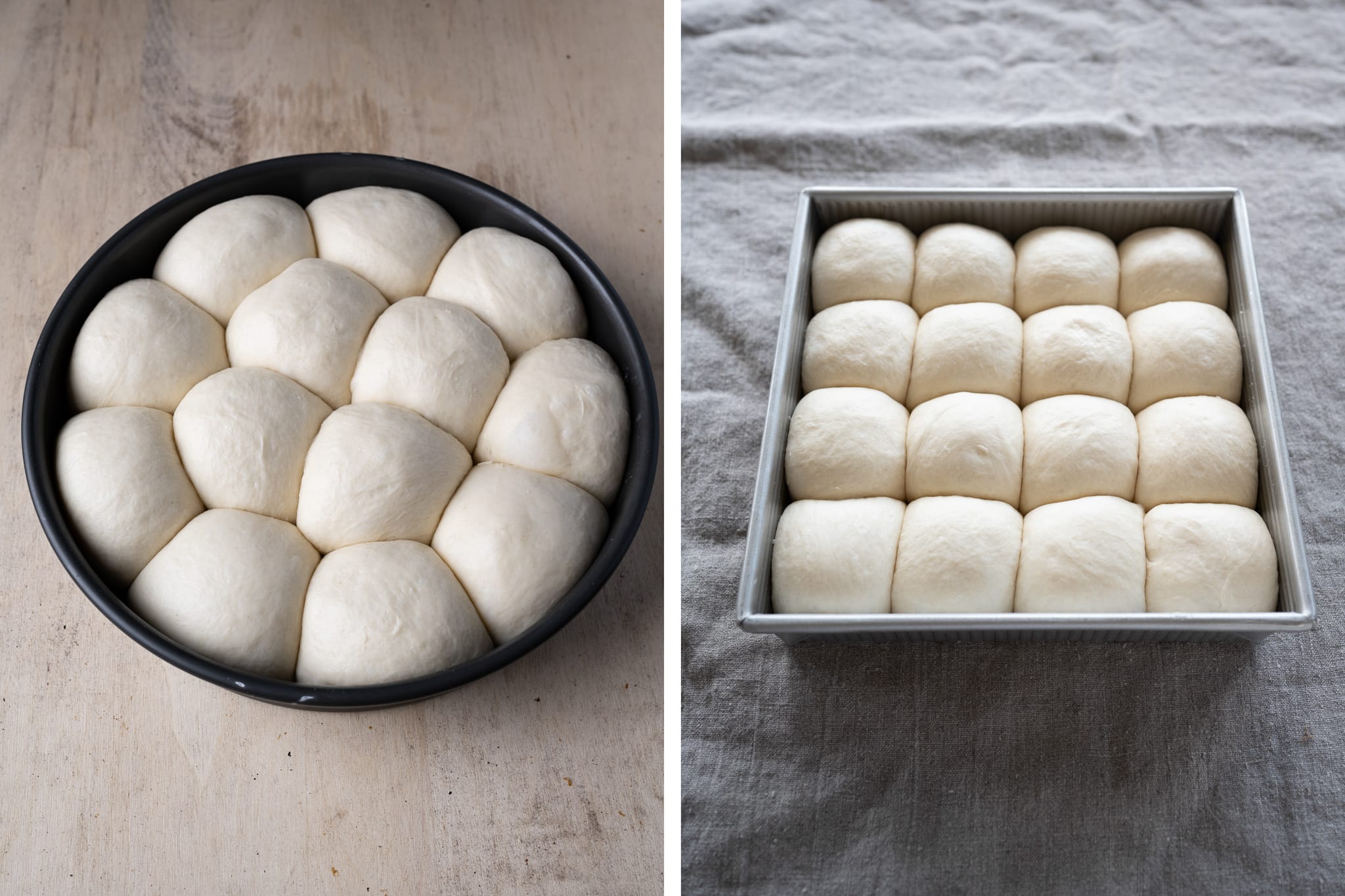
Round pan choice: LloydPans 10×2.25-inch round pan.
I use these round LloydPans for many things in my kitchen: from my sourdough focaccia to sourdough pizza to these dinner rolls. They are nonstick and conduct heat so well that they brown the bottom and sides of whatever is inside just as well as the top. They’re magical, actually.
Square pan choice: USA Pan 9-inch square pan.
I love this square pan because it has a nonstick liner and is extremely versatile. I use it for sweet cardamom rolls, cinnamon rolls, and even cakes or brownies. It bakes rolls that are evenly browned, and cleanup is a breeze.
Super soft sourdough rolls formula
For tips on how to calculate baker’s percentages or how to modify this formula, see my post on baker’s percentages (baker’s math).
| Total Dough Weight | 1200 grams |
| Pre-fermented Flour | 12.5% |
| Levain in final dough | 37.1% |
| Hydration | 43.0% |
| Yield | 16 x 70g sourdough dinner rolls |
Total formula
Desired dough temperature: 78°F (26°C). See my post on the importance of dough temperature for more information.
Milk & butter alternative (vegan): If you want to make these rolls vegan, substitute water, nut milk, or full-fat oat milk for the dairy milk in the roux below. For the butter, go with Earth Balance Vegan Butter or a similar product.
| Weight | Ingredient | Baker’s Percentage |
|---|---|---|
| 41g | Tangzhong: Medium-protein bread flour or All-purpose flour (~11% protein, King Arthur Baking All-Purpose) | 7.00% |
| 166g | Tangzhong: Whole milk (see vegan options above) | 28.00% |
| 402g | Medium-protein bread flour or All-purpose flour (~11.7% protein, King Arthur All-Purpose) | 68.00% |
| 148g | High-protein bread flour (~12.7% protein, King Arthur Bread Flour) | 25.00% |
| 95g | Butter, unsalted | 16.00% |
| 53g | Caster sugar | 9.00% |
| 254g | Water | 43.00% |
| 11g | Salt | 1.80% |
| 30g | Ripe sourdough starter, 100% hydration | 5.00% |
Additional ingredients:
Egg wash: 1 large egg and 1 tablespoon whole milk, for brushing
Coarse sea salt, for topping (optional)
Super soft sourdough rolls method
1. Prepare Levain – 9:00 p.m.
| Weight | Ingredient | Baker’s Percentage |
|---|---|---|
| 74g | Medium-protein bread flour (all-purpose flour) | 100.0% |
| 15g | Caster sugar | 20.0% |
| 74g | Water | 100.0% |
| 30g | Ripe sourdough starter, 100% hydration | 40.0% |
Mix the ingredients in the chart above in a container and leave covered to ripen at about 76°F (24°C) for 12 hours overnight.
Like my pumpkin cinnamon sourdough bread, this recipe utilizes a sweet levain, or sweet starter, which calls for a little sugar added to the levain to promote yeast activity and help reduce sourness in the final dinner rolls. See my post on the differences between a starter and levain if the two terms are new to you.
2. Make the tangzhong – 8:00 a.m.
In a medium saucepan set over medium-low heat, add the 41g tangzhong flour and 166g tangzhong milk. Cook, whisking continuously, until the mixture thickens into a paste, 5 to 8 minutes. In the beginning, whisk vigorously to break up any flour clumps, and continue whisking to avoid burning. The mixture won’t seem to do anything for a while, but it will thicken.
Remove the pan from the heat and spread the tangzhong on a small plate to expedite cooling. Set aside.
3. Mix – 9:00 a.m.
| Weight | Ingredient |
|---|---|
| All | Tangzhong (from Step 2) |
| 328g | Medium-protein bread flour (all-purpose flour) |
| 148g | High-protein flour |
| 95g | Butter, unsalted |
| 39g | Caster sugar |
| 181g | Water |
| 11g | Salt |
| 192g | Levain |
I used my KitchenAid stand mixer to mix this dough, but it could also be mixed by hand using the slap and fold technique or a series of folds in the mixing bowl.
First, cut the butter into 1/2″ pats. Set them on a plate to warm to room temperature.
To the bowl of a stand mixer fitted with the dough hook attachment, add the water, flour, ripe levain, sugar, tangzhong, and salt. Mix on low speed (STIR on a KitchenAid) for 1 to 2 minutes until the ingredients come together and no dry bits remain. Increase the mixer speed to medium (2 on a KitchenAid) and mix for 4 to 5 minutes until the dough starts to strengthen and clump around the dough hook. It won’t completely remove from the bottom of the bowl, and it will still be shaggy.
Let the dough rest in the bowl for 10 minutes.
Turn the mixer to low speed and add the room-temperature butter, one pat at a time, waiting until each pat is fully absorbed before adding the next. Adding all the butter will take 5 to 8 minutes. After this, mix on medium speed for 1 to 2 minutes, until the dough is smooth and clings to the dough hook.
In the end, the dough will still be very soft, and it will not completely remove from the sides of the bowl. Transfer the dough to a bulk fermentation container and cover.
4. Bulk Fermentation – 9:30 a.m. to 1:00 p.m.
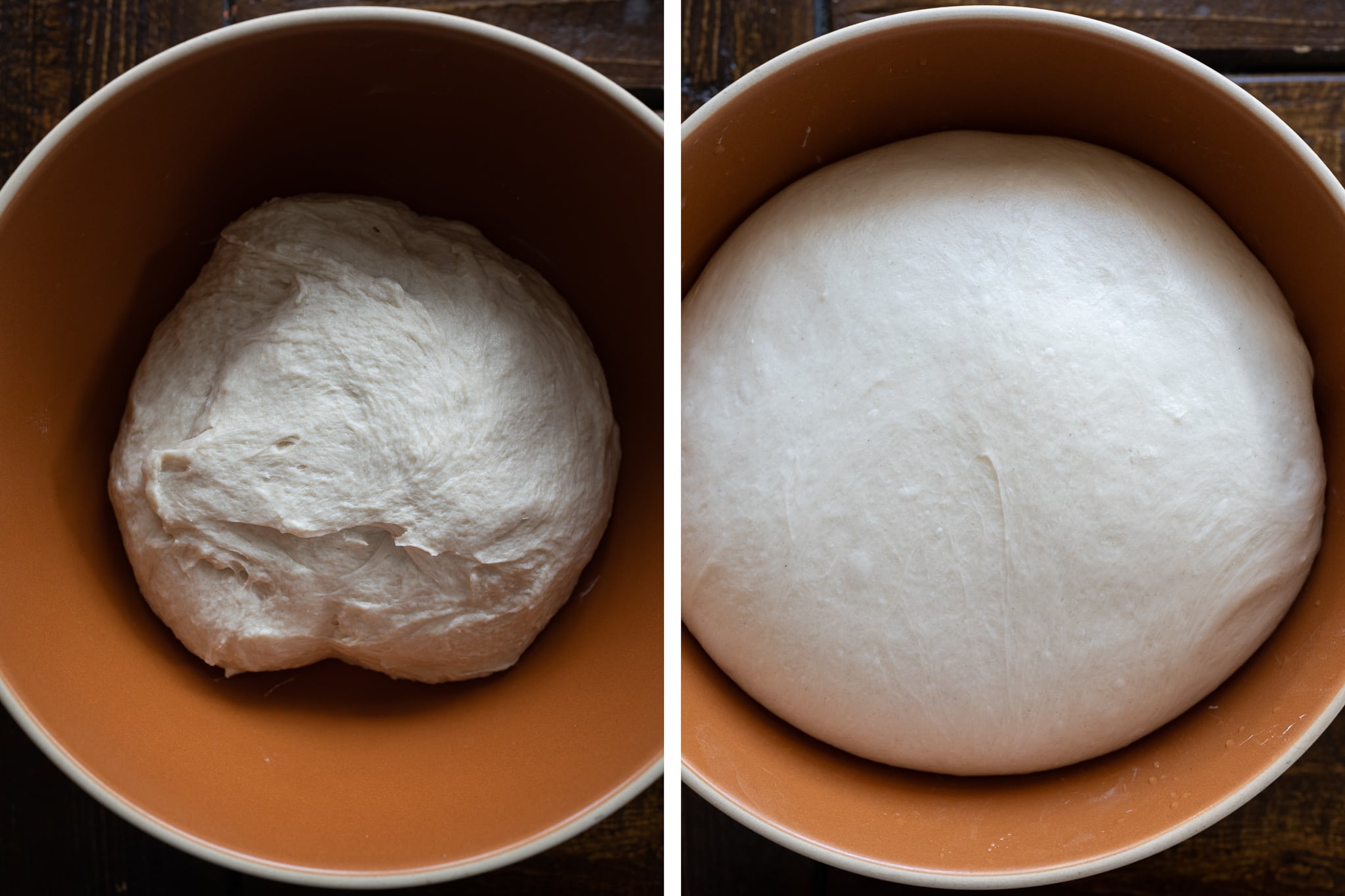
At a warm room temperature, 74-76°F (24°C), bulk fermentation should take about 3 1/2 hours. If your kitchen is cooler, place your bulk container in a small home dough proofer, or extend the bulk fermentation time to give the dough more time to ferment.
In the image below (tap/click to zoom in), you can see my dough at the start of bulk (left) and after 3 1/2 hours (right). The dough is ready when it has risen in the container, smooths, and is puffy to the touch.
Give this dough three sets of stretches and folds during bulk fermentation at 30-minute intervals. The first set begins 30 minutes after bulk fermentation starts. For each set, wet your hands, grab one side, and stretch it up and over the dough to the other side. Rotate the bowl 180°, then perform another stretch-and-fold (this forms a long rectangle in the bowl). Then rotate the bowl 90° and repeat the stretch and fold. Finally, turn the bowl 180° and do one last stretch and fold. The dough should be neatly folded up in the bowl.
After the third set, let the dough rest, covered, for the remainder of bulk fermentation.
5. Chill Dough – 1:00 p.m. to 1:15 p.m.
At this point, your dough should have risen in your bulk container, be puffy to the touch, and have smoothed out. If the dough still feels dense and tight, give it another 15 minutes and check again.
Uncover your bulk container and place it in the refrigerator for 15 to 25 minutes. Chilling the dough will help it firm up, making shaping and transferring to the pan much easier. Note that the longer you chill the dough in the fridge, the longer it will take to proof (because it will have to warm up that much more).
If your dough is extremely soft, keep the bulk container covered and chill the dough for up to 1 hour.
Overnight fermentation option: At this point, you can choose to place the covered bulk fermentation container into the fridge to retard the dough overnight and bake the next day. The next day, take the dough out of the fridge, let it warm up for 30 minutes, and then resume with the Shape step below.
6. Shape – 1:15 p.m.
Butter your baking pan (even if it’s nonstick) to ensure that the rolls come out cleanly after baking.
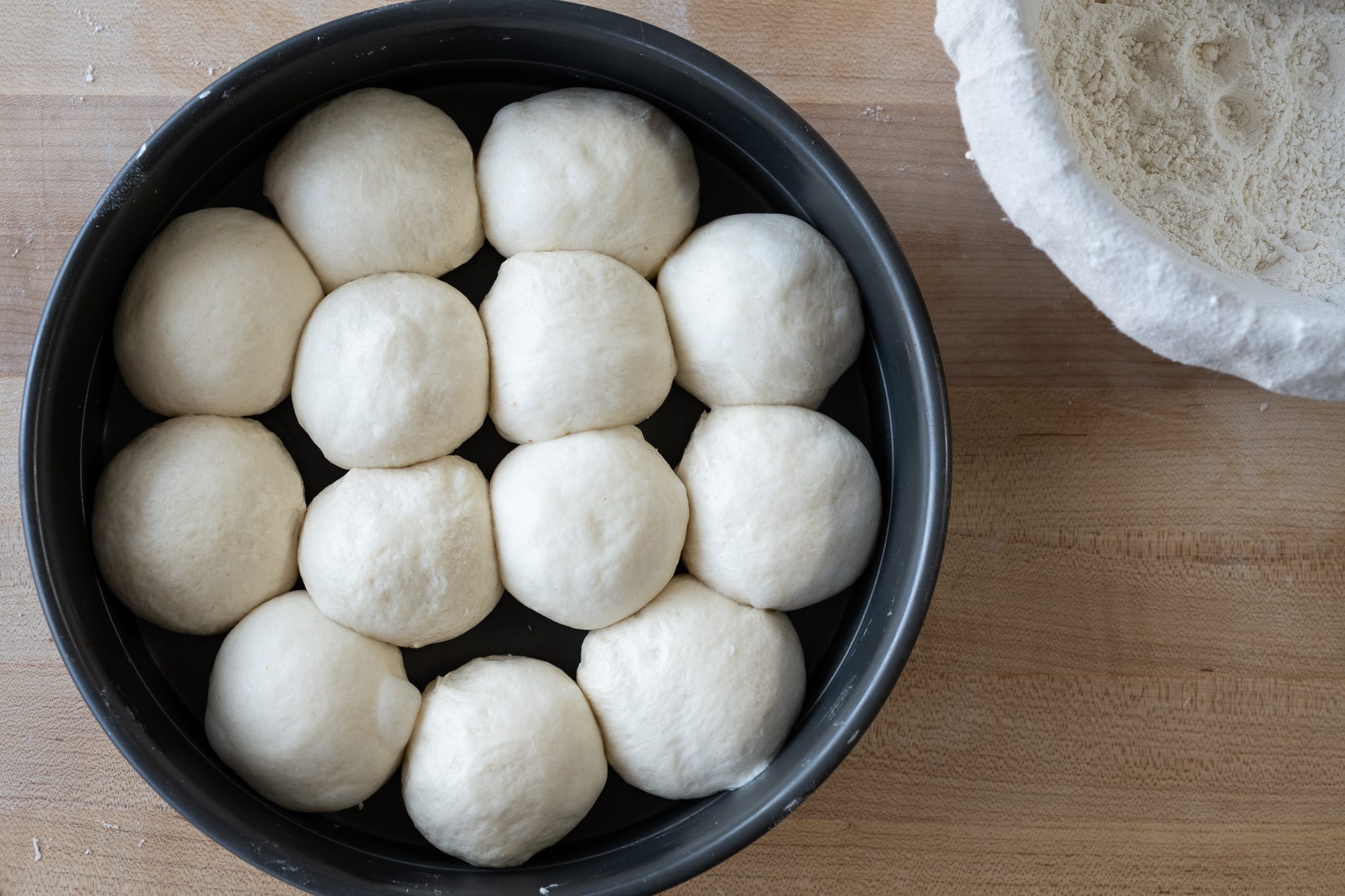
Remove the bulk fermentation container from the fridge, lightly flour the top of the dough in the bowl, and gently scrape the dough out onto a lightly floured work surface. The dough will be cool to the touch but still very soft. Lightly dust the top of the dough and divide it into sixteen 70g pieces (or fourteen 85g pieces for larger rolls).
Because the dough is so soft, I prefer to use my bench knife to shape each roll. Use the knife to drag the dough toward your body as your other hand rounds the dough, tucking the edge down under the ball. Repeat this dragging-and-tucking motion with the knife and your other hand until you have a uniformly round ball. Place the ball in the prepared baking pan. When using a round pan, I prefer to start by placing the rolls along the outside in a ring, then work inward as each ring fills.
For more shaping instruction, see my guide page to shaping buns and rolls.
Cover the pan with a large, reusable plastic bag and seal it shut.
7. Proof – 1:45 p.m. 4:15 p.m. (2 to 3 hours)
At a warm room temperature of 74-76F (23-24 °C), this dough should take 2 to 3 hours to fully proof. If your kitchen is cooler, expect it to take longer.
When fully proofed, the dough should be well-risen in the pan and very soft to the touch. Uncover your dough and gently press the tops of a few rolls. You shouldn’t feel any dense spots or tight areas—the dough should be very light and airy. If you do, cover the bowl and let your dough proof for another 15 to 30 minutes, then check again.
8. Bake – 4:15 p.m. (pre-heat oven around 3:45 p.m.)
Place an oven rack in the middle of the oven, and preheat the oven to 400°F (200°C).
Make an egg wash: In a small bowl, whisk together 1 egg and 1 tablespoon whole milk.
Remove the pan from the bag, evenly brush the egg wash over the tops of the rolls, sprinkle with coarse sea salt (optional), and slide the pan into the oven.
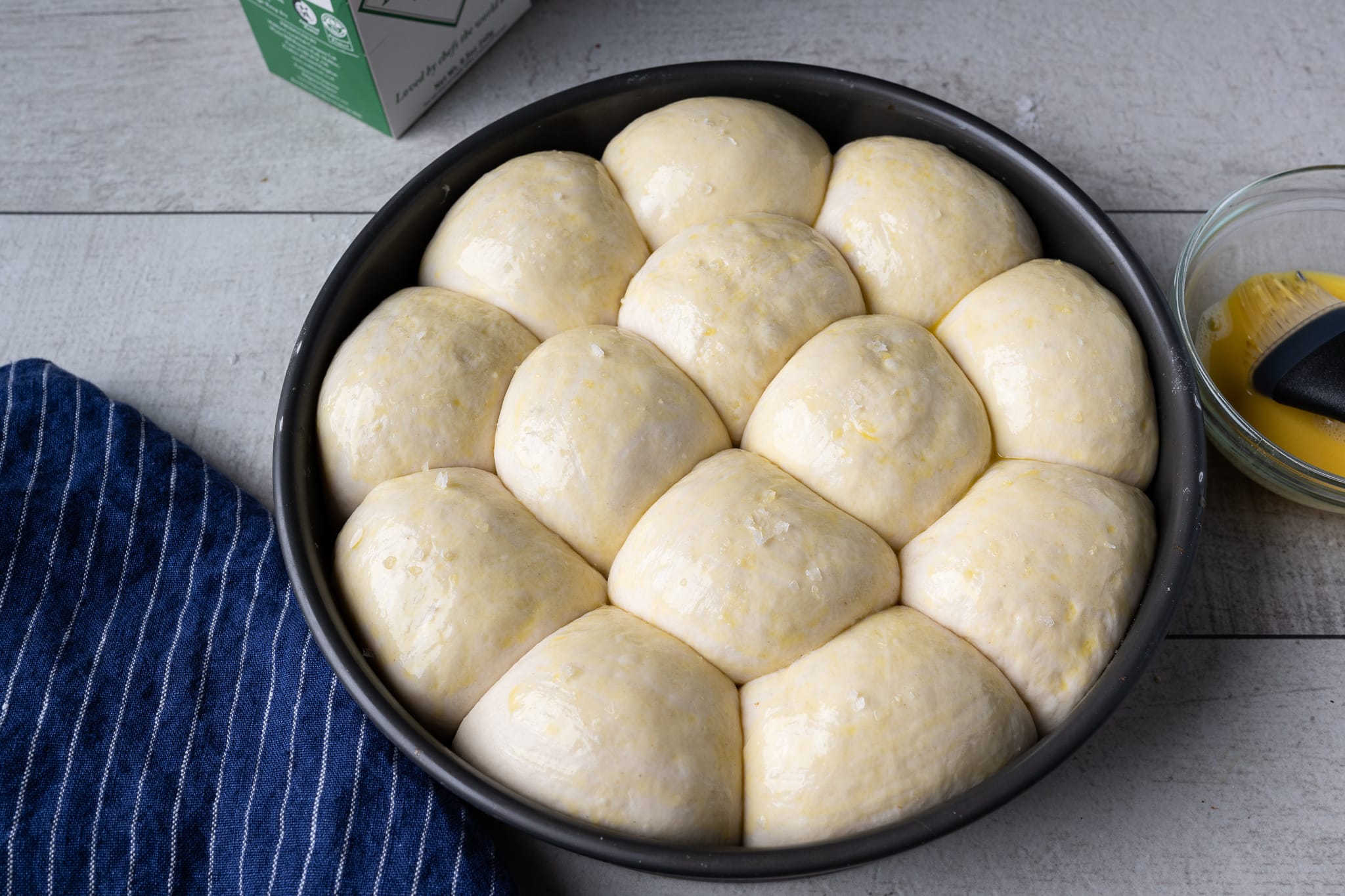
Bake for 20 minutes. Rotate the pan 180° in the oven and reduce the temperature to 350°F (175°C). Bake for an additional 20 minutes until the tops of the rolls are golden and the internal temperature is around 204°F (95°C).
Remove the pan from the oven and let it cool for 30 minutes before eating.
These are wonderful warm from the oven, but I like to let them cool for at least 30 minutes before eating. These rolls are best the day they’re made, but are still great the day after (if stored according to my post on storing bread).
Print
Super Soft Sourdough Rolls (with Tangzhong) Recipe
- Prep Time: 24 hours
- Cook Time: 40 minutes
- Total Time: 24 hours 40 minutes
- Yield: 16 rolls
- Category: Buns, Rolls
- Cuisine: American
Description
These super soft sourdough rolls are the perfect accompaniment to any dinner table (especially Thanksgiving!). They’re slightly buttery, a little sweet, ultra-tender, and the perfect counterpart for soups, stews, and any holiday meal.
Ingredients
Levain
- 74g medium-protein bread flour (all-purpose flour)
- 15g caster sugar
- 74g water
- 30g ripe sourdough starter, 100% hydration
Tangzhong
- 41 grams medium-protein bread flour (all-purpose flour)
- 166 grams whole milk
Main Dough
- All the tangzhong
- 328g medium-protein bread flour (all-purpose flour)
- 148g high-protein bread flour (bread flour)
- 95g butter, unsalted
- 38g sugar, caster
- 181g water
- 11g salt
- All the levain
Instructions
- Prepare levain (Day One, 9:00 p.m.)
Mix the following ingredients in a container and leave covered to ripen at about 77°F (25°C) for 12 hours overnight. - Pre-cook flour (Day Two, 8:00 a.m.)
To a medium saucepan, add the tangzhong flour and milk. Turn the heat to medium-low and cook, whisking continuously, until the mixture thickens and becomes like a paste, about 5-8 minutes. Set aside. - Mix (9:00 a.m.)
Cut the butter into 1/2″ pats. Set them on a plate to warm to room temperature. To the bowl of a stand mixer fitted with the dough hook attachment, add the water, flour, ripe levain, sugar, tangzhong, and salt. Mix on low speed (STIR on a KitchenAid) for 1 to 2 minutes until the ingredients come together and no dry bits remain. Increase the mixer speed to medium (2 on a KitchenAid) and mix for 4 to 5 minutes until the dough starts to strengthen and clump around the dough hook. It won’t completely remove from the bottom of the bowl, and it will still be shaggy. Let the dough rest in the bowl for 10 minutes. Turn the mixer on low speed and add the room temperature butter, one pat at a time, waiting to add each pat until the previous one is fully absorbed. Adding all the butter will take 5 to 8 minutes. After this time, mix on medium speed for 1 to 2 minutes until the dough smooths and clings to the dough hook. In the end, the dough will still be very soft, and it will not completely remove from the sides of the bowl. Transfer the dough to a bulk fermentation container and cover. - Bulk fermentation (9:30 a.m. to 1:00 p.m.)
Give the dough 3 sets of stretch and folds at 30-minute intervals, where the first set starts 30 minutes after the start of bulk fermentation. - Chill dough (1:00 p.m. to 1:15 p.m.)
Place the bulk fermentation container, uncovered, in the refrigerator for 15 minutes to make shaping easier. - Shape (1:15 p.m.)
Butter your pan. Divide the dough into sixteen 70g pieces (or fourteen 85g pieces for larger rolls) and shape each as a very tight ball. Place the balls in the buttered pan to proof. - Proof (1:45 p.m. to 4:15 p.m.)
Cover the pan with dough and let proof for 2 1/2 hours. - Bake (4:15 p.m.)
Preheat your oven to 400°F (220°C). Whisk together one egg and a splash of whole milk for the egg wash. When oven is preheated, brush on the egg wash and bake for 20 minutes. Then, rotate the pan 180° in the oven and reduce the temperature to 350°F (175°C). Bake for an additional 20 minutes until the tops are well-colored and the rolls have reached around 204°F (95°C). Remove from the oven and let cool in the baking pan for 10 minutes. Then knock the rolls out to cool on a wire rack. Let rest for 30 minutes, then enjoy.
Notes
Do ahead: you can prepare the tangzhong the night before. Cook the flour and milk as instructed and let cool to room temperature. Cover the tangzhong and keep in the fridge overnight. The next morning, take it out to let it warm some (to room temperature would be ideal) and proceed to add it during the mix as instructed.
Do ahead: you can prepare the dough and proof them overnight to bake the next day at any time. When chilling the dough, keep the covered bulk fermentation container in the fridge to retard the dough overnight. The next day, take the dough out, let it warm for 30 minutes, then continue with the Shape, Proof, and Bake steps. Alternatively, shape the dough into small balls and place them into the proofing pan. Cover the pan and put it into the fridge overnight. The next day, take them out 3 to 4 hours before you want to bake them and proof them on the counter until puffy and ready to bake.
To make these rolls vegan, substitute the milk for a full-fat nut or oat milk, and instead of an egg, use a flax egg.
What’s Next?
These super soft sourdough dinner rolls are now my go-to for all holiday meals, especially Thanksgiving. They’re just the right mix of buttery, sweet, savory (thanks, salt!), and squish-in-your-hand tender.
If you’d like to explore the ideas in this recipe even further, check out my sourdough shokupan loaf (which also uses tangzhong) or my sourdough pumpkin dinner rolls for a different take on rolls!
And if you are making these during the holidays, check out the Bread Baker’s Gift Guide for gifts for your favorite baker (or yourself!).


659 Comments
Hi! So I was trying to scroll through all the comments to make sure you hadn’t answered, but was wondering if I do all the steps right up till baking and then put in fridge overnight (Saturday) to bake the next day before an Easter Sunday brunch. Think if they have proofed and risen up to the point of baking today, then refrigerated overnight, the only thing I would need to do is take out in morning and wait till they are a little warmer (room temp) and then bake? Maybe give it a couple hours -take out at 7a, bake at 9a?
Yes, exactly! Just be sure they’re very fluffy and light when you go to back them.
I was trying to proof them (retard) in the refrigerator and they didn’t rise at all.
I put them back on the countertop for 3 hours before bake.
I’m thinking wether it’s possible to proof them in the fridge and bake straight from the refrigerator?
Technically, it’s totally possible. However, it really depends on how far the dough has fermented before it’s placed into the fridge. With these rolls, I would probably always opt for some counter time before baking, it’s hard to over proof them (and even if you did, they’d just be more tender as long as it wasn’t super excessive!).
Hi China. I just made my rolls last night and put in fridge. They are now proofing, took about 3 hours and I’m about to put on the egg wash and bake. I did not proof them last night after shaping. I will be interested to know how your’s turned out!
Hi Maurizio. I’ve made the tangzhong and it’s in the fridge and the levain is fermenting. A couple of questions. Can honey be substituted either in the levain or in the final dough? Can I prepare the levain and put in the fridge overnight and take out the next morning to warm up and use? I got ahead of myself today and made the levain thinking it might move along faster and I would start the dough in the evening and then put that in the fridge overnight. But it’s getting late so that isn’t going to work. My other question is how long can the dough be refrigerated before shaping and baking without compromising the taste? This is my first atttempt at using the tangzhong and I’m excited. And I love your recipes and blog.
This recipe is really geared to having that sugar, but you could swap out for honey. It will change the dough fermentation rate (increased), though. I use honey quite a bit in my baking but the sugar plays more than a sweetening roll here, it also helps reduce the sour flavor in the end as well. I hope the rolls turned out great and happy to have you here!
Hi Maurizio! I really get inspired from your , always, beautiful and well organised baking webbpages. Tomorow is the time for this recepie. Cred! Stay safe!
Thanks, I appreciate that, Anders! Hope the bake went well 🙂
Hi all
I tried the recipe and made amazing rolls!!! Just wondering why the sugar in the levain? I am trying minimize my daughter’s sugar intake.
Thanks
Nicole
The sugar helps encourage yeast activity in the levain, ultimately it leads to increased rise in the rolls and a less sour flavor. Glad to hear you like them, Nicole!
Thanks so much Maurizio ! I am a big fan of yours.
Hi Maurizio, second time making this recipe and I love it. This time I did a bit of a twist on hot cross buns. I added ginger, cinnamon and nutmeg and 200g of rum soaked sultanas and 25g of mixed peel. They are delicious and it’s worked a treat. Thank you!
Love this idea, Julie! Perfect time of the year for those, too 🙂
Hey Maurizio..so I’m in the middle of bulk fermentation and it has been 3.5 hrs and still dint rise even a little ..can you suggest me what steps should I take for the rise and for the Leavin i had only 189g risen so is that the reason is which effecting the bulk fermentation?…thank you
Give it more time if necessary! Let it ferment until you see good rise and the dough looks similar to my photos in the post.
My dough did not rise. When i did the bulk fermentation, I forgot to fold the dough and let it sit for 3.5 hours. Afterward, I realized my mistake and folded the dough 3x every 30 mins. Then I let it set for another 1.5 hours. Still no rise. When I folded the dough it was soft the first time, but by the 3rd fold it was tough to stretch. It is cold here, so I place the dough in the oven to keep it warmer. Can i still save the dough?
I left it in the oven overnight and it rose and doubled in size! I’m so excited! I’ll be baking my rolls today. I will let you know how they turn out!
The rolls turned out perfect! Thanks for the recipe!
Good job rolling with it, Faith! Glad to hear they turned out well despite the sluggish dough 🙂
I’ve done many of your recipes, including my starter (Eva, who turns 3 soon) and love them all. These sourdough rolls, however, are my favorite. Last thanksgiving, I made the recipe as written and they were incredible. Just this past weekend, I made them with all AP flour, no bread flour, and also added about 10g of minced fresh rosemary and maybe 20 cloves of roasted garlic, chopped. Wow!! So good! I like the texture a little better with the bread flour included, but either way, these rolls are just the best. Thank you for making The Perfect Loaf such a great resource!
Huge praise for these, so glad to hear that Peter! I love the idea of adding rosemary and garlic, sounds delicious. Thanks for the feedback and happy baking!
These were PERFECTION!! Thanks again for another wonderful recipe!
Happy to hear that and enjoy! 🙂
Hi! I’m planning on making them this week, but filling it with a coconut filling / paste before baking. Do you have any tips / recommendations for filling them?
I have never done this!
I wanted to update you, as I’ve now made them and they turned out fantastic 🙂
What I did was roll out each bun and dollop a little bit of filling in (made out of egg, dessicated coconut and condensed milk) and sealed them like a chinese bun. Then I continued with the recipe.
They turned out really amazing and the coconut inside adds a lot of delicious flavor 🤤
Thank you for the recipe 🙂
That sounds wonderful, Patryk! Thanks for coming back with the update, love your idea. Enjoy!
Love this idea for Pan de Coco! I’ll have to try this next.
I’ve never used taro in a recipe, but you could base it off of my soft sourdough potato buns!
I think I’d like to try these as hot dog buns, do you think this would work well? Would you recommend keeping them the same size but shaping them into tubes rather than tight balls before the final proof?
Yes, it sure will. In fact, I’ve done this and they came out great. I shaped them into tubes and then proofed them in a long baking pan, if I recall, I divided them at 120g each. They turned out awesome!
Just made these as burger buns and they were delicious! Thanks for all of your recipes, your blog is truly a wonderful, reliable resource!
You’re very welcome! I haven’t tried these as hamburger buns, but yes, they’d be awesome. Next time I make burgers I’m going to follow your lead! Happy baking 🙂
Hello! I am planning to make theses as burger buns also. What weight did you use for the balls?
I usually weigh dough out to 120g for burger buns (like in my brioche hamburger buns here).
Hi there, just tried these and baked on 220c fan oven then 180c for the time you recommended but they seem biscuity and they are not soft and fluffy. They also seem flat. They taste OK but not soft and fluffy any ideas?
Hey, Leigh! Is it possible they were under or over proofed? They should definitely be well-risen when they go into the oven. If they’ve risen and then fallen they might have proofed too long. Conversely, if the dough never rose in bulk fermentation or in proof, they might have needed more time.
Has anyone baked these in disposable tin containers? I’d like to make them as gifts and was thinking I’d bake in one of those round aluminum containers, so I could then gift them in the container. Just curious how that worked, and any tips!
I have not, but it should work just fine, Mel!
Thank you for this recipe so excited to try it! Was wondering if I could split the dough to make two smaller batches of 7 rolls each – if so please could you tell me how to adjust the heat/cooking time?
Yes, you could do that. Hard to say on the bake time, but it will be less depending on the pan. I’d just keep an eye on them in the final 10 minutes of the bake and take them out when they look well colored (and you could also use internal temp cues I have up in the post). Will work well!
Thanks so much! The bake time was fine I reduced by 5 minutes or so in total and the rolls were quite fluffy but I had to use oil instead of butter and I think that had an effect on consistency.
Hello Maurizio. So far this is turning out beautifully. I don’t have pans the size you recommend so will be using my 9×13 USA pan that I got for your recommended focaccia pan. How will it be making 4 rows of 3 and then two extra at the end? Do the rolls actually touch when they first go in to the pan and before the proof? Just trying to decide if it’s 3 or 4 rolls in the narrow end of the pan. And yes, I’m clearly overthinking it… Thanks for any guidance.
I hope they turned out well, Greg! My rolls do touch, but it’s ok if they don’t—they should puff up and will fill up space between them. Not overthinking it! It can be a challenge to get any bread dough to fit just right, and it’s a fun optimization problem, too 🙂
They turned out perfectly! They were the hit of New Year’s dinner. I’m already getting requests to make them again. DELICIOUS recipe! Thanks!
Excellent, Greg! Super happy to hear that. Enjoy!
Ciao Maurizio, I would like to make half batch, can I just divide the ingredients by
Thanks 😃
Yes, that’s right Antonia! Check out my guide to baker’s percentages for instructions on how to do all of that (and also for scaling up and down recipes). Happy baking!
Loving this recipe so far. Have just put the dough in the fridge but don’t want to bake until tomo. Can i shape then retard in fridge overnight or is it best to shape tomo morning?
You can do either! I’ve done both and they both work really well.
I’ve made these 3 times now and each time they’re even better than I remember. So good, in fact, that my family passed over 4 layer pistachio cardamom cake with lemon swiss meringue buttercream for dessert in exchange for one or two more rolls at dinner! I’ll be handwriting a recipe card for this to drop in my box of forever go to recipes. Thank you for creating and sharing! The detailed step by step instructions make it foolproof.
That’s big praise there, Lauren! Thanks so much, I really appreciate that. Happy to hear everyone loved them and happy baking!
I’m out of unsalted butter. How should I alter the recipe if I use salted butter instead?
That’s a hard call to make! Usually salted butter is around 1.7% salt, and since there’s 95g of butter in this recipe, you’re looking at about 1.65g of salt. I’d drop the called for 11g of salt down to 9g and you should be just fine. It’s ok if it’s not exact! Enjoy, Sallie 🙂
Thank you for the quick reply! Happy Holidays!
Help! I’ve made these a few times and they’ve turned out perfectly! But I spaced the starter mixed with flour and sugar and just made a normal starter last night and am wanting to make the rolls today. Is there any edits I can do or do I just scrap it and do another non-sourdough recipe? Thank you!
Hey, Shelby! I’d probably just go with it! Use your ripe starter to mix the dough. Add the called for starter in the recipe and adjust as necessary—keep an eye on the dough and divide when it needs it!
These were so amazing for Thanksgiving that I’m planning to make them again for Christmas! Two questions: (1j I want to add some white whole wheat and I wonder what’s the max white whole wheat you’d advise using? (2) Since I don’t have a stand mixer, I hand mixed last time – but was thinking of trying my Cuisinart food processor with the dough blade this time – any idea if that’d work? I frankly have never tried it before!
The more whole white wheat you add, the more potential sour flavor in these rolls—but I still think the’d be awesome. I’d try first at 20%, then go up to 40% if the results were agreeable. You can try the food processor, I know others who have had success, but I’ve never tried it either! Hope that helps. I’m making these tomorrow as well—happy holidays!
Thanks so much! Re the Cuisinart, in re-reading the recipe, my concern is that you specify using different mixer speeds, whereas the food processor only has one speed. So in the interest of only altering one variable at a time, maybe I’d better try it on a lower-stakes meal than Christmas. My family is now expecting near-perfection to match the dinner rolls I made at Thanksgiving (!). Merry Christmas and thanks for all you do!
Amazing, Rachael! So glad to hear that. I love how you’re using your bread machine (I’ve never used one but it sounds incredibly convenient), and your adjustments sound right on. Thanks for the comments Rachael, and happy holidays 🙂
I was wondering if you can freeze these prior to baking???
See a few comments down, a few people have tried this with success!
Hi, I’m in the uk currently making these rolls. Can I cut the amount of sugar in them, will it effect the outcome.
The ingredient percentages are quite strict! Adjusting the percentage will alter the dough texture, fermentation time, and final eating quality.
I made this at Thanksgiving and it turned out great. I want to make for Christmas, but I won’t be near my Kitchen-Aid mixer, so I’m thinking to make in advance and freeze the rolls. Do you think that would work?
Glad to hear that! While I haven’t tried this, others have reported it has worked really well for them (freezing them in shape, then thawing and baking, and also par-baking them and finishing them off in the oven later).
I made these rolls for thanksgiving and absolutely loved them, definitely one of my favorite breads I’ve baked. I wanted to try this recipe in a pan loaf. I used the same recipe, and shaped it shokupan style, dividing the dough into three and shaping those into mini-loaves and then putting them in my 9×4 pullman pan. It turned out fantastic. My next thought is to try to make it a true shokupan milk bread and sub the water out for milk. Thanks for the inspiration and fantastic recipe!
Awesome, Jason! I haven’t tried this in a loaf pan but that’s a great idea. Yes, I’ve been eyeing a proper shokupan myself. I might give that a try soon. Let me know how it goes!
I made this amazing bread today and it was OMG so good and tasty and looked amazing. It will be my comfort bread from now on. You can have this bread with anything. We had for dinner and will have for french toast tomorrow morning. Thank you for amazing recipe. Awesome.
That’s awesome to hear, Fara! Using these as a base for French toast, why didn’t I think of that? That’s next for me! Enjoy 🙂
I made these and they were amazing and made in various different sizes to fit different pan. Thanks for the recipe.
So happy to hear you liked them, Gerry!
Awesome, Hudson! It’s hard to say without more details, perhaps the dough needed more time in bulk fermentation or proof—and this could certainly be the case as temperatures have dropped, requiring either a warming of the mixing liquid or longer time in each step.
I made these for the first time tonight. OMG- the PERFECT roll. I did an overnight bulk ferment and used a springform pan got baking; and on release, a beautiful crust all around. Nice crispness with a soft fluffy inside. I can honestly say, it is the absolute best roll I’ve ever eaten. A definite repeat recipe!
Just wonderful to hear that, Nancy! Great idea using the springform pan as well! Enjoy 🙂
Making these for the second time in a week! I’m really happy with these. I did sub caster sugar for local honey, and swapped about 100 g of white flour for rye flour. I made mine in a cast iron and it worked beautifully. This batch I’m going to try what another commenter did and freeze some to bake later.
Right on, Shalyn! I am planning to do a whole grain version of these in the future as well… Happy baking!
Hi Shalyn, do you thinkthe rolls are softer when you made it with the honey instead of caster sugar?
I just wanted to make a comment on a test I did. Made the rolls and at the point of just short of full proof, I put them in the freezer. I took them out a week later, thawed, finished the proof and baked them. Worked great! I am splitting the dough between 2-9″ round pans. Lined one with foil so I could easily remove them from the pan to put into a bag to freeze. Next time I need to butter the foil so they don’t stick. Also found that the foil kept the sides and bottoms from browning too much which made them extra soft.
Thanks!
Wow, that’s just awesome. I haven’t tried freezing these but I know others have successfully frozen sourdough pizza dough recipe with great results. Next time I might double this batch and freeze one for easy rolls the week after! Thanks for reporting back and happy baking 🙂
Wonderful recipe, we enjoyed this for Thanksgiving as well. Have you tried experimenting with whole wheat flour ratios, or with adding seeds or grains? I would love to try, but wouldn’t want to lose the lovely fluffiness in this roll. Thank you!
I haven’t yet but it’s on my to-do list! I think adding some whole grains will be really great. You’ll likely eke out a bit of sourness, but because these have such low sourness to start, it’ll probably be a flavorful addition.