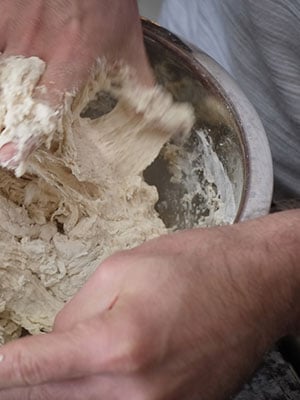
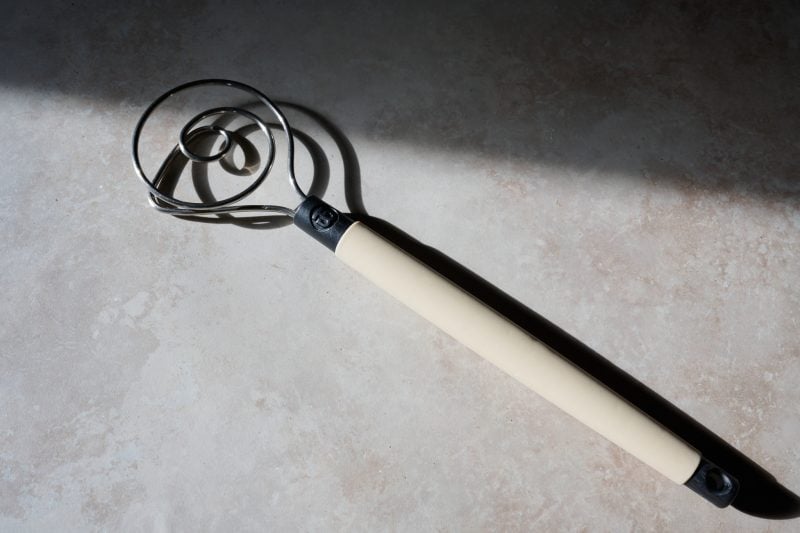
Keep your hands clean during mixing with this super strong whisk.
Flour and Grain
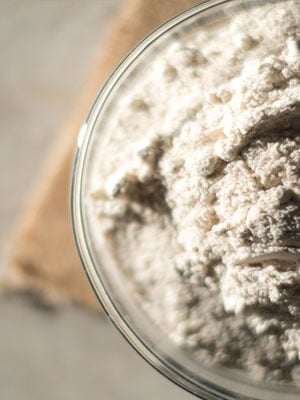
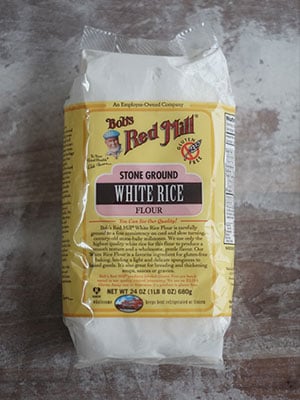
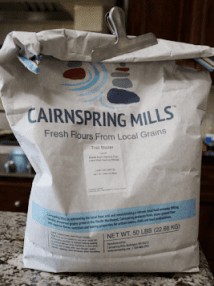
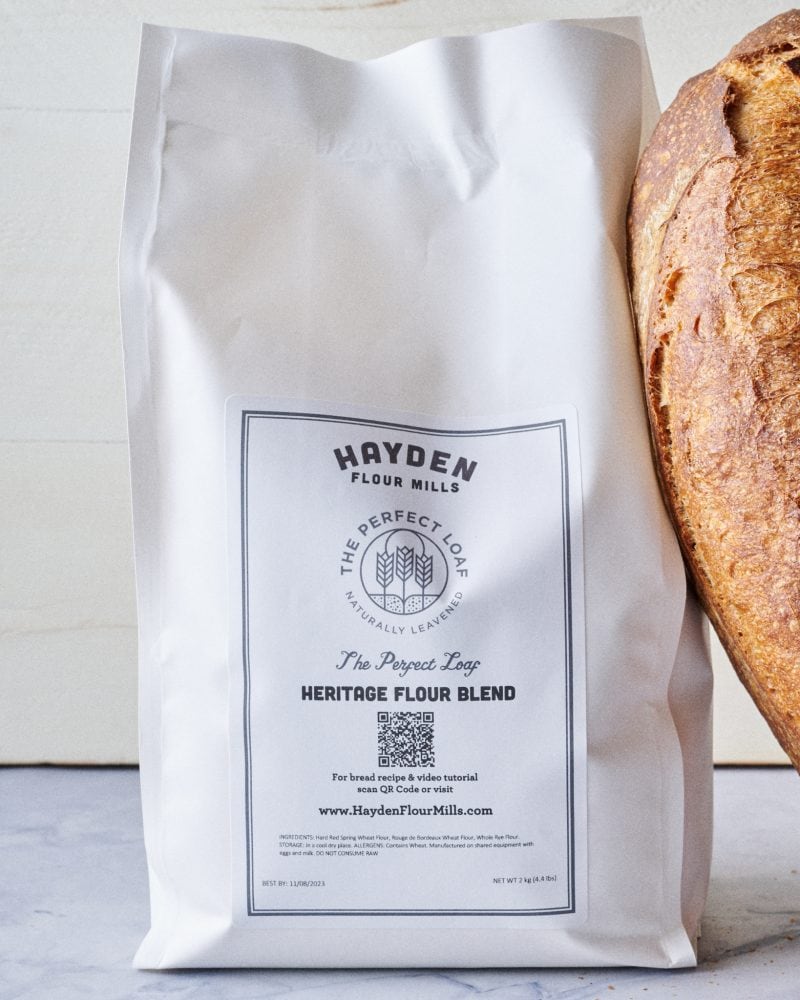
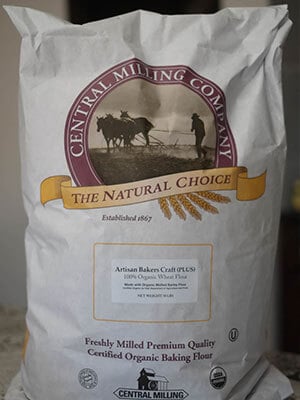
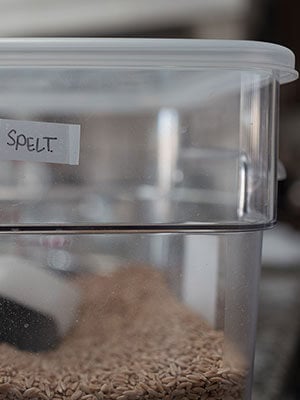
The list below are my most-used flours here at home, but look local first! There are many great farmers and millers scattered all over with incredible flour options.
I use these to store all my flour (5lb bags)—just the best.
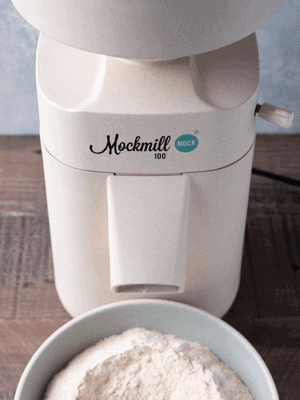
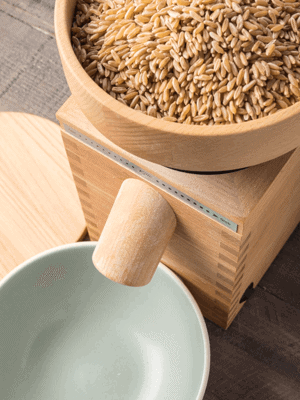
Grain Mills
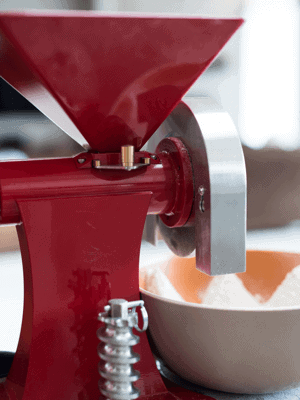
Below is a list of my favorite grain mills used to mill fresh flour in my home kitchen regularly. They are all built extremely well and are capable of producing excellent flour.
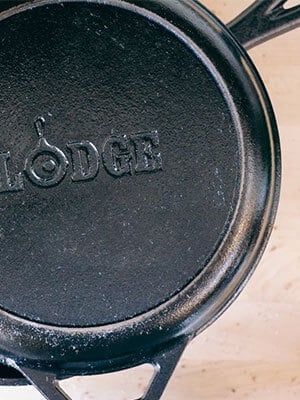
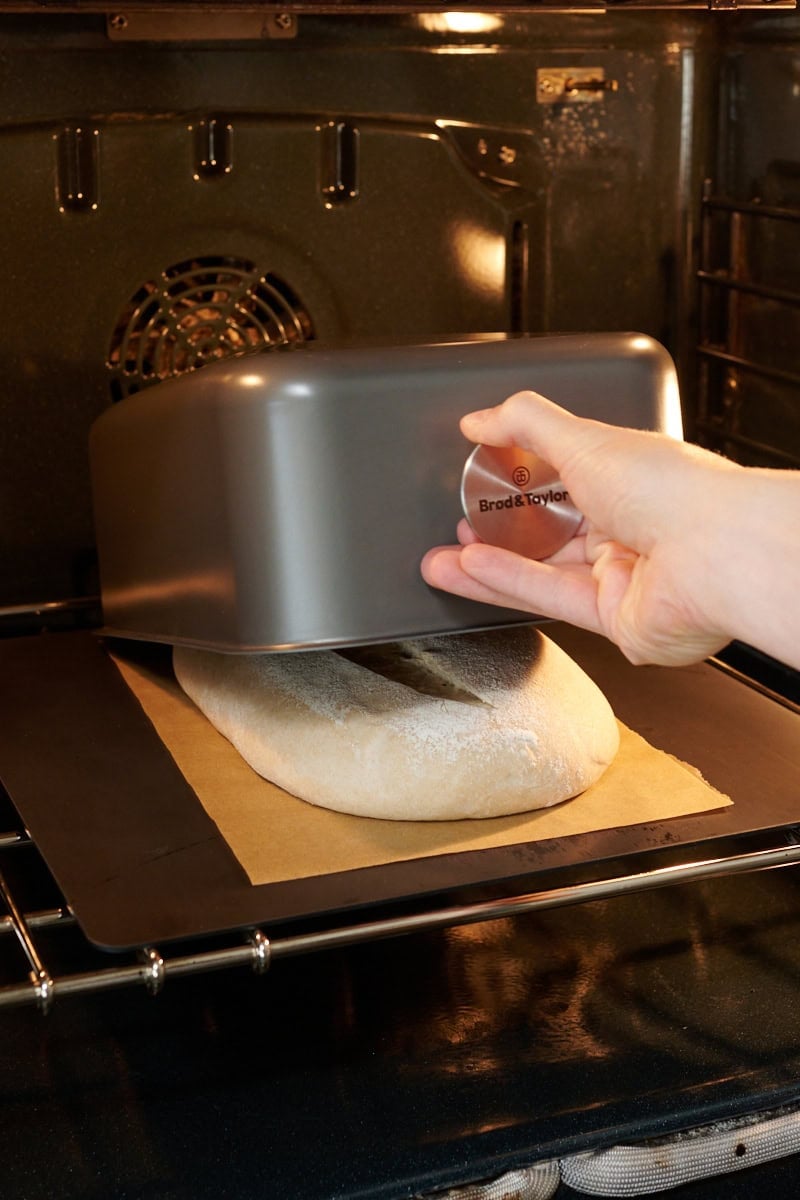
The combo cooker is a bit small for a batard, but check out my guide to steaming your home oven for a method for baking right on a baking stone/baking steel. You might also want to check out Challenger Breadware pans, which are cast iron but longer and wider!
Mauricio, quick question: Do you bake your batards in your Lodge Combo cooker? I am finding that the batards are too big for the shallow part of the combo cooker. I was just wondering if you could give me some tips!
Many thanks!
Glad to hear that, Ben! I’d try moving your oven rack up (if it’s close to the heating element) and/or reducing the preheat temp by 25-50°. A baking steel would only help if you preheated it at a lower temp (or for less time) and it was helping to insulate an exposed heating element. A baking steel is a fantastic item, but it can also get too hot, so if you go with one preheat at a lower temp 🙂
Question: I’ve tried your bagel method twice and it’s phenomenal – thank you! Mine are turning out great except the bottom is bordering on burned (bien bien cuit haha) I’m not currently using a stone or steel though, would that help with the bottoms?
Cheers
Hey, Caroline. I’d say you might be pushing your flour too far—some flour doesn’t hold up to extended fermentation times, and it may also simply be over proofing. If it were me, I’d drop the hydration further, reduce bulk, and see how that goes. If you’re still having issues, you could try prefermenting a little more of the flour to see if that helps bring more strength to the dough (just keep an eye on it because this will make it ferment a little faster!).
You can! Just be sure the amount of dough you want to bake will fit in the pan. Check out my guide to loaf pan loaves for common dough weights and shaping tips.
Thank you, and i have just another question iv been baking sourdough for maybe 3-4 weeks now and i bake at 250c for the first 20 then 230c for the next 20 in a lodge combo cooker and my crumb is always sort of shiny and translucent but yours looks like sort of matte i cant really think of another word.
what causes my crumb to like this instead of yours
Matthew—I like to use 8″ rounds for 500-900g or so, 10″ rounds for anything larger.
For ovals, I like 9″ for 500-750 or 800g, and 10″+ for anything larger. For my white style long batard (900-1kg), I usually use 14″ long baskets but the dough must be shaped tightly inside so as not to spread excessively.
Hi! I live in Denmark and have been trying +failing to make successful sourdough ever since Covid lockdown struck in March. I have the feeling that none of the flour I have readily available here has enough gluten, so when I follow recipes with ‘long’ bulking stages, they look really good and then completely fall apart into soup. I am thinking I can continue to use the flour I have (all-purpose low protein, ~12g/100g combined with “ølands” flour (high-protein ancient grain)) and reduce bulking + hydration, or else… maybe use Manitoba flour? Do you have any tips for me? I have been trying to use Full Proof Baking’s method, and I will try yours next time. Thank you so much!
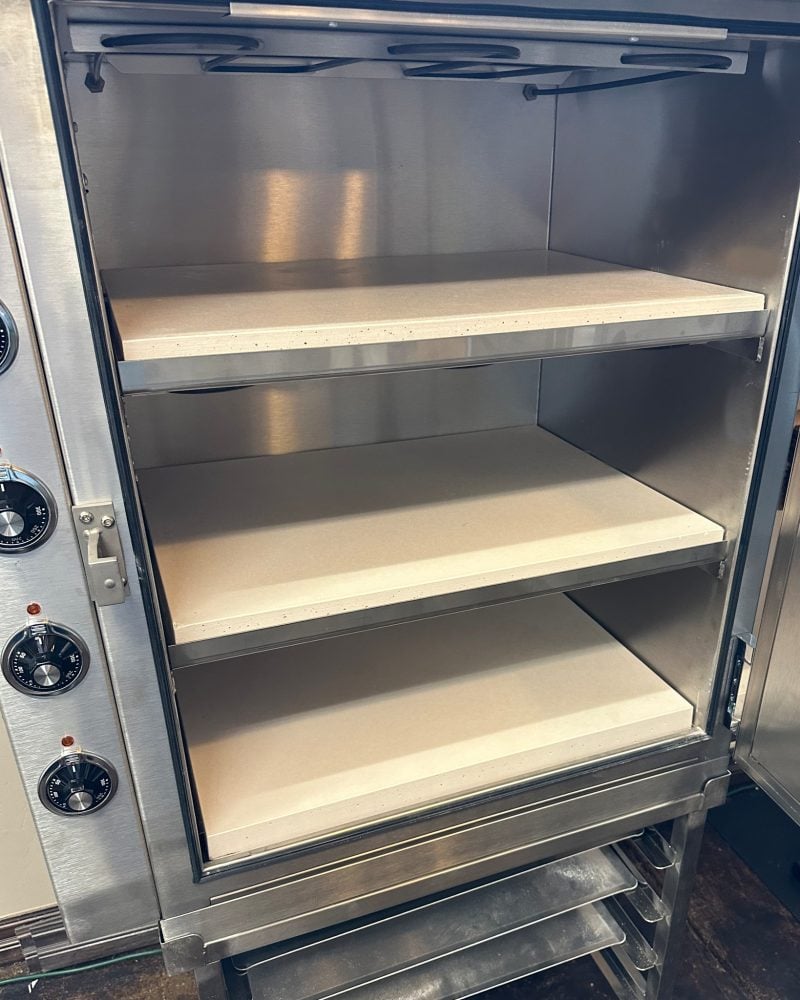
I wanted to ask where you got your thick baking stones from? I am looking for some just like in your picture on your 100% whole wheat bread recipe page so that I can arrange them in my oven better than my current pizza stone.
A link to the place you got them from or helping me know where I can start looking for some will be amazing.
Hi Maurizio, am loving your website and tips and tricks on baking sourdough! Thanks so much for all the great advice you provide. I am going to purchase a Lodge DO – I am in Australia, so my options are the 3.2 quart that you have listed above, or a 5 quart one that doesn’t have the long skillet handle (but still has one shallow side and one deep side). Since both DO’s have the same diameter, it is only the depth of the pan that is different, do you think the 5 quart one would allow the bread to rise more? Or do you want to minimise the amount of air around the bread when it is baking to generate the most steam? I use your beginners sourdough recipe so am baking 900g loaves. Thanks so much in advance for your advice 🙂 Carolyn
Hey, Carolyn! You’re very welcome. Either pot will work well! No worries about the extra air inside, as long as it’s sealed a larger or smaller one will work fine. Just keep in mind the larger ones are heavier (if that’s a concern). Happy baking!
Hey, Charlene! You’re likely over proofing your dough in the oven for that long with the light on. I suspect your dough is getting much warmer than you think in there!
It’s good flour! So far, though, my favorite pizza flour here in the USA is Central Milling 00 Normal flour. I use this for Neapolitan style pizza, pizza al taglio, and pasta!
Hi Maurizio – Have you found Central Milling’s Tony Gemignani’s “California Artisan” Type 00 Pizza Flour to be better suited for pizza crust than Organic High Mountain? I wanted to get your take on it before I ordered the 00 Flour! 🙂 Also, what is your opinion on Antimo Caputo 00 flour? Thank you!
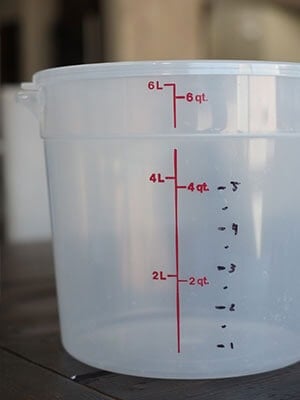
Hey Y’all, i’m looking to start doing batches of 50 pizzas… the largest storage container i can find is 22qt and that’s not big enough when it rises… does anyone have any suggestions?
Hi Maurizio. It’s been a while. I’ve baked professionally for the past couple of years now, owing a lot of what I know to you and your terrific site – big thank you. Quick question: You mention in one of your posts that you use a professional grade steamer and to look on your Tool page to see the specs but I don’t see it. What type of steamer are you using for your Rofco B40? Cheers!
Hi Maurizio. Great website, great instructions.Thank you. I too am new (from New Zealand) and have even taken to laying awake in the middle of the night with words like autolyse, levain, going through my head.
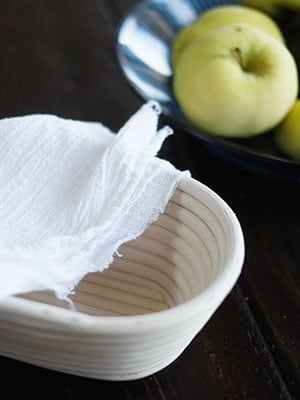
I’m interested in more information about proofing liners. I cannot find any reference to their function on the website, so please direct me there if more is said. How come the dough does not stick to the fabric?
Hey, Julie! Liners are totally optional, depending on the basket you use. I like to use them because they’re easy to clean and do help the dough remove cleanly from the basket with minimal flouring. I still lightly flour the liner (usually with white flour) just to be safe, and I do like the contrasting look the resulting loaves will have. But the key to good liners is a tight weave. The ones I use are very tight and uniform so no place for the dough to stick into the fabric. Anything will work here, and tea towels (as I have linked above in the tools) work really well. Bakers will also use “baker’s linen” or canvas to line baskets, this works well also!
Hello, My first post,
I made the Pain De Mie and it turned out good. The problem I had was my starter. I was feeding it with 50gm rye, 50gm whole wheat & 100gm water. It is extra active. I was almost out of AP so I used WW to make up the amount of dough needed, took about 35%. The Pain De Mia was OK but too tart for my taste SO I made French Toast from a very old cook book for my wife & myself. It was wonderful, best French Toast I ever ate. I will make Pain De Mie again with 100% AP flour and a much more gentle starter. I purchased 25 pounds of organic AP from Central Milling last week. should have it by nent Monday. Thanks for the Tip & recipes.
That’s right, making the starter/levain from 100% white flour should help reduce that sourness (assuming the rest of the process is followed closely!). Happy baking, Jim.
Hi!
I’m new to sourdough and both times I’ve tried, after the bulk rise of 5 hours in my oven (with light on) my dough has been quite runny and unmanageable. I’ve been covering it with a lid in the oven. Would you recommend covering it with a towel instead? I’d love your recommendations. I’m also wondering if it’s TOO warm in the oven with the light on?
Thought I’d mention that I own one of the handmade custom SS “kneading tools” from Jovial and I have to say that the guy who designed and makes them is genius. That things works great! It’s hard to believe that one tool could make it so much easier to mix a dough. Have you tried it?
Hey Ginger! I think you’re talking about a dough whisk — I have used one in the past, they’re great. Especially useful for when mixing up einkorn flour given its extra sticky nature.
Hi Maurizio–The flours you show above are malted. What’s the benefit of using malted flour for bread vs. unmalted? Also, flour mills! Do you mill all your own flour for bread these days? Is the flavor really noticeably different from good quality purchased flour (say Central Milling Artisan Bread Four)?
Steven — check out my post on malted bread where I talk about its use in baking.
I don’t mill 100% of my flour, but a fair portion, yet. The flavor and nutrition is incredible! But I still find having a set of reliable flours you like to use is a good idea (and you can’t go wrong with Central Milling ABC).
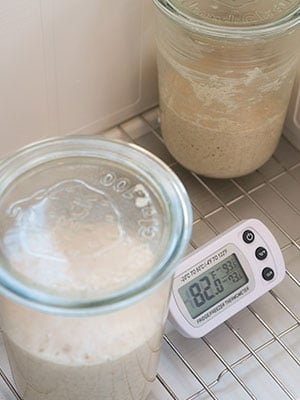
Thanks ! I’ve ordered the Weck jars via your link (or at least the ones that came up on France site). Let me know if it’s registered on your end, before I go for the bigger purchases 😉





748 Comments
The combo cooker is a bit small for a batard, but check out my guide to steaming your home oven for a method for baking right on a baking stone/baking steel. You might also want to check out Challenger Breadware pans, which are cast iron but longer and wider!
Mauricio, quick question: Do you bake your batards in your Lodge Combo cooker? I am finding that the batards are too big for the shallow part of the combo cooker. I was just wondering if you could give me some tips!
Many thanks!
Glad to hear that, Ben! I’d try moving your oven rack up (if it’s close to the heating element) and/or reducing the preheat temp by 25-50°. A baking steel would only help if you preheated it at a lower temp (or for less time) and it was helping to insulate an exposed heating element. A baking steel is a fantastic item, but it can also get too hot, so if you go with one preheat at a lower temp 🙂
Ah! Thanks for the generous and detailed response, I’ll move the oven rack up and decrease the preheat temp a touch. Cheers
Question: I’ve tried your bagel method twice and it’s phenomenal – thank you! Mine are turning out great except the bottom is bordering on burned (bien bien cuit haha) I’m not currently using a stone or steel though, would that help with the bottoms?
Cheers
Hey, Chase! They don’t sell the exact same ones, but this is another baking stone I have, and it works really well!
Hey, Caroline. I’d say you might be pushing your flour too far—some flour doesn’t hold up to extended fermentation times, and it may also simply be over proofing. If it were me, I’d drop the hydration further, reduce bulk, and see how that goes. If you’re still having issues, you could try prefermenting a little more of the flour to see if that helps bring more strength to the dough (just keep an eye on it because this will make it ferment a little faster!).
You can! Just be sure the amount of dough you want to bake will fit in the pan. Check out my guide to loaf pan loaves for common dough weights and shaping tips.
Thank you, and i have just another question iv been baking sourdough for maybe 3-4 weeks now and i bake at 250c for the first 20 then 230c for the next 20 in a lodge combo cooker and my crumb is always sort of shiny and translucent but yours looks like sort of matte i cant really think of another word.
what causes my crumb to like this instead of yours
https://imgur.com/a/Qfel7Ls
Can I bake a high hydration loaf in a pullman pan instead of a dutch oven?
My favorite oven mitts are added above, Sonja!
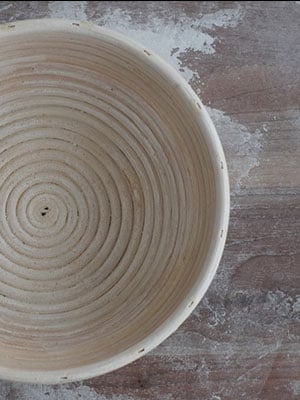
Hi just wondering what size oval bannaton do you like to use and what size dough
Matthew—I like to use 8″ rounds for 500-900g or so, 10″ rounds for anything larger.
For ovals, I like 9″ for 500-750 or 800g, and 10″+ for anything larger. For my white style long batard (900-1kg), I usually use 14″ long baskets but the dough must be shaped tightly inside so as not to spread excessively.
Will do!
oven mitts Sir, please add 🙂
Hi! I live in Denmark and have been trying +failing to make successful sourdough ever since Covid lockdown struck in March. I have the feeling that none of the flour I have readily available here has enough gluten, so when I follow recipes with ‘long’ bulking stages, they look really good and then completely fall apart into soup. I am thinking I can continue to use the flour I have (all-purpose low protein, ~12g/100g combined with “ølands” flour (high-protein ancient grain)) and reduce bulking + hydration, or else… maybe use Manitoba flour? Do you have any tips for me? I have been trying to use Full Proof Baking’s method, and I will try yours next time. Thank you so much!
Hello Maurizio,
I wanted to ask where you got your thick baking stones from? I am looking for some just like in your picture on your 100% whole wheat bread recipe page so that I can arrange them in my oven better than my current pizza stone.
A link to the place you got them from or helping me know where I can start looking for some will be amazing.
Thank you,
Chase Campbell
Hi Maurizio, am loving your website and tips and tricks on baking sourdough! Thanks so much for all the great advice you provide. I am going to purchase a Lodge DO – I am in Australia, so my options are the 3.2 quart that you have listed above, or a 5 quart one that doesn’t have the long skillet handle (but still has one shallow side and one deep side). Since both DO’s have the same diameter, it is only the depth of the pan that is different, do you think the 5 quart one would allow the bread to rise more? Or do you want to minimise the amount of air around the bread when it is baking to generate the most steam? I use your beginners sourdough recipe so am baking 900g loaves. Thanks so much in advance for your advice 🙂 Carolyn
Hey, Carolyn! You’re very welcome. Either pot will work well! No worries about the extra air inside, as long as it’s sealed a larger or smaller one will work fine. Just keep in mind the larger ones are heavier (if that’s a concern). Happy baking!
Links are now fixed. Looks like they don’t offer the one I used previously, this food grade lye looks like a great alternative!
Hi. What’s your source for food-grade lye? Your links are inactive.
Hi Maurizio, How many full size loaves can you fit on one baking steel? Thanks
Depends on the size. I usually do 2x900g batard (oblong) loaves. If I’m doing a round boule, usually just one.
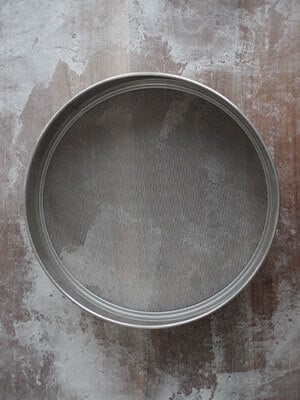
Perfect. In case the link is sold out again, it is for a 50 Mesh (Vollum Stainless Steel Flour Sifter).
Hey, Charlene! You’re likely over proofing your dough in the oven for that long with the light on. I suspect your dough is getting much warmer than you think in there!
Hey! I use a large Boos block made of maple wood.
It’s good flour! So far, though, my favorite pizza flour here in the USA is Central Milling 00 Normal flour. I use this for Neapolitan style pizza, pizza al taglio, and pasta!
Hi Maurizio – Have you found Central Milling’s Tony Gemignani’s “California Artisan” Type 00 Pizza Flour to be better suited for pizza crust than Organic High Mountain? I wanted to get your take on it before I ordered the 00 Flour! 🙂 Also, what is your opinion on Antimo Caputo 00 flour? Thank you!
Hey Y’all, i’m looking to start doing batches of 50 pizzas… the largest storage container i can find is 22qt and that’s not big enough when it rises… does anyone have any suggestions?
I’d look on Webstaurant!
Hi Maurizio. It’s been a while. I’ve baked professionally for the past couple of years now, owing a lot of what I know to you and your terrific site – big thank you. Quick question: You mention in one of your posts that you use a professional grade steamer and to look on your Tool page to see the specs but I don’t see it. What type of steamer are you using for your Rofco B40? Cheers!
Sorry for the delay, Billy! Check out my post on baking in a Rofco for a link to the steamer I use and a rundown of how I use the oven here.
Hi Maurizio. Great website, great instructions.Thank you. I too am new (from New Zealand) and have even taken to laying awake in the middle of the night with words like autolyse, levain, going through my head.
I’m interested in more information about proofing liners. I cannot find any reference to their function on the website, so please direct me there if more is said. How come the dough does not stick to the fabric?
Hey, Julie! Liners are totally optional, depending on the basket you use. I like to use them because they’re easy to clean and do help the dough remove cleanly from the basket with minimal flouring. I still lightly flour the liner (usually with white flour) just to be safe, and I do like the contrasting look the resulting loaves will have. But the key to good liners is a tight weave. The ones I use are very tight and uniform so no place for the dough to stick into the fabric. Anything will work here, and tea towels (as I have linked above in the tools) work really well. Bakers will also use “baker’s linen” or canvas to line baskets, this works well also!
Is there another link to your preferred sifter. That amazon link is to a different mesh sifter now…thanks!
Link works again!
Hello, My first post,
I made the Pain De Mie and it turned out good. The problem I had was my starter. I was feeding it with 50gm rye, 50gm whole wheat & 100gm water. It is extra active. I was almost out of AP so I used WW to make up the amount of dough needed, took about 35%. The Pain De Mia was OK but too tart for my taste SO I made French Toast from a very old cook book for my wife & myself. It was wonderful, best French Toast I ever ate. I will make Pain De Mie again with 100% AP flour and a much more gentle starter. I purchased 25 pounds of organic AP from Central Milling last week. should have it by nent Monday. Thanks for the Tip & recipes.
That’s right, making the starter/levain from 100% white flour should help reduce that sourness (assuming the rest of the process is followed closely!). Happy baking, Jim.
Hi!
I’m new to sourdough and both times I’ve tried, after the bulk rise of 5 hours in my oven (with light on) my dough has been quite runny and unmanageable. I’ve been covering it with a lid in the oven. Would you recommend covering it with a towel instead? I’d love your recommendations. I’m also wondering if it’s TOO warm in the oven with the light on?
Hi Maurizio,
What kind of table you use as a working surface?
Thanks!
Thought I’d mention that I own one of the handmade custom SS “kneading tools” from Jovial and I have to say that the guy who designed and makes them is genius. That things works great! It’s hard to believe that one tool could make it so much easier to mix a dough. Have you tried it?
Hey Ginger! I think you’re talking about a dough whisk — I have used one in the past, they’re great. Especially useful for when mixing up einkorn flour given its extra sticky nature.
Hi Maurizio–The flours you show above are malted. What’s the benefit of using malted flour for bread vs. unmalted? Also, flour mills! Do you mill all your own flour for bread these days? Is the flavor really noticeably different from good quality purchased flour (say Central Milling Artisan Bread Four)?
Steven — check out my post on malted bread where I talk about its use in baking.
I don’t mill 100% of my flour, but a fair portion, yet. The flavor and nutrition is incredible! But I still find having a set of reliable flours you like to use is a good idea (and you can’t go wrong with Central Milling ABC).
Glad to hear that! As long as you’re ordering from the links on this page all should we working well — I really appreciate the support!
Thanks ! I’ve ordered the Weck jars via your link (or at least the ones that came up on France site). Let me know if it’s registered on your end, before I go for the bigger purchases 😉