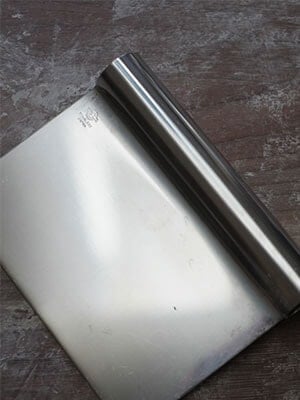
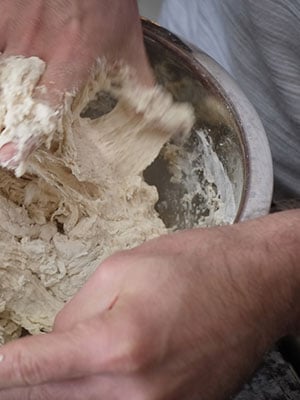
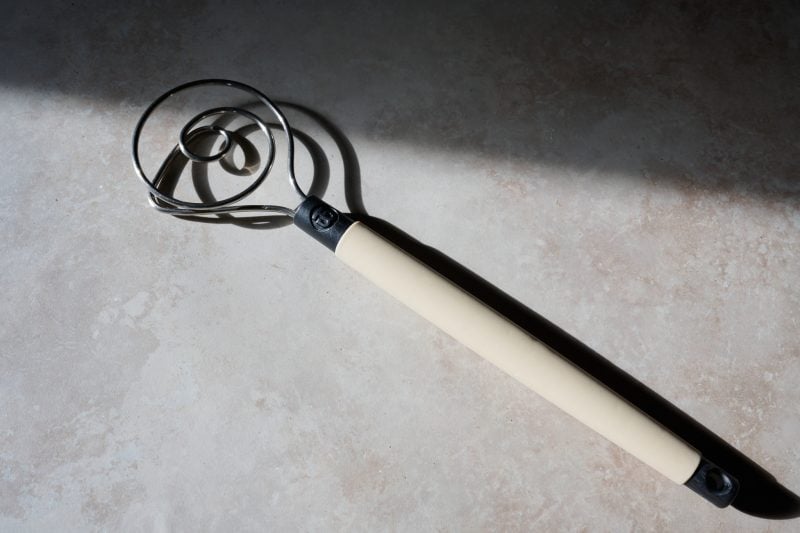
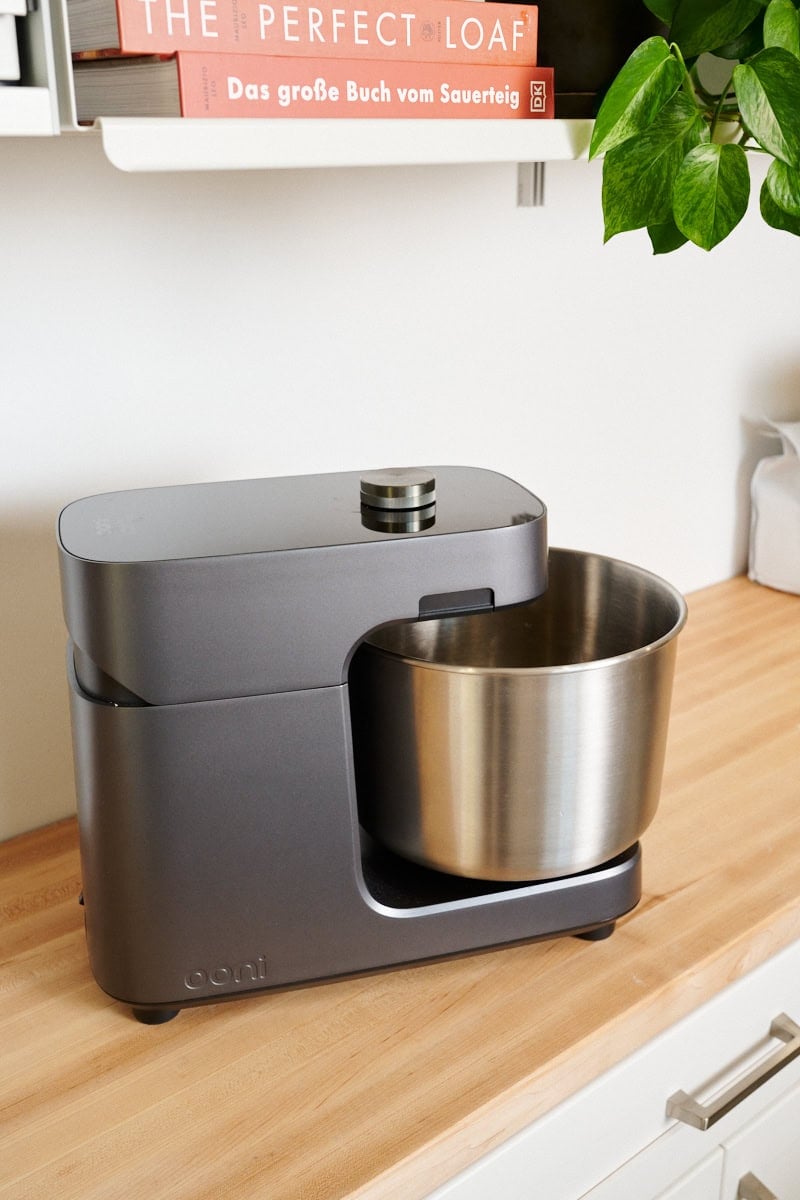
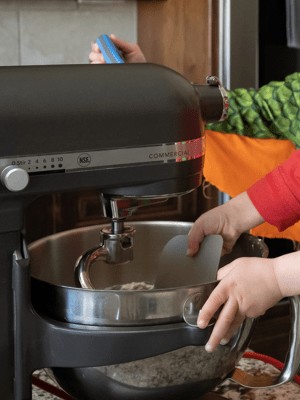
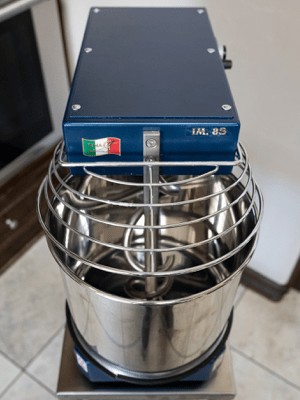
Keep your hands clean during mixing with this super strong whisk.
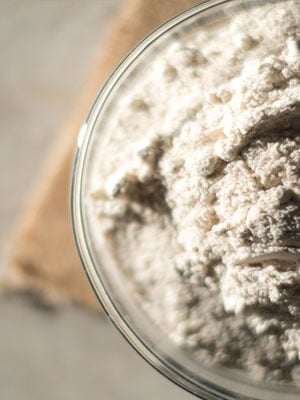
Flour and Grain
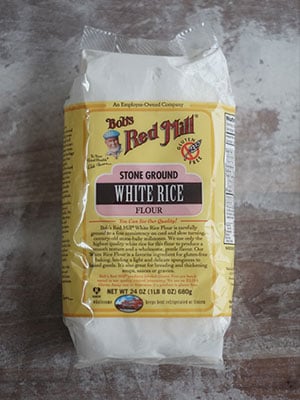
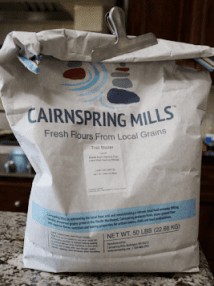
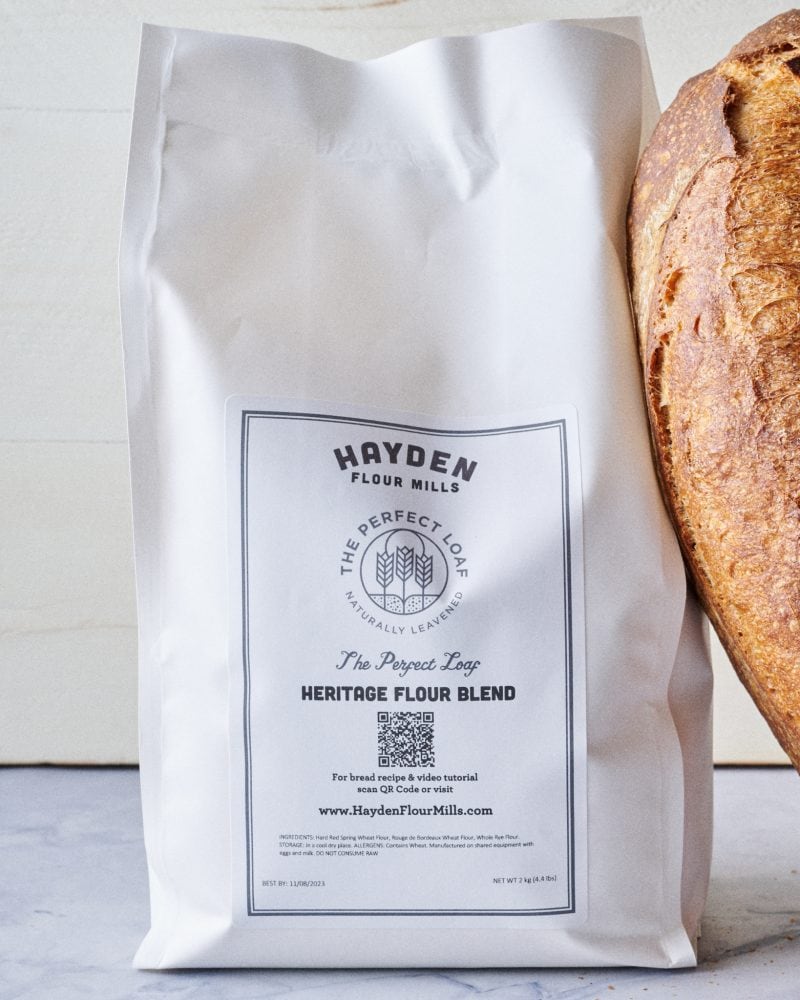
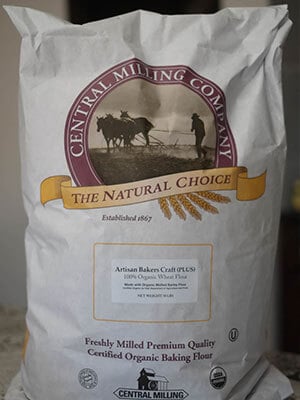
The list below are my most-used flours here at home, but look local first! There are many great farmers and millers scattered all over with incredible flour options.
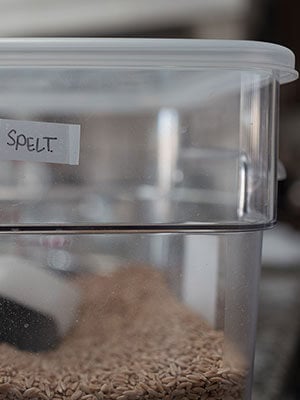
I use these to store all my flour (5lb bags)—just the best.
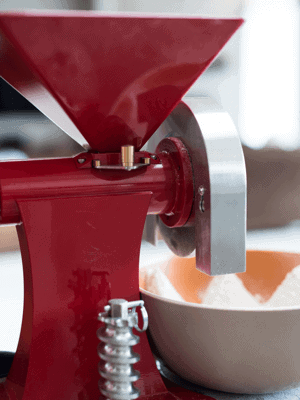
Grain Mills
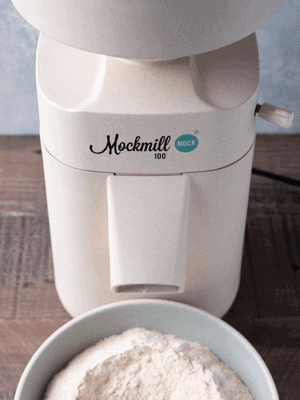
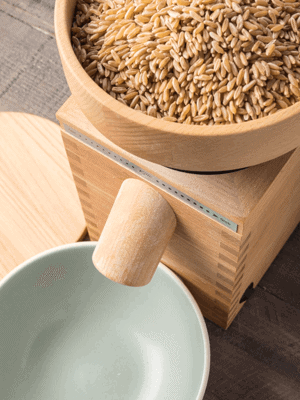
Below is a list of my favorite grain mills used to mill fresh flour in my home kitchen regularly. They are all built extremely well and are capable of producing excellent flour.
Hello Maurizio! I’m so glad a friend sent me the link to your site!
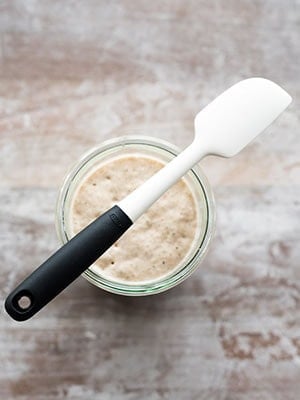
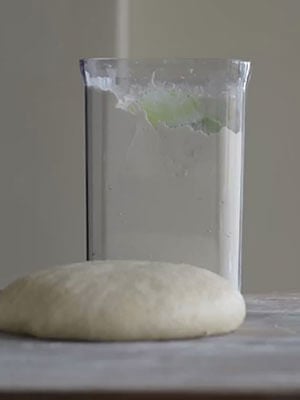
I was just wondering, what are the glass jars you use to hold your starters? I really like the shape and they seem very easy to maintain without the lip at the top that normal jars have.
Thanks! Happy Baking!
Katie
You’re very welcome! Yes, that’s something I’ve been working on for a long while… Flour is such a complicated topic and it’s really hard to distill things down into a single post here on all aspects, but I do mean to get some information out on what flour I’ve found great to use and why! That said, all those flours you’re using are great! In fact, CM T85 is one of my favorites.
Hi Maurizio, love your site. Beginner sourdough baker here, in France, during quarantine. I’ve got a kitchen scale but it’s not great. When I click to amazon from your site, I’m directed to amazon France; would you still be getting a percentage of sales? Thanks for your inspiring prose about the creative process.
Yes, I do have France added so I believe I will (the item will cost the same to you but I will get a small kickback for linking it here — thanks for the support!). Happy baking and thanks for the kind words!
Apart from the knife do you recommend anything to cut the bread. Like a guide or something which will give you even pieces. I find it hard to cut the breads evenly.
You’re welcome, Michaeline! I wouldn’t add malt to King Arthur AP — I believe it already has everything it needs. KAF AP is great flour, I wouldn’t be worried about using it at all. In fact you can use it anywhere here I call for “medium protein bread flour”. You can also use it where I call for “bread flour”, but I’d reduce the hydration in the dough just a bit if doing so, to give it a little more strength.
If you’re baking in a very humid place at sea level I’d say watch the hydration of these recipes in general, your flour might need less to feel adequately hydrated. You can also expect shorter bake times as well.
Maurizio— thank you so much for all you content! It is so inspiring. Would love to know a bit more on you thoughts on flour— I just picked up a sack of type 85 Malted but I’m thinking about getting the high mountain too. Been using King Arthur bread flour and I’m noting all sorts of differences, but I would LOVE a more in-depth primer on your take on flour types and brands!
Hi Maurizio,
First, thanks for posting so often here on Instagram. You have changed my life! This pandemic has changed life and now I find myself baking, a lot, which I love. But the pandemic has created a shortage of bread flour. Can I add malt to King Arthur All-purpose Flour or to Caputo Chef;s Flour TIPO 00? I have Bob’s Red Mill Organic Spelt, and Stone Ground Spelt but I’m afraid to use the all-purpose flour. Can you help? By the way, I live on the harbor in Portsmouth, NH so I am baking at sea level. Not sure if that matters.
Warmly,
Baker in training in Portsmouth, NH
Michaeline
Hi Maurizio,
How do you store your large quantities of flour, i.e. 50 pound bags I’m guessing?
Ordinary Cambro’s and tupperware or have you found a better more commercial solution?
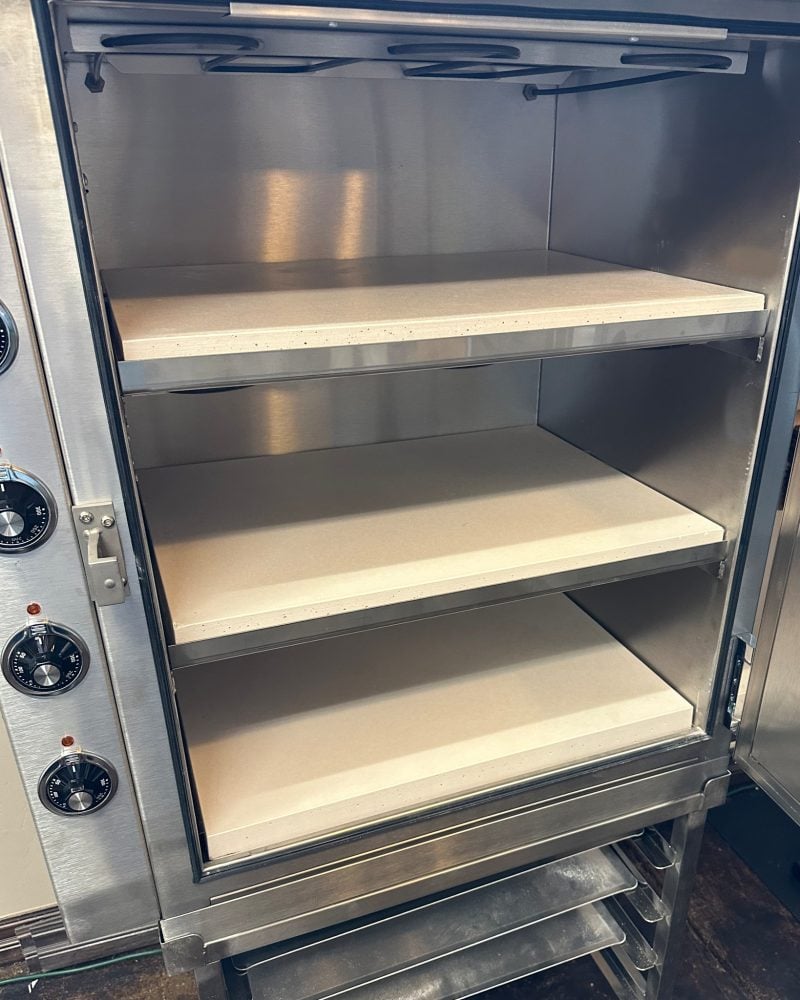
Are you still using the Rofco Oven? If so, do you use the Steam Trays?
Thanks for all your help.
Best regards,
Steve
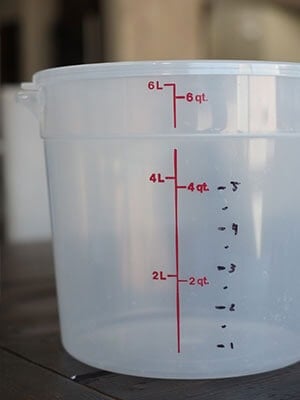
Hey, Steve. I usually keep large 50# bags of flour right in their bag in my pantry. Too hard to transfer that much flour out in one go. However, I do transfer about 5# of that out at a time to the smaller Oxo containers you see above in the post. This way I can use those on my counter.
I have the steam trays for the Rofco, but don’t usually use them. Check out my guide to baking in a Rofco for my process.
Hi Maurizio, thanks lots for all your insights on sourdough, i know there is a lot of work in it, and it really helps me!
I too have a perfect loaf or as i call it ‘bread in my head’ (not great for blog-use, but ok.) that i am striving for, and continue to experiment every week, and last year i bought a second hand Rofco B30. Very happy with it, it sits next to my normal furnace and i feel rich:)
My question is on the steam in the Rofco, i found it to be extremely important for an open crumb/good ovenspring and i am not sure the steam trays i bought are doing the maximal amount, or maybe i am using them wrong. I recently replaced the gasket and it is not making the difference i was hoping for.
What is your approach on creating steam in the Rofco? And how much water do you use?
hope to hear from you.
Kind reg all the way from Holland.
Right, that helps immediately, because i always used 1 tray per deck. I will find a garden sprayer though, have read similar comments here and there.
Quick question; you spray the oven áfter loading, right? and then you (also) spray the loafs?
thanks again.
and yay for canelé!
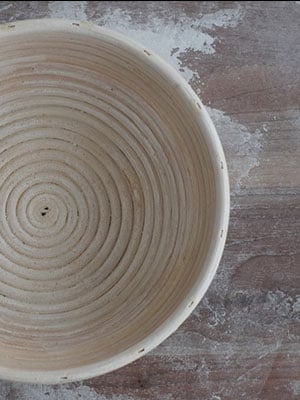
Hi Maurizio! I follow you since I began my sourdough experience. Thanks for share your knowledge and recipes. I have a weird question. Do you prefer proofing the dough in a coiled basket or a wicker classic basket. I mean, I would like to know if the baskets has an impact on the look of the final product. I use coiled baskets and I can’t find that rustic style your breads have, I only find my bread those round lines. Thanks from Perú.
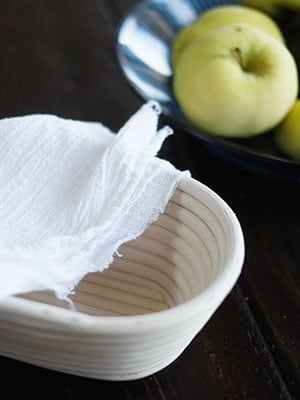
Hey, Juan! I really like wicker baskets for my higher hydration loaves because they tend to let the dough try out just a little more, which helps — they seem to have better airflow. I also like that they are slightly deformable: I usually bend them outward so they’re a little wider than when I first get them. I do like the cane bannetons, though, as it’s hard to find wicker in smaller sizes. For this reason, I typically use cane for smaller loaves (600-800g) and the wicker for larger, higher hydration doughs (800g-1.5kg). Hope that helps!
I am in search of bannetons that will hold 900 grams of dough. The one that you provide a link to says in the body of the description that it can accommodate up to a 1.5 pound loaf., which wouldn’t be large enough….it would need to accommodate 2 pound loaves. When I make these recipes, I have to divide the dough into thirds, which isn’t bad, but I would like to be able to make a larger loaf on occasion. I prefer the bannetons to the boules if possible. Thank you!!!
It’s something I’m thinking about! If you want to be notified when something like this might come out, subscribe to my mailing list (there’s a Subscribe box up top, right) and I’ll certainly send out an email!
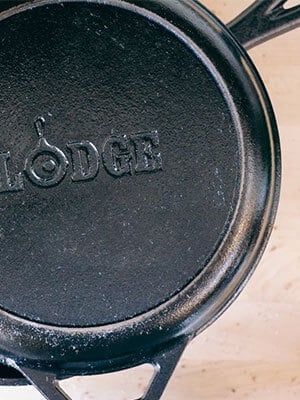
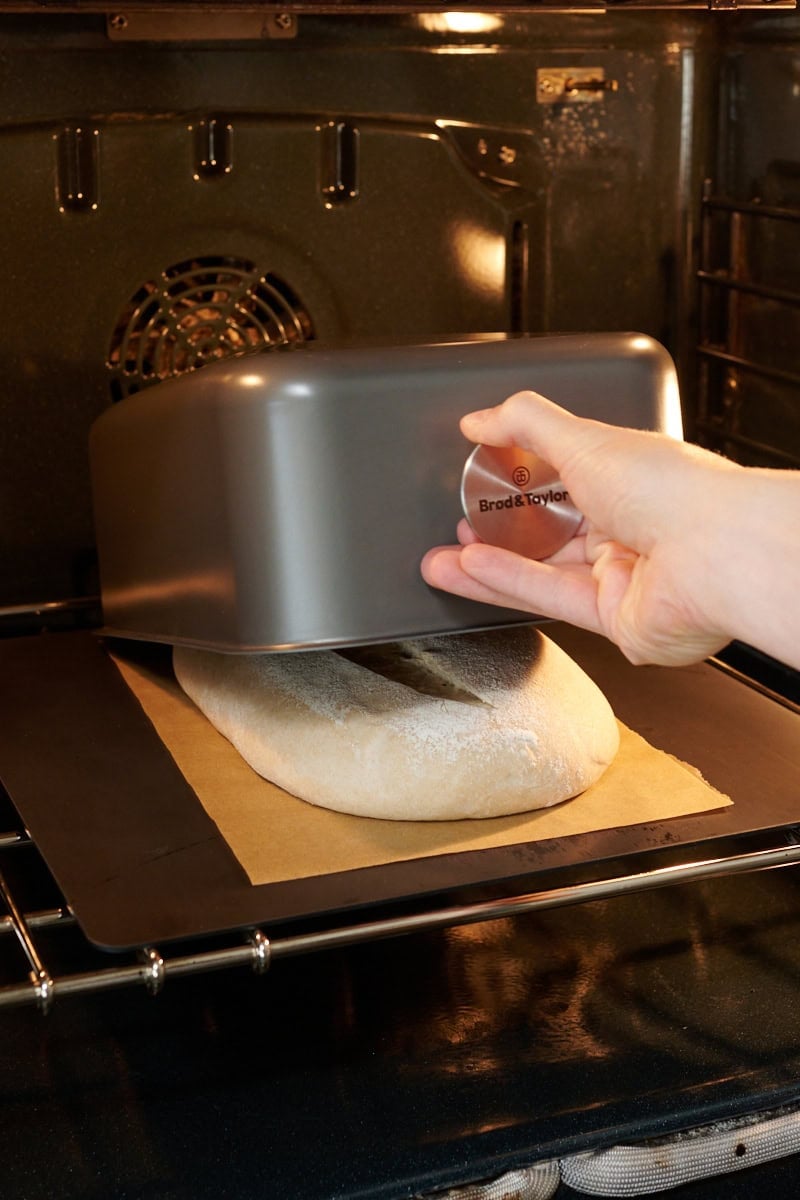
Would a vast iron Dutch oven work instead of the combo cooker? I have a few different sizes of Dutch oven and wasn’t looking forward to buying the combo cooker just to bake bread. At least not yet!
Yes, they’ll certainly fit. You might have to tip it diagonally a bit, but I haven’t had an issue with one fitting. You could also slice the boule in half and place the halves inside, they’ll certainly fit.
I’m a pretty big fan of the Baking Steel I have linked up above, not only is it great for bread but it’s also amazing for pizza. Have fun and happy baking!
Hi Maurizio! I started my sourdough adventures recently and just invested in a dough proofer! Excited to have found your blog and was wondering if you prefer a baking steel over a baking stone? Is it essentially the same thing? So far I’ve only baked boules in my dutch oven. Thanks!
Im glad that I found your blog right when I am starting my sourdough adventure. I was wondering, if I could pick your brain about what you would think about the mockmill kitchenaid attachment, instead of the Mockmill 100 grain mill.
Hey, Rosio! I haven’t had a chance to test out the KA attachment, but I personally would go with the counter-top mill. It’s a really well built mill and should give you room to grow and mill at larger quantities!
Hi Maurizio
The 10″ bannetons you show that will work with the DO. The banneton site says they are good for 1.5lb of dough. Your recipes often run closer to 2lb. Will they fit in the 10″ banneton and work in the DO?
Yes, they should fit as long as you don’t make them out too far above 900g. If you’re worried, you could divide at 700-800g per basket just to be sure, but as long as your dough is shaped tightly enough it should fit!





748 Comments
I have an entire guide post up on how to store bread!
Hello Maurizio! I’m so glad a friend sent me the link to your site!
I was just wondering, what are the glass jars you use to hold your starters? I really like the shape and they seem very easy to maintain without the lip at the top that normal jars have.
Thanks! Happy Baking!
Katie
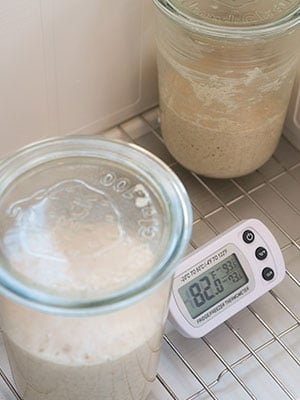
There’s a link to them up there in the tools list, they are Weck canning jars. Happy baking!
Hi Maurizio, what do you use for storing your bread? Cotton/linen bags?
You’re very welcome! Yes, that’s something I’ve been working on for a long while… Flour is such a complicated topic and it’s really hard to distill things down into a single post here on all aspects, but I do mean to get some information out on what flour I’ve found great to use and why! That said, all those flours you’re using are great! In fact, CM T85 is one of my favorites.
Hi Maurizio, love your site. Beginner sourdough baker here, in France, during quarantine. I’ve got a kitchen scale but it’s not great. When I click to amazon from your site, I’m directed to amazon France; would you still be getting a percentage of sales? Thanks for your inspiring prose about the creative process.
Yes, I do have France added so I believe I will (the item will cost the same to you but I will get a small kickback for linking it here — thanks for the support!). Happy baking and thanks for the kind words!
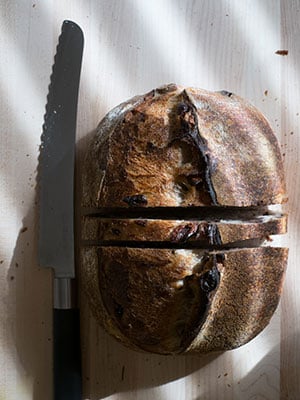
Apart from the knife do you recommend anything to cut the bread. Like a guide or something which will give you even pieces. I find it hard to cut the breads evenly.
I’ve not used anything else!
You’re welcome, Michaeline! I wouldn’t add malt to King Arthur AP — I believe it already has everything it needs. KAF AP is great flour, I wouldn’t be worried about using it at all. In fact you can use it anywhere here I call for “medium protein bread flour”. You can also use it where I call for “bread flour”, but I’d reduce the hydration in the dough just a bit if doing so, to give it a little more strength.
If you’re baking in a very humid place at sea level I’d say watch the hydration of these recipes in general, your flour might need less to feel adequately hydrated. You can also expect shorter bake times as well.
Hope this helps!
Maurizio— thank you so much for all you content! It is so inspiring. Would love to know a bit more on you thoughts on flour— I just picked up a sack of type 85 Malted but I’m thinking about getting the high mountain too. Been using King Arthur bread flour and I’m noting all sorts of differences, but I would LOVE a more in-depth primer on your take on flour types and brands!
Hi Maurizio,
First, thanks for posting so often here on Instagram. You have changed my life! This pandemic has changed life and now I find myself baking, a lot, which I love. But the pandemic has created a shortage of bread flour. Can I add malt to King Arthur All-purpose Flour or to Caputo Chef;s Flour TIPO 00? I have Bob’s Red Mill Organic Spelt, and Stone Ground Spelt but I’m afraid to use the all-purpose flour. Can you help? By the way, I live on the harbor in Portsmouth, NH so I am baking at sea level. Not sure if that matters.
Warmly,
Baker in training in Portsmouth, NH
Michaeline
You can add vital wheat gluten to all purpose to make bread flour. It is still pretty broadly available these days.
Thank you Maurizio.
Hi Maurizio,
How do you store your large quantities of flour, i.e. 50 pound bags I’m guessing?
Ordinary Cambro’s and tupperware or have you found a better more commercial solution?
Are you still using the Rofco Oven? If so, do you use the Steam Trays?
Thanks for all your help.
Best regards,
Steve
Hey, Steve. I usually keep large 50# bags of flour right in their bag in my pantry. Too hard to transfer that much flour out in one go. However, I do transfer about 5# of that out at a time to the smaller Oxo containers you see above in the post. This way I can use those on my counter.
I have the steam trays for the Rofco, but don’t usually use them. Check out my guide to baking in a Rofco for my process.
Happy baking!
That’s correct for both questions!
Hi Maurizio, thanks lots for all your insights on sourdough, i know there is a lot of work in it, and it really helps me!
I too have a perfect loaf or as i call it ‘bread in my head’ (not great for blog-use, but ok.) that i am striving for, and continue to experiment every week, and last year i bought a second hand Rofco B30. Very happy with it, it sits next to my normal furnace and i feel rich:)
My question is on the steam in the Rofco, i found it to be extremely important for an open crumb/good ovenspring and i am not sure the steam trays i bought are doing the maximal amount, or maybe i am using them wrong. I recently replaced the gasket and it is not making the difference i was hoping for.
What is your approach on creating steam in the Rofco? And how much water do you use?
hope to hear from you.
Kind reg all the way from Holland.
Hey, Leslie! You’re very welcome, I’m happy to help. Very cool to hear you got a Rofco, they are great ovens! I actually have an entire post dedicated to how I work my Rofco oven!
Take a look at let me know if that helps. Wishing you good health and happy baking!
Right, that helps immediately, because i always used 1 tray per deck. I will find a garden sprayer though, have read similar comments here and there.
Quick question; you spray the oven áfter loading, right? and then you (also) spray the loafs?
thanks again.
and yay for canelé!
That should work! I believe my 550 is the smallest they make, and it fits just fine 🙂
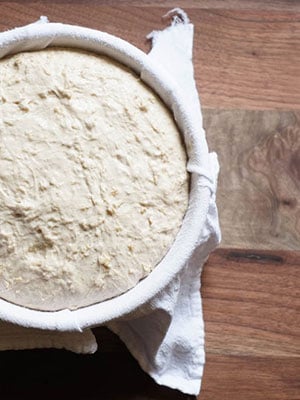
Hi Maurizio! I follow you since I began my sourdough experience. Thanks for share your knowledge and recipes. I have a weird question. Do you prefer proofing the dough in a coiled basket or a wicker classic basket. I mean, I would like to know if the baskets has an impact on the look of the final product. I use coiled baskets and I can’t find that rustic style your breads have, I only find my bread those round lines. Thanks from Perú.
Hey, Juan! I really like wicker baskets for my higher hydration loaves because they tend to let the dough try out just a little more, which helps — they seem to have better airflow. I also like that they are slightly deformable: I usually bend them outward so they’re a little wider than when I first get them. I do like the cane bannetons, though, as it’s hard to find wicker in smaller sizes. For this reason, I typically use cane for smaller loaves (600-800g) and the wicker for larger, higher hydration doughs (800g-1.5kg). Hope that helps!
Check out SFBI.com, I get their 14″ long bannetons for 900g+ batards — they work very well!
Thank you for the quick reply!!! I don’t know how you do it all and do it all so well!! Wow!
I am in search of bannetons that will hold 900 grams of dough. The one that you provide a link to says in the body of the description that it can accommodate up to a 1.5 pound loaf., which wouldn’t be large enough….it would need to accommodate 2 pound loaves. When I make these recipes, I have to divide the dough into thirds, which isn’t bad, but I would like to be able to make a larger loaf on occasion. I prefer the bannetons to the boules if possible. Thank you!!!
Yes, absolutely, a Dutch oven will work very well!
It’s something I’m thinking about! If you want to be notified when something like this might come out, subscribe to my mailing list (there’s a Subscribe box up top, right) and I’ll certainly send out an email!
Would a vast iron Dutch oven work instead of the combo cooker? I have a few different sizes of Dutch oven and wasn’t looking forward to buying the combo cooker just to bake bread. At least not yet!
I would love to own a book of all your recipes. Any chance of that?
Yes, they’ll certainly fit. You might have to tip it diagonally a bit, but I haven’t had an issue with one fitting. You could also slice the boule in half and place the halves inside, they’ll certainly fit.
You could follow my guide to baking and steaming a home oven which goes into baking two batard at once or check out the Challenger pan — both great options!
Pampered Chef makes a stoneware covered baker that is the perfect size and shape for baking A battard. It’s my go to
Help please.
I am looking for something to bake a battard in. Something like a cloche or cast iron lidded pot, but battard shapw.
Any pointers please?
Thanks
I’m a pretty big fan of the Baking Steel I have linked up above, not only is it great for bread but it’s also amazing for pizza. Have fun and happy baking!
Hi Maurizio,
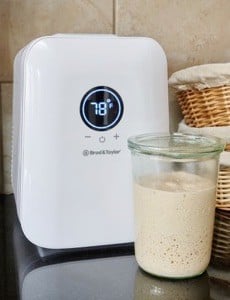
Just bought a proofer. Says to use the humidifier and not cover the dough. Thoughts? Thanks!
I do the opposite: I cover my dough and don’t use the humidifier. Up to you but I find covering the dough to be just fine!
Hi Maurizio! I started my sourdough adventures recently and just invested in a dough proofer! Excited to have found your blog and was wondering if you prefer a baking steel over a baking stone? Is it essentially the same thing? So far I’ve only baked boules in my dutch oven. Thanks!
Sounds good! Yes, it would be nicer to have an even larger one but I’ll usually use my oven with light on/off if more space is needed. Have fun!
Hi Maurizio!
Im glad that I found your blog right when I am starting my sourdough adventure. I was wondering, if I could pick your brain about what you would think about the mockmill kitchenaid attachment, instead of the Mockmill 100 grain mill.
Hey, Rosio! I haven’t had a chance to test out the KA attachment, but I personally would go with the counter-top mill. It’s a really well built mill and should give you room to grow and mill at larger quantities!
Hi Maurizio
The 10″ bannetons you show that will work with the DO. The banneton site says they are good for 1.5lb of dough. Your recipes often run closer to 2lb. Will they fit in the 10″ banneton and work in the DO?
Yes, they should fit as long as you don’t make them out too far above 900g. If you’re worried, you could divide at 700-800g per basket just to be sure, but as long as your dough is shaped tightly enough it should fit!
Fixed!
I personally have the 1/2-inch version, but I think any of them will work very well!
John — I’d be worried that wouldn’t be tall enough…
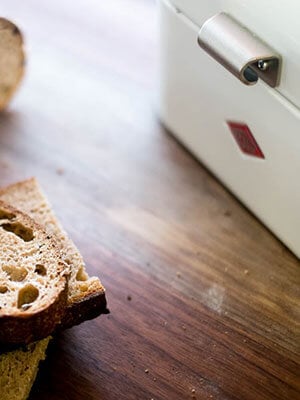
Hi Maurizio, Looks like the breadbox you recommend is “Currently Unavailable”