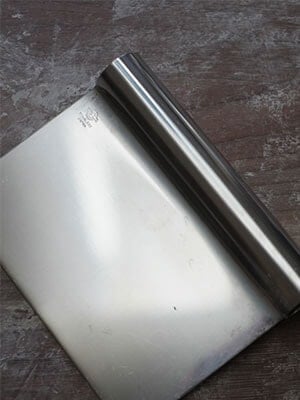
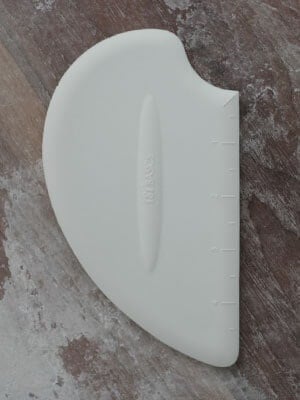
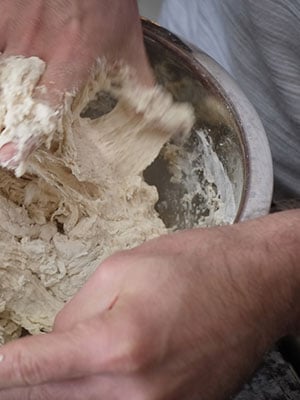
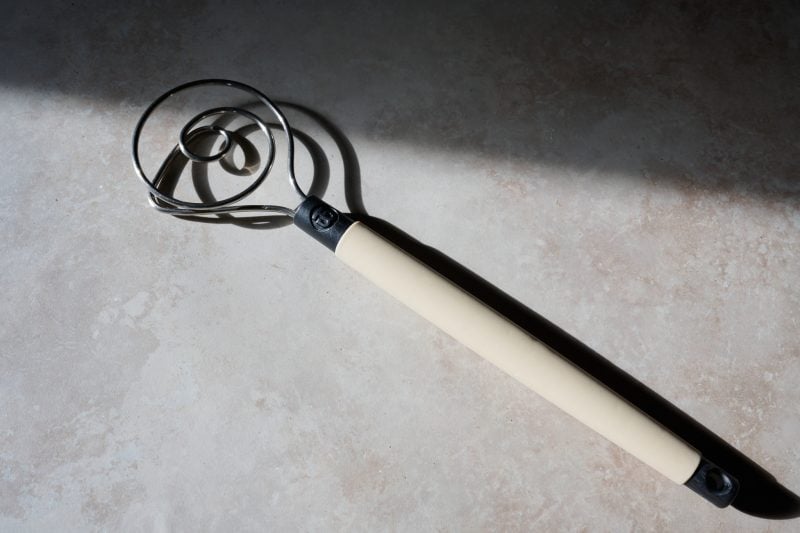
Keep your hands clean during mixing with this super strong whisk.
Flour and Grain
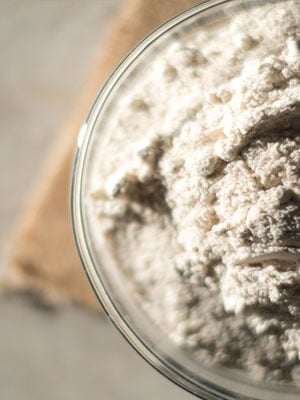
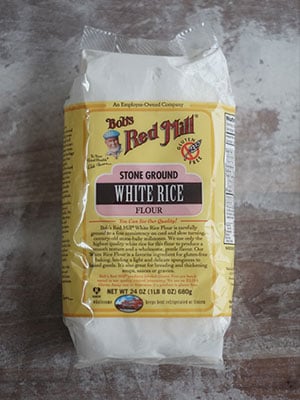
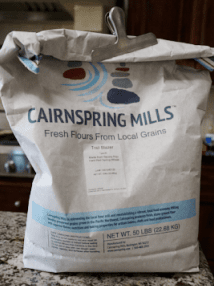
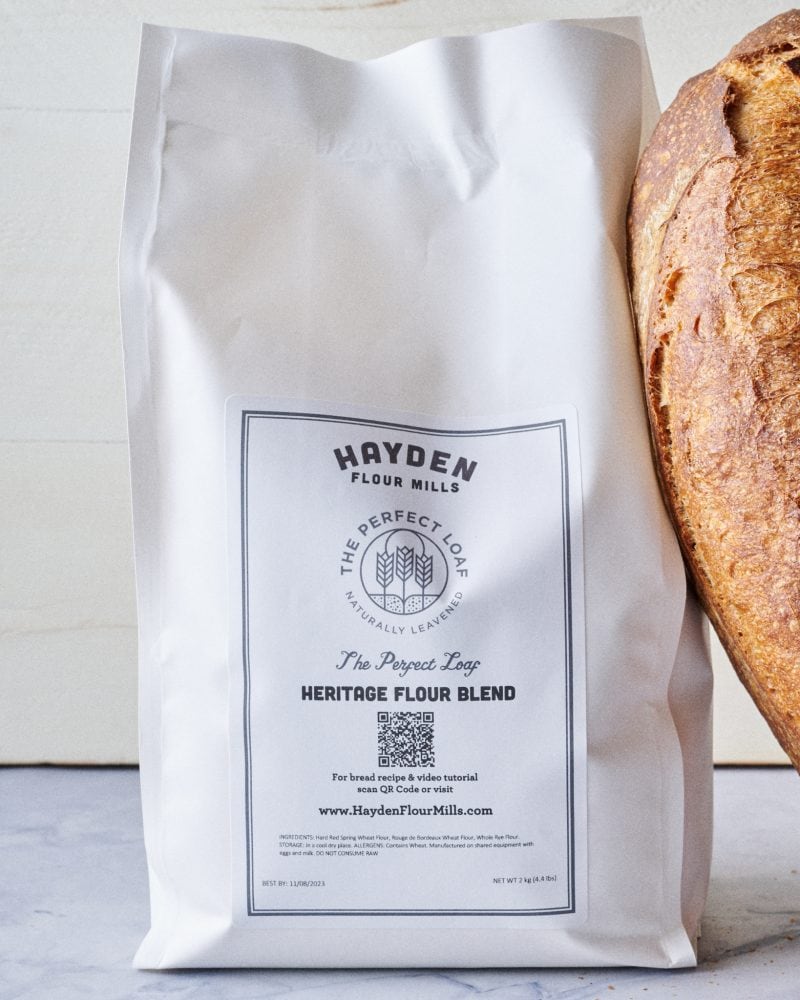
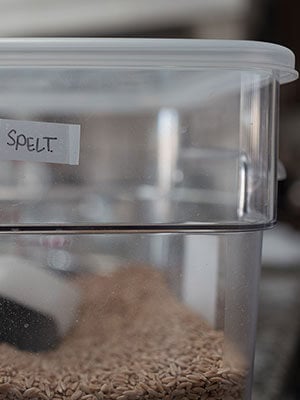
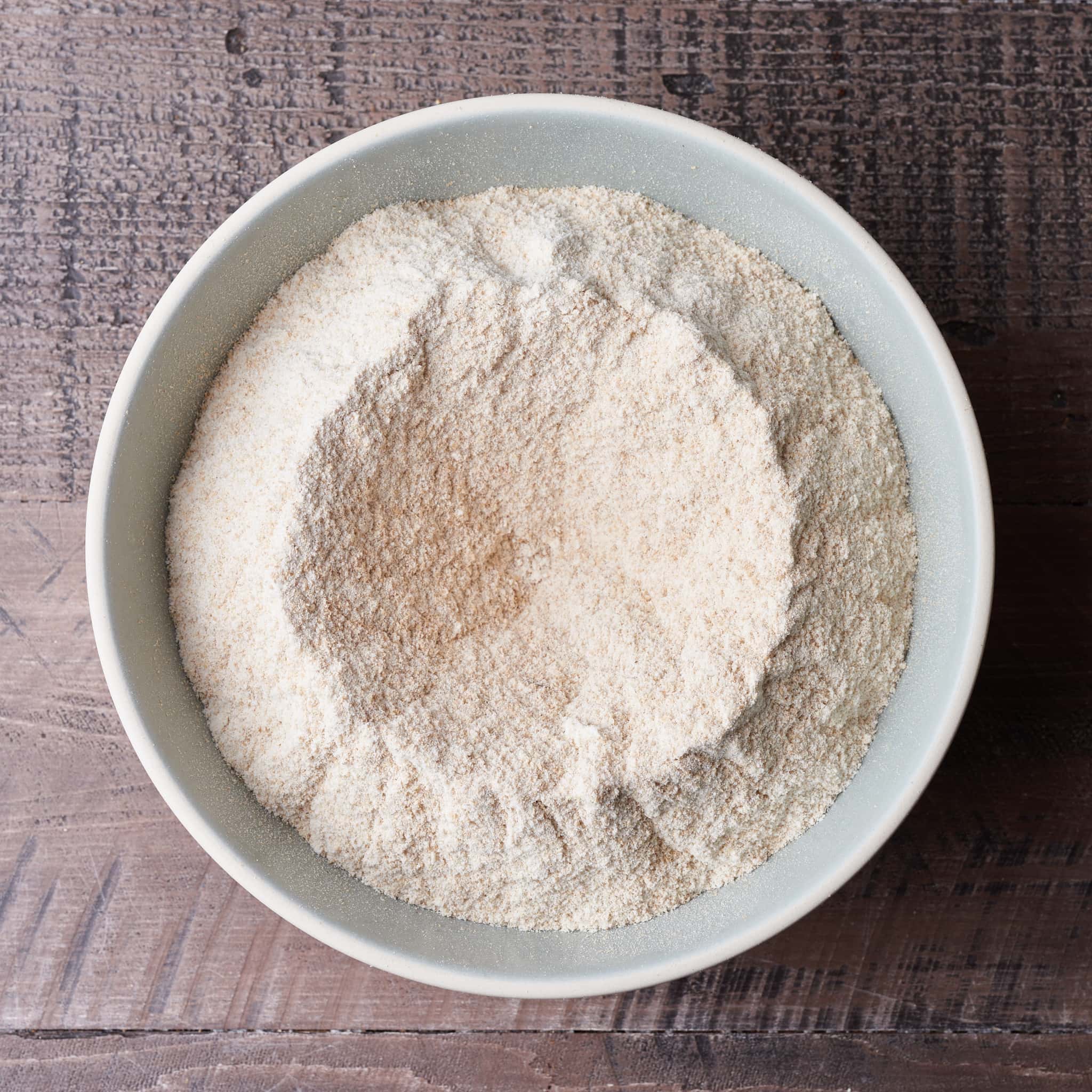
The list below are my most-used flours here at home, but look local first! There are many great farmers and millers scattered all over with incredible flour options.
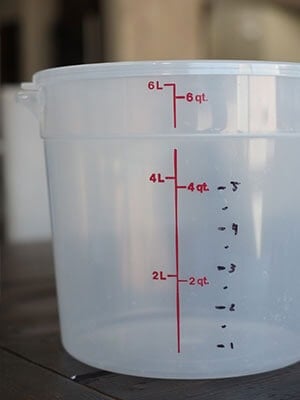
I use these to store all my flour (5lb bags)—just the best.
Grain Mills
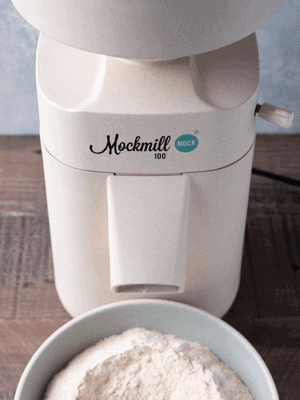
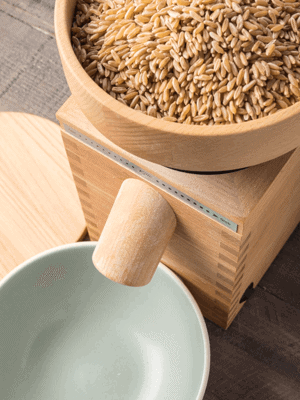
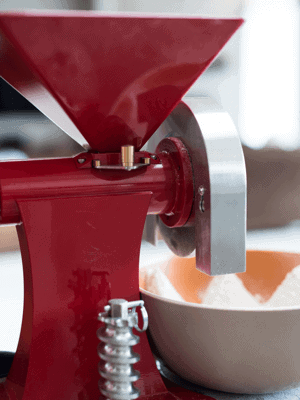
Below is a list of my favorite grain mills used to mill fresh flour in my home kitchen regularly. They are all built extremely well and are capable of producing excellent flour.
I have just purchased a baking steel. until now I have been baking bread with a cast iron combo and would like to bake on the steel sheet instead. Do I need to make any adjustments to the baking process? (for example: should i add steam in the beginning of the baking?) Also, where should I place the steel in the oven for best results? lower, middle or top shelf?
Thank you so much for the help and the delicious recipes! we enjoy them regularly.
Maurizio, you write under autolyse that with a high percentage of spelt flour you don’t autolyse. Typically I use about 30% fresh spelt, about 10% rye, and the rest is white flour for my loaves. Where does that fit in the high percentage? I usually set my autolyse for two hours. I’m guessing you think it is too long for the percentages that I listed. How long should I autolyse.
Hey, Bruce! There are no hard and fast rules regarding autolyse times, the above are just my preferences. You can certainly do 2 hours, just observe how the consistency of the dough changes and the result after baking, then try a chance and see if it improves or decides. For that much freshly milled spelt, I personally would do a very short auto, maybe just 15 minutes, if any at all. But that’s just me!
Hey, Jeffrey! The mills listed above will produce fine flour, but it won’t get you to the same level as a large scale miller with their roller mill. In my experience, the flour from the KoMo or Mockmill does make great bread, though!
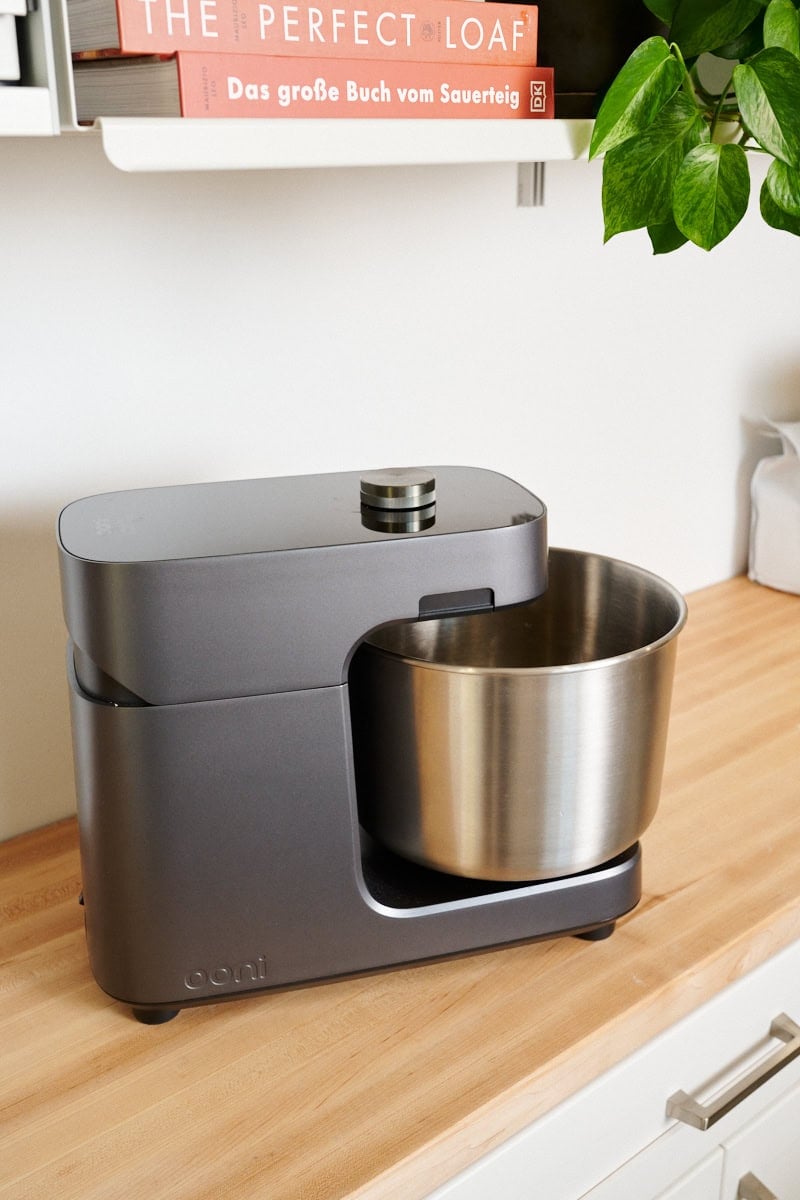
Hi there — I’m curious whether you’ve ever used the Ankarsrum Assistant mixer? I’m considering buying one. It’s supposed to be great for bread. (No, I’m not affiliated with them at all.)
I’ve used one, but it’s been many, many years now. I do remember thinking it was a great mixer, it’s just a bit different than a typical planetary (KitchenAid) or spiral!
I bought an Ankarsrum over the summer. It’s okay. There really is a significant learning curve, because it functions differently from a Kitchen Aid. I don’t particularly like it for stiff dough, which it struggles with in the beginning, and I would not buy it again, but it does have advantages over the KA, including easier to clean, larger bowl (often too large, really), easier to add ingredients, and the motor can run longer. It does make butter really well.
Hi Maurizio!
I am interested in getting a baking steel to try to do your baking with steam in home oven to bake multiple loaves at once. I noticed that the baking steel you recommend from Food52 is no longer available. Do you have another one that you would recommend? Thank you so much for all the helpful bread information!
Hey, Sarah! Yes, it looks like it’s no longer available via Food52. I would pickup this one, it looks exactly the same (and a little cheaper, too)! Happy baking 🙂
You’re welcome! Keep me posted on how it’s going and have fun 😀
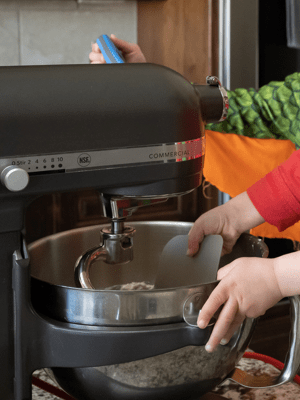
Hi Maurizio, I wanted to ask you if you think the KitchenAid 8 qt mixer could be good for me. A few years ago when I just got tired of mixing up large batches of rye dough by hand, I purchased the Bosch 1000 universal mixer, and it really works well for that purpose. But when I tried to use it for mixing other flours, I had a hard time removing the dough because the whole mixing mechanism is attached to the bowl, and it just turned into a big mess, so I opted to mix all my other doughs by hand from start to finish. The Kitchen Aid 8 qt mixer looks amazing. Is it aso good for mixing small amounts of dough, like for 1 or 2 loaves? It looks like it could handle the sticky rye dough, also. What are your thoughts?
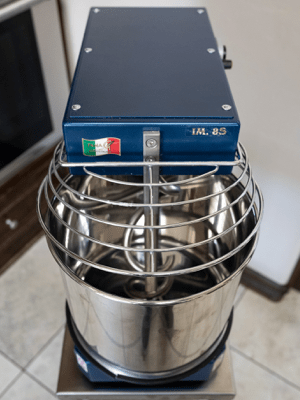
Hey! Yes, it’s a great little mixer. I actually use it for rye bread all the time (with the paddle). I would say it can struggle with some lower hydration doughs, and if you’re doing large batches it might not be the best option. But for medium hydration or even some high hydration doughs it’s suitable. If you’re really serious about getting a bread mixer, though, you might want to also check out mixers like the Famag spiral mixer, Haussler, or Sunmix.
Hello! Do you have a favorite pizza peel? I’ll be using it mostly for baking bread with steam (without a dutch oven), and sometimes for pizza. Any preference on wood vs. metal? Thanks!
Hey Maurizio – how do I figure out the maximum dough capacity of any bread pan/pot? Since Lockdown, I’ve made a bunch (okay 70+ loaves) of no-knead breads (3 cup flour types), in my beloved EH bread pot, but I’m kind of gutless in regards to testing how much dough the pot would actually take. I’m also checking out bigger DO’s and bakeware –
Do you have a magic chart of some kind?
I reached out to EH and the staffer said that she wouldn’t use more than 4 cups (flour +). I’ll look forward to seeing your future chart and will read up (and gather courage) to try out my starter in one of your basic recipes. Thx – you rock.
Hi Maurizio — I see that you use both the Mockmill and the Grainmaker. Do you use one over the other for specific applications or have you settled in on one of the two?
Hey Jim! The GrainMaker (GM) makes incredible flour. It’s very fine and very low temperature. It does take time and effort to turn the crank though, so that’s the drawback. I use my MM when I need to quickly mill flour, and it does a great job, too! So it’s a tradeoff of time. Either way you can’t beat the flavor and nutrition of freshly milled flour.
Hi there! Now I’m using a baking stone, by ROCKSHEAT, and like it a lot. How do I bake bread on it without overbaking? How can I convert your oven bake times for Dutch Ovens? Can I spray water in the oven for steam when using it? And, can I use my new KitchenAid Mixer with dough paddle and hook for any of your recipes, not just the few that call for a mixer? How will I know when I can use ANY of your recipes in another recipe and know it will be okay?
If you’re finding the bottom of your loaves color too fast or bake too much, reduce the preheat time and/or temp so the stone is saturated with less heat. Or, bake for less time overall. Should be just fine to steam the oven with that stone, just be careful as some stones can crack if excessive cold water is spilled on them (after 10+ yrs of baking, this has never happened to me, though).
Thanks so much, Maurizio! I’ve really enjoyed baking your recipes and feeding my family delicious bread, pancakes, English Muffins, and even DOG BISCUITS!! (DOG BISCUITS not your recipe, but thanks for giving me the courage to embark on this sourdough journey!)
You’re very welcome, Mare, glad I could help! I’ve heard of sourdough dog biscuits, I wonder if my picky German Shepherd would finally eat a treat!? Happy baking 🙂
They’re made with mint, wheat germ and cornmeal. Our dog AND horses love them!!! And, they’re edible for humans, too. I’d be happy to share the recipe with you if you’d like. A friend gave me Nancy Silverton’s book, “Breads from the La Brea Bakery.” (copyright 1996) It’s in there, in the section with recipes using SD discard called, “Sourdough Specialties.”
Thanks, Mare! You know, I think I have that book. I’ll take a look, I’m sure my dog will love them (and me, too?!).
Hey Mauricio,
Wondering if you’ll ever tell us who makes that gorgeous white and orange mixing bowl we see in all the pictures?
They seem to be on backorder. I have a Baking Tools channel on our private Discord chat server (accessible to members), that might be a place to reach others.
HI, Maurizio. What a great site! I want to work with high hydration dough, and want to use the slap and fold method you use. Won’t work on my tile counters, so it’s time to upgrade to granite or quartz. I’d sure like your recommendation. Thanks.
Yes, I use my 14″ banneton with the Challenger but the interior length of the pan is 11.5″, so I ensure the dough I place in the basket is shaped tightly enough to not spread the entire 14″ length. I’ve done up to 1kg dough weight in the Challenger.
Hi. I have a similar question … I have an 11″ banneton (from Challenger, bought with my pan) and two round bannetons for batards: one that is 8″ (interior diameter) and another that is 9″ (again, interior diameter). I am just not sure of the ideal dough weight for any of them. Can you help? Thanks! (LOVING your site – sound advice, clearly written. Thank you!)
Glad to hear that, Sarah! For an 8″ basket I’d probably go with something like 700-800g total dough weight. The 9″ you might be able to push up to 900g!
Is there a larger oval banneton you recommend? I’ve to date only done two pound boules. I thought a batard could be larger, but bannetons I see max out at 1.5lbs of dough. Thank you.
Hi Maurizio, I’m new to your site and new to sourdough baking. How does sprouted grain flours (like spelt) affect the sourdough baking process? I think you can use it for making starter, but what about using it to bake bread? I would like to use more sprouted grains due to their ease of digestibility and increased vite and mineral content. Thanks!
Hi Maurizio, do you know of a baguette peel suitable for use with a 13”x18” half sheet pan? The ones I’ve found are too long and would bump against the lip of the pan. Thanks!
That’s right. Or, you can use a large cutting board, or more recently, I’ve been using a proofing board like this one.
Hi Maurizio! I noticed that in one of your other posts you bake on two stones. Do you have a link to which stones you use? I’m not sure what the right thickness is (and do you always prefer stone to steel for bread?)
Hi Maurizio! What a great site. I’ve been baking sourdough for about a year, but am excited to try some of the recipes on your site for a change. Two questions:
– Do you have a new link for the baking steel? The link does not seem to be working.
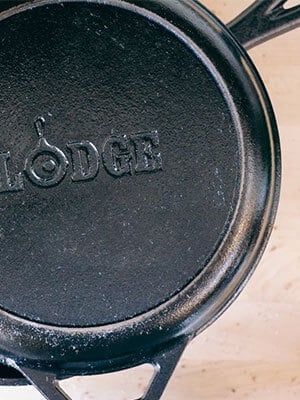
– Do you find the 3.2Q Lodge Combo Cooker sufficient size, or do your sourdough boules get too tall for this size? Do you recommend a larger size?
Thanks so much!
– Here’s a link to the Baking Steel (it should be fixed up in the post as well)
– the Lodge 3.2q I have linked above is perfect for just about any sized boule (except massive Miche, 1.2kg+)! I like that size and have been using one for almost 10 yrs now. If you’re interested in baking oblong batards, check out the Challenger pan I have linked above as well.
Hello, Maurizio. Nearly every time I transfer bread or pizza to the baking stone in the oven, I use the backside of a tray to slide it in. It’s not the most efficient thing, but it works, for the most part. I’ve seen where people use pizza peels to to slide their bread into the oven. What do you use? Thanks!
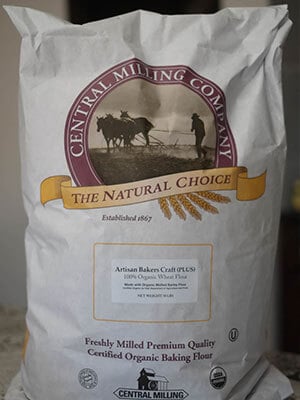
Hi Maurizio, I’m new at sourdough baking. CM has two ABC flour options, one as the plus (malt) and regular. What is the best to use for the sourdough, not sure result difference between the two flours. What recipes are best to use malted flour vs no malt?




733 Comments
Hello Mauricio,
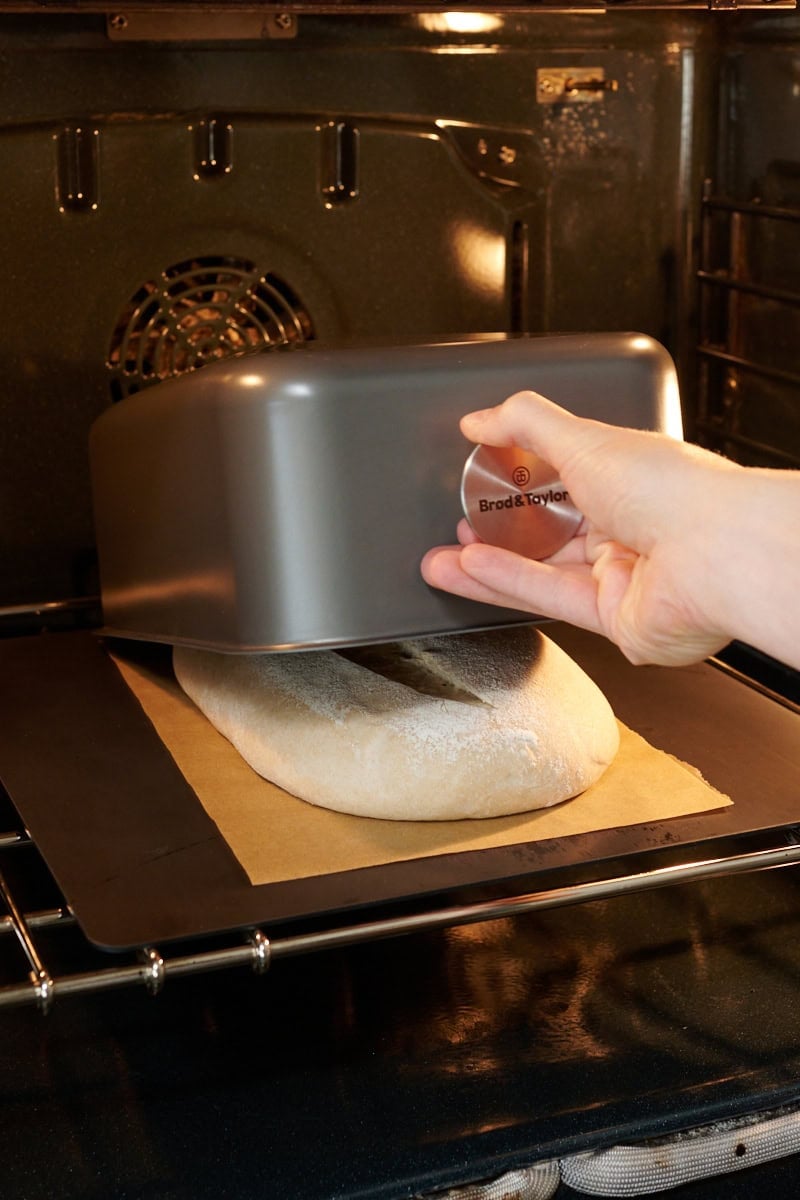
I have just purchased a baking steel. until now I have been baking bread with a cast iron combo and would like to bake on the steel sheet instead. Do I need to make any adjustments to the baking process? (for example: should i add steam in the beginning of the baking?) Also, where should I place the steel in the oven for best results? lower, middle or top shelf?
Thank you so much for the help and the delicious recipes! we enjoy them regularly.
Kindly, Hila.
Awesome, you’ll love it, Hila! Check out my guide to steaming a home oven for tips on how to use the BS!
Maurizio, you write under autolyse that with a high percentage of spelt flour you don’t autolyse. Typically I use about 30% fresh spelt, about 10% rye, and the rest is white flour for my loaves. Where does that fit in the high percentage? I usually set my autolyse for two hours. I’m guessing you think it is too long for the percentages that I listed. How long should I autolyse.
Hey, Bruce! There are no hard and fast rules regarding autolyse times, the above are just my preferences. You can certainly do 2 hours, just observe how the consistency of the dough changes and the result after baking, then try a chance and see if it improves or decides. For that much freshly milled spelt, I personally would do a very short auto, maybe just 15 minutes, if any at all. But that’s just me!
Thank you.
Maurizio, I’m considering purchasing a flour mill. When do you need a mill to produce ‘super” fine flour vs fine flour?
Thank you!
Hey, Jeffrey! The mills listed above will produce fine flour, but it won’t get you to the same level as a large scale miller with their roller mill. In my experience, the flour from the KoMo or Mockmill does make great bread, though!
Hi there — I’m curious whether you’ve ever used the Ankarsrum Assistant mixer? I’m considering buying one. It’s supposed to be great for bread. (No, I’m not affiliated with them at all.)
I’ve used one, but it’s been many, many years now. I do remember thinking it was a great mixer, it’s just a bit different than a typical planetary (KitchenAid) or spiral!
I have one, but I get better results with my Kitchen aid.
I bought an Ankarsrum over the summer. It’s okay. There really is a significant learning curve, because it functions differently from a Kitchen Aid. I don’t particularly like it for stiff dough, which it struggles with in the beginning, and I would not buy it again, but it does have advantages over the KA, including easier to clean, larger bowl (often too large, really), easier to add ingredients, and the motor can run longer. It does make butter really well.
Hi Maurizio!
I am interested in getting a baking steel to try to do your baking with steam in home oven to bake multiple loaves at once. I noticed that the baking steel you recommend from Food52 is no longer available. Do you have another one that you would recommend? Thank you so much for all the helpful bread information!
Hey, Sarah! Yes, it looks like it’s no longer available via Food52. I would pickup this one, it looks exactly the same (and a little cheaper, too)! Happy baking 🙂
Thank you so much for the quick response! I am eying your sourdough bagel recipe right now, so I cannot wait to purchase the steel and try them soon!
You’re welcome! Keep me posted on how it’s going and have fun 😀
Hi Maurizio, I wanted to ask you if you think the KitchenAid 8 qt mixer could be good for me. A few years ago when I just got tired of mixing up large batches of rye dough by hand, I purchased the Bosch 1000 universal mixer, and it really works well for that purpose. But when I tried to use it for mixing other flours, I had a hard time removing the dough because the whole mixing mechanism is attached to the bowl, and it just turned into a big mess, so I opted to mix all my other doughs by hand from start to finish. The Kitchen Aid 8 qt mixer looks amazing. Is it aso good for mixing small amounts of dough, like for 1 or 2 loaves? It looks like it could handle the sticky rye dough, also. What are your thoughts?
Hey! Yes, it’s a great little mixer. I actually use it for rye bread all the time (with the paddle). I would say it can struggle with some lower hydration doughs, and if you’re doing large batches it might not be the best option. But for medium hydration or even some high hydration doughs it’s suitable. If you’re really serious about getting a bread mixer, though, you might want to also check out mixers like the Famag spiral mixer, Haussler, or Sunmix.
I’ll check them out, thank you. Love your site! I have learned so much!
Hello! Do you have a favorite pizza peel? I’ll be using it mostly for baking bread with steam (without a dutch oven), and sometimes for pizza. Any preference on wood vs. metal? Thanks!
Hey, Emily! Wood is definitely my favorite (this is a nice one with various sizes).
Thank you!
Hey Maurizio – how do I figure out the maximum dough capacity of any bread pan/pot? Since Lockdown, I’ve made a bunch (okay 70+ loaves) of no-knead breads (3 cup flour types), in my beloved EH bread pot, but I’m kind of gutless in regards to testing how much dough the pot would actually take. I’m also checking out bigger DO’s and bakeware –
Do you have a magic chart of some kind?
I usually start based on experience, and trial and error from there on. I’ll add this to my Guide pages to-do list, this would definitely be helpful!
I reached out to EH and the staffer said that she wouldn’t use more than 4 cups (flour +). I’ll look forward to seeing your future chart and will read up (and gather courage) to try out my starter in one of your basic recipes. Thx – you rock.
Hi Maurizio — I see that you use both the Mockmill and the Grainmaker. Do you use one over the other for specific applications or have you settled in on one of the two?
Hey Jim! The GrainMaker (GM) makes incredible flour. It’s very fine and very low temperature. It does take time and effort to turn the crank though, so that’s the drawback. I use my MM when I need to quickly mill flour, and it does a great job, too! So it’s a tradeoff of time. Either way you can’t beat the flavor and nutrition of freshly milled flour.
Hi, amazing site! Am curious on your opinion on thr
Mockmill Stone Grain Mill Attachment For Stand Mixers
Is it equivalent to the standalone version you recommend? Thanks for the help!
Thanks! Unfortunately, I don’t have any experience with that MM attachment. For me, though, I prefer a standalone unit!
Hi there! Now I’m using a baking stone, by ROCKSHEAT, and like it a lot. How do I bake bread on it without overbaking? How can I convert your oven bake times for Dutch Ovens? Can I spray water in the oven for steam when using it? And, can I use my new KitchenAid Mixer with dough paddle and hook for any of your recipes, not just the few that call for a mixer? How will I know when I can use ANY of your recipes in another recipe and know it will be okay?
If you’re finding the bottom of your loaves color too fast or bake too much, reduce the preheat time and/or temp so the stone is saturated with less heat. Or, bake for less time overall. Should be just fine to steam the oven with that stone, just be careful as some stones can crack if excessive cold water is spilled on them (after 10+ yrs of baking, this has never happened to me, though).
Check out my guide to baking in a Dutch oven for general times & temps.
Yes, you can use your mixer with any of the recipes here.
Thanks so much, Maurizio! I’ve really enjoyed baking your recipes and feeding my family delicious bread, pancakes, English Muffins, and even DOG BISCUITS!! (DOG BISCUITS not your recipe, but thanks for giving me the courage to embark on this sourdough journey!)
You’re very welcome, Mare, glad I could help! I’ve heard of sourdough dog biscuits, I wonder if my picky German Shepherd would finally eat a treat!? Happy baking 🙂
They’re made with mint, wheat germ and cornmeal. Our dog AND horses love them!!! And, they’re edible for humans, too. I’d be happy to share the recipe with you if you’d like. A friend gave me Nancy Silverton’s book, “Breads from the La Brea Bakery.” (copyright 1996) It’s in there, in the section with recipes using SD discard called, “Sourdough Specialties.”
Thanks, Mare! You know, I think I have that book. I’ll take a look, I’m sure my dog will love them (and me, too?!).
Hey Mauricio,
Wondering if you’ll ever tell us who makes that gorgeous white and orange mixing bowl we see in all the pictures?
Heath Ceramics in San Francisco!
Thank you!!
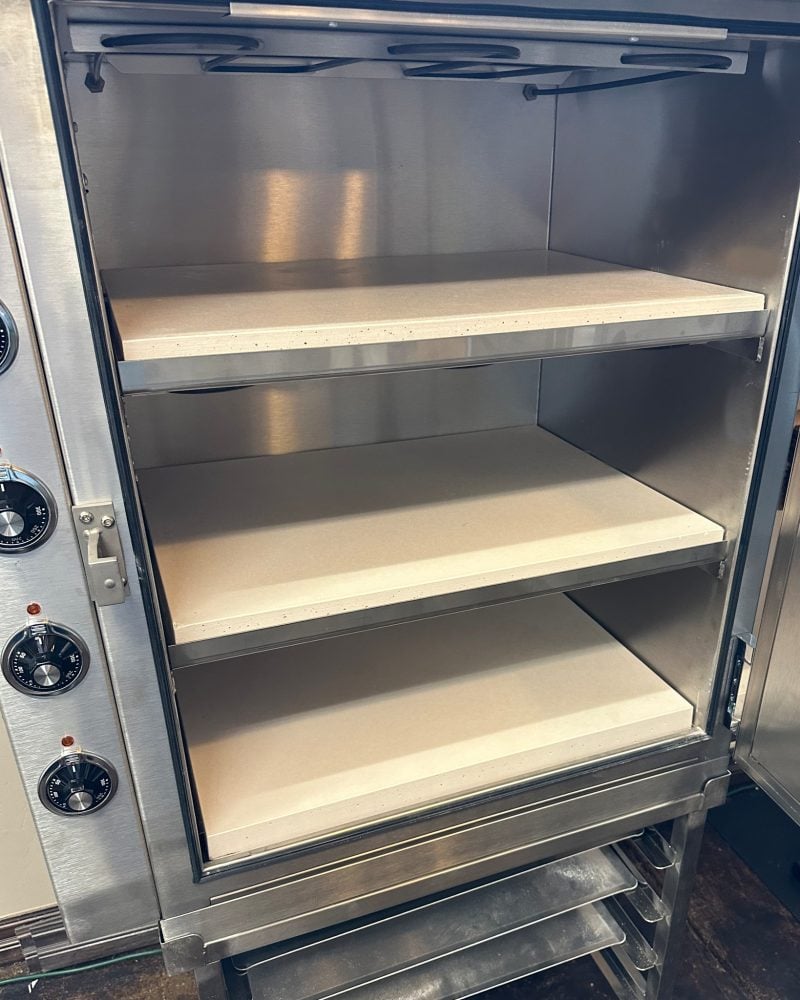
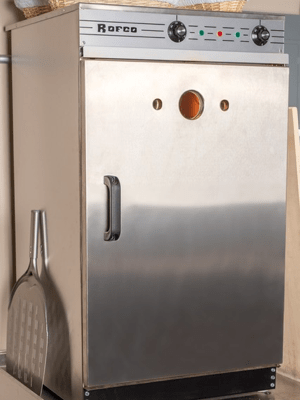
Hi Maurizio, what are your thoughts on the smaller Rofco ovens? Do they work as well? Or do you need the volume of the b40 for adequate steam?
P
Hey, Paula! I’ve never used a small one, but it should do just as well and shouldn’t affect steaming at all (since you have to steam manually).
Having trouble to find a ROFCO B40, anyone here selling some used?
They seem to be on backorder. I have a Baking Tools channel on our private Discord chat server (accessible to members), that might be a place to reach others.
HI, Maurizio. What a great site! I want to work with high hydration dough, and want to use the slap and fold method you use. Won’t work on my tile counters, so it’s time to upgrade to granite or quartz. I’d sure like your recommendation. Thanks.
Hey, Neil! Either granite or quartz will work well. I personally have granite here and I’ve had no issues.
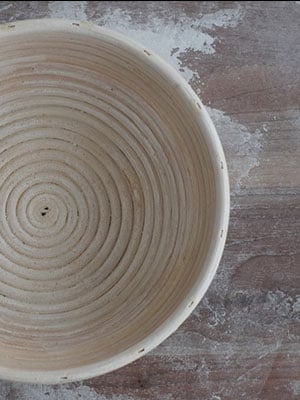
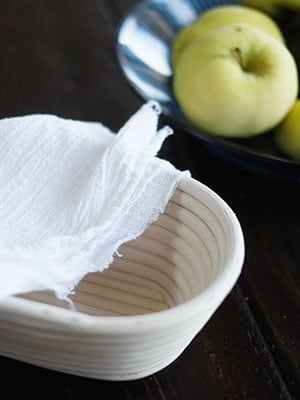
Yes, I use my 14″ banneton with the Challenger but the interior length of the pan is 11.5″, so I ensure the dough I place in the basket is shaped tightly enough to not spread the entire 14″ length. I’ve done up to 1kg dough weight in the Challenger.
Hi. I have a similar question … I have an 11″ banneton (from Challenger, bought with my pan) and two round bannetons for batards: one that is 8″ (interior diameter) and another that is 9″ (again, interior diameter). I am just not sure of the ideal dough weight for any of them. Can you help? Thanks! (LOVING your site – sound advice, clearly written. Thank you!)
Glad to hear that, Sarah! For an 8″ basket I’d probably go with something like 700-800g total dough weight. The 9″ you might be able to push up to 900g!
Is there a larger oval banneton you recommend? I’ve to date only done two pound boules. I thought a batard could be larger, but bannetons I see max out at 1.5lbs of dough. Thank you.
I like the 14″ long ones from sfbi.com.
Hi Maurizio, I’m new to your site and new to sourdough baking. How does sprouted grain flours (like spelt) affect the sourdough baking process? I think you can use it for making starter, but what about using it to bake bread? I would like to use more sprouted grains due to their ease of digestibility and increased vite and mineral content. Thanks!
Works wonderfully well! Check out my recipe for sprouted grain sourdough.
Hi Maurizio, do you know of a baguette peel suitable for use with a 13”x18” half sheet pan? The ones I’ve found are too long and would bump against the lip of the pan. Thanks!
Unfortunately, I do not! I use this one from King Arthur.
So where do you rest your baguettes while they proof in the couche? Just on the bench? Thanks.
That’s right. Or, you can use a large cutting board, or more recently, I’ve been using a proofing board like this one.
Hi Maurizio! I noticed that in one of your other posts you bake on two stones. Do you have a link to which stones you use? I’m not sure what the right thickness is (and do you always prefer stone to steel for bread?)
Hey, Sam! I typically use the baking steel linked above for everything these days. I almost never use a baking stone!
Hi Maurizio! What a great site. I’ve been baking sourdough for about a year, but am excited to try some of the recipes on your site for a change. Two questions:
– Do you have a new link for the baking steel? The link does not seem to be working.
– Do you find the 3.2Q Lodge Combo Cooker sufficient size, or do your sourdough boules get too tall for this size? Do you recommend a larger size?
Thanks so much!
Hey, Kelli! Thank you, I appreciate that.
– Here’s a link to the Baking Steel (it should be fixed up in the post as well)
– the Lodge 3.2q I have linked above is perfect for just about any sized boule (except massive Miche, 1.2kg+)! I like that size and have been using one for almost 10 yrs now. If you’re interested in baking oblong batards, check out the Challenger pan I have linked above as well.
Hope that helps!
Hello, Maurizio. Nearly every time I transfer bread or pizza to the baking stone in the oven, I use the backside of a tray to slide it in. It’s not the most efficient thing, but it works, for the most part. I’ve seen where people use pizza peels to to slide their bread into the oven. What do you use? Thanks!
That works just fine, Marie! But yes, I do use my small home pizza peel for transferring.
Hi Maurizio, I’m new at sourdough baking. CM has two ABC flour options, one as the plus (malt) and regular. What is the best to use for the sourdough, not sure result difference between the two flours. What recipes are best to use malted flour vs no malt?
Welcome, Annie! I almost always use CM ABC Plus (it has malt added). That’s actually my go-to flour for most baking.
Check out my malted sourdough bread recipe for some background info on malt!
Thank you.
Apologies, I have only just seen your reply.
Yes, I have been using lava rocks in a baking tray and above it a thick baking stone. It works, but my Dutch oven gives better results.
I am going to try the Challenger pan. Thank you for the tip.
Be well.
Where can I purchase wooden Bagel boards? I’d like to try these with your Sourdough Bagel recipe
I have wanted to try them as well—I don’t have a source for these just yet!