

It’s been cold here in New Mexico, like really, really cold. When it’s ten degrees outside you only want one of a few things: 1) a cup of hot coffee and light the fireplace, 2) a big bowl of homemade minestrone with a crunchy slice of sourdough bread, or 3) go outside for approximately 2 minutes while the dog runs through the snow, be thankful for a warm home, and promptly return indoors.
Don’t get me wrong, I love snowboarding (and we have excellent snowboarding nearby in Santa Fe), snowshoeing, and dog walks with 3-plus jackets on, but a day inside with hot coffee and comfort food is a beautiful thing. And this is where this rye sourdough and smørrebrød comes into play.
The cold weather had me motivated to look at traditional foods made in colder regions, and thus my recent acquisition of The Nordic Cookbook by Magnus Nilsson (in case you’re wondering, yes, I have more baking and cookbooks than I know what to do with. Something is terrific about cookbooks: they instantly transport you to the kitchen of another cook and are filled with endless potential for exquisite new food). When they say, it’s a tome they are not exaggerating. Upon opening, I immediately paged to the section titled smørrebrød, which translates to “butter and bread,” but represents the daily ritual of “open sandwiches” in Nordic cultures.
Placed on a slice of rugbrød, or sourdough rye bread, these open sandwiches are miniature works of art with delicately placed meats, cheeses, butter, vegetables, pickles, and greens. One can easily get lost in the research of smörgås, as the Swedish call them, there are endless variations with a myriad of delicious ingredients. Rye bread is a foreign thing to me. I didn’t grow up eating it, and my parents, being Italian, surely didn’t eat it often or bake it at home. I equate it with a bitter, strong taste that can be overwhelming, and yet I find it strangely appealing.
While I baked a few of these in the past, they mostly went uneaten here in my house — as I read through The Nordic Cookbook, I was inspired and wanted to give them another try.
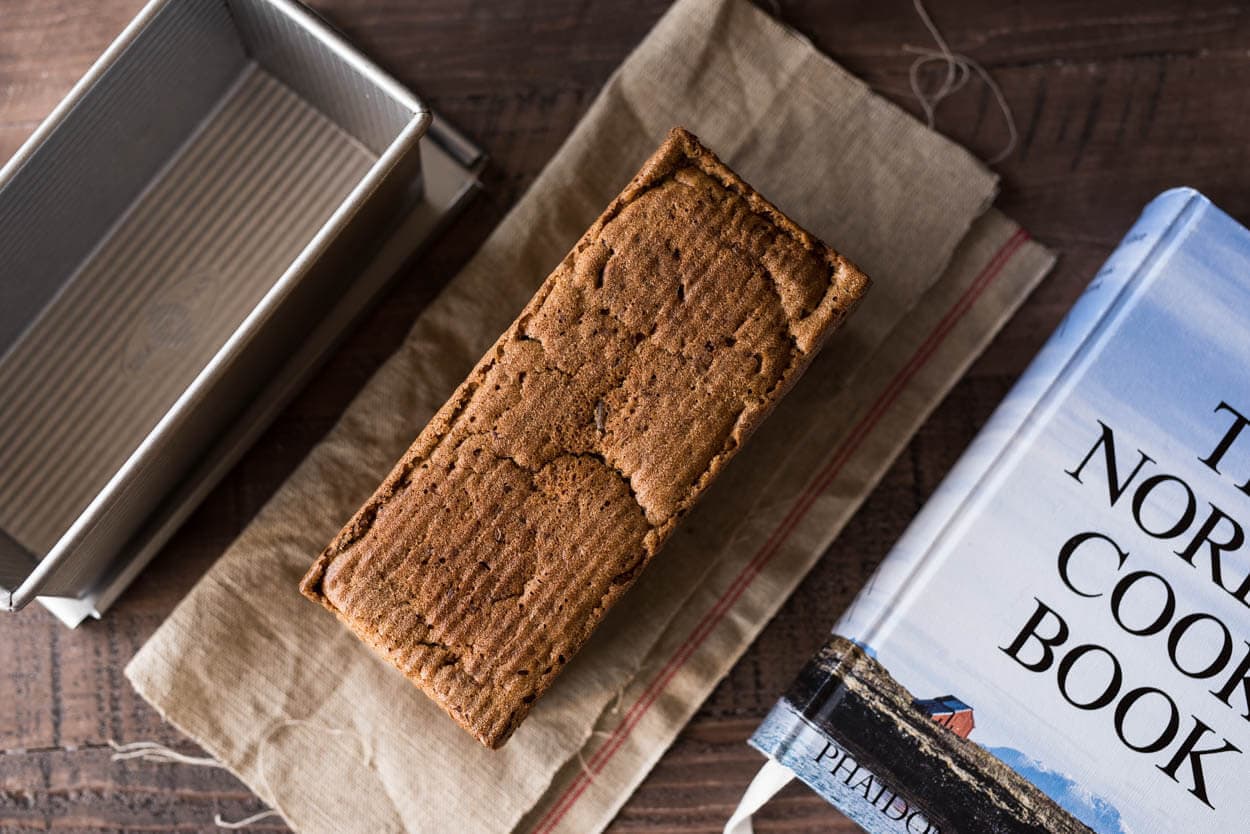
When I think of rye bread, I think of hearty slices of dense bread with a dark, almost black, color to the crust and crumb. In my mind, I had visions of opening up this bread a little, not so much as to completely obscure the purity of traditional rye but enough to bridge the gap. I was determined to tone down the sour notes and intense rye flavor, to try and transform this bread from something that will keep you alive through Nordic winters to bread that might get you through a couple of light winter days here in the Southwest. I think my results accomplished that—it’s a tasty bread that I’m sure you’ll enjoy on those cold, winter days.
In this post, I’ve included my rye sourdough recipe, quick pickled red onions, and a couple of smørrebrød that were inspired by The Nordic Cookbook.
Flour Selection
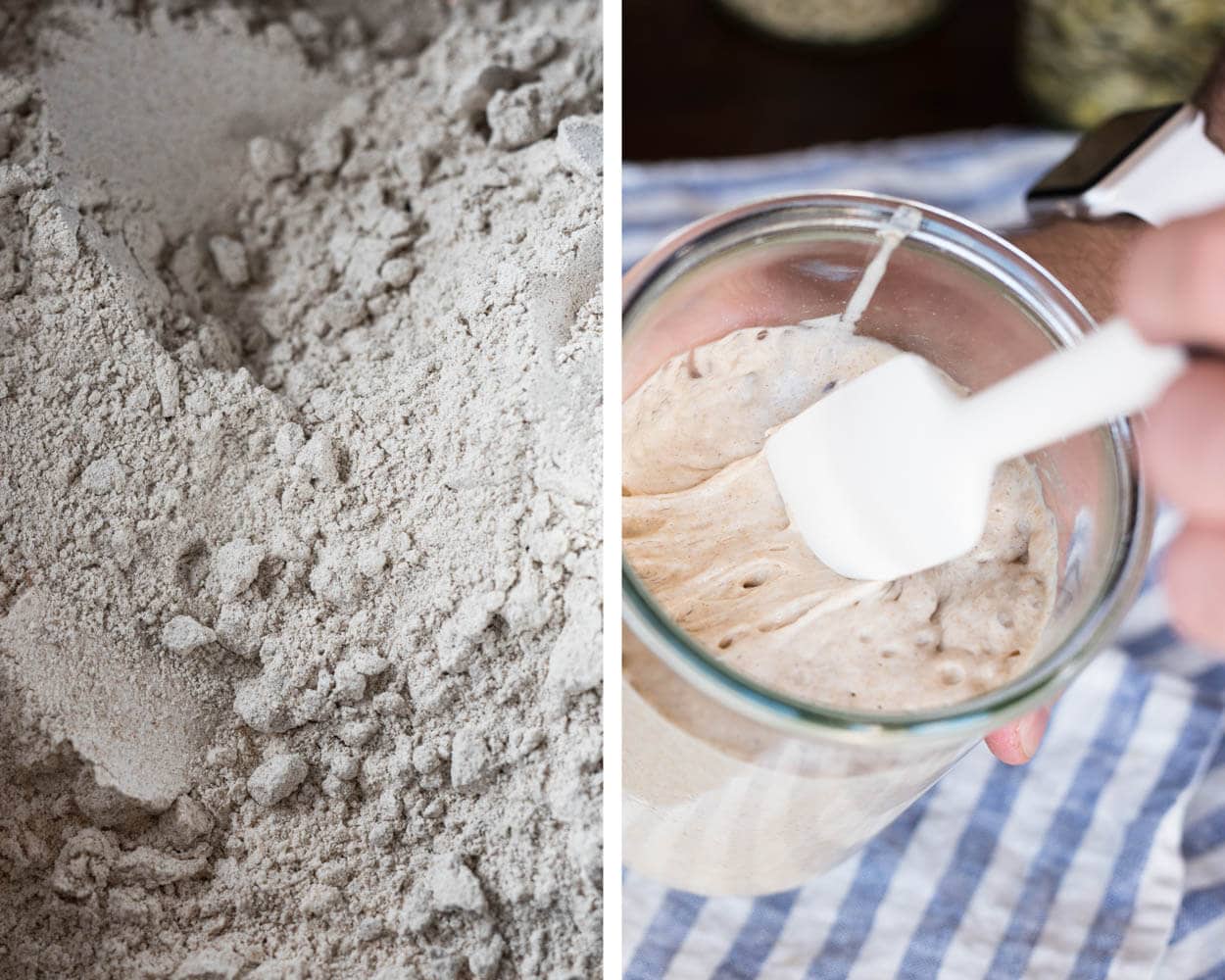
In the past, my rye bread was composed of 100% dark whole-grain rye. The flavor of these loaves was quite intense and, as I mentioned earlier, this go-around I wanted to tone down those flavors and make more balanced bread. I planned to mix part dark rye, part medium (or white) rye, and part something else, in this case, freshly milled spelt.
You could modify this recipe to change the percentages as you see fit, however, know that the more spelt or traditional wheat you add, the more rise your bread will have. A conventional rye bread should be a rather dense thing, with a hearty flavor, especially if you want them to stand up to some of the smørrebrød I outline below. I tacked on a few test bags of Central Milling Dark Rye and Medium Rye to my last bulk order, and I’ve found the flour to be great (big surprise). It’s milled super fine and has a fluffy, smooth texture to it. Any whole grain rye flour will work well in this recipe. I’ve been playing with freshly milled spelt for a while now and love the results when mixed with traditional wheat (I’ll have a future writeup on this) and it works equally well here in this bread while keeping the whole grain percentage rather high.
“Medium Rye” can be made by sifting any dark rye you purchase. I’ve done this previously using a #50 sifting screen to sift out some of the larger particles from the dark rye. Alternatively, you could use all dark rye flour with the expectation that your bread will have a slightly more intense flavor.
Rye Sourdough Recipe
Vitals
| Total Dough Weight | 1,200 grams |
| Pre-fermented Flour | 40.00% |
| Hydration | 95.00% (water + beer) |
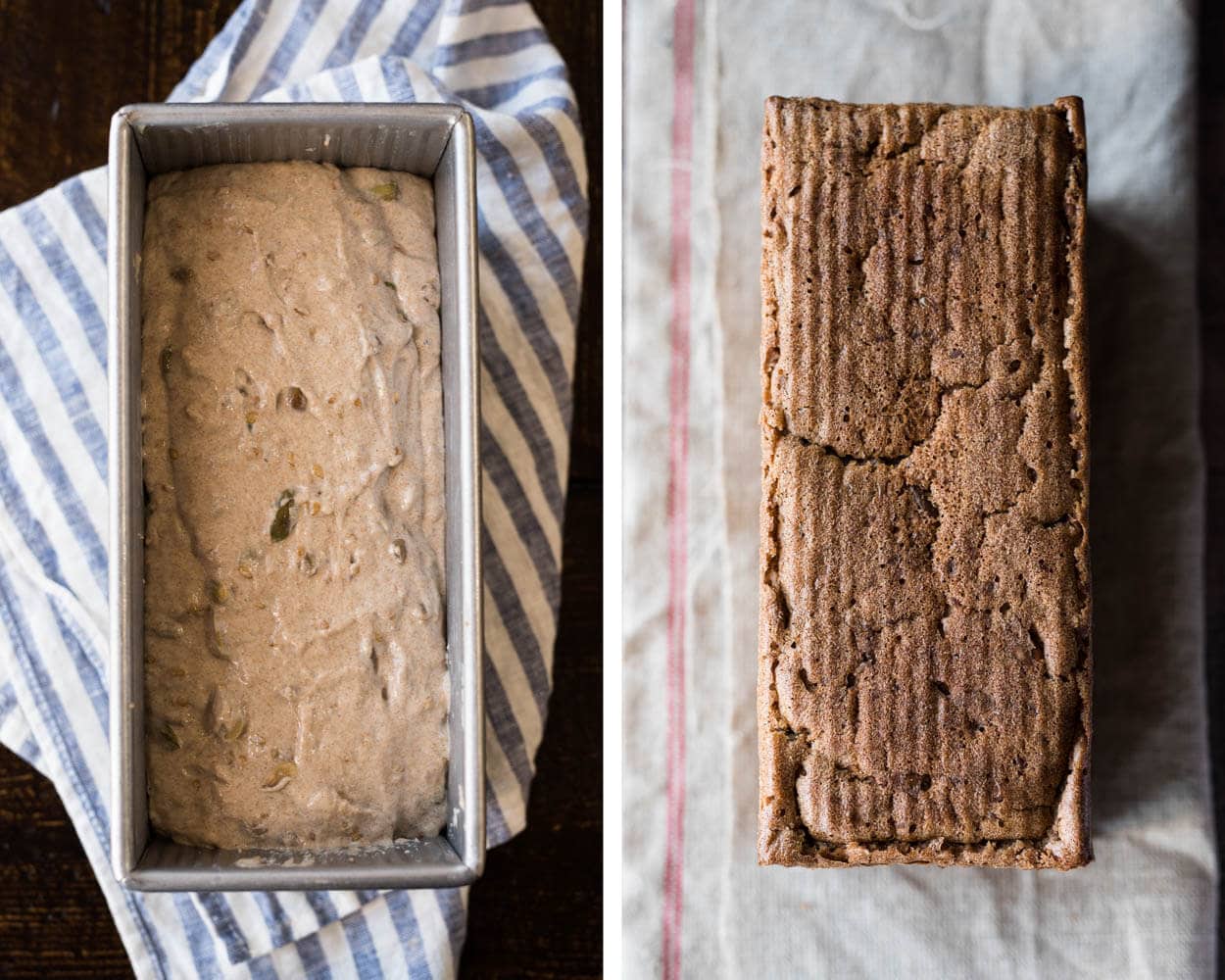
| Yield | One 9” x 4” x 4″ Pullman pan loaf |
I used my 9” x 4” x 4″ Pullman Pan for this bread. It has a nice lid you slide on to create that flat top, and you’d be hard-pressed to get anything to stick to the sides of this thing. If you have a 9×4 pan that doesn’t have a lid I’m sure that will work just as well, you’ll end up with a domed top which would be just fine.
See my guide to shaping a loaf pan for more pan sizes and examples.
Total Formula
| Weight | Ingredient | Baker’s Percentage |
|---|---|---|
| 234g | Sifted Rye Flour (Central Milling Medium Rye) | 40.00% |
| 176g | Whole Grain Rye Flour (Central Milling Whole Rye) | 30.00% |
| 176g | Freshly Milled Whole Grain Spelt | 30.00% |
| 468g | Water | 80.00% |
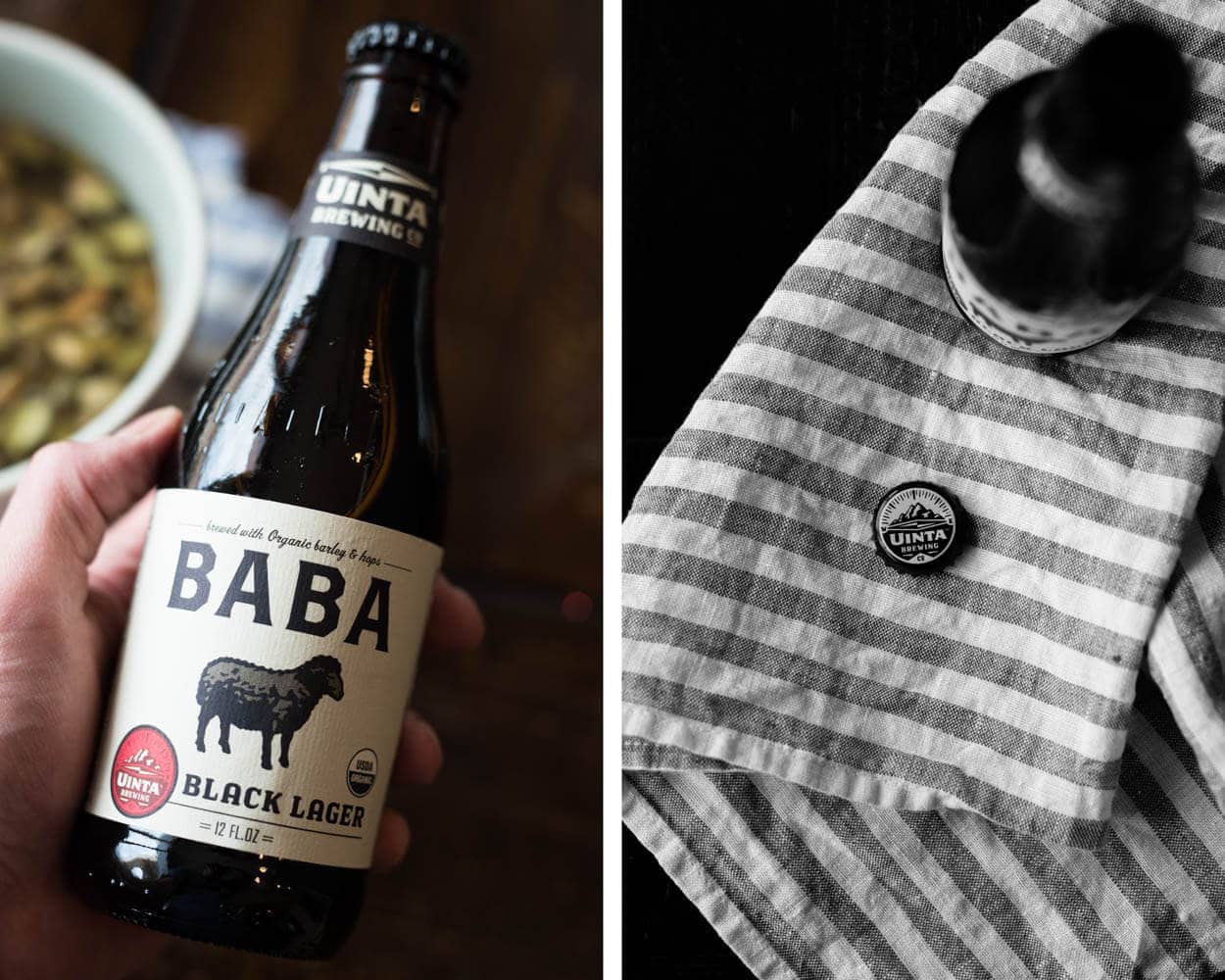
| 88g | Dark beer (stout, black lager, etc.) | 15.00% |
| 12g | Fine sea salt | 2.00% |
| 47g | Ripe sourdough starter | 8.00% |
Levain Build
The night before you plan to bake, prepare the levain and soaker (directions to follow). Let the levain ferment for 12 hours overnight at room temperature, about 70-72°F (21-22°C).
| Weight | Ingredient | Baker’s Percentage |
|---|---|---|
| 47g | Ripe starter (100% hydration) | 20% |
| 234g | Sifted Rye Flour (Central Milling Medium Rye) | 100% |
| 234g | Water | 100% |
Soaker
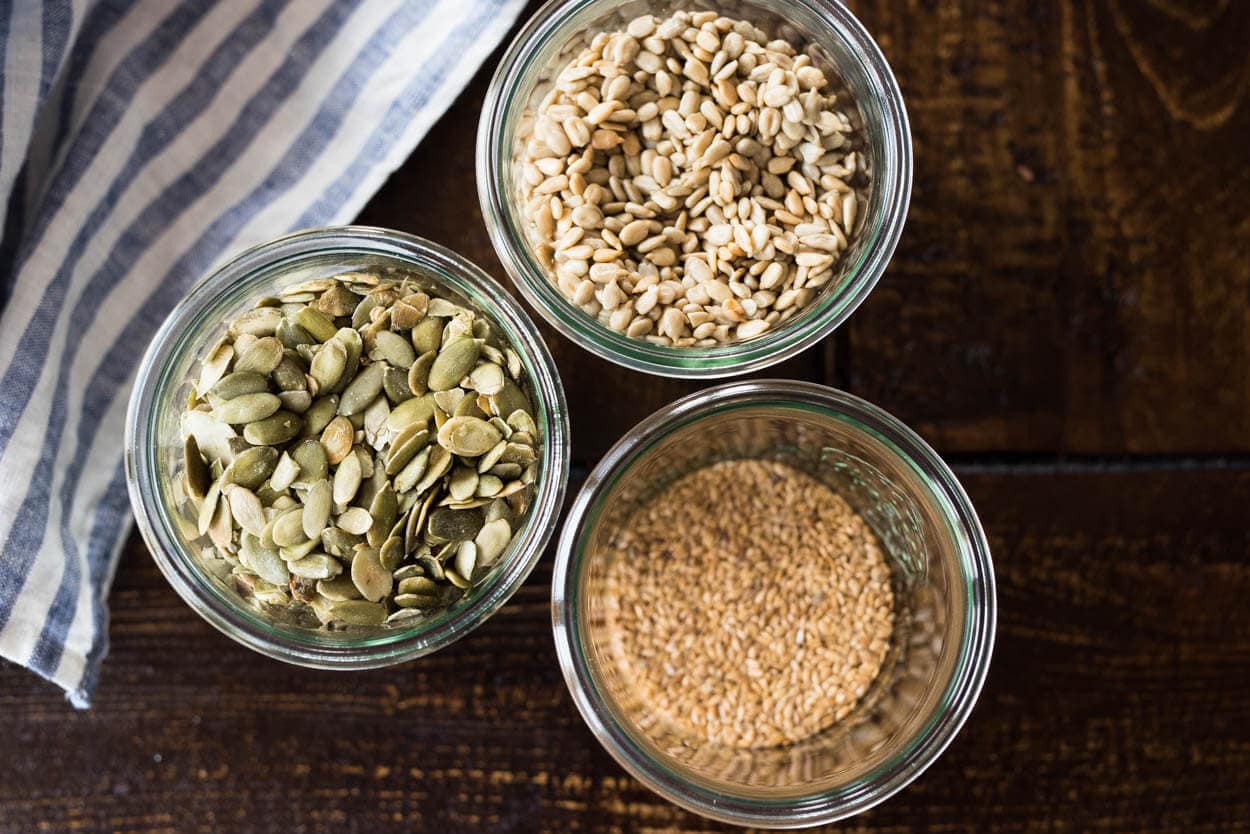
Prepare this soaker at the same time you prepare your levain—the night before you plan to bake. Soaking the seeds softens them and helps to bring out their oils, which later wonderfully infuses the mixed dough.
| Weight | Ingredient |
|---|---|
| 65g | Sunflower Seeds (unsalted) |
| 65g | Pumpkin Seeds (hulled & unsalted) |
| 30g | Flaxseeds (raw) |
Spread the seed mixture out in a single layer on a rimmed baking sheet lined with parchment paper (save this when done toasting the seeds to use it later when you bake the bread) or a silicone mat and toast at 350°F (175°C) for 15 minutes. Toss around once midway through and keep an eye on them towards the end, seeds can go from toasted to burned rather quickly.
Place toasted seeds in a glass bowl, pour enough hot water over them (I used hot water from the tap) to cover. Wait until the mixture cools a bit and then loosely cover the bowl with a lid to rest.
Dough Formula
Note that the baker’s percentages listed below are concerning the final dough ingredients and do not take into account the levain.
The target final dough temperature (FDT) is 80°F (26°C).
Note: Due to feedback from readers (thank you!) I’ve reduced the hydration of this recipe to help avoid an overly gummy interior and potential separation at the top between the crust and the crumb. Additionally, I’ve modified some of the percentages and ingredients after many test bakes of this formula.
| Weight | Ingredient |
|---|---|
| 0g (all of this was used in the levain) | Sifted Rye Flour (Central Milling Medium Rye) |
| 176g | Whole Grain Rye Flour (Central Milling Whole Rye) |
| 176g | Freshly Milled Whole Grain Spelt |
| 234g | Water |
| 88g | Dark beer (stout, black lager, etc.) |
| 12g | Fine sea salt |
| 515g | All the ripe levain (see above) |
Method
1. Levain & Soaker – 10:00 p.m. (the day before baking)
Mix the ingredients for your levain and set somewhere to ferment for 10-12 hours at around 72-74°F / 22-23°C (see my post on the Importance of Dough Temperature for more information).
At the same time, toast your seeds and soak them in hot water for the same duration as your levain.
2. Mix – 10:00 a.m. (the next day)
Drain the seed mixture using a fine-mesh sieve and let sit while you prepare the rest of the ingredients.
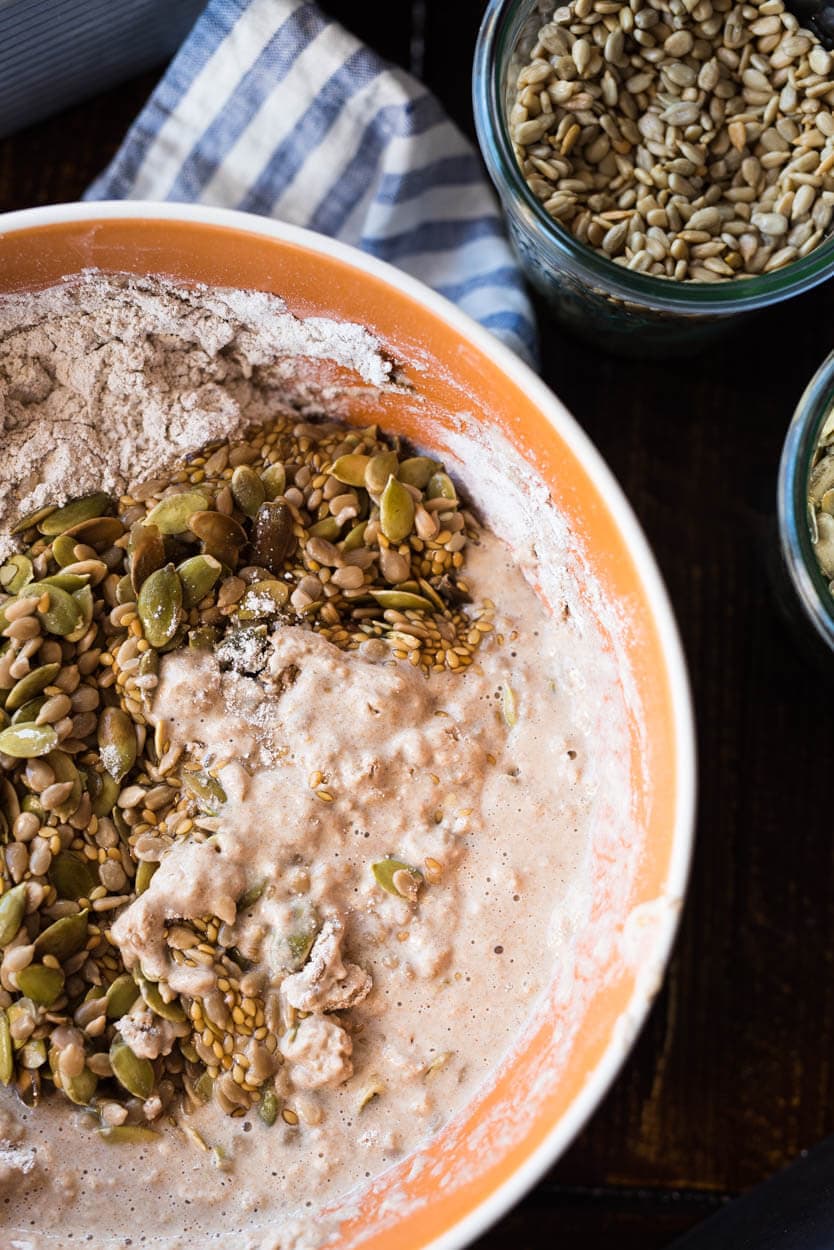
Add the levain to a mixing bowl along with the beer and the room temperature water and stir around to dissolve the levain. Add in all the dry ingredients plus the drained seed mixture. Mix well with wet hands or a spatula. Make sure you mix thoroughly so there are are no dry bits of flour remaining, and the seeds are incorporated well.
3. Bulk Fermentation – 10:10 a.m.
Cover the bowl and let it bulk ferment for 30 minutes at 74°F (23°C) ambient temperature. No stretch and folds are necessary.
4. Proof – 10:40 a.m.
Lightly grease your Pullman pan (I used a light coating of butter) and scoop out the dough, a.k.a. “wet concrete,” from the bulk container into your greased Pullman pan. Smooth the top with wet hands or a spatula. Let proof, covered with reusable plastic, for 1.5 to 2 hours at around 74°F (23°C). The dough should rise to about 1” below the top rim of your pan.
5. Bake – 12:15 p.m.
Preheat the oven to 400°F (200°C).
I baked this bread the entire time with the lid on. Place the Pullman pan on a baking sheet lined with a silicone mat (or the recycled parchment paper when you toasted your seeds) and bake for 35 minutes at 400°F (200°C). Turn the heat down to 350°F (175°C) and bake for 1.5 to 2 hours until the internal temperature reaches 208-210°F (97-98°C). Check the loaf occasionally in the last 20 minutes to check for doneness.
When I baked this bread it rose high enough in the pan to spill out the top of my Pullman; thankfully I had the thought to bake this on a baking sheet. I reduced the ingredients in this to hopefully prevent that from happening to you, but if it does, it’s not a big deal, continue with the bake. The spillage will be caught by the baking sheet without any issues.
I think I could have baked the loaf pictured in this post an additional 10-15 minutes or so. The internal temperature read 208°F (97°C), and while it was baked, I would have liked a bit more crunch on that crust. Be flexible with your baking duration and check the loaf periodically towards the end.
There is no need to steam your oven for this bread if you’re baking with the lid on.
6. Rest
Once your bread has finished baking, remove the lid to your Pullman pan (if used) and let sit on a wire rack until cool to the touch. Gently remove the bread from the pan, wrap in a kitchen towel or baker’s linen (couche) and let it rest on the counter for 24-48 hours. If you slice too soon, you’ll end up with a gummy interior. See my post on storing bread to keep it fresh for more on this.
Smørrebrød Recipes
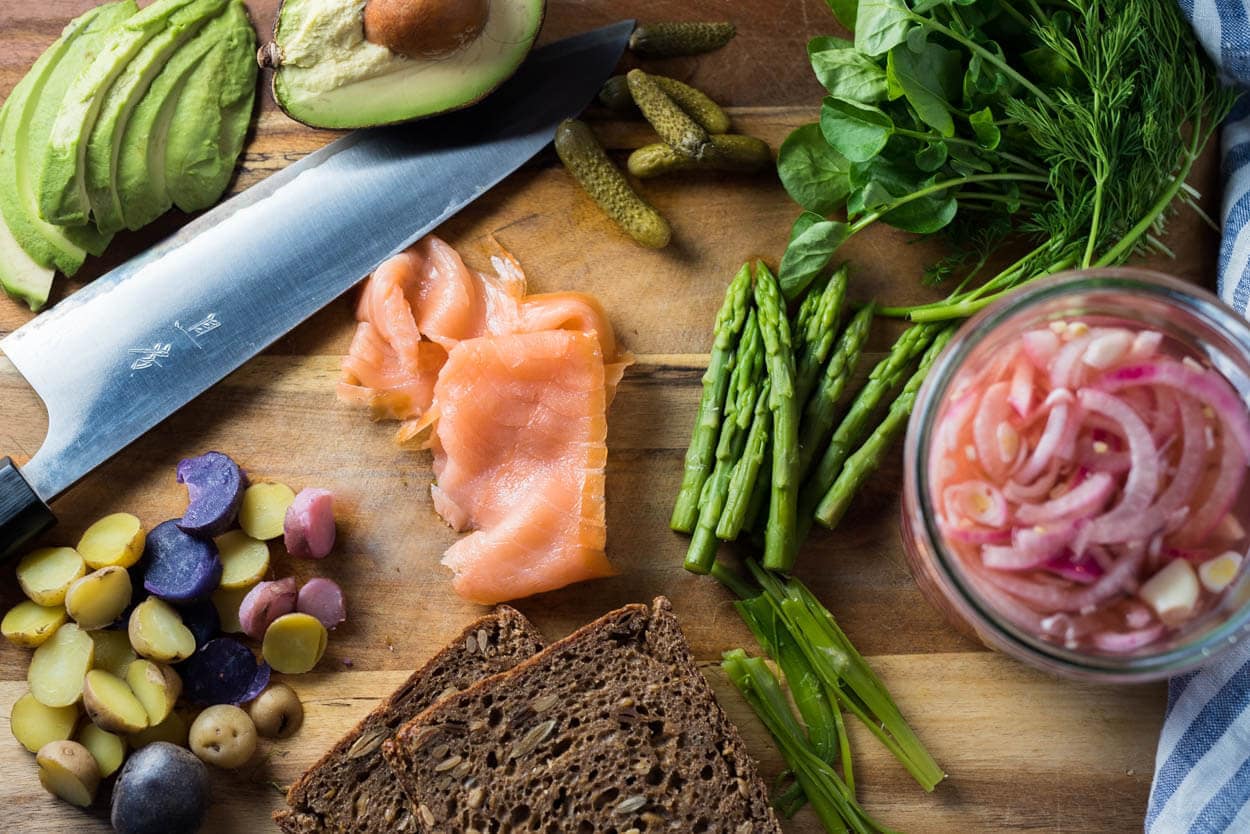
The possibilities here are endless. Below are two recipes I found and slightly modified to suit the ingredients I had on hand and found at the market — they both turned out to be so delicious I made another pair the next day for lunch.
While these look like two puny pieces of meticulously decorated toast, don’t for a second think they are not filling. I ate two, I mean just two, and I was stuffed for hours. The hearty rye bread, healthy fats, and protein from the salmon will keep you satiated for longer than you might think.
… for most Danish open-faced sandwiches there should be enough toppings to completely obscure the bread…
Magnus Nilsson
According to Magnus in his cookbook, open-faced sandwiches should be piled high with ingredients, enough to completely cover the rye sourdough below. I came close, but next time I’ll be piling more on top.
Avocado, Potato, and Homemade Pickled Red Onion with Watercress
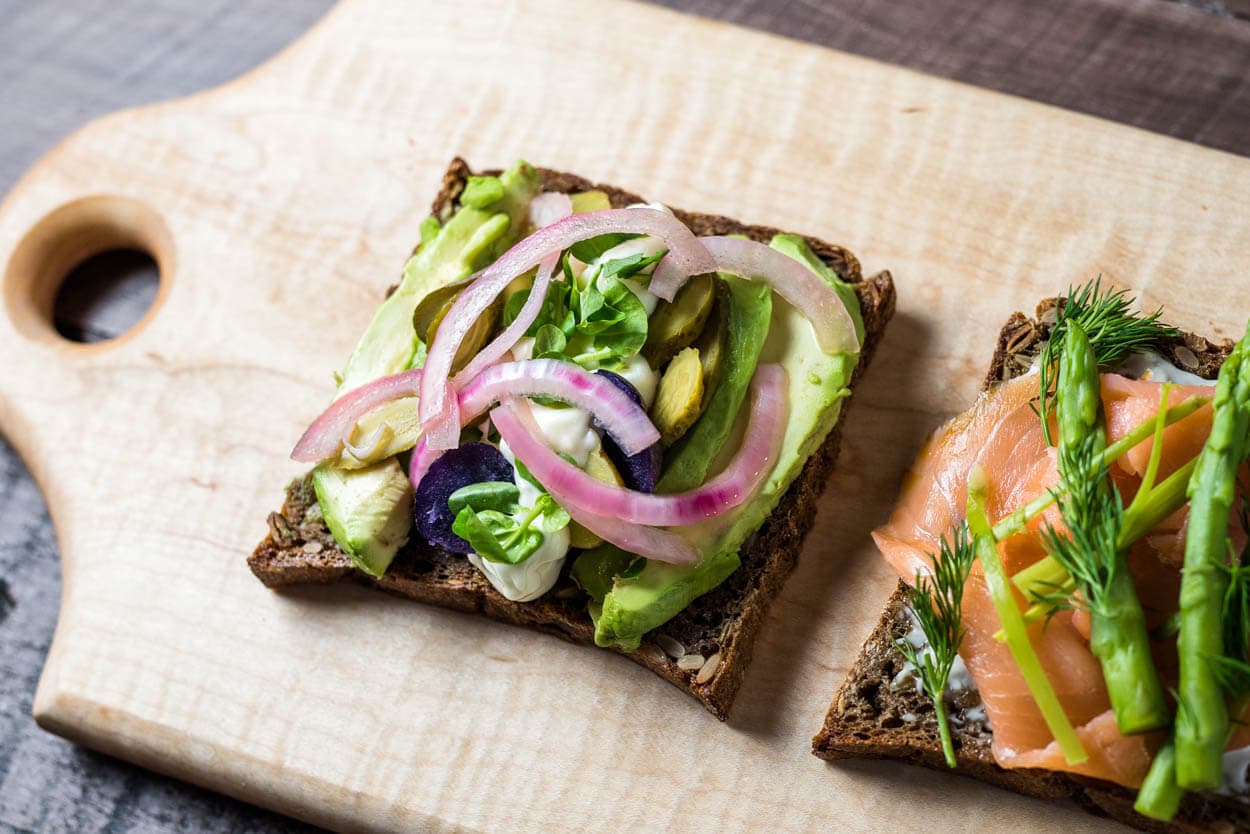
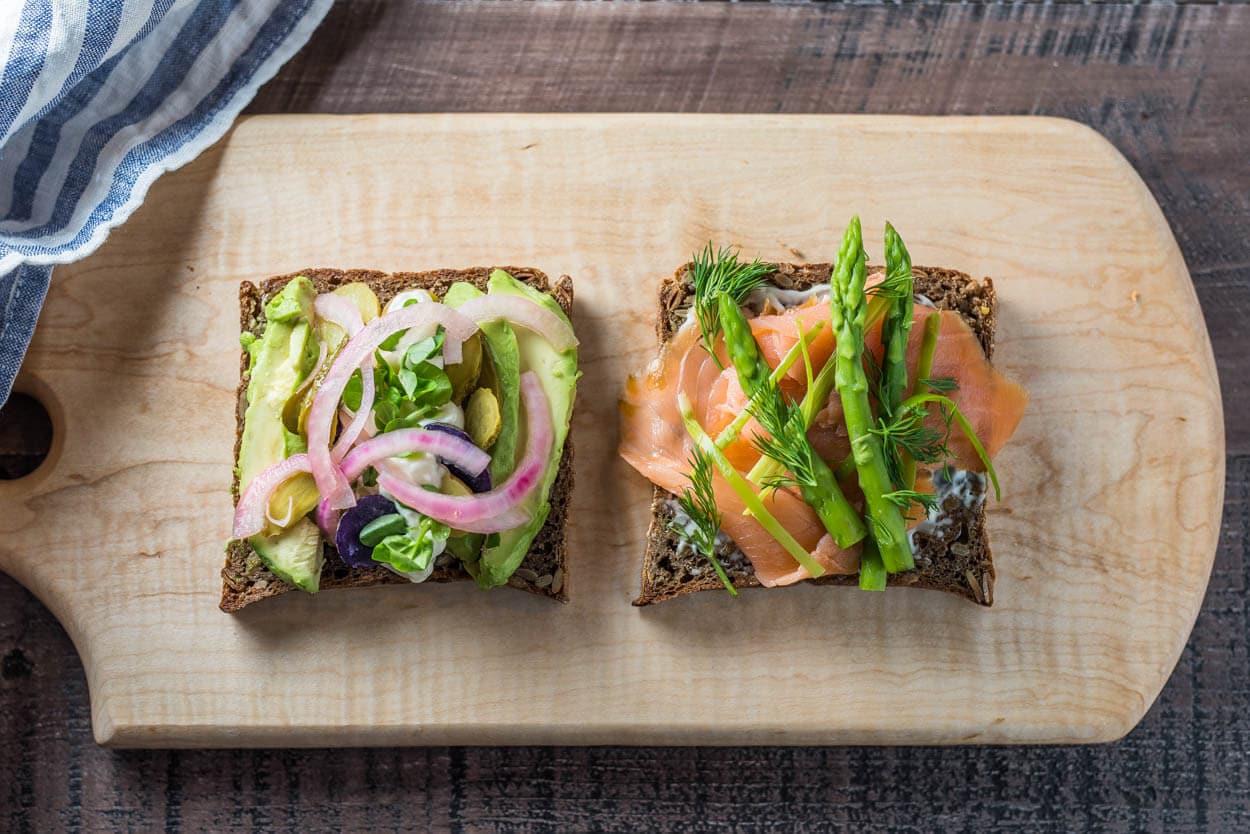
Avocado and mayonnaise go well together, so I knew this would be a hit. The hearty rye bread holds up to the fatty, sweet ingredients and the pickled red onion gives this an incredible acid punch. Avocado probably isn’t a traditional ingredient in Scandinavian countries, but out here good quality ones are just about everywhere. Makes two slices.
Ingredients:
- 1 ripe avocado, thinly sliced
- A handful of small potatoes (I used a mix of colored potatoes, but new potatoes would work well here), boiled in salted water for about 15-20 minutes until tender but not mushy, sliced thin
- A few thin slices of pickled red onion (see recipe below)
- A few French-style gherkin baby pickles
- 2 Tbsp mayonnaise
- Watercress to top
- Small pinch flaky sea salt
Method:
- Place sliced avocado flat on top of toasted rye sourdough
- Scatter sliced potatoes on top of avocados
- Make a thick line of mayonnaise down the middle
- Top mayonnaise with small watercress
- Scatter a few thinly sliced gherkins, pickled red onions and a small pinch of sea salt on top of all
Smoked Norwegian Salmon with Asparagus Spears and Mayonnaise
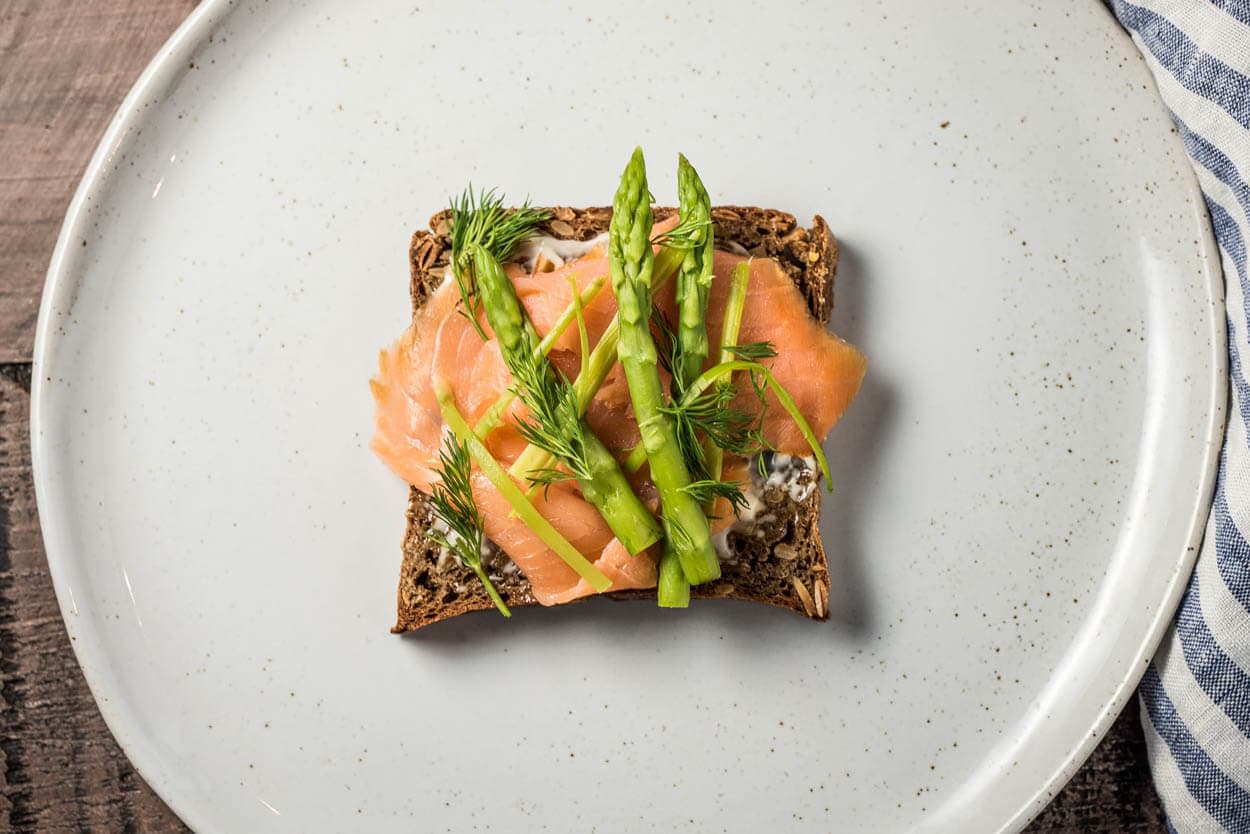
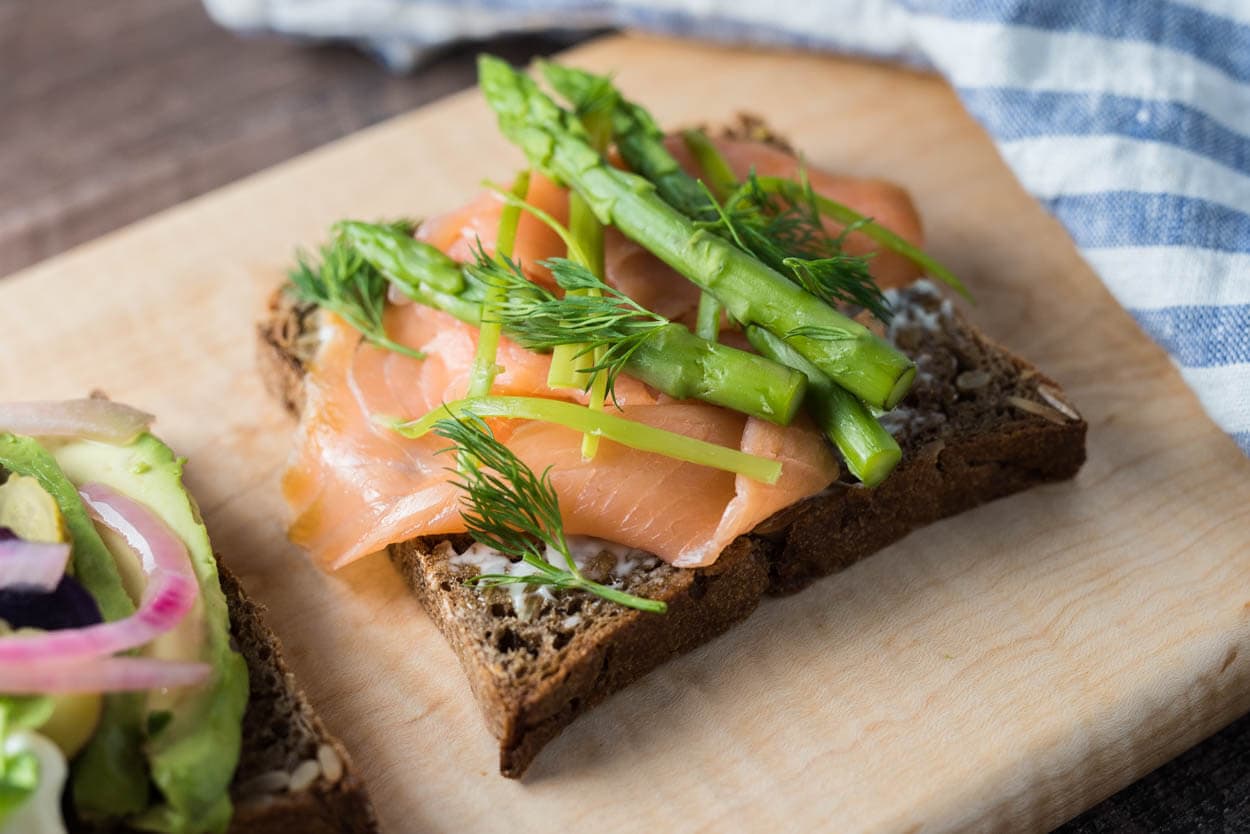
Smoked salmon isn’t something I eat often. I think the last time I had salmon this way (sushi doesn’t count) was a bagel & lox breakfast in New York City almost ten years ago (I know, lox is not smoked salmon, but it’s the closest thing I’ve had!). The smoked salmon, mayonnaise and fresh dill all work well together — a natural combination. I boiled the asparagus spears for about 8 minutes until they were starting to wilt. While they have no seasoning directly, they impart a subtle, balanced flavor to the rest of the ingredients. And again, the hearty rye bread carries this whole thing wonderfully. Makes two slices.
Ingredients:
- Smoked Norwegian Salmon (you can find this in vacuum packs at the market)
- 6 small asparagus spears — tops left whole, hard bottoms discarded and middle discarded save for a few shavings with a vegetable peeler
- 2 Tbsp mayonnaise
- Handful fresh dill
- Small pinch flaky sea salt
Method:
- Boil, or steam, the asparagus spears for 8 minutes until they start to wilt, don’t overcook. Cut off the bottom half and use a vegetable peeler to make a few thin strands
- Spread a thin layer of mayonnaise on a slice of toasted rye sourdough
- Place a layer of smoked salmon on top of the mayonnaise
- Place asparagus tips and asparagus shavings on top of salmon
- Top with scattered fresh dill and a tiny pinch of flaky sea salt
Homemade Quick-Pickled Red Onion
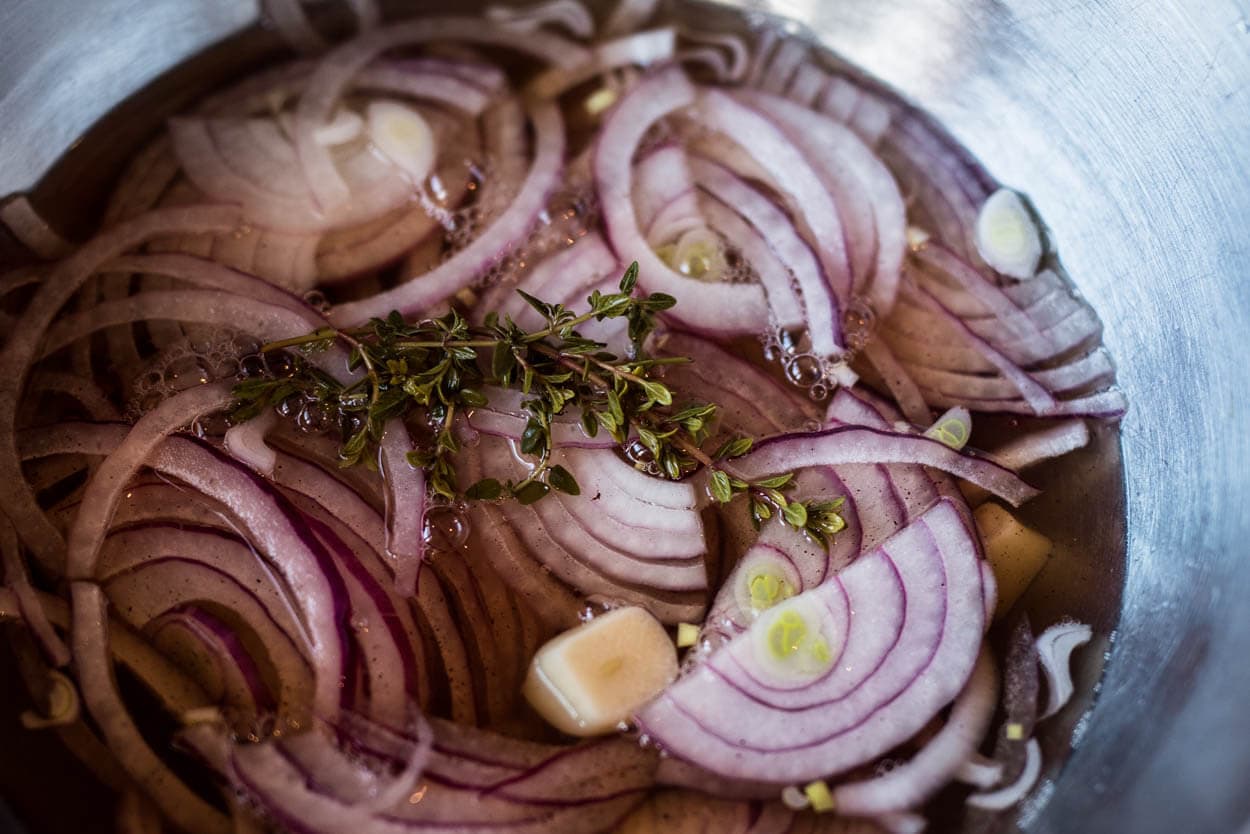
For the sandwiches above you could get away with half a red onion, but I used a full onion and saved the rest in the fridge for more sandwiches or potatoes later in the week. The pickled onions will keep refrigerated for about a week covered in the brine.
You could use any combination of vinegar you’d like; I used mostly white vinegar with some red vinegar to give them a bright pink color.
Ingredients:
- 1/2 red onion, sliced very thin
- 3/4 cup white distilled vinegar
- 1/4 cup red vinegar
- 1 garlic clove, halved
- 2-4 sprigs of thyme
- very small pinch of red chili flakes
- 1/2 tsp raw sugar
- small pinch of salt
Method:
- Place all the ingredients except the onion in a small saucepan and bring to a boil
- Once boiling, pour the hot brine over the red onions in a small bowl, or directly in their final glass storage jar (make sure the onions are completely submerged)
- Let sit at room temperature for at least 30 minutes before using, preferably 1 hour or more
Conclusion

Although rye isn’t something I’ve had much experience eating, baking this hybrid rye and using it for smørrebrød has opened my eyes to an endless universe of open sandwiches. A deliberate selection of fresh and pickled ingredients coupled with meticulous placement and design, make them something I wouldn’t mind preparing for an occasional lunch and possibly a weekly winter ritual. Since rye sourdough has excellent keeping qualities, it’s great to have hearty bread like this on hand through the winter when you need something especially nourishing and hefty.
Crust
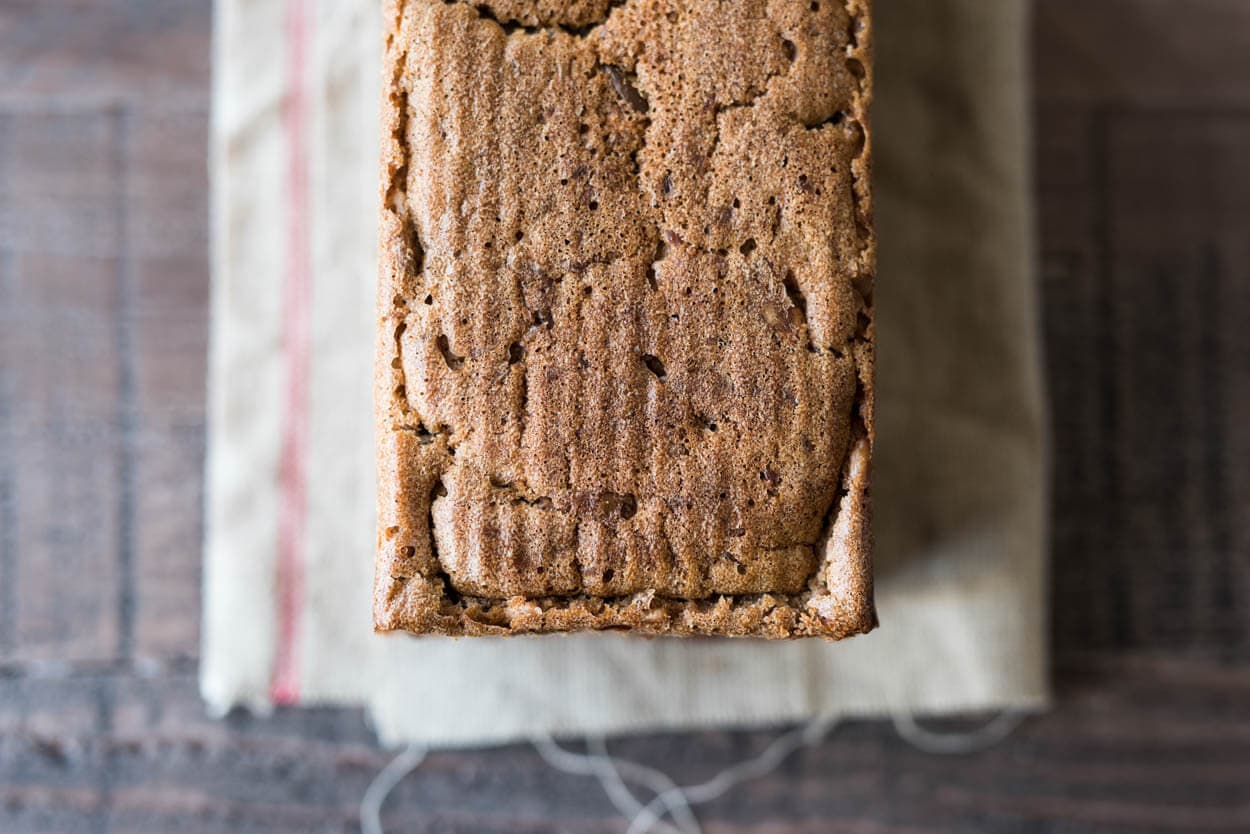
Provided you let the rye bread rest, wrapped and sealed as I instructed above, the crust will stay moist and cuts very quickly. It does not have a detectable crunch to it like most another sourdough I bake, but it’s not needed here.
Crumb
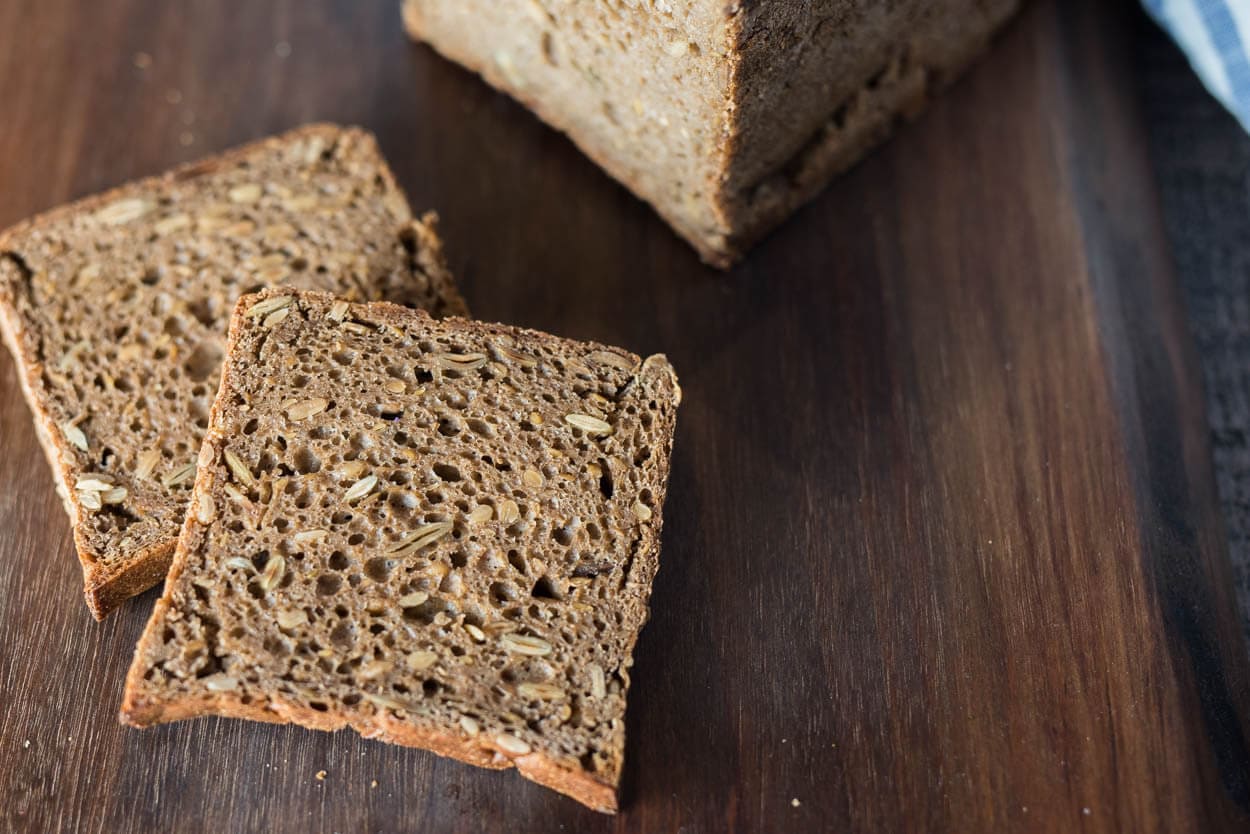
The small percentage of freshly milled spelt and medium rye helped to open up the interior of this bread compared to traditional rye bread I’ve baked in the past or have seen online. I like that. Even though this bread is rugbrød, it has a light texture that I enjoy.
Taste
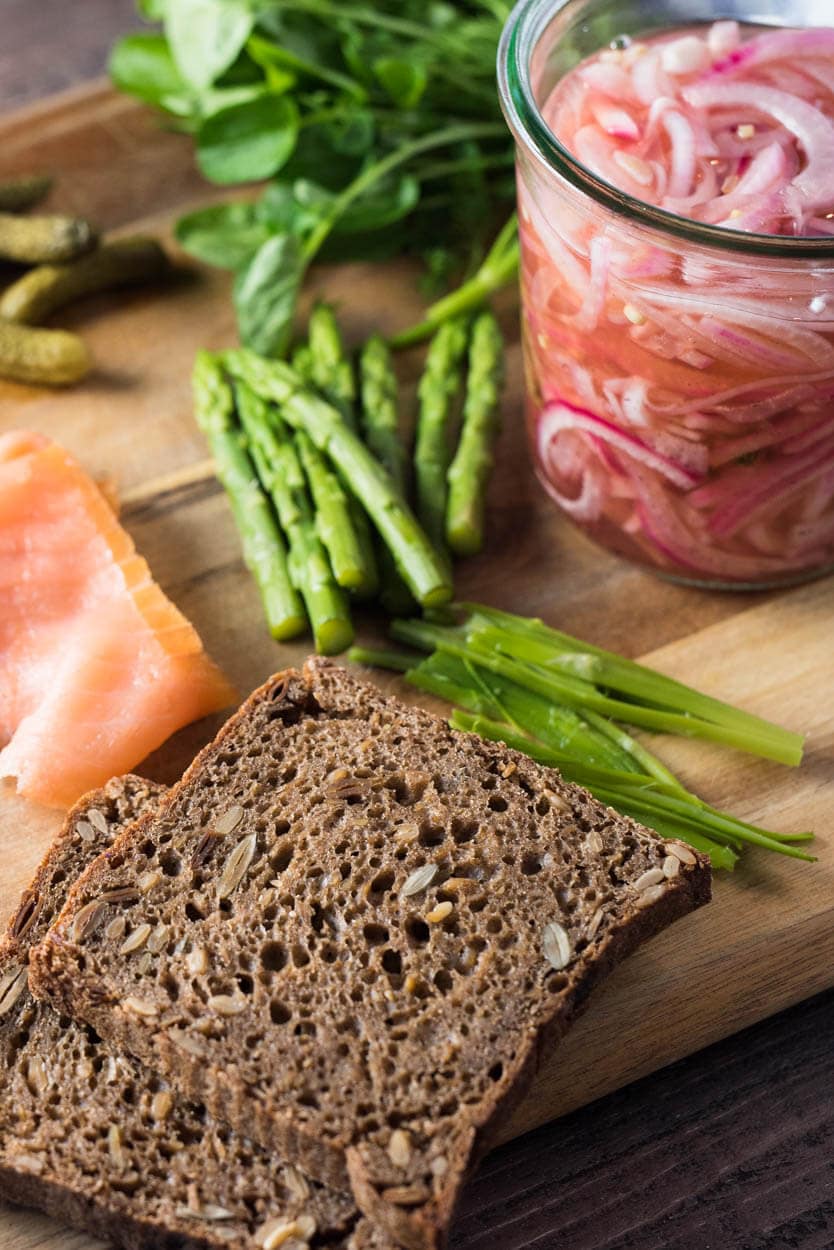
Given the high amount of rye flour and somewhat long fermentation time (for this much rye and whole grain), it is expected that this bread has a definite sour note to it, but it’s not overwhelming and probably less than “traditional” rye bread. For me, this has the perfect amount of tang and heartiness to balance out whatever ingredients it might provide a vehicle for.
What’s Next?
I hope you enjoy this rye sourdough and smørrebrød recipe set as much as I do! And please, do as Magnus says: “enjoy them for lunch with a beer on the side and a glass of Aquavit!”
If you’re looking for more recipes with rye flour, look at our Light Deli Rye, a lighter bread perfect for sandwiches. Or, our new 90% whole grain freeform 90-rye for a seriously delicious loaf with layers upon layers of flavor.
Velkommen! (Buon appetito!)


244 Comments
Hi Maurizio! Can’t wait to try this recipe. Quick question, is the beer used just for flavor or also helps with the fermentation because of the yeasts present in it? And would you recommend a ceramic or aluminum tin covered with foil ? (I don’t have a pullman pan)
Thank you!!
Thanks for this! I tried the recipe but no cover and steamed the oven. The top of the loaf turned out impossibly hard. Any ideas? I used Dark Rye and Spelt for the dough. Could it be not enough steam?
Thanks!
That’s right, if you’re not using a lid you should steam the oven like you would a normal loaf of bread — even just a spray on top with a handheld mister would help there!
I’m wanting to try this recipe but not too keen on all the seeds. Do I need the seeds in the recipe. I have Diverticulitis and seeds are a big no no for me.
You can certainly leave them out!
OK i’ve now tried this for the second time and when I put into the loaf pan it is already 1″ below the rim. Same pan as you. The only difference is that I’m using whole rye throughout. This time proofing at cooler temp. Any ideas?
OK so it worked! Albeit with lots of spillover. I think my local rye just super active. I did reduce temperature to calm it down a bit. Next time will reduce recipe by 10-15%
Thanks for reporting back, Christine! Did you use the same Pullman Pan I call for? I assume you did — I’ll scale back the total dough weight because I did also have some spillage. I think it’s a bit much for the pan. Thank you for sticking with this and providing feedback! And I think your hair looks wonderful now, too 😉
Yes I bought the pullman pan from the link on your site. I made a pancake with the spillover that was yummy. Greta (doberman) may have also enjoyed a bit. (And, yeah, best hair day ever. That has had me giggling every time I think about it. Just more reasons to stick with this recipe.)
Glad ti worked out well! I reduced the total dough weight to 1200g — this should help quite a bit. Thanks again for the feedback and enjoy!
Great recipe, Maurizio. Baked one yesterday and kept it wrapped in a kitchen towel in a plastic bag for 24 hours before slicing. Very tasty, but the crumb was a bit moist and kind of tacky – is this normal?
Since you left your comment I’ve updated the formula after many recent tests. You shouldn’t end up with a gummy crumb, it might have been over hydrated (one of the things I’ve fixed!) and this can also happen if it’s cut too early, but it sounds like you let it have plenty of rest. If you give it another try, let me know how it turns out for you, my changes have been working very well here!
I actually used the latest recipe, with 90% hydration. Should I try reducing it more?
That was the updated one, but I’ve updated it yet again. It’s actually quite a bit different now and I believe it’ll help alleviate a lot of the problems some readers have had with this dough. I’d love for you to give it a try if you would! You can see above, the levain and dough have changed quite a bit.
Thanks for this great recipe. Do you have any recommendations on what you could do with the leftover water/oils from soaking the seeds?
You could use that water in another bread recipe. The water will be more like a mucilage, that is, a viscous gelatinous liquid, that has some nutrients intact. Another option is to remove the amount of water used to soak the seeds from the overall water of the recipe, and then don’t drain the water off from the seeds — use just enough of the mixing water to cover the seeds when soaking. This way nothing is discarded. I’ve been doing this same thing with my latest trials making a roggenvollkornbrot (100% rye) — delicious!
LOL makes awesome hair gel for curly folks! https://www.instagram.com/p/B-VHp0ChT3n/ (Flax seeds are a common ingredient in DIY gels.)
Great recipe, thanks for posting! I didn’t have dark rye so I used medium and still turned out really good.
Sliced, spreaded some miso butter, toasted and went to heaven
Awesome, Candida! I’m actually baking some rye right now so I’ll be on the lookout for miso butter at the market this weekend 🙂 Enjoy!
If I don’t have a pullman loaf pan and will be baking instead in a ceramic loaf pan, should I still cover it with something? Aluminum foil, baking sheet, anything like that?
Thanks so much for so many great recipes!
I’d still cover it, but if you can’t you can also steam the oven!
Planning to make this this weekend! Big rugbrod fan… previous recipes I have made have a much longer bulk fermentation, usually overnight or 24 hours. Curious why this one is so short and if you experimented with long times?
Excellent! My experience with rye has always been using a large preferment percentage (to bring along high acidity for proper dough strength and fermentation), and given the nature of whole grain rye, this dough really doesn’t require a long bulk fermentation. In fact, it might be pushing it a little far, depending on the temperature in your kitchen. So no, I haven’t experimented with long bulk fermentation when using this high of a percentage of rye!
Just baked this today and I think it’s going to be terrific. I doubled the recipe, and used soaked rye and wheat berries, in addition to the sunflower and flax seeds. But the loaves came out beautifully. I am going to follow you advice and rest the loaves for a couple of days, but I baked an additional small loaf in a mini-Pullman pan. We ate that hot, and it was delicious. We’re going to serve it later this week with homemade braunschweiger (but any nice pork liver loaf will do) and pickled beets.
Oh that sounds fantastic! I’ve been making rye lately with a scalded chop addition, it’s been great. Additionally, I’ve been working on a vollkornbrot recipe I hope to have posted this fall. Enjoy!
Just made this, turned out great! Thanks for the recipe! You’ve done it again!
Right on, glad to hear that, Adam!
Hi Maurizio! I wonder, is this recipe for one loaf of rye bread or two? Many thanks 🙂
Hey there! This is for one loaf. Happy baking!
Hi Maurizio! I wonder, is this recipe for one loaf of rye bread or two? Many thanks 🙂
Hi Maurizio – I have baked this rye bread 3 times now. The first time I followed your recipe to the T. Unfortunately, the inside temperature of the bread was already at 214 F when I checked less than 1.5 hours after the initial 35 min and the bread was a bit too dry.
I added about 40 ml more water the second time and started checking the temperature after 1 hour plus the initial 35. It was fully baked. I did the same today and after the hour at 350F, it came out at 211. I put a thermometer inside the oven to make sure it’s not hotter than it is supposed to be. It wasn’t. Also, I don’t bake with a lid, just a regular loaf pan. I am surprised my timing is so different to yours. Also, would you mind telling me the initial composition of your recipe, before you reduced the hydration? I like mine fairly moist, albeit not gummy. I think 40 ml is about right for me.
Thanks also for your fantastic website! It has turned me into a regular baker and our freezer is bursting with sourdough waffles since I can never throw away my starter.
My bake times tend to be a little different than some reporting back, especially for this particular bread. I live at very high altitude (5280 ft above sea level) in a very dry climate, this, coupled with typical oven differences, seems to cause an issue when it comes to some bakes — this one especially. I usually include a little note about bake times and temps in my recipes to adjust as necessary, but it sounds like yours might have taken too long to get to fully-baked temp, thus drying out some. In the end, use the time and temp that works for you and use my posts as a general guideline only!
I had the hydration for this recipe up to 105% which worked really well for me in my dry environment with the flour I was using. Many reported issues with that high of a hydration so I dropped the post to accommodate the majority of my readers knowing that some, such as yourself, who feel they can increase the hydration can definitely do so.
Glad you’re enjoying my site, thanks so much for the feedback and let me know how it goes next time you try this recipe! I have some more rye recipes I’ve been practicing coming soon…
Hi Maurizio, I made the rye bread in a bread pan without the lid. It has a dip in the middle of the loaf. Is this normal?
That’s a pretty common issue. It can be hard to diagnose what’s the cause of the dip, but in my experience I’ve found that it’s either over hydration or over proofing. I’d first suggest trying this recipe with just a bit less water to see if that resolves the problem. If not, then try pulling back that proof time, perhaps 30 minutes or so.
It might also be due to an insufficiently acidic starter/levain used when mixed into the dough. Make sure your starter is very mature when using it to build a levain, and similarly, a mature levain used to mix into a dough!
Let me know how that goes next attempt — sorry for the delay!
First things first, thank you so much for documenting your bakes so thoroughly it is so helpful for beginners! I’m still new to sourdough but wife has asked for a rye bread this week, so it will be! Is it possible to omit the beer and if yes, how to I compensate the liquid, should I just add an extra 72g of water?
Thanks!
Hey there, you’re very welcome! Yes, definitely possible to omit the beer entirely. Honestly, I’ll likely just leave the beer out and add no additional liquid — this is a highly hydrated dough and it’ll be just fine without the beer. Happy baking!
Thanks! I just came back from my third store and although it’s easy to find Black rye, I can’t find any white one. What would you advise to replace it, whole wheat or all purpose? Would the switch change the hydration rate? Thanks again!
I’d say definitely go with dark/black/whole grain rye. I’ve been working on a new version of this recipe — well more like a successor — that’s 100% whole grain rye. Seriously awesome bread!
Great! will try this tomorrow and post a pic on instagram with the results.
Very excited to see your 100% rye variant. I made this recipe over the weekend and the amount of dough I had was simply not going to fit into the tin. Also If you post another rye recipe I would encourage you to provide more detailed notes on what to look for in a properly proofed rye loaf. Speaking from experience, it very hard to tell the various phases of rye bread baking. Signs of under vs over etc.
Yes, those details will be crucial — and in my experience with baking rye, sometimes hard to nail. I guess that’s true with most baking though, right? 🙂 I’ve been baking volkornbrot frequently and hope to have something up here once I’m confident it’ll work out well for everyone!
can’t wait to see the vollkornbrot – a rare treat that I’ve found is hard to come by in this country
So true, I rarely see it. I’ve had really great results thus far — I’m still working at it!
If I omit the beer, do I need to make any changes to the recipe (e.g. substitute an equal amount of water)? Thanks – love your recipes!
Thanks, Roshni! Yes, I would replace the beer with another liquid — water would work. You won’t have the same flavor profile, but the texture should still be there!
Another dane checking in.
If you want to “learn” how to enjoy the properly tart and sour versions, then look no further than hazelnut spreads. It is close to the ultimate comfort food for me .. balances out the sour with something slightly sweet.
Bonus observation: As for topping the “rugbrød”, there are no rules just a whole bunch of traditions. But since traditions are by definition invariably local/regional (based on available products, often restricted by season) you are free to make your own traditions based on whatever you can source at any given time and place – “rugbrød” will take on all comers 🙂
-UMJ
Right on, UMJ, thanks for all that info! I’m familiar with some hazelnut spreads I’ve had back in Italy, I’ll have to look around for some variations.
I totally understand what you mean about tradition — all food has some tradition to it in Italy 🙂 And in this case, the above post might be a new start to my own!
Thanks again and happy baking 🙂
Hi Maurizio, I absolutely love this bread. I have to have some on hand at all times. If I choose to omit pumpkin seeds how do I tweek the recipe to make sure it still turns out just as well?
Maurizio, i want to make this but cant get Whole grain rye. I have everything else. Can i leave it out? Or add more rye flour?
That’s awesome, Helen! Glad to hear that. I think that sounds like a delicious bread — however I have zero experience with coconut flour. I’d say try it out and see how it comes out, as you know I’m big on experimentation 🙂 One thing: make sure the interior of the loaf is baked out fully, check the temps I have listed above to make sure it’s done when you take it out. Additionally, you could try reducing the hydration a bit on this recipe if things were overly gummy, sometimes this will help.
Let me know how it turns out!
Excellent! I would remove the lid. I’ll update this post to reflect that as well. Enjoy!
Any reason you’re not doing a cold retard on this, and would it benefit in any way from it? If I were to include a cold retard, how would you suggest doing it?
Im my experience a bread like this doesn’t need a cold retard — it might make it overly sour and/or overproof. Rye moves so, so fast I found just baking this straight worked best. If you were to try and retard this, you might cut that final proof time and just place it right into the fridge.
Hi! I have to share my experience with making this rye loaf. I have had several less than successful attempts, but because I love rye bread I persevered and finally had a success. After reading a lot of the responses I tried a few new things. I have always used a starter that is half rye half white flour “Dolene”. I instead used my all white flour starter, otherwise known as “Dorothy”. I used 144 g blue mountain sprouted rye, 192 g Bob’s RM dark rye, 144 g One Degree sprouted spelt, no malt, 72 g Night Shift “Awake” dark beer, 17g salt and the seeds in the amount suggested. I also used 20 g less water. so 422g of H2O. I live in the northeast and our weather can often edge towards higher humidity. After reading previous entries, many saying they had dough overflow, I decided to take 1 c out of the dough out and discard it. I then baked the loaf. I too felt like it was going to overflow. After an hour of proof it had not risen. After 2 hours it had risen about 1/2″. I had left 1-1/2′ of space in the pan. I baked the bread for 2 hours per the instructions . I let it sit for 48 hours before cutting it open. The crumb was gorgeous and the taste was wonderful! It was nutty with a good sour to it, not mild but not over powering! One difference I noticed between Maurizio’s loaf and mine is his was flat with the ridges and mine was more rounded. Perhaps if I had not extracted the 1 cup of dough the loaf would have cooked up to the cover and created that flat surface with the ridges in it. Perhaps I will have the courage to use all of the dough next time.
Hey, Kim! Thanks so much for sharing your bakes. From all the comments I’ve received about hydration I did go back and modify the recipe to have a lower amount of water — it sounds like perhaps it should be decreased even further for a higher chance of success. I plan to revisit this recipe, and even a 100% rye, here very soon. I’ll post any updates here.
Thanks again for sharing what worked for you. I’m happy the end result turned out so well, sometimes it just takes a few trials and I feel like rye can be a bit challenging!
Happy baking ????
Hello, very excited about all the recipes you share on your website! I was wondering whether you are planning to show us how to bake a proper sourdough whole grain barley loaf? would have been fantastic!
Thank you! I actually haven’t had too much experience in baking with barley, I’ll have to give it a go here again soon, and yes, a recipe sounds like a great idea. Thanks for the inspiration!
Hi Maurizio, first congrats on the website, is by far one of the most complete sites i’ve visited.
Second, maybe im lost in translation, and since i usually use a sourdough that i had for the last 8 months, what is it that you mean in the levain part, by ” 50g Mature liquid starter (100% hydration) ” ?
thanks!
keep posting.
Thanks so much, I really appreciate that! That 50g “mature liquid starter” is just your sourdough starter (chef, mother, etc.) you keep and feed each day. Use this mature starter to make a levain (or leaven) which is a small build just for this bake.
Hope that helps!
I followed the recipe as currently written, and I ended up with some of the gummy concerns others have expressed…but it tastes great! The wetness of the final bread, though, has made it a little more likely to crumble when topped with smorrebrod toppings. At the 90-minute mark, the interior was registering 210F. But maybe on my next go, I should reduce the hydration and let bake a while longer still? I used Arrowhead Mills rye flour for all of the rye–perhaps that brand absorbs water less efficiently than Central Milling? Or maybe using all whole rye flour (and not sifting any to get to “medium”) inhibited some of the absorption?
Andy, thanks for the feedback! it definitely sounds like an over hydration issue. It’s a common thing for rye bread, unfortunately, and probably made a little worse here since I used fresh milled spelt as an addition which I’ve found to take on a lot of water (and thus why I haven’t had issues with the recipe). I would have guessed that using whole rye would have helped in your case, it should absorb more water… but hydration really is a relative thing, and it always requires adjustment when baking (especially in two different locations and with different flour). So yeah, I’d say reduce that hydro and give it another go! Sorry for the “gummy” bread, I am confident it’ll work out next time.
Happy baking!
I would very much like to make this style of rye *without* seeds (for a brother who just doesn’t like seedy bread). I can see a couple of options: (a) just omit, and (b) replace with soaked groats. Thoughts and/or guidance? Option “c”?
Both options would work really well! Soaked groats would lend a really great flavor to this bread — I love that idea!
Excellent. And now I have my project for the weekend…
Hello Maurizio and everybody, I baked this bread yesterday and used whole grain rye and the rye without the beer. the crumb looks kind of nice yet feels little dense and moist although evenly distributed…is it normal? cause I think yours looks little dryer than mine when cut..Oh and I left it settle for 24 hours…I took a couple of pictures not sure how to attach them..thanks in advance
It shouldn’t be overly gummy inside, it sounds like the dough might have been over hydrated. I’d suggest next go at this reducing hydration 5% or more and see if that helps. When I originally created this recipe I had even higher hydration than listed (my fresh milled spelt used can take on a lot of water!), after some feedback I decided to reduce the hydration as some were experiencing either a gummy interior or the dreaded “flying crust” where the interior separates from the top crust.
I’d say go with a reduced hydration next time and that should help!
thx for your reply…I used only the water in the recipe without the beer…next time will reduce the water a little..lets see..
Hi, thank you for this wonderful recipe. Question: the baker’s percentage for levain (60%) gives me more than 200 grams (closer to 280). What am I calculating incorrectly? I would like to increase the amount for a larger pan but can’t do it if my measurements are wrong.
This formula only calls for 200g of levain, if there is extra after you build your levain use only 200g in the final dough mix. Sometimes I like to make just a little extra when making the levain just in case it comes up short.
You’re welcome and I hope this helps!
May I ask, why do you soak the seeds? I am going to bake an old favorite of mine and my daughter’s from her childhood that my husband and her brother always hated. My husband is going to be out of town for a week, so I thought it was the perfect time to pull out the Flax Seed Rye recipe I have from I don’t even remember where…the book it came from fell apart and I typed up this recipe and one other then threw it away. It’s going to be quite the treat for myself! LOL
There are a few reasons you typically soak seeds before mixing them into a dough: first, it helps soften them so they’re not quite so hard. Sometimes if the seeds are not soaked you’ll end up with a mouth full of hard seeds when you bite into the bread — not desirable! Additionally, soaking helps ensure they don’t pull out water from the dough later in the mix. While this may not be as important with this bake in other bakes the seeds can draw water out from the dough making it stiffer than intended.
Enjoy!!
Hi there – just tried the Rye Sourdough recipe, with pretty good results. I had an issue with volume, tho – I simply ended up with too much mix after the Bulk Fermentation stage, I had enough extra to fill a second, smaller bread pan – one of those disposable foil #1. Then during proofing, both rose over the top of the pans, and I had to spoon more of the mix out and let it proof a little while again. The finished breads were very moist in the middle, and the larger one fell a bit in the center, but so what.
This may have something to do with my location (warm Hawaii) and an extremely vigorous sourdough starter. After
No stretch and folds are necessary.
6. Proof – 11:40 a.m.
Glad to hear the bake went pretty well! That’s interesting about having too much dough, it could very well be due to your warmer climate. I wouldn’t expect the dough to rise super high, but it’s possible. It’s ok if your levain rises quite high, just make sure to use it before it becomes overly acidic or it falls and stays at that fallen point for too long — this is a good indicator it’s overripe.
I think reducing water 10% would be a great idea. Usually that gummy interior is due to over-hydration and perhaps again your location played a role here (much more humid than my desert climate!).
Thanks so much for the kind words and I’m glad my site has helped so much! Keep me posted on how your bakes go 🙂
Hi Maurizio,
As St. Patty’s day is fast approaching, and I’ll be making corned beef, I was wondering if you had a recipe for a sourdough Jewish rye like I find at the delis here in NYC? It’s lighter in color than the rye above and often comes perfumed with the caraway seeds used in it. I’m sure there are plenty of recipes out there, but your site hasn’t steered me wrong yet so was hoping you have a recipe of your own, or at least a recipe you think I should turn to. Thanks!
Hey! I have not tried making a rye bread like this… I will probably get there at some point, though (not before St. Patty’s though!). Sorry about that. Thanks so much for the kind words, I hope you stumble on a great recipe until mine is up 🙂
Hi, the bread you are talking about is most likely New York Deli Rye. There is a good recipe on the King Arthur Flour website but if you want a professional recipe, consider purchasing a book called the Bread Bakers Apprentice. Its a beautiful book written by Peter Reinhart and contains all you need to know as a home baker about sourdough and pre-fermented breads. The Deli Rye recipe in it is un-paralelled. Happy Baking!
Thanks for the info! I’m going to look into this as well 🙂
Hi Maurizio,
I’ve never baked rye bread (I mostly bake country wheat loaves) but I recently bought a small bag of Bob’s Red Mill Dark Rye flour, just to try it out, and am thinking about making this one. I am just curious about the baking temperatures and times. Have you ever tried baking at 450 degrees Fahrenheit for a shorter time? If not, what do you would happen? How long would it take to bake this loaf in a pan, no lid on but in a Dutch oven, for 1 or 1.5 hours total? Would it do the trick? I often find myself short on time because of my workweek schedule. Your thoughts on this issue will be much appreciated.
Thanks,
Daniel
You could try to shorten the bake time for this bread but you run the risk of the interior not being fully baked off before the exterior colored fully. I would say play with the times for you, your environment and your oven. I live at high altitude so things do take longer to bake usually.
I can’t really say how long it would take to bake in a Dutch oven but it should be somewhat similar — I’d have to test this out to say for sure.
Again, give it a go and see how it turns out! You can always test the interior temperature of your dough as it’s baking to see how things are progressing. If it’s coloring too quickly on the outside turn the oven down and cover it if necessary.
Hope this helps!
Does it rest 24-48 hours, kitchen counter, or fridge? I can’t wait to see how it slices….
Lisa, 24-48 hour rest on the counter. Good point on the 9×4 spec, will adjust that! Definitely use a Pullman for this, or like you said, split it out into multiple pans.
Thanks for the comments and please let me know how it turns out, I love this bread!
This turned out great! I wouldn’t mind a bit more tang, I’m a beginner, so what would I do to get more of that sourdough bite? And will try again with all dark rye, and maybe will purchase a covered pullman to bake next time, just to see the difference. Actually just slicing into it today. It sat wrapped in cloth and plastic bag abt. 36 hours, then has been in the fridge. Has just the right amount of chew.
My new favorite bread.
Awesome, really great to hear that! Using more dark rye flour should help add acidity/tang to the end result. This should be a pretty hearty tasting bread! I love my covered Pullman pan, I use it for not only this type of rye bread but even regular sandwich bread (recipes for this are on my Recipes page up top)!
Again, glad to hear this worked out well for you!!