

It’s been cold here in New Mexico, like really, really cold. When it’s ten degrees outside you only want one of a few things: 1) a cup of hot coffee and light the fireplace, 2) a big bowl of homemade minestrone with a crunchy slice of sourdough bread, or 3) go outside for approximately 2 minutes while the dog runs through the snow, be thankful for a warm home, and promptly return indoors.
Don’t get me wrong, I love snowboarding (and we have excellent snowboarding nearby in Santa Fe), snowshoeing, and dog walks with 3-plus jackets on, but a day inside with hot coffee and comfort food is a beautiful thing. And this is where this rye sourdough and smørrebrød comes into play.
The cold weather had me motivated to look at traditional foods made in colder regions, and thus my recent acquisition of The Nordic Cookbook by Magnus Nilsson (in case you’re wondering, yes, I have more baking and cookbooks than I know what to do with. Something is terrific about cookbooks: they instantly transport you to the kitchen of another cook and are filled with endless potential for exquisite new food). When they say, it’s a tome they are not exaggerating. Upon opening, I immediately paged to the section titled smørrebrød, which translates to “butter and bread,” but represents the daily ritual of “open sandwiches” in Nordic cultures.
Placed on a slice of rugbrød, or sourdough rye bread, these open sandwiches are miniature works of art with delicately placed meats, cheeses, butter, vegetables, pickles, and greens. One can easily get lost in the research of smörgås, as the Swedish call them, there are endless variations with a myriad of delicious ingredients. Rye bread is a foreign thing to me. I didn’t grow up eating it, and my parents, being Italian, surely didn’t eat it often or bake it at home. I equate it with a bitter, strong taste that can be overwhelming, and yet I find it strangely appealing.
While I baked a few of these in the past, they mostly went uneaten here in my house — as I read through The Nordic Cookbook, I was inspired and wanted to give them another try.
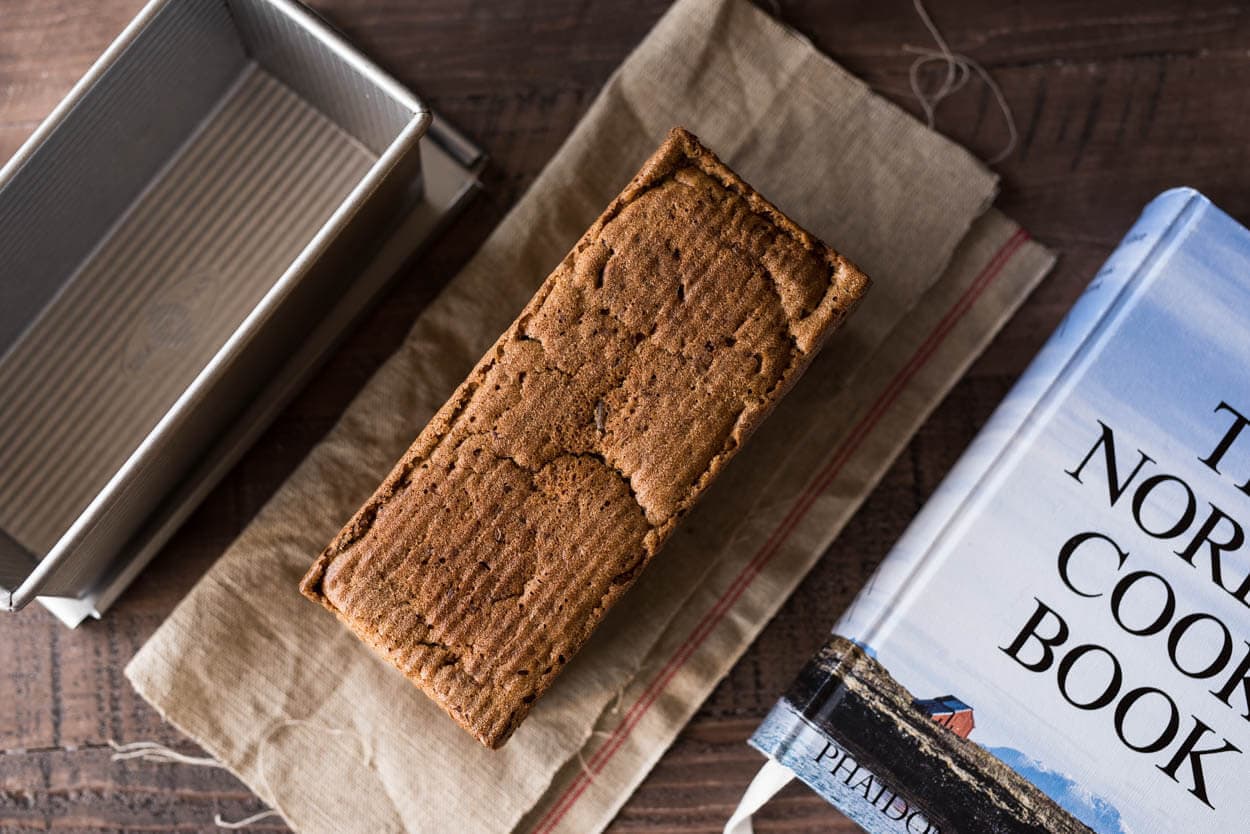
When I think of rye bread, I think of hearty slices of dense bread with a dark, almost black, color to the crust and crumb. In my mind, I had visions of opening up this bread a little, not so much as to completely obscure the purity of traditional rye but enough to bridge the gap. I was determined to tone down the sour notes and intense rye flavor, to try and transform this bread from something that will keep you alive through Nordic winters to bread that might get you through a couple of light winter days here in the Southwest. I think my results accomplished that—it’s a tasty bread that I’m sure you’ll enjoy on those cold, winter days.
In this post, I’ve included my rye sourdough recipe, quick pickled red onions, and a couple of smørrebrød that were inspired by The Nordic Cookbook.
Flour Selection
In the past, my rye bread was composed of 100% dark whole-grain rye. The flavor of these loaves was quite intense and, as I mentioned earlier, this go-around I wanted to tone down those flavors and make more balanced bread. I planned to mix part dark rye, part medium (or white) rye, and part something else, in this case, freshly milled spelt.
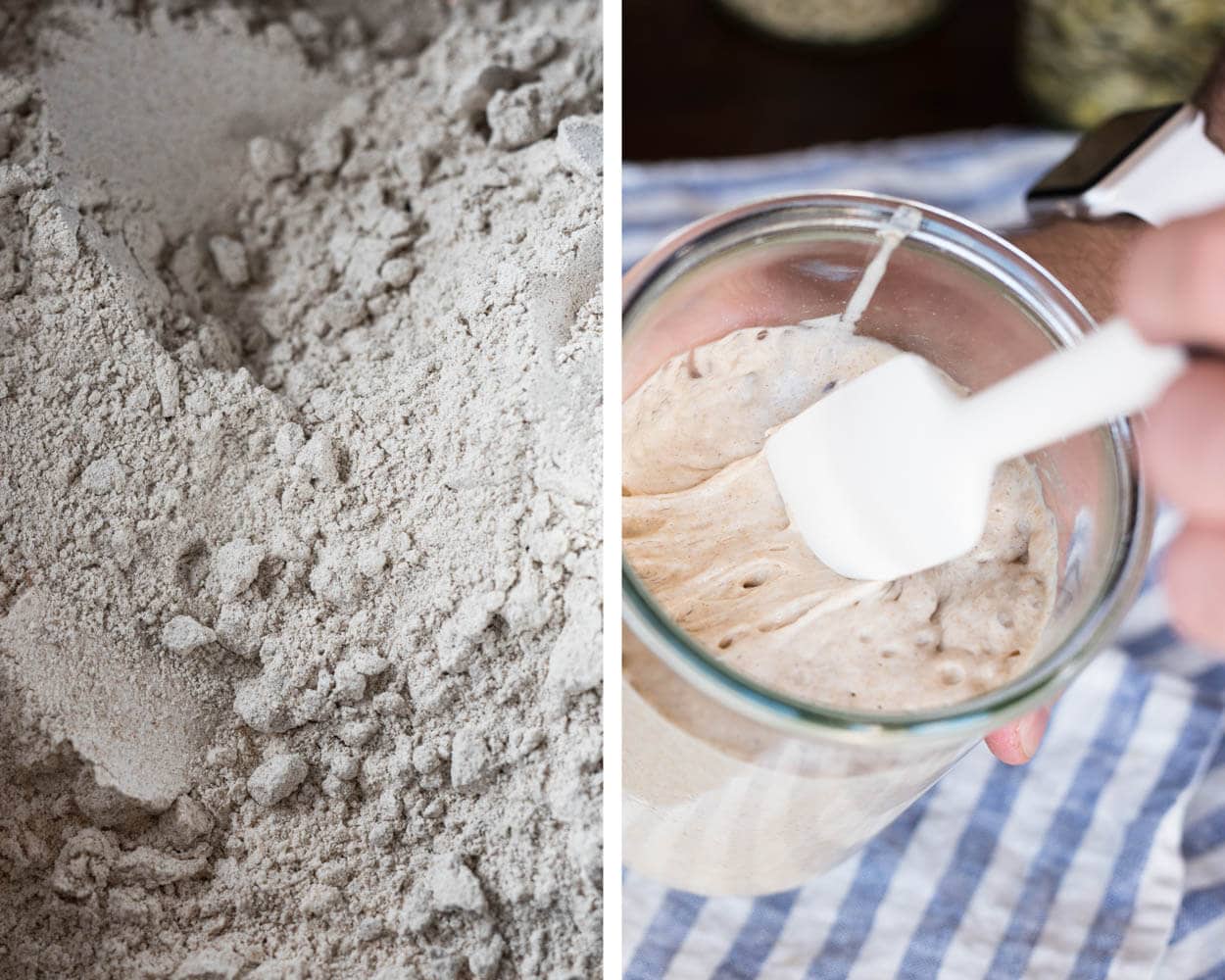
You could modify this recipe to change the percentages as you see fit, however, know that the more spelt or traditional wheat you add, the more rise your bread will have. A conventional rye bread should be a rather dense thing, with a hearty flavor, especially if you want them to stand up to some of the smørrebrød I outline below. I tacked on a few test bags of Central Milling Dark Rye and Medium Rye to my last bulk order, and I’ve found the flour to be great (big surprise). It’s milled super fine and has a fluffy, smooth texture to it. Any whole grain rye flour will work well in this recipe. I’ve been playing with freshly milled spelt for a while now and love the results when mixed with traditional wheat (I’ll have a future writeup on this) and it works equally well here in this bread while keeping the whole grain percentage rather high.
“Medium Rye” can be made by sifting any dark rye you purchase. I’ve done this previously using a #50 sifting screen to sift out some of the larger particles from the dark rye. Alternatively, you could use all dark rye flour with the expectation that your bread will have a slightly more intense flavor.
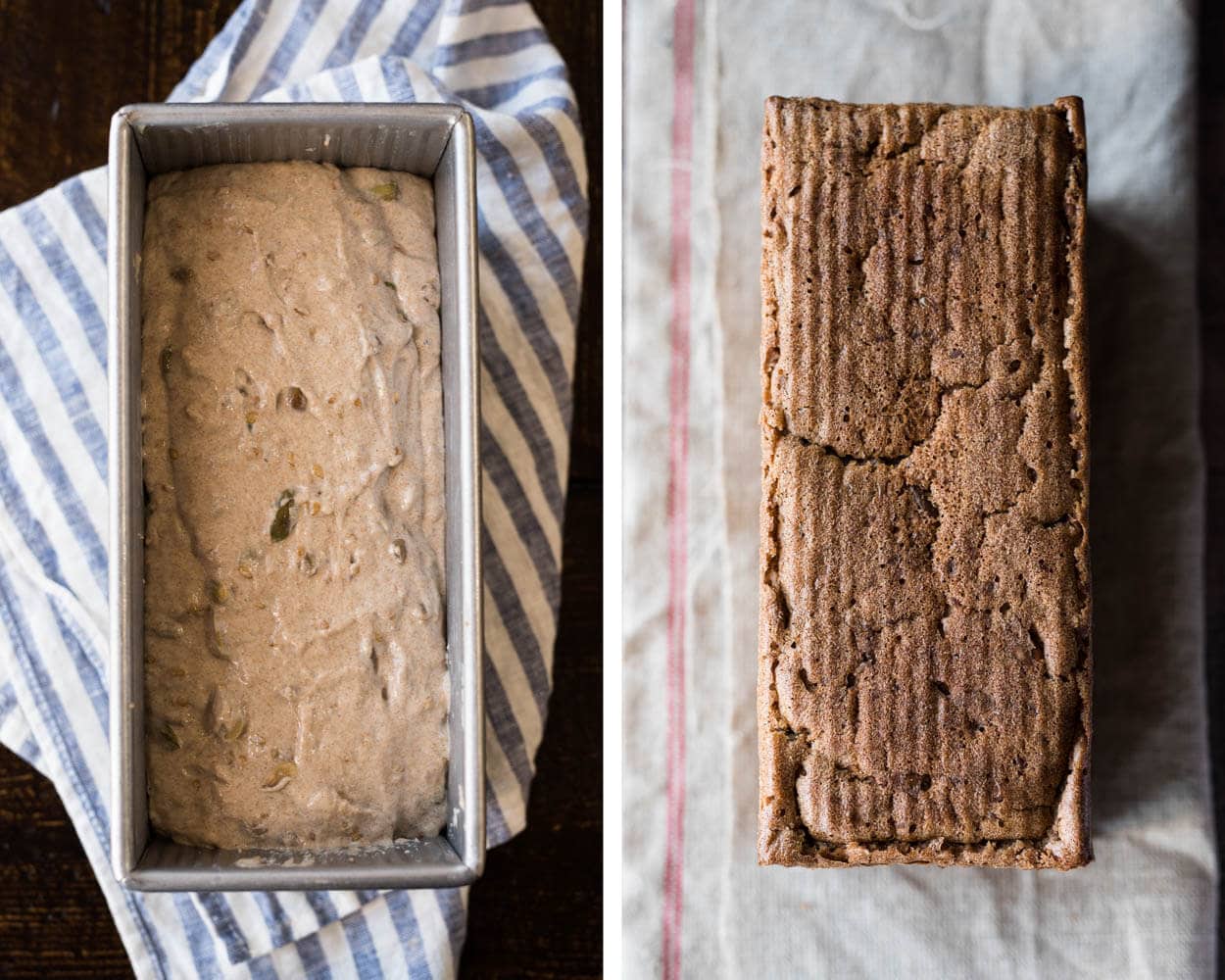
Rye Sourdough Recipe
Vitals
| Total Dough Weight | 1,200 grams |
| Pre-fermented Flour | 40.00% |
| Hydration | 95.00% (water + beer) |
| Yield | One 9” x 4” x 4″ Pullman pan loaf |
I used my 9” x 4” x 4″ Pullman Pan for this bread. It has a nice lid you slide on to create that flat top, and you’d be hard-pressed to get anything to stick to the sides of this thing. If you have a 9×4 pan that doesn’t have a lid I’m sure that will work just as well, you’ll end up with a domed top which would be just fine.
See my guide to shaping a loaf pan for more pan sizes and examples.
Total Formula
| Weight | Ingredient | Baker’s Percentage |
|---|---|---|
| 234g | Sifted Rye Flour (Central Milling Medium Rye) | 40.00% |
| 176g | Whole Grain Rye Flour (Central Milling Whole Rye) | 30.00% |
| 176g | Freshly Milled Whole Grain Spelt | 30.00% |
| 468g | Water | 80.00% |
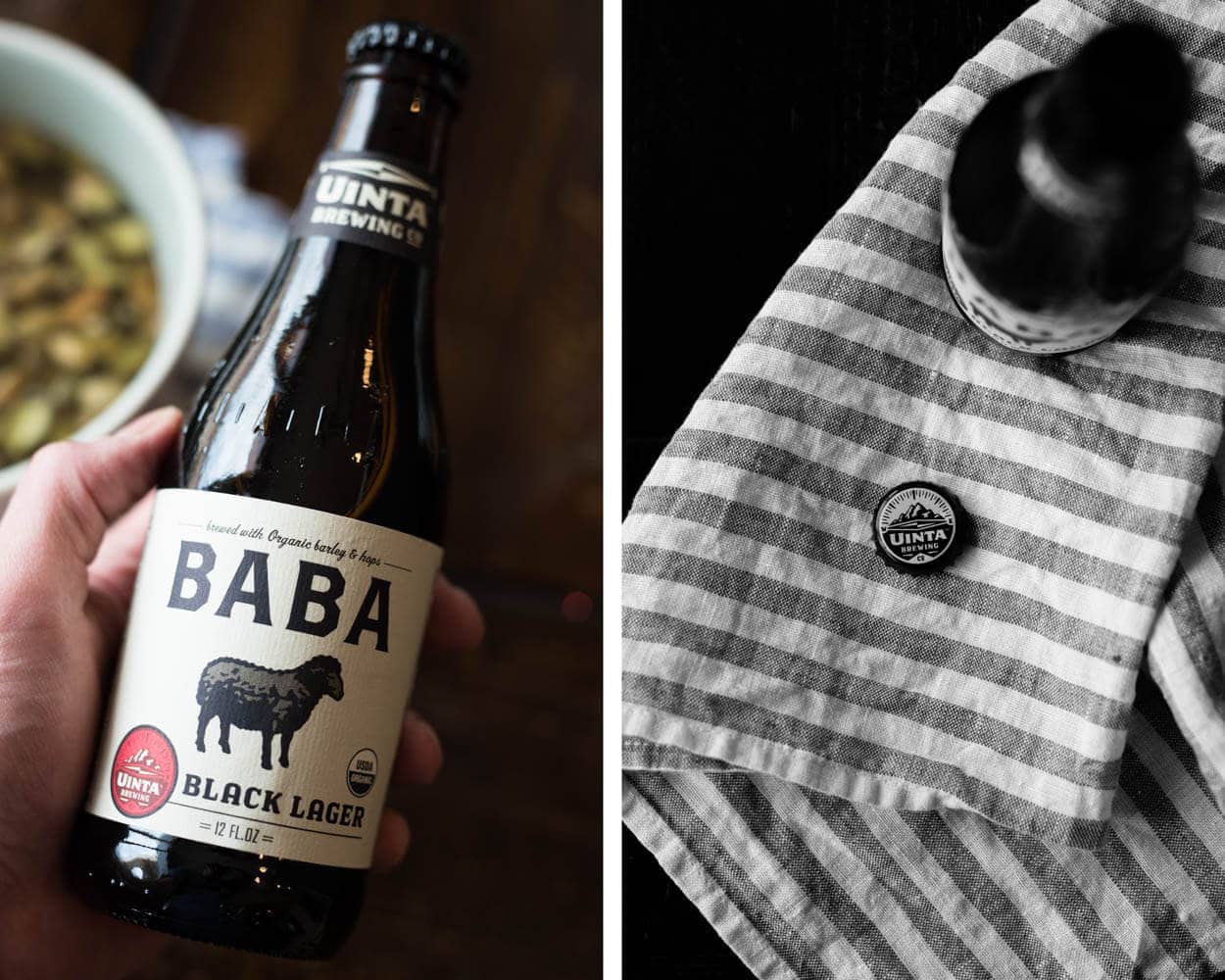
| 88g | Dark beer (stout, black lager, etc.) | 15.00% |
| 12g | Fine sea salt | 2.00% |
| 47g | Ripe sourdough starter | 8.00% |
Levain Build
The night before you plan to bake, prepare the levain and soaker (directions to follow). Let the levain ferment for 12 hours overnight at room temperature, about 70-72°F (21-22°C).
| Weight | Ingredient | Baker’s Percentage |
|---|---|---|
| 47g | Ripe starter (100% hydration) | 20% |
| 234g | Sifted Rye Flour (Central Milling Medium Rye) | 100% |
| 234g | Water | 100% |
Soaker
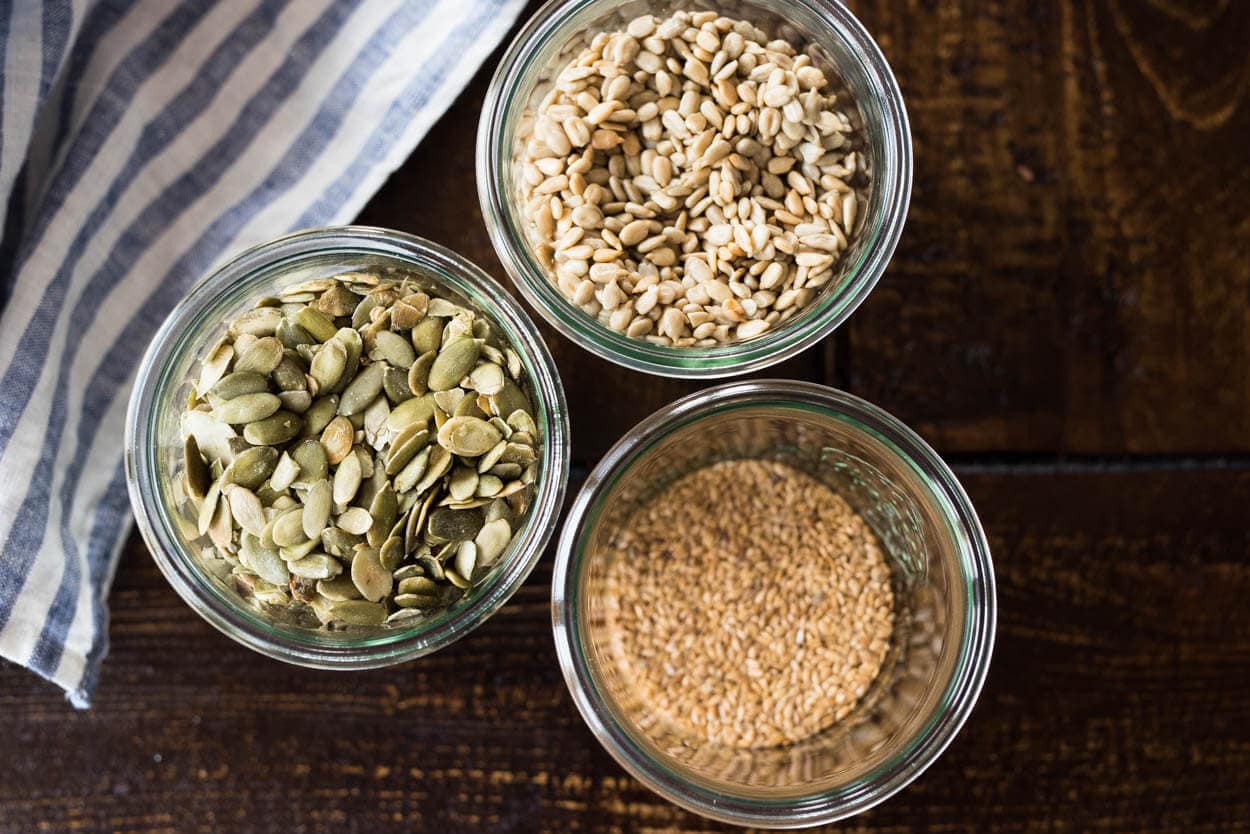
Prepare this soaker at the same time you prepare your levain—the night before you plan to bake. Soaking the seeds softens them and helps to bring out their oils, which later wonderfully infuses the mixed dough.
| Weight | Ingredient |
|---|---|
| 65g | Sunflower Seeds (unsalted) |
| 65g | Pumpkin Seeds (hulled & unsalted) |
| 30g | Flaxseeds (raw) |
Spread the seed mixture out in a single layer on a rimmed baking sheet lined with parchment paper (save this when done toasting the seeds to use it later when you bake the bread) or a silicone mat and toast at 350°F (175°C) for 15 minutes. Toss around once midway through and keep an eye on them towards the end, seeds can go from toasted to burned rather quickly.
Place toasted seeds in a glass bowl, pour enough hot water over them (I used hot water from the tap) to cover. Wait until the mixture cools a bit and then loosely cover the bowl with a lid to rest.
Dough Formula
Note that the baker’s percentages listed below are concerning the final dough ingredients and do not take into account the levain.
The target final dough temperature (FDT) is 80°F (26°C).
Note: Due to feedback from readers (thank you!) I’ve reduced the hydration of this recipe to help avoid an overly gummy interior and potential separation at the top between the crust and the crumb. Additionally, I’ve modified some of the percentages and ingredients after many test bakes of this formula.
| Weight | Ingredient |
|---|---|
| 0g (all of this was used in the levain) | Sifted Rye Flour (Central Milling Medium Rye) |
| 176g | Whole Grain Rye Flour (Central Milling Whole Rye) |
| 176g | Freshly Milled Whole Grain Spelt |
| 234g | Water |
| 88g | Dark beer (stout, black lager, etc.) |
| 12g | Fine sea salt |
| 515g | All the ripe levain (see above) |
Method
1. Levain & Soaker – 10:00 p.m. (the day before baking)
Mix the ingredients for your levain and set somewhere to ferment for 10-12 hours at around 72-74°F / 22-23°C (see my post on the Importance of Dough Temperature for more information).
At the same time, toast your seeds and soak them in hot water for the same duration as your levain.
2. Mix – 10:00 a.m. (the next day)
Drain the seed mixture using a fine-mesh sieve and let sit while you prepare the rest of the ingredients.
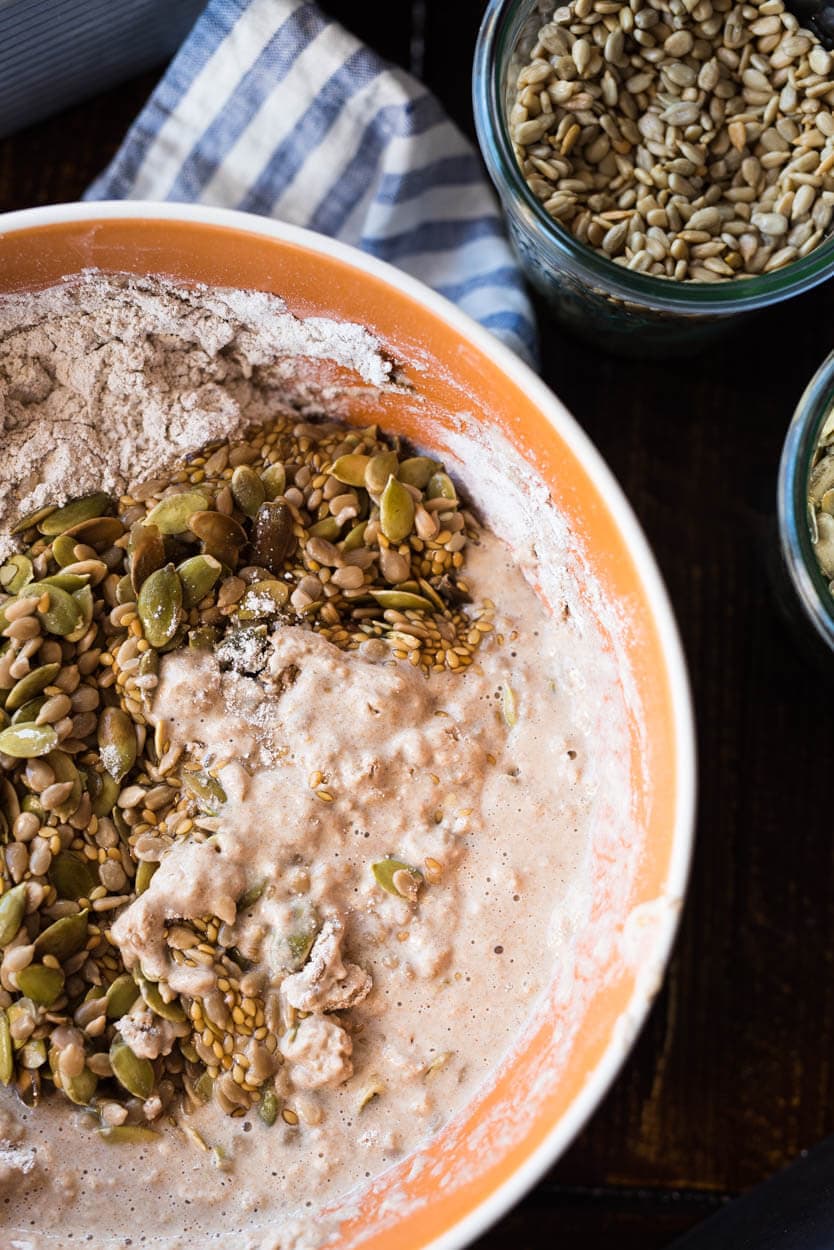
Add the levain to a mixing bowl along with the beer and the room temperature water and stir around to dissolve the levain. Add in all the dry ingredients plus the drained seed mixture. Mix well with wet hands or a spatula. Make sure you mix thoroughly so there are are no dry bits of flour remaining, and the seeds are incorporated well.
3. Bulk Fermentation – 10:10 a.m.
Cover the bowl and let it bulk ferment for 30 minutes at 74°F (23°C) ambient temperature. No stretch and folds are necessary.
4. Proof – 10:40 a.m.
Lightly grease your Pullman pan (I used a light coating of butter) and scoop out the dough, a.k.a. “wet concrete,” from the bulk container into your greased Pullman pan. Smooth the top with wet hands or a spatula. Let proof, covered with reusable plastic, for 1.5 to 2 hours at around 74°F (23°C). The dough should rise to about 1” below the top rim of your pan.
5. Bake – 12:15 p.m.
Preheat the oven to 400°F (200°C).
I baked this bread the entire time with the lid on. Place the Pullman pan on a baking sheet lined with a silicone mat (or the recycled parchment paper when you toasted your seeds) and bake for 35 minutes at 400°F (200°C). Turn the heat down to 350°F (175°C) and bake for 1.5 to 2 hours until the internal temperature reaches 208-210°F (97-98°C). Check the loaf occasionally in the last 20 minutes to check for doneness.
When I baked this bread it rose high enough in the pan to spill out the top of my Pullman; thankfully I had the thought to bake this on a baking sheet. I reduced the ingredients in this to hopefully prevent that from happening to you, but if it does, it’s not a big deal, continue with the bake. The spillage will be caught by the baking sheet without any issues.
I think I could have baked the loaf pictured in this post an additional 10-15 minutes or so. The internal temperature read 208°F (97°C), and while it was baked, I would have liked a bit more crunch on that crust. Be flexible with your baking duration and check the loaf periodically towards the end.
There is no need to steam your oven for this bread if you’re baking with the lid on.
6. Rest
Once your bread has finished baking, remove the lid to your Pullman pan (if used) and let sit on a wire rack until cool to the touch. Gently remove the bread from the pan, wrap in a kitchen towel or baker’s linen (couche) and let it rest on the counter for 24-48 hours. If you slice too soon, you’ll end up with a gummy interior. See my post on storing bread to keep it fresh for more on this.
Smørrebrød Recipes
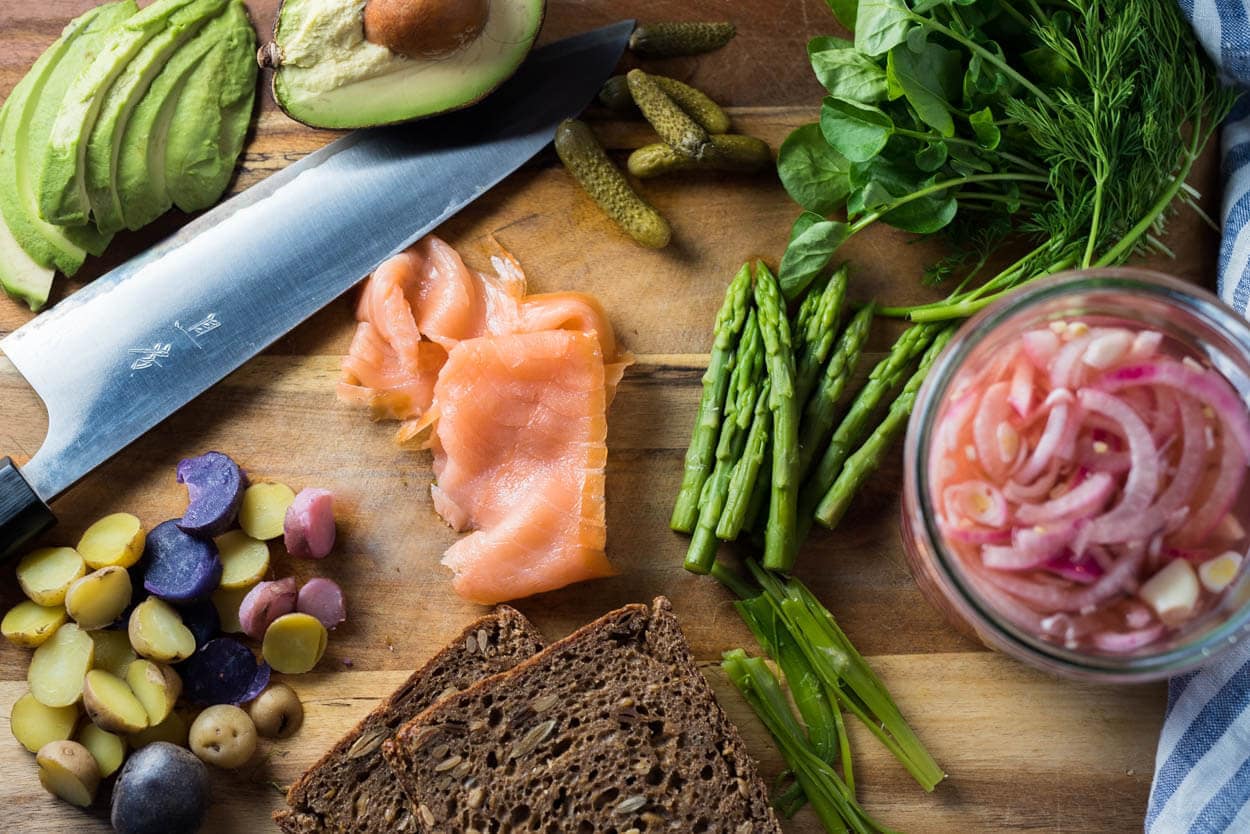
The possibilities here are endless. Below are two recipes I found and slightly modified to suit the ingredients I had on hand and found at the market — they both turned out to be so delicious I made another pair the next day for lunch.
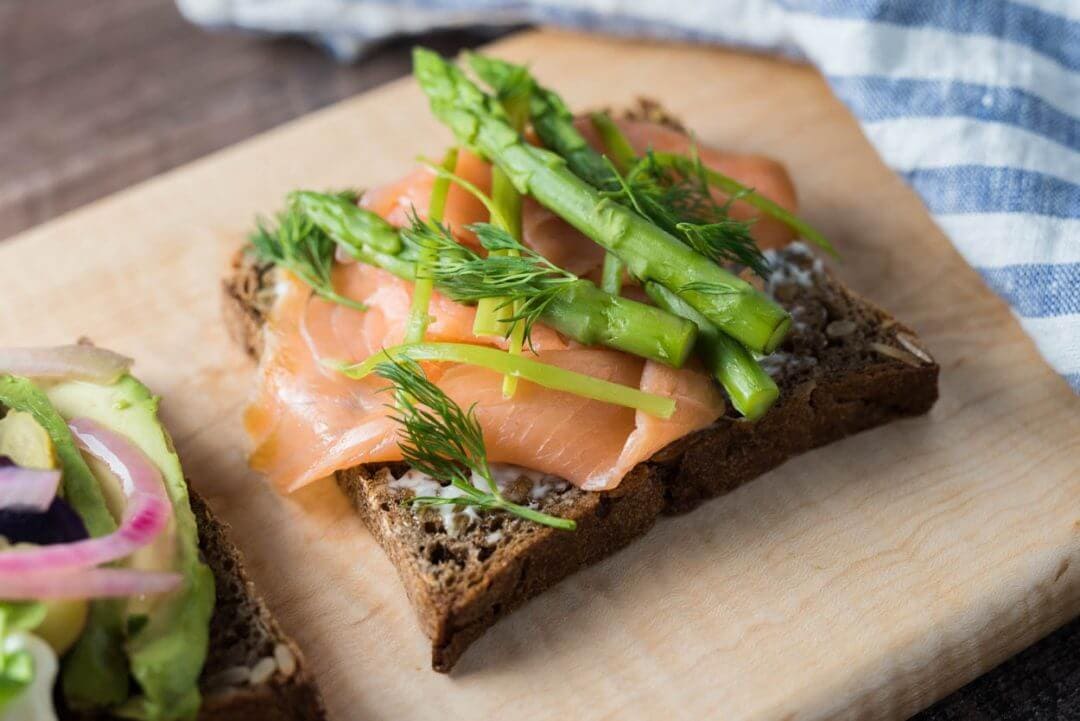
While these look like two puny pieces of meticulously decorated toast, don’t for a second think they are not filling. I ate two, I mean just two, and I was stuffed for hours. The hearty rye bread, healthy fats, and protein from the salmon will keep you satiated for longer than you might think.
… for most Danish open-faced sandwiches there should be enough toppings to completely obscure the bread…
Magnus Nilsson
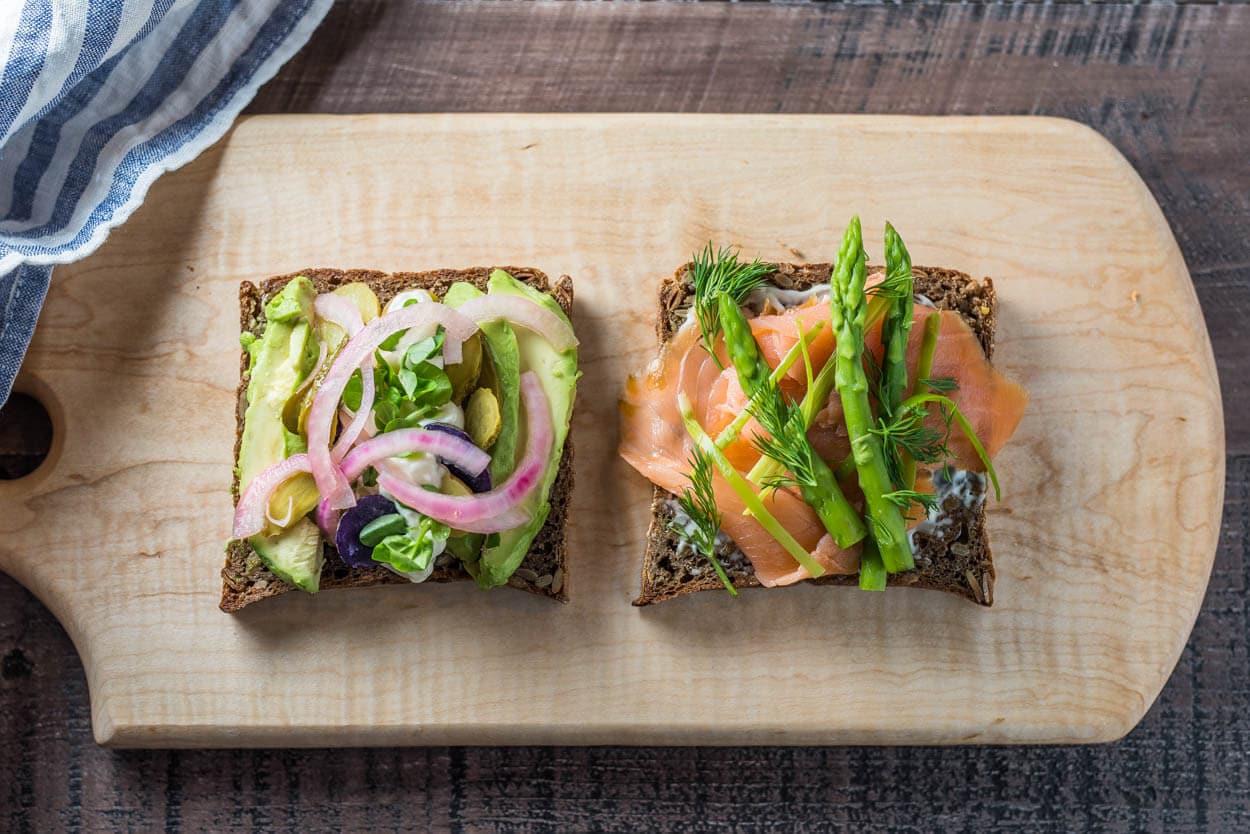
According to Magnus in his cookbook, open-faced sandwiches should be piled high with ingredients, enough to completely cover the rye sourdough below. I came close, but next time I’ll be piling more on top.
Avocado, Potato, and Homemade Pickled Red Onion with Watercress
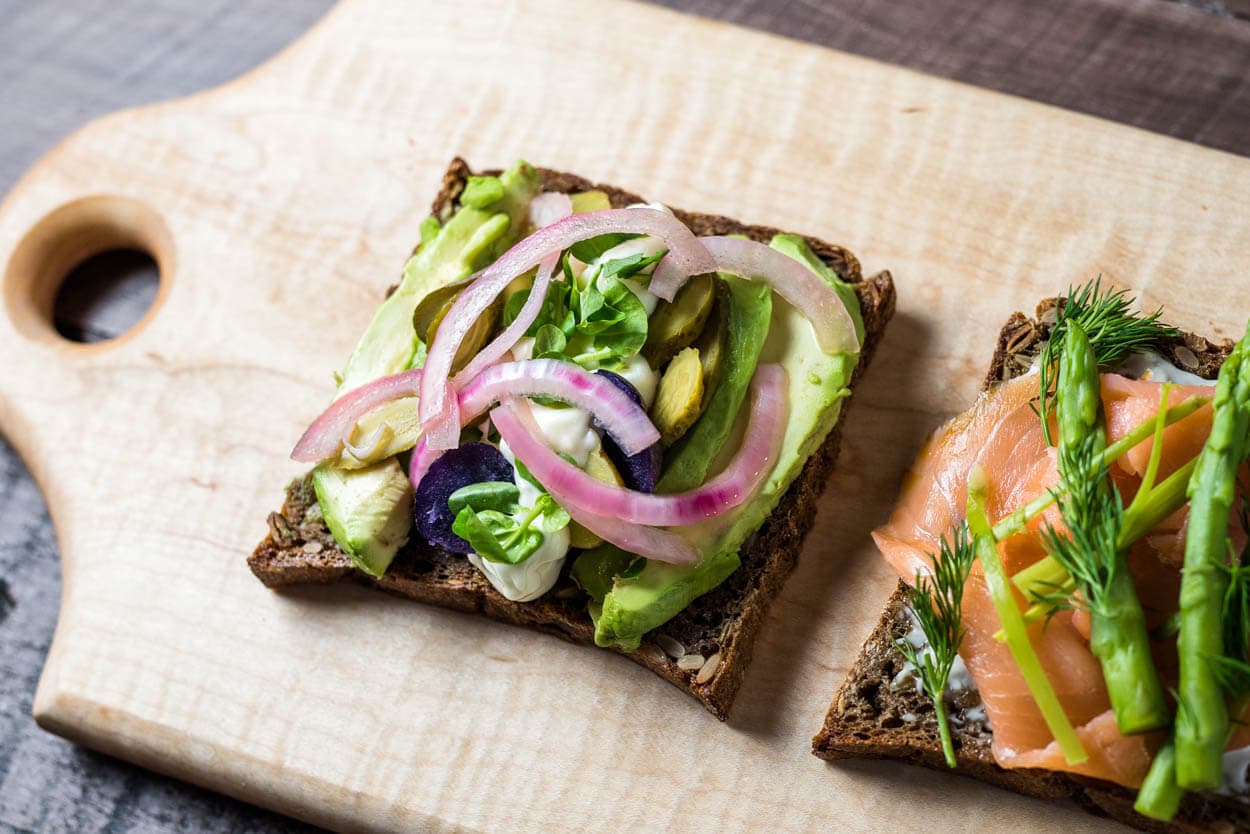
Avocado and mayonnaise go well together, so I knew this would be a hit. The hearty rye bread holds up to the fatty, sweet ingredients and the pickled red onion gives this an incredible acid punch. Avocado probably isn’t a traditional ingredient in Scandinavian countries, but out here good quality ones are just about everywhere. Makes two slices.
Ingredients:
- 1 ripe avocado, thinly sliced
- A handful of small potatoes (I used a mix of colored potatoes, but new potatoes would work well here), boiled in salted water for about 15-20 minutes until tender but not mushy, sliced thin
- A few thin slices of pickled red onion (see recipe below)
- A few French-style gherkin baby pickles
- 2 Tbsp mayonnaise
- Watercress to top
- Small pinch flaky sea salt
Method:
- Place sliced avocado flat on top of toasted rye sourdough
- Scatter sliced potatoes on top of avocados
- Make a thick line of mayonnaise down the middle
- Top mayonnaise with small watercress
- Scatter a few thinly sliced gherkins, pickled red onions and a small pinch of sea salt on top of all
Smoked Norwegian Salmon with Asparagus Spears and Mayonnaise
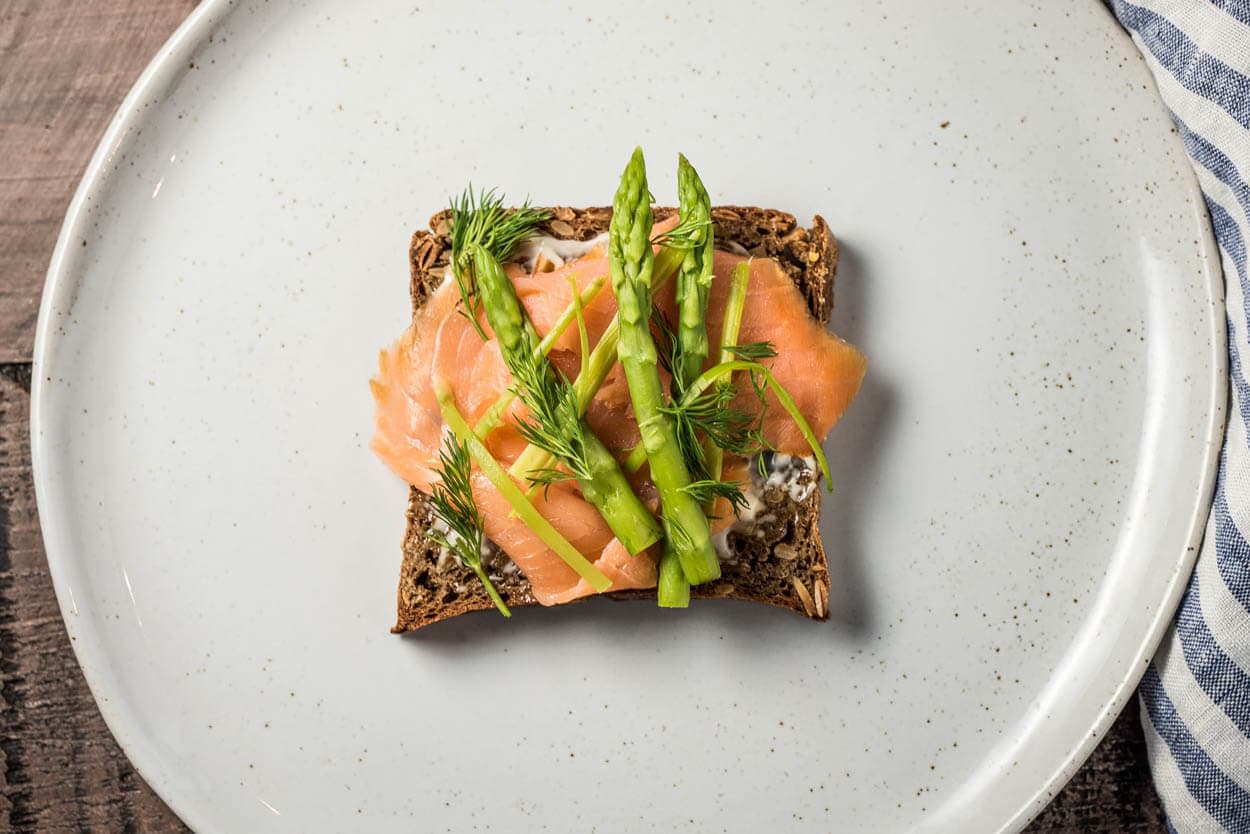
Smoked salmon isn’t something I eat often. I think the last time I had salmon this way (sushi doesn’t count) was a bagel & lox breakfast in New York City almost ten years ago (I know, lox is not smoked salmon, but it’s the closest thing I’ve had!). The smoked salmon, mayonnaise and fresh dill all work well together — a natural combination. I boiled the asparagus spears for about 8 minutes until they were starting to wilt. While they have no seasoning directly, they impart a subtle, balanced flavor to the rest of the ingredients. And again, the hearty rye bread carries this whole thing wonderfully. Makes two slices.
Ingredients:
- Smoked Norwegian Salmon (you can find this in vacuum packs at the market)
- 6 small asparagus spears — tops left whole, hard bottoms discarded and middle discarded save for a few shavings with a vegetable peeler
- 2 Tbsp mayonnaise
- Handful fresh dill
- Small pinch flaky sea salt
Method:
- Boil, or steam, the asparagus spears for 8 minutes until they start to wilt, don’t overcook. Cut off the bottom half and use a vegetable peeler to make a few thin strands
- Spread a thin layer of mayonnaise on a slice of toasted rye sourdough
- Place a layer of smoked salmon on top of the mayonnaise
- Place asparagus tips and asparagus shavings on top of salmon
- Top with scattered fresh dill and a tiny pinch of flaky sea salt
Homemade Quick-Pickled Red Onion
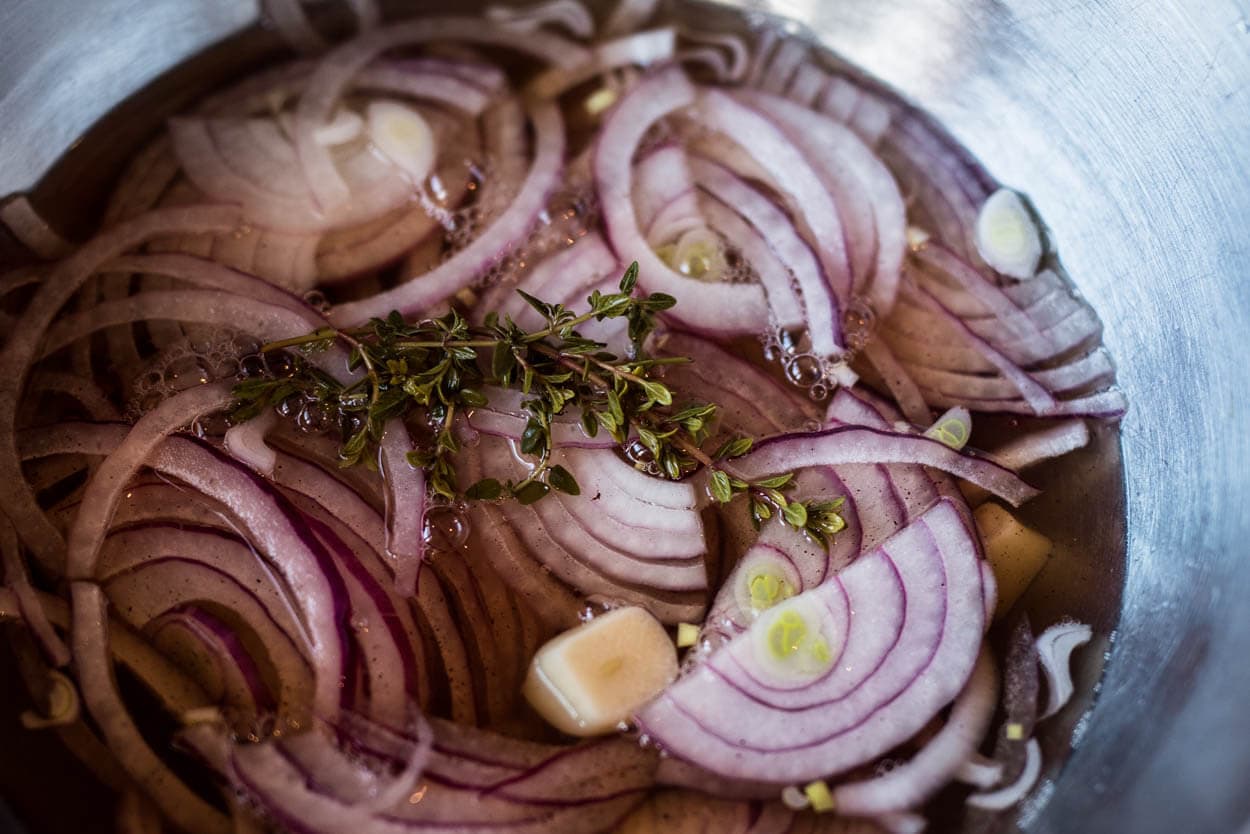
For the sandwiches above you could get away with half a red onion, but I used a full onion and saved the rest in the fridge for more sandwiches or potatoes later in the week. The pickled onions will keep refrigerated for about a week covered in the brine.
You could use any combination of vinegar you’d like; I used mostly white vinegar with some red vinegar to give them a bright pink color.
Ingredients:
- 1/2 red onion, sliced very thin
- 3/4 cup white distilled vinegar
- 1/4 cup red vinegar
- 1 garlic clove, halved
- 2-4 sprigs of thyme
- very small pinch of red chili flakes
- 1/2 tsp raw sugar
- small pinch of salt
Method:
- Place all the ingredients except the onion in a small saucepan and bring to a boil
- Once boiling, pour the hot brine over the red onions in a small bowl, or directly in their final glass storage jar (make sure the onions are completely submerged)
- Let sit at room temperature for at least 30 minutes before using, preferably 1 hour or more
Conclusion

Although rye isn’t something I’ve had much experience eating, baking this hybrid rye and using it for smørrebrød has opened my eyes to an endless universe of open sandwiches. A deliberate selection of fresh and pickled ingredients coupled with meticulous placement and design, make them something I wouldn’t mind preparing for an occasional lunch and possibly a weekly winter ritual. Since rye sourdough has excellent keeping qualities, it’s great to have hearty bread like this on hand through the winter when you need something especially nourishing and hefty.
Crust
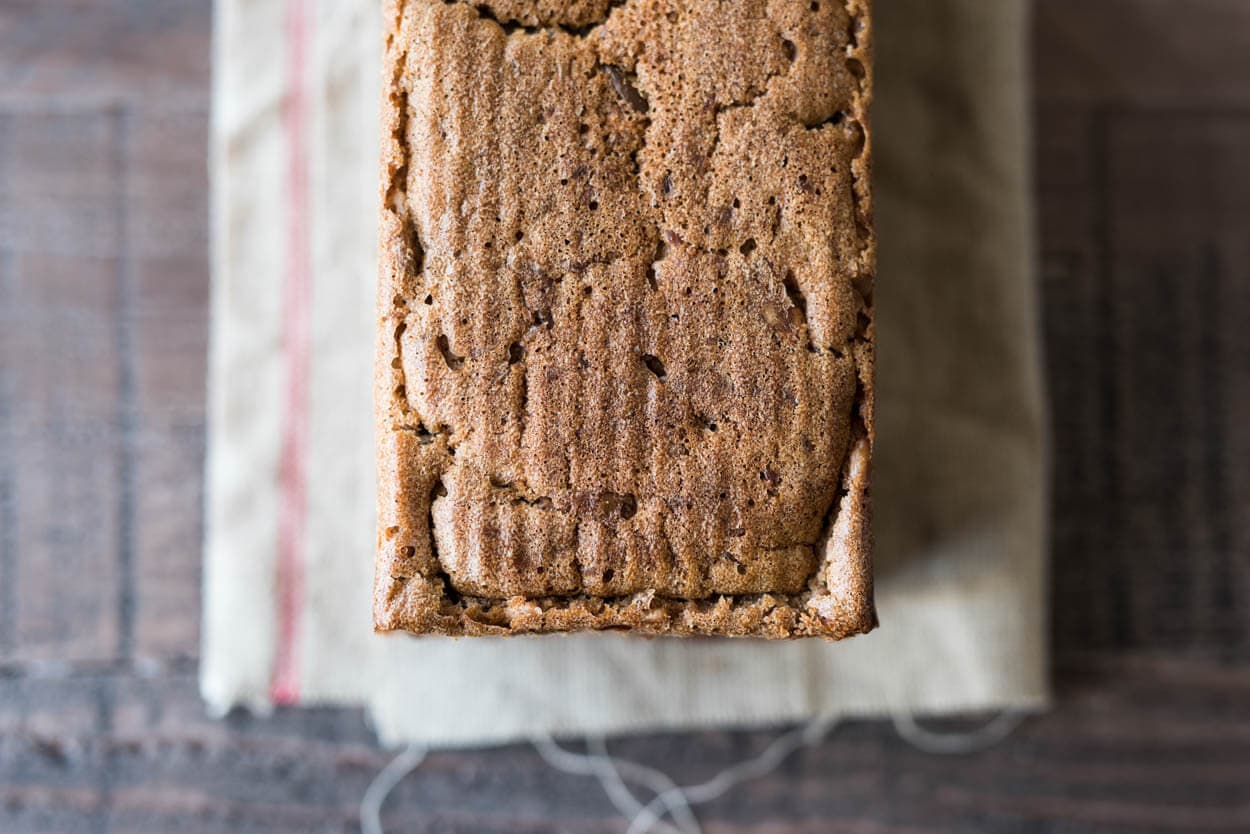
Provided you let the rye bread rest, wrapped and sealed as I instructed above, the crust will stay moist and cuts very quickly. It does not have a detectable crunch to it like most another sourdough I bake, but it’s not needed here.
Crumb
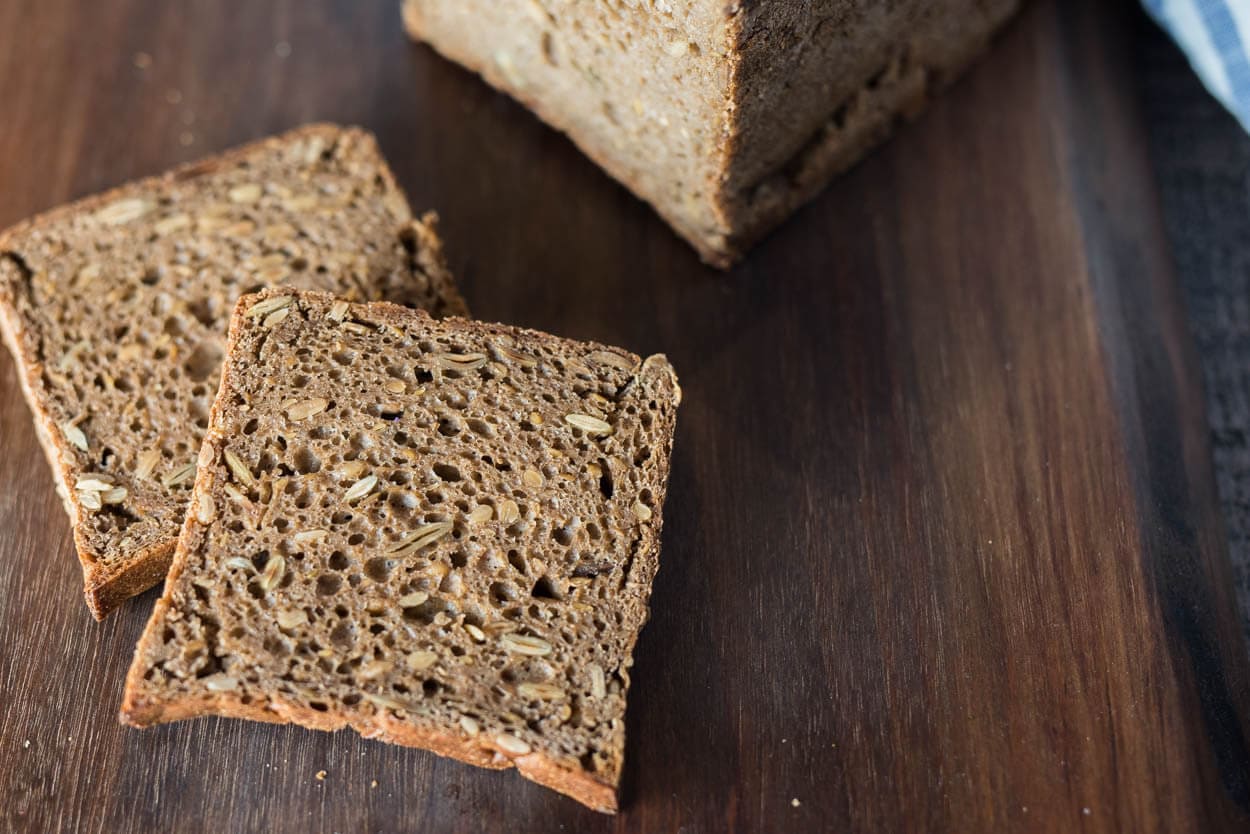
The small percentage of freshly milled spelt and medium rye helped to open up the interior of this bread compared to traditional rye bread I’ve baked in the past or have seen online. I like that. Even though this bread is rugbrød, it has a light texture that I enjoy.
Taste
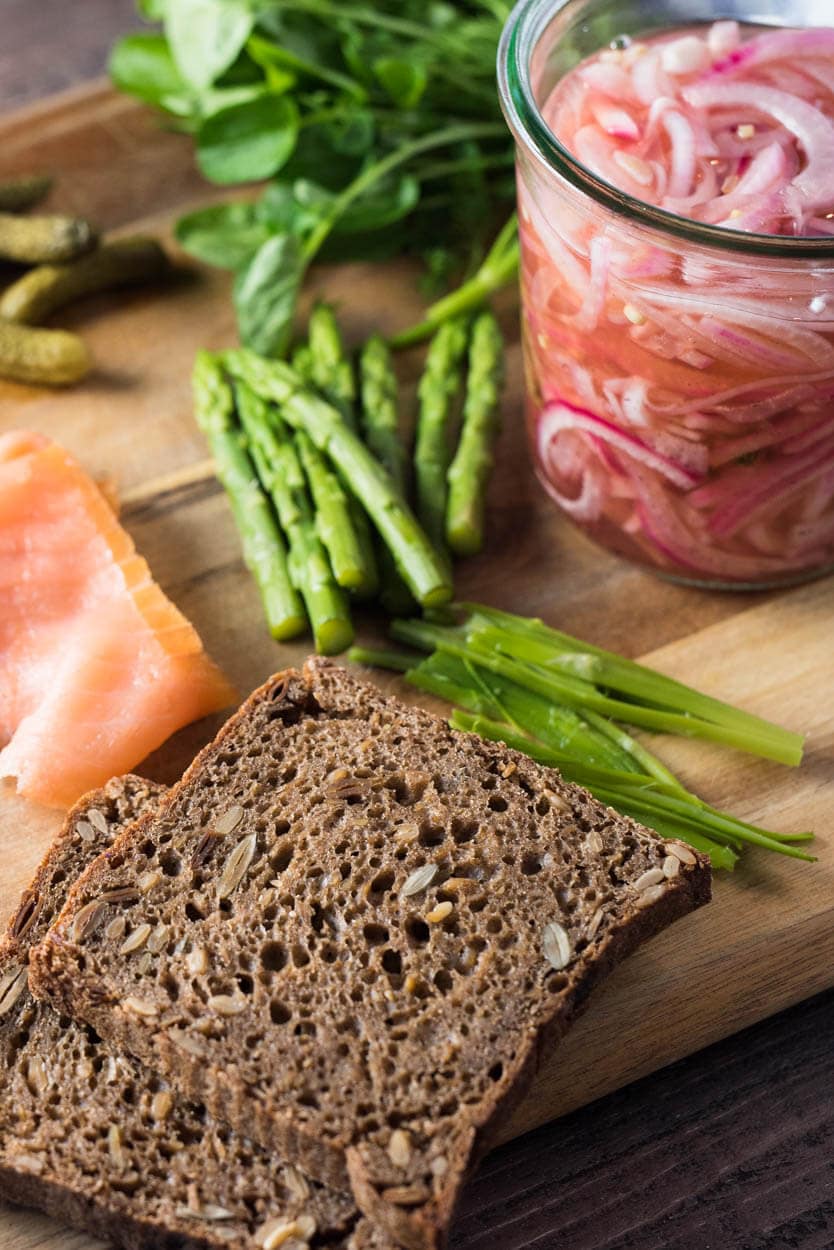
Given the high amount of rye flour and somewhat long fermentation time (for this much rye and whole grain), it is expected that this bread has a definite sour note to it, but it’s not overwhelming and probably less than “traditional” rye bread. For me, this has the perfect amount of tang and heartiness to balance out whatever ingredients it might provide a vehicle for.
What’s Next?
I hope you enjoy this rye sourdough and smørrebrød recipe set as much as I do! And please, do as Magnus says: “enjoy them for lunch with a beer on the side and a glass of Aquavit!”
If you’re looking for more recipes with rye flour, look at our Light Deli Rye, a lighter bread perfect for sandwiches. Or, our new 90% whole grain freeform 90-rye for a seriously delicious loaf with layers upon layers of flavor.
Velkommen! (Buon appetito!)


244 Comments
How would you adjust the recipe if I wanted to use a 13x4x4 pan? I used a 9x4x4 (albeit without lid) and it significantly overflowed onto my tray
naturally like your web site however you need to take a look at the spelling on several of your posts. A number of them are rife with spelling problems and I find it very bothersome to tell the truth on the other hand I will surely come again again.
Pretty! This has been a really wonderful post. Many thanks for providing these details.
Where are steps 3 & 4 in the recipe above?
It jumps from 2 to 5.
Sorry about the typo, Karina! It's fixed now 🙂
So glad you’re enjoying these, Darryl!
Maurizio, greetings from down here in Las Cruces! I love your website (and Instagram) and the soft pretzels, and the jalapeño Cheddar sourdough, and the babka! Trying this recipe for the first time! A question about the fermentation temperature. It says the final target dough temperature is 80F. How and when do we get to 80F? In the final mix we are told to use room temperature water and then the final ferment happens at 74F. So how, and when should my dough be 80F? Thank you!
Hey there fellow New Mexican! Thanks so much, sorry for the late reply. To get a higher dough temp, warm the mixing water!
Maurizio,
Would it be possible to do a longer bulk ferment of 24 hours by using a much smaller levain/ripe starter? Say, by using the total dough formula with the 47g levain or less? I’m trying to increase the flavor and intensity by a longer ferment much like the traditional recipes for these european breads that leave their dough on the counter for 24 hours. I’m just worried about over proofing the dough with such a large levain. Any suggestions? I wanted to use your recipe because most recipes for these breads involve the cracked grains that I don’t have right now and, as well, some of the European recipes use yeast instead of sourdough. Not having these cracked grains would result in me having to rework their recipes for hydration and I didn’t want to have to do that. Thanks so much.
Definitely possible, yes. But you’ll have to test the amounts there, I find rye does need a lot of fermentation time, but it can quickly overproof, too 🙂
I’ve made this three times and it is truly fantastic. It’s my go to for my home-made gravlax. I don’t have a loaf pan with a lid but for the first two loaves I covered it with foil for the entire cooking time. This past loaf, I forgot to cover it before turning down the oven temp. I put the foil on when I lowered the temp and left it for the remaining cooking time. I cooked it to 210 degrees. It was late night so I took it out of the pan but also forgot to wrap it in a towel until the morning. Once wrapped, I left it for almost 48 hours. It was the best loaf yet! The crumb was perfect, nothing gummy about it at all. It cut perfectly, went great with my gravlax, was amazing plain and with just butter. I can’t wait to put a mushroom cream sauce over a toasted slice of it. 🙂 I think I will incorporate this “technique” into the way I make it in the future.
Happy to hear you like this, Wendy! Mmm, gravlax 🙂
This brings back memories from my days as an exchange student in Germany (1976). I have made many recipes on this web site, but this is the bomb. I grind my own rye, sift it as called for. The result is great. Breakfast is the most important meal of the day. This bread, cheese, meat to top…. perfect.
Amazing, thanks so much for the feedback, Deborah! Glad you enjoyed this bread, and yes, a little cheese… a little meat… I love this bread 🙂
Dane here with a tip: soak the seeds with the water and beer you will use in the bake. This way all you have to do is add the flour to the seed mix and you’ve got yourself a dough. You’ll probably need to add some more water to your recipe (weigh water before and after a normal soak), and I also recommend adding about 20g of honey to that mix for sweetness.
IDK if you already tried this approach, but normally I make rugbrød with a higher ratio of rye and let it proof for 24-72 hours (longer is better). This means a rise of about 30-40%, and the end result is really delicate and complex. For the bake itself I bake at 160 degrees for 2hrs, and I rub water on the top of the loaf and add seeds (for me poppy seeds, but whatever seeds you want) for decoration and added texture.
Great tip, Benjamin! I’ll give these mods a god next time, and maybe even develop a new recipe!
Hi Maurizio! I have been making this recipe over and over and the results are always amazing. One question though… if you had to, what would you replace the dark beer and the spelt flour for?
Thank you so much!
Dark beer can be swapped for simply water if you want a lighter loaf, and spelt, for whole wheat!
Hi Maurizio! Do you have a print option for this one?
I don’t Margie! Working to update this recipe (there are a few that need this update). Getting there!
Do you know how this can be made without seeds? My husband can’t have nuts or seeds.
Yes, I think it would work without the seeds!
This might be a little late, but another option could be adding cracked rye kernels instead if you can find them where you live. That’s something they often do in Denmark.
Just sliced into my bake. I got all the “problems” outlined in the recipe, lol! For starters, I ran out of spelt and the store was out as well, so I substituted rice flour. I then overproofed it as I used my dehydrator for a temp-control setting but it only goes down to 77F, so in less than in hour it was overflowing from the pan. Spillage was intense! Lastly, I got complete crust separation and very gummy interior. I’ll toast the slices for a more desirable texture 🙂 Better luck to me next time
Hi Maurizio,
Can I retard this recipe in the fridge for a few hours, if I want to bake it later?
Thanks!
I would not retard this dough! With the high percentage of rye and large levain, it’ll likely overproof on you. Sorry for the late reply, too, Mark!
Yes, milled whole rye berries = whole grain rye flour.
That’s correct, milled fine into a flour.
Excellent! Sounds like a success–enjoy 🙂 I have some more rye recipes in the works!
Hi Maurizio
I made this loaf over the weekend, it was awesome to say the least, just a few questions, does the beer contribute to the colour, texture and flavour profile,
What can I use in place of it ? I have a few friends that don’t drink alchohol (religious reasons), so i’m wondering what could I replace it with
Thanks again for your time
Darryl,
Remember any yeast including sourdough does produce alcohol. Almost any baked product that does not use baking powder/soda will have the same 'drawback'. That said, I understand purchasing from a producer you are opposed to does make sense to me. Baking drives off most of the alcohol and I would never presume to direct your ethics. Informed facts can help.
hi Maurizio i plan on making this and wondering could i use freshly milled rye or should i just use store brought rye? if i were to use freshly milled rye what things would need to change, cheers
Absolutely! If you do, expect a seriously active dough. You might want to drop the levain percentage 2-5%, that’s likely what I would do the first test.
Thanks for the reply, also since the recipe calls for light or medium rye, what setting should i mill at then sift to get either
I almost always prefer milling very, very fine. Hard to say what percentage to sift out for “medium” rye… I would say go for something like high extraction, perhaps 20% of the larger pieces sifted out.
Hi @maurizioleo:disqus !
Thanks again for this recipe which got my attention, I’m a huge fan of rugbrød and I’m definitely looking to try this recipe. One question though, I have two bottles of malt drink (“Vita Malt”, and “Maltin”), and I wonder if I could use some instead of the stouts? These are sweet drinks so that might not really work, but they are flavorful, so I’m willing to experiment!
Have a good day!
Hey, Mathieu! Honestly, I don’t know! I’ve never heard of those drinks, I’m not sure what they taste like. If you’re up to experiment, I’d say go for it and see how you like the result. The stout here has some sweetness to it, but it’s more robust and ‘earthy’ than sweet. If you give it a try, please report back!
Hey Maurizio!
If you like stouts, you might enjoy these drinks! They are quite sweet so I only drink them occasionally but they are super flavorful. There might be healthier, less sweet alternatives too; my favorite is “Vita Malt” which has good flavor/sweetness balance.
Since the recipe calls for 88g of dark beer I think I can definitely give it a go. I usually use dark malt syrup when making rugbrød so I guess this might work just as well and not taste overly sweet. I will definitely keep you posted!
Thanks and have a good day!
Mathieu.
Hi, thank you for your effort in providing such amazing and detailed recipes. What is the replacement of beer if one would like to bake it without that component?
You can just use water in its place 🙂
Hi! Does that recipe also work with alcohol free beer?
Absolutely! The beer is there only for flavor.
This recipe is very similar to one I have been making for a while where you mix equal parts of rye sourdough starter made with whole grain rye flour, with water and white rye flour. I replace a small quantity of this white rye flour with bread flour and I get a lovely and fluffy rye bread. I like it because it is so simple to make and yet so tasty. I don´t use beer but add a lot of different seeds when mixing the dough. It is probably the healthiest of all breads.We never get tired of it.
Hi, great recipe. We love rye in Poland. Shouldn’t you use dark rye flour when building the levain? It’s the heaviest of them all, so I’d give it the most time to soak and soften.
That’s one way to go about it! Either will work, especially with a bread like this. If I were to go back and re-do this recipe, I’d likely take that approach.
Hello, I love your recipes and blog! I am all set to make this bread except that I just realized I have a large Pullman pan …. 13 x4x4. Do you think I can still use this for the recipe? I’ve never used a Pullman pan before so am unsure if it’ll work. Or if I should double the recipe? Any advice would be very much appreciated. 😬🙂
Hey, Janet! Yes, you’d have to increase the dough weight of this recipe, but it wouldn’t quite be double… You could increase by 125% (multiply everything by 1.25) and give that a try, that might fit just right (I’d have to test!).
Wonderful! I’ll give that a try and let you know how it goes. 🤞🏽😀 Thank you!
Hi! I made the bread increasing it by 125% as you suggested. The flavor was amazing! The size was perfect. baked it for 3 hours. Next time, I’ll bake for 3.5 as it was slightly gummy. Do you think it’ll help if I increase the temperature? It also fell slightly in the middle and I’m wondering if it’s because I opened the oven too soon to check on it. 🤷🏽♀️ I’ll definitely be making this again. Thanks for such a wonderful and flavorful recipe! 👏🏽
Awesome, Janet! Yes, increasing temp may help, just be sure it’s not coloring too fast. Also, be sure to not cut the loaf for at least 24 hours, if you cut too early it’ll be gummy. But, since it fell, it almost sounds like it was over hydrated or over proofed. I’d try reducing the hydration a bit (5%?) and see if that helps. My guess is over hydration (which will lead to a fall and gummy interior).
Seeking advice! I have been so excited to make this bread, and am just getting a shipment of food and supplies, but it’s arriving quite late (I’m very rural) and has messed up my timeline. I’m wondering if I begin the levain the day before, could I retard it in the fridge overnight and then resume at room temp in the morning (aiming for a 12 hour levain outside of the fridge) for a mid-late afternoon bake? Thanks so much for this wonderful site by the way, I’ve learned so much here.
I would not recommend placing the levain in the fridge. I’d simply make a new one in the morning!
Maurizio: great stuff! Is it possible to do this as a boule or batard? Thanks.
Thanks, Andrew! With this dough I would not recommend it. You could try a boule, but expect it’ll be very squat and result in very thin slices—which is expected for rye loaves!
What do you think about using the liquid that the nuts were soaked in as part of my hydration?
You can absolutely do that!
hey man – i have a ton of buttermilk i need to use and i know it’s a traditional ingredient in some of these breads – would you recommend subbing out ALL of the water / beer for buttermilk? thanks!
I wouldn’t do all, maybe start at 25% of the liquid and see how it goes—adjust from there! If you give that a try, please report back, I’ve been wanting to add in buttermilk as well!
Making this bread for the first time. I am sure that I over proofed this bread as it is at the top of the baking pan and i have to wait 45 minutes for my oven to preheat. So I threw it into the fridge! What do you think? I am worried it’s going to spill over like crazy (i don’t have a pullman). I am also going to try steaming trays also for the first time. Lots of trial and error here. I guess that’s how one learns.
OMG…so far it’s working out. just trying to get it to 208 degrees but it looks perfect!
Awesome, Jody! If you’re worried, slip a baking sheet on a rack below the pan to catch anything that might spill out.
Came out great. Alittle sunken as I think I overproofed it. Going to make again tonight. We ate it in two days. 🙂
Great recipe, about to try it and I got a question regarding the baking time, is it the same if I bake without the cover(don’t have a Pullman pan)?
These days I tend to bake rye bread without the lid, I’d say a very similar time, but be sure to check the internal temp for doneness, especially with a bread like this!
Hi Maurizio, could you add a photo to this post showing how your dough looks after mixing?
I’ll take one next time! It looks like puffy mousse, lighter in color than when I started mixing.
This is my favorite bread. I baked it with the old and updated recipe. With the new recipe i always seem to end up with too much dough. I follow directions exactly and using the same pan as in this recipe, but when i fill the pan with dough before final proof, it does not fit, so i only fill to 75%of the pan so there would be some room to ruse, it rises to the top and i cannot fit the lid. In the recipe it says the dough should rise to 1 inch below the rim, so somehow the proportions are off… i made this new recipe three times now, last time following even ambient temp exactly to see if that was the problem. Yet i always end up with a bit of extra dough. My loaf also tends to deflate just slightly in the oven, a spring and a small collapse, nothing major, does not affect the bread crumb or texture, it is delish…. but i wonder if maybe the issue is overproofing…. last time i did 30 min bulk followed by 1.5 h proof at 72F ambient temp.
When i used your old recipe the amount of dough was just perfect to bake with the cover and get a perfect square bread. Anyway, seems like i need to continue figuring it out to get my perfect bake.
Hello! I had printed the old version…I wanted to bake 1.900kg of bread but I dunno the soaker percentage. Also, that is not added to the Dough Formula. So, I can’t even work it out. Can you help me? Thanks!
Thanks for all your great recipes! I’ve made your best loaf a few times and your babka loaf twice—so good. I’ve also learned so much from your site about how to make sourdough. I want to try this loaf—but I’m not sure which of my flours will work best. I have fresh milled rye (whole, not sifted), fresh milled red fife wheat (whole, not sifted), unbleached organic all purpose flour (13.3% protein). Do you have suggestions on what quantities to use for this loaf. I would like a denser rather than lighter loaf—to contrast my other sourdough loaves. Thanks for your insight.