

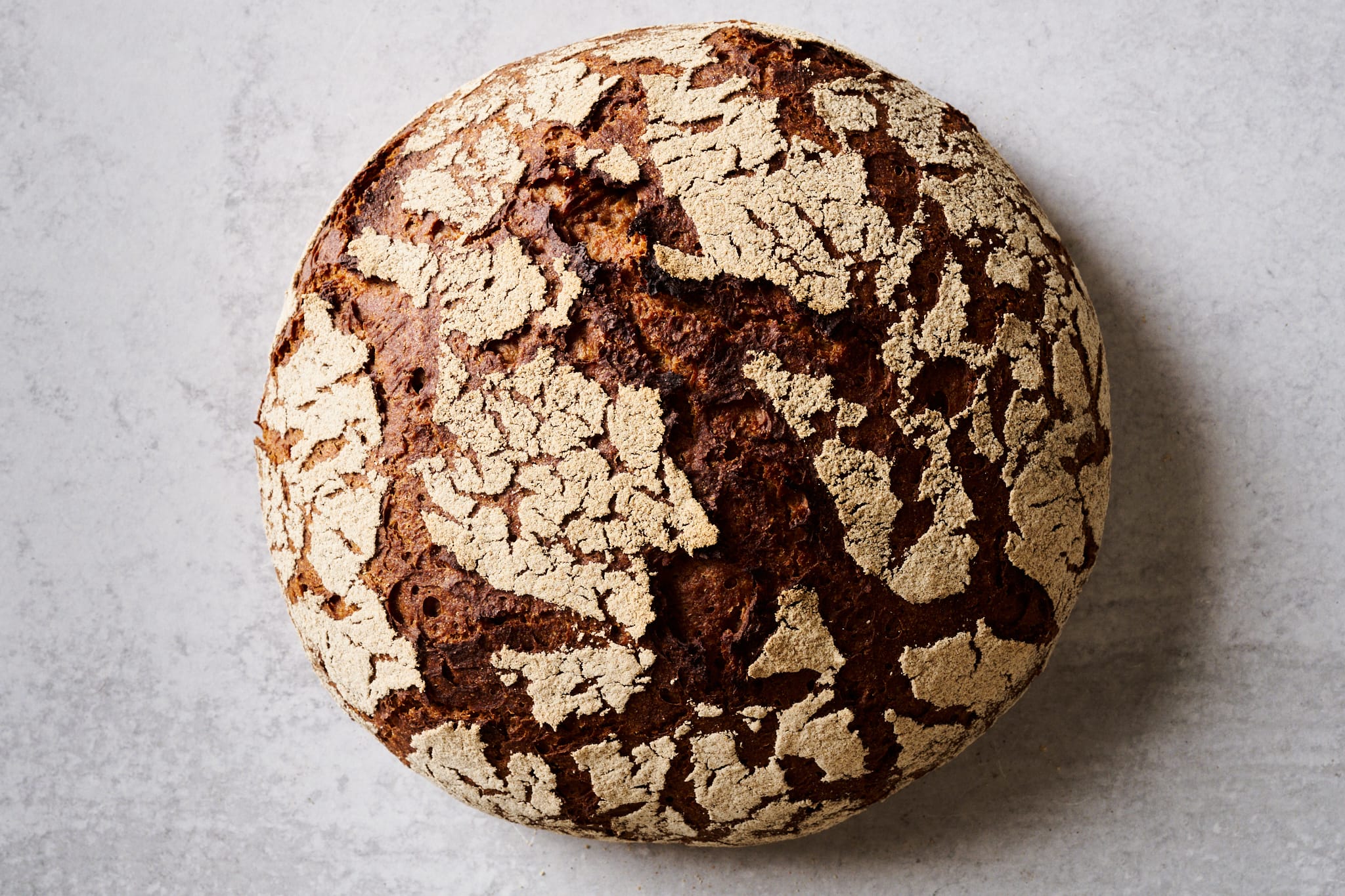
Mix whole dark rye flour and water with your hands, and you’re immediately plunged into an intense sensory experience. Earthy aromas swirl about as a dough texture that’s not unlike wet concrete starts to form. When the gray paste squishes and squashes through your fingers, you begin to hear whispers from somewhere in your head: How can this dense, shreddy coalescence make a cohesive, airy, and crusty loaf of sourdough rye bread?
This bread steals your attention—it’s all you’ll think about at breakfast, lunch, and dinner.
The answer, as is the case with many of the recipes you’ll find here, is fermentation. But also, while all rye flour lacks the same glutenous characteristics of wheat flour (especially high-protein white flour), it has pentosans. Pentosans are polysaccharides that absorb copious amounts of water, which steam in the oven during baking, puffing up the dough. They also form a gel network that helps trap the gaseous byproducts of fermentation. Finally, pentosans help the starches gelatinize during baking, which sets the soft, airy structure of rye-based bakes.
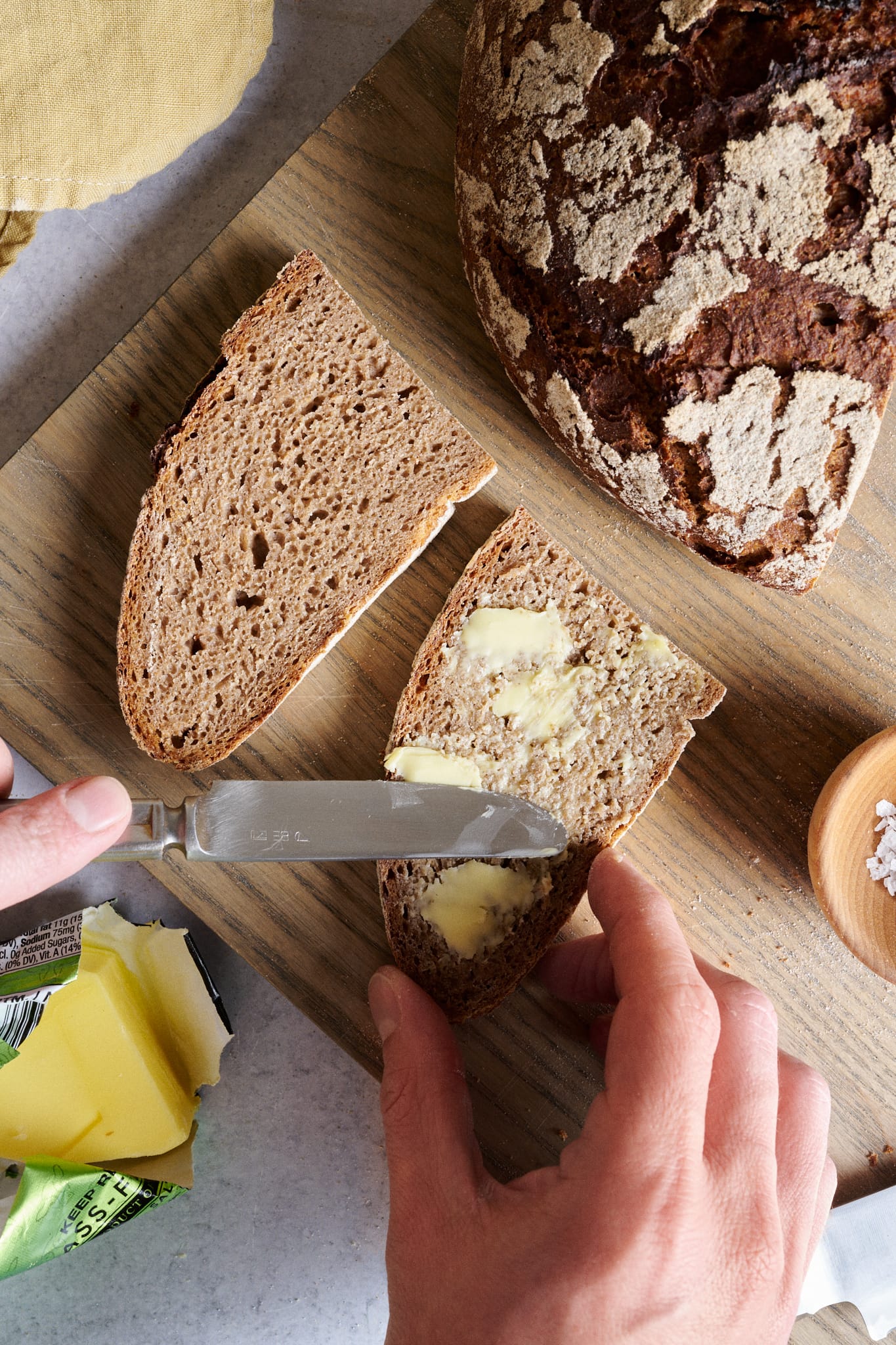
But the stars of the show with rye bread (as I’ve come to sincerely appreciate over the years I’ve baked it at home), are its captivating aroma and robust malty flavor. This bread steals your attention—it’s all you’ll think about at breakfast, lunch, and dinner. If you work from home, be prepared to hear its call from the kitchen when you least expect it. You’ll want it sliced thin and topped simply with good salted butter. You’ll want it to accompany your smoked salmon. You’ll begin to want it with just about anything you have in the fridge.
Here are a few important details I’ve found when making any sourdough rye bread:
- Use a large preferment; at least 40% of the total flour is fermented ahead of time
- When using whole-grain rye flour, increase the hydration dramatically for the best texture
- Employ a short bulk fermentation and short final proof
Instagram Walkthrough
Click play below to watch me make this sourdough rye bread on Instagram.
Why is a Large Preferment Necessary with Rye Bread?
One thing you’ll notice with this sourdough rye bread, and with almost every sourdough rye bread, is the incredibly large preferment relative to the total flour in the recipe. When making proper rye, it’s necessary to ferment a large percentage of the flour in the recipe beforehand.
Why? The large preferment ensures that when the dough is mixed (either by hand or machine), it has a high acidity (low pH) from the start. This low pH inhibits excessive amylase enzyme activity, preventing excessive starch breakdown, especially during baking. If rye doughs are not properly acidified with sourdough, this starch breakdown will result in bread with a gummy interior and a separation between the top crust and interior of the loaf.
In this recipe, I call for 45% of the total flour in the levain, and while this may seem like a lot compared to other sourdough recipes here at The Perfect Loaf, it’s actually rather moderate compared to other rye recipes such as a multi-stage vollkornbrot or 100% whole-grain rye like the roggenvollkornbrot in my cookbook.
Finally, the large preferment also means that much of the flour in the recipe has fermented for a long period of time, which gives it time to build up copious amounts of organic flavor compounds. This flavorful mixture directly translates into the final dough.
Flour Selection
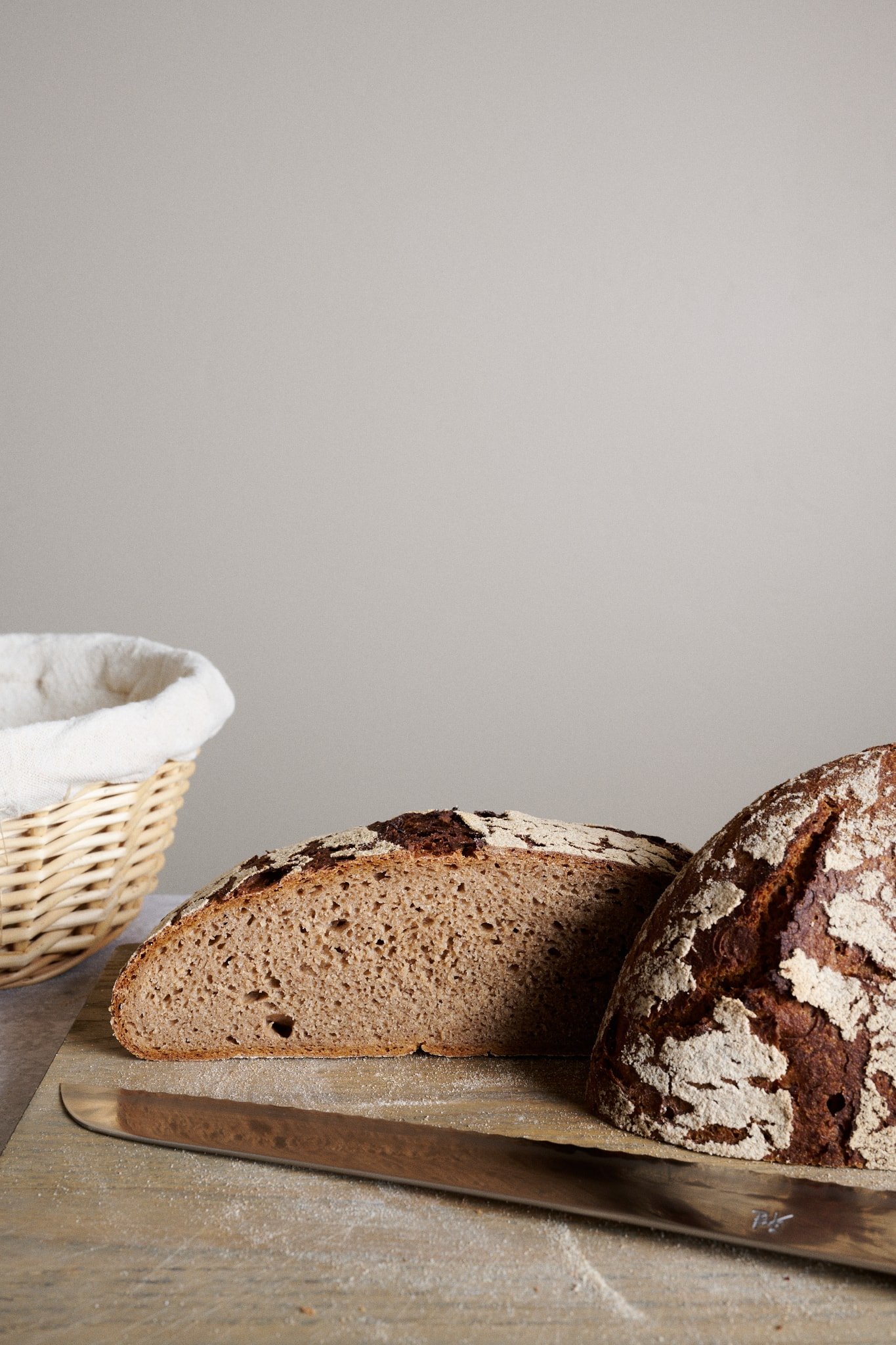
This sourdough rye bread calls for whole dark rye (the same flour you might find in rugbrød, Danish rye bread). This means the flour is not sifted and contains the entire rye berry. Keeping the bran and germ brings increased flavor to the final loaf, specifically, a more earthy and robust flavor profile that’s a touch nutty. Additionally, by keeping the bran and germ, the resulting sourdough rye bread will have more fiber, be richer in nutrients, and keep you full longer.
In addition to the whole rye, I call for 10% high-protein white bread flour to help lighten the loaf just a bit. This higher protein flour brings a touch of airiness and openness to this rye, making for the perfect counterbalance to the dark, heavy rye. If you don’t have any high-protein white flour on hand, feel free to use medium-protein or all-purpose flour.
For a closer look at what makes rye so great (and so delicious), see The Whys of Ryes →
Baking Schedule
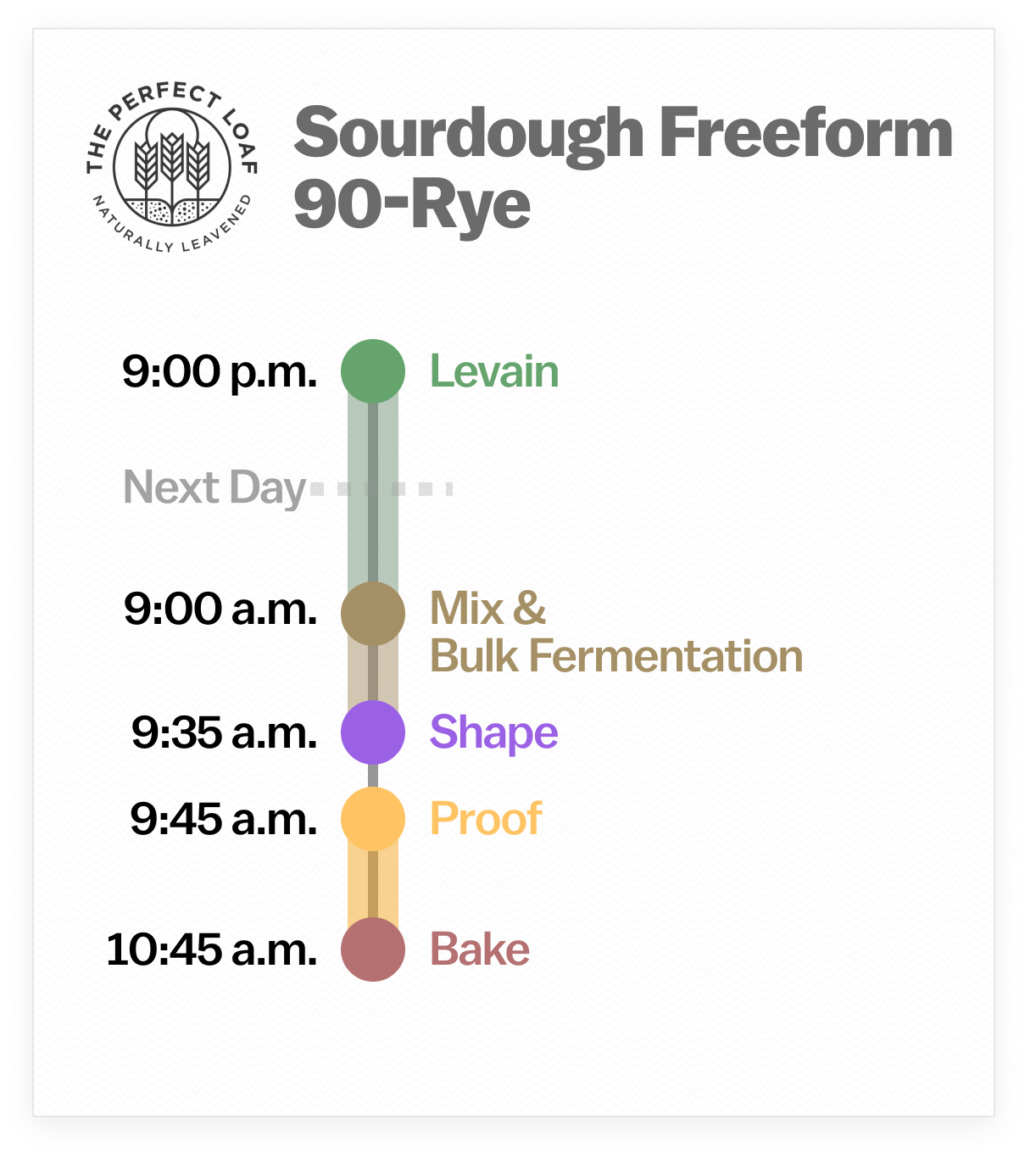
The incredible thing about making sourdough rye bread with lots of rye flour and a large preferment is that the schedule is relatively short and the loaf is easy to make. The preferment (levain) runs overnight for 12 hours; the next day, after a short mix, fermentation time, and bake, you’ll have a loaf of rye bread cooling on your countertop.
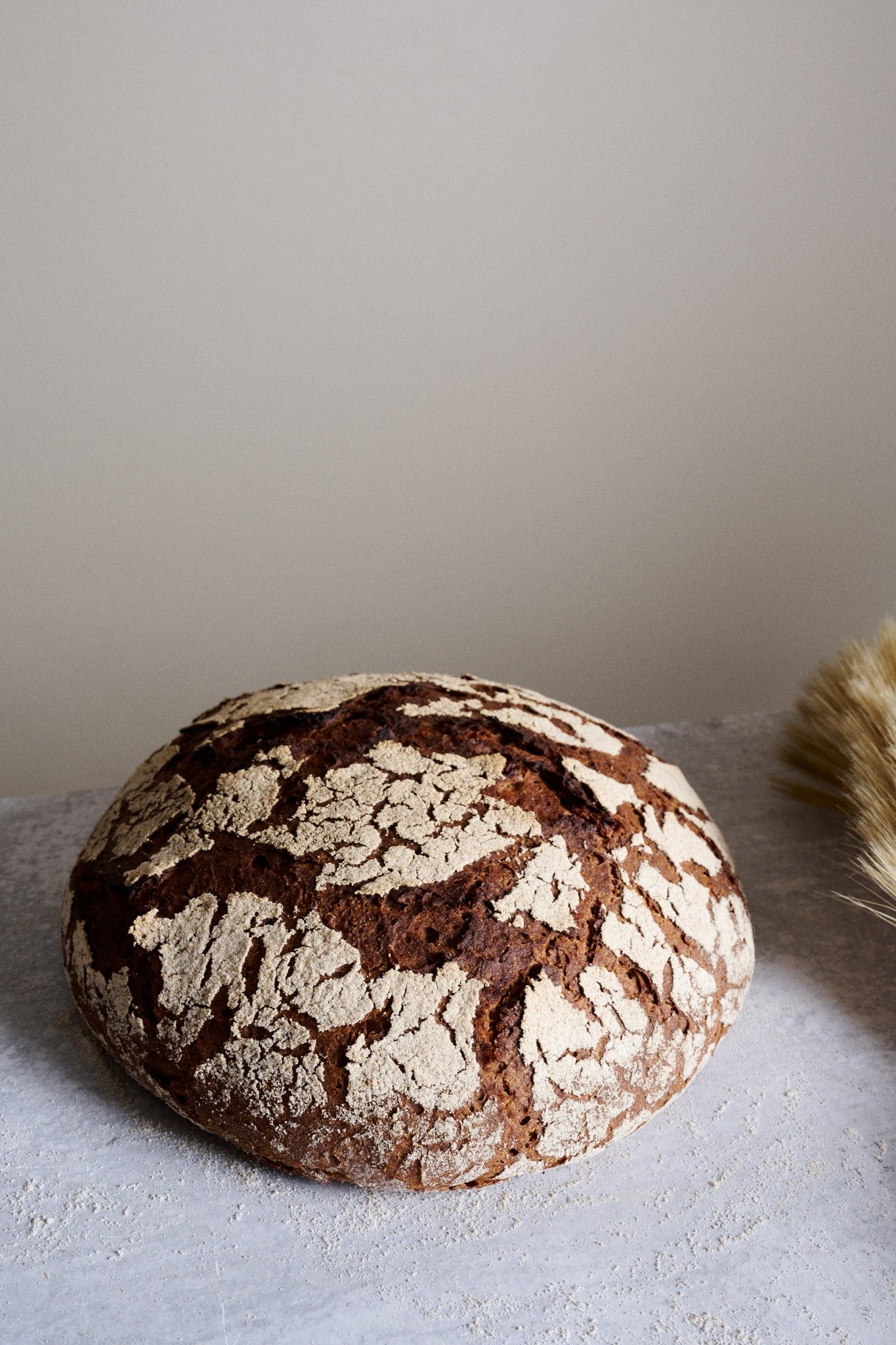
Sourdough 90-Rye Bread Recipe
This 1,200-gram loaf is large, but it’s the perfect size for a week of eating. If you want to scale the recipe up, including doubling the recipe, use baker’s percentages.
Vitals
| Total dough weight | 1,200 grams |
| Pre-fermented flour | 45.0% |
| Hydration | 90.0% |
| Yield | 1 loaf |
Total Formula
This total formula table shows all the ingredients you need to make this sourdough rye bread. In the Method, below, the ingredients will be broken down into exactly what you need for each step.
Desired dough temperature: 82°F (28°C).
| Weight | Ingredient | Baker’s Percentage |
|---|---|---|
| 544g | Whole rye flour (Central Milling Organic Whole Dark Rye) | 90.0% |
| 60g | High-protein white bread flour (~12.7% protein, King Arthur Bread Flour) | 10.0% |
| 544g | Water | 90.0% |
| 11g | Fine sea salt | 1.8% |
| 41g | Ripe sourdough starter, 100% hydration | 6.8% |
Sourdough 90-Rye Bread Method
1. Prepare the levain – 9:00 p.m. (the day before mixing)
| Weight | Ingredient | Baker’s percentage |
| 272g | Whole rye flour | 100.0% |
| 272g | Water 1 (levain) | 100.0% |
| 41g | Ripe sourdough starter, 100% hydration | 15.0% |
Mix the ingredients in the chart above in a large jar or medium bowl and leave them covered with a lid or reusable plastic bowl cover at a warm temperature, 74-76°F (23-24°C), to ripen overnight.
Note that this is a very large levain, so be sure your container can hold the ingredients plus a little room for expansion overnight. My favorite container for this size levain, seed soakers, and other large preferments, are 1-quart round Cambro Camwear containers.
2. Mix – 9:00 a.m. (the next day)
| Weight | Ingredient |
| 272g | Whole rye flour |
| 60g | High-protein white bread flour |
| 272g | Water |
| 11g | Fine sea salt |
| 585g | Ripe levain (from Step 1) |
In the morning, the levain should have risen and aerated significantly (see below). The aroma of the levain will almost be earthy with fruity overtones, similar in a way to dark red wine.
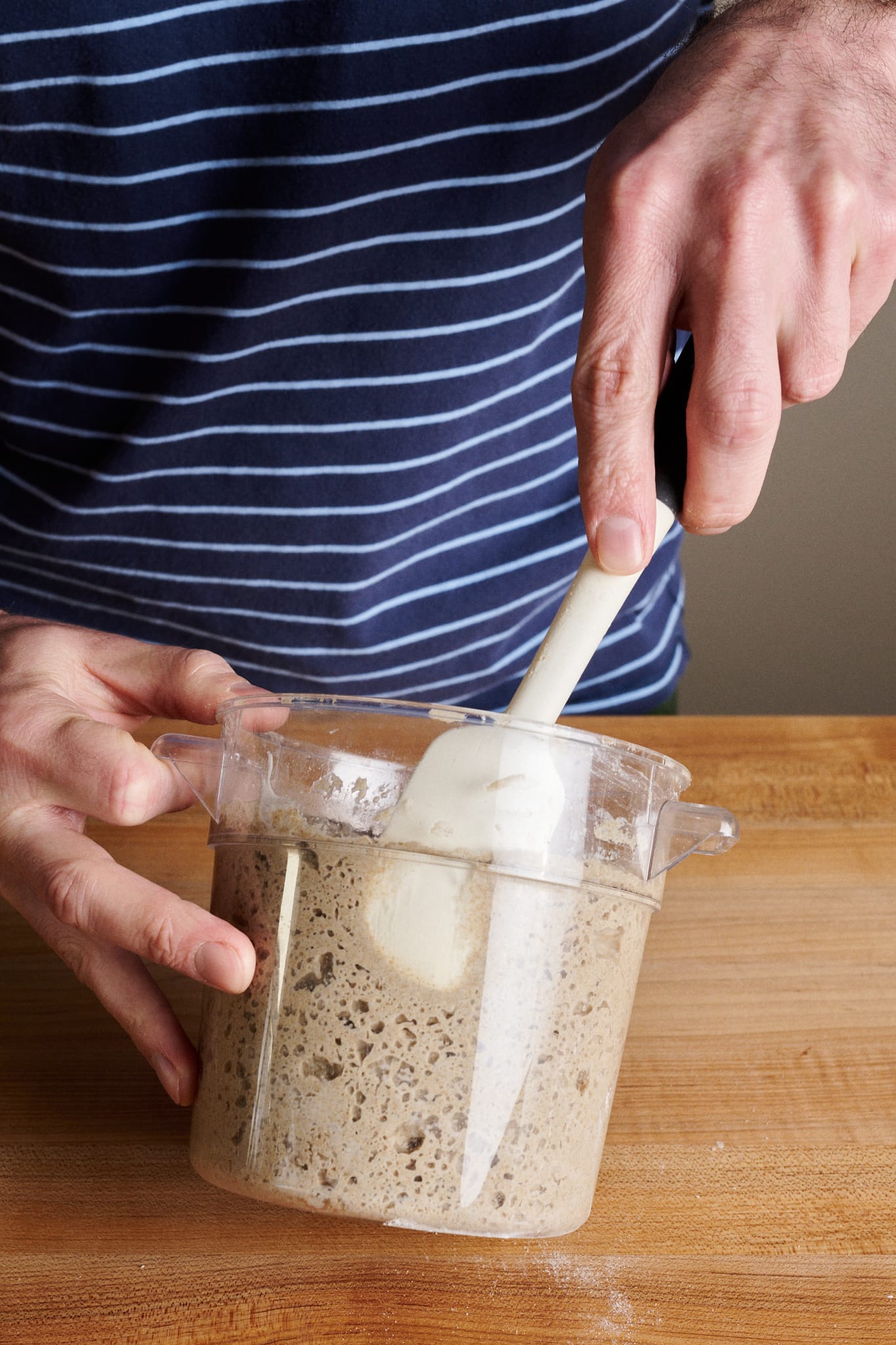
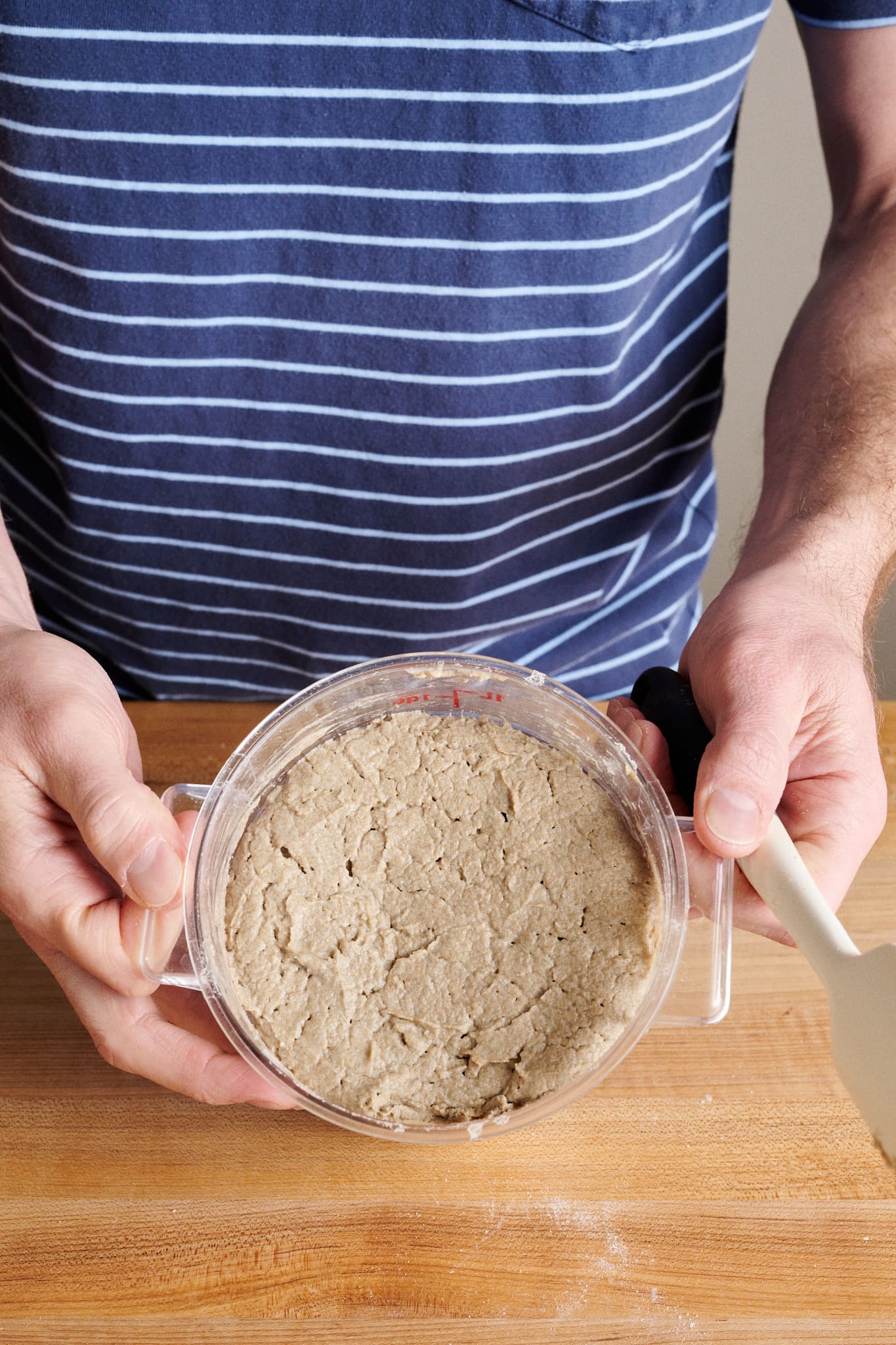
With this rye dough, it’s important to hit the desired dough temperature (DDT) of 82°F (28°C). This is warmer than typical bulk fermentation temperatures here at The Perfect Loaf, so warm the mixing water as necessary to ensure the dough ends up at that temperature (see the guide to dough temperatures for a handy chart and calculator for figuring out this water temperature).
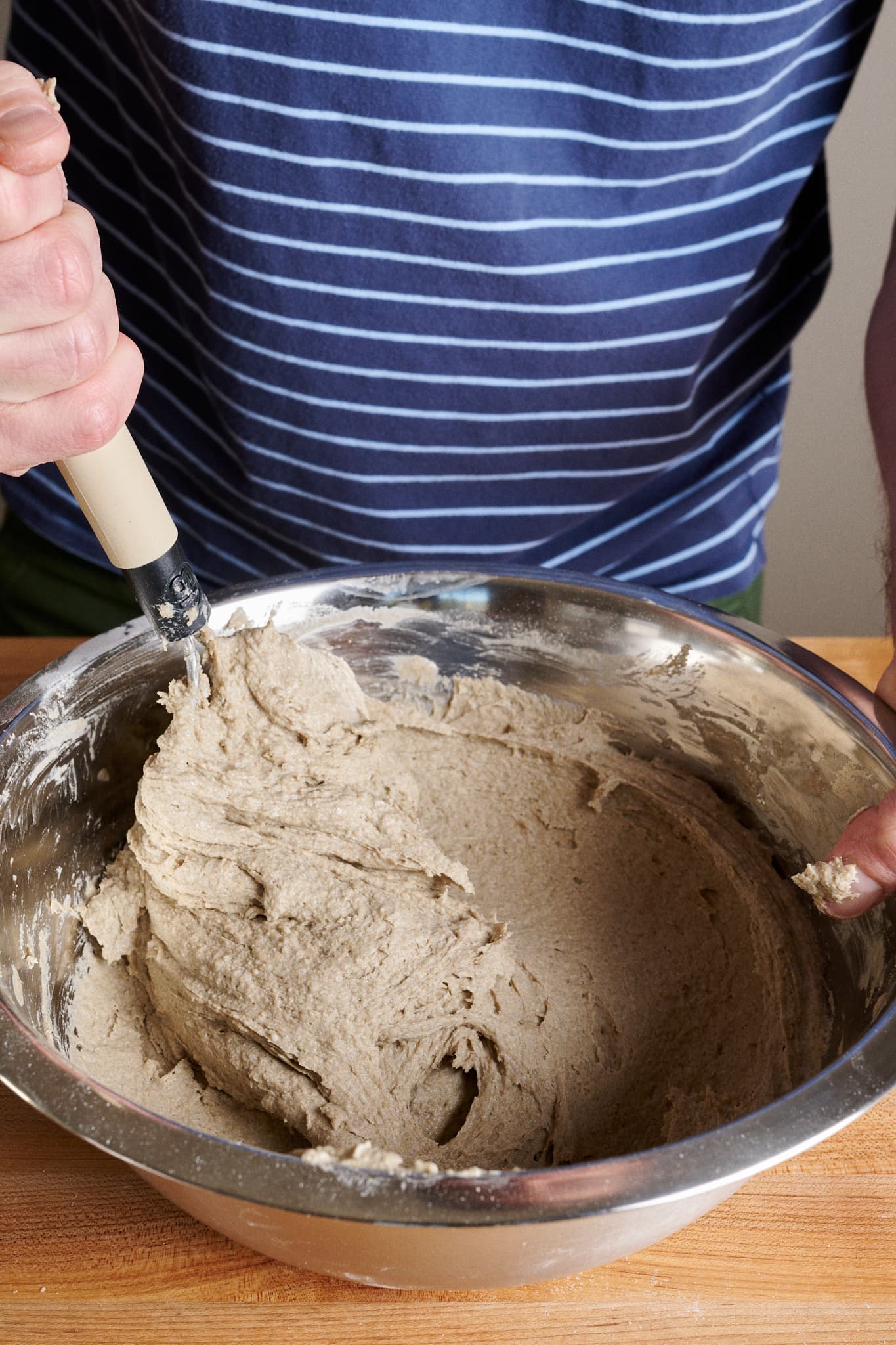
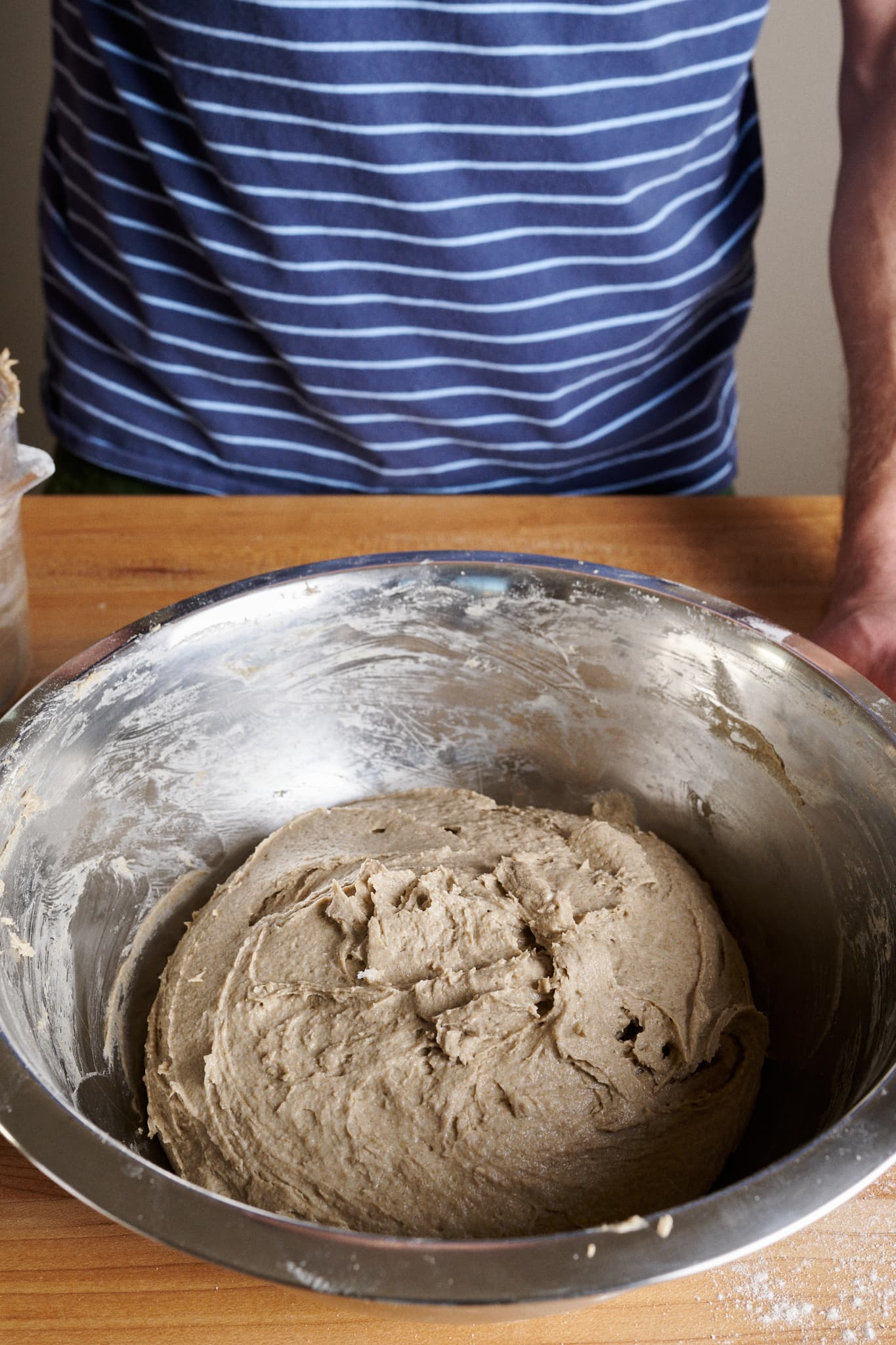
Hydration Note: As with any bread recipe, you might need to adjust the dough’s hydration to suit your flour (especially if baking in a humid environment. When mixing, hold back a little of the water and add it only if the dough feels like it can handle it (look at the images below to help judge the consistency).
Place the flour, water (see note above), salt, and levain in a large bowl. With wet hands (or, my preference, using a sturdy dough whisk), mix thoroughly until no dry bits remain (see below, left). Rye does not benefit from mixing and kneading in the same way as wheat due to its low gluten content. Therefore, it’s only necessary to mix this dough until no dry flour remains.
Gather up the dough into a ball in the center of the mixing bowl (see below, right). Take the dough’s temperature to record the final dough temperature, and then cover.
3. Bulk Fermentation – 9:15 a.m. to 9:35 a.m. (20 minutes)
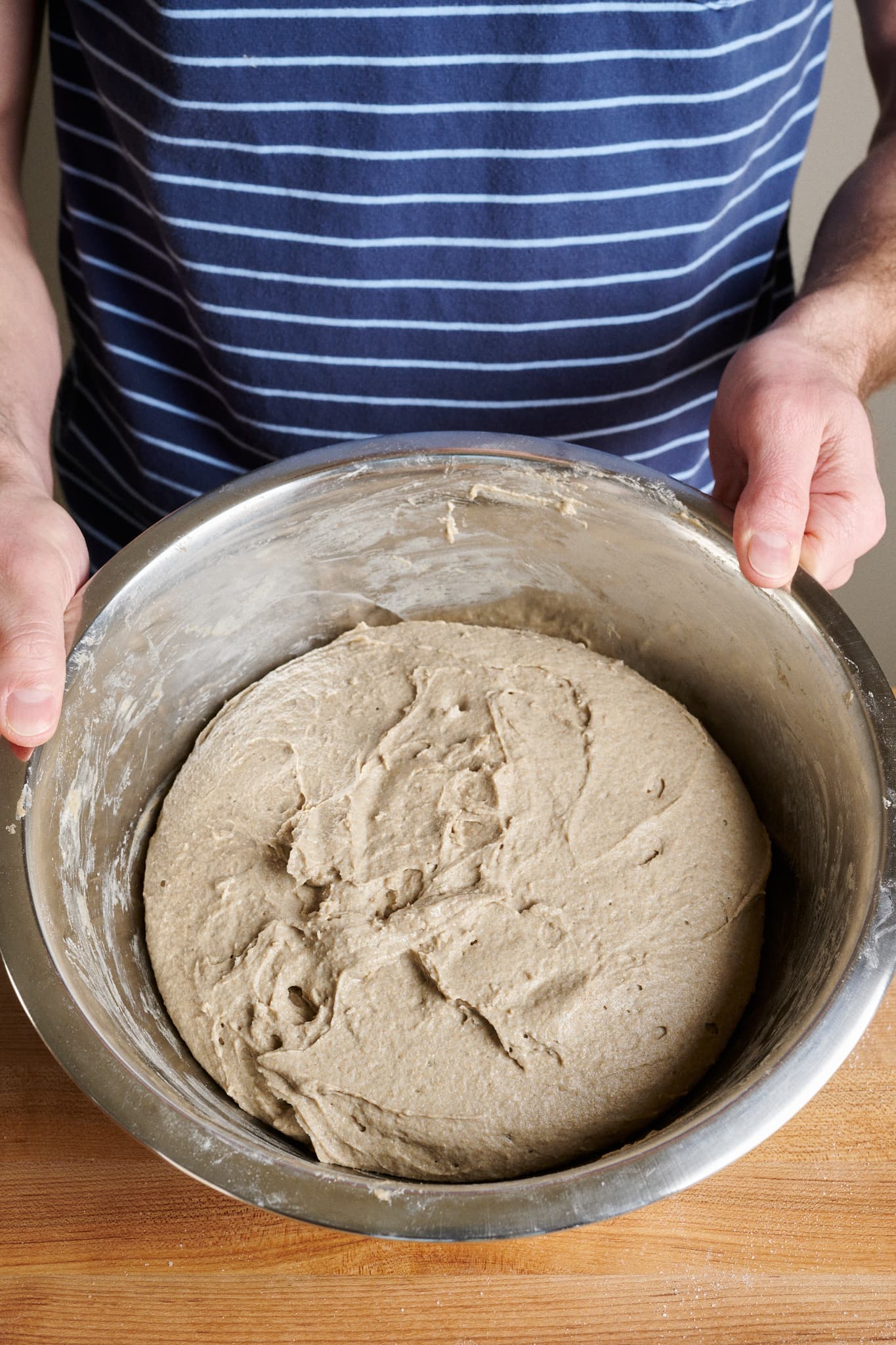
At a warm room temperature, 74-76°F (23-24°C), bulk fermentation should take 20 minutes (yes, it’s short!). Because this dough is primarily rye flour, it doesn’t benefit from strengthening and therefore does not require any stretches and folds during this time.
4. Shape – 9:35 a.m.
Note that if your final dough temperature was below 82°F (28°C), you might need to extend bulk fermentation. The dough is ready to shape when it has expanded (about 20%), has smoothed, and feels slightly puffy to the touch (see below).
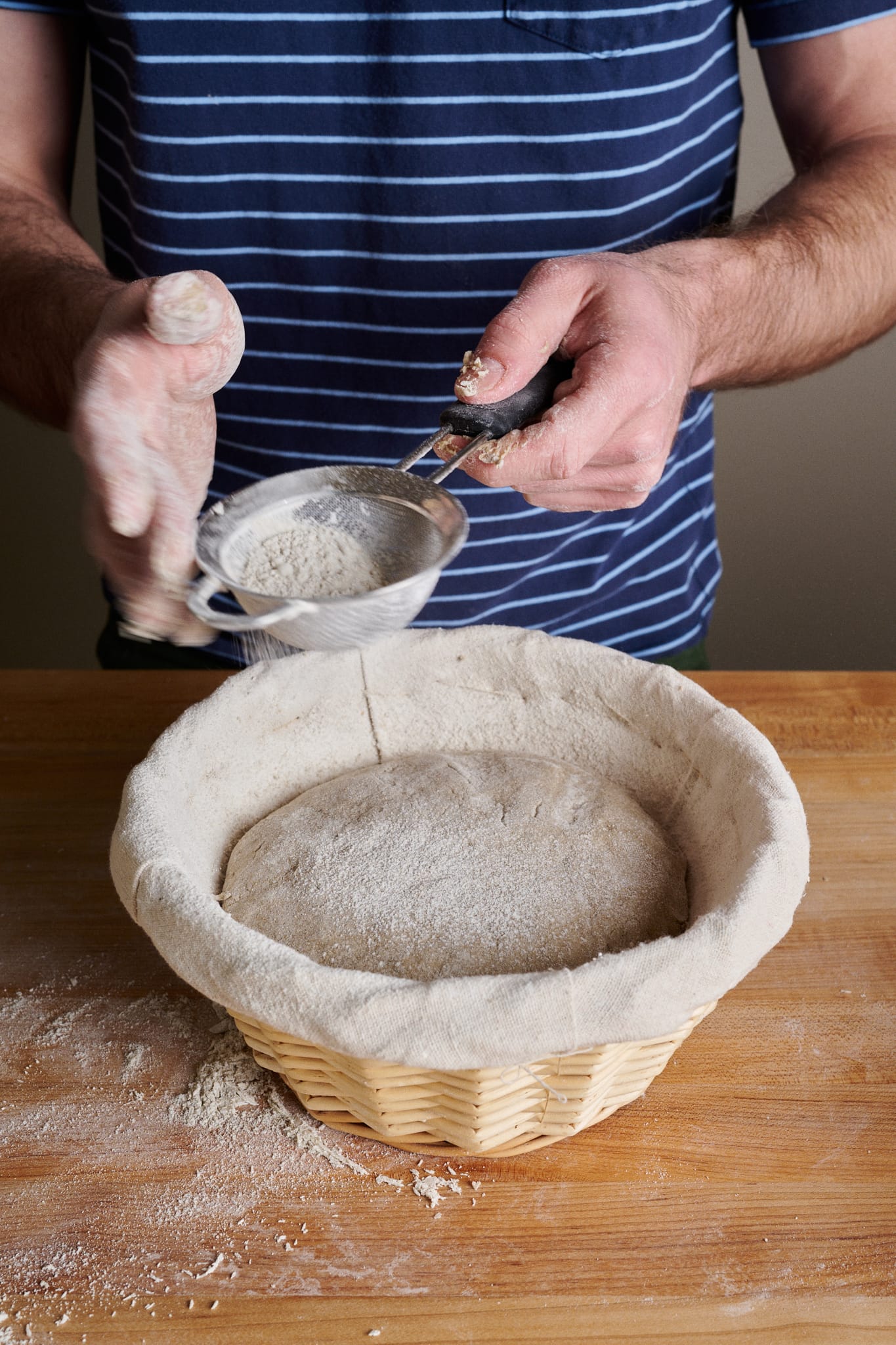
Prepare an 8-inch round proofing basket or banneton by liberally dusting on whole rye flour. Be sure the entire surface area of the basket’s interior is covered with flour.
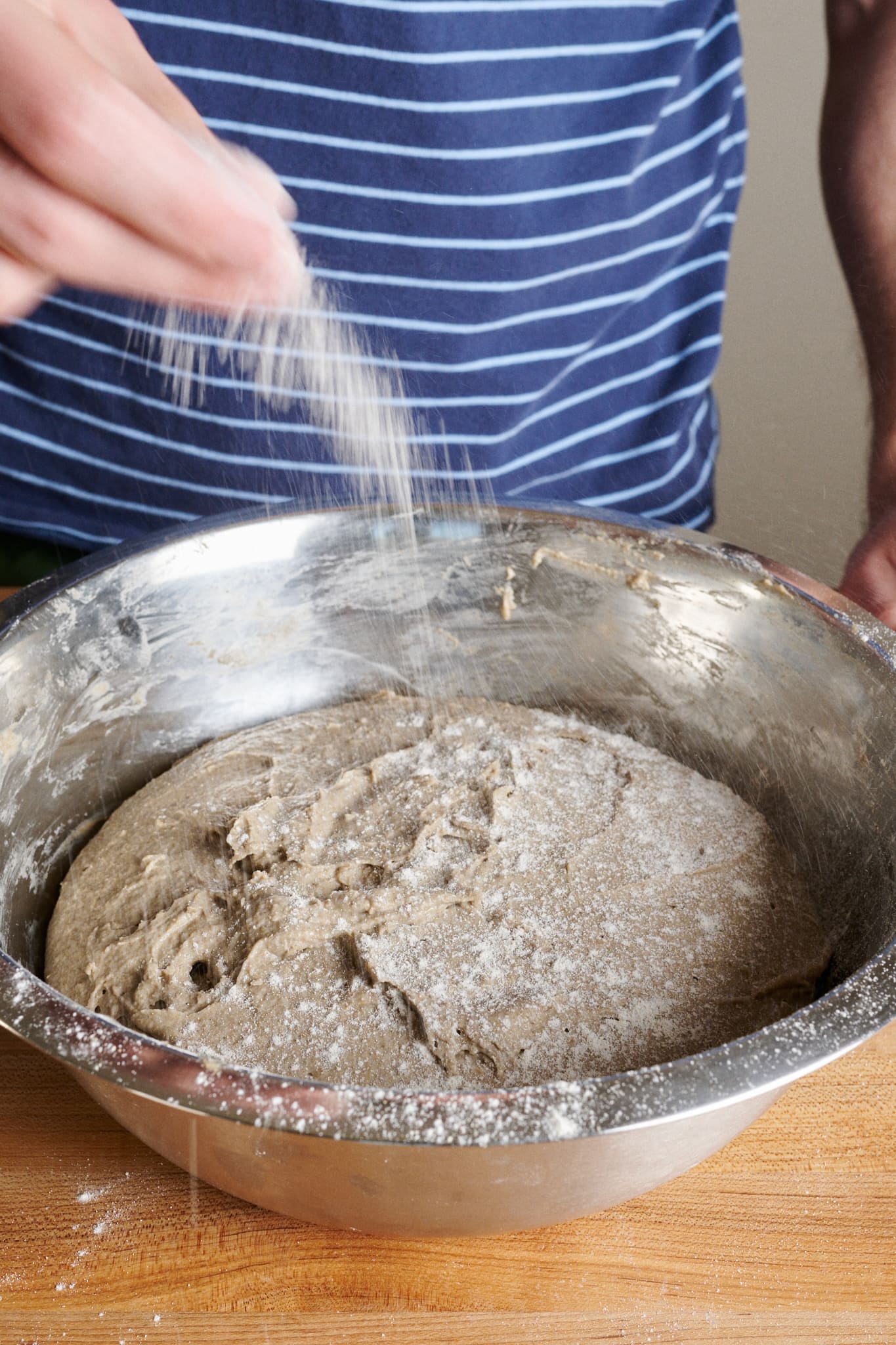
This dough is very sticky, so it’s important to use enough rye flour on your work surface and handle the dough as little as possible. The more you handle the dough, the faster it absorbs the dusting flour and becomes sticky.
Flour your work surface, the top of the dough in the large bowl, and your hands. Scrape the dough onto the floured work surface with the floured top of the dough facing down.
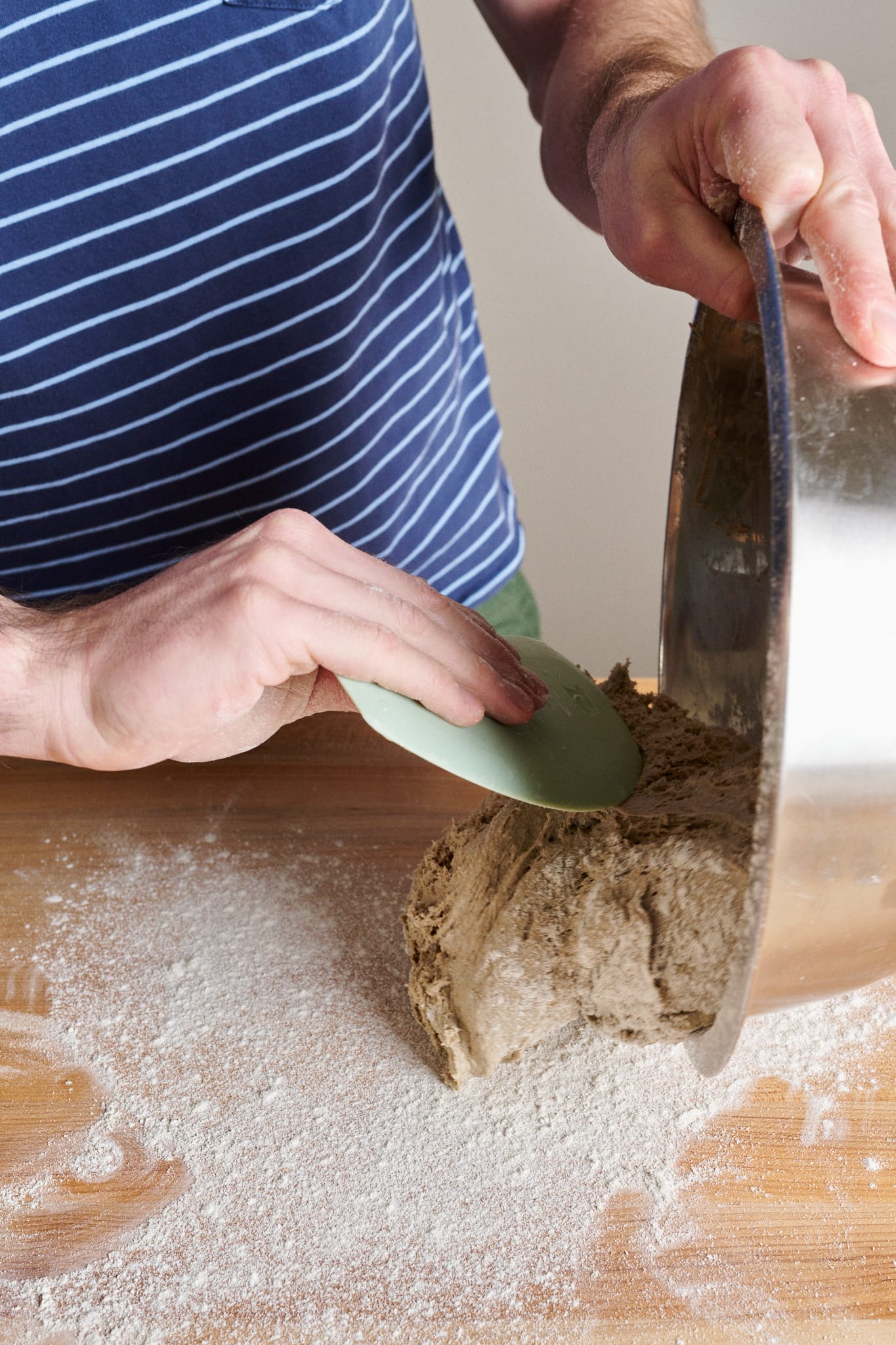
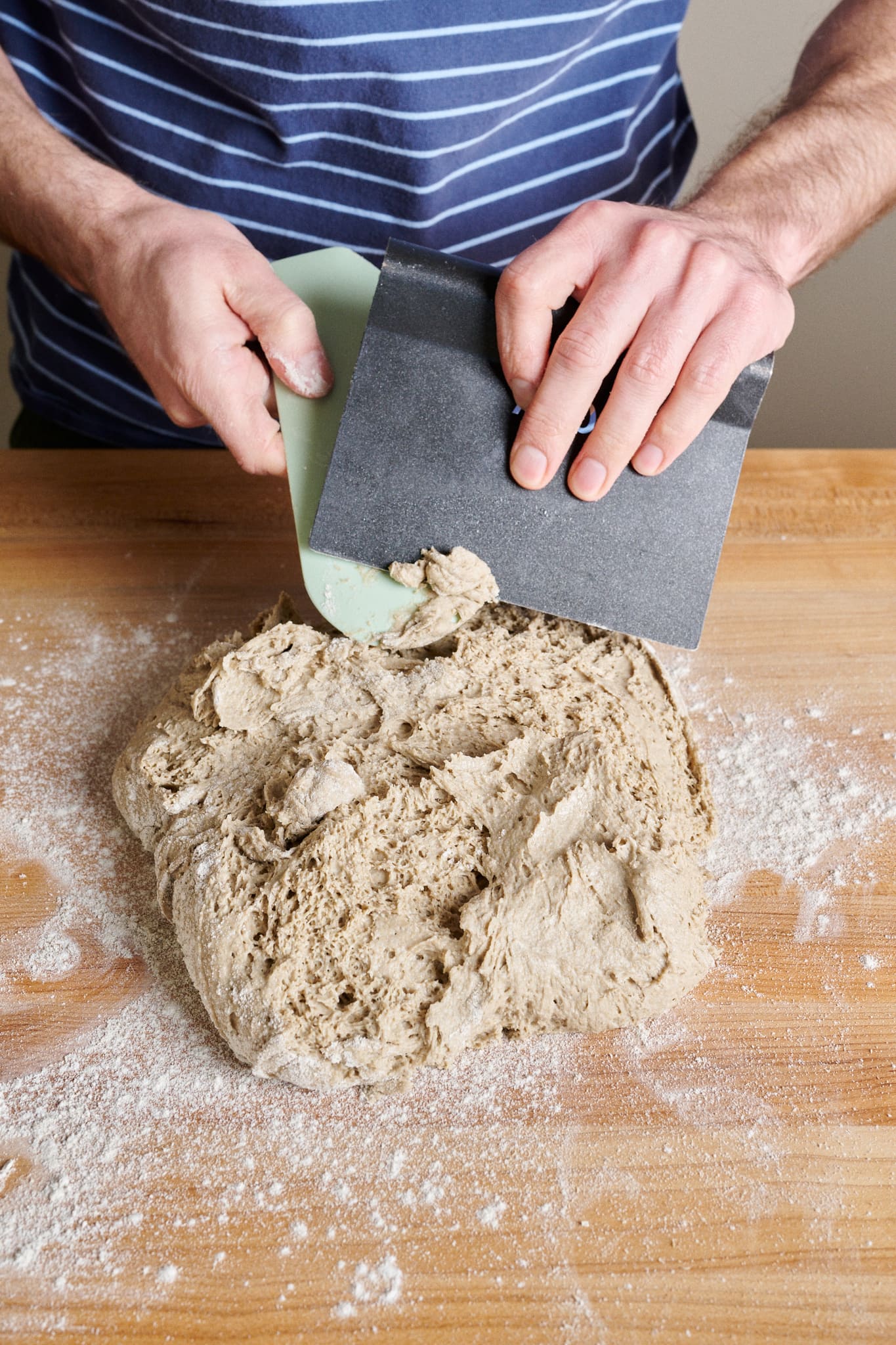
Using your bench scraper, fold the left side of the dough over to about the middle. Then, use the scraper to fold the top (twelve o’clock) down to the middle. Repeat for the right side and bottom. You should now have a folded-up shape that loosely resembles a square in front of you.
Using your floured hands, flip the dough over and quickly and confidently round it until it gets into a rough ball shape. It does not have to be a perfect ball. Just do your best to gather it with as few motions as possible.
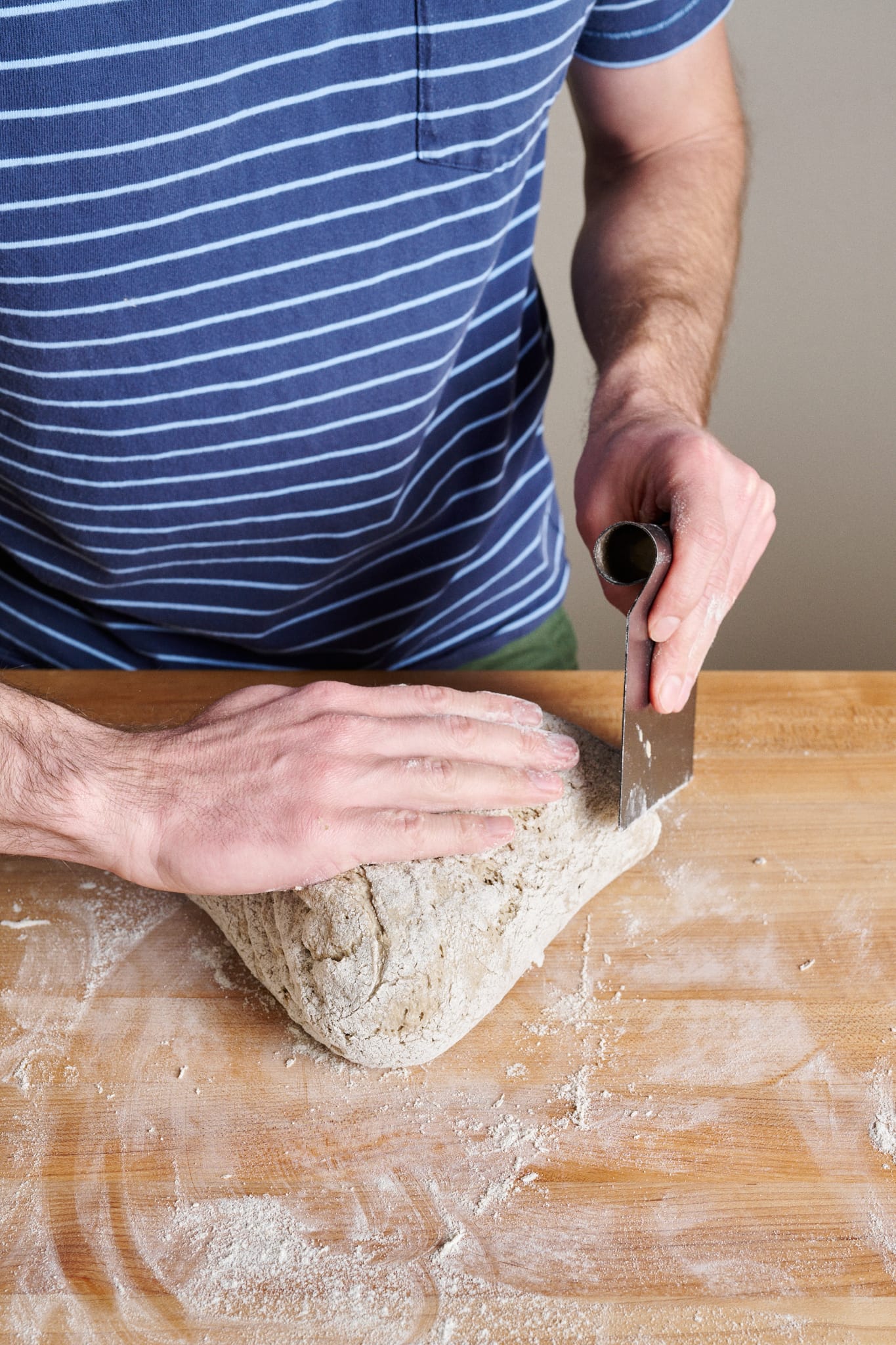
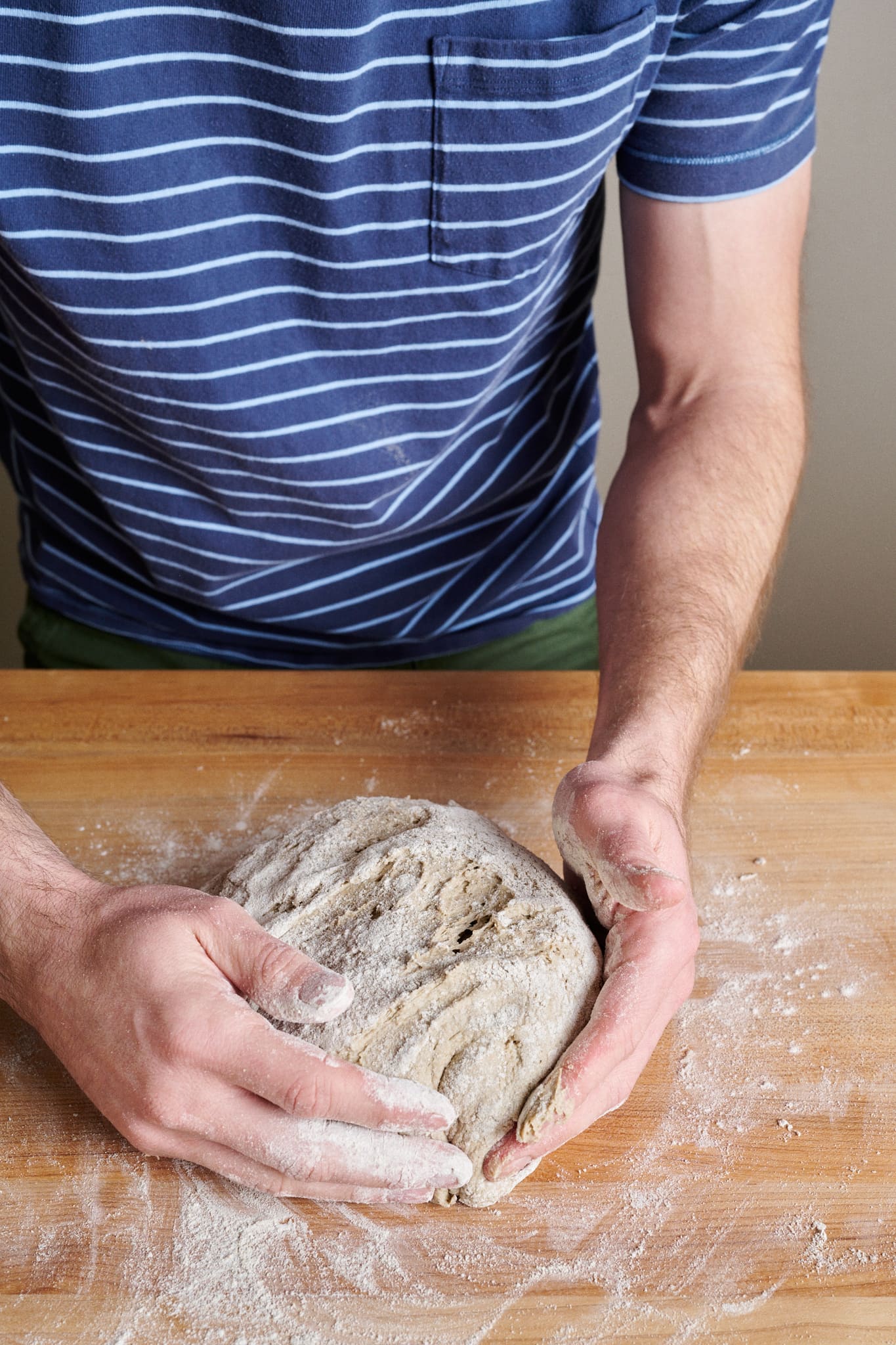
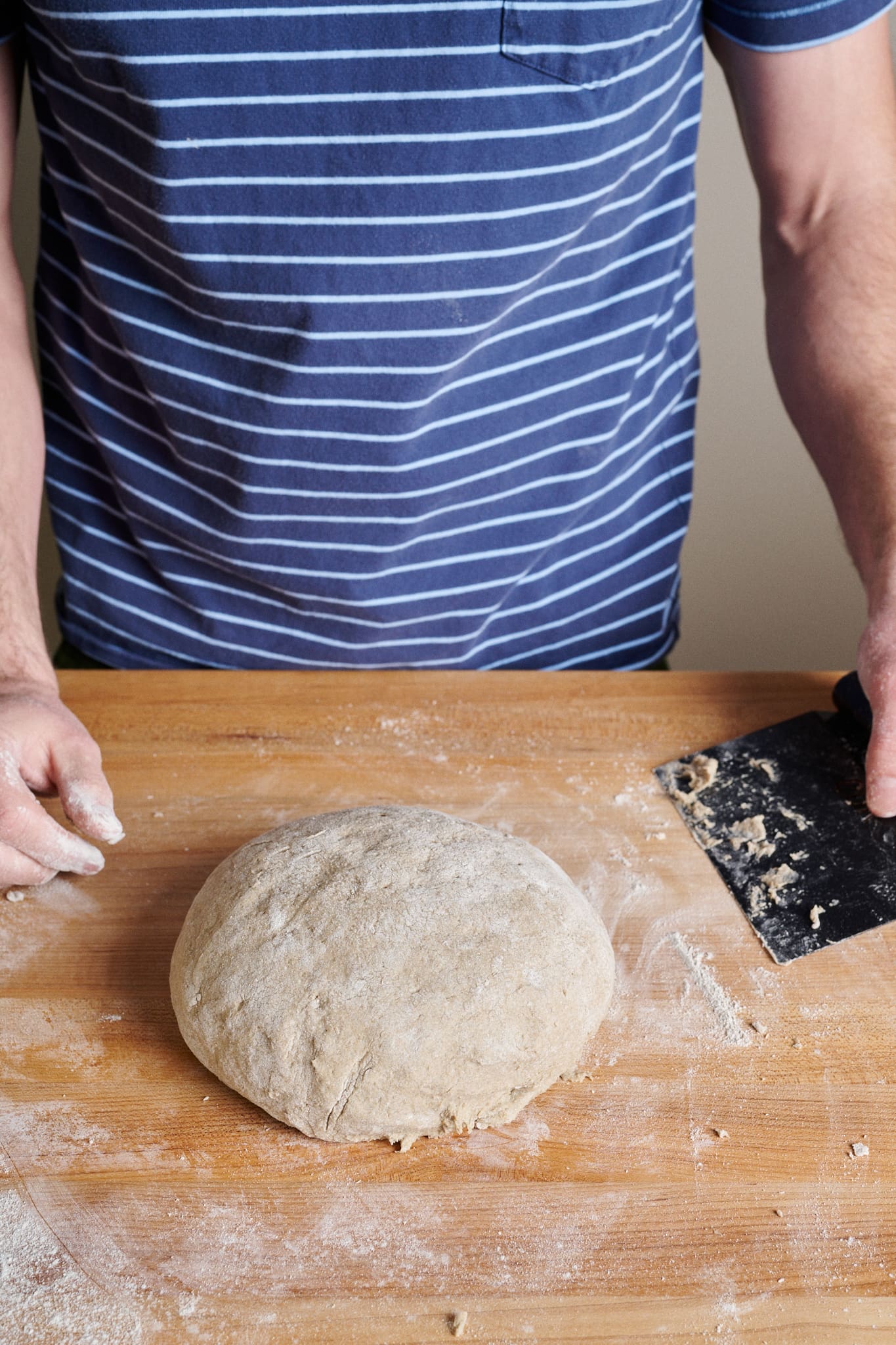
Using your bench scraper, scoop up the dough and place it seam-side-down into the prepared proofing basket.
Dust the top of the dough with more whole rye flour in an even layer. This will eventually crack open as the dough proofs. Cover the basket with a reusable plastic cover for an air-tight seal.
5. Proof – 9:45 a.m. to 10:45 a.m.
At room temperature, this rye sourdough bread will take 1 hour to proof.
During this time, preheat your oven with a baking stone or steel on a rack in the bottom third to 450°F (230°C).
6. Bake – 10:45 a.m.
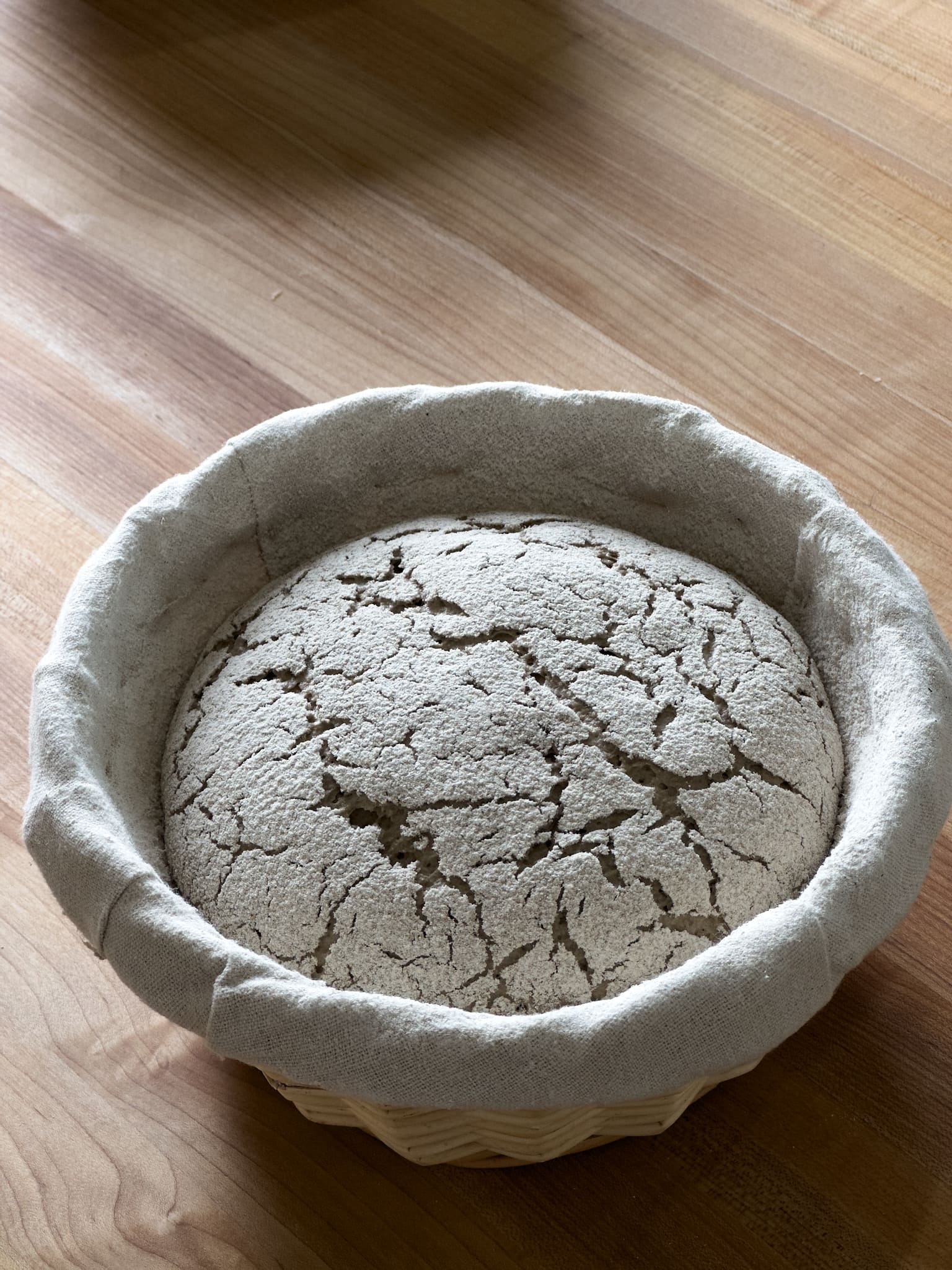
The rye dough is ready to bake when it is puffy to the touch and has cracks that are at least ½-inch wide all over the top (see below).
Place a piece of parchment paper on a pizza peel or inverted baking sheet. Tip the dough out of the basket into your hand and quickly invert it over the parchment paper seam-side down.
Slide the dough onto the preheated baking surface, steam the oven, and bake for 30 minutes. After this time, reduce the temperature of the oven to 400°F (205°C) and bake for 30 to 35 minutes longer, until the crust is deep golden brown and a knock to the bottom sounds a bit hollow.
Let the bread cool on a wire rack for 30 minutes. Then, to ensure the interior is fully set, place it inside a plastic bag or cover it with baker’s linen and let it rest for 24 hours before slicing.
Print
Sourdough 90-Rye Bread Recipe
- Prep Time: 14 hours
- Cook Time: 1 hour
- Total Time: 15 hours
- Yield: 1 loaf
- Category: Lunch, Dinner
- Cuisine: German, Danish
Description
This freeform rye is made with 90% whole-grain rye flour for an intensely aromatic and flavorful loaf of bread. Perfect for open-faced sandwiches or topped with good salted butter, it’ll be an instant favorite and a new staple in your baking quiver.
Ingredients
Levain
- 272g whole rye flour
- 272g water
- 41g ripe sourdough starter (100% hydration)
Main Dough
- 272g whole rye flour
- 60g high-protein white bread flour
- 272g water
- 11g fine sea salt
- All the levain
Instructions
- Prepare the levain – 9:00 p.m.
Mix the Levain ingredients in a large jar or medium bowl and leave them covered with a lid or reusable plastic bowl cover at a warm temperature, 74-76°F (23-24°C), to ripen overnight. - Mix – 9:00 a.m. (the next day)
Warm the mixing water to 82°F (28°C). Place the flour, water, salt, and levain in a large bowl. With wet hands (or, my preference, using a sturdy dough whisk), mix thoroughly until no dry bits remain. Gather up the dough into a ball in the center of the mixing bowl (see below, right). - Bulk fermentation – 9:15 a.m. to 9:35 a.m.
At a warm room temperature, 74-76°F (23-24°C), bulk fermentation should take 20 minutes (yes, it’s short!). No stretches and folds are necessary. - Shape – 9:35 a.m.
Prepare an 8-inch round proofing basket or banneton by liberally dusting on whole rye flour. Be sure the entire surface area of the basket’s interior is covered with flour. Flour your work surface, the top of the dough in the large bowl, and your hands. Scrape the dough onto the floured work surface with the floured top of the dough facing down. Using your bench scraper, fold the left side of the dough over to about the middle. Then, use the scraper to fold the top (twelve o’clock) down to the middle. Repeat for the right side and bottom. You should now have a folded-up shape that loosely resembles a square in front of you. Using your floured hands, flip the dough over and quickly and confidently round it until it gets into a rough ball shape. Using your bench scraper, scoop up the dough and place it seam-side-down into the prepared proofing basket. Dust the top of the dough with more whole rye flour in an even layer. Cover the basket with a reusable plastic cover for an air-tight seal. - Proof – 9:45 a.m. to 10:45 a.m.
At room temperature, this rye sourdough bread will take 1 hour to proof. During this time, preheat your oven with a baking stone or steel on a rack in the bottom third to 450°F (230°C). - Bake – 10:45 a.m.
Place a piece of parchment paper on a pizza peel or inverted baking sheet. Tip the dough out of the basket into your hand and quickly invert it over the parchment paper seam-side down. Slide the dough onto the preheated baking surface, steam the oven, and bake for 30 minutes. After this time, reduce the temperature of the oven to 400°F (205°C) and bake for 30 to 35 minutes longer, until the crust is deep golden brown and a knock to the bottom sounds a bit hollow. Let the bread cool on a wire rack for 30 minutes. Then, to ensure the interior is fully set, place it inside a plastic bag or cover it with baker’s linen and let it rest for 24 hours before slicing.
Notes
Be sure to let the loaf cool at least overnight before cutting to ensure the interior isn’t gummy.
Hydration Note: As with any bread recipe, you might need to adjust the dough’s hydration to suit your flour (especially if baking in a humid environment. When mixing, hold back a little of the water and add it only if the dough feels like it can handle it (look at the images below to help judge the consistency).
Sourdough Rye Bread FAQs
Why did the top crust of my rye bread separate from the interior?
The top crust, also known as the “flying crust,” can separate if the levain (preferment) is not fully ripe when it’s mixed into the dough. Be sure the levain has a full 12 hours at a warm temperature to ripen, erring on the side of overly ripe than under. Another cause of the flying crust is dough that’s overhydrated. The dough should feel soft, wet, and sticky but not soupy or loose (more like hummus than pancake batter).
Can I use pumpernickel flour for this rye bread recipe?
My preference for this recipe is finely milled whole dark rye flour, but whole grain pumpernickel, which is usually milled a little more coarsely, will also work well. If using pumpernickel flour, consider increasing the hydration of the recipe by 2 to 5%.
Why is the interior of my rye bread gummy?
If rye bread is cut too early before it has had a chance to set fully, typically 24 hours or more, the interior can be gummy and stick to, or streak, the sides of your knife when slicing. Additionally, this can also happen if your dough was not properly acidified. This can happen if your levain was not fully ripe when it was used or your dough was not proofed long enough.
Is rye gluten-free?
No, rye is not gluten-free. While it does not have the same gluten content and characteristics of wheat flour, resulting in tall loaves of bread, it still contains gluten.
Can I bake this rye bread in a Dutch oven?
Yes, absolutely. Steam this dough the same way you would any other. This means keeping the lid on and tightly sealed for the first 20m of the bake. Keep an eye on the loaf near the end to ensure the bottom of the crust doesn’t get too colored in the Dutch oven (which can happen, especially with a longer bake time).
What’s Next?
For a rye pan loaf intended for Danish-style open-faced sandwiches, see my Rye Sourdough and Smørrebrød recipe.
Or, if you’re looking for a large freeform loaf with just a touch of rye, my Spelt, Rye, and Whole Wheat Sourdough Bread is loaded with flavor but light and airy.
Thank you to Michael Shulze (Brotbruder) for your help with this recipe!


236 Comments
Would this recipe be close to pumpernickel if it had some sweetness to it?
When I flipped it into my hand I could feel it deflated. I tried to be quick. How could I avoid it next time? I’m in the 24 hr waiting period right now. So I haven’t gotten to taste it yet.
I had my first piece this morning and have to say, WOW, I did it! It didn’t quite come together as your instructions so I had to wing it a bit. My question, would it have been OK to have let it rise a bit longer. It looked as if it wanted to. ALso I made it in a loaf pan. And thanks for the email about the sale on your book, it’s winging its way to me now.
Followed this recipe to the letter and it turned out great.
A good way for me to use up last year’s rye berries as well.
Next bake — the spelt, rye, and whole wheat sourdough bread!
Happy Baking to all of us!
How do I turn my 1:3:2 ratio starter back to 100% hydration called for in the recipe? Thanks