

As you may have caught on my Instagram feed last week, I was totally shocked and honored to find out The Perfect Loaf won both Editors’ Choice and Readers’ Choice for The Food Obsessive award in the 2016 Saveur Blog Awards! Also, I met some incredibly talented and passionate people at the event in New York City — so passionate I could have probably talked with them for weeks upon weeks about food, cooking, and baking. A huge thanks go out to everyone who nominated, voted, and supported this site (and me)—I really can’t convey enough thanks. And congratulations to all the other nominees and winners! Ok, on to this apricot lavender and walnut sourdough.
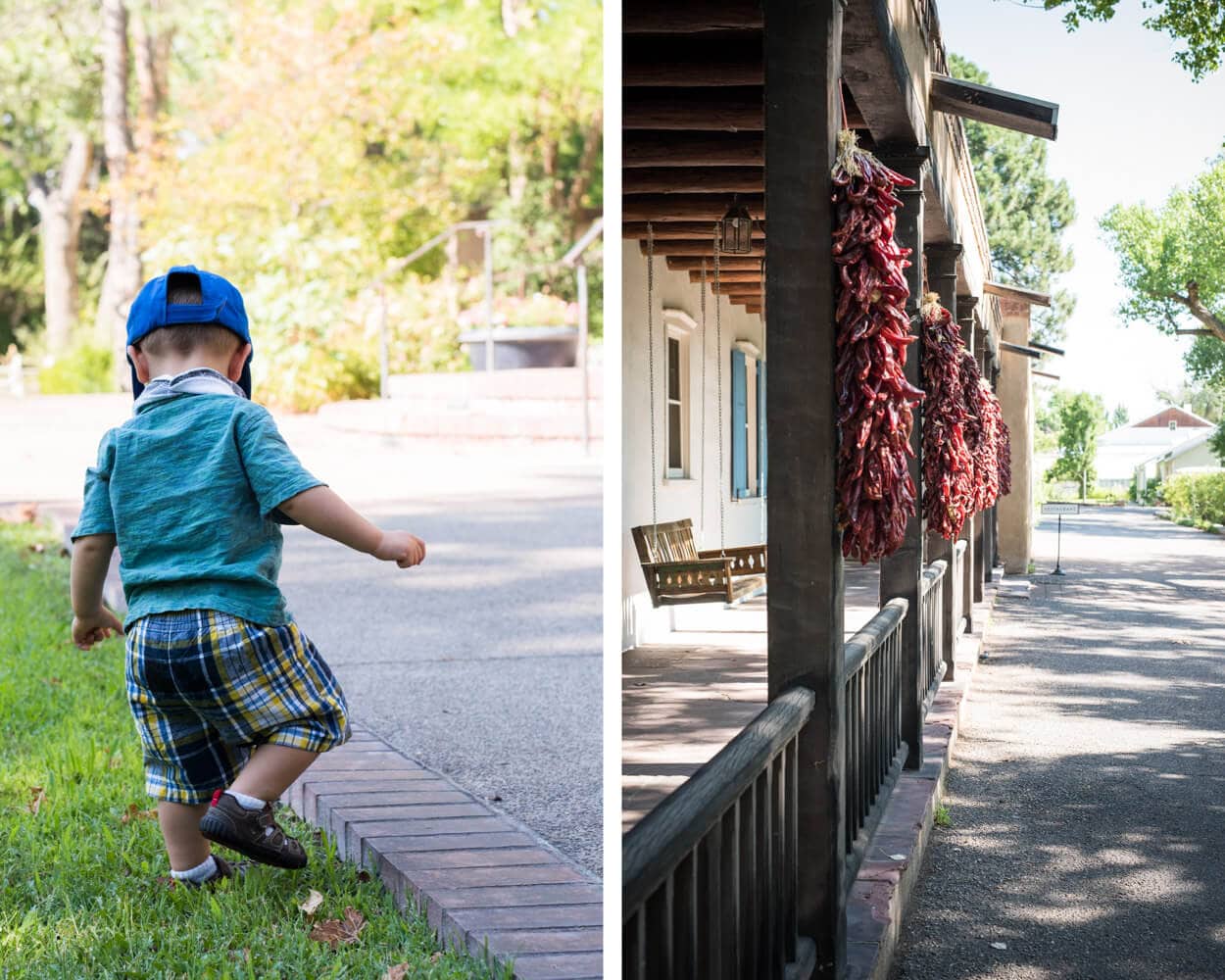
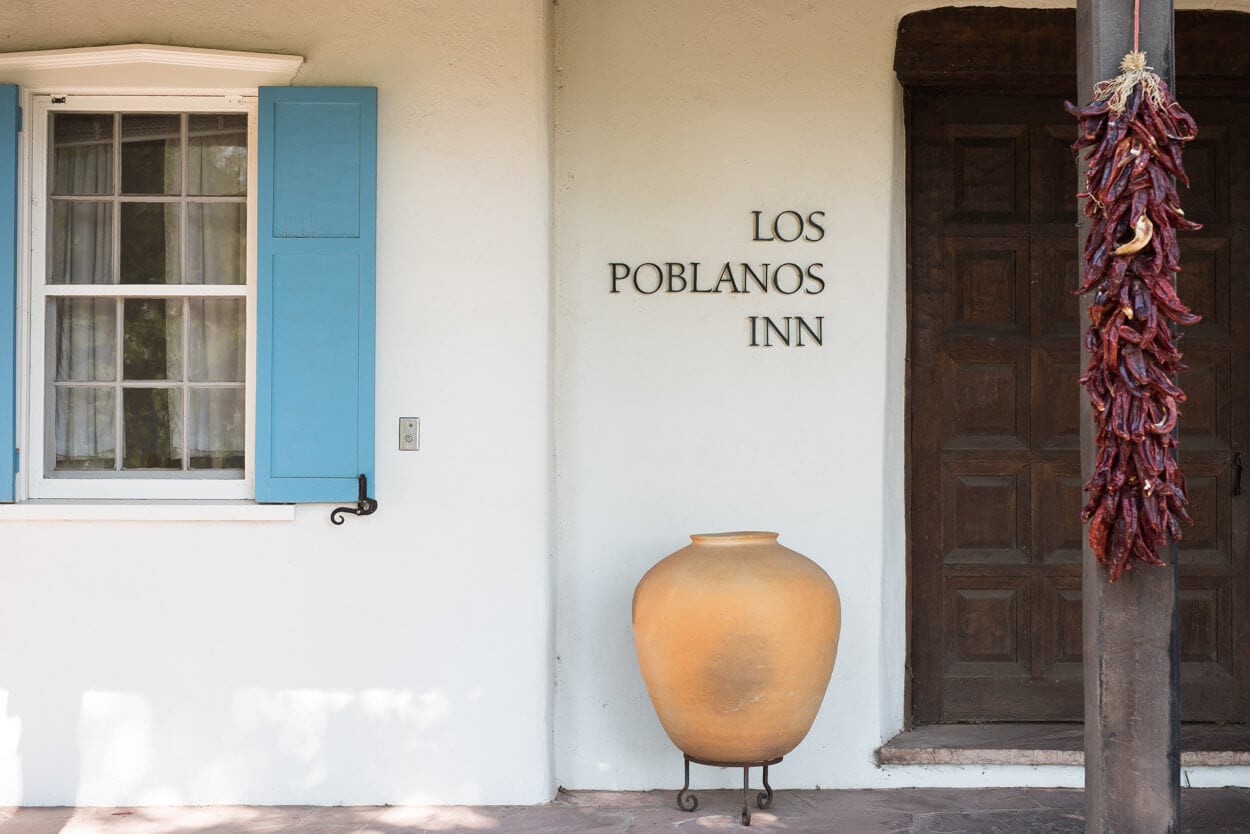
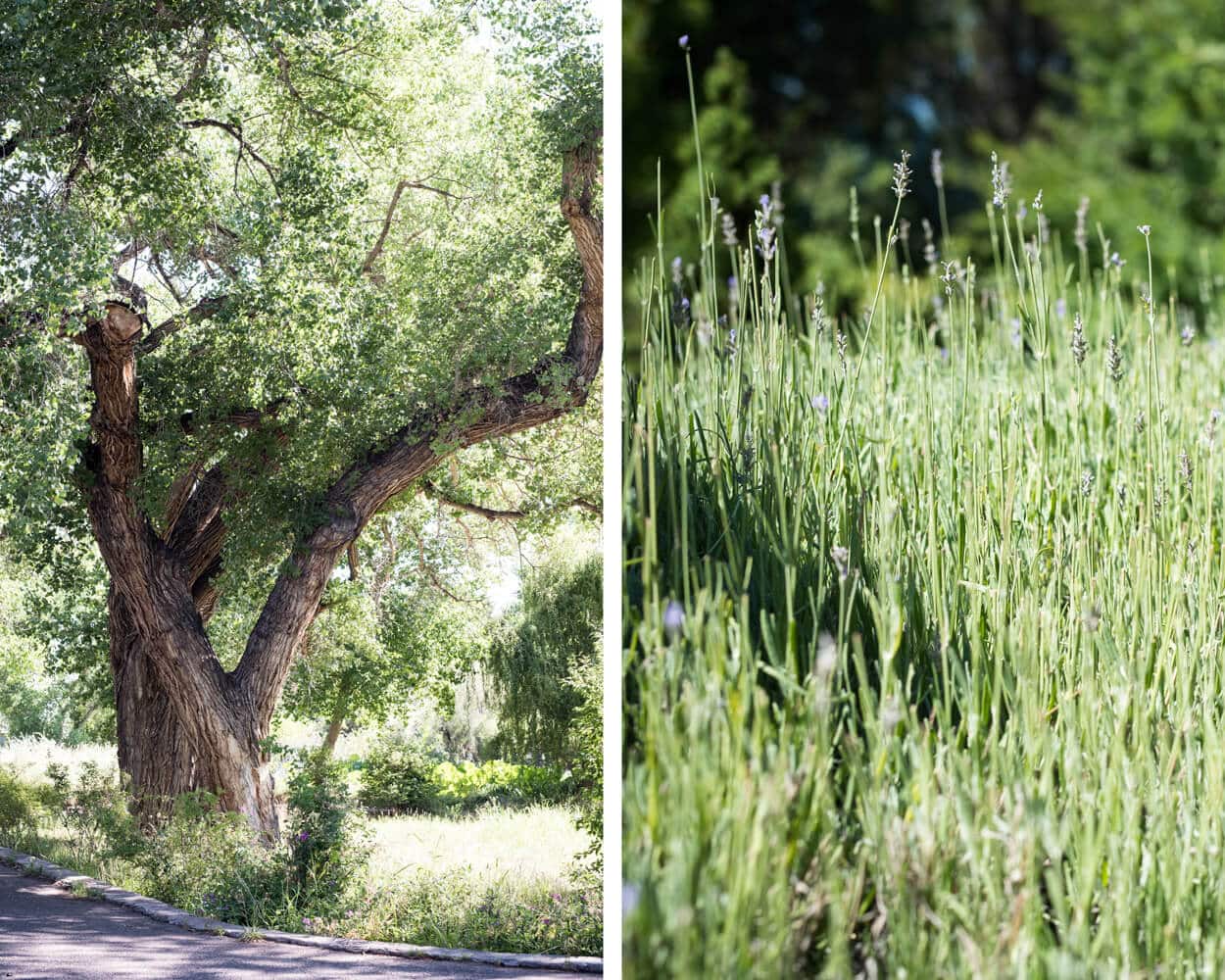
I recently had an opportunity to attend a lavender event at Los Poblanos Historic Inn & Organic Farm, a local farm here in Albuquerque, New Mexico. They offered a small glimpse of their lavender fields, organic farming practices, and an introduction to their growing lavender distillation process. The lavender grown on the farm is not a culinary lavender, it’s only used for cosmetics (essential oils, lotion, etc.). Still, it was incredibly interesting to see how they follow sustainable growth practices throughout the farm and produce so much local lavender each year.
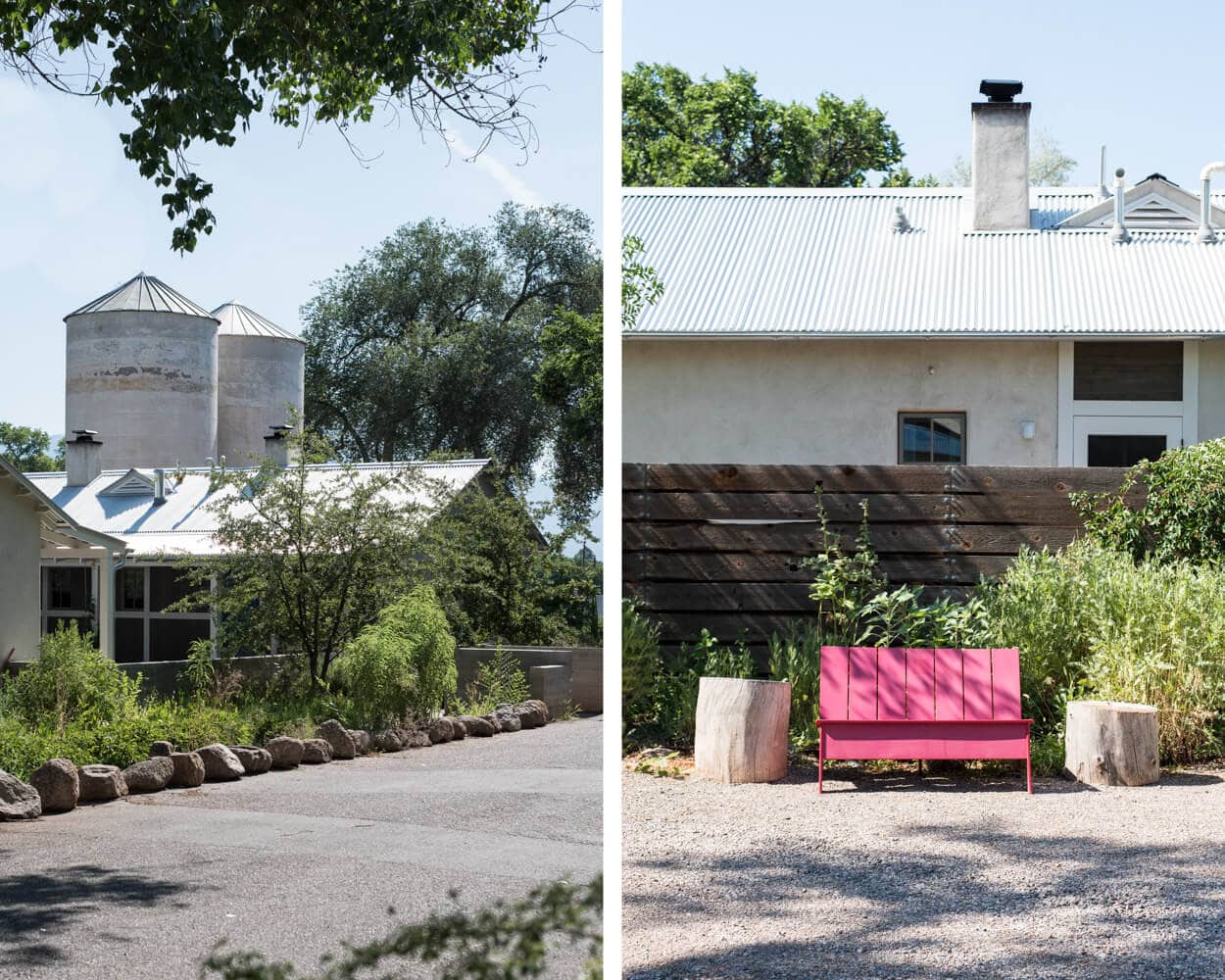
The particular variety of lavender grown on the farm was selected for a specific reason: it takes extremely well to the local warm, dry climate. When walking up and down the numerous rows of large lavender bushes, you spot bees busily going about their business, rich bark-laden soil, and every once in awhile, a faint smell of lavender on the breeze. Lavender margaritas are a common thing here, and if you’ve had one, you know why, but I couldn’t help myself from dreaming up pastry and bread ideas that would complement the purple little buds. After the tour, a quick visit to their Farm Shop provided just the fuel I needed: sachets of culinary lavender buds grown here in New Mexico ready to use in my kitchen baking adventures.
Back at home with this new and inspiring ingredient, I started searching through my (many) cookbooks for that inspirational spark. My recent experiments with lavender in peach, blueberry, and lavender sourdough galette taught me that whatever other flavor profiles used had to be assertive enough to stand up to the lavender. Thankfully I stumbled across an apricot, walnut, and lavender cake in Ottolenghi’s Plenty More (a must-have cookbook if you don’t already own it), and just like that, I had my inspiration. He relays that this flavor combination is very French, although I can’t say I’ve had it during my travels through France, I’ll take his word for it. Next time I’m out that way, I’ll be on the hunt. Honestly, I think simply pairing the dried apricot and walnut together would be fantastic in its own right if you did not have lavender or are not partial to its flavor. Walnuts are some of my favorite nuts to use in sourdough, and their flavor is balanced out so nicely with the slightly tart and hearty dried apricots.
A Few Important Notes on Culinary Lavender
First, make sure to buy culinary lavender. Lavender is grown for various purposes, and some types are grown specifically for use in cooking and baking. This is what we want. Use the lavender sparingly the first try at this recipe; it can quickly go from just right to “oooh, this tastes like soap bread!” If you are not sure about how powerful your lavender is, side with caution and perhaps halve the quantity I call for in the formula below.
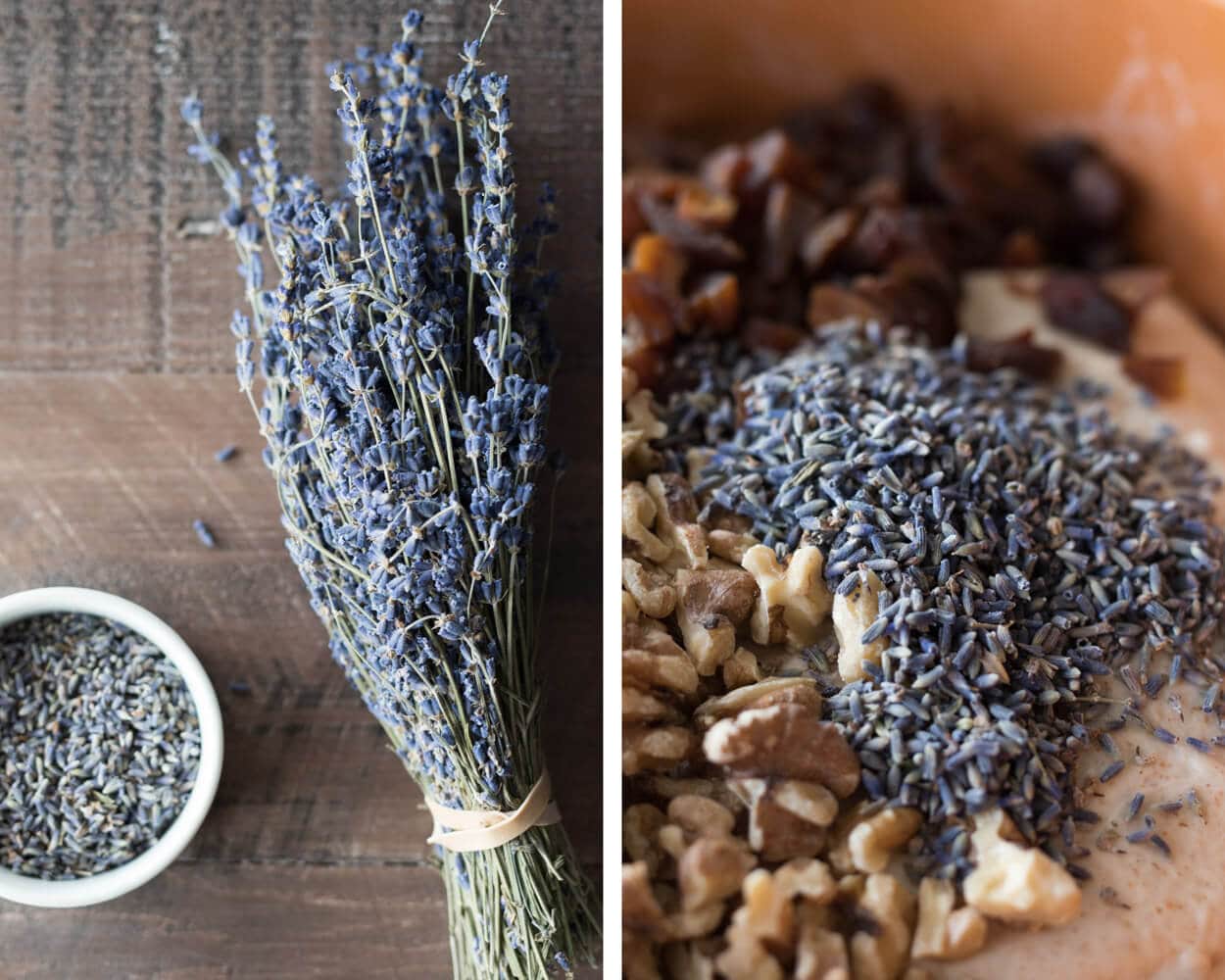
I chose to include the lavender buds whole (as you see in my photos), but you could also grind them down if you want to avoid the mouthfeel of the whole pieces, although I didn’t notice them at all, and neither did any of my “test subjects.” Another option is to use culinary lavender oil instead of the dried variety. If you choose this route, you will have to modify the amount as the oil potency is surely drastically different from dried lavender buds.
Flour Selection
I tend to stick to predominantly white flour, with most fruit loaves around 11-13% protein. I used my standard Giusto’s Artisan Bread Flour for this recipe, but using a stronger flour with higher protein might yield an even more voluminous, open crumb (something akin to King Arthur Bread Flour at 13-14% protein). This is not to say using a percentage of whole wheat wouldn’t work very well because I think it would actually be really nice, but I was going for a more subtle wheat flavor, and I wanted the mix-ins to shine through much as possible.
Apricot, Lavender and Walnut Sourdough Formula
Vitals
| Total Dough Weight | 1,900 grams |
| Pre-fermented Flour | 5.75% |
| Levain in Final Dough | — |
| Yield | Two loaves |
Levain Build
| Weight | Ingredient | Baker’s Percentage |
|---|---|---|
| 42g | Ripe liquid starter (100% hydration) | 100.0% |
| 42g | Central Milling Type 85 Flour | 100.0% |
| 42g | Water | 100.0% |
Dough Formula
The target final dough temperature (FDT) is 78°F (25°C).
Note that the baker’s percentages listed below are with respect to the final dough ingredients and do not take into account the levain.
| Weight | Ingredient | Baker’s Percentage |
|---|---|---|
| 609g | Giusto’s Artisan Bread Flour | 74.3% |
| 124g | Central Milling Type 85 Flour | 15.1% |
| 87g | Giusto’s Stoneground Whole Wheat Flour | 10.6% |
| 707g | Water | 86.2% |
| 17g | Fine sea salt | 2.1% |
| 70g | Dried Apricots (I did not soak them) | 8.0% |
| 157g | Shelled Walnuts | 18.0% |
| 4g | Culinary Lavender Buds | 0.5% |
| 125g | Ripe, liquid levain | 15.3% |
Method
1. Levain – 10:30 a.m.
Build the liquid levain (everything listed in the Levain Build section above) in the afternoon and store somewhere around 78°F (25°C) ambient.
See my post on the differences between a sourdough starter and a levain for an in-depth discussion.
2. Toast Walnuts & Chop Apricots – Anytime between 10:30 a.m. and 3:00 p.m.
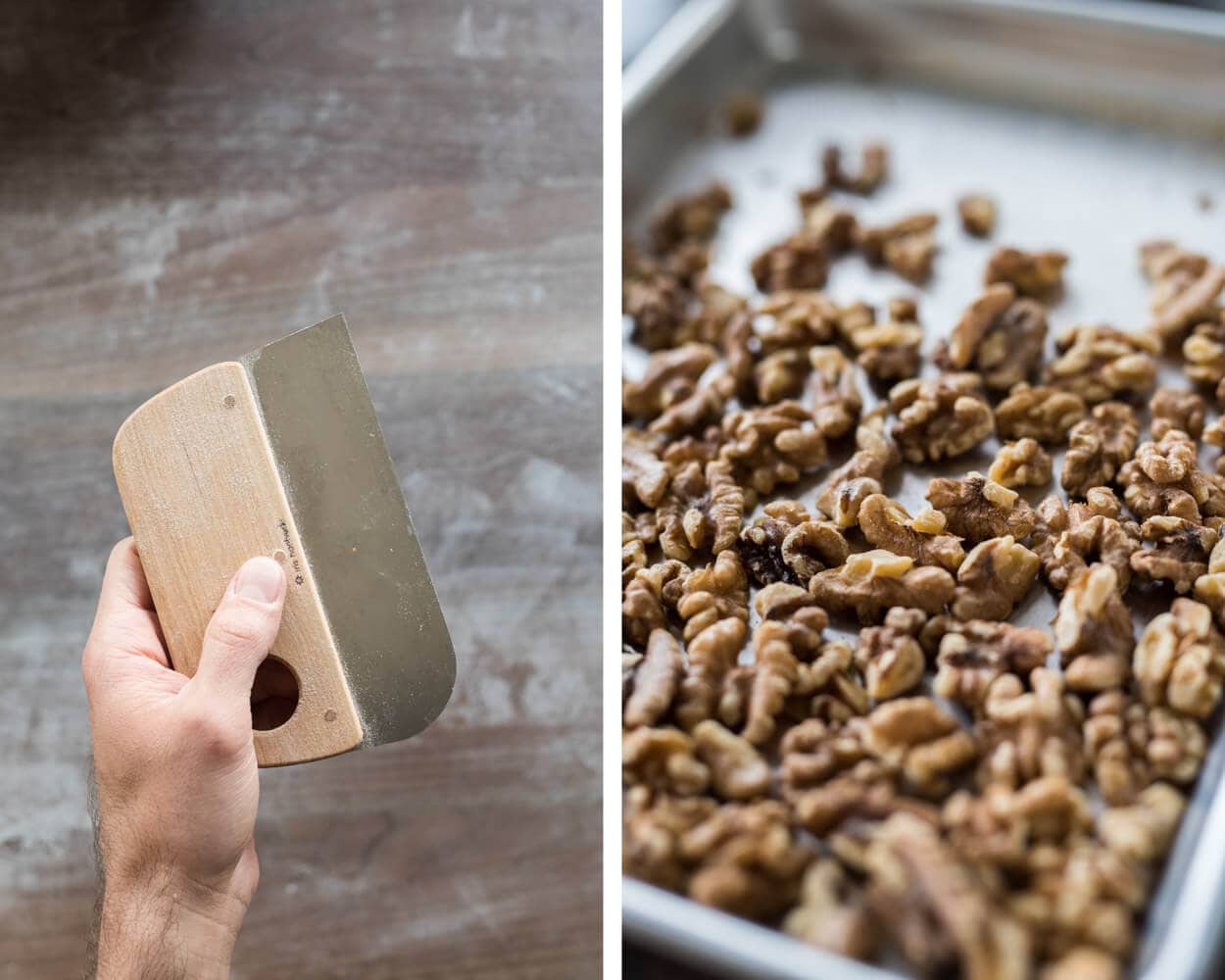
Spread the shelled walnuts on a baking sheet and toast in the oven at 400°F (200°C) for about 10 minutes. Each oven is different so keep an eye on them, remove them when they start to become fragrant and slightly brown. Let the walnuts cool on the baking sheet and then chop as course as desired. Reserve them until bulk fermentation.
Coarsely chop the dried apricots. I did not soak my apricots because they were incredibly moist and tender. If you have overly dry apricots you might want to consider soaking them but I’d recommend draining them after they are rehydrated — no additional hydration is desired.
2. Autolyse – 4:00 p.m.
Mix flour and water (reserve 100g water for the mix, later) in a bowl until all dry bits are hydrated. Cover the bowl and store somewhere warm (around 78°F/25°C) for 1 hour.
See my guide to the autolyse technique for why it helps with this bread recipe.
3. Mix – 5:00 p.m.
Add the levain (from step #1) and about half of the reserved water to the dough in the mixing bowl and mix by hand to first incorporate and then to build strength in the dough.
To build strength I chose to do slap and fold for about 5 minutes, just until the dough started to show signs of a smooth surface and it was catching some air. If you aren’t comfortable with slap/fold method or don’t like it, you can do stretch and folds in the bowl until your dough tightens up and is slightly hard to stretch out and fold over. Medium development.
Let the dough rest for 20 minutes, covered, in the mixing bowl.
When finished resting, sprinkle the salt on top of the dough and use the remaining water to help dissolve. Pinch through a few times and fold the dough over itself to help incorporate. I continued to fold the dough over here until it came back together and started to get a little sticky. Transfer dough to a tub or thick-walled bowl for bulk fermentation.
4. Bulk Fermentation – 5:20 p.m. to 9:20 p.m.
At about 78°F (25°C) ambient temperature bulk fermentation should go for about 4 hours.
Perform 4 sets of stretch and folds during the bulk, spaced out by 30 minutes.
After the second set of stretch and folds mix in the dried apricots, lavender, and walnuts. Place all the ingredients on top of the dough and using a splash of water on your hands gently mix and fold the dough over and over until everything is incorporated.
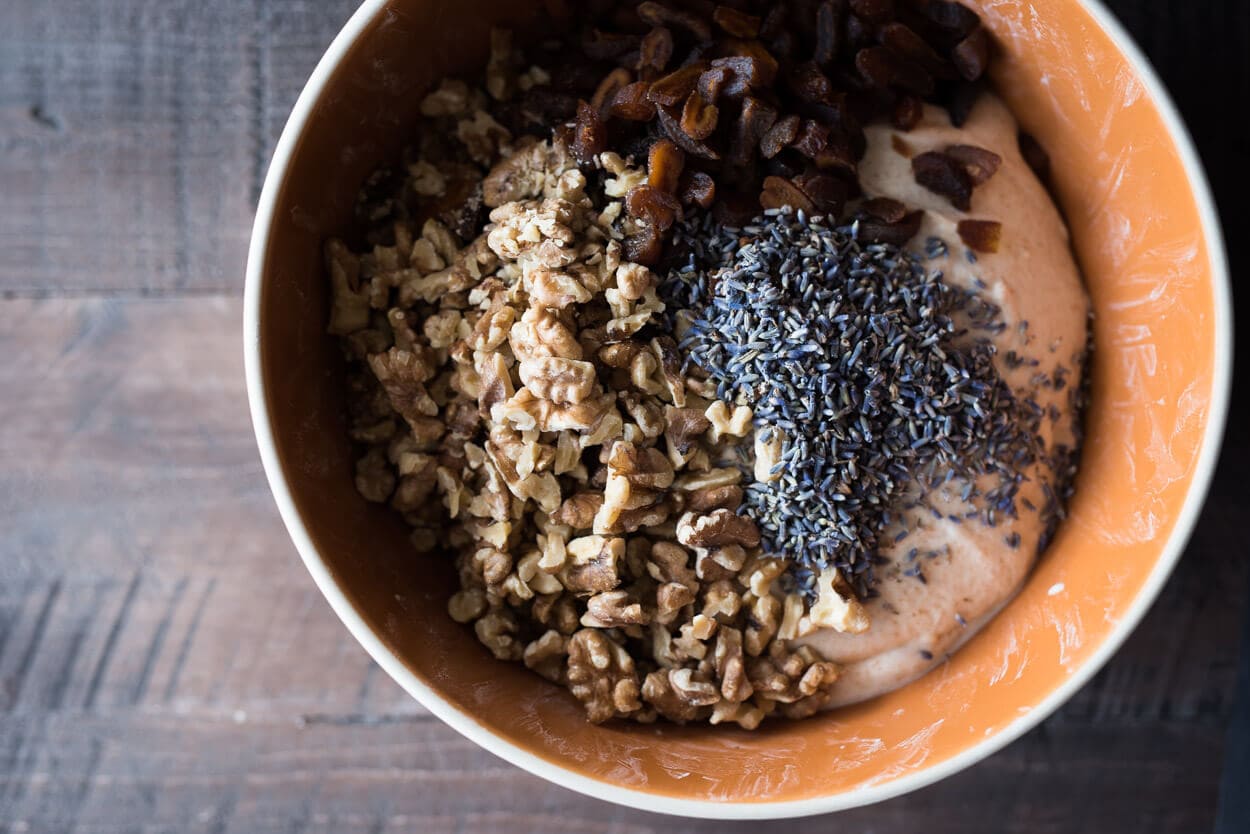
After the fourth set of stretch and folds let the dough rest for the remainder of bulk. You want to look for a significant rise in the dough, plenty of bubbles on top and just below the surface, and most importantly: the edge where the dough meets the bowl is domed, convex. This is a good sign your dough is strong enough and ready to be divided.
5. Divide & Pre-shape – 9:20 p.m.
Dump out the dough from your bulk container onto an un-floured work surface. Pre-shape the dough into two round boules and let rest 20 minutes uncovered. Don’t worry if you lose a walnut or apricot here and there, just push it back into the dough somewhere, preferably on the bottom.
6. Shape – 9:40 p.m.
This dough will work equally well shaped as a boule (round shape) or a batard (oval shape).
To gently shape as a batard, first moderately flour the top of the dough and flour the work surface. Flip one resting round over so the floured side is down on the work surface. Fold the top of the dough up and over to the middle and repeat for the bottom (you’ll now have a long slender rectangle in front of you). Pick up the rectangle and rotate it 90º so it’s now lengthwise facing you. Grab the dough at the very top and fold over a little way, press to seal with the main mass of the dough. Now grab this rolled over the top and gently continue to roll it down towards the bottom, tucking in the dough as you go (imagine rolling down a beach towel). At the end of this, you’ll have a tube that has essentially been rolled downward. Once shaped, transfer each to their floured shaping basket with the seam side facing up.
For more instruction on how to shape this dough as an oblong loaf, see my post on how to shape a batard (with video!).
7. Rest & Proof – 9:45 p.m.
Cover your baskets with plastic and then place them in the refrigerator at 38°F (3°C) for about 10-12 hours.
8. Bake – Next Morning: Preheat oven at 7:45 a.m., Bake at 8:45 a.m.
Preheat your oven to 450°F (230°C).
Take out both of the baskets from the fridge and cut a piece of parchment paper to fit over the top, quickly invert each basket onto each piece of parchment. Using a bread lame (or sharp razor blade fastened to a stick) score the top of each loaf at a shallow angle to the dough and just deep enough to cut below the top skin of the dough.
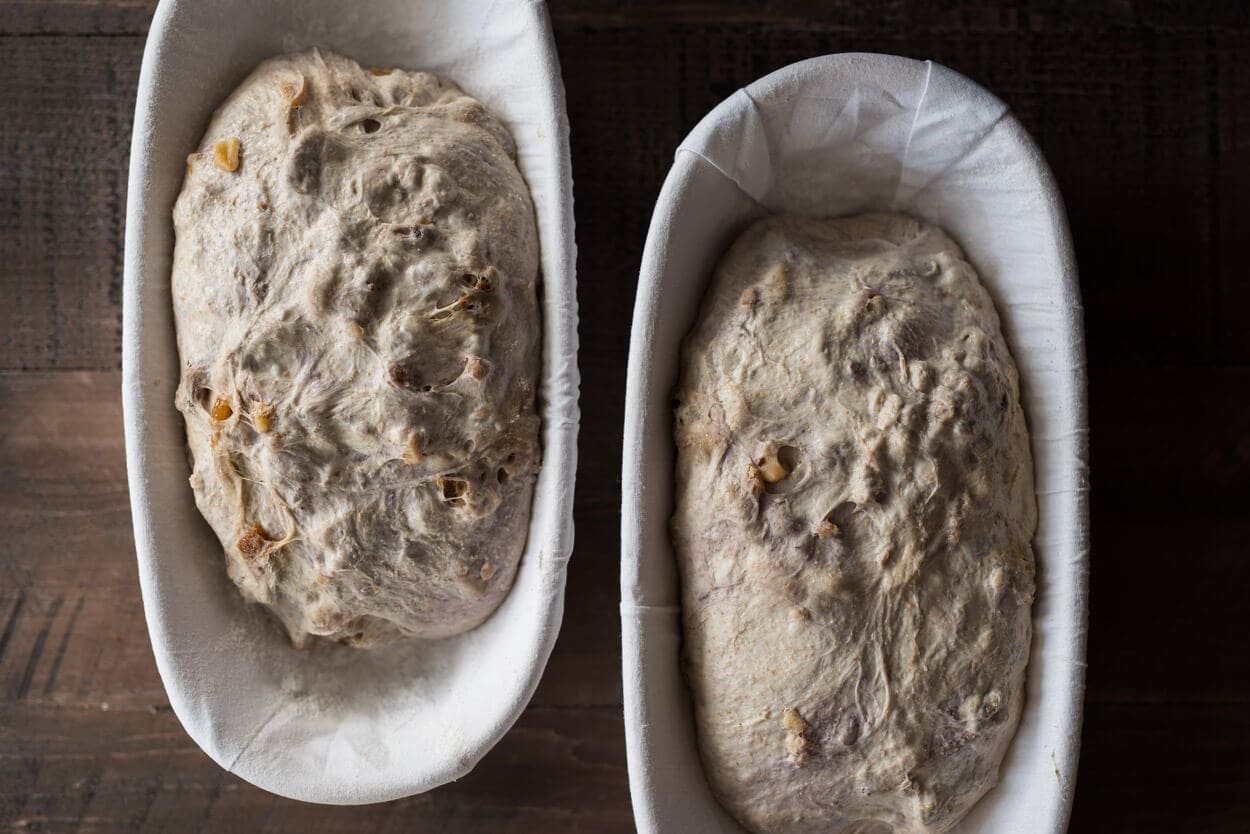
It can be challenging to score this dough! Because there are so many walnuts and apricots I found my blade snagging here and there, producing a jagged score instead of a clean, slightly curved slash. I actually like the rustic, rugged look.
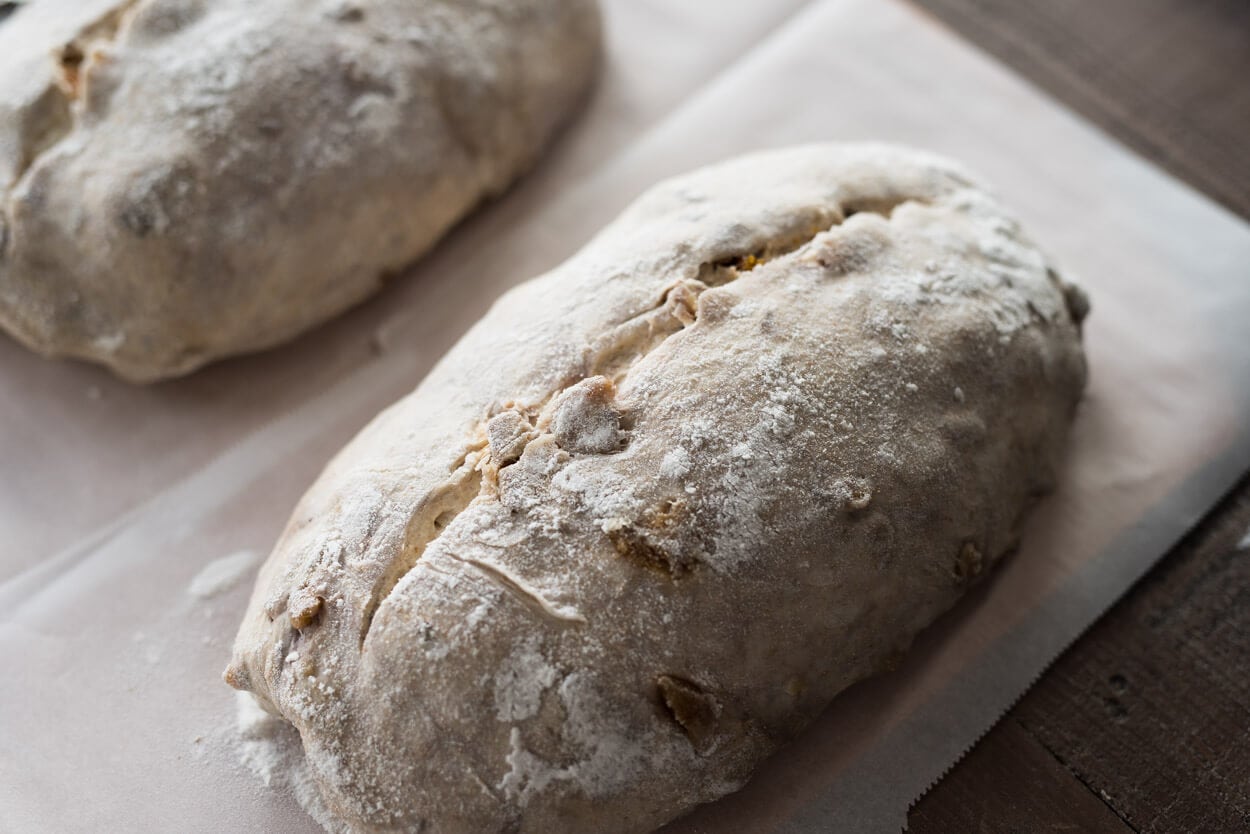
Bake for 20 minutes, then remove the steaming pans from inside the oven (or remove the lid of your Dutch oven). Then, bake for an additional 25-30 minutes until the internal temperature is between 206-210°F (96-98°C). Remove from the oven and let the loaves cool on a wire rack for at least 1-2 hours (see why!).
I steamed my oven in my usual way, described here in my post on how to steam your home oven for baking.
Conclusion
The smell. Oh, the wonderful aroma in the kitchen as this bread bakes. You don’t realize it at first, but then all of a sudden—somewhere mid-bake—you’re hit upside the head with smells that compel you to open the oven, risking burns and lost heat just to see what’s going on in there. When this bread is finished baking and resting on the rack, it becomes a true test of resolve.
I’m a fan of using lavender in cooking, and in this case especially so. I think it lends an unexpected floral note that works so well in this sourdough with the other assertive apricot and walnut flavors. However, I know lavender is very polarizing so if it’s not something you’re fond of, ditch it altogether. In fact, walnut and apricot go so well together I could envision a bread with just these two ingredients and perhaps even other mix-ins. They provide that grounded, hearty base.
Crust
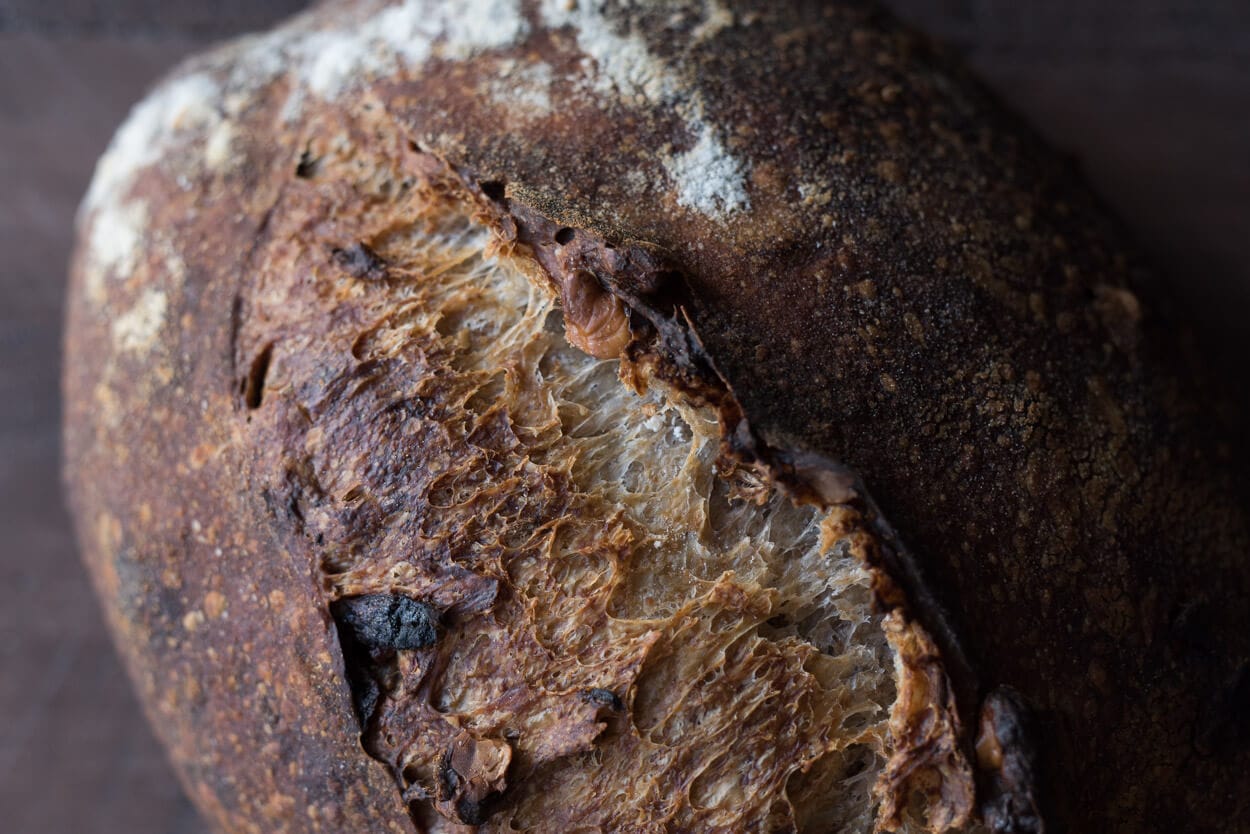
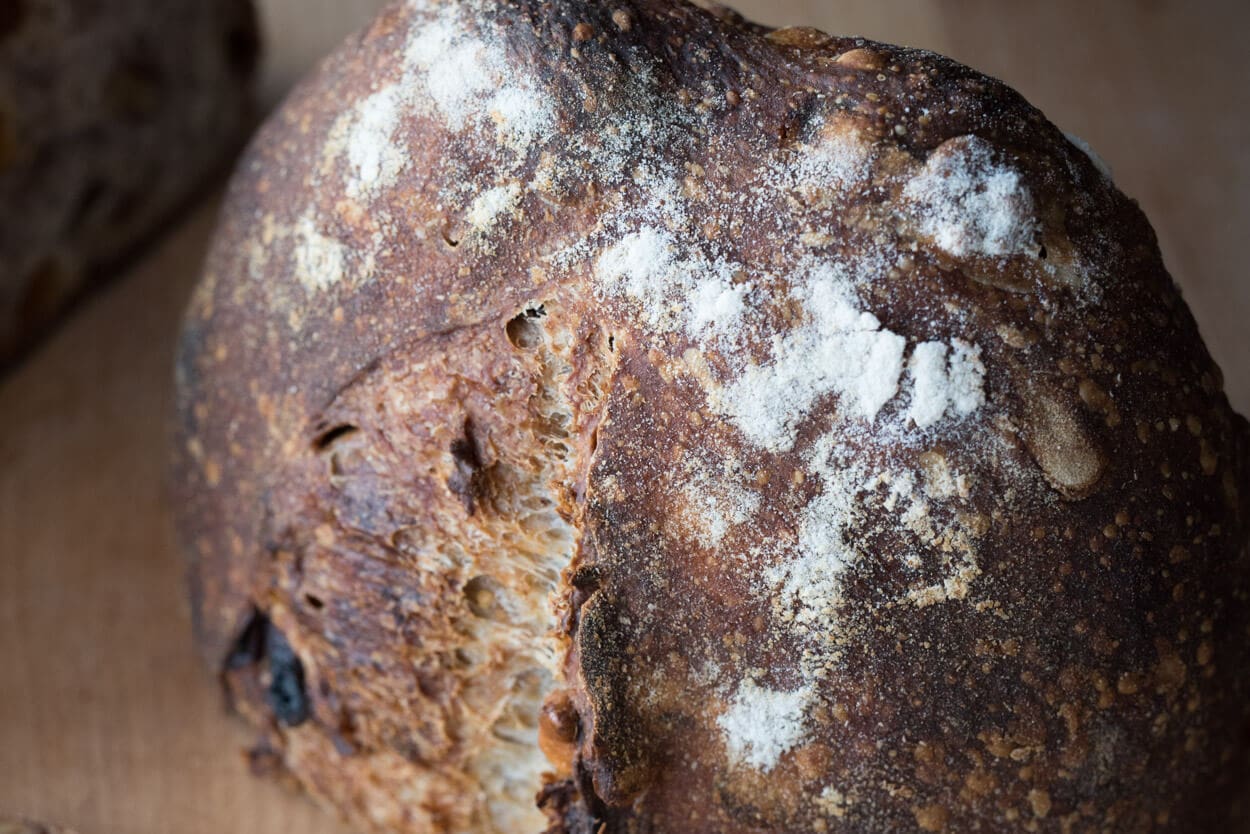
Because it’s challenging to cleanly score this bread you end up with this gnarly, ragged score on top that’s peppered with walnuts and apricots all going this way & that, trying to escape the interior. It’s a very beautiful thing, this crust, and one that you should let express itself in whatever way it sees fit. If you have a guest over whom by chance gets a slightly charred walnut or apricot and complains, very politely take their slice and eat it for them.
Crumb
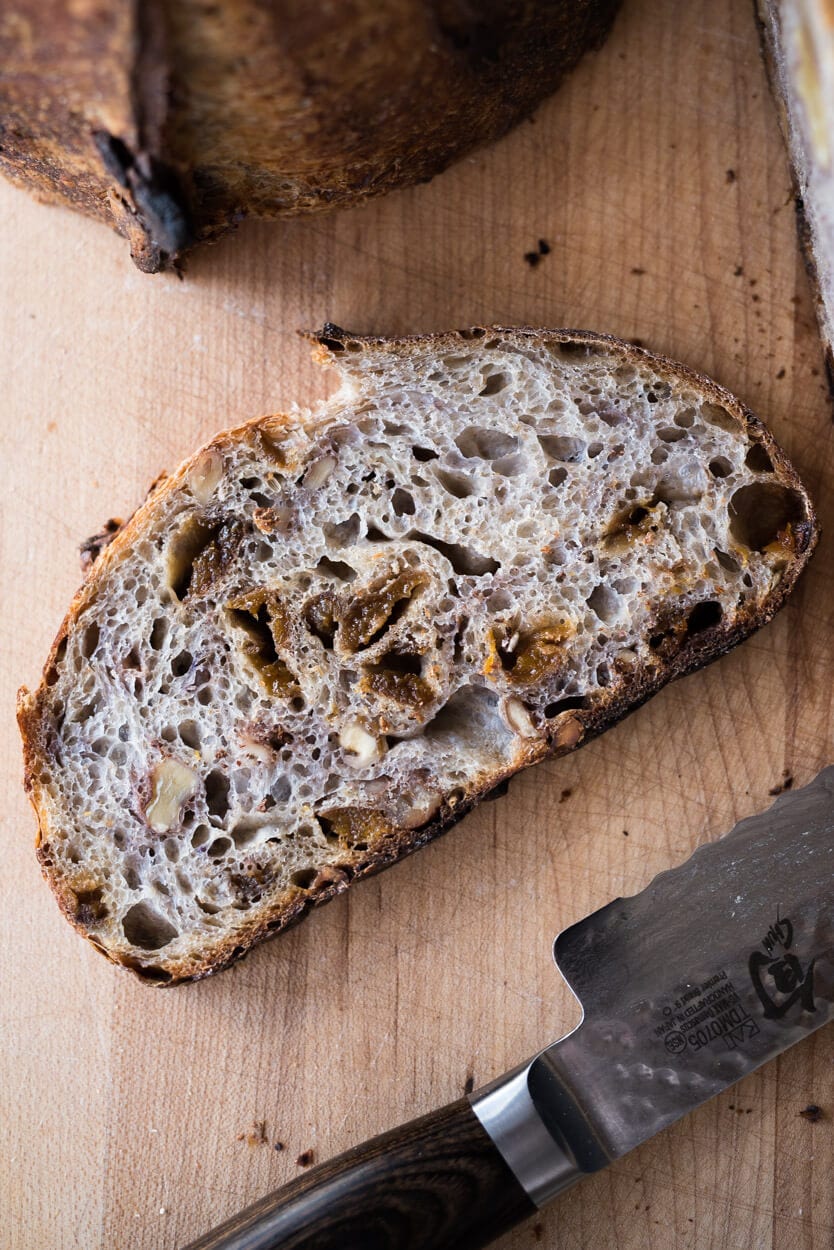
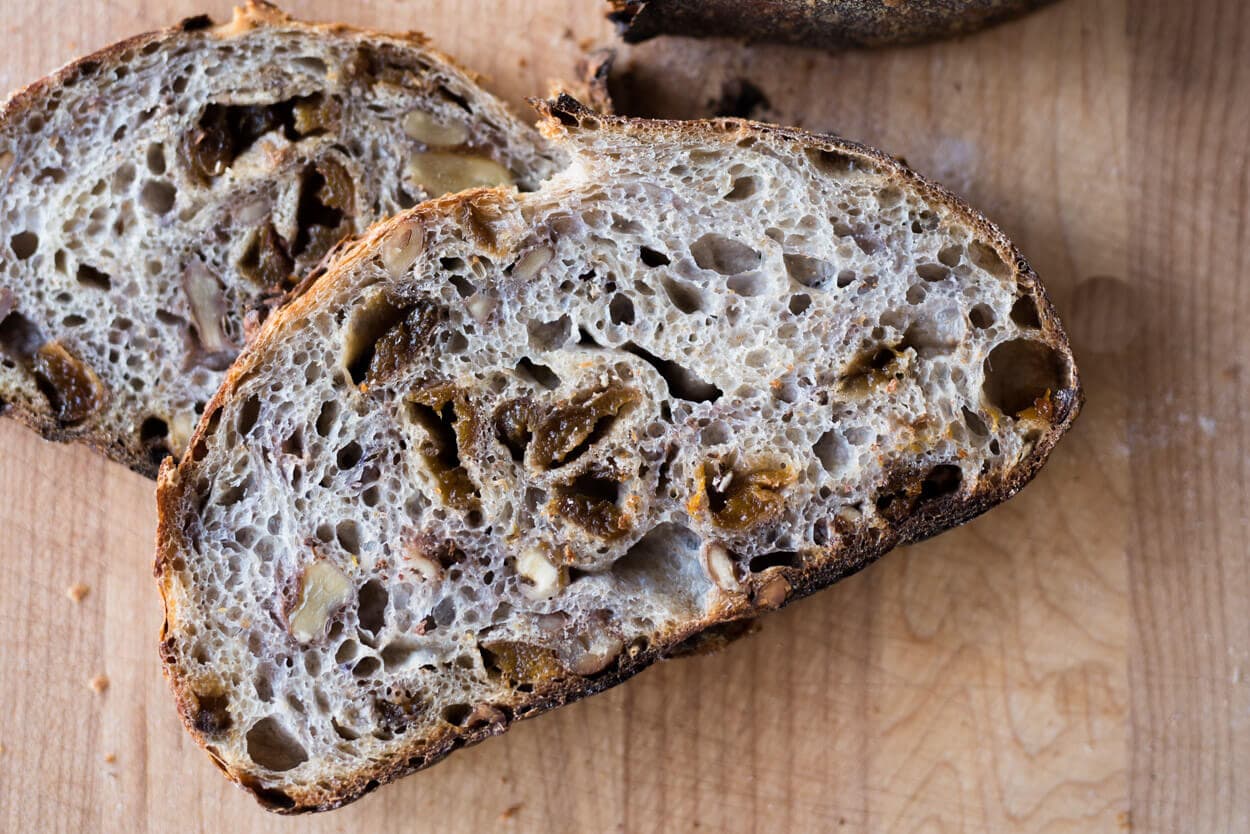
Swirls of stained purple from the tannins in the walnuts and an arthritic dark spot here and there from the dried apricots, the crumb on this bread is like an unreleased Van Gogh. Plenty open and light for my liking, despite the high percentage of fruit and nuts. Because of this high percentage I noticed this bread, when kept in a paper bag or bread box, retained its moisture for an entire week, easy. See my post on how to store bread for more.
Taste
Lavender can be strong and overpowering when used at high quantity, but for the dried lavender buds I had the quantity called for here was just right. It worked extremely well with the musky dried apricot and deep, rich flavor of the toasted walnuts. This bread is incredibly delectable with a generous smearing of goat cheese or even just with a light coating of good quality cultured butter. There’s a lot going on in each slice and it’s a bread that wants to, and should, take center stage.
This is a very full, heavy bread. Full of nuts, fruit, and flavor. If you’re more fond of a lighter sourdough reduce the percentage of all the mix-ins to suit—something like 8% walnut and 5% apricot would yield a substantially lighter bread with plenty of flavors still intact.
A slight nudge from the lavender, an assertive, deep flavor from the walnuts, and a musky tang from the apricots: what a combination. I think the French may be onto something.
For another take on bread with apricots, check out my apricot and thyme sourdough bread with 50% whole wheat.
Buon appetito!
If you use this recipe, tag @maurizio on Instagram so I can take a look!


79 Comments
Hi Maurizio,
I've been making this bread every week! I marinate my apricots in amaretto di sarono. Yesterday, I used your instructions but used cranberries marinated in chambord and roasted pecans and did not use lavender because I didn't know how that might mix. I wondered if you had any suggestions on the herb that I might use.
Whoa, those sound amazing Mary! Love the maceration there, great idea. Hmm. Instead of lavender you could use a tiny bit of thyme, but the cran + pecans would go really well with finely chopped rosemary, too.
Thanks Maurizio. Made you pan de mie yesterday. Quite a hit with my husband. I think it harkens back to his childhood white bread. Wondered if you had any thoughts on making it slightly whole wheat with a bit more honey. Would I have to increase the liquid content if I used about 200 gm of whole wheat? I really appreciate you suggestions. You have been a godsend in my sour dough bread adventure.
It's probably my fav white bread pan loaf, I just love the taste and texture of the Pain de Mie ! I'd say you could go up to 20% whole wheat with the recipe, no problem. You might need more liquid, but at that small bit it might be okay as is (adjust in mixing as needed).
If you want to try a super soft but really delicious honey whole wheat pan loaf, this one is pretty amazing (I'm biased, but still!!):
https://www.theperfectloaf.com/the-best-honey-whole-wheat-bread-recipe/
Happy to help and great to have you here, Mary!
I’ll try the best honey whole wheat bread. I thoroughly trust your recipes to produce the very best breads. Thanks!
Just finished making this bread and wow what a flavor combination! I had been gifted some culinary lavender and some “ancient grains ” whole wheat from a friend who grows them on their Pacific Northwest farm. I used 128 g of the fresh ground whole wheat flour and the rest with King Arthur’s artisan bread flour. I had recently made a batch of fresh goat cheese, and decided to make a lavender infused honey chevre spread to go on the bread. It was devine! This one is going into my regular rotation for baking. Thanks for the recipe!
Holy smokes that sounds incredible, Deborah!
This recipe is so beautifully delicious! I followed the measurement for lavender exactly and it’s just the perfect level of flavor without being overpowering. It pairs well with a cup of green tea. Thanks so much, Maurizio!
So happy you enjoyed this, Beira!
Looking for a holiday loaf to gift my friends and neighbors. This could be just ticket. Although, staying up to 9:45 is not a compelling feature. I’ll try it out and back up the timeline. Considering the Walnut Cranberry also. Will make them both! I so appreciate your book and your videos. I feel my skills excelling with every loaf!
This is a delicious one, Pam. Yes, just slide over the timeline to suit your schedule 🙂
Maurizio, I so appreciate all the education you have provided. I’ve felt like I have had a personal sourdough coach on this new journey! I am wearing out your excellent book and have made some 25+ bakes from it. It is just wonderful. I have a question about the Apricot, Lavender and Walnut Sourdough Bread that is on your website. The levain in the Levain Build Section totals 150g but in the Dough Formula table it lists the levain as 125g. The recipe says to add all of the levain from the Levain Build Section. Could you clarify this for me? I may be missing something.
You’re very welcome! So happy you’re enjoying my cookbook 🙂 When I made this recipe I used to make a levain that was a little larger to cover any loss (sometimes it would come up short). You only need to add 125g levain to the mix here. If you want to make the levain to cover this exactly, use 42g flour, 42g starter, 42g water.
Happy baking!
After a post overnight fridge proof, we take an hour to properly warm up oven with stone. Should we pull dough out of fridge at the start of the hour to acclimatize it to room temperature or remove just before baking? Thank you!!, I love this bread, those aromatics and texture and beautiful colours. A hit with beautiful white semi hard cows cheese
Hey there! I usually bake straight from the fridge. Take the dough out once your oven is fully preheated. Glad you like the recipe! Happy baking, Amanda 🙂
Who makes that bench scraper with the rounded edge and wooden handle next to the photo of the roasted walnuts?
It’s from Iris Hantverk 🙂
Thanks for this formula – I’m excited to try. How do you recommend applying mechanical mixing? I am considering an improved mix, but I’m wondering how the 20 minute rest period (between levain incorporation and salt incorporation) would play into the rest of the mix method. Have you tried this without a rest period? Is the rest period largely to increase acid and thus dough strength, especially considering the high hydration?
You’re very welcome. If I was using a mechanical mixer I’d skip the rest period and mix everything in the bowl from the start, and go to improved. I’ve found the rest period helps mostly with hand mixing these doughs.
Thanks for the reply! Very helpful! Along the same lines – would you still incorporate the inclusions at the second set of folds? Or incorporate on first speed after developing a few minutes in second speed?
Ah yes, great catch. It depends on the mix-in itself, if they’re smaller I like to toss them into the mixer at the very end for a few revolutions until incorporated. But bigger ones like these, I’d likely still add them after the first set of stretch and folds during bulk.
If you’re doing a very large batch of this dough in a commercial setting, it mike make more sense to use the mixer.
Maurizio, you’re probably used to this by now but I just wanted to say ‘thank-you’ for this site and all your work (and I also made a small donation). I’ve just finished this recipe for the first time and it couldn’t have gone better. Over the last few months, I’ve progressed from making your Beginner’s loaf to the Simple Weekly sourdough to what is now my favourite regular loaf – the Spelt, Rye and Wholewheat. We were recently gifted some culinary lavender, so I thought I would give this a go. Since I like what spelt does to the mouthfeel of sourdough so much, I thought I would make this one with 75% regular bread flour (our Onario local 1847 Milling’s Daily Bread https://1847.ca/1847-flours/) and 25% light spelt. I also switched out the walnuts for pecans just because that’s what I had to hand and they are pretty similar. The dough behaved very well all the way through the process, and I’ve just tried that first slice after
cool-down – and it was just fantastic. What a great recipe! I can imagine it working well with other garrigue herbs like rosemary or thyme, either together or substituted. Thanks again.
You’re very welcome, David! And thank you so much for your contribution—sorry for my late reply. I like your substitutions! That sounds wonderful to me and I have to agree, thyme would especially be nice in this one. I’ll have to give it a try as well! Happy baking 🙂
I’ve made this bread 3 times now, it’s loved by all and is just about perfect in every way! So far I’ve divided after bulk fermentation into two loaves–one boule and one batard. I’d like to change it around so I can give away some as gifts. I want to make one batard, but then take the other portion of dough and make two small boules. A size that is right for maybe 2 people. I’ve never made mini boules before, so not certain on the ideal dough weight considering this one has the apricots and nuts. Should I aim for 550 grams each, leaving the remaining 800 grams for the batard? How would I adjust baking time and temperatures? I will be baking in a covered Le Creuset pot, appropriate for the dough ball size. I want the finished small loaves to be of adequate size for a nice oven spring and attractive scoring. Any experience with making really small boules in a covered pot? Is it a mistake for the sides of the raw loaf to make contact with the sides of the cast iron pot? I use a parchment sling to put loaf inside pot.
I have been able to make two small ones side by side in an oval Dutch oven. I usually take 1/4 of the dough for each ones. I have some boat shaped bowls that work really well for proofing this size and they turn out great!
550g should be just fine for smaller loaves. You’ll have to bake them for less time given the smaller mass, but it’s hard to say just how long.
Hi Maurizio! First of all, thanks so much for putting together such a beautiful and comprehensive blog! I’ve been studying it all throughout quarantine. I’ve gotten excellent results from following your starter creation and maintenance guide, and I’ve made your beginner’s sourdough several times now- I absolutely love it! I’m a first time baker and I can already see how sourdough is not only a thing that you do, it is also a way of life. And so, I am ready to move on to my next adventure, like this beautiful bread that you describe above. I did have a question, though.. when you speak of Type 85 Flour or Giusto’s bread flour, etc, I find that their websites provide options for purchasing malted and non malted flour. Is there a difference to these or is there a preference for this type of recipe? I am a newbie so I am still learning and trying to understand the world of flour 🙂
Happy to help, Maria! For this recipe I’d go with the malted versions of their flour. Check out my post on diastatic malt and why it’s used!
Made this bread but my dough strength never got to a sufficient level. I did the four throw and folds for about 5 minutes each but the dough was still kind of spready. It didn’t feel strong enough. Anyone venture a guess what might have gone wrong?
I had the same problem! The dough continued to behave like a glob of glue throughout the slap & folds. Difficult to stop it running off the county. The finished loaves were great though!
Now I’ve just made another batch as I managed to find bread flour (first batch I used all purpose). The dough was a goey mess again. Not sure what’s going on but glad it was delicious after all the effort I put in. Would love to hear some comments.
See my reply to Shannon above, Louise!
It sounds like your dough is most likely over hydrated. Try reducing the hydration by 10% and give it another go — the reduced water should bring a lot of strength to the dough and you’ll feel it immediately. Once you find a suitable hydration, you can try to push it back up, but as you do, take note of how the consistency of the dough changes: the dough will start to slacken out as you add more and more water, this means you’ll likely have to mix more upfront or add another set or two of stretch and folds during bulk fermentation.
Try to keep everything else as consistent as possible and let me know how the next attempt goes!
Thanks!.. The bread turned out very good despite it’s runny-ness. Then I tried the recipe again (before I read your note above) and the dough was very very sticky. I was trying to do slap-and-fold to build strength but it was really slap-and-stick-to-the-counter instead of slap-and-fold. So I added flour and that seemed to help and the bread turned out very nicely. I initially follow the recipe very closely so I was surprised the dough was so sticky. But as you said in your note above cut back on hydration would likely address sticky or (previous case) runny dough. I wonder what is the cause of the dough being so sticky even though I measured out everything very carefully for weight in grams. Could the humidity of the air have some effect to make it too sticky? I recall you were at fairly high elevation too. Don’t know if that has something to do with it. BTW the bread was great with Apricot Jam on it! (Used a NYT recipe from Samin Nosrat and it was great together with the bread and the Lavender – wow!) People see photos of it and say “you should open a bakery. And I say wow too much work , but yes tastes great!”
Hi Maurizio, what is central mill flour type 85? What can be a substitute? Thank you
Hi Maurizio, thanks very much for the site, i’ve found it so useful. QQ re the levain quntities you outline here. If your standard starter refreshment is 20% mature starter, 100% flour, 100% water and that keeps the starter fed for 12 hours. Doesn’t using 100% mature starter, 100% flour, 100% water in this levain indicate it will reach maturity five times more quickly? i.e. in a little under 3 hours. I just wondered, because you are allowing 6.5 hours for the levain to mature in the recipe. Is it something to do with the flour you are using in the levain? Cheers for any help.
Adam — great question and yes, you’re right. Typically when I do a 100% inoculation levain (meaning 100% mature starter is used in the mix) it’s ready around 3-4 hours. However, in that case I almost always use 50% whole grain flour in that mix and at warm temperature (80F). This used type 85 (mostly white flour) and at room temp (70-72F) — for me the times listed here resulted in a nice and mature levain, but I would keep an eye on yours and adjust to your experience!
So unique and beautiful ! Please show us how to make pumpernickel bread. Unless you have and I’ve missed it. I love getting lost in your blog.
So unique and beautiful ! Please show us how to make pumpernickel bread. Unless you have and I’ve missed it. I love getting lost in your blog.
Thank you so much, Adelina! Working on my version of volkornbrot — it can be a tricky bread but oh so delicious. Happy baking!
Hi there! just a quick question about using fruit in bread…I have a buttload of frozen cherries from our tree out back and had traded some for some unshelled walnuts this summer and have a whole bunch of dried lavender from our giant bushes, but wondering what difference using fruit that is not dried would make?
Hey there! First off, I’d let the frozen fruit come up to room temperature so it doesn’t tank your dough temperature when you add it in. Adding in frozen fruit will likely be carrying around extra water since it’s been frozen. I’d reduce the hydration of the dough by 10% or so and see how an initial test goes. My feeling is about halfway through bulk you’ll notice the dough slacken out as the water gets absorbed into the dough mix from the fruit.
Those are my guesses and that’s what I’d do for initial tests! Let me know how it goes, I’ve never used frozen fruit but it’s a great idea, especially in the winter. Happy baking!
I wanted to make this recipe and had walnuts and apricots, but I had no lavender. I did, however, just finish making your stout beer sourdough recipe (I used Guinness left over from St. Pat’s day and it was tremendous). This made me excited about putting beer in bread, and I decided to make this apricot/walnut recipe with half IPA/half water. I’m hoping the slightly bitter/floral taste of the IPA I’m using will compliment the walnuts and apricots in a similar way the lavender would. I’ll let you know how it goes.
I am wondering what the reason is for changing the percentage of leaven in your recipes. In this one it is about 9% and others can be as high as 15%. Is it to do with the amount of whole grain in the recipe – so the higher the amount of whole grain, the lower the amount of leaven? Thank you in advance
Usually I’ll reduce the amount of levain in a recipe if there’s a high percentage of whole grains (or fresh milled flour) to slow the process down. Otherwise, my dough will typically speed along through bulk and likely overproof. With this recipe, and the high amount of apricots (and their added sugars), I found the fruit caused the dough to move faster than I’d like. Reducing the levain drastically in this recipe helped tame fermentation and keep it to a schedule I like.
Hope that helps!
Oh my goodness!!! Thank you for such inspiration. So yummy!! I just baked these loaves this morning at the restaurant I work at and they were gone within just a few hours. You’re absolutely right on all the positive things about this bread. The high hydration, AROMA, the color!! Beautiful!! I made a couple small additions to the formula. I omitted the fruit, added 2g fresh thyme, and 87 g honey. We agreed our fave way to eat this was a light toast, light butter, and even butter and honey. I will be making this again in a couple of days. I need more!!
That’s fantastic! Happy to hear that 🙂 I love the idea of adding thyme (perfect right now since my bush outside is overgrowing its pot), I’ll have to give that a try next time I make this. Thanks for the update, Stephanie, and happy baking!
Found your blog via Jarkko Laine’s Bread Magazine, and was intrigued by the flavor combination. I made the bread this week (using German wheat type 1050 instead of the 85% extraction flour), and we loved it!
Also, Iwas happy to learn how to shape a high hydration dough into a bâtard – I had baked Tartine-esque breads before, but only as boules.
Awesome, really glad to hear that! Bread Magazine is such a nice publication. I really prefer the shape of batards (as you can probably tell with my posts here) but a nice boule is a great shape for a family meal and especially for bread I intend to tear instead of slice.
Happy baking!
Got this one in the fridge right now. I’m curious about the (relatively) shorter proofing time on this one? Any reason why it’s shorter? How bad would it be if I extended it to like… say….. 16 hours? Added some pistachios as well (inspired by someone else who had made walnut, apricot, pistachio loaf). I’m so interested to see what this tastes like with the lavender. Making some ricotta right now to go with it! Can’t wait!
Fantastic! I’ve noticed when working fruit into my dough fermentation activity is increased, most likely due to the extra sugars in the fruit. I cut the proof short here to counter that and avoid an overproofed loaf. Keep an eye on that dough 🙂
Pistachios sound like such a good addition, I really like that idea! And fresh ricotta, too? You are going to have a wonderful feast very soon!
Thanks for the quick response! I probably won’t push the proof… I’ll just bake it up around 10pm … midnight snack?? Or maybe I can wait until breakfast. Hmmm. Ricotta is made and waiting. Thanks again!
Can’t beat that for a midnight snack!! You bet, happy baking 🙂
Hi ,I’m Italian too and I love your breads, I’ve been following your blogs since I recognized it on the site and I love most of your breads. I just don’t like polenta for some reason never have but I love all the other breads their wonderful indeed and delicious too, keep up the good work, I’m looking forward to your next bread..
Hi, Rosa! Thanks so much, I appreciate that! No worries on the polenta, it’s not for everyone. I grew up eating it but only really learned to love it as of late. Thanks again for the comments and happy baking!
Hi Joe I think your name is Joe isn’t it this is Rosa I’m Italian too and I love bread I’ve been following your blogs since I recognized it on the site and I love your breasts most of your beds I just don’t like polenta for some reason never have but I love all the other breads their wonderful indeed keep up the good work.
Question here? The mature Levain gets mixed in at step #3?
That’s correct, thanks for spotting that. I’ve updated the post!
Wow! Can’t wait to try this one out. I have some culinary lavender waiting to be used other than the lemon-lavender cookies I’ve made. Well-deserved accolades, too! Keep inspiring us!!
I hope you do try it out, I really like this recipe! Hmm… Lemon-lavender also sounds fantastic, great idea. Thank you for the kind words, I really appreciate that! Happy baking 🙂
Thank you! I really like how these loaves turned out, this recipe is darn tasty 🙂 Thanks so much for the kind words!
Congrats, Maurizio! Well done!
Thank you Johnny!
Congratulations, Maurizio! I voted for you!
Thanks SO much Anna, I really appreciate that!
Complimenti, Maurizio! I have been (quietly) reading your blog for two years and baking many of your recipes with much success and satisfaction. I started this particular bake this morning and have one more stretch and fold before resting for a few more hours of bulk fermentation. The dough feels strong and supple, and the smell subtle and very pleasing. If all goes well with this test bake, I’ll make it again for my sister’s birthday gift. I feel the additions are interesting and clever enough for a special occasion! Mille grazie.
Grazie, Kim! Wow, thanks for reading for so long and I’m super happy to hear about the good results — means a lot!
I hope this bread turned out well for you! I do feel it’s kind of a “special occasion” bread actually. There’s a lot going into it and the result is unique and tastes incredible.
Hope you guys enjoy it and happy birthday to your sister!
Congrats Maurizio!
Thank you so much!
Beautiful! Lavender is a favourite and the idea to use it in bread is quite exciting. Thank you for always enticing and inspiring. And a huge happy congratulations on your awards! I was so rooting for you.
Thank you and I knew you were rooting for me, I really appreciate that! I really enjoyed the subtle lavender taste in this bread, works so well with the other ingredients. I want to try a more whole wheat loaf next time because I think the heady flavor from red wheat might pair up really well with the lavender. So many things to try.
Thanks again!
Looks heavenly!!! On my to make list!
Thank you, I really hope you like it!
Beautiful read and wonderful post. It was a well deserved win and congratulations for twin awards! I really enjoyed all the reference and humor in this post..It has been a while since I tried additions in bread as well, a good reminder there. Will definitely give it a go in next couple of days. Keep up the great work, always inspiring!!
Thanks so much Jinal! Yea it’s been a while since I’ve made a fruit loaf and since I got my hands on that lavender I’ve been thinking of ways to sneak it in (and this one is awesome!!) 🙂 Thanks again, ciao for now!
Fantastic News! A well deserved win – keep up the good work!! You just seem to have too much time on your hands with all these fantastic new recipes!! Not sure when I’ll find the time to try them all but I won’t stop enjoying looking at your wonderful photographs and reading about them! Well done again. – Jon
Thanks, Jon! I really appreciate that. “Free time”, what’s that again? 🙂 I spend so much time in the kitchen baking my wife thinks I might as well have a career change 🙂
Add this one to your list of things to bake, I promise you’ll love it! Thanks again and happy baking!