

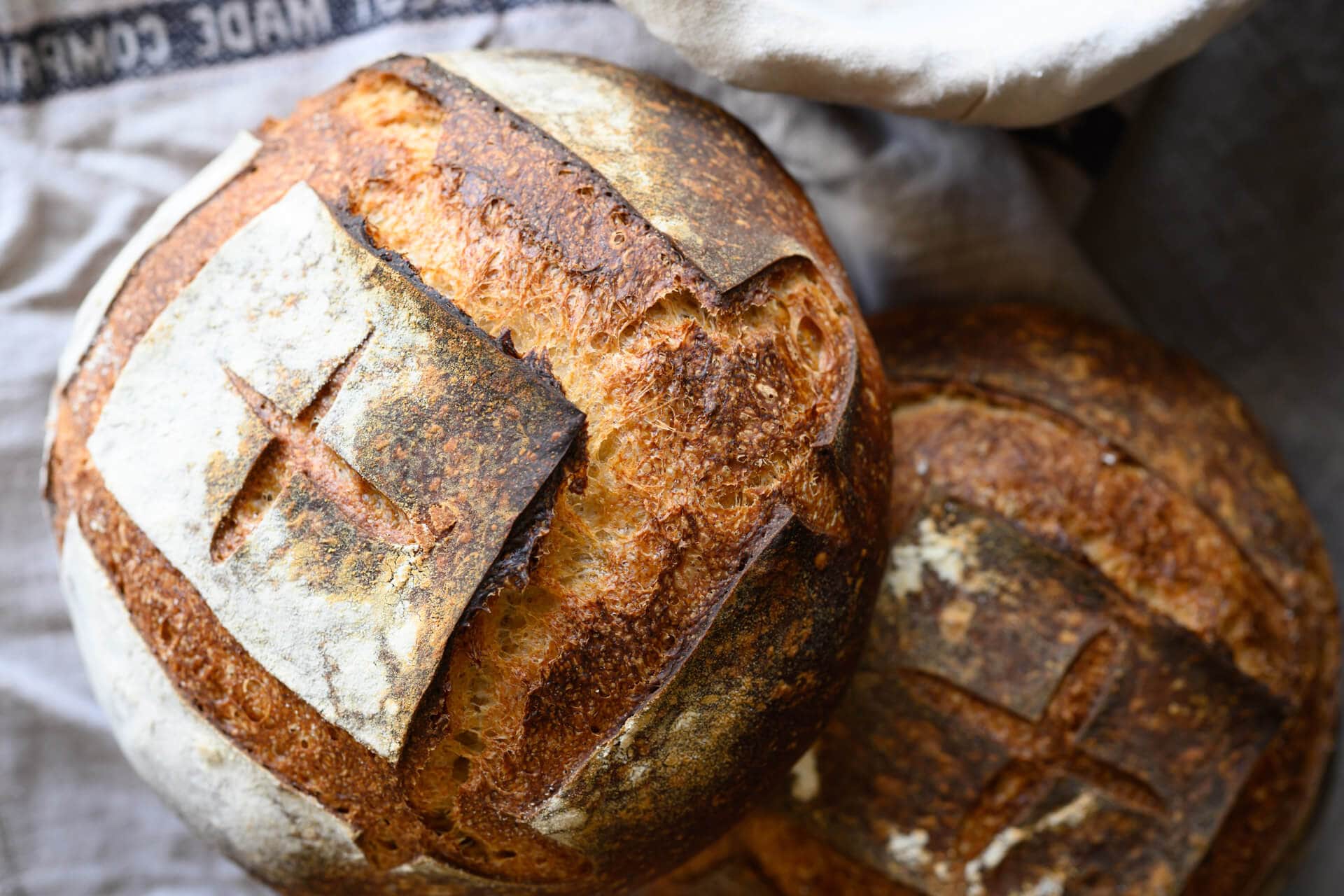

Hey there, new baker! My name is Maurizio, and I’m the baker here; welcome.
This new baker, start here page has a rollup of resources that’ll help you get baking sourdough bread quickly in your home kitchen. It begins with creating a sourdough starter from scratch (just flour and water!), your first sourdough bread, a few guides, and some of my favorite (and reader’s favorite) recipes.
Sourdough can be intimidating for new bakers, but it doesn’t have to be. With a few essential basics, you’ll be baking crusty and healthy loaves of bread in short order. And if you get stuck? I’m almost always lurking around here, answering questions and providing help—leave a comment, and I’ll get back to you.
Step 1. Create Your Sourdough Starter
A sourdough starter is the most important aspect of baking sourdough bread at home, and without it, you’d have flour and water mixed. It takes a little care to keep it alive, but it’ll reward you with countless loaves of bread, pizza, and more.
It takes about 5-7 days to get a starter going from scratch, using only flour and water. But, of course, if you have a friend who is a sourdough baker, you can always ask if they’ll give you a bit of theirs to get going. If not:
Check out my guide to creating a sourdough starter from scratch →
Step 2. Review the Baking Process
While your sourdough starter is starting up, review my eight steps to making sourdough bread. In this beginner’s guide, you can see a high-level view of each step of the bread-making process with detailed explanations of each step.
Read the Beginner’s Guide to Sourdough Bread →
Step 3. Bake Your First Loaf of Bread
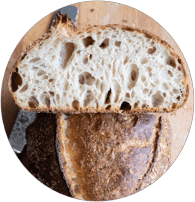
Here. We. Go!
Once your sourdough starter consistently shows the same signs of fermentation each day, it should be strong enough to bake a loaf of bread. I have two recipes here that are great introductions to baking sourdough at home.
Most Detailed Recipe: Bake my Beginner’s Sourdough Bread Recipe →
If you want a more condensed recipe that gets straight to baking, have a look at my simple weekday sourdough bread:
Easiest: Bake my Easy No-knead Sourdough Bread →
Step 4. Review More Baking Guides
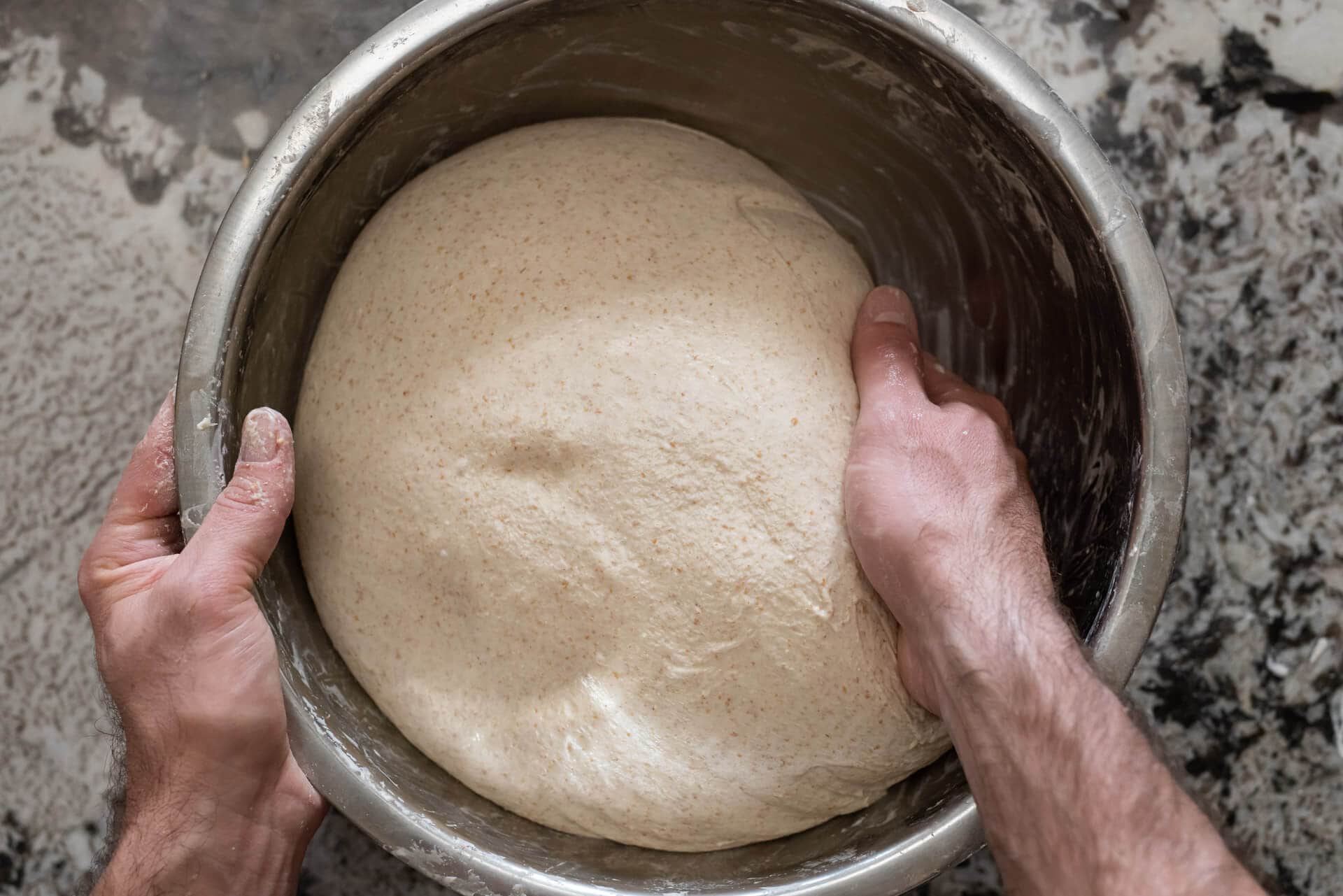
Once you have that loaf of bread crackling on the counter as it cools, review more of my baking guides to increase baking consistency and confidence. These guides have in-depth tips on maintaining a sourdough starter (with video walkthrough), creating baking schedules around your busy work week, working with baker’s percentages (baker’s math) to scale up and down recipes, and numerous guides to shaping bread dough.
My Guides Page is a great place to bookmark and return to from time to time to review the basics and expand your baking toolset:
Explore my baking guides page →
Step 5. Use Your Sourdough Starter For Other Things
Because a sourdough starter requires fresh flour and water each day (or less if you’re keeping it in the fridge), we tend to have sourdough starter discard—don’t throw it away! Instead, I like to save up the discard in a container in the fridge during the week, then use this to make sourdough pancakes, sourdough waffles, and sourdough banana bread.
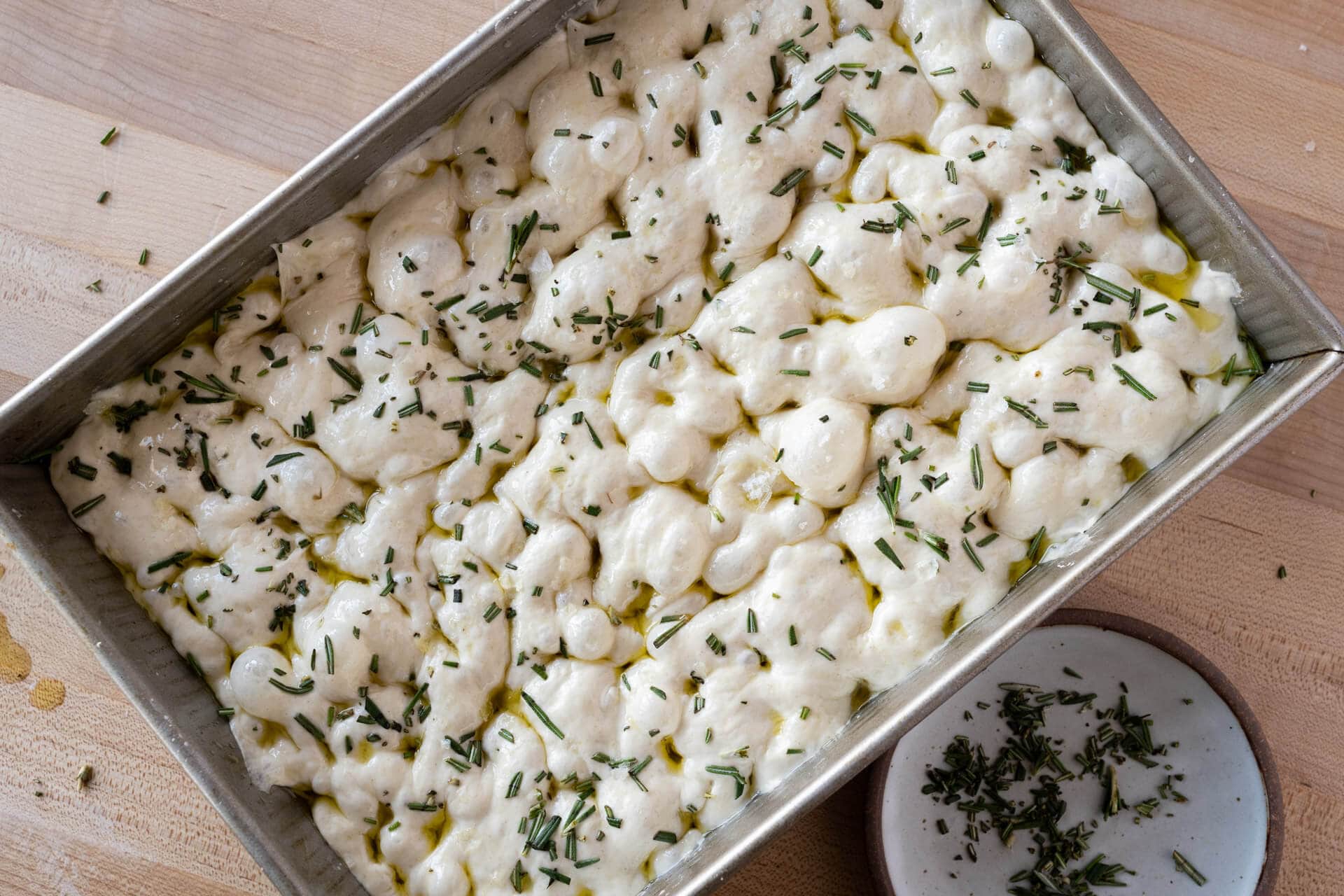
I’m also a huge fan of focaccia. This is one of the most-baked items in my kitchen, and my recipe couldn’t be easier. Use all of your sourdough starter discard one morning, and you’ll have fresh sourdough focaccia for dinner (and it’s an amazing canvas for any veggies in season!).
See my collection of sourdough starter discard recipes →
Step 6. Upgrade Your Baking Tools
One of the challenges of baking at home is consistency. It can be hard to bake consistently great loaves when the environment—our hectic home kitchens!—is always changing. I’ve collected my tried-and-true tools in one place, and they’ll help you make the bread easier and more repeatable in your home kitchen.
My top 3 recommended tools (read: if you’re going to buy anything, get these):
- A simple kitchen scale to accurately measure ingredients
- An instant-read thermometer to quickly and accurately measure dough temperature
- A foldable dough proofer to keep your dough warm and fermentation activity high
Explore all my favorite baking tools →
Step 7. My Top 10 Favorite Sourdough Recipes
- A Simple Weekday Sourdough Bread
- My Best Sourdough Bread Recipe
- Spelt, Rye, and Whole Wheat Sourdough Bread (50% whole grain)
- Fifty-fifty Whole Wheat Sourdough (50% whole grain)
- Sourdough Pizza
- Pain de Mie (super soft sandwich bread)
- A Simple Focaccia
- Whole Grain Spelt Pan Loaf
- Super Soft Sourdough Rolls
- Sourdough Cinnamon Rolls
Step 8. Join The 2500+ Member Community and Come Chat

Want to take your baking to the next level or get help with an issue you’re running into? Join the community here at The Perfect Loaf and get:
- Remove all ads from the website
- Instantly download my recipe archive and baking spreadsheets, plus other baking tools
- Join our private community to share photos, talk baking tips, tricks, and get help (I’m chatting there daily!)
- Access exclusive tool and flour discounts
- First access to live baking events
- And more!
Check out the baking community and membership →
Step 9. Experiment, Have Fun, and Happy Baking
One last note: don’t be afraid to experiment and have fun—after all, what’s the worst that can happen? No matter what comes out of your oven in almost every case, it’s perfectly edible and delicious. Some of my most significant baking improvements came from accidents that turned into opportunities for me to learn and grow as a baker.
Happy baking!

365 Comments
Maurizio:
Do you have a bakery in Albuquerque? We are planning a trip soon.
Hey Alan! I don't (yet??), sorry!
Hi Maurizio,
I have been working on your method and information re sourdough bread for the past six months and I am totally grateful for the assistance you have provided me through your engineering background. I believe I have found success with the perfect loaf with the addition of 25g of olive oil. I am using an old cast iron camp oven in my BBQ outside.
Thank you for your help.
Darryl
Amazing, Darryl, great to hear it. I often sneak in a little EVOO to my loaves as well, I love the sheen the crumb gets and the added flavor, too!
Hi there I recently started following your page..I made one of your recipes yesterday..I am new to baking sourdough bread..I have an active starter that is now 3 yrs old I feed once a week..from the fridge..
have tried many different recipes but never had success..your recipe was the best I've done so far..
my question is I made a levain the night before but was late the following day put it in fridge overnight..then was late by the time I used it for your recipe..my sourdough just didn't seem to rise enough..although it was edible..the bread had a finer grain..not large airy holes like yours..is it because of my starter being done day before and in fridge overnight??..I really want to bake better than I am.. thanku selena
Hey Selena, welcome. I would not put the starter in the fridge if you're planning to bake within the next few days. You want it out at room temp (or warmer) and fed to keep strong!
I am in the process of making the wheat bread recipe in your book, I prepared the dry levain and waited the five hours. After the five hours, the levain was still stiff and dry with a dry layer on top.
What did I do wrong, and how can I fix it?
A dry layer on top usually means the levain was exposed to too much air. Try setting a lid on your container during fermentation to prevent it from drying out. You can scrape off the dry layer and use what's underneath if it looks active. For next time, make sure the container is covered well to retain moisture.
Maurizio, i'm happy to tell you that i'm not only a member of your online baking community but also i recieved your book, The Perfect Loaf as a gift and this will be a great experience. I am only a one year sourdough baker who took it up in late retirement as a hobby. Its great. I just wanted to congragulate you on the expertise you show in both your book and on line. Thanks. (:
Thank you so much for the kind words, and welcome to the sourdough journey! One year in and you're just getting started. Enjoy the book and happy baking!
Hello! I bought your book The perfect loaf and it has been fantastic. One question i had — you mention all these flour types and a combination of companies where you can buy some of them. When doing research there seems to be a lot of options and don't necessarily align 1:1. Do you have recommendations on where to purchase each type (i.e. white flour vs. whole wheat flour vs. whole spelt vs. Whole rye) Thanks!
Thanks for getting the book! For flour sourcing, I'd recommend Central Milling, King Arthur, and Bob's Red Mill as reliable options that are widely available. Each carries a good range of white, whole wheat, spelt, and rye flours. Local mills are also worth exploring if you have any nearby. Don't get too caught up in finding exact matches; most quality flours will work well with the recipes.
I have learned so much from your book. I was overwhelmed at first but it helps to actually make a loaf and then many of the steps start to fall into place. My granddaughters LOVE the English muffins and I have to stay busy making those fluffy pillows of deliciousness. So thank you from me and them. I have a tip for those of you who have excess discard and a garden. You can pour any discard you were not able to use this week into your compost or directly into the garden. The dirt and leaves love it and I feel better not just throwing it in the trash.
So glad to hear the book is clicking for you, and that your granddaughters are enjoying those English muffins! Great tip about the compost too. The garden is a perfect place for excess discard, and it's a nice way to close the loop. Thanks for sharing!
Hei Maurizio, I am reading your amazing book, and I am interested to know more about the ph levels. In what range of ph numbers the bulk fermentation is done? And in what range of ph it's ready for baking after the cold bulking? Thank you so much
Thanks for the kind words! To be honest, I don't typically measure pH during fermentation. I rely more on visual and tactile cues like dough rise, texture, and jiggly movement. If you're interested in diving deeper into the science, I'd recommend checking out some of the academic research on sourdough fermentation, but for home baking, reading the dough is the most practical approach.
Hi all, I am super new to this group and to making sourdough. I have had good success so far and I am looking to move forward and begin making some flavored bread. However, I was wondering if anyone has had any luck creating a starter with gluten free flour. Thoughts and tips would be greatly appreciated.
Kimberly, while I don't specialize in gluten-free baking, I can share that brown rice flour tends to work well for gluten-free starters. The key is consistency and warmth – keep your starter in a warm spot (around 75-80°F) and feed it regularly. The fermentation process might take a bit longer to establish compared to wheat-based starters since there's less available food for the microorganisms. Happy baking!
Maurizio, first thank you for all you do!!! I have your book and am making your Simple Sourdough. Two questions. One, whenever I make your levain, I make it exactly to the gram, but when I go to use it, it is never enough. Should I just start making more? Also, in stretch and fold, my dough is not as elasticy as yours. When I pull it up to stretch, the whole thing comes up. When you do it seems much looser. What am I doing wrong?
Amy, thanks for getting my cookbook! For the levain, I mention this in the book, but it's common for it to come in slightly under. If you're worried about this, add 5g more of each (water, flour, starter) when making your levain to build it up a bit bigger.
For the dough strength – this often means the flour you're using might not be able to handle all the water in the recipe. Try holding back about 50g of water during the initial mix. Then, as you perform your stretch and folds, slowly work in that reserved water if you see the dough can handle it. The dough should start to feel stronger and more elastic as you progress through bulk fermentation.
Check out my guide to dough strength for more help.
Again (this time from the new challah recipe e-mail) I spotted the tip about using the oven lights to help with bulk fermentation. It's a good idea but do put a disclaimer (or several) somewhere about watching that temperature with a remote digital thermometer. The twin lights in my upper/smaller oven will boost the temperature from 64°F to 130° in about 3 hours. That's a mistake I won't make again!
Yes, very very good point here Michael!
Hi!
I recently started following your sourdough starter recipe. From days 2 through 4 I had consistent fermentation activity with my starter being about double the size the next morning. On day 4 I refreshed 12 hours after my morning feeding as suggested, but it looked like my starter had only gone through half of the fermentation process (it had grown by about half). Since then, I have had very little activity. Should I go back to only feeding once a day, or continue the 12 hour feedings?
Hey there, Josh! Yes, I talk about that a bit on the starter creation page. It's normal to see a dip in activity, but if it's persisting, switch back to 1x feeding a day. Keep it warm and stick with it, it will come around 🙂
Hi Maurizio. I purchased your book via kindle and I am enjoying it. It inspired me to start making my own starter following your method. I Had a flase rise after day1 to 3 then quiet phase started. Now on Day 10, bubbles on side sometimes on top but not significant rise. Doing 20g starter, 30g rye, 60g APF & 100g water. Placed it in proofing box with 78F temp, feeding twice. However, it turns a bit runny when I'm about to refresh. Any advice suggestion how to make it stronger? Thank you!!!
It's actually sounding fine, Claire. No need to focus on how much it rises and how many bubbles you see, just that you're seeing these consistent signs each day—that's what's important. It sounds like youre doing all the right things here. Keep with the feeding schedule.
Thank you for getting my book!
Not 60g APF but 70g APF.
Use also S.Pellegrino water. works great for me.
Hi Maurizio, I'm a seasoned baker of about 30 plus years, is there a way to use 1/2 yeast and 1/2 sour starter when making your demi baguettes? My husband doesnt appreciate full sour flavor in bread. I try not to cold ferment when making my boules, but I was wondering if you've ever played with the ratio Ive stated. Thanks for any help in this journey.
Rosalie
You could just add a pinch of yeast to the recipe when making it, but also feel free to reduce the starter/levain in that case by 50%.
hello I just purchased your flour blend. Can I use that for the beginning of my starter?ty
Yes, you certainly can!
getting ready to bake my first loaf from my first ever starter! I have a proofing mat that I’ve never used. I see your notes say to do bulk fermentation at 75f for 3.5 hours on the simple weekday sourdough bread, but I am wondering at what temperature I should set the proofing mat, since ambient air will be cooler. I’m going to have the dough in a Pyrex bowl covered in plastic wrap…should I set the mat to 80f?
I'd recommend putting a cooling rack on top of the mat just to be sure it doesn't get too hot when in direct contact with your starter. I'd set it to maybe 74F and take your starter's temp after 6 hours or so to see where it's at. Bump it up if needed.
I just got your book for Christmas and followed your steps with my pre-existing starter for my first loaf. I want to transition my starter to have rye in it like your recipe. Right now mine is only white flour. How would I start mixing in the rye with the starter I already have active?
Just add it in at the next feeding in whatever ratio you'd like! You can use the ratios I like (I talk about them here on my post how I feed my starter ), or adjust to what works for you!
Hi !
I just receive your book and I started to reed it and I am already enjoying it, being my self a scientific. But I am French canadien and I am a little confuse with a note in page 302: " Using Ripe Sourdough Starter instead of a Levain"… I looked up ripe sourdough and in french it is a levain at his top form, ready for use. So I don't understand what levain is in English and I couldn't find that in the dictionary. So could you please clarify that for me ?
Oh! In your book you stated that you enjoy a loaf with thin crust, but the loaf on the photo of the book cover are very dark and I tough that it would be the opposite, but it must be tasty !!!
Thank You
Jean-Michel
Thanks so much for getting my cookbook! Check out the "Levain" section in the cookbook, I talk about the word and how I use it in the book. Essentially, it's a small off-shoot of your sourdough starter (which you feed and maintain every day). That little off-shoot is used completely in a single bake. You can generally use your sourdough starter in place of the levain if you feed it regularly and it's healthy.
Here's some more info about what a levain is (vs a sourdough starter).
Hope that helps!
How. Long after removing starter from refrigerator can it be fed?
I usually let it warm up for a few hours then feed it!
Just joined as a member but have been using your website for a couple weeks. I have two starters now (Rick and Morty) and have made two loaves from each. Beginners luck or just a lot of reading, but all the loaves came out beautiful and tasted great. I'm using a dutch oven and the middle bottom on all four loaves is a little over done. I've used wax paper and one of those silicone mats. Still the same issue. Looking for ideas.
Thank you so much Maurizio,
Jeff
Hey Jeff! Sorry for the late reply and thanks so much for joining, it's great to have you here. A Dutch oven can often do this, the key is to either preheat the DO for less time, or take the loaf out for the last 5-10 mins in the bake to just bake directly on the rack. This always helps me!
how do I join the discusion
You just have!
I am a new member! My friend shared some of her sourdough starter with me over a month ago and I have been baking almost 3 days a week. She suggested first thing to buy The Perfect Loaf. Well, I did and have found every recipe I have tried delicious. I have made about 5 or 6 loaves of Sourdough Rounds, Kalamata Olive and Rosemary Batard, The Weekend Cinnamon Rolls (my husband just finished off the last two this morning), Discard Scones with dried cranberries and half with blueberry/lemon zest. This morning I made Jalapeno and Cheddar Batard (great with a smear of cream cheese}. Now I have been asked to make Sourdough with Garlic Cloves.
When making the loaves with garlic, should they be roasted before adding them to the dough?
Hey there, Debbie, welcome! Really happy to hear you're enjoying my cookbook, thanks so much for getting it 🙂 Yes, I would absolutely roast the garlic (or confit) before adding it to the dough. Know that garlic can sometimes interfere with fermentation, so if the dough needs longer in bulk fermentation, give it a bit more. Let me know how it goes!
Hello all! I hope everyone is enjoying the holiday season. I’ve run into a problem lately that I just can’t seem to beat. My loaves come out gummy. Ive gone back back to Mauricio’s beginners sourdough dough loaf but I’ve had no success. Suggestions please! Thank You!
Hey, Bill. If the hydration is too high for your dough it can lead to an overly wet or gummy interior. If the dough feels "soupy" or very "slack" then try pulling back the water percentage by 5% and see if that helps.
Make sure to bake your loaves completely. The interior should register around 204-206°F (95-96°C) or higher.
If your loaf is under proofed then this will typically lead to a gummy or "wet" textured interior. Make sure your starter and levain are very vigorous and strong when you use them. This is very important! From there, make sure to bulk ferment your dough fully (use the images you see in my posts to guide you on what the dough should look/feel like). You want the dough to be alive and aerated before you divide and shape.
From there, a full and complete proof is also very important.
A few ideas there for you, let me know how the next attempt goes!
Mario,
Question about the new baking steel and cover you're promoting. Important question to me is, is there an improvement over the other baking vessels you've used? You emphasize the convenience factor but you do not note any improvement in results…or I missed that?
Hey Rob, I do talk about it in the post: https://www.theperfectloaf.com/introducing-baking-sourdough-bread-with-the-baking-shell/
I mention you get the same results!
Oops. I meant Maurizio! Apologies.
Do you have a list of all of your favorite ingredients?
I actually don't. What are you looking for here Desiree? Like a list of flour, nuts, seeds, etc?
This is a great idea!