Teaching the art of sourdough bread, pizza, and more.
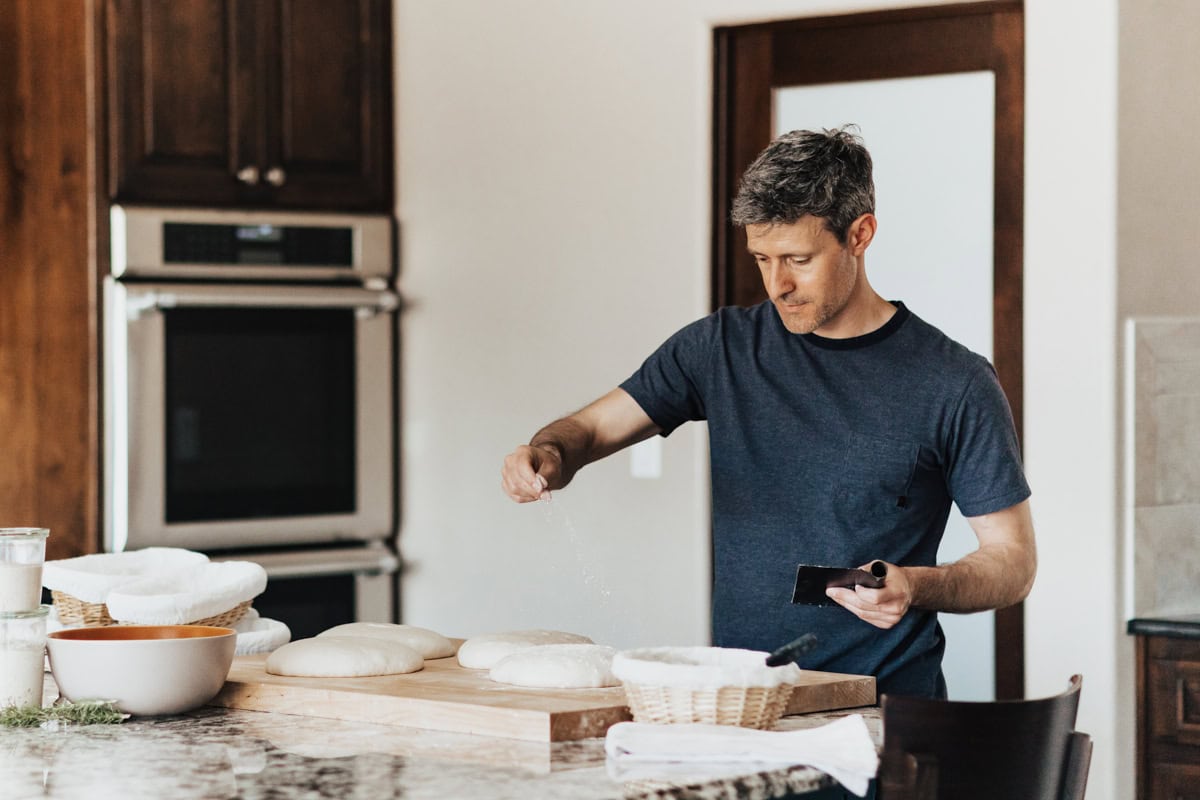
Hello there, I’m Maurizio Leo, the James Beard Award-winning, New York Times bestselling author of The Perfect Loaf and The Perfect Pizza, and the creator of this site. Since 2012, The Perfect Loaf has been the leading independent resource for baking sourdough bread and pizza at home.
But long before any of that, I was a kid in my dad’s pizzeria in Albuquerque, watching him work dough.
The Restaurant (as we called it), along with my mom’s gnocchi at home, taught me early on that good food made by hand takes time. Summers in Italy, with their long family meals and fresh bread hunts, only cemented it.
I took the long way back to dough: a master’s degree in computer science and years spent writing software before I founded The Perfect Loaf in 2012 (and along the way, the site picked up a couple of Saveur Blog Awards and a Webby nomination). The engineering never really left me, though. It’s why every recipe here leans on temperatures, iteration, and written-down results rather than feel alone. But at some point the measuring ends and baker’s intuition takes over. Great bread isn’t complicated technique—it’s simple technique done with attention and flavor given time to develop.
I’m still learning and still experimenting, and if I’m not baking sourdough, I’m probably thinking about it.
He strives for perfection, for the perfect loaf, secretly hoping never to attain it — for where would he go from there?
Jeffrey Hamelman
Every Sourdough Recipe Is Tested. Repeatedly.
Before I publish any recipe, it’s baked repeatedly in my home kitchen using the same ovens, same tools, and same ambient temperature chaos you’re working with. I log dough temperatures, fermentation times, and results for every test bake (the same baking notes worksheet I share here).
One thing that surprises readers is that recipes here continue to evolve after I publish them: I’m constantly learning and improving as a baker, and reader comments and questions regularly send me back to the kitchen to retest, clarify, or fix. If a recipe here says 20 minutes, it’s because that’s what worked across many bakes, not once.
My Cookbooks
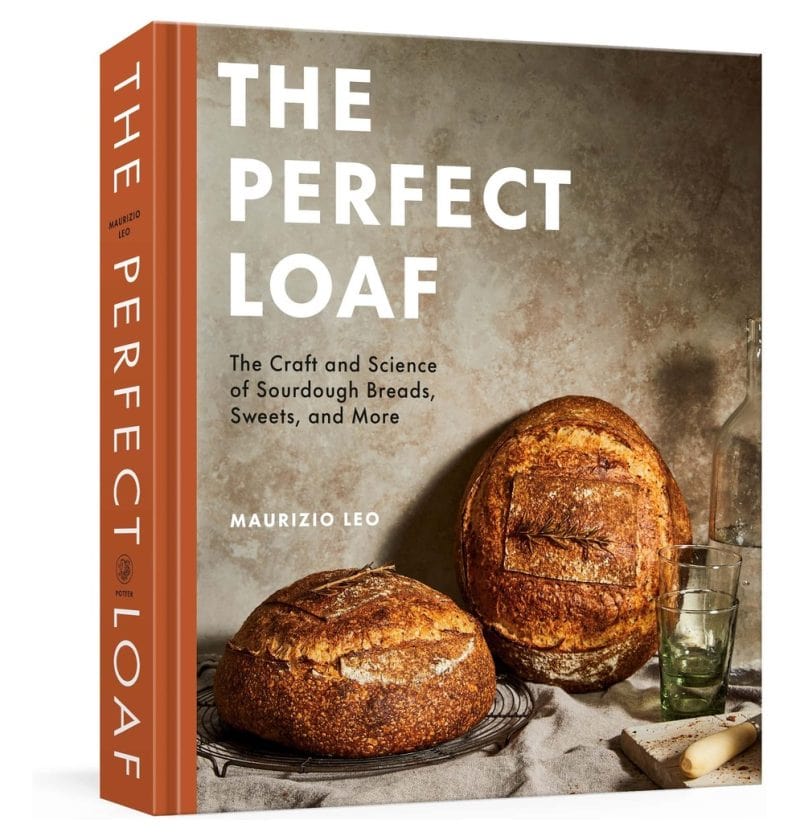
The Perfect Pizza
Sourdough pizza, focaccia, and more than forty regional styles from New York to tavern to al taglio to Sicilian, with every dough built to use a sourdough starter and tested in home ovens, pizza ovens, and everything in between.
Baking is better with other bakers. Members get exclusive recipes and guides, and a place in our community where questions get answered daily (often by me, always by someone who’s had the same dough problem).
A few times a year I host small group bread trips to visit cities, farms, mills, and bakeries in search of incredible bread and the food that goes along with it. Or, join me in my next baking workshop!
If you have a burning baking question, I usually hang out with many like-minded—and very helpful!—bakers on The Perfect Loaf’s Discord, where you can post questions, comments, and photos. Come join the community and ask a question.
Thank you for all your amazing recipes, extremely inspiring.
I’m looking forward for The Perfect Pizza, I’m sure it will be astonishing just as The Perfect Loaf.
How can I get in touch with you for a couple of questions other than posting a comment or send you a DM on Discord?
I purchased The Perfect Loaf spiral bound book through Amazon. I’m having trouble with the “spiral” slowing moving itself out toward the bottom edge of the book.
Any suggestions how I can move it back to the top and get it to stay even with the pages?
I love the details provided in the book.
Robyn
Hey Robyn! This is pretty common (in fact, it’s happening right now with my adult Piano book!). What I do is try to line up the holes on the pages, then turn the spiral “backward” so it goes back into the holes and out the other side. It takes a little fiddling, but it’ll get through and back. Repeat until the spiral is even. Thanks so much for getting my book!
Hello – I’m new! I have your cookbook and just found this awesome resource. Thank you! I’d really like to only bake one loaf at a time to start… should I just 1/2 the recipes? Do I 1/2 what I feed my starter too? I’m starting with the beginner’s sourdough. Thank you
Hey there! Give the site a hard refresh (CMD+R), it should show back up! I'll look into this and make sure all is okay, but looks good on my end. Let me know if you're still having trouble!
Hi there! I love your recipes and techniques, and every weekend I take my 9yo starter on so many new (and traditional) adventures. Question though: every recipe I’ve done turns out amazing, but the end product is gargantuan! I mean massive, seriously. They’re incredible, and I follow everything to a tee… it’s just whatever the loaf or bun or roll or something it is, they turn out huge! At first I thought it was an over-proof, but temp, time, signs…all correct. Then I thought it was maybe these recipes just made bigger-than-usual items, but when I got to recipes that called for one sheet pan or a specific pan that, by all accounts, should have held the volume, they all don’t really “contain” my doughs like I’d expect. I made English muffins today, 12 total, and what started as 85g – 6 W x 0.85cm H post warm proof balls became 11.5 W x 4.5cm H final cooked and I had to force them to fit into the half sheet pan to bake. They are amazing with all the nooks and crannies! Delicious!! Just really big! I’ve had to reduce many recipes to 80% formulas, which has been great, but now the question: is it possible that my starter is just….more active, or is this completely normal?? Is mine releasing more gases?? I’ve used so many other fresh and dry yeasts that don’t do this, but whenever I use my starter, it seems like he really over performs. He is a natural starter and I know there are millions of types of yeasts…I don’t know the science though. As I said, the products turn out right, just BIG. Wondering what’s going on here! Thanks!
Hey there Christine! It's hard to say exactly what's happening, but if you're seeing tons of rise and explosive oven spring, it can usually be from underproofing. I would have to see the interior crumb to help determine this though! But regarding your starter strength, totally possible it's very strong if you've kept it in good condition with proper maintenance—in fact, many would be jealous of this 🙂
Maurizio, Got the email regarding renewal invoice and noticed that the credit card number on file was outdated. I have entered the correct card number in my account.
Hello Maurizio,
I have been baking Sourdough bread for a year and a half now and have kept book on all 156 loaves so far. Started with Dutch ovens and am now baking on steel with steam. Love my Italian Famag spiral mixer but still enjoy mixing by hand when only making 1 or 2 loaves. It's been fun from the start and although my bread didn't always look the best, it tasted great. Thanks to your book "The Perfect Loaf" I have learned so much and continue learning from all the fine articles you have published. Having lived in Europe, I fell in love with their breads and had to learn to make my own and am still learning.
Thank you so much,
Ron Smith
Hello Maurizio,
Here I am on your site and I’m terrified! Haha
I’m going to open up a micro bakery but want to learn how to make sourdough bread. I’ve heard you are the Best. Coming from an Italian family, myself, I always remember my grandmother in the kitchen making wonderful memories. I wish I was old enough to learn back then. But, it’s never too late. I have looked at recipes for sourdough and have talked with those who have made it; this is what is so terrifying. It appears to be so very difficult. Any pointers on where I should start would be most welcoming.
Grazie,
Andrea Antonelli
Hey there, Andrea! That is a big venture, for sure, but you can do it! Maybe start small and scale up over time based on demand, that is what I would do (and I have thought about it many, many times over the years). Pick one or two recipes that are your core offerings, and really nail those down so you can produce that bread consistently each week.
If you're looking for more help, I'm always here (my email is above), or, join our membership , lots of great bakers there chatting each day! A few of which have microbakeries and beyond. Keep me posted on how it's going, here to help 🙂
I suffer with painful digestive issues for many years. I had eliminated grains from my diet. I came across a few articles that explained today's modern wheat that is labeled non-GMO. Our wheat had been modified long before the law defining non-GMO. The Ancient wheat that has not ever been altered is still available from parts of Europe. Most people that are sensitive to US wheat can eat ancient wheat.
I gave it a try, bought your book, ordered Polselli Organic wheat flour from Italy, and because I was in a hurry I bought an Italian Starter from Living Dough. I made your first loaf and pigged out. I expected to bloat up like a balloon.
Ten minutes,15, 30, 60 minutes later I was fine. I ate a slice with my eggs, still no reaction. Could this be true???
I have since made your white bread 2 times, soft Dinner Rolls, and baguettes.
The starter from Living Dough is beautiful. Her instructions said to wake her up so her name is Maggie May. I am the happiest bread lover ever.
Thank you for getting me started. My brother and nurses at the hospital are getting you book and going sourdough.
Hi Maurizio…I am your biggest fun and you are my inspiration from day one on my Sourdough journey for past 5 years. I go back and forth to different bakers, books, websites, etc. but then again ending up using your recipes and your suggestions. The outcome is always amazing, thank you!!!
I was challenged to make Italian prosciutto provolone bread. I did my home work and found some recipes. I like to combine recipes and come up with my own one, but this one looks very challenging. I don't like the dough consistency. All recipes call for lard and lager. But final bread is more like a scone than bread.
Do you have any suggestions or maybe a recipe for it? I will really appreciate your help:)
Means SO much to read that Irina, thank you! Sorry for the delay. I'm not a huge fan of using lard in bread, to be honest. I've tried it many times over the years and don't really like the flavor profile. Instead I choose to use butter or oil more often than not. It sounds like the dough needs more water to me, especially if it's dry and dense!
Hi Maurizio, Thanks for such a great website. I've baked bread for a long time and I'm just getting into sourdough bread. I've been reading tons of information on your site and have my starter stable and ready to go. I have a question, or comment, about the "Starter And Levain Calculator" page. It is confusing because there seems to be a discrepancy in the example provided. The writeup says "The desired starter can be made by mixing the outputs below in the grey boxes (50g starter, 25g flour, 25g water)." But the grey boxes show different numbers (20g starter, 40g flour, 40g water). Using Bakers Percentages, I believe the calculator numbers (20, 40, 40) are correct. Yes?
Hello Maurizio – I tried your Simple Focaccia recipe – it was excellent first time! I see the flour, levain and water quantities are the same combination as the normal sourdough loaves I bake! Instead of adding the Olive Oil to the autolyse stage – can I add this in only when going into the bulk fermentation i.e. AFTER the 4 * 20 min turn intervals.
If yes I can then combine my normal sourdough loaves and the Focaccia in the same bake prep!
I like the idea there, Bill, but I would be hesitant to try and add oil that much later in the process, unfortunately. It won't absorb well into the dough and you'll have to really work to get it in.
What I'd do instead, though, is mix the same dough without olive oil. Then at the very end, take out some of the dough to use as the lean (without OO) loaves and put that into a bulk container. Then add the OO to the other dough and mix it through. You'll have two different doughs in bulk fermentation, but at least you save a lot of time by mixing only a single dough.
Hello Mauizio,
I’m new to your site and I am loving the information, especially about your home milled grains. I use a Komo mill and am relearning to make sourdough bread with the home milled flour.I have a question about milling your flour. Is there a reason that you include factory milled bread in combination with your home milled flour.
Thank you,
Suzan
Hey Suzan, really great to have you here! I'll sometimes blend the two flours depending what I'm after. With aged flour I tend to get more rise and a lighter texture (but less flavor!). So I see it as the best of both worlds using both. But there is magic in a 100% freshly milled flour loaf, too. You'll find those recipes here as well.
Hello Maurizio,
I wanted to attempt The One Day Bake. The guidance is a 10:00pm Autolyse, with the next step at 0700am. That sounds like an overnight Autolyse, yet the site cautions against it. Is the 10:00pm Autolyse to be left on the counter, refrigerated, or in a proofer (what temp) until 07:00am? Please advise.
Hello Maurizio,
I’m a big fan of your site! It’s my go to in my sourdough bread challenge. Amazing job you’re doing and please keep it up.
I need to ask your opinion on the flour I’ve been using to bake your recipes. The flour I purchase is from a mill here in ontario(Canada) and it’s a 14 % protein content. It also does not remove anything from it(bread flour). I love the results in using your recipe with this flour,BUT, I just can’t seem to get an open crumb.. can you tell me what modifications I should make when making your best sourdough bread recipe, which is the one I use weekly. The flavor, using this flour, is exceptional. I’ve read your posts and, if I’m not mistaken, using these whole grain flours sometimes means sacrificing an open crumb. But I’d like your advice and expertise. The bread turns out the way my nonna would make it…dense, thick, but hearty and delicious. Would love to hear back. You’re amazing!
Diana
I would like to see my discard recipes. I love your cookbook, I used it to make my starter from scratch. I have had the best luck with any bread using your recipes.
Absolutely. You can add them in at the end of mixing or during stretches and folds in bulk fermentation. I talk about it a bit here in my guide to bulk fermentation .
I have a question about a calculation in your book, page 129. In the section about Baker’s Percentages you discuss Pre-fermented Flour Percentage. The prefermented flour weight is 100g and the total flour weight is 1100g giving a percentage of 9.1%. I noticed that here is also 10g of prefermented flour in the ripe sourdough starter. If that extra 10g of flour is used in the calculation the PFF% would be 9.9%. Is there a reason the weight of flour in the starter is not used?
Essentially, I don't count it because it makes things difficult, it's another "layer" of ingredients added into the calculation. Plus, because the recipes are rather small (only 1-2 loaves), the amount of starter is small compared to the overall flour in the recipe. I do take the levain into account, though, this is much larger.
Hi Maurizio, Thank you for your free recipe/video with step-by-step instructions. I'm new to sourdough and used your recipe/video to bake my first two rounds. I'm on my third week with a levain currently out and getting ready! I also purchased your book and excited to try other recipes. :). Quick question- my sourdough ends up a bit sticky and I'm not sure why. The starter rises, it bakes enough (top/bottom is brown) and I let it cool for at least 2 hours before cutting it. I think bulk fermentation is the culprit because at the end the dough is super smooth and has some bubbles, but it doesn't "dome" as much as your video or pictures in the book. I live in the tropics where my kitchen is usually in the low 80's- could this be the culprit? Please advise of any changes you'd make. I appreciate your time & help. Keep doing what you're doing as I wouldn't be a sourdough fanatic without your videos!
Glad they've been a help, Carmen! I really appreciate the kid words and for you getting my cookbook (hope you're loving that, too). If you're at that hot of a temp and a very humid environment, you might want to reduce the hydration of the dough when youre mixing to better suit your environment. Later, you can work the hydration back up (if you want), but just so you get a feel for a stiffer dough, it might help. If you have a lot of water in the dough, it's very humid, and you're possibly not mixing as long as you need to, you won't see as much doming.
So, 1) drop the hydration a bit for a little while and see how the dough feels. 2) Increase the hydration slowly if you want, but mix a little longer.
Hello, I am brand new to sourdough, so I'm used to baking with commercial yeast and have been doing that for over a decade. Naturally, I have a lot of beloved yeast bread recipes now. Can I still use those recipes but with sourdough starter instead of yeast? Is there some general rule to know how much starter you need per cup of flour to achieve a successful rise? Thanks so much!
Hey, Emily! You can convert those yeasted recipes over to sourdough, if you'd like. I'm working on a post on how to do this soon. Generally, you want to take some of the flour and water in the recipe to make a preferment (levain). This will be mixed with a small bit of your sourdough starter.
I’m having some trouble with the sourdough starter recipe from your book. It’s been doing great from day 1 to day 6, but on day 7, when I switch to mostly white flour, the starter doesn’t rise much. I’ve tried both King Arthur and Central Milling flours, but no luck.
It does seem to start rising around the 24-hour mark, though.
Any ideas on what might be going wrong or how I can fix it?
I have been making your everyday sandwich loaf for sometime and have a problem with the loaves rising in the time you suggest. I have to use a 1 hp Kitchenaid mixer (old hands don't function as well anymore). At the end of mixing, the dough temp has risen to about 85 degrees. I am using stone ground flour from Barton Sprins Mills: red fife whole wheat and their all-purpose (13%). The final product tastes great, but why does it take so long to rise in the pan before baking? 2 hours+ at proper temp.
It's pretty normal not to see huge rise in the fridge overnight. Give it a poke, though, and if it feels very tight and dense, let it proof more on the counter for about an hour, then poke again. It should pass the poke test at that point: https://www.theperfectloaf.com/how-to-use-the-dough-poke-test/
Just made some Baguettes and I was happy with them for my first batch. The recipe describes each loaf as having a 14" length. My loaves ended up 15" – 16" in length and about 2" in diameter. The loaves seem a little spindly to me especially when compared to the photos. Is this width loaf to be expected??
Hey Chip. Sounds like you might have rolled them out a little too long—which is okay! They'll bake a little faster that way. Next time, don't roll them out quite as long and you'll have stubbier baguettes. All good!
Hi, I started my sourdough journey 2 years ago and have found your recipes and instructions extremely clear. So thank you! Got your book last year and have gotten stuck making Rustico again and again. Two days ago I decided to branch out and am trying the pane pugliese. Have never made a stiff levain before so am a little nervous. Overnight, at about 73-74F, it rose but did not double. I let it go for 13 hours and decided to just go for it. Description of the levain in the book – it's referring to the standard 100% hydration kind, right? Further down the recipe, there's a mention of removing the dough from the fridge, but this is a one-day bake, right? No cold retardation, I thought… Please help and clarify. Thanks!!
Hey Catherine, sorry for the late reply! So glad the site and my book have been a help. Like you, I make the Rustico over and over, I just love that recipe 🙂 Yes, the Pane Pugliese uses a stiff levain. It's totally okay if it does not double in size. There's a small typo in the recipe, the dough is never in the fridge! Sorry about the confusion there.
I am having trouble with getting a great ear/rise on my sourdough loaves. I use active starter at its peak, or shortly thereafter, in all the recipes, and am wondering if I should use starter that has risen and fallen and is ready to be fed (discard) for a better rise and more aerated crumb? I have seen one recipe for plain sourdough that calls for the discard rather than active starter, and am curious about the outcome.
In my experience (and opinion), you definitely want to use ripe starter to seed fermentation in new dough. Though, ripe starter and discard really are the same thing if they're used at the right time. It's hard to say why you're not getting good rise with out more details or photos. Feel free to write back here or send me an email on the About page!
It has a nice flavor and texture, and not a dense crumb. And it baked up well in a countertop oven. Simple, easy, and tasty. The hardest part is waiting 24 hrs to slice it.












503 Comments
I live in Santa Fe. What adjustments do I make to the sourdough discard oatmeal cookies so they work at 7,000 feet?
Hey fellow New Mexican! For cookies, I will usually reduce the leavener just a bit, so instead of, say, 1tbsp of baking soda, I’ll drop to 3/4 tbsp.
I also have a bunch more tips, here:
https://www.theperfectloaf.com/how-to-bake-sourdough-bread-at-high-altitude/
Hello Maurizio,
Thank you for all your amazing recipes, extremely inspiring.
I’m looking forward for The Perfect Pizza, I’m sure it will be astonishing just as The Perfect Loaf.
How can I get in touch with you for a couple of questions other than posting a comment or send you a DM on Discord?
Thanks so much, Mohammad! I saw you joined, will reply to your message soon!
I purchased The Perfect Loaf spiral bound book through Amazon. I’m having trouble with the “spiral” slowing moving itself out toward the bottom edge of the book.
Any suggestions how I can move it back to the top and get it to stay even with the pages?
I love the details provided in the book.
Robyn
Hey Robyn! This is pretty common (in fact, it’s happening right now with my adult Piano book!). What I do is try to line up the holes on the pages, then turn the spiral “backward” so it goes back into the holes and out the other side. It takes a little fiddling, but it’ll get through and back. Repeat until the spiral is even. Thanks so much for getting my book!
Are you on Tik Tok by any chance?
I am: https://www.tiktok.com/@theperfectloaf
But I post more on Instagram: https://www.instagram.com/maurizio/
While you were in Paris did you make it to L’Autre Boulange (in the 11th?).
I did not but I’m feeling like I need to add that to my list for next time!
Ordered The Perfect Loaf, hopefully it'll arrive today!… it's a bank holiday this weekend in Ireland so I cant wait to get going.
Amazing, Pat. I hope you love it! Let me know what you think after you've read through 🙂
Hello – I’m new! I have your cookbook and just found this awesome resource. Thank you! I’d really like to only bake one loaf at a time to start… should I just 1/2 the recipes? Do I 1/2 what I feed my starter too? I’m starting with the beginner’s sourdough. Thank you
Yup, you can halve all the ingredients for a recipe and bake just one loaf. (You'll also want to halve the levain ingredients, too.)
Hi Maurizio, the Search button doesn't seem to be working 🙁
Hey there! Give the site a hard refresh (CMD+R), it should show back up! I'll look into this and make sure all is okay, but looks good on my end. Let me know if you're still having trouble!
Hi there! I love your recipes and techniques, and every weekend I take my 9yo starter on so many new (and traditional) adventures. Question though: every recipe I’ve done turns out amazing, but the end product is gargantuan! I mean massive, seriously. They’re incredible, and I follow everything to a tee… it’s just whatever the loaf or bun or roll or something it is, they turn out huge! At first I thought it was an over-proof, but temp, time, signs…all correct. Then I thought it was maybe these recipes just made bigger-than-usual items, but when I got to recipes that called for one sheet pan or a specific pan that, by all accounts, should have held the volume, they all don’t really “contain” my doughs like I’d expect. I made English muffins today, 12 total, and what started as 85g – 6 W x 0.85cm H post warm proof balls became 11.5 W x 4.5cm H final cooked and I had to force them to fit into the half sheet pan to bake. They are amazing with all the nooks and crannies! Delicious!! Just really big! I’ve had to reduce many recipes to 80% formulas, which has been great, but now the question: is it possible that my starter is just….more active, or is this completely normal?? Is mine releasing more gases?? I’ve used so many other fresh and dry yeasts that don’t do this, but whenever I use my starter, it seems like he really over performs. He is a natural starter and I know there are millions of types of yeasts…I don’t know the science though. As I said, the products turn out right, just BIG. Wondering what’s going on here! Thanks!
Hey there Christine! It's hard to say exactly what's happening, but if you're seeing tons of rise and explosive oven spring, it can usually be from underproofing. I would have to see the interior crumb to help determine this though! But regarding your starter strength, totally possible it's very strong if you've kept it in good condition with proper maintenance—in fact, many would be jealous of this 🙂
Maurizio, Got the email regarding renewal invoice and noticed that the credit card number on file was outdated. I have entered the correct card number in my account.
Thanks so much, Dan! If you're ever having issues, please feel free to email me maurizio (at) theperfectloaf.com.
nice
Hello Maurizio,
I have been baking Sourdough bread for a year and a half now and have kept book on all 156 loaves so far. Started with Dutch ovens and am now baking on steel with steam. Love my Italian Famag spiral mixer but still enjoy mixing by hand when only making 1 or 2 loaves. It's been fun from the start and although my bread didn't always look the best, it tasted great. Thanks to your book "The Perfect Loaf" I have learned so much and continue learning from all the fine articles you have published. Having lived in Europe, I fell in love with their breads and had to learn to make my own and am still learning.
Thank you so much,
Ron Smith
Means a great deal to hear all of this, Ron, thank you. Sounds like you're definitely on the right track here with your baking, I love it!
Hello Maurizio,
Here I am on your site and I’m terrified! Haha
I’m going to open up a micro bakery but want to learn how to make sourdough bread. I’ve heard you are the Best. Coming from an Italian family, myself, I always remember my grandmother in the kitchen making wonderful memories. I wish I was old enough to learn back then. But, it’s never too late. I have looked at recipes for sourdough and have talked with those who have made it; this is what is so terrifying. It appears to be so very difficult. Any pointers on where I should start would be most welcoming.
Grazie,
Andrea Antonelli
Hey there, Andrea! That is a big venture, for sure, but you can do it! Maybe start small and scale up over time based on demand, that is what I would do (and I have thought about it many, many times over the years). Pick one or two recipes that are your core offerings, and really nail those down so you can produce that bread consistently each week.
If you're looking for more help, I'm always here (my email is above), or, join our membership , lots of great bakers there chatting each day! A few of which have microbakeries and beyond. Keep me posted on how it's going, here to help 🙂
I suffer with painful digestive issues for many years. I had eliminated grains from my diet. I came across a few articles that explained today's modern wheat that is labeled non-GMO. Our wheat had been modified long before the law defining non-GMO. The Ancient wheat that has not ever been altered is still available from parts of Europe. Most people that are sensitive to US wheat can eat ancient wheat.
I gave it a try, bought your book, ordered Polselli Organic wheat flour from Italy, and because I was in a hurry I bought an Italian Starter from Living Dough. I made your first loaf and pigged out. I expected to bloat up like a balloon.
Ten minutes,15, 30, 60 minutes later I was fine. I ate a slice with my eggs, still no reaction. Could this be true???
I have since made your white bread 2 times, soft Dinner Rolls, and baguettes.
The starter from Living Dough is beautiful. Her instructions said to wake her up so her name is Maggie May. I am the happiest bread lover ever.
Thank you for getting me started. My brother and nurses at the hospital are getting you book and going sourdough.
Hi Maurizio…I am your biggest fun and you are my inspiration from day one on my Sourdough journey for past 5 years. I go back and forth to different bakers, books, websites, etc. but then again ending up using your recipes and your suggestions. The outcome is always amazing, thank you!!!
I was challenged to make Italian prosciutto provolone bread. I did my home work and found some recipes. I like to combine recipes and come up with my own one, but this one looks very challenging. I don't like the dough consistency. All recipes call for lard and lager. But final bread is more like a scone than bread.
Do you have any suggestions or maybe a recipe for it? I will really appreciate your help:)
Means SO much to read that Irina, thank you! Sorry for the delay. I'm not a huge fan of using lard in bread, to be honest. I've tried it many times over the years and don't really like the flavor profile. Instead I choose to use butter or oil more often than not. It sounds like the dough needs more water to me, especially if it's dry and dense!
Hi Maurizio, Thanks for such a great website. I've baked bread for a long time and I'm just getting into sourdough bread. I've been reading tons of information on your site and have my starter stable and ready to go. I have a question, or comment, about the "Starter And Levain Calculator" page. It is confusing because there seems to be a discrepancy in the example provided. The writeup says "The desired starter can be made by mixing the outputs below in the grey boxes (50g starter, 25g flour, 25g water)." But the grey boxes show different numbers (20g starter, 40g flour, 40g water). Using Bakers Percentages, I believe the calculator numbers (20, 40, 40) are correct. Yes?
Yes, that's correct, sorry about that, Lenny. I'll fix the example!
Hello Maurizio – I tried your Simple Focaccia recipe – it was excellent first time! I see the flour, levain and water quantities are the same combination as the normal sourdough loaves I bake! Instead of adding the Olive Oil to the autolyse stage – can I add this in only when going into the bulk fermentation i.e. AFTER the 4 * 20 min turn intervals.
If yes I can then combine my normal sourdough loaves and the Focaccia in the same bake prep!
Thanks
Bill
I like the idea there, Bill, but I would be hesitant to try and add oil that much later in the process, unfortunately. It won't absorb well into the dough and you'll have to really work to get it in.
What I'd do instead, though, is mix the same dough without olive oil. Then at the very end, take out some of the dough to use as the lean (without OO) loaves and put that into a bulk container. Then add the OO to the other dough and mix it through. You'll have two different doughs in bulk fermentation, but at least you save a lot of time by mixing only a single dough.
Hope that helps!
Hello Mauizio,
I’m new to your site and I am loving the information, especially about your home milled grains. I use a Komo mill and am relearning to make sourdough bread with the home milled flour.I have a question about milling your flour. Is there a reason that you include factory milled bread in combination with your home milled flour.
Thank you,
Suzan
Hey Suzan, really great to have you here! I'll sometimes blend the two flours depending what I'm after. With aged flour I tend to get more rise and a lighter texture (but less flavor!). So I see it as the best of both worlds using both. But there is magic in a 100% freshly milled flour loaf, too. You'll find those recipes here as well.
If you haven't yet, check out my guide to working with fresh flour .
Again, great to have you here!
Hello Maurizio,
I wanted to attempt The One Day Bake. The guidance is a 10:00pm Autolyse, with the next step at 0700am. That sounds like an overnight Autolyse, yet the site cautions against it. Is the 10:00pm Autolyse to be left on the counter, refrigerated, or in a proofer (what temp) until 07:00am? Please advise.
I don't usually do an overnight autolyse. Which recipe is this you're referring to, it must be a typo. I'd imagine it should be 10am.
Hello Maurizio,
I’m a big fan of your site! It’s my go to in my sourdough bread challenge. Amazing job you’re doing and please keep it up.
I need to ask your opinion on the flour I’ve been using to bake your recipes. The flour I purchase is from a mill here in ontario(Canada) and it’s a 14 % protein content. It also does not remove anything from it(bread flour). I love the results in using your recipe with this flour,BUT, I just can’t seem to get an open crumb.. can you tell me what modifications I should make when making your best sourdough bread recipe, which is the one I use weekly. The flavor, using this flour, is exceptional. I’ve read your posts and, if I’m not mistaken, using these whole grain flours sometimes means sacrificing an open crumb. But I’d like your advice and expertise. The bread turns out the way my nonna would make it…dense, thick, but hearty and delicious. Would love to hear back. You’re amazing!
Diana
Hey Diana, thanks so much! You can make fantastic bread with high protein flour. Have you sen my guide to working with it? Check it out here:
https://www.theperfectloaf.com/sourdough-bread-high-protein-white-bread-flour/
Let me know if you have more Qs, I can help 🙂
I've been using your book "The Perfect Loaf" for two years and loving it. Is there a second book coming soon?
Thanks so much, means a lot to hear that. I have to ask, what would you look for in a second book? More bread, sweets, or something else?
More bread, flatbreads, whole grains, international breads. I’m not very interested in sweets.
I would like to see my discard recipes. I love your cookbook, I used it to make my starter from scratch. I have had the best luck with any bread using your recipes.
Just ordered your book and Amazon referred me to your blog! So glad I found it as I too am still trying to make “the perfect loaf”!
Amazing, thank you for getting my book and great to have you here, too. Here to help!
can I add pepitas into the dough and if so, at what point
Absolutely. You can add them in at the end of mixing or during stretches and folds in bulk fermentation. I talk about it a bit here in my guide to bulk fermentation .
I have a question about a calculation in your book, page 129. In the section about Baker’s Percentages you discuss Pre-fermented Flour Percentage. The prefermented flour weight is 100g and the total flour weight is 1100g giving a percentage of 9.1%. I noticed that here is also 10g of prefermented flour in the ripe sourdough starter. If that extra 10g of flour is used in the calculation the PFF% would be 9.9%. Is there a reason the weight of flour in the starter is not used?
Hey there! I talk about that a bit in the book, why I don't take the sourdough starter itself into the calculations. I also talk about it here:
https://www.theperfectloaf.com/reference/introduction-to-bakers-percentages/
Essentially, I don't count it because it makes things difficult, it's another "layer" of ingredients added into the calculation. Plus, because the recipes are rather small (only 1-2 loaves), the amount of starter is small compared to the overall flour in the recipe. I do take the levain into account, though, this is much larger.
Hope that makes sense!
Thanks
Hi Maurizio, Thank you for your free recipe/video with step-by-step instructions. I'm new to sourdough and used your recipe/video to bake my first two rounds. I'm on my third week with a levain currently out and getting ready! I also purchased your book and excited to try other recipes. :). Quick question- my sourdough ends up a bit sticky and I'm not sure why. The starter rises, it bakes enough (top/bottom is brown) and I let it cool for at least 2 hours before cutting it. I think bulk fermentation is the culprit because at the end the dough is super smooth and has some bubbles, but it doesn't "dome" as much as your video or pictures in the book. I live in the tropics where my kitchen is usually in the low 80's- could this be the culprit? Please advise of any changes you'd make. I appreciate your time & help. Keep doing what you're doing as I wouldn't be a sourdough fanatic without your videos!
Glad they've been a help, Carmen! I really appreciate the kid words and for you getting my cookbook (hope you're loving that, too). If you're at that hot of a temp and a very humid environment, you might want to reduce the hydration of the dough when youre mixing to better suit your environment. Later, you can work the hydration back up (if you want), but just so you get a feel for a stiffer dough, it might help. If you have a lot of water in the dough, it's very humid, and you're possibly not mixing as long as you need to, you won't see as much doming.
So, 1) drop the hydration a bit for a little while and see how the dough feels. 2) Increase the hydration slowly if you want, but mix a little longer.
Hope this helps!
Hi, I don't know how else to contact you, I can't seem to get a discord account going after paying for membership. Thanks.
I have a question about the typos on the book The Perfect Loaf…
Have they been corrected on the new prints?
Yes, all typos have been fixed if you've purchased a book in the last year!
do you have an errata sheet?
Yes, it's at the bottom of the cookbook page !
I recently bought your book from Amazon and there’s not an errata sheet on page 1
Hello, I am brand new to sourdough, so I'm used to baking with commercial yeast and have been doing that for over a decade. Naturally, I have a lot of beloved yeast bread recipes now. Can I still use those recipes but with sourdough starter instead of yeast? Is there some general rule to know how much starter you need per cup of flour to achieve a successful rise? Thanks so much!
Hey, Emily! You can convert those yeasted recipes over to sourdough, if you'd like. I'm working on a post on how to do this soon. Generally, you want to take some of the flour and water in the recipe to make a preferment (levain). This will be mixed with a small bit of your sourdough starter.
Here's a little more about what a levain (leaven) is:
https://www.theperfectloaf.com/what-is-a-levain-and-how-is-it-different-from-a-starter/
Thank you for your response, I'm looking forward to trying this!
Hey Maurizio,
I’m having some trouble with the sourdough starter recipe from your book. It’s been doing great from day 1 to day 6, but on day 7, when I switch to mostly white flour, the starter doesn’t rise much. I’ve tried both King Arthur and Central Milling flours, but no luck.
It does seem to start rising around the 24-hour mark, though.
Any ideas on what might be going wrong or how I can fix it?
Thanks!
Hey there, Pilar! I just emailed you back, check your email 🙂
I have been making your everyday sandwich loaf for sometime and have a problem with the loaves rising in the time you suggest. I have to use a 1 hp Kitchenaid mixer (old hands don't function as well anymore). At the end of mixing, the dough temp has risen to about 85 degrees. I am using stone ground flour from Barton Sprins Mills: red fife whole wheat and their all-purpose (13%). The final product tastes great, but why does it take so long to rise in the pan before baking? 2 hours+ at proper temp.
Try including a bit more starter or levain when you mix your dough. I would suggest doubling it.
I am not seeing my dough rise sufficiently after cold proofing in the fridge overnight!
It's pretty normal not to see huge rise in the fridge overnight. Give it a poke, though, and if it feels very tight and dense, let it proof more on the counter for about an hour, then poke again. It should pass the poke test at that point:
https://www.theperfectloaf.com/how-to-use-the-dough-poke-test/
Just made some Baguettes and I was happy with them for my first batch. The recipe describes each loaf as having a 14" length. My loaves ended up 15" – 16" in length and about 2" in diameter. The loaves seem a little spindly to me especially when compared to the photos. Is this width loaf to be expected??
Chip
Hey Chip. Sounds like you might have rolled them out a little too long—which is okay! They'll bake a little faster that way. Next time, don't roll them out quite as long and you'll have stubbier baguettes. All good!
Hi, I started my sourdough journey 2 years ago and have found your recipes and instructions extremely clear. So thank you! Got your book last year and have gotten stuck making Rustico again and again. Two days ago I decided to branch out and am trying the pane pugliese. Have never made a stiff levain before so am a little nervous. Overnight, at about 73-74F, it rose but did not double. I let it go for 13 hours and decided to just go for it. Description of the levain in the book – it's referring to the standard 100% hydration kind, right? Further down the recipe, there's a mention of removing the dough from the fridge, but this is a one-day bake, right? No cold retardation, I thought… Please help and clarify. Thanks!!
Hey Catherine, sorry for the late reply! So glad the site and my book have been a help. Like you, I make the Rustico over and over, I just love that recipe 🙂 Yes, the Pane Pugliese uses a stiff levain. It's totally okay if it does not double in size. There's a small typo in the recipe, the dough is never in the fridge! Sorry about the confusion there.
Let me know how that loaf turned out for ya!
I am having trouble with getting a great ear/rise on my sourdough loaves. I use active starter at its peak, or shortly thereafter, in all the recipes, and am wondering if I should use starter that has risen and fallen and is ready to be fed (discard) for a better rise and more aerated crumb? I have seen one recipe for plain sourdough that calls for the discard rather than active starter, and am curious about the outcome.
In my experience (and opinion), you definitely want to use ripe starter to seed fermentation in new dough. Though, ripe starter and discard really are the same thing if they're used at the right time. It's hard to say why you're not getting good rise with out more details or photos. Feel free to write back here or send me an email on the About page!
What is the pottery bowl that you have had on your site that you use to mix and bulk ferment? Has an orange like hue.
It's from Heath Ceramics!
Here are photos of the 90% rye at 90% hydration, but using pumpernickel instead of regular whole rye. https://photos.app.goo.gl/cDTLwbT7qUsyR3YY7
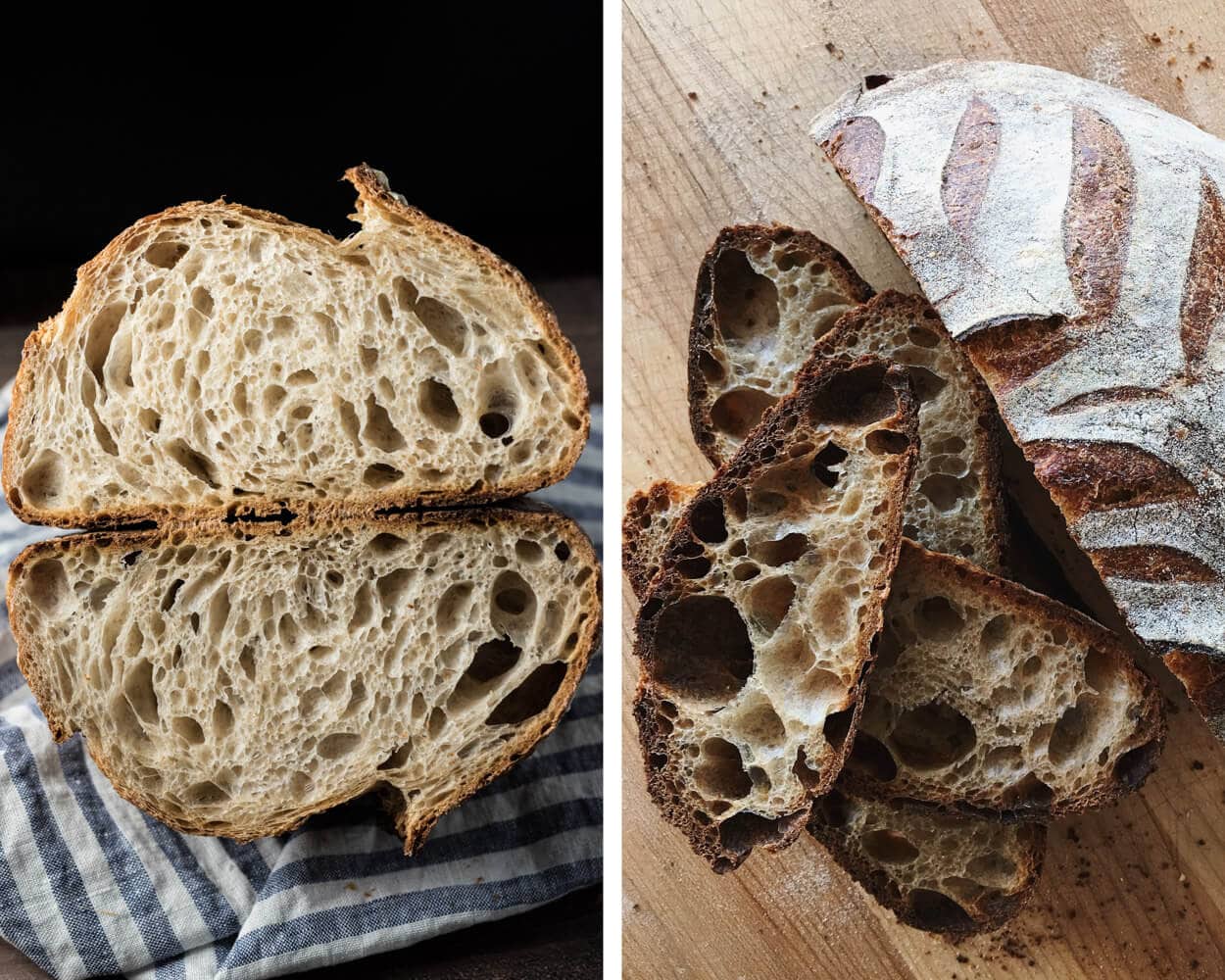
It has a nice flavor and texture, and not a dense crumb. And it baked up well in a countertop oven. Simple, easy, and tasty. The hardest part is waiting 24 hrs to slice it.
Looks wonderful, Louis! I love that you used the Breville to bake it, too. I’ve been thinking about getting one for here. Enjoy!