Teaching the art of sourdough bread, pizza, and more.
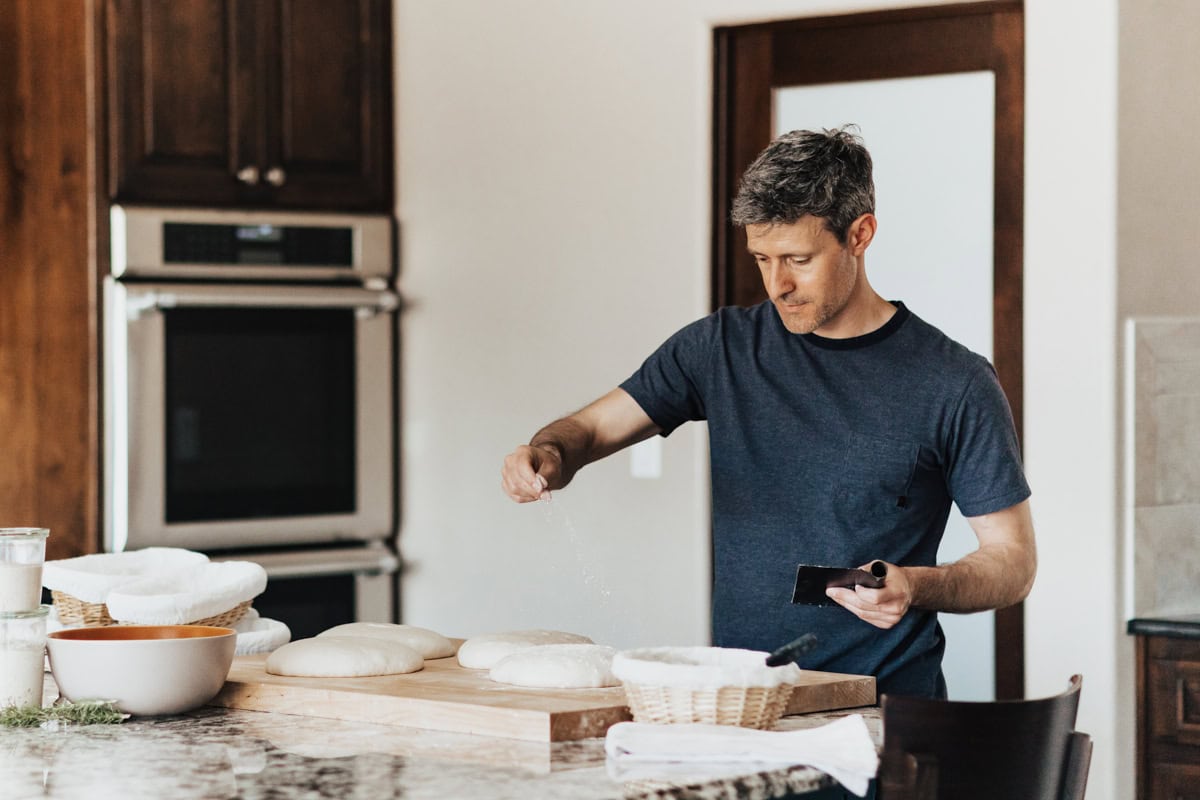
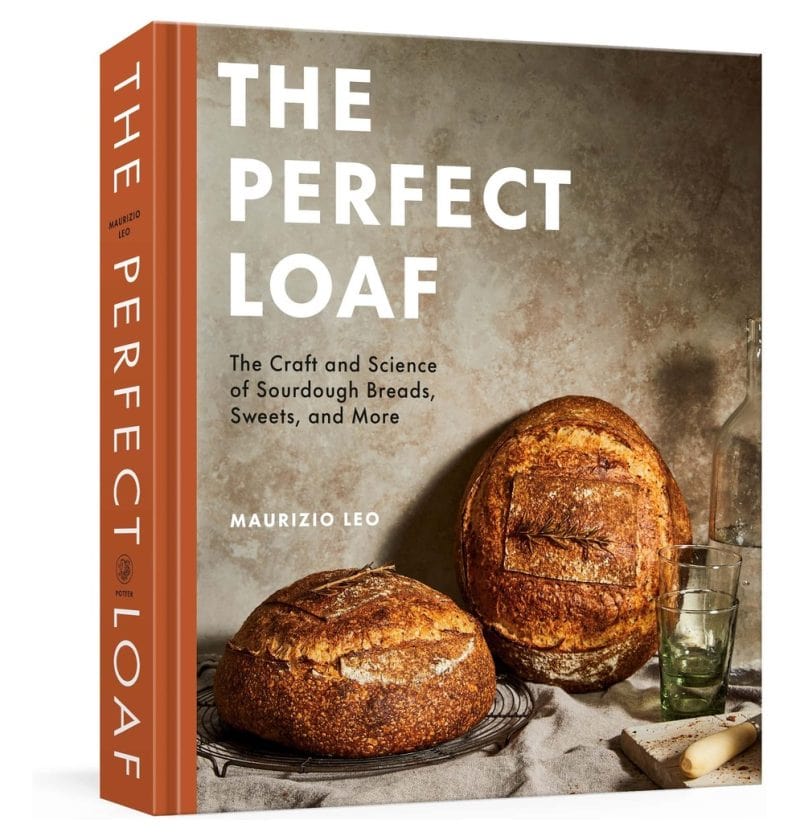
Hello there, I’m Maurizio Leo, the James Beard Award-winning, New York Times bestselling author of The Perfect Loaf and The Perfect Pizza, and the creator of this site. Since 2012, The Perfect Loaf has been the leading independent resource for baking sourdough bread and pizza at home.
But long before any of that, I was a kid in my dad’s pizzeria in Albuquerque, watching him work dough.
The Restaurant (as we called it), along with my mom’s gnocchi at home, taught me early on that good food made by hand takes time. Summers in Italy, with their long family meals and fresh bread hunts, only cemented it.
I took the long way back to dough: a master’s degree in computer science and years spent writing software before I founded The Perfect Loaf in 2012 (and along the way, the site picked up a couple of Saveur Blog Awards and a Webby nomination). The engineering never really left me, though. It’s why every recipe here leans on temperatures, iteration, and written-down results rather than feel alone. But at some point the measuring ends and baker’s intuition takes over. Great bread isn’t complicated technique—it’s simple technique done with attention and flavor given time to develop.
I’m still learning and still experimenting, and if I’m not baking sourdough, I’m probably thinking about it.
He strives for perfection, for the perfect loaf, secretly hoping never to attain it — for where would he go from there?
Jeffrey Hamelman
Every Sourdough Recipe Is Tested. Repeatedly.
Before I publish any recipe, it’s baked repeatedly in my home kitchen using the same ovens, same tools, and same ambient temperature chaos you’re working with. I log dough temperatures, fermentation times, and results for every test bake (the same baking notes worksheet I share here).
One thing that surprises readers is that recipes here continue to evolve after I publish them: I’m constantly learning and improving as a baker, and reader comments and questions regularly send me back to the kitchen to retest, clarify, or fix. If a recipe here says 20 minutes, it’s because that’s what worked across many bakes, not once.
My Cookbooks
The Perfect Pizza
Sourdough pizza, focaccia, and more than forty regional styles from New York to tavern to al taglio to Sicilian, with every dough built to use a sourdough starter and tested in home ovens, pizza ovens, and everything in between.
Baking is better with other bakers. Members get exclusive recipes and guides, and a place in our community where questions get answered daily (often by me, always by someone who’s had the same dough problem).
A few times a year I host small group bread trips to visit cities, farms, mills, and bakeries in search of incredible bread and the food that goes along with it. Or, join me in my next baking workshop!
If you have a burning baking question, I usually hang out with many like-minded—and very helpful!—bakers on The Perfect Loaf’s Discord, where you can post questions, comments, and photos. Come join the community and ask a question.
Hi, Maurizio, I got your book & I’m doing a bit better now. Initially, I was grasping, but now with the book , notes, a scale & digital thermometer I’m actually seeing progress. I’m at 6,500′ in Raton (just north a ways) & am finally starting to understand what’s happening. Thanks for making the sourdough baking fun, challenging & good to eat…
That is just fantastic, so glad I could help you! You’re at high alt, even more than here in ABQ! No problems at all, just know you might need to bake a little longer (or hotter). Have fun and happy baking!
I have been baking bread for approximately 9 years and moved to Albuquerque from Brunswick GA just over 5 years ago and just recently started baking sourdough. I bought your book and read it as I developed my sourdough stater and have baked your recipe for simple sourdough twice both times with results I deem unacceptable, the first time the crust was so burnt I couldn’t eat it, that was with 31 min baking time after I removed the lid of the dutch oven, the second bake at 25 min after removing the dutch oven lid I covered the bread lightly with aluminum foil to stop it from burning and baked it for another 10 for a total of 35 min baking time after lid removal the result of the second bake was the center of the bread was doughy when I cut it after it cooled. I believe I read that you are based in Albuquerque and all your recipes are for high altitude baking so I didn’t think I should just the recipes. Any suggestions?
Hey, Tom! Hmm, it sounds like you do need an adjustment to the baking time/temp. Yes, I’m here in ABQ so the recipes should work just fine for you, though, there’s always some type of adjustment needed somewhere in the process. I would say reduce that second half baking time to 20 minutes and see how the crust is after that time. If it darkens too quickly, try turning down your oven near the end to 425F to see if that helps as well.
This may not be the case for you, but many bakers have reported their ovens are hotter or cooler than they think they are. This happened to me in my old house! I bought an oven-safe thermometer and stuck it in there to keep an eye on the temp during baking. Sure enough, when the oven registered 450F on it’s thermostat, it was actually at 435F. You might want to try that, it could be an issue for you as well.
Hello Maurizio! The book is super, a real advance in the world of sourdough baking, in my opinion.
Today’s bake is Pane Siciliano. Your directions are spot on. Loaves look like the picture! Can hardly wait to cut it.
How do I send/post a photo?
Best Regards from California
Viktoria
Thank you so much, Viktoria, means a lot to hear that from you! Unfortunately, I don’t have a way to upload photos here in the comments, only over in the member’s area.
Hi, Maurizio! I’ve been baking sourdough for almost seven years now, having learned largely from the recipes and guides from your website. Thank you! Of course I purchased your new cookbook and have made a few recipes from it. I’ve run into a couple problems and have a few questions that I’d love to run by you.
By way of example, today I am in the middle of the Oat Porridge recipe from the book and am a bit perplexed by it…
1. Why no autolyse on this one? The recipe goes straight from mix (with levain and salt) to slap and fold.
2. This is probably the most important question as I have had this problem with other recipes from your book: How can use the slap and fold method for a dough with SO little hydration? Before adding the oat porridge, the dough has a 57% hydration. That is a very stiff dough to work with. Am I doing something wrong? I find it impossible to utilize the slap and fold method for this recipe.
3. This recipe doesn’t include the oats as a flour (understandably) but they do act as a whole grain and are quite thirsty, so the 79% hydration listed in the recipe does not really reflect a 79% hydration dough. Shouldn’t I increase the hydration?
4. Why does this recipe differ so greatly from the oat porridge recipe on your website?
With the other recipes I’ve had trouble with, they turn out fine in end and I have no doubt this one will turn out fine too. I just have had trouble trying to employ these new techniques with these doughs and have had to improvise a bit. I would love any advice!!
Hey, Caryn! Thanks for the comments and for following along for such a long while. Glad to hear you’re enjoying my cookbook 🙂
As with my oat porridge post on this site, that’s a challenging bread. I redesigned it for the cookbook to hopefully help others have an easier time with that recipe. Because the oats are such a large component in the dough, it’s very hard to nail down the right hydration (some oats really are more thirsty than others!). In other words, that recipe WILL need some adjustment based on the flour you’re using and the oats.
If the dough is too stiff for you to do slap and fold, skip that and just do folds in the bowl to strengthen it. Or, add more water to the dough to loosen it if you find the hydration is a bit low.
It’s funny because I’ve received feedback on both sides: some people find the dough is under-hydrated, others, over-hydrated. It’s so hard with that one because of the oat soaker/porridge! My hope was in the book I tried to lay down the fact that you need to adjust things as needed in your kitchen that day when you’re baking. I’d say your particular flour and oats could use more water added.
Hope this helps. I know it’s not really a great answer, but sometimes the recipe is more of a loose guideline 🙂 Let me know how it goes next time!
Thanks so much for the reply! Yes, I added folds in the bowl and gave it a bit longer on the bulk, just because it seemed to be real slow that day. And it turned out great…one of the best oat breads I’ve made, without the globs of oatmeal I’ve often struggled with. It’s a wonderful bread for sandwiches.
But I think I will up the hydration in the future to see what happens.
Thank you! I really appreciate your thoughts on this!
Help!! I just purchased a membership and am completely flummoxed as to how to connect to Discord. I now have accounts at Discord and something called Memberful.com (did I really need to have this?), and I appear to be able to sign in but at that point I get a message that says “no connection” or something like that. I’ve been trying for 45 minutes. I am also unclear on how to connect to Discord from the Perfect Loaf site. Thanks. Sorry about being so computer illiterate, but I am over 65, by way of excuse…
I’m relatively new to bread baking and have to say my sourdough thus far a little subpar (yeasted breads are more successful). However, I found your blog and bought your book. Your detailed instructions, informative videos and several deliveries to acquire proper tools are definitely helping. My question is regarding salt. Such an essential ingredient but it makes a huge difference in weight which TYPE of salt (kosher, table, sea, flake size, etc) you use. My preferred baking salt is Diamond Crystal Salt Co. Kosher salt flakes. I know from using King Arthur bread recipes that measuring salt and weighing salt (and their recipes are very inconsistent!) amounts to a significant difference. What type of salt do you use? And if I’m using something different how do I account for that in a recipe?
So glad to hear everything has been helping, Alison! For my cooking, I personally use Diamond Crystal as well, it’s great there. For baking, however, I prefer using fine sea salt. I buy a big bag (this is my fav Celtic Sea Salt for baking) and use that for a long time in my baking.
I’m brand new (one month) to all of this. Husband is having a CPA stroke, as I’ve purchased so much equipment and ingredients, e.g. stand mixer, wheat mill, etc. The recipe confused me, details are not my strong suit… I only have whole wheat, not malted whole wheat, so I didn’t know what that meant. Therefore, I combined that with the 161g of sprouted, dehydrated, milled measurement. My brain did suggest that 912g was too much, so I’m only sprouting 450g. 🤦🏼♀️🤷🏼♀️🤔. Help me please. Question 1: I can just use regular whole wheat, and add the 161g of my sprouted stuff, right? I’m typing the measurements from memory, so don’t get a headache if they’re not accurate. Question 2: can I refrigerate or freeze the left over sprouted , dehydrated, milled? Please don’t kick me off of the website. 😂😂😂
Hey there! No worries about not having malted wheat, just use what you have. You dont have to add the sprouted wheat at all, unless you want to! Yes, you can refrigerate and freeze any sprouted wheat.
Hi, Maurizio! Are you collecting possible ‘typos’ in your book for the next edition? If so, you might want to check Rye25 (pg. 158). Under Step 3 ‘Mix’ you say to add 1/2 the water but never mention adding the rest, and no reference to Water 1 or Water 2.
Hey there! Yes, sorry about that typo. I have a page where I’ve collected them, typos are on this errata page. Hopefully all of these are now fixed with newer printings coming in February!
Perfect! Any I find I’ll post there. And not to worry. I used to participate in writing of government budget documents. It didn’t matter how many eyes looked at them, we always found typos afterwards!
Maurizio, I am trying the rye (came here to find the missing water step) and note that the ‘levain is quite loose’ phrase is on the 25% rye instructions, and that levain is anything but. So maybe it should be removed from the 25% rye instructions as well as (per the errata) adding it to the 50:50 instructions.
Maurizio, you are the best sourdough resource on the internet (and I just ordered your book too). Thank you so much for making all this information free.
Having used your site pretty exhaustively I have a suggestion for a guide that would be extremely helpful: something about selecting flours would be fantastic. For new bakers who are figuring out how different flours affect fermentation rate, ideal hydration, flavor it can be daunting to sort out. And explanations of what it means if a flour is Type 70 vs Type 85, bleached vs unbleached, malted vs unmalted, protein content, etc. Cheers and happy baking!
Thanks, I really appreciate that (and for getting my book!).
You’re 100% correct, I need a guide to all things flour ASAP. I actually have one in the works, but it’s so lengthy at this point. It’s a hard topic to break into without having to talk about so much… I’ll bump this to the top of my priority list, even if it’s just a high level overview for beginners.
I am new to allllllll of this. My friend who’s been milling and sourdoughing for seven years referred me to the Best whole-wheat with honey and Yudane. I messed it up with too much water and it was still WONDERFUL.
Hallo Maurizio,
How are you this day. I have been baking your recipes and i am excited with the results. I have a question regarding the book. Bookdepository has canceled my order and the book is out of stock in amazon as well. Since i live in Greece do you have any idea where could i purchase the book or when will the international suppliers have it back in stock?
Thank you for your support,
Apos
Ahh, I’m so sorry to hear about this, Apos! Really a bummer. Book Depository is the only place I know at the moment who ships internationally. I don’t know why they would have cancelled your order, I have heard from many international bakers who have ordered through them successfully!
Baking times?
Hello Maurizio, not sure where to ask this but would love your opinion/advice. Loving the new book and recommend everyone who want to learn break baking to get it.
Question – if I want to bake smaller loaves, how to figure baking times?
Example: recipe is for 900 gram loaf, you bake at 450F for 20 minutes covered and 30-35 uncovered.
If I want to do a 450 gram loaf, should I reduce temperature, time or both? And by how much?
Thank you for all your help.
Best regards and happy new year!
Steve
Thanks, Steve, I appreciate that! Sorry for the late reply. for smaller loaves, I would still do that initial period for 20m with steam, then reduce the second half of the bake. It’s hard to say how much of a reduction, because there are many factors at play (size, spacing in the oven, temp, etc). What I usually do is at the midway point in that second half of the bake, start checking on the loaves. If they’re looking well-colored (which will likely be the case) pay close attention and stop baking soon. Then, from that point forward you have a good benchmark for timing.
Maurizio, I decided to do an early morning bake using your Banana Bread 2.0 recipe from the new cookbook. Instead of a loaf pan, however, I baked it in my clay tarte tatin pan to create a caramelized layer of pecans and banana slices on top. I am loving the way using the sourdough starter provides a slight tang to offset the sweetness.
Wow, that’s a fantastic idea, Judy! I dont have a pan like that, but I love this idea. (I’m now looking for one 🙂). Yes, that’s my favorite thing too, it tempers/balances a lot of the sweetness in many baked goods *and* you’re using up discard. Win-win. enjoy!
Very curious. I am about to venture out and create my first sourdough starter. In your recipe you mention flour…but does that mean freshly milled flour?
I have greatly benefited from your recipes, Maurizio. Thank you very much from Sydney in Australia. A very simple question that has probably been answered, but I haven’t been able to find the answer in recipes: are the oven temperatures in your recipes for conventional ovens or for fan-forced ovens?
Bread Baskets fm SF Baking Institute being delivered this week thanks to Maurizio’s response to a query re: his lined wicker proofing baskets. Thank you!!! Another query: I am not quite ready to proceed with baking fm “The Perfect Loaf” cookbook…we have a heatwave happening here in South East Australia and Im also waiting on those baskets. Thus, I have followed instructions re: maintaining a smaller starter on pg 67 and 68. Looking good this morning after trusting the recipe. (“OMG… only 5 gm .. okay okay .. just do it and trust the recipe”). I am wondering then why rye flour is not included in that 50gm. My old white flour starters didn’t seem energized as starters containing rye flour. Thanks Maurizio.
Fantastic, Lisa! You’ll be ready to go once it cools off 🙂
You can add rye flour to the smaller starter if you’d like, but I find rye amps up the fermentation process and reduces the timeline, so leaving it out for now is what I like to do, just to make sure it’s not overly ripe by the time I need to feed it again. The focus there was to minimize feedings and how much starter you need to maintain. But again, you can definitely add it in!
I just bought flower from Hayden Mills that has your logo on it. It lists the different flowers that are used in the mix, but not the percentages of each or the proteins percentage either. I know I am way over thinking this, but in the future when I try different things, it would be nice to be able to compare. If this is proprietary I totally understand! I am a Newble at this and am geeking out at all the information that is available in the web, and am quite glad that my wife pointed me in your direction! Happy Holidays to you and your family!!!!
Hey there! Yes, it’s a custom blend I developed using HFM’s flour. Not to worry, I’m working on a blog post that outlines everything about the flour—will be out soon 🙂 Happy holiday and I hope you love the flour!
I don’t normally like to comment, but I am compelled to say thank you for the recipes and all of the information. I used to bake professionally with a focus on patisserie type items and never trained in bread baking besides in culinary school. I also spent some years working on an electronics recycling recycling startup that required a lot of grant writing which has molded my mind in a different way. The way the information is organized on this website really satisfies my thought process and answers my questions in so many ways!! We love the SkyView app at this house, which was amusing to find out it was from you as well. Merry Christmas! Amidst the flu, pink eye infection, baby fevers, and never ending coughs of our family time this year, we have been able to enjoy wonderful bread.
Gosh. Means so much to hear that from you on so many levels, thank you so much. And as a parent dealing with the same never-ending onslaught of sickness here, too, I know what you’re going through. Bread has always been my place to return to, a quiet among the hustle and daily tasks that never seem completed. Wishing you all the best holiday and thank you again for your kind comments! Happy baking 🙂
There is perfection; and, there is perfection. I think bread should complement the menu, and the menu should reflect the best available agricultural products. In the warmth of early summer we can get tender, mildly flavored products that should be matched by mild flavored breads, quickly risen in the June warmth. With the coolness of fall we get more mature, fully flavored agricultural products that should be matched by richer flavored breads fermented in cooler kitchens. In the cold of winter, we have fully flavored dishes matched by fully flavored breads.
Thus, I assert that perfection in bread making is not consistency, but baking bread that complements the menu, and the menu honors what is in the garden and market today! I do not cook the same dishes twice. Why should I bake the same bread twice?
The “perfect baguette” depends on what it is being eaten with.
I hope that some future book by Maurizio addresses a full year of breads for all seasons.
(Under duress, I have cooked the same dishes over and over every night for months on end, and they were served with the same bland baguette, but that is not the way I was trained.)
Great points there, Aaron! I do like a well-made bread to suit your food, but for me, bread IS the star of the show at the meal 🙂 In other words, I prefer making the bread I’m after, and then enjoying that as-is. Many times this means making the exact same bread over and over and over (which is the case for the Rustico bread in my cookbook) in pursuit of mastering every component for that bread and making it consistently.
All that said, I do agree that having certain types of bread for certain applications is also wonderful. A milder bread for foods that are more delicate, or a hearty and robust bread for stews, soups, or food that needs something sturdy.
I do love the idea of a bread book that bakes through the seasons, though. What a fantastic idea!
Hello Maurizio – PLEASE HELP! I live just outside of Tucson, AZ. I bought your book and I can’t get past the autolyse phase for your Simple Sourdough recipe. I have made my way through MOST of Ken Forkish’s recipes (sans the levain recipes since I just recently created a starter. Wanted you to know that I am not a new baker, but a new sourdough baker). This is my first sourdough attempt with your book/recipe. I calibrated my scale and warmed my water to 78F). The 1000g of flour (using Bob’s Red Mill Organic Unbleached All-Purpose flour) and the 600g of water (for autolyse is 78F) worked out to be a VERY CLUMPY, STIFF dough for me. It was not shaggy and loose as the book says and I saw all of your tutorials on your website. My autolyse dough isn’t even remotely close to what yours looks like. I tried again this morning doing a HALF recipe so 500g flour and 300 g of water. Same thing. The dough is so stiff and hard that I will not be able to do the stretches and folds. After I added the salt and levain to the autolyse, there was no difference. Clumpy, not easy to work with and afraid I will throw this batch out. I am very frustrated. Do you think this dry air here in Tucson area is causing me not to get past this autolyse phase, by that much? If I was to do half of the recipe again, instead of 300 g of water, should I go 400g of water? Everyone is having excellent success with your starter recipe, and I don’t want to give up, but not sure what variable I am missing. I have done many autolyse phases with Ken’s books and never had a problem. This is why I am stumped. My levain looks awesome and ready to go (lots of bubbles and risen in jar considerably from the night before and has a slight sweet/sour smell). I honestly do not know what I am missing. Thank you – I know you are very busy, and am ashamed I cannot figure this out on my own. I’m keeping a journal and doing all of your steps in your book. Any suggestions would be appreciated so I can have a SUCCESS!
Hey, Deanna!
It sounds to me like your dough needs more water—it’s under hydrated. Try adding 2-5% more water to your dough (with that recipe, start around 50g more water) during mixing to see if that helps. You can add the water at the autolyse time.
Since you live in a dry climate (much like I do here in ABQ), you’ll simply just need more water!
Hi! I was just gifted your fantastic!!! book after being a fan of the website for years. What a wonderful compendium of sourdough baking knowledge and advice! I’m a rye flour fanatic (strictly sourdough), usually blended with other whole wheat or A.P. white flour, and I always add some gluten powder in my recipes. I don’t find any reference to that ingredient in your book and I wonder why? Any thoughts pro or con to using added gluten to improve a rye based dough?
Hey, Lee! Thanks so much and I appreciate you getting my cookbook, hope you’re enjoying it. I’ve actually never worked with vital wheat gluten and haven’t found it necessary to add to my doughs. If you’re baking with rye, which has very different baking properties than wheat, as you know, you won’t get the same dough characteristics. In other words, much less gas-trapping capability! Instead of adding VWG, I’d probably mix in a percentage of traditional wheat flour to help give the loaf structure. You can see me do that here in my rye sandwich loaf!
Hey, Mauricio! Just received my Mockmill and think your site will be my guidepost for a while as I move from leaning on sourdough made with King Arthur flours to incorporating freshly milled. Considering a membership. BTW, discord means disagreement. Discourse means an authoritative discussion. 😉
Hey Pam! Congrats on the Mockmill, you’re going to love fresh flour, it’s really a game changer. Would love to have you in the membership, thanks for considering joining. Discord is a 3rd party chat app we use, I like “Discourse” better too 🙂 Happy baking!
Hi Maurizio! I pre-ordered your cookbook. It just arrived & I’m so excited to start baking. Btw, since I pre-ordered, how do I get the 5 bonus recipes?
Hi, Maurizio! Thanks to you we are about to enjoy sourdough bread again. My COVID era starter finally dried up and turned ugly after 6 months of neglect, so I started over a week ago. Your clear directions quickly gave me a robust starter, once I backed off double feeding in my cooler temperatures. Soon, the new starter was bubbling happily away, and today I baked off two Beginner loaves. Nice rise, nice color. Can’t wait for proper cooling to slice in and taste it. I’ve gone to your weekend bake schedule for feeding my starter since I won’t be baking for a bit and the discard could take over my fridge. Thanks for such through explanations and videos. I’m eager for your cookbook to come out and my pre-order to be delivered. I’ll be taking notes in the margins, I’m sure! Question: How to I get a nice shiny crust on my loaves? – Thanks! Polly
Amazing, so glad to hear my instructions have helped, Polly! Happy you’re back up and ready for baking again. And thank you for preordering!
For a little extra shine, try adding more steam to your oven when baking. If you’re baking in a Dutch oven, after you place your dough inside, put a single ice cube in there next to it, then close the pot. See if that helps!
HI Maurizio! Thank you so much for all of the great information you share on your website!! I have very much enjoyed all of your recipes!!! Now that I am getting more comfortable with break making, I have been enjoying your “Baker’s Notes”!! I find myself tweaking recipes every once in a while and they have been extremely helpful. I am wondering if there is a simple way to convert a recipe from imperial to metric using your “Baking Sheets”?
Fantastic, Ruby! So glad to hear you like the notes sheet, too. Sadly, no easy way to convert between metric and Imperial, it takes quite a bit of fiddling about to make that happen. So sorry about that!
Hi, I like your graphic baking timelines, but its hard to adjust to my day schedule. For example – I can’t make a levain at 8.00 am, and my starter not always ripen in the same time. Any chance for editable version, so I could set my own timings, I mean more intractive version would make my life easier 🙂
Hey there! Ahh, that would be really cool. I’ll think about a way to do this, but it will be difficult at the moment! I’ve gone back and forth on what’s better: a timeline like I have, or durations for each step (so you know how long to do each thing and can start whenever makes sense for you).
Hey, Valerie! I don’t have any classes here in ABQ scheduled at the moment, but it’s something I’m thinking about doing. Please subscribe to my newsletter, I’ll announce any classes there!
Edit needed on StGarter refreshing. Freudian slip. No, slip is not my Freudian slip. Cheers. Ever use spent grains from beer making in any of your sour dough recipe’s? Whole grains, wheats and oats.
HELP! I’ve been trapped by the Disquis mary-go-round. e-mail+PW rejected for some unknown reason. What is it’s value-add anyway? Why not get an answer here?
I’ve been making your Best Sourdough recipe with great success. I decided to try using PA Bread flour + Spelt. Terrific results. BUT, you suggest using “medium protein” bread flour. Why not specify a % range other than @11.5%?
THANKS for your terrific site & efforts. I’ve turned on lots of folks to sourdough bread making thanks to your site. Don
Hey Don! I just state around 11.5% because that’s the flour I use, and there are also no clear ranges that delineate exactly what “medium” protein is (it’s kind of something I came up with!). So anywhere around there should work just fine.
Thanks so much for spreading the word about my site, I really do appreciate that Don!
Hi Maurizio… I am glad to inform you that I have all the necessary tools to start making the “sourdough starter” from your recommendations ! Could you please let me know if the Bob’s Red Mill Organic Unbleached White All-Purpose Four and the Bob’s Red Mill Organic Stone Ground Whole Grain Dark Rye Flour are suitable flours to start the process. Also, what Flour do you recommend for dusting ?
Hi Maurizio… Thank you for your reply. Unfortunately, due to governmental regulations, the “organic” variety of the ‘Bob’s Red Mill Organic Unbleached All-Purpose Flour’ is not available in the country. As a substitute, can I use ‘Bob’s Red Mill Unbleached Enriched Artisan Bread Flour’ instead ? Yes, I plan to sick to your schedule. Please let me know. Take care and stay healthy. Cheerio ! Ranjit
Hi Maurizio ! Thank you for your reply. I am unable to source the Bob’s Red Mill Organic Unbleached All-Purpose Flour due to governmental regulations. Can I substitute this flour with Bob’s Red Mill unbleached Enriched Artisan Bread Flour ? Please let me know so that I can get started. Of course, I will be sticking to your schedule. Take care and stay healthy. Cheerio Ranjit
Thank you, Leo ! My friend, Divya from the Siemens Experience Centre and I are going to get started very soon. We will certainly keep you posted of our progress. We are so excited to be on this journey with you. Take care and stay healthy. Cheerio Ranjit











503 Comments
Hi, Maurizio, I got your book & I’m doing a bit better now. Initially, I was grasping, but now with the book , notes, a scale & digital thermometer I’m actually seeing progress. I’m at 6,500′ in Raton (just north a ways) & am finally starting to understand what’s happening. Thanks for making the sourdough baking fun, challenging & good to eat…
That is just fantastic, so glad I could help you! You’re at high alt, even more than here in ABQ! No problems at all, just know you might need to bake a little longer (or hotter). Have fun and happy baking!
I have been baking bread for approximately 9 years and moved to Albuquerque from Brunswick GA just over 5 years ago and just recently started baking sourdough. I bought your book and read it as I developed my sourdough stater and have baked your recipe for simple sourdough twice both times with results I deem unacceptable, the first time the crust was so burnt I couldn’t eat it, that was with 31 min baking time after I removed the lid of the dutch oven, the second bake at 25 min after removing the dutch oven lid I covered the bread lightly with aluminum foil to stop it from burning and baked it for another 10 for a total of 35 min baking time after lid removal the result of the second bake was the center of the bread was doughy when I cut it after it cooled. I believe I read that you are based in Albuquerque and all your recipes are for high altitude baking so I didn’t think I should just the recipes. Any suggestions?
Hey, Tom! Hmm, it sounds like you do need an adjustment to the baking time/temp. Yes, I’m here in ABQ so the recipes should work just fine for you, though, there’s always some type of adjustment needed somewhere in the process. I would say reduce that second half baking time to 20 minutes and see how the crust is after that time. If it darkens too quickly, try turning down your oven near the end to 425F to see if that helps as well.
This may not be the case for you, but many bakers have reported their ovens are hotter or cooler than they think they are. This happened to me in my old house! I bought an oven-safe thermometer and stuck it in there to keep an eye on the temp during baking. Sure enough, when the oven registered 450F on it’s thermostat, it was actually at 435F. You might want to try that, it could be an issue for you as well.
Let me know how this goes!
Hello Maurizio! The book is super, a real advance in the world of sourdough baking, in my opinion.
Today’s bake is Pane Siciliano. Your directions are spot on. Loaves look like the picture! Can hardly wait to cut it.
How do I send/post a photo?
Best Regards from California
Viktoria
Thank you so much, Viktoria, means a lot to hear that from you! Unfortunately, I don’t have a way to upload photos here in the comments, only over in the member’s area.
Thanks for the comments and happy baking!
Hi, Maurizio! I’ve been baking sourdough for almost seven years now, having learned largely from the recipes and guides from your website. Thank you! Of course I purchased your new cookbook and have made a few recipes from it. I’ve run into a couple problems and have a few questions that I’d love to run by you.
By way of example, today I am in the middle of the Oat Porridge recipe from the book and am a bit perplexed by it…
1. Why no autolyse on this one? The recipe goes straight from mix (with levain and salt) to slap and fold.
2. This is probably the most important question as I have had this problem with other recipes from your book: How can use the slap and fold method for a dough with SO little hydration? Before adding the oat porridge, the dough has a 57% hydration. That is a very stiff dough to work with. Am I doing something wrong? I find it impossible to utilize the slap and fold method for this recipe.
3. This recipe doesn’t include the oats as a flour (understandably) but they do act as a whole grain and are quite thirsty, so the 79% hydration listed in the recipe does not really reflect a 79% hydration dough. Shouldn’t I increase the hydration?
4. Why does this recipe differ so greatly from the oat porridge recipe on your website?
With the other recipes I’ve had trouble with, they turn out fine in end and I have no doubt this one will turn out fine too. I just have had trouble trying to employ these new techniques with these doughs and have had to improvise a bit. I would love any advice!!
Hey, Caryn! Thanks for the comments and for following along for such a long while. Glad to hear you’re enjoying my cookbook 🙂
As with my oat porridge post on this site, that’s a challenging bread. I redesigned it for the cookbook to hopefully help others have an easier time with that recipe. Because the oats are such a large component in the dough, it’s very hard to nail down the right hydration (some oats really are more thirsty than others!). In other words, that recipe WILL need some adjustment based on the flour you’re using and the oats.
If the dough is too stiff for you to do slap and fold, skip that and just do folds in the bowl to strengthen it. Or, add more water to the dough to loosen it if you find the hydration is a bit low.
It’s funny because I’ve received feedback on both sides: some people find the dough is under-hydrated, others, over-hydrated. It’s so hard with that one because of the oat soaker/porridge! My hope was in the book I tried to lay down the fact that you need to adjust things as needed in your kitchen that day when you’re baking. I’d say your particular flour and oats could use more water added.
Hope this helps. I know it’s not really a great answer, but sometimes the recipe is more of a loose guideline 🙂 Let me know how it goes next time!
Thanks so much for the reply! Yes, I added folds in the bowl and gave it a bit longer on the bulk, just because it seemed to be real slow that day. And it turned out great…one of the best oat breads I’ve made, without the globs of oatmeal I’ve often struggled with. It’s a wonderful bread for sandwiches.
But I think I will up the hydration in the future to see what happens.
Thank you! I really appreciate your thoughts on this!
Help!! I just purchased a membership and am completely flummoxed as to how to connect to Discord. I now have accounts at Discord and something called Memberful.com (did I really need to have this?), and I appear to be able to sign in but at that point I get a message that says “no connection” or something like that. I’ve been trying for 45 minutes. I am also unclear on how to connect to Discord from the Perfect Loaf site. Thanks. Sorry about being so computer illiterate, but I am over 65, by way of excuse…
Hey, Ron! Send me over an email and I can help you get this sorted out asap 🙂 You can reply to any of the emails you got and it’ll go straight to me!
I’m relatively new to bread baking and have to say my sourdough thus far a little subpar (yeasted breads are more successful). However, I found your blog and bought your book. Your detailed instructions, informative videos and several deliveries to acquire proper tools are definitely helping. My question is regarding salt. Such an essential ingredient but it makes a huge difference in weight which TYPE of salt (kosher, table, sea, flake size, etc) you use. My preferred baking salt is Diamond Crystal Salt Co. Kosher salt flakes. I know from using King Arthur bread recipes that measuring salt and weighing salt (and their recipes are very inconsistent!) amounts to a significant difference. What type of salt do you use? And if I’m using something different how do I account for that in a recipe?
So glad to hear everything has been helping, Alison! For my cooking, I personally use Diamond Crystal as well, it’s great there. For baking, however, I prefer using fine sea salt. I buy a big bag (this is my fav Celtic Sea Salt for baking) and use that for a long time in my baking.
I’m brand new (one month) to all of this. Husband is having a CPA stroke, as I’ve purchased so much equipment and ingredients, e.g. stand mixer, wheat mill, etc. The recipe confused me, details are not my strong suit… I only have whole wheat, not malted whole wheat, so I didn’t know what that meant. Therefore, I combined that with the 161g of sprouted, dehydrated, milled measurement. My brain did suggest that 912g was too much, so I’m only sprouting 450g. 🤦🏼♀️🤷🏼♀️🤔. Help me please. Question 1: I can just use regular whole wheat, and add the 161g of my sprouted stuff, right? I’m typing the measurements from memory, so don’t get a headache if they’re not accurate. Question 2: can I refrigerate or freeze the left over sprouted , dehydrated, milled? Please don’t kick me off of the website. 😂😂😂
Hey there! No worries about not having malted wheat, just use what you have. You dont have to add the sprouted wheat at all, unless you want to! Yes, you can refrigerate and freeze any sprouted wheat.
You won’t get kicked off. Rather, welcome!
Hi, Maurizio! Are you collecting possible ‘typos’ in your book for the next edition? If so, you might want to check Rye25 (pg. 158). Under Step 3 ‘Mix’ you say to add 1/2 the water but never mention adding the rest, and no reference to Water 1 or Water 2.
Hey there! Yes, sorry about that typo. I have a page where I’ve collected them, typos are on this errata page. Hopefully all of these are now fixed with newer printings coming in February!
Perfect! Any I find I’ll post there. And not to worry. I used to participate in writing of government budget documents. It didn’t matter how many eyes looked at them, we always found typos afterwards!
It’s so true 🙂
Maurizio, I am trying the rye (came here to find the missing water step) and note that the ‘levain is quite loose’ phrase is on the 25% rye instructions, and that levain is anything but. So maybe it should be removed from the 25% rye instructions as well as (per the errata) adding it to the 50:50 instructions.
Hey there! It’s an error in the cookbook, I”m so sorry about that. Here’s a list of the errors and their fixes:
https://www.theperfectloaf.com/cookbooks/the-perfect-loaf-cookbook-errata/
Maurizio, you are the best sourdough resource on the internet (and I just ordered your book too). Thank you so much for making all this information free.
Having used your site pretty exhaustively I have a suggestion for a guide that would be extremely helpful: something about selecting flours would be fantastic. For new bakers who are figuring out how different flours affect fermentation rate, ideal hydration, flavor it can be daunting to sort out. And explanations of what it means if a flour is Type 70 vs Type 85, bleached vs unbleached, malted vs unmalted, protein content, etc. Cheers and happy baking!
Thanks, I really appreciate that (and for getting my book!).
You’re 100% correct, I need a guide to all things flour ASAP. I actually have one in the works, but it’s so lengthy at this point. It’s a hard topic to break into without having to talk about so much… I’ll bump this to the top of my priority list, even if it’s just a high level overview for beginners.
Great suggestion and I hope you love my book!
I am new to allllllll of this. My friend who’s been milling and sourdoughing for seven years referred me to the Best whole-wheat with honey and Yudane. I messed it up with too much water and it was still WONDERFUL.
Hallo Maurizio,
How are you this day. I have been baking your recipes and i am excited with the results. I have a question regarding the book. Bookdepository has canceled my order and the book is out of stock in amazon as well. Since i live in Greece do you have any idea where could i purchase the book or when will the international suppliers have it back in stock?
Thank you for your support,
Apos
Ahh, I’m so sorry to hear about this, Apos! Really a bummer. Book Depository is the only place I know at the moment who ships internationally. I don’t know why they would have cancelled your order, I have heard from many international bakers who have ordered through them successfully!
Amazon has the book and ships to Greece.
https://www.amazon.com/s?k=the+perfect+loaf+book&rh=n%3A16961&ref=nb_sb_noss
Baking times?
Hello Maurizio, not sure where to ask this but would love your opinion/advice. Loving the new book and recommend everyone who want to learn break baking to get it.
Question – if I want to bake smaller loaves, how to figure baking times?
Example: recipe is for 900 gram loaf, you bake at 450F for 20 minutes covered and 30-35 uncovered.
If I want to do a 450 gram loaf, should I reduce temperature, time or both? And by how much?
Thank you for all your help.
Best regards and happy new year!
Steve
Thanks, Steve, I appreciate that! Sorry for the late reply. for smaller loaves, I would still do that initial period for 20m with steam, then reduce the second half of the bake. It’s hard to say how much of a reduction, because there are many factors at play (size, spacing in the oven, temp, etc). What I usually do is at the midway point in that second half of the bake, start checking on the loaves. If they’re looking well-colored (which will likely be the case) pay close attention and stop baking soon. Then, from that point forward you have a good benchmark for timing.
Hope that helps and HNY!
Maurizio, I decided to do an early morning bake using your Banana Bread 2.0 recipe from the new cookbook. Instead of a loaf pan, however, I baked it in my clay tarte tatin pan to create a caramelized layer of pecans and banana slices on top. I am loving the way using the sourdough starter provides a slight tang to offset the sweetness.
Wow, that’s a fantastic idea, Judy! I dont have a pan like that, but I love this idea. (I’m now looking for one 🙂). Yes, that’s my favorite thing too, it tempers/balances a lot of the sweetness in many baked goods *and* you’re using up discard. Win-win. enjoy!
Very curious. I am about to venture out and create my first sourdough starter. In your recipe you mention flour…but does that mean freshly milled flour?
Hey, Jessica! No, you don’t need freshly milled flour. Any white flour and whole rye flour will work well.
I have greatly benefited from your recipes, Maurizio. Thank you very much from Sydney in Australia. A very simple question that has probably been answered, but I haven’t been able to find the answer in recipes: are the oven temperatures in your recipes for conventional ovens or for fan-forced ovens?
Glad to hear that, Frank! The oven temps here are all conventional (no fan assist) unless otherwise explicitly stated. Happy baking!
Bread Baskets fm SF Baking Institute being delivered this week thanks to Maurizio’s response to a query re: his lined wicker proofing baskets. Thank you!!! Another query: I am not quite ready to proceed with baking fm “The Perfect Loaf” cookbook…we have a heatwave happening here in South East Australia and Im also waiting on those baskets. Thus, I have followed instructions re: maintaining a smaller starter on pg 67 and 68. Looking good this morning after trusting the recipe. (“OMG… only 5 gm .. okay okay .. just do it and trust the recipe”). I am wondering then why rye flour is not included in that 50gm. My old white flour starters didn’t seem energized as starters containing rye flour. Thanks Maurizio.
Fantastic, Lisa! You’ll be ready to go once it cools off 🙂
You can add rye flour to the smaller starter if you’d like, but I find rye amps up the fermentation process and reduces the timeline, so leaving it out for now is what I like to do, just to make sure it’s not overly ripe by the time I need to feed it again. The focus there was to minimize feedings and how much starter you need to maintain. But again, you can definitely add it in!
I just bought flower from Hayden Mills that has your logo on it. It lists the different flowers that are used in the mix, but not the percentages of each or the proteins percentage either. I know I am way over thinking this, but in the future when I try different things, it would be nice to be able to compare. If this is proprietary I totally understand! I am a Newble at this and am geeking out at all the information that is available in the web, and am quite glad that my wife pointed me in your direction! Happy Holidays to you and your family!!!!
Hey there! Yes, it’s a custom blend I developed using HFM’s flour. Not to worry, I’m working on a blog post that outlines everything about the flour—will be out soon 🙂 Happy holiday and I hope you love the flour!
I don’t normally like to comment, but I am compelled to say thank you for the recipes and all of the information. I used to bake professionally with a focus on patisserie type items and never trained in bread baking besides in culinary school. I also spent some years working on an electronics recycling recycling startup that required a lot of grant writing which has molded my mind in a different way. The way the information is organized on this website really satisfies my thought process and answers my questions in so many ways!! We love the SkyView app at this house, which was amusing to find out it was from you as well. Merry Christmas! Amidst the flu, pink eye infection, baby fevers, and never ending coughs of our family time this year, we have been able to enjoy wonderful bread.
Gosh. Means so much to hear that from you on so many levels, thank you so much. And as a parent dealing with the same never-ending onslaught of sickness here, too, I know what you’re going through. Bread has always been my place to return to, a quiet among the hustle and daily tasks that never seem completed. Wishing you all the best holiday and thank you again for your kind comments! Happy baking 🙂
There is perfection; and, there is perfection. I think bread should complement the menu, and the menu should reflect the best available agricultural products. In the warmth of early summer we can get tender, mildly flavored products that should be matched by mild flavored breads, quickly risen in the June warmth. With the coolness of fall we get more mature, fully flavored agricultural products that should be matched by richer flavored breads fermented in cooler kitchens. In the cold of winter, we have fully flavored dishes matched by fully flavored breads.
Thus, I assert that perfection in bread making is not consistency, but baking bread that complements the menu, and the menu honors what is in the garden and market today! I do not cook the same dishes twice. Why should I bake the same bread twice?
The “perfect baguette” depends on what it is being eaten with.
I hope that some future book by Maurizio addresses a full year of breads for all seasons.
(Under duress, I have cooked the same dishes over and over every night for months on end, and they were served with the same bland baguette, but that is not the way I was trained.)
Great points there, Aaron! I do like a well-made bread to suit your food, but for me, bread IS the star of the show at the meal 🙂 In other words, I prefer making the bread I’m after, and then enjoying that as-is. Many times this means making the exact same bread over and over and over (which is the case for the Rustico bread in my cookbook) in pursuit of mastering every component for that bread and making it consistently.
All that said, I do agree that having certain types of bread for certain applications is also wonderful. A milder bread for foods that are more delicate, or a hearty and robust bread for stews, soups, or food that needs something sturdy.
I do love the idea of a bread book that bakes through the seasons, though. What a fantastic idea!
Hello Maurizio – PLEASE HELP! I live just outside of Tucson, AZ. I bought your book and I can’t get past the autolyse phase for your Simple Sourdough recipe. I have made my way through MOST of Ken Forkish’s recipes (sans the levain recipes since I just recently created a starter. Wanted you to know that I am not a new baker, but a new sourdough baker). This is my first sourdough attempt with your book/recipe. I calibrated my scale and warmed my water to 78F). The 1000g of flour (using Bob’s Red Mill Organic Unbleached All-Purpose flour) and the 600g of water (for autolyse is 78F) worked out to be a VERY CLUMPY, STIFF dough for me. It was not shaggy and loose as the book says and I saw all of your tutorials on your website. My autolyse dough isn’t even remotely close to what yours looks like. I tried again this morning doing a HALF recipe so 500g flour and 300 g of water. Same thing. The dough is so stiff and hard that I will not be able to do the stretches and folds. After I added the salt and levain to the autolyse, there was no difference. Clumpy, not easy to work with and afraid I will throw this batch out. I am very frustrated. Do you think this dry air here in Tucson area is causing me not to get past this autolyse phase, by that much? If I was to do half of the recipe again, instead of 300 g of water, should I go 400g of water? Everyone is having excellent success with your starter recipe, and I don’t want to give up, but not sure what variable I am missing. I have done many autolyse phases with Ken’s books and never had a problem. This is why I am stumped. My levain looks awesome and ready to go (lots of bubbles and risen in jar considerably from the night before and has a slight sweet/sour smell). I honestly do not know what I am missing. Thank you – I know you are very busy, and am ashamed I cannot figure this out on my own. I’m keeping a journal and doing all of your steps in your book. Any suggestions would be appreciated so I can have a SUCCESS!
Hey, Deanna!
It sounds to me like your dough needs more water—it’s under hydrated. Try adding 2-5% more water to your dough (with that recipe, start around 50g more water) during mixing to see if that helps. You can add the water at the autolyse time.
Since you live in a dry climate (much like I do here in ABQ), you’ll simply just need more water!
Hi! I was just gifted your fantastic!!! book after being a fan of the website for years. What a wonderful compendium of sourdough baking knowledge and advice! I’m a rye flour fanatic (strictly sourdough), usually blended with other whole wheat or A.P. white flour, and I always add some gluten powder in my recipes. I don’t find any reference to that ingredient in your book and I wonder why? Any thoughts pro or con to using added gluten to improve a rye based dough?
Hey, Lee! Thanks so much and I appreciate you getting my cookbook, hope you’re enjoying it. I’ve actually never worked with vital wheat gluten and haven’t found it necessary to add to my doughs. If you’re baking with rye, which has very different baking properties than wheat, as you know, you won’t get the same dough characteristics. In other words, much less gas-trapping capability! Instead of adding VWG, I’d probably mix in a percentage of traditional wheat flour to help give the loaf structure. You can see me do that here in my rye sandwich loaf!
Hey, Mauricio! Just received my Mockmill and think your site will be my guidepost for a while as I move from leaning on sourdough made with King Arthur flours to incorporating freshly milled. Considering a membership. BTW, discord means disagreement. Discourse means an authoritative discussion. 😉
Hey Pam! Congrats on the Mockmill, you’re going to love fresh flour, it’s really a game changer. Would love to have you in the membership, thanks for considering joining. Discord is a 3rd party chat app we use, I like “Discourse” better too 🙂 Happy baking!
Also, where are the bonus recipes? I must have missed this.
Send me over an email with a copy of your receipt (it’s up top on this page) 🙂
I love your cookbook! One question: Can I adjust the recipe in half for just 1 loaf rather than 2?
Yes, absolutely! I mention it in the book in the baker’s percentages section: just divide everything in half!
Hi Maurizio! I pre-ordered your cookbook. It just arrived & I’m so excited to start baking. Btw, since I pre-ordered, how do I get the 5 bonus recipes?
Thanks so much, Lee! Send me over an email address and I’ll get you squared away 🙂
Hi, Maurizio! Thanks to you we are about to enjoy sourdough bread again. My COVID era starter finally dried up and turned ugly after 6 months of neglect, so I started over a week ago. Your clear directions quickly gave me a robust starter, once I backed off double feeding in my cooler temperatures. Soon, the new starter was bubbling happily away, and today I baked off two Beginner loaves. Nice rise, nice color. Can’t wait for proper cooling to slice in and taste it. I’ve gone to your weekend bake schedule for feeding my starter since I won’t be baking for a bit and the discard could take over my fridge. Thanks for such through explanations and videos. I’m eager for your cookbook to come out and my pre-order to be delivered. I’ll be taking notes in the margins, I’m sure! Question: How to I get a nice shiny crust on my loaves? – Thanks! Polly
Amazing, so glad to hear my instructions have helped, Polly! Happy you’re back up and ready for baking again. And thank you for preordering!
For a little extra shine, try adding more steam to your oven when baking. If you’re baking in a Dutch oven, after you place your dough inside, put a single ice cube in there next to it, then close the pot. See if that helps!
HI Maurizio! Thank you so much for all of the great information you share on your website!! I have very much enjoyed all of your recipes!!! Now that I am getting more comfortable with break making, I have been enjoying your “Baker’s Notes”!! I find myself tweaking recipes every once in a while and they have been extremely helpful. I am wondering if there is a simple way to convert a recipe from imperial to metric using your “Baking Sheets”?
Fantastic, Ruby! So glad to hear you like the notes sheet, too. Sadly, no easy way to convert between metric and Imperial, it takes quite a bit of fiddling about to make that happen. So sorry about that!
Hi, I like your graphic baking timelines, but its hard to adjust to my day schedule. For example – I can’t make a levain at 8.00 am, and my starter not always ripen in the same time. Any chance for editable version, so I could set my own timings, I mean more intractive version would make my life easier 🙂
Hey there! Ahh, that would be really cool. I’ll think about a way to do this, but it will be difficult at the moment! I’ve gone back and forth on what’s better: a timeline like I have, or durations for each step (so you know how long to do each thing and can start whenever makes sense for you).
I would love to take a class too!!!
Definitely think about this!!
I live in Albuquerque do you have classes?
Hey, Valerie! I don’t have any classes here in ABQ scheduled at the moment, but it’s something I’m thinking about doing. Please subscribe to my newsletter, I’ll announce any classes there!
Edit needed on StGarter refreshing. Freudian slip. No, slip is not my Freudian slip. Cheers. Ever use spent grains from beer making in any of your sour dough recipe’s? Whole grains, wheats and oats.
I don’t see any error?!
Oh, yes indeed, see here for my spent grains sourdough.
Ah ha! See your answer below. Disquis just gets in the way!
Yeah, sorry, it can be a pain, I know. It’s the best option I’ve found at the moment 🙂
HELP! I’ve been trapped by the Disquis mary-go-round. e-mail+PW rejected for some unknown reason. What is it’s value-add anyway? Why not get an answer here?
I’ve been making your Best Sourdough recipe with great success. I decided to try using PA Bread flour + Spelt. Terrific results. BUT, you suggest using “medium protein” bread flour. Why not specify a % range other than @11.5%?
THANKS for your terrific site & efforts. I’ve turned on lots of folks to sourdough bread making thanks to your site. Don
Hey Don! I just state around 11.5% because that’s the flour I use, and there are also no clear ranges that delineate exactly what “medium” protein is (it’s kind of something I came up with!). So anywhere around there should work just fine.
Thanks so much for spreading the word about my site, I really do appreciate that Don!
Hi Maurizio… I am glad to inform you that I have all the necessary tools to start making the “sourdough starter” from your recommendations ! Could you please let me know if the Bob’s Red Mill Organic Unbleached White All-Purpose Four and the Bob’s Red Mill Organic Stone Ground Whole Grain Dark Rye Flour are suitable flours to start the process. Also, what Flour do you recommend for dusting ?
By the way, my pet name is ‘Ranjit’.
Thank you very much
Take care and stay healthy.
Cheerio !
Excellent! Ranjit, I usually use white flour for dusting. Good luck on the starter process, stick to the schedule and you’ll get there!
Hi Maurizio… Thank you for your reply. Unfortunately, due to governmental regulations, the “organic” variety of the ‘Bob’s Red Mill Organic Unbleached All-Purpose Flour’ is not available in the country. As a substitute, can I use ‘Bob’s Red Mill Unbleached Enriched Artisan Bread Flour’ instead ? Yes, I plan to sick to your schedule. Please let me know. Take care and stay healthy. Cheerio ! Ranjit
Hi Maurizio ! Thank you for your reply. I am unable to source the Bob’s Red Mill Organic Unbleached All-Purpose Flour due to governmental regulations. Can I substitute this flour with Bob’s Red Mill unbleached Enriched Artisan Bread Flour ? Please let me know so that I can get started. Of course, I will be sticking to your schedule. Take care and stay healthy. Cheerio Ranjit
Yes, that should work! Be sure to pay attention to the dough hydration, it will likely need an adjustment (my guess is slightly more water).
Thank you, Leo ! My friend, Divya from the Siemens Experience Centre and I are going to get started very soon. We will certainly keep you posted of our progress. We are so excited to be on this journey with you. Take care and stay healthy. Cheerio Ranjit
Have fun!
very good bread
Thank you!