Teaching the art of sourdough bread, pizza, and more.
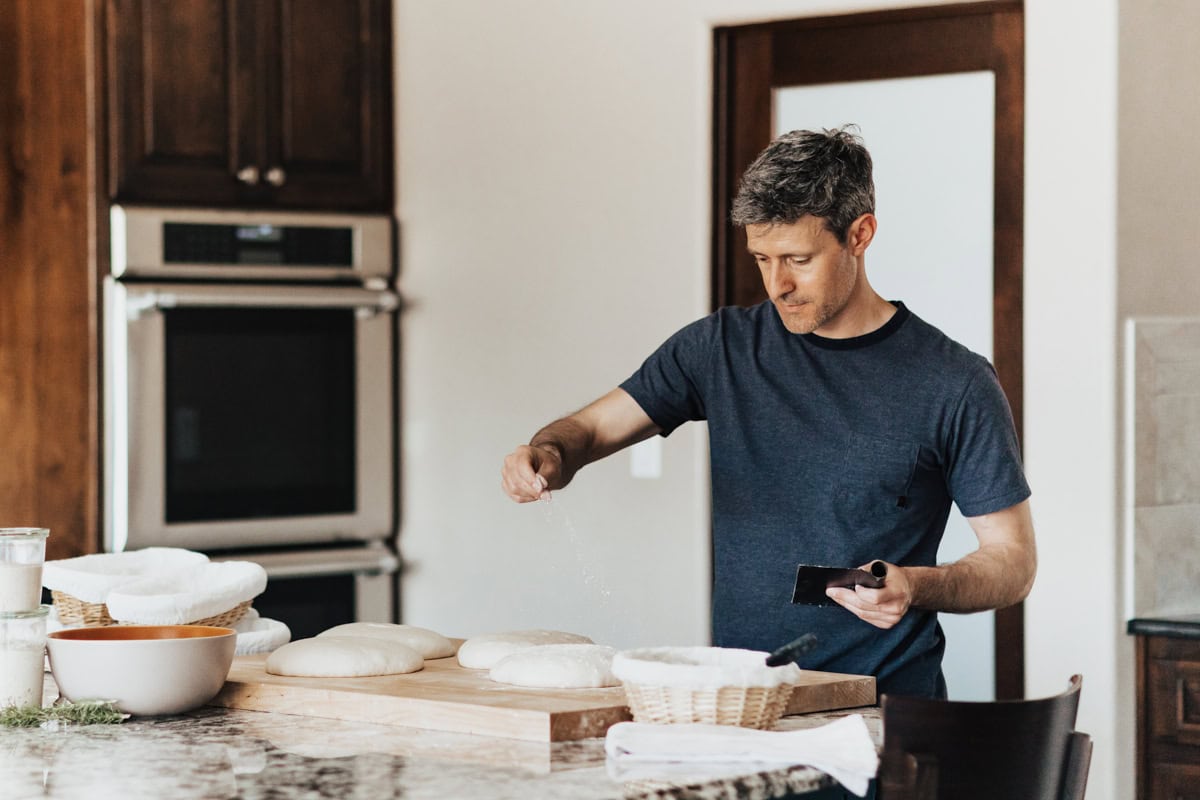
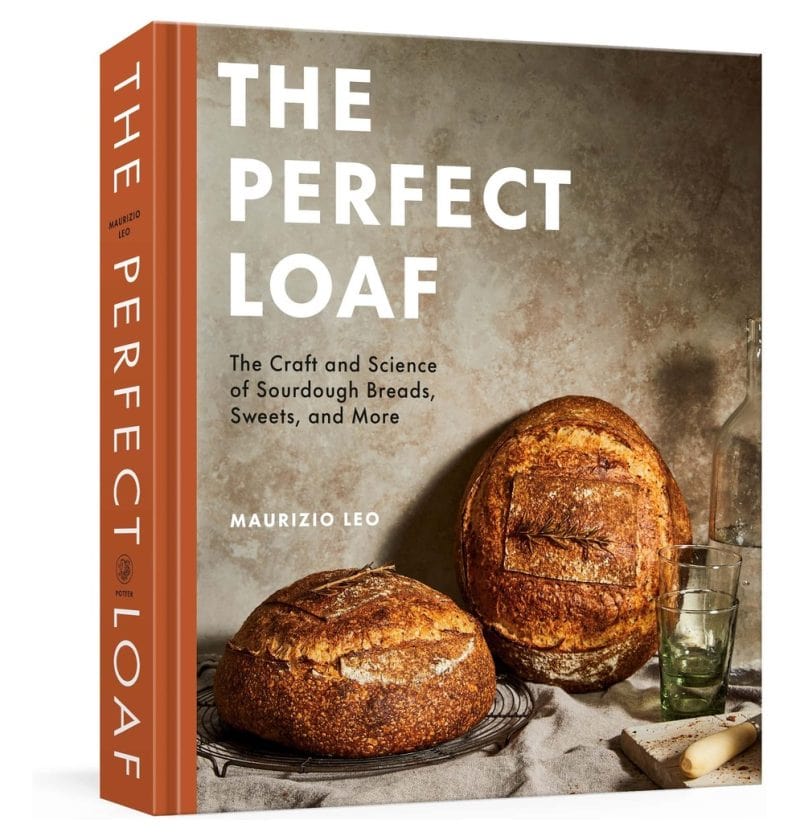
Hello there, I’m Maurizio Leo, the James Beard Award-winning, New York Times bestselling author of The Perfect Loaf and The Perfect Pizza, and the creator of this site. Since 2012, The Perfect Loaf has been the leading independent resource for baking sourdough bread and pizza at home.
But long before any of that, I was a kid in my dad’s pizzeria in Albuquerque, watching him work dough.
The Restaurant (as we called it), along with my mom’s gnocchi at home, taught me early on that good food made by hand takes time. Summers in Italy, with their long family meals and fresh bread hunts, only cemented it.
I took the long way back to dough: a master’s degree in computer science and years spent writing software before I founded The Perfect Loaf in 2012 (and along the way, the site picked up a couple of Saveur Blog Awards and a Webby nomination). The engineering never really left me, though. It’s why every recipe here leans on temperatures, iteration, and written-down results rather than feel alone. But at some point the measuring ends and baker’s intuition takes over. Great bread isn’t complicated technique—it’s simple technique done with attention and flavor given time to develop.
I’m still learning and still experimenting, and if I’m not baking sourdough, I’m probably thinking about it.
He strives for perfection, for the perfect loaf, secretly hoping never to attain it — for where would he go from there?
Jeffrey Hamelman
Every Sourdough Recipe Is Tested. Repeatedly.
Before I publish any recipe, it’s baked repeatedly in my home kitchen using the same ovens, same tools, and same ambient temperature chaos you’re working with. I log dough temperatures, fermentation times, and results for every test bake (the same baking notes worksheet I share here).
One thing that surprises readers is that recipes here continue to evolve after I publish them: I’m constantly learning and improving as a baker, and reader comments and questions regularly send me back to the kitchen to retest, clarify, or fix. If a recipe here says 20 minutes, it’s because that’s what worked across many bakes, not once.
My Cookbooks
The Perfect Pizza
Sourdough pizza, focaccia, and more than forty regional styles from New York to tavern to al taglio to Sicilian, with every dough built to use a sourdough starter and tested in home ovens, pizza ovens, and everything in between.
Baking is better with other bakers. Members get exclusive recipes and guides, and a place in our community where questions get answered daily (often by me, always by someone who’s had the same dough problem).
A few times a year I host small group bread trips to visit cities, farms, mills, and bakeries in search of incredible bread and the food that goes along with it. Or, join me in my next baking workshop!
If you have a burning baking question, I usually hang out with many like-minded—and very helpful!—bakers on The Perfect Loaf’s Discord, where you can post questions, comments, and photos. Come join the community and ask a question.
HI Maurizio, I cannot seem to understand in your recipe…… (Note that the baker’s percentages listed below are with respect to the final dough ingredients and do not take into account the levain.)….. and how come the WEIGHT and BAKERS % dont match in your recipe, i sure don’t understand, can you please explain me, would much appreciate.
Hey there! That little note I prepend my Dough Mix table tries to explain that the numbers presented in that Dough Mix table represent just the final, dough mix without the levain — this is why the percentages might be a bit strange looking (like 78.43% instead of just 80%). In other words, the levain isn’t shown in that final table because I’ve broken it out into its own table above in each Levain Build section. The flour and water in the levain is still counted in my overall formula, it’s just shown as a separate table.
Usually when you see a table with a bread formula it’ll have the overall numbers and percentages, the levain numbers and percentages, and the final mix numbers and percentages. I’ve broken this up into two parts: the levain table and the final dough mix table. I did this because I see my posts are meant to be followed linearly from top to bottom. The levain comes first, then the dough mix.
I’ve thought about restructuring this a bit in the future to have a single table up top that has the entire formula laid out, and then later in the writeup bread out each section. This might avoid confusion some readers have!
I hope that makes sense and sorry about the confusion.
Glad to hear that, Don! Sounds like you’re on a roll now — sometimes it just takes changing one or two seemingly small things to send your baking in a new direction. Happy baking!
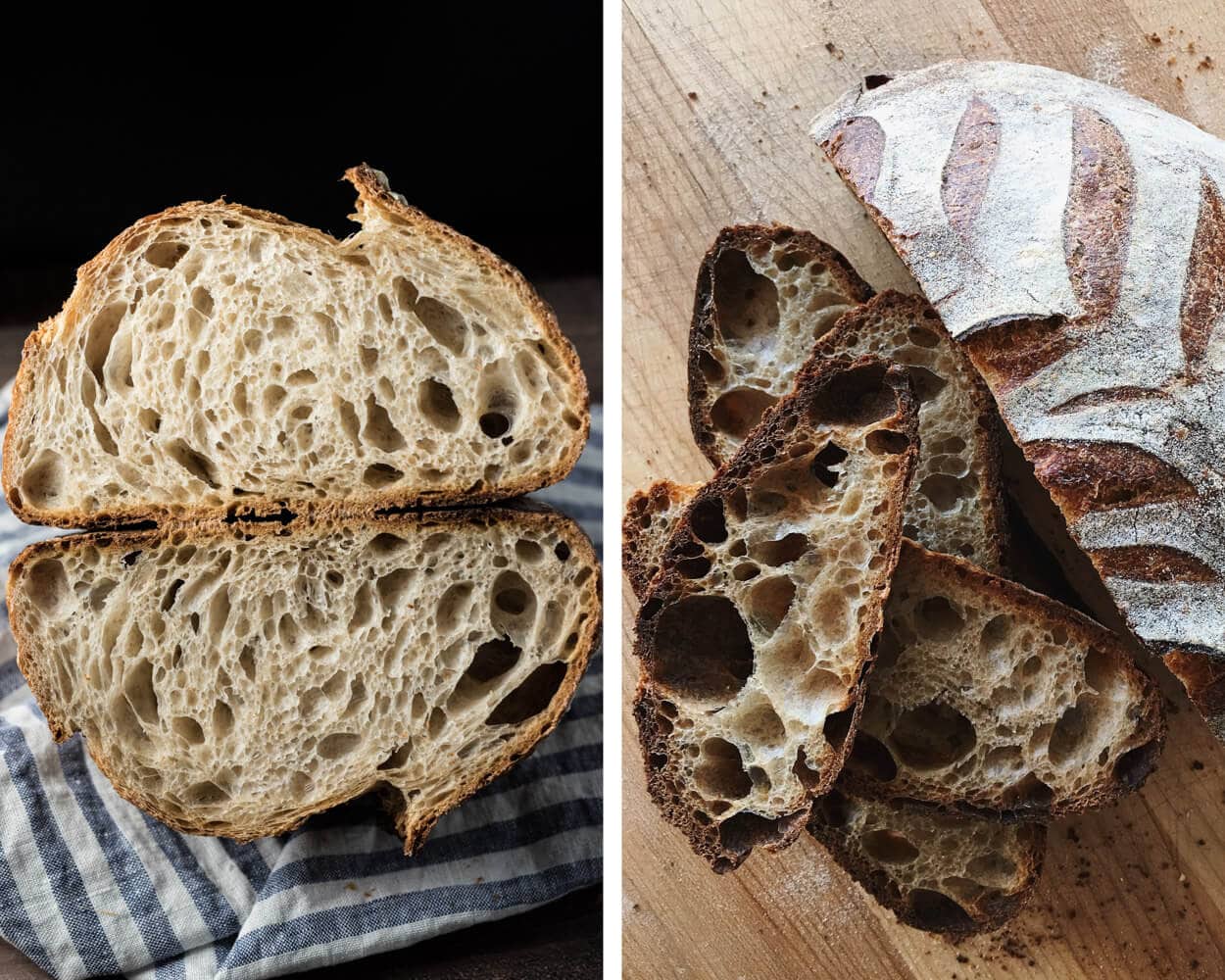
Maurizio, you are my hero. I have been making decent sourdough bread for about 3 years but not until I tried your formula and technique could I get an open crumb. I need to attempt it again soon to make sure it wasn’t just luck.
So you have probably seen both of these long ago, but just in case…have you seen Dan Barber’s talk on wheat? It is a Must See! The link is below. Also, the episode of Chef’s Table with Nancy Silverton.
Thanks, Wayne! I was actually just at a class where we made pretzels. I’m absolutely motivated to develop a recipe and post it here! Hopefully I’ll get to this soon. Thanks for the message!
Just had my first slice of avocado on homemade sourdough toast. Delicious, and definitely worth the extra patience! Thanks for the recipes and tips. I’m looking forward to experimenting with some new flavours!
Paul, thanks so much for the kind words and I’m really happy to hear that! Sounds like you have plenty of baking experience, that’s great. I’m confident once you taste your sourdough loaves you’ll happily stick with sourdough from here on out! Happy baking 🙂
You make my life so difficult!! I follow a low carb lifestyle, but your site has me ready to “modify” the way I eat. My aunt taught me to make bread over 50 years ago, and I’ve baked hundreds of loaves, but never a sourdough. You have a wonderful site and you’ve inspired me to learn a new loaf. Thank you.
Hi Maurizio! First I want to congrats you for your impeccable blog! I thought I knew somethings about breads but I end up learning A LOT here. Thanks (:
So, I have a problem… All loafs I did so far was very heavy and almost did not have air bubles inside at all… I use organic flour, but here in Brasil is difficult to find a lot of different kinds of flour (only one type of white – all purpose; whole wheat; rye..) I made your “begginer’s sourdough recipe” but end up the same: a heavy bread with no airpockets. I tried using less flour but the dough was too wet and runny and I could not handle it properly. Maybe it is because of my stiff starter? Although It seems very health and I feed it every day at the same time… In your waffle recipe it worked amazing – really light and aerated, but not with my loafs ):
Can you help me?
Lot of success for you!
Thanks so much and I’m really glad to hear that!
It sounds like your dough is probably over hydrated. Even my Beginners Sourdough recipe might be too much hydration for the flour you’re using in Brazil — and you need to also take your environment into account! It’s probably much more humid there than it is here which means you’ll likely have to reduce hydration even further.
I’d try reducing the water in my recipe by 10% and see how it performs. If the dough is overly dry during mixing you can always add more but be cautious. Subsequent bakes slowly increment back up so you know your flour can handle it.
That’s a very interesting technique! Sounds like it’d work very well, just a little worried about steam burns! The need for elbow-high gloves is a must 🙂 I’ll have to give that a try next time.
Great article. Reading all the comments – so many ways to add steam –
very creative. I use a 500 F pre-heated Lodge cast iron Dutch oven (DO)
– with parchment paper and add ice cubes between the paper and the
walls of the DO. I have to add the ice and get the lid on fast ’cause it
melts fast. (not my invention, saw this somewhere on line on several
sites) All the best in your tweaking… to all of you home bakers out
there!
Marisa — glad you stopped by and thanks for the comments! I’m a fan of KA flour, a very consistent and high quality set of flour choices (not to mention a myriad of other fun things to bake with). It sounds like your starter needs some TLC, get him/her up and running! 🙂
I’m happy to have you along on my journey and I’m looking forward to chatting with you again! Let me know if you ever have any questions on how I do things here, or anything else. Ciao!
Getting through all these valuable post here will take me a while but it’s worthwhile. It’s great reading and I’d like to take this opportunity to thank you for all the work you put here.
I wonder whether you have ever tried wood fired brick oven?
Hello Maurizio, I have been entertained by reading your blog…. it is absolutely wonderful read and contains so much useful tips and information to absorb for a beginner like me to learn from… really fascinating and appreciate the time and effort you put in your site explaining everything so thoroughly! I am a big fan of sourdough baking and recently acquired a small portion of starter from my Italian friend who also got it from another Italian friend who happened to be coming from a sourdough bakers family and her starter has been passed down the generations… so I do have a very active and very old starter…. and I am totally in love with it!! It is my new found pet! I have transformed it into several different types of started since and now I have a full collection of different dough made from different flours! I am going to make your oat porridge bread shortly and will definitely give you my feedback! I also have Tartine Bread & the book No.3 from Chat Robertson… they are great book to refer to when baking but your blog is by far easier to follow… so again thanks for that! Maryam
Maryam — thanks so much for all the comments, I really appreciate that! I’m glad you’ve got a strong starter and are ready to get baking sourdough, very cool. Let me know how the oat porridge bread goes, it’s definitely one of my favorites! Happy baking Maryam, talk to you soon!
Yes it could definitely be lack of sufficient tension during shaping, that would cause a weak rise and no ears when scored. I try to keep track of the dough I preshape and shape all the way through bake so I can keep notes on which was shaped well and which weren’t.
The combo cooker was nearly perfect. We made four loaves yesterday, and of those four one did any pancaking. What was the most interesting observation about it, though, was that I thought pancaking meant going wider. It didn’t. It just didn’t have the edges raise up as much as the center. I actually measured the results, too, so it’s not just a random guess about it like it was before.
We had one loaf that didn’t take to the preshaping well, and we’re pretty sure it was that one. Basically, it looks like we didn’t get enough structural gluten in place to keep the shape we wanted.
The other loaves, though, were amazing. Crackly crust that we didn’t get before, Now it’s time to focus on adding some sour into the flavor. Next week, much longer fermentation times (and a nearby thermometer to help me get a better idea of where it should be).
Awesome! Really glad to have you along, Brooke. You’ll be baking amazing bread in no time 🙂 Let me know if you have any questions: feel free to post on any page or send me an email through the Contact button up top. Happy baking!
I just recently began a sourdough starter and am so excited that I have found your site to help me out along the way to beautiful bread. I absolutely love the wonder of slow-cooking myself! Glad to have crossed paths with you (in the internet world!)
Apologies for taking so long to reply. It’s been busy for me, including more baking. I finally picked up the Tartine Bread book, and am loving it (got it last night, and 1/4 of the way through my first reading).
I’ve decided to build my own proofing box, since that’s *also* the box I use for my starter (very drafty old home, so I need that microclimate). Being a computer geek, I’m also getting video inside, along with temperature/humidity/atmospheric pressure monitoring so I can learn more about what my starter likes and doesn’t like. I figure that, once I’ve gone to that extreme, making a box out of wood isn’t too much extra effort 🙂
As a weirdness for my bread, I’ve been using a cloche the past few weekends, and after I started using it, I started getting pancaked loaves. When I used nothing, I got great oven spring. Have you ever heard of behavior like that? BTW, I’m getting the combo cooker for this weekend’s baking. I have a feeling I’m going to get results that I’m much happier with.
No worries! I definitely know what it’s like to get busy.
Sounds like your proof box is the way I would have wanted mine to turn out! Sounds awesome actually, I’d love to take snapshots of the starter at intervals and see how it progresses throughout the day. Will make gathering data on its strength much easier.
I’m not familiar with using a cloche, but I’d be curious to see if you get the same results with the DO. I’m not sure why that would cause pancake’d loaves, though. Are you sure it wasn’t something else (over-proof, or too high hydration)? It might be something else unrelated that just happened to show itself.
Thanks for the note, Jessica and glad to have you along! Let me know if you have any questions, I know you’ll be making some really great bread soon 🙂 Happy baking!
Hello there. I’ve been using a couple of your guides in my own quest to make a great sourdough, and the results have been amazing. I’ve cultured my own starter from scratch, I’ve baked 3 batches (mostly successfully, the last batch pancaked a lot), and the flavor on all of these has been amazing. I have a feeling that I need to read every post of yours in detail to figure out more of what’s going on inside my loaves.
In particular: When it comes time to retard the dough (placing the boules into the fridge overnight), how cold is the fridge expected to be, roughly? I’m worried ours might be too cold for this use. I’m not averse to buying a mini-fridge for this purpose, but I’d rather know what I need to look for when buying it as opposed to guessing.
Also, my bread is coming out without very much sour. I get hints of it, but the amounts I actually get are much lower than I would like and expect. Do you have any suggestions on how I can control the level of sour in the end result?
I’m considering making a box specifically to develop a micro-climate for maintaining my starter (to track temp, humidity, and have a camera taking pictures at regular intervals to allow me to observe the rise and fall of the starter). Do you know of any such box already in existence?
I’m probably asking way too much, but you’ve helped spark my curiousity. I hope you don’t mind. And thank you for any help you can give.
Michael — really great to hear! Sounds like you’re off to an awesome start already. I retard my loaves in my fridge overnight, which is set to 39ºF. Different bakers have their preference there (some around 45ºF) but this temp is what my main fridge is set to, so I work with it. If yours is around this temp, and you feel like your dough isn’t fermenting enough by bake-time, let your dough sit out on the counter after shaping for 20 minutes or so and see if that helps.
There are a few things you can do to increase the sourness: use more levain in your mix. I typically use anywhere between 12-20%, shoot for the 20% mark. This will increase the acidity of your loaf. You can also increase the percentage of whole grains in the mix (whole grains also increase acid production). Finally, you could increase the length of your cold proof, start with 5 more hours and go up from there. Of course there is a limit.
A proof box is a great idea, and I noticed my bread quality increased dramatically after getting one. I almost built my own, but then I found one I really like, and for the price it wasn’t really worth me building anything. I highly recommend this proof box by Bröd & Taylor.
I definitely do not mind the questions. If you have any more feel free! Happy baking, Michael!
Hi Maurizio I’ve been following you for quite a while now and have a few general questions…
When you bake a loaf, how long do you let it sit before you cut into it?
How do you store your bread once you have cut into it? I’ve read somewhere you keep some in the freezer, do you keep any out of the freezer?
And finally….are you going to post your recent pizza dough recipe!? I’ve been experimenting with extra levain to make my own recipe, your 10% levain tip was very helpful thus far! Thank you for everything, you have really helped build my baking skills!
Awesome, glad to have you along! With regard to cutting into fresh bread: the time I wait to slice depends on the bread I make. If it’s 100% whole wheat, for example, it’s best to way at least 4-6 hours (preferably the next day to let it “set”). The same goes for rye. My typical white sourdough you could slice into it right after removing from the oven, but it’s best to let that cool at least an hour. Of course these are general times, but they are what I find to be the best.
I have a bread box that I store my bread in — it keeps the moisture in the bread in my dry climate. If I have extra bread I tend to keep it in the freezer until I can get to eating it. If I plan to eat it sooner I’ll fully slice the loaf, place it in a freezer Ziplock bag and put it into the freezer. My toaster has a “defrost” function that I use to toast the individual frozen slices. If I plan to keep it long term in the freezer I will wrap the bread several times with plastic wrap and then put it into a freezer bag.
I will definitely post that pizza recipe! Still working on it (and the method) and have a few kinks to work out.
Glad to hear my tips have been helping and it’s great to hear from you, Brendan!
Cristiano — not a problem, glad to help. Glad you’re liking my site! Let me know how it goes baking from here, I’m sure you’ll crank out some really nice bread.
It’s true… I remember as a kid waking up and wandering into the kitchen to the sight of my nonna rolling out pasta dough while a nice bolognese is on the stove — great memories! I hope one day to pass the same things down to my son 🙂 Thanks for stopping by, hope to hear from you again soon! Ciao ciao.
Kim, very nice to meet you! That sounds like quite the baking circle you have there, what a treasure. I’m glad to have you along and look forward to hearing from you again in 2016! And yes, you’re right those baking “errors” always taste good 🙂
Enjoyed your web site. I’ve been doing sourdough for years. Here’s my basic sourdough bread recipe:
2 cups bread flour
2 cups liquid (water, milk, vegetable & potato water, beer, (and coffee if I’m making dark rye or pumpernickle))
2 tsp salt
2 TBLS oil or butter
2-3 TBLS sugar, honey, (sorgahm, or molasses if Im making dark rye or pumpernickle)
2 eggs
1 cup starter
bread flour
1. The night before (right before going to bed) mix 2 cups bread flour, 2 cups liquid, and 1 cup starter
2. Next morning stir batter and take out 1 cup batter and put it back into my starter jar & mix well
3. Add salt, sugar, eggs, oil or butter
4. Gradually add bread flour untill you get a kneadable dough ball
5. Knead well
6. Let rise untill double
7. Punch down – devide in half – knead will and pleace into loaf pans
8. bake @ 350 degrees for about an hour (bread is done when you tap on the top a couple of
times and it sounds hollow
9. brush butter on top of bread loaves
10. Take bread out of pans to cool on cooling raks
I’ve made white, whole wheat, rye, and pumpernickle breads just by substituting different flours with this basic recipe. I even made rolls, and cinnaman rolls with tis recipe.
I absolutely love your sit. Your passion for Sourdough is wonderful. I spent a lovely hour reading your posts and looking at your photos. Thank you for sharing.
Vanessa, thank you much, I really appreciate that! I’ve been a fan of yours for a long time, I only wish I lived closer to attend one of your workshops!












501 Comments
HI Maurizio, I cannot seem to understand in your recipe…… (Note that the baker’s percentages listed below are with respect to the final dough ingredients and do not take into account the levain.)….. and how come the WEIGHT and BAKERS % dont match in your recipe, i sure don’t understand, can you please explain me, would much appreciate.
Hey there! That little note I prepend my Dough Mix table tries to explain that the numbers presented in that Dough Mix table represent just the final, dough mix without the levain — this is why the percentages might be a bit strange looking (like 78.43% instead of just 80%). In other words, the levain isn’t shown in that final table because I’ve broken it out into its own table above in each Levain Build section. The flour and water in the levain is still counted in my overall formula, it’s just shown as a separate table.
Usually when you see a table with a bread formula it’ll have the overall numbers and percentages, the levain numbers and percentages, and the final mix numbers and percentages. I’ve broken this up into two parts: the levain table and the final dough mix table. I did this because I see my posts are meant to be followed linearly from top to bottom. The levain comes first, then the dough mix.
I’ve thought about restructuring this a bit in the future to have a single table up top that has the entire formula laid out, and then later in the writeup bread out each section. This might avoid confusion some readers have!
I hope that makes sense and sorry about the confusion.
Glad to hear that, Don! Sounds like you’re on a roll now — sometimes it just takes changing one or two seemingly small things to send your baking in a new direction. Happy baking!
Maurizio, you are my hero. I have been making decent sourdough bread for about 3 years but not until I tried your formula and technique could I get an open crumb. I need to attempt it again soon to make sure it wasn’t just luck.
So you have probably seen both of these long ago, but just in case…have you seen Dan Barber’s talk on wheat? It is a Must See! The link is below. Also, the episode of Chef’s Table with Nancy Silverton.
Dan Barber at MAD2 on WHEAT:
https://www.youtube.com/watch?v=kbdj76Og9HE
Thanks for posting that! Yes, I’ve seen both — incredibly inspiring and, actually, worth another view. Happy baking!
will be looking forward to it!
Love all your recipes, I was wondering if you have thought about coming up with a sourdough pretzel recipe?
Thanks, Wayne! I was actually just at a class where we made pretzels. I’m absolutely motivated to develop a recipe and post it here! Hopefully I’ll get to this soon. Thanks for the message!
Great to hear that, Heather!
The beginner’s recipe was a great success! Thanks for sharing, we love your site at probake!
Just had my first slice of avocado on homemade sourdough toast. Delicious, and definitely worth the extra patience! Thanks for the recipes and tips. I’m looking forward to experimenting with some new flavours!
Mmm, that sounds perfect! You’re very welcome and here’s to many more loaves!
Paul, thanks so much for the kind words and I’m really happy to hear that! Sounds like you have plenty of baking experience, that’s great. I’m confident once you taste your sourdough loaves you’ll happily stick with sourdough from here on out! Happy baking 🙂
You make my life so difficult!! I follow a low carb lifestyle, but your site has me ready to “modify” the way I eat. My aunt taught me to make bread over 50 years ago, and I’ve baked hundreds of loaves, but never a sourdough. You have a wonderful site and you’ve inspired me to learn a new loaf. Thank you.
Visited your site and found pleasant surprise, many compliments on beautiful logo design. Love clean lines. Really speak for itself.
Thanks so much Jinal! I really like it as well, clean and simple but representative of what I do here 🙂
Hi Maurizio! First I want to congrats you for your impeccable blog! I thought I knew somethings about breads but I end up learning A LOT here. Thanks (:
So, I have a problem… All loafs I did so far was very heavy and almost did not have air bubles inside at all… I use organic flour, but here in Brasil is difficult to find a lot of different kinds of flour (only one type of white – all purpose; whole wheat; rye..) I made your “begginer’s sourdough recipe” but end up the same: a heavy bread with no airpockets. I tried using less flour but the dough was too wet and runny and I could not handle it properly. Maybe it is because of my stiff starter? Although It seems very health and I feed it every day at the same time… In your waffle recipe it worked amazing – really light and aerated, but not with my loafs ):
Can you help me?
Lot of success for you!
Thanks so much and I’m really glad to hear that!
It sounds like your dough is probably over hydrated. Even my Beginners Sourdough recipe might be too much hydration for the flour you’re using in Brazil — and you need to also take your environment into account! It’s probably much more humid there than it is here which means you’ll likely have to reduce hydration even further.
I’d try reducing the water in my recipe by 10% and see how it performs. If the dough is overly dry during mixing you can always add more but be cautious. Subsequent bakes slowly increment back up so you know your flour can handle it.
Thanks again and happy baking!
That’s a very interesting technique! Sounds like it’d work very well, just a little worried about steam burns! The need for elbow-high gloves is a must 🙂 I’ll have to give that a try next time.
Glad I could help — happy baking!
Great article. Reading all the comments – so many ways to add steam –
very creative. I use a 500 F pre-heated Lodge cast iron Dutch oven (DO)
– with parchment paper and add ice cubes between the paper and the
walls of the DO. I have to add the ice and get the lid on fast ’cause it
melts fast. (not my invention, saw this somewhere on line on several
sites) All the best in your tweaking… to all of you home bakers out
there!
Marisa — glad you stopped by and thanks for the comments! I’m a fan of KA flour, a very consistent and high quality set of flour choices (not to mention a myriad of other fun things to bake with). It sounds like your starter needs some TLC, get him/her up and running! 🙂
I’m happy to have you along on my journey and I’m looking forward to chatting with you again! Let me know if you ever have any questions on how I do things here, or anything else. Ciao!
Lukas, thanks I appreciate that! I’m glad my site is helping 🙂
I actually have not had the opportunity to bake in a wood fired oven but I dream about that. One day perhaps… I’d especially love it for pizza.
Happy baking!
I do have a perfect stone oven for you Master Leo,its ready to go to a new home email me for details
Will take a look!
Hi there,
Getting through all these valuable post here will take me a while but it’s worthwhile. It’s great reading and I’d like to take this opportunity to thank you for all the work you put here.
I wonder whether you have ever tried wood fired brick oven?
Thanks
Lukas
Hello Maurizio, I have been entertained by reading your blog…. it is absolutely wonderful read and contains so much useful tips and information to absorb for a beginner like me to learn from… really fascinating and appreciate the time and effort you put in your site explaining everything so thoroughly! I am a big fan of sourdough baking and recently acquired a small portion of starter from my Italian friend who also got it from another Italian friend who happened to be coming from a sourdough bakers family and her starter has been passed down the generations… so I do have a very active and very old starter…. and I am totally in love with it!! It is my new found pet! I have transformed it into several different types of started since and now I have a full collection of different dough made from different flours! I am going to make your oat porridge bread shortly and will definitely give you my feedback! I also have Tartine Bread & the book No.3 from Chat Robertson… they are great book to refer to when baking but your blog is by far easier to follow… so again thanks for that! Maryam
Maryam — thanks so much for all the comments, I really appreciate that! I’m glad you’ve got a strong starter and are ready to get baking sourdough, very cool. Let me know how the oat porridge bread goes, it’s definitely one of my favorites! Happy baking Maryam, talk to you soon!
Yes it could definitely be lack of sufficient tension during shaping, that would cause a weak rise and no ears when scored. I try to keep track of the dough I preshape and shape all the way through bake so I can keep notes on which was shaped well and which weren’t.
Sounds like you’re on your way, though!
The combo cooker was nearly perfect. We made four loaves yesterday, and of those four one did any pancaking. What was the most interesting observation about it, though, was that I thought pancaking meant going wider. It didn’t. It just didn’t have the edges raise up as much as the center. I actually measured the results, too, so it’s not just a random guess about it like it was before.
We had one loaf that didn’t take to the preshaping well, and we’re pretty sure it was that one. Basically, it looks like we didn’t get enough structural gluten in place to keep the shape we wanted.
The other loaves, though, were amazing. Crackly crust that we didn’t get before, Now it’s time to focus on adding some sour into the flavor. Next week, much longer fermentation times (and a nearby thermometer to help me get a better idea of where it should be).
Awesome! Really glad to have you along, Brooke. You’ll be baking amazing bread in no time 🙂 Let me know if you have any questions: feel free to post on any page or send me an email through the Contact button up top. Happy baking!
I just recently began a sourdough starter and am so excited that I have found your site to help me out along the way to beautiful bread. I absolutely love the wonder of slow-cooking myself! Glad to have crossed paths with you (in the internet world!)
Apologies for taking so long to reply. It’s been busy for me, including more baking. I finally picked up the Tartine Bread book, and am loving it (got it last night, and 1/4 of the way through my first reading).
I’ve decided to build my own proofing box, since that’s *also* the box I use for my starter (very drafty old home, so I need that microclimate). Being a computer geek, I’m also getting video inside, along with temperature/humidity/atmospheric pressure monitoring so I can learn more about what my starter likes and doesn’t like. I figure that, once I’ve gone to that extreme, making a box out of wood isn’t too much extra effort 🙂
As a weirdness for my bread, I’ve been using a cloche the past few weekends, and after I started using it, I started getting pancaked loaves. When I used nothing, I got great oven spring. Have you ever heard of behavior like that? BTW, I’m getting the combo cooker for this weekend’s baking. I have a feeling I’m going to get results that I’m much happier with.
No worries! I definitely know what it’s like to get busy.
Sounds like your proof box is the way I would have wanted mine to turn out! Sounds awesome actually, I’d love to take snapshots of the starter at intervals and see how it progresses throughout the day. Will make gathering data on its strength much easier.
I’m not familiar with using a cloche, but I’d be curious to see if you get the same results with the DO. I’m not sure why that would cause pancake’d loaves, though. Are you sure it wasn’t something else (over-proof, or too high hydration)? It might be something else unrelated that just happened to show itself.
Let me know how it works out with the DO!
Thanks for the note, Jessica and glad to have you along! Let me know if you have any questions, I know you’ll be making some really great bread soon 🙂 Happy baking!
Hello!
I am so glad I found your site! I love it. I am hoping to make sourdough as beautiful as yours soon!
-Jessica
Hello there. I’ve been using a couple of your guides in my own quest to make a great sourdough, and the results have been amazing. I’ve cultured my own starter from scratch, I’ve baked 3 batches (mostly successfully, the last batch pancaked a lot), and the flavor on all of these has been amazing. I have a feeling that I need to read every post of yours in detail to figure out more of what’s going on inside my loaves.
I do have some questions though, that I’m not finding solid answers for anywhere yet. Right now, I’m working with https://www.theperfectloaf.com/tartine-sourdough-country-loaf-bread-recipe/ and making some progress, but I have a feeling I’m missing some pieces.
In particular: When it comes time to retard the dough (placing the boules into the fridge overnight), how cold is the fridge expected to be, roughly? I’m worried ours might be too cold for this use. I’m not averse to buying a mini-fridge for this purpose, but I’d rather know what I need to look for when buying it as opposed to guessing.
Also, my bread is coming out without very much sour. I get hints of it, but the amounts I actually get are much lower than I would like and expect. Do you have any suggestions on how I can control the level of sour in the end result?
I’m considering making a box specifically to develop a micro-climate for maintaining my starter (to track temp, humidity, and have a camera taking pictures at regular intervals to allow me to observe the rise and fall of the starter). Do you know of any such box already in existence?
I’m probably asking way too much, but you’ve helped spark my curiousity. I hope you don’t mind. And thank you for any help you can give.
Michael — really great to hear! Sounds like you’re off to an awesome start already. I retard my loaves in my fridge overnight, which is set to 39ºF. Different bakers have their preference there (some around 45ºF) but this temp is what my main fridge is set to, so I work with it. If yours is around this temp, and you feel like your dough isn’t fermenting enough by bake-time, let your dough sit out on the counter after shaping for 20 minutes or so and see if that helps.
There are a few things you can do to increase the sourness: use more levain in your mix. I typically use anywhere between 12-20%, shoot for the 20% mark. This will increase the acidity of your loaf. You can also increase the percentage of whole grains in the mix (whole grains also increase acid production). Finally, you could increase the length of your cold proof, start with 5 more hours and go up from there. Of course there is a limit.
A proof box is a great idea, and I noticed my bread quality increased dramatically after getting one. I almost built my own, but then I found one I really like, and for the price it wasn’t really worth me building anything. I highly recommend this proof box by Bröd & Taylor.
I definitely do not mind the questions. If you have any more feel free! Happy baking, Michael!
Hi Maurizio I’ve been following you for quite a while now and have a few general questions…
When you bake a loaf, how long do you let it sit before you cut into it?
How do you store your bread once you have cut into it? I’ve read somewhere you keep some in the freezer, do you keep any out of the freezer?
And finally….are you going to post your recent pizza dough recipe!? I’ve been experimenting with extra levain to make my own recipe, your 10% levain tip was very helpful thus far! Thank you for everything, you have really helped build my baking skills!
Awesome, glad to have you along! With regard to cutting into fresh bread: the time I wait to slice depends on the bread I make. If it’s 100% whole wheat, for example, it’s best to way at least 4-6 hours (preferably the next day to let it “set”). The same goes for rye. My typical white sourdough you could slice into it right after removing from the oven, but it’s best to let that cool at least an hour. Of course these are general times, but they are what I find to be the best.
I have a bread box that I store my bread in — it keeps the moisture in the bread in my dry climate. If I have extra bread I tend to keep it in the freezer until I can get to eating it. If I plan to eat it sooner I’ll fully slice the loaf, place it in a freezer Ziplock bag and put it into the freezer. My toaster has a “defrost” function that I use to toast the individual frozen slices. If I plan to keep it long term in the freezer I will wrap the bread several times with plastic wrap and then put it into a freezer bag.
I will definitely post that pizza recipe! Still working on it (and the method) and have a few kinks to work out.
Glad to hear my tips have been helping and it’s great to hear from you, Brendan!
Cristiano — not a problem, glad to help. Glad you’re liking my site! Let me know how it goes baking from here, I’m sure you’ll crank out some really nice bread.
It’s true… I remember as a kid waking up and wandering into the kitchen to the sight of my nonna rolling out pasta dough while a nice bolognese is on the stove — great memories! I hope one day to pass the same things down to my son 🙂 Thanks for stopping by, hope to hear from you again soon! Ciao ciao.
Here’s to the revival! You’re very welcome 🙂
Kim, very nice to meet you! That sounds like quite the baking circle you have there, what a treasure. I’m glad to have you along and look forward to hearing from you again in 2016! And yes, you’re right those baking “errors” always taste good 🙂
Happy New Year to you and your family!
Thank you! I still think it’d be fun to swap stories, experience, and just have a great time baking 🙂
I’m not sure you would need to attend one!! Your sourdoughs are beautiful.
Enjoyed your web site. I’ve been doing sourdough for years. Here’s my basic sourdough bread recipe:
2 cups bread flour
2 cups liquid (water, milk, vegetable & potato water, beer, (and coffee if I’m making dark rye or pumpernickle))
2 tsp salt
2 TBLS oil or butter
2-3 TBLS sugar, honey, (sorgahm, or molasses if Im making dark rye or pumpernickle)
2 eggs
1 cup starter
bread flour
1. The night before (right before going to bed) mix 2 cups bread flour, 2 cups liquid, and 1 cup starter
2. Next morning stir batter and take out 1 cup batter and put it back into my starter jar & mix well
3. Add salt, sugar, eggs, oil or butter
4. Gradually add bread flour untill you get a kneadable dough ball
5. Knead well
6. Let rise untill double
7. Punch down – devide in half – knead will and pleace into loaf pans
8. bake @ 350 degrees for about an hour (bread is done when you tap on the top a couple of
times and it sounds hollow
9. brush butter on top of bread loaves
10. Take bread out of pans to cool on cooling raks
I’ve made white, whole wheat, rye, and pumpernickle breads just by substituting different flours with this basic recipe. I even made rolls, and cinnaman rolls with tis recipe.
I absolutely love your sit. Your passion for Sourdough is wonderful. I spent a lovely hour reading your posts and looking at your photos. Thank you for sharing.
Vanessa, thank you much, I really appreciate that! I’ve been a fan of yours for a long time, I only wish I lived closer to attend one of your workshops!
Thanks again!