Teaching the art of sourdough bread, pizza, and more.
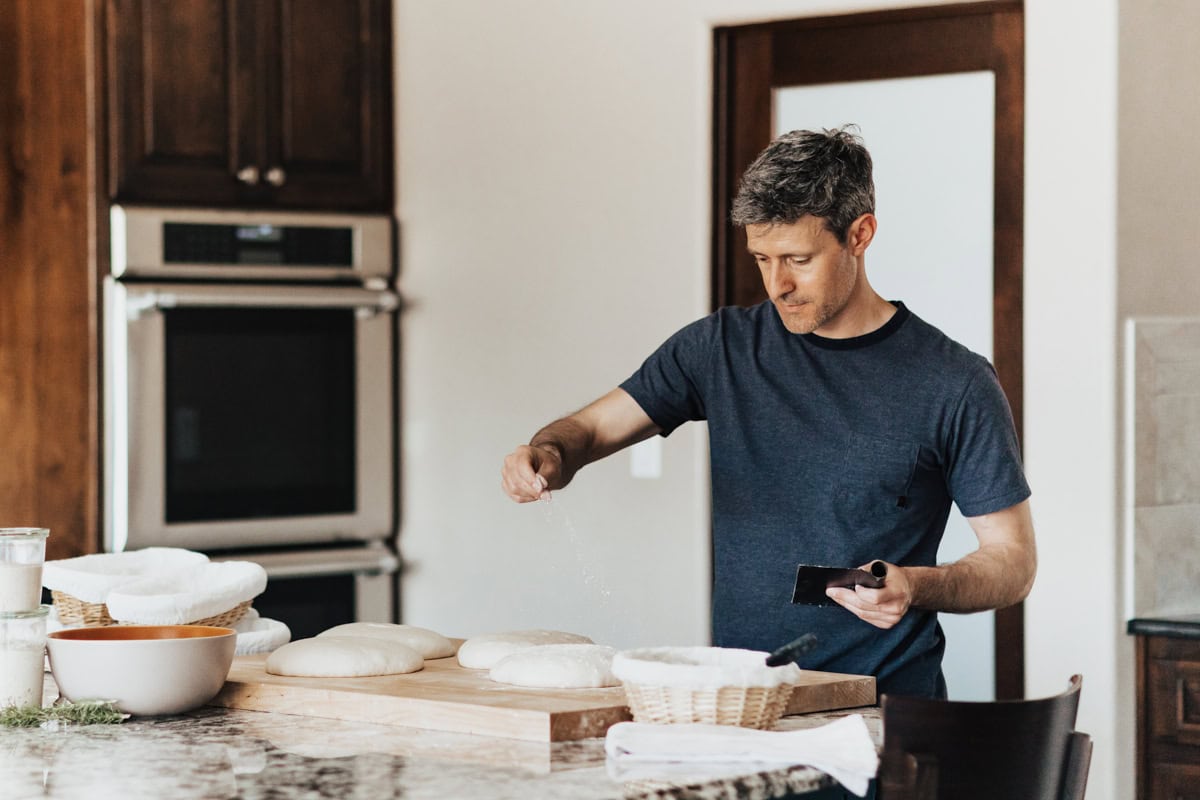
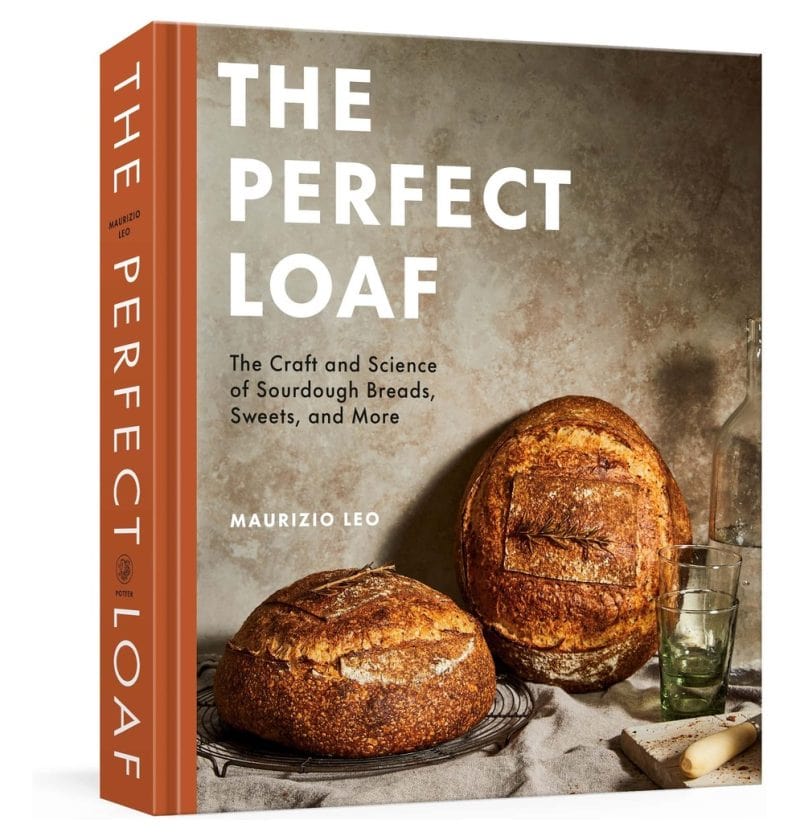
Hello there, I’m Maurizio Leo, the James Beard Award-winning, New York Times bestselling author of The Perfect Loaf and The Perfect Pizza, and the creator of this site. Since 2012, The Perfect Loaf has been the leading independent resource for baking sourdough bread and pizza at home.
But long before any of that, I was a kid in my dad’s pizzeria in Albuquerque, watching him work dough.
The Restaurant (as we called it), along with my mom’s gnocchi at home, taught me early on that good food made by hand takes time. Summers in Italy, with their long family meals and fresh bread hunts, only cemented it.
I took the long way back to dough: a master’s degree in computer science and years spent writing software before I founded The Perfect Loaf in 2012 (and along the way, the site picked up a couple of Saveur Blog Awards and a Webby nomination). The engineering never really left me, though. It’s why every recipe here leans on temperatures, iteration, and written-down results rather than feel alone. But at some point the measuring ends and baker’s intuition takes over. Great bread isn’t complicated technique—it’s simple technique done with attention and flavor given time to develop.
I’m still learning and still experimenting, and if I’m not baking sourdough, I’m probably thinking about it.
He strives for perfection, for the perfect loaf, secretly hoping never to attain it — for where would he go from there?
Jeffrey Hamelman
Every Sourdough Recipe Is Tested. Repeatedly.
Before I publish any recipe, it’s baked repeatedly in my home kitchen using the same ovens, same tools, and same ambient temperature chaos you’re working with. I log dough temperatures, fermentation times, and results for every test bake (the same baking notes worksheet I share here).
One thing that surprises readers is that recipes here continue to evolve after I publish them: I’m constantly learning and improving as a baker, and reader comments and questions regularly send me back to the kitchen to retest, clarify, or fix. If a recipe here says 20 minutes, it’s because that’s what worked across many bakes, not once.
My Cookbooks
The Perfect Pizza
Sourdough pizza, focaccia, and more than forty regional styles from New York to tavern to al taglio to Sicilian, with every dough built to use a sourdough starter and tested in home ovens, pizza ovens, and everything in between.
Baking is better with other bakers. Members get exclusive recipes and guides, and a place in our community where questions get answered daily (often by me, always by someone who’s had the same dough problem).
A few times a year I host small group bread trips to visit cities, farms, mills, and bakeries in search of incredible bread and the food that goes along with it. Or, join me in my next baking workshop!
If you have a burning baking question, I usually hang out with many like-minded—and very helpful!—bakers on The Perfect Loaf’s Discord, where you can post questions, comments, and photos. Come join the community and ask a question.
Hello I’m learning so much from you and all the questions and answers on this site. I live at sea level in N Wa state. Once in a while I have an edible loaf but have a lot of throw always. I use KA flour but have now ordered Central Milling flours with higher protein which I haven’t opened yet I’m using your starter recipe. I think part of my failures is that it isn’t bubbling enough. It doubles and starts to recede every 12 hours but I think it doesn’t have enough omph to raise the bread. Yesterday I started your best sourdough recipe. I made the levain did the autolyse but the levain didn’t bubble like your picture before it started receding so I tossed the whole thing rather than baking another brick. What can I do to change this?
ok…. so on the morning of day 6 i got distracted and forgot to do the discard of the starter before feeding it. have i blown it and need to start over??
Hi Maurizio, do you have any experience with the Camp Chef oval roaster and any advice you could offer? I’d like to make a batard shaped loaf, and plan to use a 14” oval banetton. What quantities would you recommend for one batch? Would appreciate your insights. And a big Thank You for creating ThePerfectLoaf. Thanks to you we have been making unbelievable sourdough bread at home since the pandemic started. We practically have not bought any bread since. Grazie1000, Stefania
Hey, Stefania! I do not have experience with that roaster, sorry! But, as long as it forms a nice seal and keeps steam in, it’ll work just fine. So glad to hear my site has helped!
Hi Maurizio,
I’ve been baking sourdough for two years. Your website is my guide, and I’ve really progressed. I’m very discouraged, however. Despite two years of practice, a very active starter, and the right equipment and good ingredients, I’m having a persistent problem getting oven rise. I’ve made your beginner’s and best recipes many, many times. My bread tastes delicious, and looks great when I put it in the bannetons. As soon as I unmold it the next day and score it, however, it starts to spread. After baking, it’s pretty flat. I never get the kind of rise I see everywhere on line. I’ve watched all of your videos, and am wondering if you have any recommendations for next steps. Thank you so much.
Glad to hear my site has helped, Cynthia! It sounds like either your dough is over hydrated, under-strengthened, or in the extreme case under proofed. I would try dropping the hydration of whatever recipe you’re working with by 5% or so, and see how that goes. You should feel the dough be much stronger and not collapse when scoring.
If you’re a TPL Member please post pictures to the Discord channel so I can see and help! Sorry for the delay to your message 🙂
Hi Maurizio ! You are an amazing baker ! I am a beginner home baker from Chennai, India, and I have learned so much from your instructions via your website. Regarding generating steam in my newly acquired Siemens Combination Oven with Microwave (Model No.: CM676GBS1/35), can I use one of my Lodge 6.5 ” cast iron grill pan for the lava rocks ? Or, do I need a slightly larger grill pan ? By the way, do the lava rocks need all type of specification ? The width of my oven is approximately 18 inches x 16 inches, and there is no open coils at the bottom. I plan to follow your instructions to the tee. At present I am gathering all the specific tools that I need. Thank you. Take care and stay healthy.
Thank you! Yes, you can absolutely use a Lodge. However, if your oven injects steam at the push of a button, you might not need to using the lava rocks at all.
Hello, Maurizio! Thank you so much for your authentic and carefully-constructed recipes. We’ve enjoyed your sourdough loaves and bagels for over a year now, and are excited to try more. Although we’ use recipes from other sites for our day-to-day sourdough loaves (they’re less fuss…) they are nowhere near the quality that yours are. I have a question regarding giving and/or selling loaves that use your recipes. What is the best way to credit you and/or recompense you?
Hey, Emily! You’re very welcome, really glad to hear my site has helped you bake some wonderful creations—and that they’ve come out so great! No need to recompense me for selling anything you make from here, you baked them 🙂 If you feel inclined, and it’s by not means necessary or mandatory, there are yearly support options through the TPL Membership, which helps me keep the site up and more posts coming. I appreciate anything you might contribute, and again, not mandatory.
Happy baking and keep in touch, would love to hear if you go on to sell!
Hello, Maurizio! Thank you for this fabulous site and your wonderful contributions to the Sourdough world! I am a new ‘neighbor’ living in Northern Arizona at 5,300 ft elevation. I apologize if this question is repetitive, but are your recipes written for sea level, and I need to make adjustments, or are they ready for high altitude baking as written? I love your High Altitude Baking Guide, by the way. Thank you!
Hey, neighbor! At your altitude all the recipes here should work just fine as-is. Always be mindful of dough hydration, though, which is sometimes we always need to watch given differences in flour and climate. Happy baking, Chris!
Thank you for this great site Maurizio. 1st attempt at making a starter. I never got any kind of rise out of it the 1s day or 2 like in your picture. Should I continue or start over? It does look OK to me and similar to your day 4 pictures, but from my experience making bread with Yeast, if you don’t get that really good rise, the bread isn’t likely to be what I want
You’re very welcome! Continue with the process and the schedule, don’t worry about the first few days and how yours looks. And, don’t worry too much about how much your starter rises, either, I like to use other metrics for how strong it is. At this stage, though, just focus on getting consistent signs of fermentation each day. Stick to the schedule for a week and see how it’s going!
Ok will keep going. Since I am a once a week baker, is it ok to continue with a once a day refreshment or do I need to switch to twice a day at least until it gets going?
Hi Maurizio, I want to thank you for all you have done on this website! Thanks to you I bake various breads, make my family happy and with our high yielding garden, produce 90% of our own food! You have helped me greatly to become selfsufficient! Thank you for that!
Ah, so happy to hear that, Jana! I think it’s incredible you’ve got a high-yielding garden and bake your own sourdough bread—can’t beat that! Happy baking 🙂
Hi! I want to mention that every time I print a recipe from this site that Page 2 always cuts off the top. I have received recipes from friends in email and their printed recipes also have the top of the Page2 missing. for instance Step 1 of instructions are generally cut off. I have tried to change the layout. Any suggestions?
Hey, welcome to ABQ! Unfortunately, I don’t have a source for locally milled high protein flour. King Arthur Bread Flour will work well for bagels, though! You might also try Whole Foods, which carries Navajo Pride flour, I believe that’s stronger flour but I haven’t had a chance to test with it, yet.
Thanks for sharing all these wonderful recipes Maurizio. I started with your beginner sourdough recipe and work my way up to your best sourdough recipe all have come out amazing although I’m still working on getting the correct strength needed for the higher hydration recipes.
I really enjoy a very tangy taste to my sourdough and was wondering if you had any tips to increase the sour flavor or recipe recommendations for an extra tangy loaf.
You’re welcome, John! For more sourness you can add in a bit more whole grains and try using your sourdough starter or levain when it’s very ripe. An overnight proof at cool temperature (in the fridge) will help!
Do you have any plans to publish your recipies in a book? I keep bringing my laptop into the kitchen and getting flour all over my keys. I’d love to support your work while also having a nice book to sit in my kitchen for referencing for baking.
Wow! Thank you! Foolishly, we decided we couldn’t wait until warmer weather to try your “beginner’s sour dough.” I say ‘foolishly’ because it’s still winter here, and 65 degrees in the house isn’t conducive to bread baking. Despite that, and despite interruptions (surprise Covid shot appointments, etc), the result was unbelievably good. We used KA bread flour and a locally produced, heirloom, whole grain flour. We were slightly apprehensive that “bread flour” might produce a seriously chewy bread, but not at all. It is perfect. The only change we’ll make for the next time will be to divide the dough into 3 proofing baskets. The loaves are pretty large for 2 seniors to eat in a short time. We have the baskets, so this is no problem.
So glad to hear they turned out great, guys! That’s part of the challenge with baking, but also part of the fun: adjusting on the fly as things come up and relying on your instinct with how the dough is progressing to still make it through the bake. So many times things have come up here and I’ve had to pivot and make it work. Usually works out ok, too 🙂 Enjoy!
I appreciate your website and your explanations. I read your explanation of Levain because I’ve been puzzled by the distinction between starter and Levain. My interpretation is slightly different from yours.
I make sourdough maybe once a week and sometimes only once a month. I feed my starter twice a day. My starter tends to become more sour over time. When a small a small amount of “older and sour” starter is combined with larger amounts of flour and water (on the morning of making bread) to create Levain, the result is much “younger and milder” than the starter. This process avoids much of the sourness and brings forward the flavors of the grain. The starter is also refreshed by using the excess Levain as the new starter.
I think our process is similar! Using the leftover levain to continue the starter works as well, I used to do that. Nowadays, I simply keep my starter separate, mostly because I’m afraid I might forget to keep that bit of levain going 🙂
Ciao Maurizio!!
Thanks for your the amazing articles…
My wife would like to have bread with onions, a recipe typical from Sardinia. Do you have any tip on when I should add the onion? I think I could do it during the pre-shape step but I wanted to get the feedback from the master 🙂
Thanks a lot!
Ciao! I’ve never made bread with onions, believe it or not! Typically I like to add inclusions in during bulk fermentation, near the beginning. That’s where I’d add them 🙂
So… I tried and it worked 😀 Actually it came out pretty good.
I used the Beginner sourdough bread recipe as the base for it and I added sliced onions along with the salt (after the autolyse). The beginner recipe does not have a very high hydration so it was good because onions will release some water. The only thing I would change next time is that I will chop the onions…and maybe add some olives as well 😉
Maurizio: I loved your article on preferments. It was very informative. My question involves converting a yeast-based recipe to one that uses a sourdough preferment along with the yeast. Because I am addicted to them, I have been baking Bialys, using a Jeffrey Hamelman recipe from his book – 2nd edition pp 332 and 333. I’d like to add a preferment to that recipe to kick up flavor and shelf-life. I’m thinking I can just make a preferment, subtract water and flour from the dough mix and make the final dough with preferment. Where I get bogged down is deciding how much preferment to use and how much mature starter to use in the preferment. Also, do I need to adjust the yeast in the recipe to allow for leavening power of preferment. Any help wiould be greatly apprecieted.
Hey, Peter! I plan to work on bialys here at some point. I have very little experience in working with instant yeast, but what you’re saying is the approach I’d take. You could take a look at Hamelman’s book for any recipe where he makes a poolish (baguettes are common), that should give you an idea how to build a preferment for the bialy!
Thanks for the tip. I’ll give it a try. Would love to get your take on sourdough bialys, By the way, this weekend I made your sunflower/sesame sourdough bread. The result was absolutely spectacular! I didn’t have black sesame seeds, so I used toasted white seeds without soaking them (no hulls). The flavor was excellent, but I now need to go again for the black seeds. The end result of all this is that my friends are all enjoying the fruits of my learning experiments. Give a man a loaf of sourdough bread and you’ll feed him for a day or so. Teach him to bake sourdough and he’ll gain 10 pounds in a month.
Hi Maurizio,
I love your recipes and knowledge…thanks for sharing them! I’m a new bread maker and I’m lucky to have a Miele steam oven. Have you ever used something like that to bake bread? If so, what do you think of it? I’ve been using it and most of my loaves come out looking great…some have been very dense but I think that has to do with other newbie issues.
Thanks!
Allie
Hey, Allie! You’re very welcome. I’ve never used one of Miele’s ovens, but I sure wish I had one! It should work very well. It sounds like perhaps your dough might have been under proofed, which is a common issue with results like that. I’d say yes, your oven should be fine!
Hi Maurizio,
I’m having an issue with the sunflower/sesame seed bread. The first time I made it it was fantastic and there were no problems, but the second time the dough seemed to lose its gluten flexibility and felt dead in my hands. I ended up putting the dough to rise overnight in bread pans and it was very dense but flavorful. I’m now starting the bulk fermentation and when I addled the salt the dough started to lose its flexibility and the feeling of it being alive. I did a bunch of stretch and folds and finally put it in the bowl to continue the fermentation. I’m feeling discouraged and think I’m on the same path as last time. How can I get the gluten formation to pick up and get rid of the sticky-ness ?
That’s interesting, Jane! Just to be sure, make sure you’re adding salt at the mix stage, and not during bulk fermentation. Adding salt will cause the dough to tighten up, that’s one of the effects salt has on dough. But it shouldn’t be super excessive, your dough should still feel just fine (although a bit more elastic). Are you making sure your dough is kept warm and around the final dough temp I have listed in the post? If you use your starter and levain at the right time (when ripe), and the dough is warm, you should see plenty of rise during bulk fermentation.
Hello Maurizio! Wonderful to have just found your site! Sounds like you know your stuff, regarding actual sourdough. I’ve found too many sites saying that in making starter, you use flour, and milk and/or sugar and/or (heaven forbid) yeast! I’m only a few weeks into both a whole grain starter & a gluten-free starter. I’ve been feeding 1/4 cup flour & 2-3 TBS water AM & PM, and discarding once a day. I now have way too much discard and way too much starter (as in, I will never use this much). This evening, I’m going to take these down to the small measurements you’ve explained on your site … so suggestions of how to dispose of the discard? Thank you so much for all this great info! I will be looking for that book!
Hey, Tess! Glad to have you here and thanks for the kind words. Yes, I have lots of great stuff to do with the discard; check out my page on using sourdough starter discard for things like banana bread, waffles, pancakes, etc. They’re all fantastic. Happy baking!
What I typically do is take the temp of the dough in the mixer before adding the bassinage water. If it’s below my FDT, I know that I might need to warm that bassinage water as a last minute adjustment (and conversely, if the dough is warm, I can use cooler water). But, you must also take into account your mixer: in your experience, will it warm the dough during this last bit of mixing? If so, factor that into the water temperature as well.
Hi Maurizio! I love your site and recipes! I thought I’ve seen posts of your Sourdough English Muffins and can’t find the recipe. Do you have one? Thank You
Thanks, Susan! I don’t have a recipe for English muffins up just yet, but it is something I’ve been working on! It’s not quite ready yet, they are finicky little things 🙂
I haven’t been able to find it in some time, but I had heard it was available again. I’ve been wanting to check at the local co-op to see if it was back! I have also noticed they now carry Navajo Pride flour (which is local) at our Whole Foods. That’s another flour from the Southwest I’m eager to try.
I just killed my 4 year old starter!!!! I have been using your website for the last 4 years making bread. Recently I had been getting comments that my sourdough wasn’t very sour so I turned to your site and tried to work with my starter to get it up to speed (thinking thats the problem). I read that I actually didn’t need to refrigerate like I had done for years if I was going to feed often. Between working as a nurse in the ER during a pandemic and going to NP school I didn’t get a chance to feed it every day and it was left on the counter… I think today was the day of its death. It smells absolutely terrible. I tried to feed it today but it has the worst smell. Its interesting in the glass container the top and the bottom have no bubble but the middle section does. Before I throw it all away if anyone has any insight ill take it. Thank you Maurizio for all you do on here. I love creating breads that everyone loves. Oh and congrats on your aware.
Ah! I totally understand, sometimes life gets in the way, not much we can do there—it’ll be ok. As long as you don’t see any signs of mold (green/pink/fuzzy white), like you’d normally see with food that’s gone bad, it might still be just fine. If you don’t see those signs, I’d discard quite a bit of it, only leaving behind a small bit in the jar. Then do a normal refreshment and keep it at room temperature. If you have whole rye flour, use some of that to do the refreshment as well.
Try that for a few days and see how it responds. If it shows signs of mold, sad to say, it’s best to toss it out.
I never expected the mere mention of it to be interpreted as a dropped hint, but lo and behold, I RECEIVED A BROD & TAYLOR FOLDING PROOFER FOR CHRISTMAS!!!!
Currently proofing a biga for tomorrow’s focaccia; yesterday I made quark and it’s delicious. Thanks for the recommendation, can’t wait to proof some terrific sourdough bread to eat with a slow-cooked pork shoulder!
Sometimes planting that seed is all we need to do 🙂 Glad to hear that! I’m confident it’s going to help you in your baking. Here’s to a wonderful 2021—happy baking!
Hey, Neil. Hmm, it could be a few things: under baked, too high of a hydration, or too much steam in the oven. I’d first try baking them a little longer. You might want to reduce the temperature if they start to color too fast, then extend the bake time–that’s where I’d start!
Love your Tartine Country sourdough recipe!!! But a question about starter management: If refreshing my starter every day is out of the question, how would you recommend I bring my starter to full strength a day or two prior to weekend baking?
Many thanks,. Liz
Yes it is! Sorry I hadn’t found it BEFORE asking you. You website is the ultimate in providing good information and inspiration for sourdough baking. Thanks again for all you are doing😘
Mauricio! Hi from a fellow NM baker (up in Los Alamos). This has been the year for me to finally nail my sourdough bread – after 9 years of more or less unsuccessful fiddling. Thanks to your blog I’ve also tried a bunch of other sourdough recipes. Your pancakes and pizza dough are favorites around here. But I was disappointed that I could not find a Panettone recipe here… Do you have one you recommend for this altitude? Would really appreciate suggestions. Thank you! Alex
Hey, Alex! It’s great to hear from a fellow NM resident. Also happy to hear my recipes have been working well for you! I have been working on panettone for a long, long while… But I’m not quite where I want it to be just yet. I do plan to have a recipe posted here once I get there! You could try searching online for recipes by a few Italian masters, Massari or Pepe, there are some out there 🙂
Question: How long is fresh-milled flour, well, fresh-milled? In March I ordered some high protein flour from Janie’s Mill and I have, for the most part, stored it in the fridge. At 9 months old, is it considered ‘fresh”, and how would you treat it with regard to autolyse?
Great question, Becky! When I say “freshly milled flour” I’m usually referring to flour that’s been milled within a week or so, but that’s my arbitrary cutoff and based on my experience in milling. I do notice that even if I use it after a week it’s still usually more “active” than aged flour from a mill. I would say an autolyse with that 9mo. old flour would be just fine. In fact, many bakers autolyse freshly milled flour as well with no ill effect, I just prefer not to do so.
I follow your website with great interest. I started baking bread 18 months ago and feel I still have a long way to go. My biggest challenge is overcoming a slightly gummy inside. I’m getting the hang of working with high hydration but my bread never reaches the high temperatures suggested in the recipes. Can the inside of a loaf reach temperatures of 95-99 degrees in a domestic oven, please? My loaves do not go over 96 degrees Celcius.
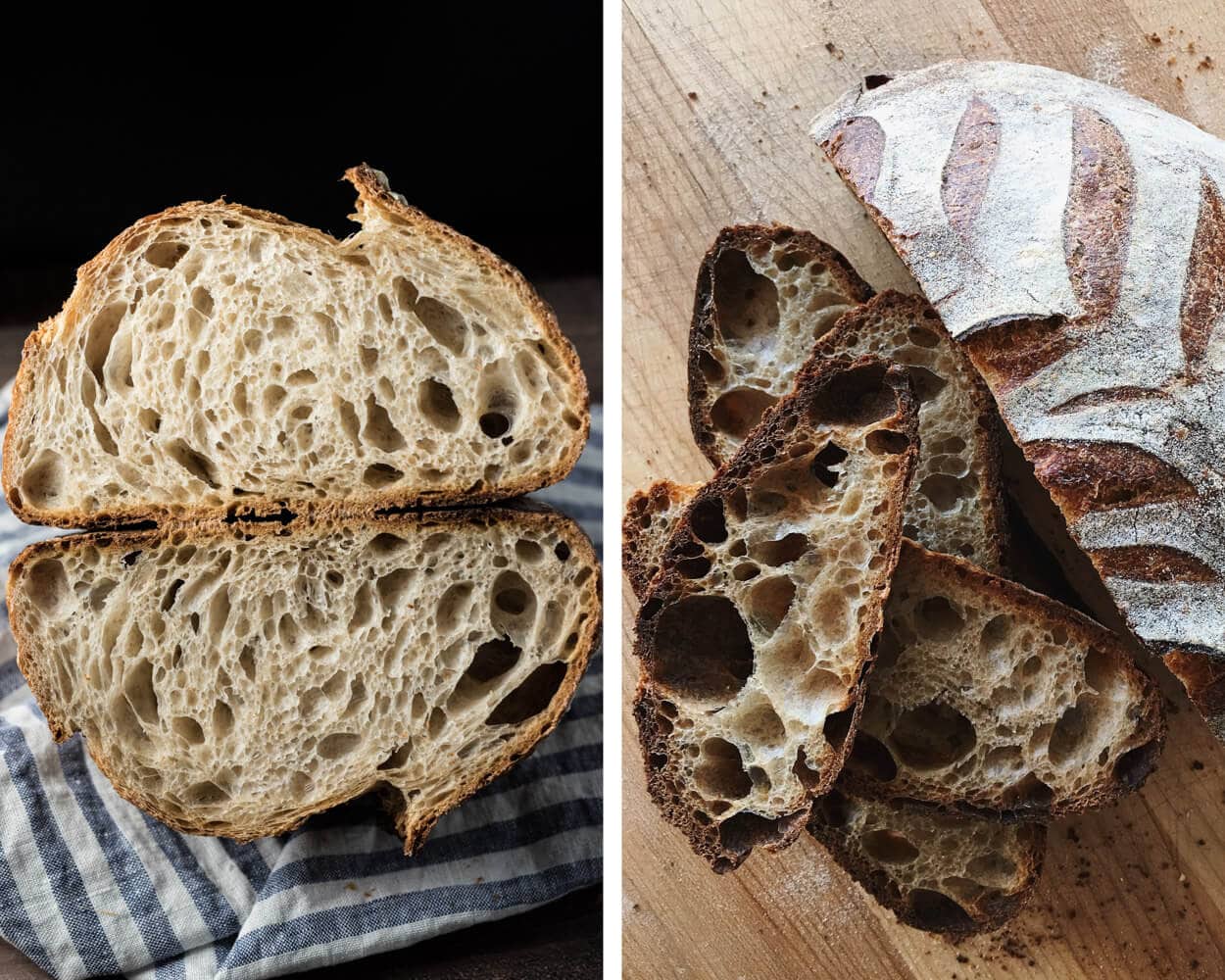
Also, how can I capture more air to get a lighter loaf and a better oven spring, please? My bread tastes amazing, but I long for a lacy crumb with lots of big holes. I use stoneground flour but I do not have a mill therefore cannot my flour fresh.
Thank you for your reply and for your detailed recipes.
Hey Colette! It’s ok if your bread doesnt go over 96C, depending on your location that may be all it will ever get to.
It sounds like perhaps your dough was slightly underproofed. There are a few indicators your dough could be under: explosive rise in the oven, dense spots in the interior with potentially scattered large holes, and a gummy texture to the interior. Finally, it’s possible the bottom of the loaf might be slightly bowed upward (like the letter “U” — the top will kind of dome).
Make sure to build your levain from a starter that’s strong and mature (meaning it’s risen to it’s peak height before you take some to use). From there, bulk fermentation is very important! Make sure your bulk fermentation goes sufficiently far, you want the dough to look smooth, it should have risen considerably, and have bubbles here and there — it should look alive. If you tug on the dough a bit it should offer resistance to your tugging, it’ll feel stronger. Give the dough the time it needs in bulk fermentation! If you have to give it another 30m or hour to see these signs, do so. It’s important for this step to go sufficiently far for the dough to have enough fermentation activity before its proof.












501 Comments
Hiay Maurizio, last week I was on the Kelly Clarkson Show taliking about sourdough bread.. I thought you’d get a kick out of seeing the segment.
https://theglobalherald.com/entertainment/65-year-old-bronx-man-turns-quarantine-sourdough-hobby-into-a-full-fledged-bread-business/?fbclid=IwAR2w0WTaMdxzeZVNsSdjGTbIM00bEVNVwOigqlFvDYSAvbfXJbpCBUbzlMQ
You helped me that there! Thank you for sharing all your knowlege
Arnie Adler
Arnie, this is amazing!! Totally agree with you, I love the process behind it as well 🙂 Happy baking!
Hello I’m learning so much from you and all the questions and answers on this site. I live at sea level in N Wa state. Once in a while I have an edible loaf but have a lot of throw always. I use KA flour but have now ordered Central Milling flours with higher protein which I haven’t opened yet I’m using your starter recipe. I think part of my failures is that it isn’t bubbling enough. It doubles and starts to recede every 12 hours but I think it doesn’t have enough omph to raise the bread. Yesterday I started your best sourdough recipe. I made the levain did the autolyse but the levain didn’t bubble like your picture before it started receding so I tossed the whole thing rather than baking another brick. What can I do to change this?
Feed it consistently, keep it warm, and wait until your starter is showing strong signs of fermentation before using!
ok…. so on the morning of day 6 i got distracted and forgot to do the discard of the starter before feeding it. have i blown it and need to start over??
Do not start over! Keep going with the schedule.
Hi Maurizio, do you have any experience with the Camp Chef oval roaster and any advice you could offer? I’d like to make a batard shaped loaf, and plan to use a 14” oval banetton. What quantities would you recommend for one batch? Would appreciate your insights. And a big Thank You for creating ThePerfectLoaf. Thanks to you we have been making unbelievable sourdough bread at home since the pandemic started. We practically have not bought any bread since. Grazie1000, Stefania
Hey, Stefania! I do not have experience with that roaster, sorry! But, as long as it forms a nice seal and keeps steam in, it’ll work just fine. So glad to hear my site has helped!
Hi Maurizio,
I’ve been baking sourdough for two years. Your website is my guide, and I’ve really progressed. I’m very discouraged, however. Despite two years of practice, a very active starter, and the right equipment and good ingredients, I’m having a persistent problem getting oven rise. I’ve made your beginner’s and best recipes many, many times. My bread tastes delicious, and looks great when I put it in the bannetons. As soon as I unmold it the next day and score it, however, it starts to spread. After baking, it’s pretty flat. I never get the kind of rise I see everywhere on line. I’ve watched all of your videos, and am wondering if you have any recommendations for next steps. Thank you so much.
Glad to hear my site has helped, Cynthia! It sounds like either your dough is over hydrated, under-strengthened, or in the extreme case under proofed. I would try dropping the hydration of whatever recipe you’re working with by 5% or so, and see how that goes. You should feel the dough be much stronger and not collapse when scoring.
If you’re a TPL Member please post pictures to the Discord channel so I can see and help! Sorry for the delay to your message 🙂
Hi Maurizio ! You are an amazing baker ! I am a beginner home baker from Chennai, India, and I have learned so much from your instructions via your website. Regarding generating steam in my newly acquired Siemens Combination Oven with Microwave (Model No.: CM676GBS1/35), can I use one of my Lodge 6.5 ” cast iron grill pan for the lava rocks ? Or, do I need a slightly larger grill pan ? By the way, do the lava rocks need all type of specification ? The width of my oven is approximately 18 inches x 16 inches, and there is no open coils at the bottom. I plan to follow your instructions to the tee. At present I am gathering all the specific tools that I need. Thank you. Take care and stay healthy.
Thank you! Yes, you can absolutely use a Lodge. However, if your oven injects steam at the push of a button, you might not need to using the lava rocks at all.
Ah, ok gotcha! Yes, a small pan will work just as well. Thanks for the comments and happy baking!
Hello, Maurizio! Thank you so much for your authentic and carefully-constructed recipes. We’ve enjoyed your sourdough loaves and bagels for over a year now, and are excited to try more. Although we’ use recipes from other sites for our day-to-day sourdough loaves (they’re less fuss…) they are nowhere near the quality that yours are. I have a question regarding giving and/or selling loaves that use your recipes. What is the best way to credit you and/or recompense you?
Hey, Emily! You’re very welcome, really glad to hear my site has helped you bake some wonderful creations—and that they’ve come out so great! No need to recompense me for selling anything you make from here, you baked them 🙂 If you feel inclined, and it’s by not means necessary or mandatory, there are yearly support options through the TPL Membership, which helps me keep the site up and more posts coming. I appreciate anything you might contribute, and again, not mandatory.
Happy baking and keep in touch, would love to hear if you go on to sell!
Hello, Maurizio! Thank you for this fabulous site and your wonderful contributions to the Sourdough world! I am a new ‘neighbor’ living in Northern Arizona at 5,300 ft elevation. I apologize if this question is repetitive, but are your recipes written for sea level, and I need to make adjustments, or are they ready for high altitude baking as written? I love your High Altitude Baking Guide, by the way. Thank you!
Hey, neighbor! At your altitude all the recipes here should work just fine as-is. Always be mindful of dough hydration, though, which is sometimes we always need to watch given differences in flour and climate. Happy baking, Chris!
Thank you for this great site Maurizio. 1st attempt at making a starter. I never got any kind of rise out of it the 1s day or 2 like in your picture. Should I continue or start over? It does look OK to me and similar to your day 4 pictures, but from my experience making bread with Yeast, if you don’t get that really good rise, the bread isn’t likely to be what I want
You’re very welcome! Continue with the process and the schedule, don’t worry about the first few days and how yours looks. And, don’t worry too much about how much your starter rises, either, I like to use other metrics for how strong it is. At this stage, though, just focus on getting consistent signs of fermentation each day. Stick to the schedule for a week and see how it’s going!
Ok will keep going. Since I am a once a week baker, is it ok to continue with a once a day refreshment or do I need to switch to twice a day at least until it gets going?
Once a day works just fine!
Hi Maurizio, I want to thank you for all you have done on this website! Thanks to you I bake various breads, make my family happy and with our high yielding garden, produce 90% of our own food! You have helped me greatly to become selfsufficient! Thank you for that!
Ah, so happy to hear that, Jana! I think it’s incredible you’ve got a high-yielding garden and bake your own sourdough bread—can’t beat that! Happy baking 🙂
Hi! I want to mention that every time I print a recipe from this site that Page 2 always cuts off the top. I have received recipes from friends in email and their printed recipes also have the top of the Page2 missing. for instance Step 1 of instructions are generally cut off. I have tried to change the layout. Any suggestions?
Very strange, Randy. I don’t see this here, the recipes print fine and full. I’ll look into this a bit and see what’s happening!
I just discovered you, thank you for sharing your knowledge and the amazing recipes.
Happy to help, Kimberly, and happy to have you along! Have fun and let me know if you have any Q’s.
Hello. I am new to Albuquerque and love to make bagels. What is a local source for Hi Gluten flour?
Hey, welcome to ABQ! Unfortunately, I don’t have a source for locally milled high protein flour. King Arthur Bread Flour will work well for bagels, though! You might also try Whole Foods, which carries Navajo Pride flour, I believe that’s stronger flour but I haven’t had a chance to test with it, yet.
Thanks for sharing all these wonderful recipes Maurizio. I started with your beginner sourdough recipe and work my way up to your best sourdough recipe all have come out amazing although I’m still working on getting the correct strength needed for the higher hydration recipes.
I really enjoy a very tangy taste to my sourdough and was wondering if you had any tips to increase the sour flavor or recipe recommendations for an extra tangy loaf.
Thanks,
John
You’re welcome, John! For more sourness you can add in a bit more whole grains and try using your sourdough starter or levain when it’s very ripe. An overnight proof at cool temperature (in the fridge) will help!
Do you have any plans to publish your recipies in a book? I keep bringing my laptop into the kitchen and getting flour all over my keys. I’d love to support your work while also having a nice book to sit in my kitchen for referencing for baking.
Working on it 🙂
Wow! Thank you! Foolishly, we decided we couldn’t wait until warmer weather to try your “beginner’s sour dough.” I say ‘foolishly’ because it’s still winter here, and 65 degrees in the house isn’t conducive to bread baking. Despite that, and despite interruptions (surprise Covid shot appointments, etc), the result was unbelievably good. We used KA bread flour and a locally produced, heirloom, whole grain flour. We were slightly apprehensive that “bread flour” might produce a seriously chewy bread, but not at all. It is perfect. The only change we’ll make for the next time will be to divide the dough into 3 proofing baskets. The loaves are pretty large for 2 seniors to eat in a short time. We have the baskets, so this is no problem.
So glad to hear they turned out great, guys! That’s part of the challenge with baking, but also part of the fun: adjusting on the fly as things come up and relying on your instinct with how the dough is progressing to still make it through the bake. So many times things have come up here and I’ve had to pivot and make it work. Usually works out ok, too 🙂 Enjoy!
I appreciate your website and your explanations. I read your explanation of Levain because I’ve been puzzled by the distinction between starter and Levain. My interpretation is slightly different from yours.
I make sourdough maybe once a week and sometimes only once a month. I feed my starter twice a day. My starter tends to become more sour over time. When a small a small amount of “older and sour” starter is combined with larger amounts of flour and water (on the morning of making bread) to create Levain, the result is much “younger and milder” than the starter. This process avoids much of the sourness and brings forward the flavors of the grain. The starter is also refreshed by using the excess Levain as the new starter.
I think our process is similar! Using the leftover levain to continue the starter works as well, I used to do that. Nowadays, I simply keep my starter separate, mostly because I’m afraid I might forget to keep that bit of levain going 🙂
So many ways to make great bread!
Ciao Maurizio!!
Thanks for your the amazing articles…
My wife would like to have bread with onions, a recipe typical from Sardinia. Do you have any tip on when I should add the onion? I think I could do it during the pre-shape step but I wanted to get the feedback from the master 🙂
Thanks a lot!
Ciao! I’ve never made bread with onions, believe it or not! Typically I like to add inclusions in during bulk fermentation, near the beginning. That’s where I’d add them 🙂
You have a new challenge then 😀😅 I will try it as you suggest… Thanks a lot!
So… I tried and it worked 😀 Actually it came out pretty good.
I used the Beginner sourdough bread recipe as the base for it and I added sliced onions along with the salt (after the autolyse). The beginner recipe does not have a very high hydration so it was good because onions will release some water. The only thing I would change next time is that I will chop the onions…and maybe add some olives as well 😉
So great to hear that!! Sounds delicious, I need to give it a try.
Attempt number 2 🙂
This time I used chopped onions and sliced black olives 🙂 So good!!!!!!!
Excellent, Gianluigi!
Maurizio: I loved your article on preferments. It was very informative. My question involves converting a yeast-based recipe to one that uses a sourdough preferment along with the yeast. Because I am addicted to them, I have been baking Bialys, using a Jeffrey Hamelman recipe from his book – 2nd edition pp 332 and 333. I’d like to add a preferment to that recipe to kick up flavor and shelf-life. I’m thinking I can just make a preferment, subtract water and flour from the dough mix and make the final dough with preferment. Where I get bogged down is deciding how much preferment to use and how much mature starter to use in the preferment. Also, do I need to adjust the yeast in the recipe to allow for leavening power of preferment. Any help wiould be greatly apprecieted.
Hey, Peter! I plan to work on bialys here at some point. I have very little experience in working with instant yeast, but what you’re saying is the approach I’d take. You could take a look at Hamelman’s book for any recipe where he makes a poolish (baguettes are common), that should give you an idea how to build a preferment for the bialy!
Thanks for the tip. I’ll give it a try. Would love to get your take on sourdough bialys, By the way, this weekend I made your sunflower/sesame sourdough bread. The result was absolutely spectacular! I didn’t have black sesame seeds, so I used toasted white seeds without soaking them (no hulls). The flavor was excellent, but I now need to go again for the black seeds. The end result of all this is that my friends are all enjoying the fruits of my learning experiments. Give a man a loaf of sourdough bread and you’ll feed him for a day or so. Teach him to bake sourdough and he’ll gain 10 pounds in a month.
Hi Maurizio,
I love your recipes and knowledge…thanks for sharing them! I’m a new bread maker and I’m lucky to have a Miele steam oven. Have you ever used something like that to bake bread? If so, what do you think of it? I’ve been using it and most of my loaves come out looking great…some have been very dense but I think that has to do with other newbie issues.
Thanks!
Allie
Hey, Allie! You’re very welcome. I’ve never used one of Miele’s ovens, but I sure wish I had one! It should work very well. It sounds like perhaps your dough might have been under proofed, which is a common issue with results like that. I’d say yes, your oven should be fine!
Hi Maurizio,
I’m having an issue with the sunflower/sesame seed bread. The first time I made it it was fantastic and there were no problems, but the second time the dough seemed to lose its gluten flexibility and felt dead in my hands. I ended up putting the dough to rise overnight in bread pans and it was very dense but flavorful. I’m now starting the bulk fermentation and when I addled the salt the dough started to lose its flexibility and the feeling of it being alive. I did a bunch of stretch and folds and finally put it in the bowl to continue the fermentation. I’m feeling discouraged and think I’m on the same path as last time. How can I get the gluten formation to pick up and get rid of the sticky-ness ?
That’s interesting, Jane! Just to be sure, make sure you’re adding salt at the mix stage, and not during bulk fermentation. Adding salt will cause the dough to tighten up, that’s one of the effects salt has on dough. But it shouldn’t be super excessive, your dough should still feel just fine (although a bit more elastic). Are you making sure your dough is kept warm and around the final dough temp I have listed in the post? If you use your starter and levain at the right time (when ripe), and the dough is warm, you should see plenty of rise during bulk fermentation.
Hello Maurizio! Wonderful to have just found your site! Sounds like you know your stuff, regarding actual sourdough. I’ve found too many sites saying that in making starter, you use flour, and milk and/or sugar and/or (heaven forbid) yeast! I’m only a few weeks into both a whole grain starter & a gluten-free starter. I’ve been feeding 1/4 cup flour & 2-3 TBS water AM & PM, and discarding once a day. I now have way too much discard and way too much starter (as in, I will never use this much). This evening, I’m going to take these down to the small measurements you’ve explained on your site … so suggestions of how to dispose of the discard? Thank you so much for all this great info! I will be looking for that book!
Hey, Tess! Glad to have you here and thanks for the kind words. Yes, I have lots of great stuff to do with the discard; check out my page on using sourdough starter discard for things like banana bread, waffles, pancakes, etc. They’re all fantastic. Happy baking!
Here’s a fun question: What temperature do you use for bassinage water that is being mixed in a large mixer (Estella)
Best,
Elena
What I typically do is take the temp of the dough in the mixer before adding the bassinage water. If it’s below my FDT, I know that I might need to warm that bassinage water as a last minute adjustment (and conversely, if the dough is warm, I can use cooler water). But, you must also take into account your mixer: in your experience, will it warm the dough during this last bit of mixing? If so, factor that into the water temperature as well.
Hi Maurizio! I love your site and recipes! I thought I’ve seen posts of your Sourdough English Muffins and can’t find the recipe. Do you have one? Thank You
Thanks, Susan! I don’t have a recipe for English muffins up just yet, but it is something I’ve been working on! It’s not quite ready yet, they are finicky little things 🙂
Thank you for the fast response! I’ve heard that they are fussy and I’m going to finally try them. Fingers crossed!
If you made a cookbook I’d totally purchase it!
Thank you! I might be working on something 🙂 Stay tuned…
Whoa !!! That would be a treat indeed
Are you still using the Sangre de Cristo organic flour? Has the flour company changed names? Is it still available?
I haven’t been able to find it in some time, but I had heard it was available again. I’ve been wanting to check at the local co-op to see if it was back! I have also noticed they now carry Navajo Pride flour (which is local) at our Whole Foods. That’s another flour from the Southwest I’m eager to try.
I just killed my 4 year old starter!!!! I have been using your website for the last 4 years making bread. Recently I had been getting comments that my sourdough wasn’t very sour so I turned to your site and tried to work with my starter to get it up to speed (thinking thats the problem). I read that I actually didn’t need to refrigerate like I had done for years if I was going to feed often. Between working as a nurse in the ER during a pandemic and going to NP school I didn’t get a chance to feed it every day and it was left on the counter… I think today was the day of its death. It smells absolutely terrible. I tried to feed it today but it has the worst smell. Its interesting in the glass container the top and the bottom have no bubble but the middle section does. Before I throw it all away if anyone has any insight ill take it. Thank you Maurizio for all you do on here. I love creating breads that everyone loves. Oh and congrats on your aware.
Ah! I totally understand, sometimes life gets in the way, not much we can do there—it’ll be ok. As long as you don’t see any signs of mold (green/pink/fuzzy white), like you’d normally see with food that’s gone bad, it might still be just fine. If you don’t see those signs, I’d discard quite a bit of it, only leaving behind a small bit in the jar. Then do a normal refreshment and keep it at room temperature. If you have whole rye flour, use some of that to do the refreshment as well.
Try that for a few days and see how it responds. If it shows signs of mold, sad to say, it’s best to toss it out.
Keep me updated!
Congratulations on winning the best Elementor design award!
Thank you so much, Manfred! So excited to have won, incredible!
I never expected the mere mention of it to be interpreted as a dropped hint, but lo and behold, I RECEIVED A BROD & TAYLOR FOLDING PROOFER FOR CHRISTMAS!!!!
Currently proofing a biga for tomorrow’s focaccia; yesterday I made quark and it’s delicious. Thanks for the recommendation, can’t wait to proof some terrific sourdough bread to eat with a slow-cooked pork shoulder!
Sometimes planting that seed is all we need to do 🙂 Glad to hear that! I’m confident it’s going to help you in your baking. Here’s to a wonderful 2021—happy baking!
My Bagels are excellent except soft. Difficult to slice. Any suggestions?
Hey, Neil. Hmm, it could be a few things: under baked, too high of a hydration, or too much steam in the oven. I’d first try baking them a little longer. You might want to reduce the temperature if they start to color too fast, then extend the bake time–that’s where I’d start!
Thanks will try next Saturday
Tried lower temp. and baked longer. These Bagels are Great. Thanks for the suggestion
Super glad to hear that, Neil! Enjoy and thanks for reporting back 🙂
I dont see it!
Thanks (it’s fixed) and super happy to hear I’ve helped, Rob! Here’s to more awesome baking next year 🙂
That looks delicious (hence the website name 🙂). Thanks for pointing out those additional typos—now fixed. Happy New Year!
Love your Tartine Country sourdough recipe!!! But a question about starter management: If refreshing my starter every day is out of the question, how would you recommend I bring my starter to full strength a day or two prior to weekend baking?
Many thanks,. Liz
Hey, Liz! Check out my weekend baking schedule, it’s exactly what you’re looking for!
Yes it is! Sorry I hadn’t found it BEFORE asking you. You website is the ultimate in providing good information and inspiration for sourdough baking. Thanks again for all you are doing😘
No problem 🙂 Happy to help and happy baking, Liz!
Mauricio! Hi from a fellow NM baker (up in Los Alamos). This has been the year for me to finally nail my sourdough bread – after 9 years of more or less unsuccessful fiddling. Thanks to your blog I’ve also tried a bunch of other sourdough recipes. Your pancakes and pizza dough are favorites around here. But I was disappointed that I could not find a Panettone recipe here… Do you have one you recommend for this altitude? Would really appreciate suggestions. Thank you! Alex
Hey, Alex! It’s great to hear from a fellow NM resident. Also happy to hear my recipes have been working well for you! I have been working on panettone for a long, long while… But I’m not quite where I want it to be just yet. I do plan to have a recipe posted here once I get there! You could try searching online for recipes by a few Italian masters, Massari or Pepe, there are some out there 🙂
Question: How long is fresh-milled flour, well, fresh-milled? In March I ordered some high protein flour from Janie’s Mill and I have, for the most part, stored it in the fridge. At 9 months old, is it considered ‘fresh”, and how would you treat it with regard to autolyse?
Great question, Becky! When I say “freshly milled flour” I’m usually referring to flour that’s been milled within a week or so, but that’s my arbitrary cutoff and based on my experience in milling. I do notice that even if I use it after a week it’s still usually more “active” than aged flour from a mill. I would say an autolyse with that 9mo. old flour would be just fine. In fact, many bakers autolyse freshly milled flour as well with no ill effect, I just prefer not to do so.
Hi Maurizio
I follow your website with great interest. I started baking bread 18 months ago and feel I still have a long way to go. My biggest challenge is overcoming a slightly gummy inside. I’m getting the hang of working with high hydration but my bread never reaches the high temperatures suggested in the recipes. Can the inside of a loaf reach temperatures of 95-99 degrees in a domestic oven, please? My loaves do not go over 96 degrees Celcius.
Also, how can I capture more air to get a lighter loaf and a better oven spring, please? My bread tastes amazing, but I long for a lacy crumb with lots of big holes. I use stoneground flour but I do not have a mill therefore cannot my flour fresh.
Thank you for your reply and for your detailed recipes.
Best regards
Colette
Hey Colette! It’s ok if your bread doesnt go over 96C, depending on your location that may be all it will ever get to.
It sounds like perhaps your dough was slightly underproofed. There are a few indicators your dough could be under: explosive rise in the oven, dense spots in the interior with potentially scattered large holes, and a gummy texture to the interior. Finally, it’s possible the bottom of the loaf might be slightly bowed upward (like the letter “U” — the top will kind of dome).
Make sure to build your levain from a starter that’s strong and mature (meaning it’s risen to it’s peak height before you take some to use). From there, bulk fermentation is very important! Make sure your bulk fermentation goes sufficiently far, you want the dough to look smooth, it should have risen considerably, and have bubbles here and there — it should look alive. If you tug on the dough a bit it should offer resistance to your tugging, it’ll feel stronger. Give the dough the time it needs in bulk fermentation! If you have to give it another 30m or hour to see these signs, do so. It’s important for this step to go sufficiently far for the dough to have enough fermentation activity before its proof.
Thanks Maurizio … will work upon your advice and see how I get on. Best regards