Teaching the art of sourdough bread, pizza, and more.
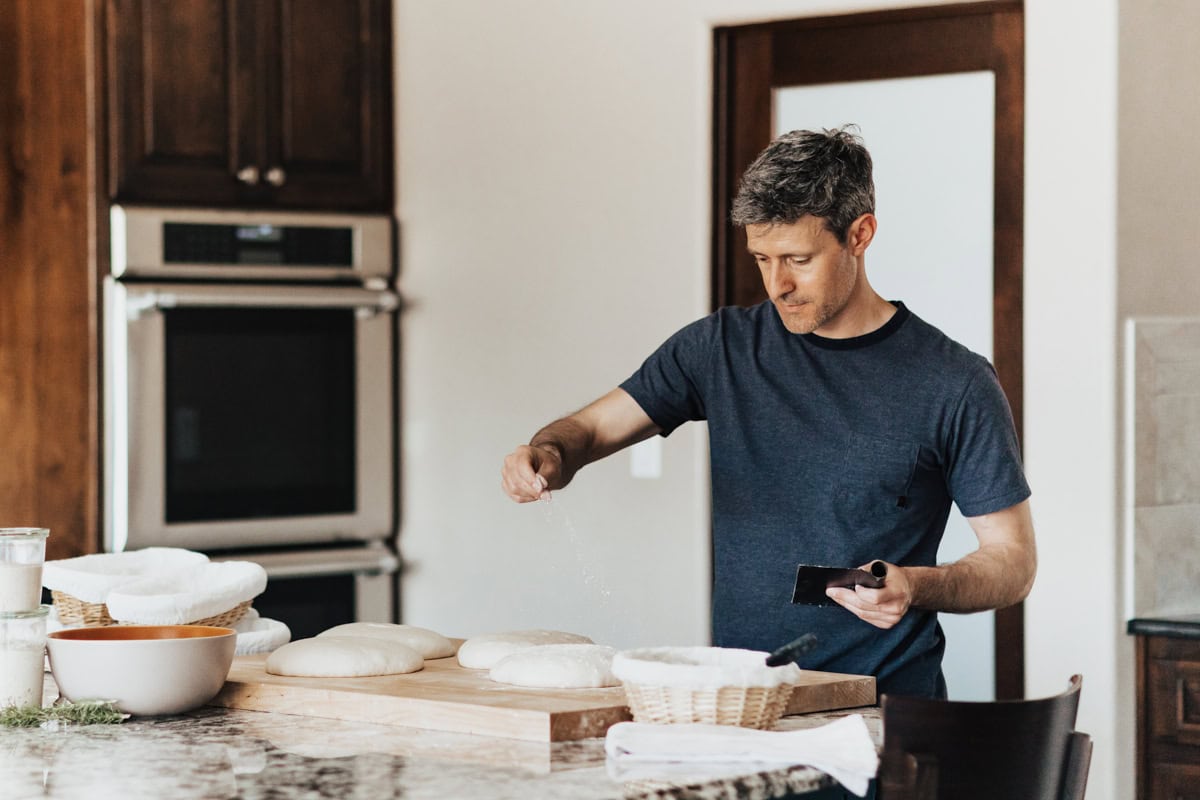
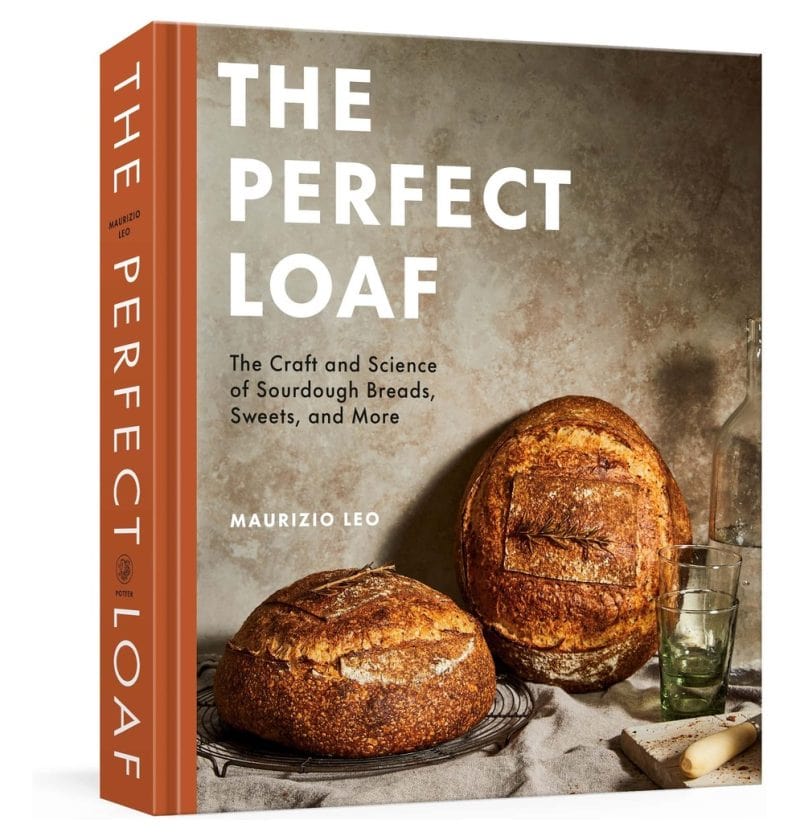
Hello there, I’m Maurizio Leo, the James Beard Award-winning, New York Times bestselling author of The Perfect Loaf and The Perfect Pizza, and the creator of this site. Since 2012, The Perfect Loaf has been the leading independent resource for baking sourdough bread and pizza at home.
But long before any of that, I was a kid in my dad’s pizzeria in Albuquerque, watching him work dough.
The Restaurant (as we called it), along with my mom’s gnocchi at home, taught me early on that good food made by hand takes time. Summers in Italy, with their long family meals and fresh bread hunts, only cemented it.
I took the long way back to dough: a master’s degree in computer science and years spent writing software before I founded The Perfect Loaf in 2012 (and along the way, the site picked up a couple of Saveur Blog Awards and a Webby nomination). The engineering never really left me, though. It’s why every recipe here leans on temperatures, iteration, and written-down results rather than feel alone. But at some point the measuring ends and baker’s intuition takes over. Great bread isn’t complicated technique—it’s simple technique done with attention and flavor given time to develop.
I’m still learning and still experimenting, and if I’m not baking sourdough, I’m probably thinking about it.
He strives for perfection, for the perfect loaf, secretly hoping never to attain it — for where would he go from there?
Jeffrey Hamelman
Every Sourdough Recipe Is Tested. Repeatedly.
Before I publish any recipe, it’s baked repeatedly in my home kitchen using the same ovens, same tools, and same ambient temperature chaos you’re working with. I log dough temperatures, fermentation times, and results for every test bake (the same baking notes worksheet I share here).
One thing that surprises readers is that recipes here continue to evolve after I publish them: I’m constantly learning and improving as a baker, and reader comments and questions regularly send me back to the kitchen to retest, clarify, or fix. If a recipe here says 20 minutes, it’s because that’s what worked across many bakes, not once.
My Cookbooks
The Perfect Pizza
Sourdough pizza, focaccia, and more than forty regional styles from New York to tavern to al taglio to Sicilian, with every dough built to use a sourdough starter and tested in home ovens, pizza ovens, and everything in between.
Baking is better with other bakers. Members get exclusive recipes and guides, and a place in our community where questions get answered daily (often by me, always by someone who’s had the same dough problem).
A few times a year I host small group bread trips to visit cities, farms, mills, and bakeries in search of incredible bread and the food that goes along with it. Or, join me in my next baking workshop!
If you have a burning baking question, I usually hang out with many like-minded—and very helpful!—bakers on The Perfect Loaf’s Discord, where you can post questions, comments, and photos. Come join the community and ask a question.
That’s great to hear, Flai! I’m happy to help. I don’t yet have a bagel recipe up, but it’s something I’ll be working on (hopefully sooner rather than later!) 🙂
Hi Maurizio I’ve been trying quite a number of your super tasty recipes over the last 12 months; thanks so much for starting this website! Whilst I was looking through your recipe list I realize you have not put up at bagel recipe there. Any chance you might include a bagel recipe? I love bagels with cream cheese along with smoked salmon.
Hello Maurizio,
I just stumbled on your site and realized we are both in ABQ. I’m returning to sourdough baking after a long lapse and have been following in Ken Forkish’ Flour Water Salt Yeast book. I’m glad that your recipes are adapted to high altitude. I’ve found that reducing yeast by about half works pretty well (for 5200′ asl), but it is always a bit of a puzzle.
A thought on flour: I have been able to get small amounts of Navajo Pride unbleashed AP flour here in Albuquerque. It is excellent, grown and milled in Farmington NM at the Navajo Agriculture Project. They also make a whole wheat that I haven’t been able to get hold of.
Hey, David! It’s great to hear from a fellow New Mexican. That’s awesome you’re using that flour — I’ve heard of it but haven’t had a chance to try it. I used to use Sangre de Cristo which was really nice. I’ll have to keep my eye out for NP flour!
Have just stumbled across this website after thinking of things I can do in self isolation here in London! Not sure what it’s like in the States but there is no bread or yeast on the shelves. Sourdough all the way! Wish me luck!
Generally, the protein percentage will play a pretty large roll in the hydration of the dough and ultimately how strong it is/feels. At 15%, you’re working with an extremely strong flour, in fact, that’s higher than I’ve ever used (I’ll have to remember this for panettone!). I like CM ABC because it’s a lower protein but perfectly suitable for bread making — I like lower protein because, to me, it yields a bread that’s more tender, creamy. You could mix ABC with their High Mountain offering, which is 13% protein, and this is typically what I do when I need additional strength in a dough. High Mountain is similar to a “bread flour” you might find in the store (like King Arthur Bread Flour).
Sounds good about the starter! Activity like that is what you’re after 🙂
Wow, if you have done the La Luz trail, then I bow to you. My days of hiking at these altitudes are behind me. I do LOVE my adopted state, New Mexico. We are even thinking about building an outdoor horno-style pizza oven that will double as a bread oven.
I do have another question. I am looking at making a Central Milling flour purchase, and I am wondering if a flour with a high protein content of 15% (Tony Gemignani’s pizza flour, for example) could be substituted for the Organic Artisan Baker’s Craft Plus which has 11.5% protein. Does the protein content effect the final product dramatically? I’m staring at having to store 100 lbs. of flour if I buy both. ‘Twould be cool if one flour worked for both . . . .
One more thing: I drained off the hooch on top of my refrigerated starter, added warm water and bread flour (heavy batter consistency) and my starter is now behaving like it’s on steroids, all bubbly and happy after 2 hours. I think a second feeding may blow the lid off! Actually, while I wait for all my supplies to arrive (thanks for all the links to Amazon) I’ll just put it back in the fridge.
Sorry if this has been answered before, but what do I do with the liquid (hooch) that forms on top of my refrigerated sourdough starter? Do I pour it off or stir it back in? I feed my refrigerated starter about once a week but if I don’t get to it for two weeks (or more) quite a bit of liquid accumulates.
I am so excited to have found this website! I live in East Mountain and you are local! I look forward to reading high altitude baking tips. We’re at 6800 ft. and I am learning to make adjustments for this altitude. Do you buy your Central Milling products locally? If so, where? Thank you!
Stephanie — I usually stir it back in if there’s not a lot, but you can also pour it out if you’d like. Either way is just fine. Check out my sourdough starter FAQ for more questions and answers like this one!
That’s great, wow you’re really up there! But I guess the Sandia Mountains do get up to 10,000 ft (I’ve hiked it many times!). I order quite a bit from Central Milling online, but not locally.
Hey, Douglass. No need to add gluten (I assume you mean vital wheat gluten), I’ve never done this in any of my breads. Some bakers find it necessary if their flour isn’t totally suitable for making bread, but I haven’t found this necessary. Thanks for the kind words and happy baking!
A quick question if I might. When making Sourdough, does it help at all to add some gluten along the way? Your site is fantastic – so much great information. Thank you.
There are not enough hours in a day for me to keep up with all the helpful information you have made available! Every time I make another loaf, I conclude it’s my favorite until I make the next one. My family is pretty addicted to the barley loaf, at the moment. I’m going to buy a baking steel. The link on your tool site has three options: 1/2 inch, 3/8 inch and the “original.” Do you have a recommendation?
Thanks so much, Ken! That makes me happy to hear your comments. There’s really no end to the fun and experimenting in sourdough, I say. As for the Baking Steel, any thickness will work, go with the cheapest option — they all work very well!
I’ve recently taken up great interest in baking, and I really want to be able to bake a nice loaf of bread. I found your site to be incredibly helpful for newbie like myself. Thank you for taking the time to share with me your experiences and outcome of your bake!
Hey, Saundra! I can relate to sleepless nights thinking about a starter… happens here frequently 🙂 It’s great to hear from a fellow New Mexican! Unfortunately I don’t know of any stores here in ABQ that are dedicated to baking. There’s a store in Santa Fe called Modern General you might want to visit: they have a cool collection of wares and might have some baking goods. It’s a nice little cafe for lunch, too. And while you’re here in ABQ, check out Los Poblanos, they have a Farm Shop that has lots of handmade goods and just might have some baking stuff as well. Los Poblanos is also a fantastic place to eat (you might need reservations for dinner). Have a good trip and happy baking!
I came across your blog on this sleepless night. What a treasure of information. I couldn’t sleep and just wanted get up and go check my starter. For the first time I am trying to change it to half whole wheat, and just really had to see how it looked. At 3am it is looking wonderful, and I am waiting for the rest of the house to wake up so I can start baking. I was so excited to see that you are in Albuquerque. I am traveling down from Taos and was wondering if you have a recommendation for a store I can get some baking equipment, specifically a proofing basket, and flour, because I guess I need to up my game in that department.
Really glad to hear that, Sabrina! Yes, here in Abq, NM that’s a real issue for me, too. I don’t like to put any lotion on my hands when dealing with dough (of course!) but after my last set of stretch and folds I lather up with O’Keefs hand cream — that stuff is the best!
Maurizio, my baking has grown leaps and bounds since I discovered your site – thank you! Being successful at sourdough baking brings joy to my soul. Real talk, though – how do you keep your hands from drying and cracking?? I live in northern AZ and all this stretching and folding is taking a toll on my skin! What’s your secret? 🙂
Wonderful site and resource! Thank you so much for sharing your experiences and helping others. I knew you must’ve had a software developer background when I first saw `WaterTemp` in your FDT equation 🙂 Congrats on the app, as well—did you do that yourself?
Hey, Mary. The amount of flour and water you use for your starter feedings can be anything you want, just be sure you’re keeping the percentages the same if you want to keep the same feeding ratios.
For example, if you’re feeding 20g starter, 100g flour, 100g water (baker’s math: 20% starter, 100% flour, and 100% water), and want to increase the quantity, you could double everything to 40g starter, 200g water, 200g flour — this would still maintain the percentages 20/100/100. Of course you don’t have to double or triple, you can increase by smaller amounts as well, you’d just have to work out the math to figure out the weights for each that would still satisfy the percentages.
I hope that makes sense, let me know if it’s still confusing!
Maurizio, I have a question about how to increase the amount of my sourdough starter. At present, I am following your basic starter recipe and feeding my starter twice daily. With the amounts of starter, flour and hydration I am using, I usually have about 3/4 cup of cast off with each feed. I have found some recipes I would like to make using my cast off starter but most of them require at least 1 cup of starter. What measurements would you suggest I use if I would like my starter to result in a little more starter with each feeding?
Maurizio, STRONG WORK brother. This blog is amazing. No other book or online resource I’ve read has as much detail about equipment, technique, and flour. Any additional information about central milling type 85? I know it’s not quite whole wheat but not fully refined either. Would it be fair to compare it to the composition of flour in your 50/50 recipe? Have you ever baked bread with 100% type 85?
Also, I live at 7400 ft, above Lake Tahoe. The air here is quite dry. Any suggestions for adjustments?
I used to believe Type 85 was easily substituted by a blend of 50% bread flour and 50% whole wheat, but I’ve since found out that Type 85 (at least from Central Milling where I source) is more like 33-35% whole wheat and the rest white. I’ve actually not done a 100% type 85 loaf but that would be excellent, I’m sure! It’s one of my favorite “types” of flour.
I live a mile up, so somewhat close to you. Typically I see my bakes require a bit more water than others and I have to bake hotter and longer to achieve a nice, dark crust. Additionally, I can usually get away with using less pre-fermented flour (levain %) — but this is also very dependent on your starter/levain and other conditions!
That’s great to know! And I’ve subscribed to your newsletter and am looking forward to a baking class. Altitude has interesting effects on bread baking, I’ve quickly learned.
Hey! Very cool. All my recipes should work perfectly for you. As always, though, every oven is different so keep that in mind when following my baking times and temperatures — keep an eye on that dough! Happy to have you here in ABQ, such a great city. Happy baking!
Hi! I recently moved to Albuquerque from sea level and am adjusting to high altitude baking. Are your recipes adapted to the altitude already or do I need to make adjustments (reduce starter, increase flour, etc.)?
Hey Maurizio,
You’ve probably gotten this before, but do you ever do in-person workshops for us ABQ folks? I have a strong feeling my home baking skills would jump (or rise?) leaps and bounds from a single or half day class from you. Thanks!
Hey, George! Yes, I’ve been asked quite a bit for more classes. Please sign up for my newsletter (there’s a “subscribe” button at the top right of this page), I’ll definitely announce to the list when a class comes up! You’re definitely right, there’s nothing like even just a single day of hands on instruction. Happy baking!
Hi Maurizio,
I’ve been trying to understand and create SD breads for about 3 years: read at least half a dozen books from some high profile bread writers, and tried all their methods – for some reason, they never quite worked out. Baking artisanal loaves using commercial yeasts and conventional rise and proof times were fine (eg: Jim Lahey’s no-knead worked great) but I know I was missing the real thing: beautiful crumbs, and deep coloured crusts, and just the powerful taste of sourdough from wild yeasts. I came across TPL a few months ago and it was like magic: the first loaf I made was like a dream – so beautiful, aromatic and tasty. I’m not sure why your method works, but I have to say your steps are clear, precise and right on. So: Grazie!
Question: oven temp is obviously highly critical – I know from having forgotten to turn down the temp just 25 degrees once for the 2nd half of a bake and having a blackened, carbon-y charcoal crust. But how confident are you in the temp control on your oven? Would you recommend using a temp gauge placed in the rack before putting the dough in? Or are the temps in your recipes just based on your oven?
Thanks,
smasharts
Sorry for the late reply and I’m so happy to hear my recipes have been working so well for you! Sometimes it just takes a little adjustment here or there to really change the outcome — and of course, a sourdough starter used at the right time and the right strength is very critical.
Yes, I would definitely recommend using an oven thermometer in there if you have one. I’ve tested my oven in the past and it was dead-on accurate, but there’s always that chance it’s drifted over the years. Regardless, it’s always important to take a look at the times and temps with any baking recipe and prepare to adjust them to some degree in your home oven. Altitude differences and oven differences will almost always require some type of adjustment in your home oven. My suggestion is to keep an eye on the dough at all times during the first few test bakes to see how things go. Then, if you notice my recipes are a little too hot for you (this is common because I’m at 5280 ft) take off some of the heat for all the recipes you see here.
I wish there was a better way to ensure consistent bakes for everyone, but that’s the name of the game with baking: adjustments, adjustments, adjustments 🙂
Hey, Martine. You shouldn’t have to oil and flour the sides of the pan, when I use a pan that doesn’t have non-stick I’ll just oil it thoroughly to ensure it removes cleanly. Hope this helps!
Firstly I would like to whole heartedly thank you for your amazing blog. Every loaf to come out of my oven (I’m up to ten, two loaf bakes) has been guided by your recipes. Your attention to detail and passion are obvious and as a fellow engineer (civil rather than software) I appreciate the devil is in the details in getting a simple yet complex process to be successful. I can say I have only had 2 of my 20 loaves fail – both due to human error – one during shaping, knocking all the air out and producing a tasty if not very vertically challenged loaf; the other fail was forgetting to put baking paper under one of my bakes! Doh!
I have a couple of questions that will hopefully fine tune my bakes. I am finding my loaves end up with a blackened bottom. I use a lodge combo cooker and feel that in order to cook the loaf the entire way through and get a crunchy top crust I am effectively burning the bottom. It still tastes good but once it is then toasted again to eat, it requires a strong jaw to tear into. I have also purchased a pizza steel at your recommendation for doing SD pizzas. I’m thinking for my next bake I could try placing the steel one tray level below the combo cooker as a thermal barrier (I use a conventional oven that heats from the bottom coil) as well as moving my combo cooker to the highest rack it will fit into to help prevent uneven heating.
Is this blackened base an inherent problem with this method of baking? I am yet to attempting baking bread on my pizza steel and steaming the oven. Would you recommend this method? I live in a rental with a less than ideal oven (poor seal, small, not very powerful – takes ages to recover after a bake of pizzas / bread) so I am concerned the self steaming method will loose too much heat.
Secondly I am currently using colanders lined with cloth rather than rattan proofing baskets. Would you recommend investing?
My next comment is that the world needs Maurizios take on the humble tortilla! I have been making SD tortillas weekly for the last three months. Quick, easy and they taste amazing – I would love to see your experience and accuracy used in coming up with your best recipe for this staple.
For a batch of 6
3/4 cup whole wheat
3/4 cup bread flour (or all purpose – these little guys aren’t picky)
1/4 teaspoon salt
1/4 teaspoon baking powder
1/2 cup water
2 tablespoons of fat – can use butter, coconut oil or lard
Leftover 100% hydration SD starter (a little under 200g)
Mix dry ingredients. Pinch or mix in fat. Pinch or mix in starter. Slowly add in water until it forms into a dough consistency. Leave to proof overnight in the fridge after and hour getting going on the bench. 4 hours in hot temps or 6-7 in cooler temps. Cool dough in fridge for easy shaping. Split, roll out and cook on a hot cast iron pan. Delicious!
Thanks again for all your work and providing everything I need to become well and truly addicted to naturally leavened baking!
Nick, thanks so much for the kind words — I’m happy to hear my website has helped so much!
Regarding the burned bottom: try preheating the oven with the Dutch oven (DO) at a lower temperature to help reduce the bottom from burning too much. Perhaps preheat at 475ºF. If you still get a slightly burned bottom you could sprinkle in some coarse wheat germ or cornmeal into the DO before placing the dough inside, this will help insulate the dough just a bit.
I would also recommend you not place the DO directly on a baking stone. Try placing the stone on the bottom rack and then a few rungs up use another wire rack to hold the DO. This way you won’t get so much direct bottom heat from the heating element. The stone on the bottom will also act as a buffer and prevent too much immediate, direct heat from the element — it should radiate out more consistently through the bake.
In general, I notice when I use a DO to bake I tend to get a slightly more baked bottom than sides and top — this is just the nature of using the DO, in my experience.
Regarding the proofing baskets: any proofing basket will work well, but I do love proper bread baskets. Wicker or wood ones tend to let the dough breath better somehow. I’d say they’re worth the investment but not a super high priority.
Regarding the tortillas: thanks for sending over your recipe! I’ll try yours out soon. I’ve been practicing this for a while… I live in New Mexico and tortillas are a staple here, I should definitely have a recipe up at this point — I’ve been bad, I know. It’s high on the list of things to post!











501 Comments
That’s great to hear, Flai! I’m happy to help. I don’t yet have a bagel recipe up, but it’s something I’ll be working on (hopefully sooner rather than later!) 🙂
Hi Maurizio I’ve been trying quite a number of your super tasty recipes over the last 12 months; thanks so much for starting this website! Whilst I was looking through your recipe list I realize you have not put up at bagel recipe there. Any chance you might include a bagel recipe? I love bagels with cream cheese along with smoked salmon.
Hello Maurizio,
I just stumbled on your site and realized we are both in ABQ. I’m returning to sourdough baking after a long lapse and have been following in Ken Forkish’ Flour Water Salt Yeast book. I’m glad that your recipes are adapted to high altitude. I’ve found that reducing yeast by about half works pretty well (for 5200′ asl), but it is always a bit of a puzzle.
A thought on flour: I have been able to get small amounts of Navajo Pride unbleashed AP flour here in Albuquerque. It is excellent, grown and milled in Farmington NM at the Navajo Agriculture Project. They also make a whole wheat that I haven’t been able to get hold of.
Hey, David! It’s great to hear from a fellow New Mexican. That’s awesome you’re using that flour — I’ve heard of it but haven’t had a chance to try it. I used to use Sangre de Cristo which was really nice. I’ll have to keep my eye out for NP flour!
Have just stumbled across this website after thinking of things I can do in self isolation here in London! Not sure what it’s like in the States but there is no bread or yeast on the shelves. Sourdough all the way! Wish me luck!
Same situation here! Have fun, stay healthy, and enjoy — you’ll love what you bake!
Absolutely! I do this all the time 🙂
when your starter is established, can you use the discarded part to make a sourdough starter to gift to a friend?
That’s totally fine, you can certainly use them mixed together in some ratio!
Generally, the protein percentage will play a pretty large roll in the hydration of the dough and ultimately how strong it is/feels. At 15%, you’re working with an extremely strong flour, in fact, that’s higher than I’ve ever used (I’ll have to remember this for panettone!). I like CM ABC because it’s a lower protein but perfectly suitable for bread making — I like lower protein because, to me, it yields a bread that’s more tender, creamy. You could mix ABC with their High Mountain offering, which is 13% protein, and this is typically what I do when I need additional strength in a dough. High Mountain is similar to a “bread flour” you might find in the store (like King Arthur Bread Flour).
Sounds good about the starter! Activity like that is what you’re after 🙂
Have fun!
Thanks. I just bought BOTH the CM ABC and the pizza flour. Apples and oranges, not interchangeable.
Wow, if you have done the La Luz trail, then I bow to you. My days of hiking at these altitudes are behind me. I do LOVE my adopted state, New Mexico. We are even thinking about building an outdoor horno-style pizza oven that will double as a bread oven.
I do have another question. I am looking at making a Central Milling flour purchase, and I am wondering if a flour with a high protein content of 15% (Tony Gemignani’s pizza flour, for example) could be substituted for the Organic Artisan Baker’s Craft Plus which has 11.5% protein. Does the protein content effect the final product dramatically? I’m staring at having to store 100 lbs. of flour if I buy both. ‘Twould be cool if one flour worked for both . . . .
One more thing: I drained off the hooch on top of my refrigerated starter, added warm water and bread flour (heavy batter consistency) and my starter is now behaving like it’s on steroids, all bubbly and happy after 2 hours. I think a second feeding may blow the lid off! Actually, while I wait for all my supplies to arrive (thanks for all the links to Amazon) I’ll just put it back in the fridge.
Sorry if this has been answered before, but what do I do with the liquid (hooch) that forms on top of my refrigerated sourdough starter? Do I pour it off or stir it back in? I feed my refrigerated starter about once a week but if I don’t get to it for two weeks (or more) quite a bit of liquid accumulates.
I am so excited to have found this website! I live in East Mountain and you are local! I look forward to reading high altitude baking tips. We’re at 6800 ft. and I am learning to make adjustments for this altitude. Do you buy your Central Milling products locally? If so, where? Thank you!
Stephanie — I usually stir it back in if there’s not a lot, but you can also pour it out if you’d like. Either way is just fine. Check out my sourdough starter FAQ for more questions and answers like this one!
That’s great, wow you’re really up there! But I guess the Sandia Mountains do get up to 10,000 ft (I’ve hiked it many times!). I order quite a bit from Central Milling online, but not locally.
Hope that helps and happy baking!
Hey, Douglass. No need to add gluten (I assume you mean vital wheat gluten), I’ve never done this in any of my breads. Some bakers find it necessary if their flour isn’t totally suitable for making bread, but I haven’t found this necessary. Thanks for the kind words and happy baking!
Thank you sir!!
A quick question if I might. When making Sourdough, does it help at all to add some gluten along the way? Your site is fantastic – so much great information. Thank you.
There are not enough hours in a day for me to keep up with all the helpful information you have made available! Every time I make another loaf, I conclude it’s my favorite until I make the next one. My family is pretty addicted to the barley loaf, at the moment. I’m going to buy a baking steel. The link on your tool site has three options: 1/2 inch, 3/8 inch and the “original.” Do you have a recommendation?
Thanks so much, Ken! That makes me happy to hear your comments. There’s really no end to the fun and experimenting in sourdough, I say. As for the Baking Steel, any thickness will work, go with the cheapest option — they all work very well!
Happy baking and thanks again!
You’re very welcome Cindy, I’m glad to hear I could help and that things are going well in your kitchen. Happy baking!
I’ve recently taken up great interest in baking, and I really want to be able to bake a nice loaf of bread. I found your site to be incredibly helpful for newbie like myself. Thank you for taking the time to share with me your experiences and outcome of your bake!
Hey, Saundra! I can relate to sleepless nights thinking about a starter… happens here frequently 🙂 It’s great to hear from a fellow New Mexican! Unfortunately I don’t know of any stores here in ABQ that are dedicated to baking. There’s a store in Santa Fe called Modern General you might want to visit: they have a cool collection of wares and might have some baking goods. It’s a nice little cafe for lunch, too. And while you’re here in ABQ, check out Los Poblanos, they have a Farm Shop that has lots of handmade goods and just might have some baking stuff as well. Los Poblanos is also a fantastic place to eat (you might need reservations for dinner). Have a good trip and happy baking!
Thank you for the info!
I came across your blog on this sleepless night. What a treasure of information. I couldn’t sleep and just wanted get up and go check my starter. For the first time I am trying to change it to half whole wheat, and just really had to see how it looked. At 3am it is looking wonderful, and I am waiting for the rest of the house to wake up so I can start baking. I was so excited to see that you are in Albuquerque. I am traveling down from Taos and was wondering if you have a recommendation for a store I can get some baking equipment, specifically a proofing basket, and flour, because I guess I need to up my game in that department.
Really glad to hear that, Sabrina! Yes, here in Abq, NM that’s a real issue for me, too. I don’t like to put any lotion on my hands when dealing with dough (of course!) but after my last set of stretch and folds I lather up with O’Keefs hand cream — that stuff is the best!
Maurizio, my baking has grown leaps and bounds since I discovered your site – thank you! Being successful at sourdough baking brings joy to my soul. Real talk, though – how do you keep your hands from drying and cracking?? I live in northern AZ and all this stretching and folding is taking a toll on my skin! What’s your secret? 🙂
Thank you and you’re very welcome. You’re right, old habits die hard! Regarding our app SkyView, there are three of us ☺️
Do you still do any dev work? I’m an iOS dev, too 🙂
Wonderful site and resource! Thank you so much for sharing your experiences and helping others. I knew you must’ve had a software developer background when I first saw `WaterTemp` in your FDT equation 🙂 Congrats on the app, as well—did you do that yourself?
Thanks Maurizio! That makes perfect sense.
Hey, Mary. The amount of flour and water you use for your starter feedings can be anything you want, just be sure you’re keeping the percentages the same if you want to keep the same feeding ratios.
For example, if you’re feeding 20g starter, 100g flour, 100g water (baker’s math: 20% starter, 100% flour, and 100% water), and want to increase the quantity, you could double everything to 40g starter, 200g water, 200g flour — this would still maintain the percentages 20/100/100. Of course you don’t have to double or triple, you can increase by smaller amounts as well, you’d just have to work out the math to figure out the weights for each that would still satisfy the percentages.
I hope that makes sense, let me know if it’s still confusing!
Maurizio, I have a question about how to increase the amount of my sourdough starter. At present, I am following your basic starter recipe and feeding my starter twice daily. With the amounts of starter, flour and hydration I am using, I usually have about 3/4 cup of cast off with each feed. I have found some recipes I would like to make using my cast off starter but most of them require at least 1 cup of starter. What measurements would you suggest I use if I would like my starter to result in a little more starter with each feeding?
Maurizio, STRONG WORK brother. This blog is amazing. No other book or online resource I’ve read has as much detail about equipment, technique, and flour. Any additional information about central milling type 85? I know it’s not quite whole wheat but not fully refined either. Would it be fair to compare it to the composition of flour in your 50/50 recipe? Have you ever baked bread with 100% type 85?
Also, I live at 7400 ft, above Lake Tahoe. The air here is quite dry. Any suggestions for adjustments?
I used to believe Type 85 was easily substituted by a blend of 50% bread flour and 50% whole wheat, but I’ve since found out that Type 85 (at least from Central Milling where I source) is more like 33-35% whole wheat and the rest white. I’ve actually not done a 100% type 85 loaf but that would be excellent, I’m sure! It’s one of my favorite “types” of flour.
I live a mile up, so somewhat close to you. Typically I see my bakes require a bit more water than others and I have to bake hotter and longer to achieve a nice, dark crust. Additionally, I can usually get away with using less pre-fermented flour (levain %) — but this is also very dependent on your starter/levain and other conditions!
That’s great to know! And I’ve subscribed to your newsletter and am looking forward to a baking class. Altitude has interesting effects on bread baking, I’ve quickly learned.
That’s definitely a true statement! Looking forward to hearing about your future bakes, keep me posted on how it’s going.
Hey! Very cool. All my recipes should work perfectly for you. As always, though, every oven is different so keep that in mind when following my baking times and temperatures — keep an eye on that dough! Happy to have you here in ABQ, such a great city. Happy baking!
Hi! I recently moved to Albuquerque from sea level and am adjusting to high altitude baking. Are your recipes adapted to the altitude already or do I need to make adjustments (reduce starter, increase flour, etc.)?
Hey Maurizio,
You’ve probably gotten this before, but do you ever do in-person workshops for us ABQ folks? I have a strong feeling my home baking skills would jump (or rise?) leaps and bounds from a single or half day class from you. Thanks!
Hey, George! Yes, I’ve been asked quite a bit for more classes. Please sign up for my newsletter (there’s a “subscribe” button at the top right of this page), I’ll definitely announce to the list when a class comes up! You’re definitely right, there’s nothing like even just a single day of hands on instruction. Happy baking!
I do! you can subscribe to my newsletter here. Happy baking, Susie!
Do you have a newsletter?
Hi Maurizio,
I’ve been trying to understand and create SD breads for about 3 years: read at least half a dozen books from some high profile bread writers, and tried all their methods – for some reason, they never quite worked out. Baking artisanal loaves using commercial yeasts and conventional rise and proof times were fine (eg: Jim Lahey’s no-knead worked great) but I know I was missing the real thing: beautiful crumbs, and deep coloured crusts, and just the powerful taste of sourdough from wild yeasts. I came across TPL a few months ago and it was like magic: the first loaf I made was like a dream – so beautiful, aromatic and tasty. I’m not sure why your method works, but I have to say your steps are clear, precise and right on. So: Grazie!
Question: oven temp is obviously highly critical – I know from having forgotten to turn down the temp just 25 degrees once for the 2nd half of a bake and having a blackened, carbon-y charcoal crust. But how confident are you in the temp control on your oven? Would you recommend using a temp gauge placed in the rack before putting the dough in? Or are the temps in your recipes just based on your oven?
Thanks,
smasharts
Sorry for the late reply and I’m so happy to hear my recipes have been working so well for you! Sometimes it just takes a little adjustment here or there to really change the outcome — and of course, a sourdough starter used at the right time and the right strength is very critical.
Yes, I would definitely recommend using an oven thermometer in there if you have one. I’ve tested my oven in the past and it was dead-on accurate, but there’s always that chance it’s drifted over the years. Regardless, it’s always important to take a look at the times and temps with any baking recipe and prepare to adjust them to some degree in your home oven. Altitude differences and oven differences will almost always require some type of adjustment in your home oven. My suggestion is to keep an eye on the dough at all times during the first few test bakes to see how things go. Then, if you notice my recipes are a little too hot for you (this is common because I’m at 5280 ft) take off some of the heat for all the recipes you see here.
I wish there was a better way to ensure consistent bakes for everyone, but that’s the name of the game with baking: adjustments, adjustments, adjustments 🙂
I hope this helps and happy baking!
Hey, Martine. You shouldn’t have to oil and flour the sides of the pan, when I use a pan that doesn’t have non-stick I’ll just oil it thoroughly to ensure it removes cleanly. Hope this helps!
Thanks Maurizio
I tried your suggestion of moving the pizza steel to the bottom of the oven and I got a much less blackened base of my loaves. Perfecto!
Hi Maurizio
Firstly I would like to whole heartedly thank you for your amazing blog. Every loaf to come out of my oven (I’m up to ten, two loaf bakes) has been guided by your recipes. Your attention to detail and passion are obvious and as a fellow engineer (civil rather than software) I appreciate the devil is in the details in getting a simple yet complex process to be successful. I can say I have only had 2 of my 20 loaves fail – both due to human error – one during shaping, knocking all the air out and producing a tasty if not very vertically challenged loaf; the other fail was forgetting to put baking paper under one of my bakes! Doh!
I have a couple of questions that will hopefully fine tune my bakes. I am finding my loaves end up with a blackened bottom. I use a lodge combo cooker and feel that in order to cook the loaf the entire way through and get a crunchy top crust I am effectively burning the bottom. It still tastes good but once it is then toasted again to eat, it requires a strong jaw to tear into. I have also purchased a pizza steel at your recommendation for doing SD pizzas. I’m thinking for my next bake I could try placing the steel one tray level below the combo cooker as a thermal barrier (I use a conventional oven that heats from the bottom coil) as well as moving my combo cooker to the highest rack it will fit into to help prevent uneven heating.
Is this blackened base an inherent problem with this method of baking? I am yet to attempting baking bread on my pizza steel and steaming the oven. Would you recommend this method? I live in a rental with a less than ideal oven (poor seal, small, not very powerful – takes ages to recover after a bake of pizzas / bread) so I am concerned the self steaming method will loose too much heat.
Secondly I am currently using colanders lined with cloth rather than rattan proofing baskets. Would you recommend investing?
My next comment is that the world needs Maurizios take on the humble tortilla! I have been making SD tortillas weekly for the last three months. Quick, easy and they taste amazing – I would love to see your experience and accuracy used in coming up with your best recipe for this staple.
For a batch of 6
3/4 cup whole wheat
3/4 cup bread flour (or all purpose – these little guys aren’t picky)
1/4 teaspoon salt
1/4 teaspoon baking powder
1/2 cup water
2 tablespoons of fat – can use butter, coconut oil or lard
Leftover 100% hydration SD starter (a little under 200g)
Mix dry ingredients. Pinch or mix in fat. Pinch or mix in starter. Slowly add in water until it forms into a dough consistency. Leave to proof overnight in the fridge after and hour getting going on the bench. 4 hours in hot temps or 6-7 in cooler temps. Cool dough in fridge for easy shaping. Split, roll out and cook on a hot cast iron pan. Delicious!
Thanks again for all your work and providing everything I need to become well and truly addicted to naturally leavened baking!
Cheers
Nick Bennett
Vancouver, Canada
Nick, thanks so much for the kind words — I’m happy to hear my website has helped so much!
Regarding the burned bottom: try preheating the oven with the Dutch oven (DO) at a lower temperature to help reduce the bottom from burning too much. Perhaps preheat at 475ºF. If you still get a slightly burned bottom you could sprinkle in some coarse wheat germ or cornmeal into the DO before placing the dough inside, this will help insulate the dough just a bit.
I would also recommend you not place the DO directly on a baking stone. Try placing the stone on the bottom rack and then a few rungs up use another wire rack to hold the DO. This way you won’t get so much direct bottom heat from the heating element. The stone on the bottom will also act as a buffer and prevent too much immediate, direct heat from the element — it should radiate out more consistently through the bake.
In general, I notice when I use a DO to bake I tend to get a slightly more baked bottom than sides and top — this is just the nature of using the DO, in my experience.
Regarding the proofing baskets: any proofing basket will work well, but I do love proper bread baskets. Wicker or wood ones tend to let the dough breath better somehow. I’d say they’re worth the investment but not a super high priority.
Regarding the tortillas: thanks for sending over your recipe! I’ll try yours out soon. I’ve been practicing this for a while… I live in New Mexico and tortillas are a staple here, I should definitely have a recipe up at this point — I’ve been bad, I know. It’s high on the list of things to post!
Thanks again and happy baking, Nick!