

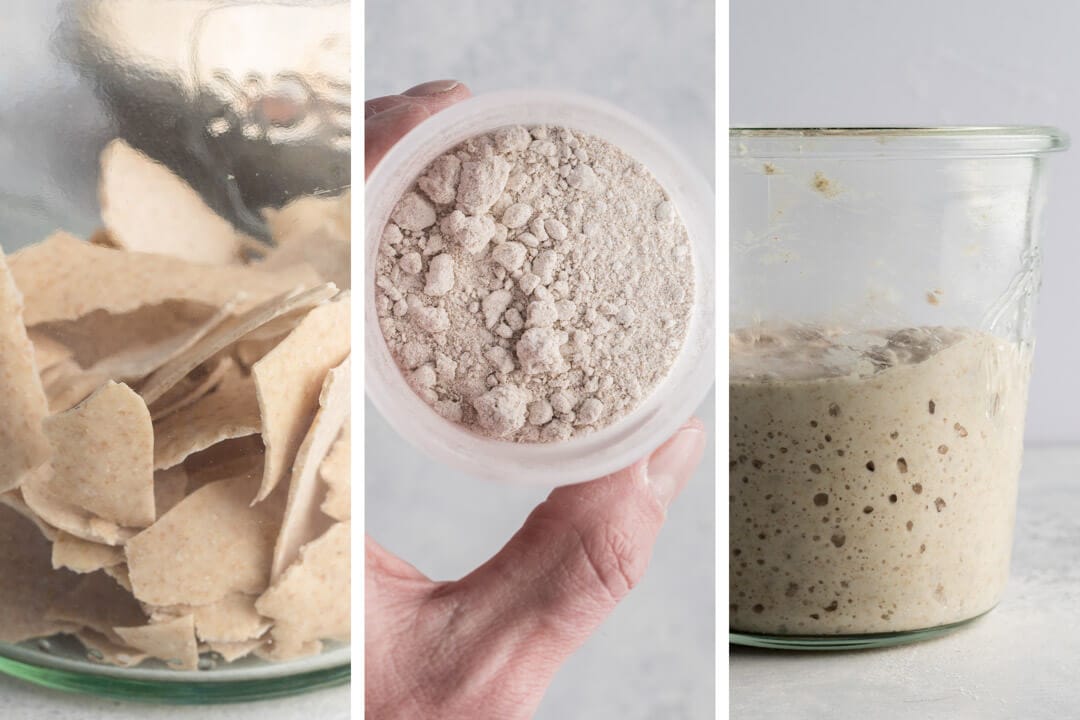
So many intangible inputs get mixed into our sourdough starter each day besides the raw, physical ingredients: the time needed to mix, attention, observation, and perhaps a little worry now and then—all the resources constantly tugged at, and contributed to, by daily life. At first glance, this list might seem like a lot of fuss needed to keep a small, bubbling culture going. But really, it’s a smidgen of time in the day, and I think, at least, the resulting bread is always justified.
There’s undeniably a lot of value in maintaining a healthy and regularly fed sourdough starter, but sometimes we do need a vacation, don’t we? Luckily for us, a starter is not only incredibly resilient but it also can be sent into “low power mode” by following a few tips on how to store a sourdough starter for a longer period of time.
In the past, I’ve talked about placing a starter in the fridge for around a week to reduce required maintenance, and this is always a valid option. However, what if we’re going to be gone longer than a week? Or two weeks? Or a month? I’ve experimented over the years with ways to store my sourdough starter and have found the following methods to all be effective means for storage and quick revival.
But first! If you don’t yet have a sourdough starter read through my guide on creating a sourdough starter in 7 steps and then head back here to pick up where you left off.
How to Control Sourdough Starter Fermentation
Control isn’t a word I like to use lightly regarding natural fermentation. Rather than control, I think of it as guiding fermentation in a certain direction. A seemingly small semantic difference but an important one. It’s a facet of baking I didn’t fully appreciate until I had a better grasp of the factors that play into modifying fermentation activity in a dough (like temperature).
The table below outlines a few of these factors and how we can modify them to adjust fermentation activity. With this knowledge, we can adjust them to slow down our starter to accommodate our desired storage time.
| Increased Fermentation Activity (↑) | Decreased Fermentation Activity (↓) | |
|---|---|---|
| Hydration | Higher hydration (e.g. liquid starter) | Lower hydration (e.g. stiff starter) |
| Temperature | Higher temperature | Lower temperature |
| Percentage of Whole Grains | Higher percentage | Lower percentage |
| Inoculation (the percentage of ripe starter carried over at each feeding) | Higher percentage | Lower percentage |
| Salt (while not typically used in a starter, salt can be mixed in at a very low percentage to temper fermentation) | Lower percentage | Higher percentage |
Many inputs determine a sourdough starter’s vigor, not just the items above. The table also assumes we can modify each factor independently, which is sometimes not the case! Usually, they are related and intertwined—changing one might have subtle side effects on another. In the end, it’s best to try and isolate a single factor and make a change. Then, observe how your starter behavior was impacted: its smell, rise time, and visual cues.
With the above information, let’s examine how we can modify our starter to reduce maintenance feedings.
How To Store Your Sourdough Starter
The following sections are divided into several storage time durations. You should read through all the sections to understand how the above chart and fermentation-altering factors affect your starter’s timeline. If you’re having any issues with the processes below or with reviving your starter, scroll down to the troubleshooting section for more information.
How To Store Your Sourdough Starter For A Day Or Less
While not exactly storing, I’m referring to small adjustments you can make to change your starter’s daily feedings. If you do feed daily (either once, twice, or even more) then you’re likely already in an effective maintenance routine. But what if you’re going to be gone for the night and won’t come back in the morning? Or you just want to skip a feeding? Let’s take a look at how I’d modify my personal starter to accommodate that change.
I usually keep my starter somewhere warm, always in a proof box or the new Sourdough Home in the winter (see more on the importance of temperature when baking), with a refreshment early in the morning and one 12 hours later. If I expect to miss a refreshment, I mix my starter to a slightly stiffer consistency with a smaller ripe starter carryover (inoculation). For example, if my normal starter feed is:
| Flour | 100% (100g) |
| Water | 100% (100g) |
| Ripe starter | 20% (20g) |
I would modify to:
| Flour | 100% (100g) |
| Water | 80% (80g) |
| Ripe starter | 10% (10g) |
A small change, but not much more is needed. The reduced hydration and smaller carryover will slow fermentation activity. Additionally, you could instead use cooler water or keep your starter a few degrees colder to also slow activity.
It’s easy to just stick a starter in the fridge when we can’t get to a feeding. And while placing your starter in the fridge at around 38°F (3°C) isn’t a huge problem, why place your starter in a “stressful” situation? For me, the preferred option is to reduce hydration and inoculation when I need to do small, daily adjustments. You can play with the amount of carryover at each feeding and see how your starter reacts to the change. In some cases you might not even need to adjust the hydration, just the inoculation percentage will afford enough control.
But what if we’re going to be gone a week or more?
How To Store Your Sourdough Starter for Up to Three Weeks
Building on the comments above, a home refrigerator can be a very convenient place to store your starter for extended periods. However, I don’t like to leave my starter for more than three weeks in the fridge because it usually takes longer to revive with the additional care required. If I need a break for more than this time, I’ll opt for another method below (usually drying into crumbles).
Storing Your Sourdough Starter In The Refrigerator
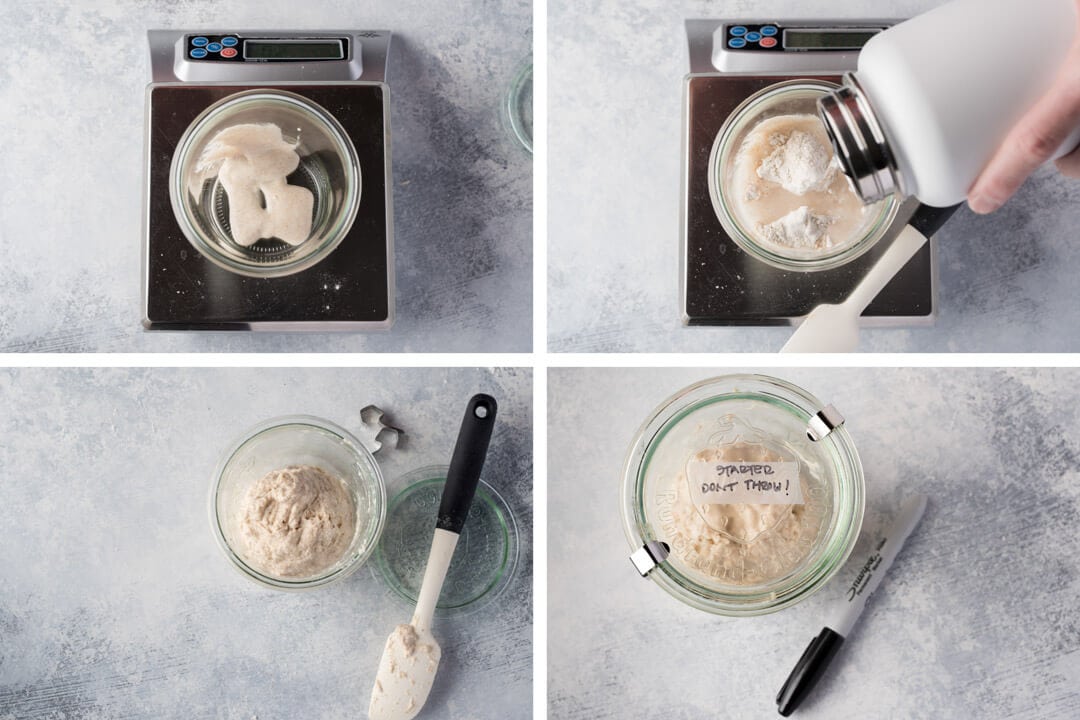
You can see the consistency of my fully mixed starter prepared for the fridge in the images below. Notice the consistency is stiffer than when at 100% hydration. This reduction in hydration helps the starter hold up extremely well in the fridge.
Take out a new, clean jar with a lid. To the jar add the 20g ripe starter and 100g flour (whatever flour you usually use for feedings). Then, add 80g room temperature water and stir until all dry bits are hydrated. Place a lid on top, and secure. Let the jar sit out on the counter for about an hour to let fermentation get started. Then, place it in the fridge somewhere near the back where it will go unnoticed (and no one will be tempted to throw it out).
How to Revive Your Sourdough Starter From The Refrigerator
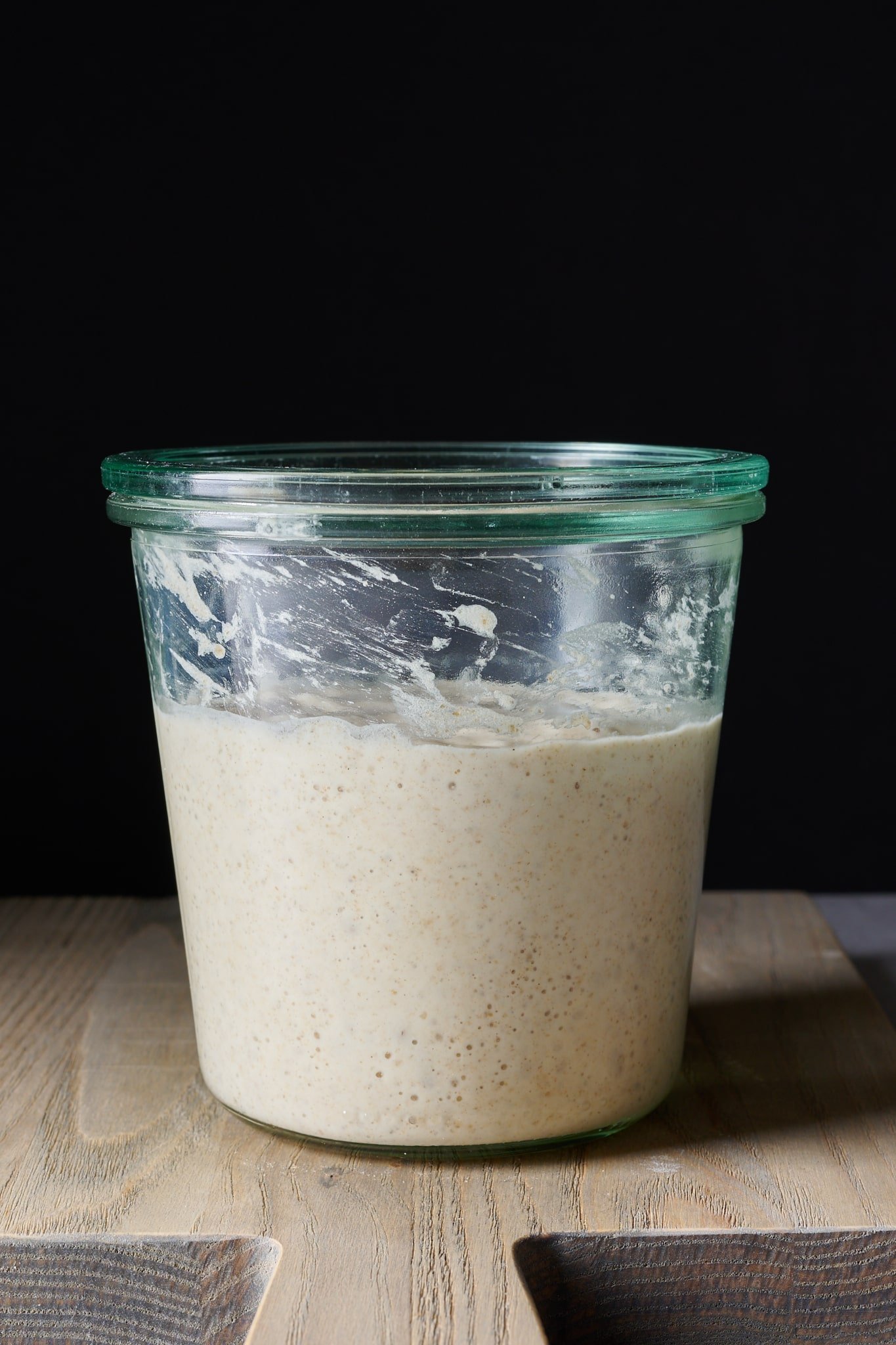
To revive, take your jar out of the fridge and let it sit on the counter for an hour or two to warm up. The mixture may or may not be bubbly like mine below, but either way, stir it so everything is reincorporated. Proceed with your normal starter feeding (discard down, add fresh flour and water) and place in a warm spot until it shows the signs it needs a refreshment. For my starter sitting at 78°F (25°C) this is usually around 12-14 hours later.
I prefer to do at least 2, preferably 3, regular feedings before using the starter to make a levain. I’ve rushed this in the past and, at least with my starter, it needs some time to get back up to full strength.
See my guide to storing a sourdough starter in the fridge for vacation for more tips on storing it for short periods.
How To Store Your Sourdough Starter For Long Periods
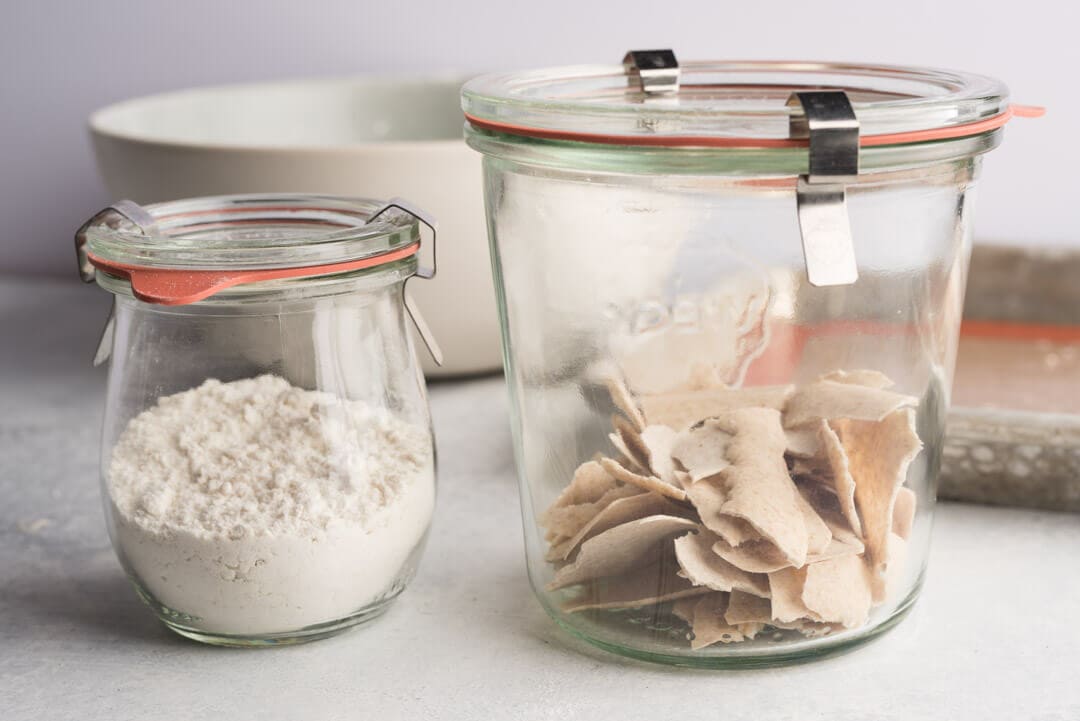
I use two methods to store my starter for long periods and usually opt for the first: crumbling and drying it out in flour. I’ve left my starter dried in my pantry and out of direct sunlight for up to 8 months (Update: I now have one stored for over two years!) without any issues.
Usually, I notice my starter springs back faster using this method, but both have proven equally effective. While these methods can be slightly laborious, especially the second, they’re handy options in your baker’s tool chest.
Moisture is the enemy of successfully storing a dried starter.
Additionally, these methods are excellent ways to ship or travel with your sourdough starter. If you have a friend that lives many miles away, dry your starter, seal it in a jar, and send it on its way. If no moisture enters the jar, it will reach its destination without issues. Then, point them back to this website to learn how to revive the now well-traveled starter.
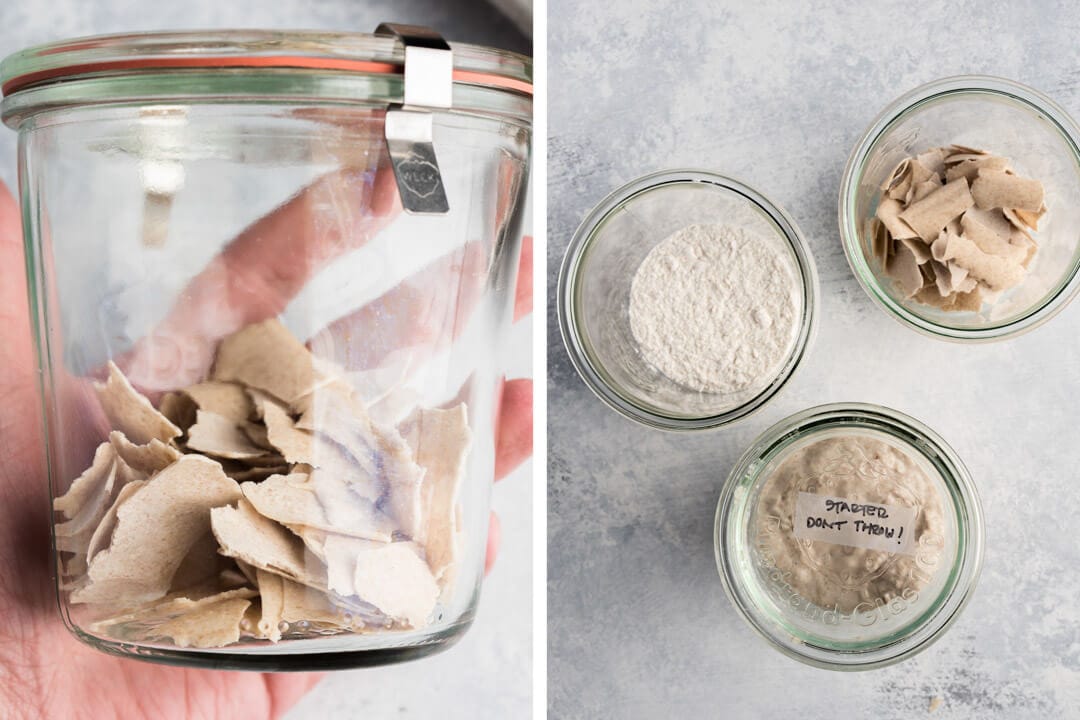
Moisture is the enemy of successfully storing a dried starter. To ensure your starter is truly hibernating, you must ensure the results are completely devoid of hydration and kept in a dry location. Once it’s dry, place the crumbs or shards in a container and seal it shut. I usually use a Weck jar with a rubber seal and clips to create an airtight seal.
These jars are designed for canning, so they’re perfect (here’s more about why I love them).
Storing: Crumble Into Dry Flour
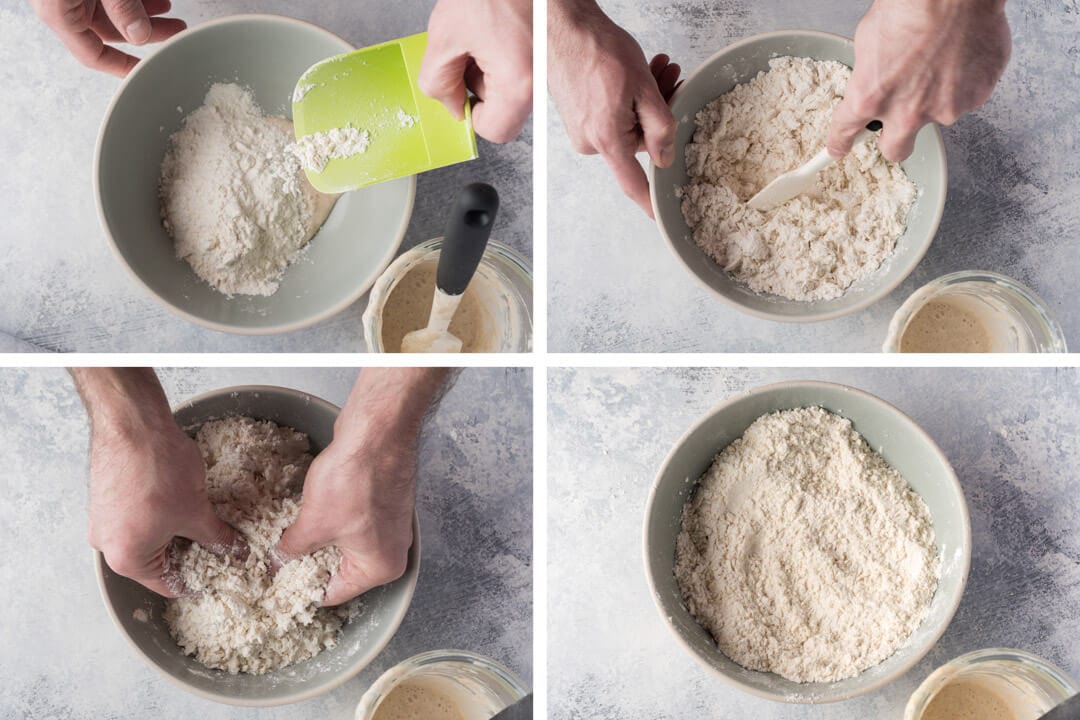
This is by far my preferred method for long-term sourdough starter storage.
Place a large dollop of your ripe sourdough starter in the bottom of a large bowl. Cover the starter with lots of flour—you can use the same flour used for feedings or 100% white flour. First, using a spatula, mix everything until it’s fairly incorporated. After mixing, you’ll still see large lumps throughout. Next, use your hands to pinch through the mixture, seeking out large clumps to break them into small pea-sized balls. Continue doing this for several minutes, depending on the quantity of starter you poured into the bowl. If the mixture feels wet, keep adding flour as needed.
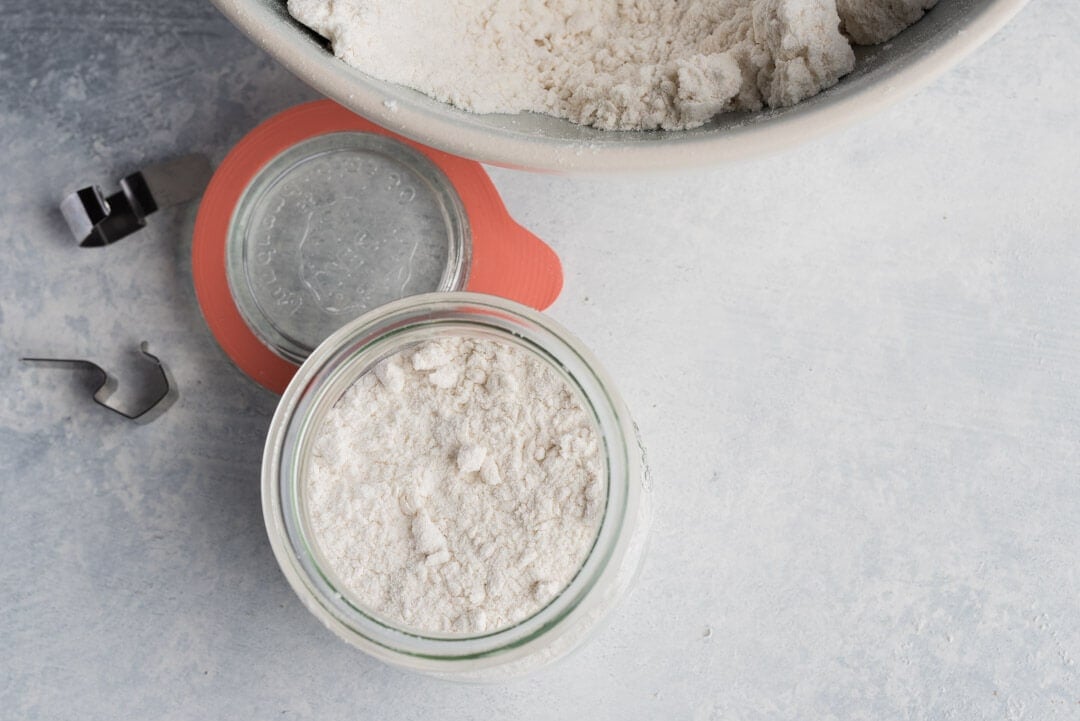
Once the entire mixture feels dry, let the bowl sit out exposed to dry air for an hour or so. Then, place the contents in a jar and seal it shut. You can spread the contents across multiple jars if you’d like to keep a few backups or give some away to friends. The key is to get enough of the mixture in each jar, so there’s a large sample of your dried ripe starter.
Keep the jar sealed in a dry area in your pantry away from light and moisture.
Reviving: Dry Crumble
The crumbs from the above method won’t require any preparation before adding fresh flour and water. Without discarding any of the dried contents of the jar, add 50g of fresh flour and enough water to make the mixture easy to stir, then stir until no dry bits remain. The exact hydration of the mixture isn’t really critical, there just needs to be enough water to make the mixture easy to stir and feel about right to you.
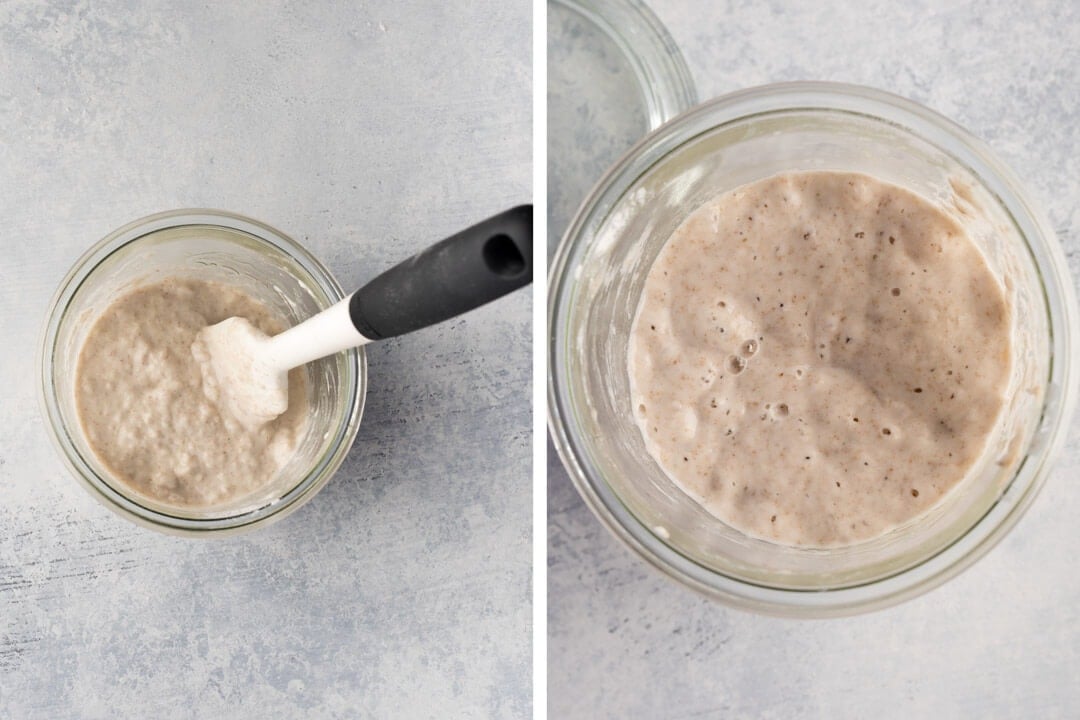
Let everything sit until it looks like it needs another feeding, usually 12 to 24 hours, at warm room temperature. It’s important to try and keep the mixture warm during this time; between 78°F (25°C) and 82°F (26°C) would be ideal. Once you see activity in the mixture and it looks like it needs feeding, feed it with your typical flour and water ratio after that.
Above, the image at the left shows the mixture just after adding the stored starter, fresh flour, and water. You’ll notice it’s rather loose and highly hydrated with lumps present. Next, the image at right is after about 12 hours at 80°F (26°C)—plenty of activity and ready for the first real feeding.
Storing: Spread, Dry, and Crack Into Shards
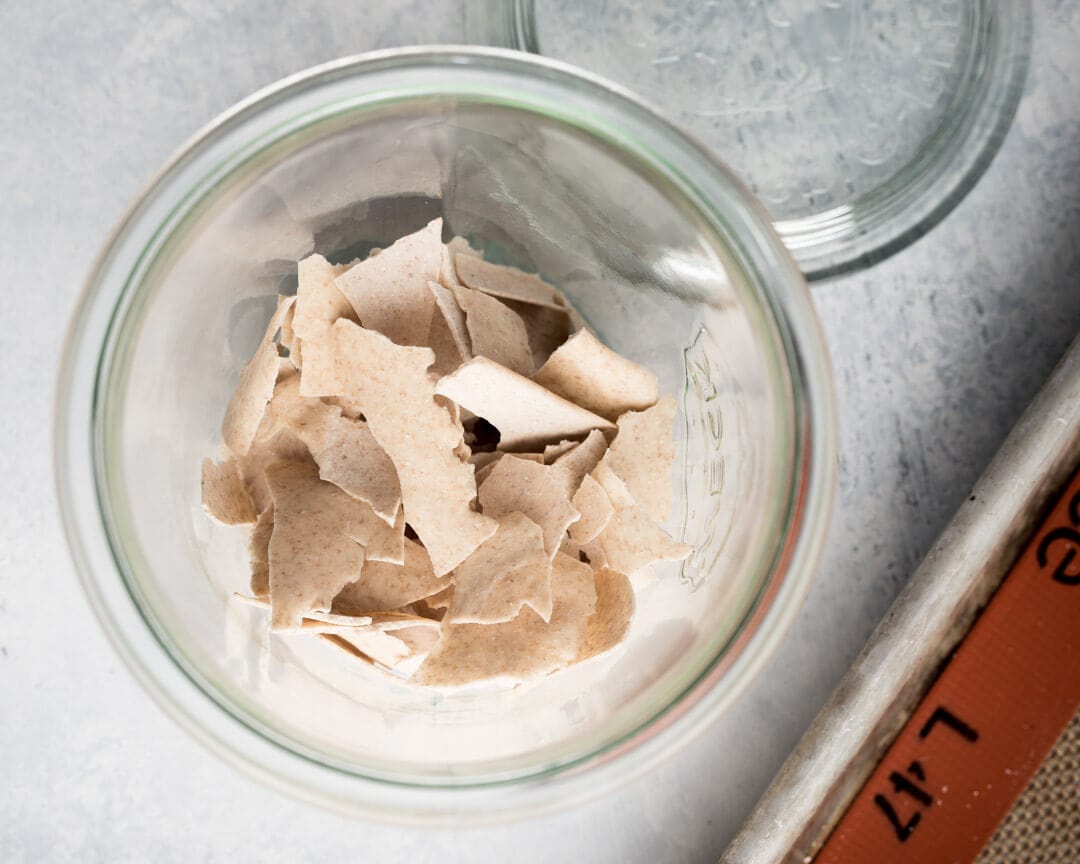
This method is similar to the above in that the starter is dried completely, but this takes it a step further by drying the starter itself into “shards.” The shards are then broken into small pieces and stored away from moisture.
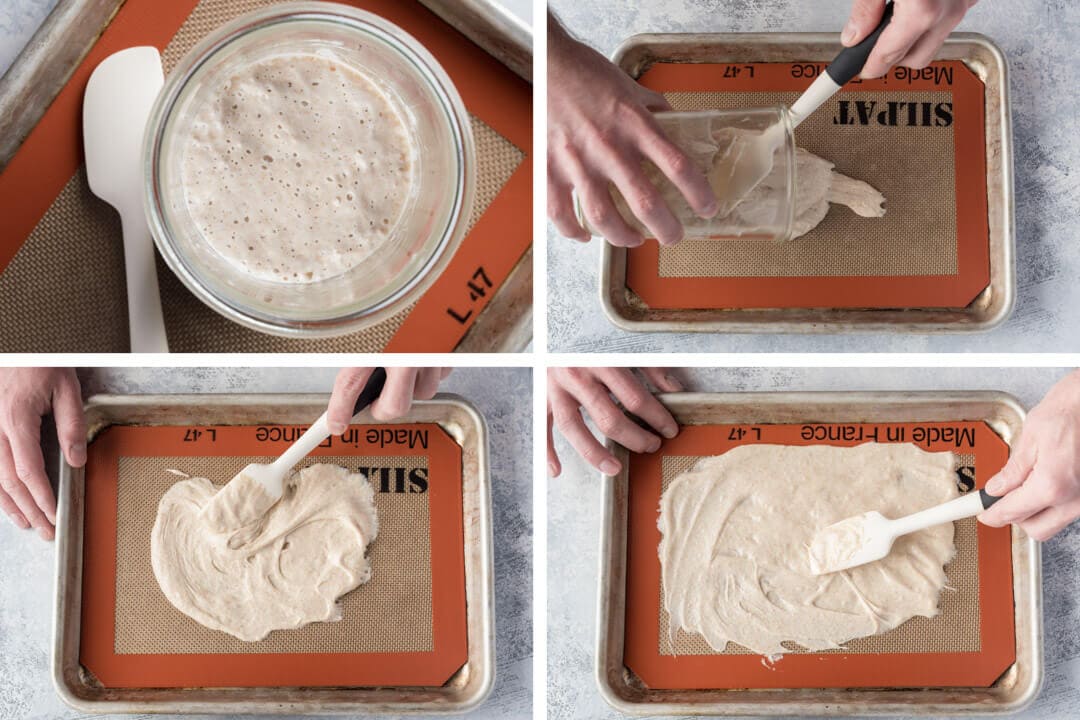
The easiest way to dry your starter is to use a baker’s quarter sheet lined with a silicone liner (or parchment paper).
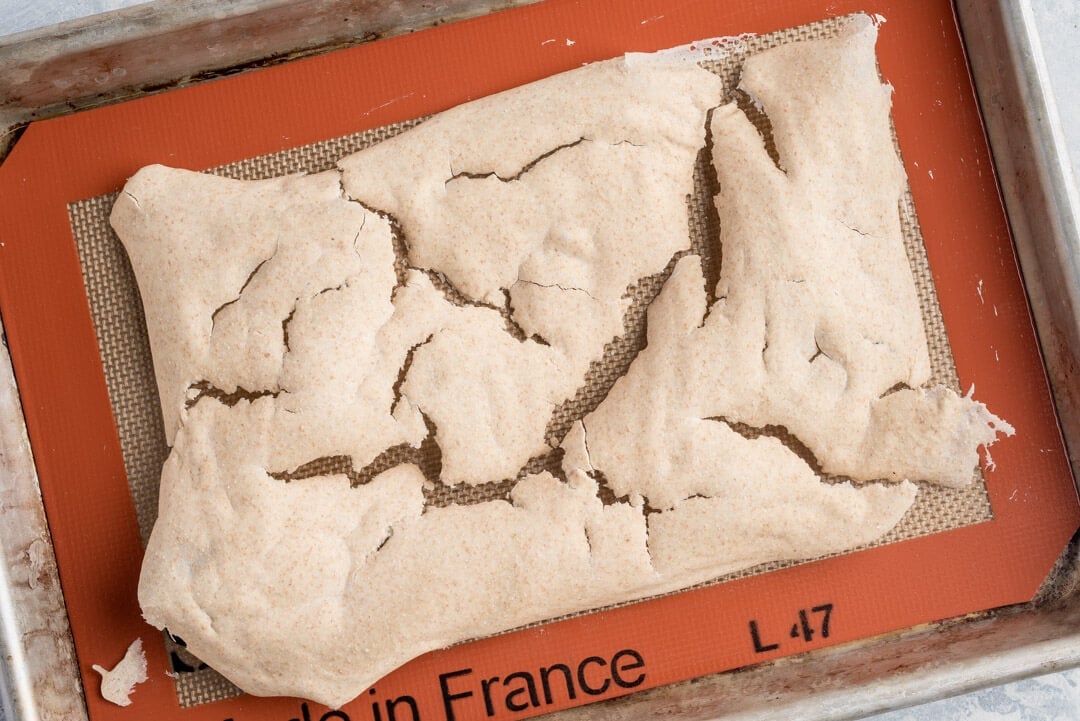
Pour a large dollop of your sourdough starter out onto the silicone liner. Using a spatula, spread your starter out into a thin layer. The thinner and more even, the better, this way, it uniformly dries and begins to crack. Using a quarter sheet is handy because it fits nicely into my Brod & Taylor dough proofer, which speeds up the drying process considerably. Place the quarter sheet in the proofer on the bottom rack and turn the temperature controller to 76°F (24°C). If you don’t have a proofer, place the quarter sheet uncovered on your kitchen counter.
Leave the quarter sheet untouched for several days until the starter begins to crack and lift up off the surface. It will visually change from a dark color (where it was wet) to a uniform, light color. Once it looks completely dry, crack the pieces with your hands and place them in a sealed jar.
Reviving: Shards
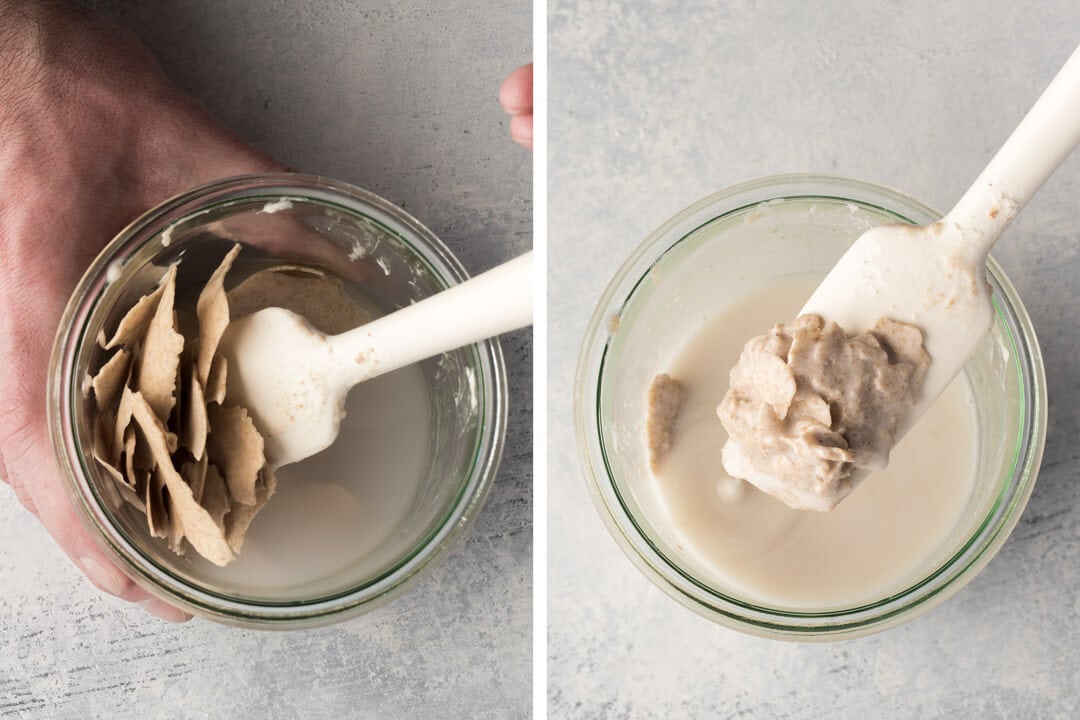
The shards need a little help rehydrating before we can add fresh flour and water. To rehydrate, add just enough warm water to cover. Let them sit in the water for an hour until soft and they start to break apart. Below, the image at the left is about 30 minutes into the soak and the image on right is after a full hour.
Next, without discarding any of the soaking mixture, add 100g fresh flour and about 90g water and stir completely. The result will feel overly wet due to the new water plus the water that was previously soaking. The mixture should feel close to 125% hydration.
Let everything sit until it looks like it needs another feeding, usually 12 to 24 hours, at warm room temperature. It’s important to try and keep the mixture warm during this time. A temperature between 78°F (25°C) and 82°F (26°C) would be ideal. Once you see sufficient maturity in the mixture, perform a feed with your typical flour and water quantities.
Sourdough Starter Storage FAQs
What should I feed my starter with when I revive it?
Use the same flour you normally use to do feedings.
What temperature should I keep the starter at when trying to revive it after storage?
Similar to when we are creating a new starter, it’s best to keep the mixture warm. If you can do 78°F (25°C) to 80°F (26°C) it will help expedite the revival process considerably.
My sourdough starter isn’t springing back to life, what can I do?
Start by picking up some good quality (organic if possible) whole grain rye flour. If you have a local source that mills rye I’d go with that first, and my second choice would be to order some online. I usually replace 50% of the flour I normally use for feedings with this rye flour.
Second, keep your starter nice and warm—78°F (25°C) to 80°F (26°C) if possible. Warm up the water used to do feedings, keep your starter insulated, or keep it in a proofer.
Finally, time your sourdough starter feeding so they are just when your starter ripens, not too early and not too late. If you feed too early you might reduce populations of bacteria/yeast before they can fully metabolize the mixture. If you feed too late, acidity will build in the mixture and will eventually create unfavorable conditions.
If you’re still having trouble, check out my top 21 sourdough starter problems (with solutions) ↗
What’s Next?
Of the many ways to store a sourdough starter the above have kept my starter healthy over the years, even with breaks now and then. They promote a quick recovery from storage, which means we can get back to baking as soon as possible. Armed with these new methods, don’t feel like your starter is keeping you from taking a break. They will ensure your starter perks back up in no time after it, and you, take a little rest.
Once your sourdough starter is up and running, head over and mix up a batch of my Beginner’s Sourdough for fresh bread this weekend! If you have more questions on sourdough starter maintenance have a look at my sourdough starter frequently asked questions or leave a comment below.


161 Comments
Hi! yesterday i dried my starter using the dry crumble method. I let it sit out for a few hours and then put it into a jar. However, it was kind of moist/damp. Not wet necessarily but not 100% dry either bc the dried crumble is still holding onto its shape. Today, i checked it again and it is still like that. Did i do something wrong? Did i completely kill my starter?
I doubt you killed it, but take it out of the jar and put on a flat surface (plate or whatever), let sit out until it is completely dry. If you want to save dry starter, it needs to be completely dry before sealing it into a container; moisture in a sealed environment will mold.
Sounds totally fine to me, Jessica! Just try to keep it as dry as possible to avoid mold from forming in the jar.
What is the revival process if I just want to feed it and stick it back in the fridge? (i.e. not going to bake with it)
I like to take it out for a few hours on the counter, give it a refreshment, let it sit out 30m to 1hr, then pop it back into the fridge.
Ciao Leo!
I recently crumbled my starter with whole wheat flour and put it away for a few days. I went back to it this morning to check on it and the crumble had a sour smell, not off or bad, but just sour, and there was a lot of gas buildup in the jar itself. It sounded like a beer can when I opened it. Is this normal?
Thanks,
Dom
I’m no expert but sour is how it is supposed to smell. If it’s not an off smell, it’s probably just as it should be
Sounds totally normal, Dom!
Hi
I am a very new baker. just been using a bread machine. However, I am in the process (day3) of making a sour dough starter. Now I wont hand bake that often and I did not realise when I started the starter I would have to keep feeding it so often. Is there a way I could maybe feed it less and keep in the fridge until I want to use it, maybe once or twice a week. To be honest I ma getting a bit confused by all the feeding regimes I have read on your website. Also can the starter be used in a bread machine? Finally I am not sure how to use it in bread recipe or how much to use? Very best wishes Tim
Hey, Tim! Sorry about all the confusion. I’d say check out my weekend baking schedule guide, this will be perfect for you: keep your starter in the fridge most of the week then take it out on the weekend to bake. You can adopt this schedule once your sourdough starter is rising and falling predictably each day — it’s established. Happy baking!
Hi Maurizio! I need to send some starter across the country and was planning on dehydrating and breaking into shards. I’m not clear on what state my starter should be in when I go to dehydrate. Can I use my discard or should I be drying ripe starter?
Hey, Kara. Yes, use your ripe (mature) starter to dry into shard — you want maximal population of yeast and bacteria. Your discard and ripe starter are really the same thing, so either will work! Be sure to thoroughly dry it out so no moisture remains.
Hi Maurizio, I just spread some leftover, very active starter on a dehydrator tray. I had two empty trays over the base of the dehydrator and put the starter to dry on the top (three from the bottom) tray. My dehydrator has a fan on it also. the lowest temp I can set it at is 95 degrees. It dried in 24 hours and I put some in storage and was going to send some shards to a friend out of state. Was that too hot? Are the shards any good?
Hey, Marcy. This is a great idea. I believe at 95°F or so things should be just fine (yeast/bacteria start running into issues around around 130°F+). I haven’t tested this firsthand, though, but if it were me I’d send these to my friend, they’ll likely come right back to life.
Hi Maurizio.
My daughter is learning SD, but unfortunately, she lives in another state, so me providing “hands on” is not possible. She has made your waffles for her first recipe. Now she would like to make bread. She doesn’t have a mixer, so it will be by hand. She isn’t a baker, so is not familiar with slap and fold techniques. Can you 1) recommend a beginner loaf recipe (they don’t care for extreme sour, high hydrated, etc.)? Also 2) Do you have your recipes designated as “beginner” recipes? Is that possible?
Thanks,
Marcy
Dr. Hammelman sounds a cautionary note in his appendix on sourdough maintenance:
Has this possibility ever concerned you? It sounds as if we all as a rule do not hesitate to put the culture in the refrigerator (I like the idea of calling it the chef as above), but these are certainly below 8°C.
Nick — it does concern me and I frequently mention here on my site I don’t like to keep my starter in the fridge for longer than a week or so. I’ve found it to be just fine for around that time, and with a few refreshments at warm temperatures, it’s back to normal. I personally bake very often so my starter only sees the fridge when I’m traveling, but when I have to leave that’s my only option. When returning from my trip, it usually takes my starter 2-3 refreshments to get back up to speed (through rebuilding yeast/bacteria population balance).
Ideally I’d like to never use the fridge, but it’s a handy tool to keep the culture alive and well while away, or taking a baking break, and sometimes we have no choice!
So it sounds as if there is a little more breathing room than Professor Calvel lets on. I’m a weekend baker, these days sometimes every-other weekend, and my culture has gotten a bit underwhelming (though a lackluster culture can still make some pretty good bread). I’m thinking of trying the technique mentioned in the same appendix of using 2% salt to retard the culture at room temperature, lasting about 2 days between feedings.
It’s good to know that the odd week in the fridge won’t make-or-break. For a longer trip I might just ask the bakery nearby for a new culture; they’re happy to give some away. I’ve rarely had my culture in tip-top shape, but I’d like to see what’s possible. Thanks for the response!
If it’s become a little sluggish keep it at room temp for a week (no salt) and give it regular feedings to perk it back up. Then I’d say give the salt method a try, it’ll work quite well, just be sure not to use too must salt. Adjust the percentage as needed.
Another approach is to convert your starter to a stiff starter (50-65% hydration) which seems to have more tolerance for changing the feeding interval. Additionally, the reduced water can help reduce activity.
Hope that all helps and keep me posted on what you find works, I’m very interested in this!
Update: I got a new starter from a bakery a month ago. It came to me about 125% hydration and all white flour, so I’ve maintained it that way. It hasn’t entered the fridge yet; I’ve occasionally used a bit of salt to retard the activity. It’s worked well but I did find it was eating up a lot of flour; I was feeding about 5 oz a day. So I was glad to see your recent post on maintaining a smaller culture.
Then, this article appeared in the local paper over the weekend. Lost Bread Co are wizards of all manner of grain here in Philadelphia, and I was a bit scandalized at their suggestion that the fridge could be embraced for long periods. I even saw them at the farmer’s market on Saturday, giving away starter and care sheets. I’ll summarize their approach:
– starter consists of whole grain or spelt flour, not white (makes it hardier?)
– 60 percent hydration (decreases activity)
– 4 percent salt (well, 2g salt to 50 g starter and 50 g flour) (should really decrease activity)
They claim it keeps in the fridge 2-3 weeks without feeding, though they do recommend refreshing with at least one feeding at room temperature prior to use if it’s been more than a week.
It all seems crazy but like it just might work. I may give it a shot.
Sounds like an interesting approach. I’ve actually never considered adding salt to the starter before placing it in the fridge, that would slow activity even further. I too like to use a lower hydration when placing my starter in the fridge. Perhaps the added whole grains increases the buffering capacity of the mixture, which would decrease the overall acidity in the mixture, especially in long periods.
I am sure it would work, but what I’d want to pay attention to is how the starter responds when coming back to life and how many refreshments it needs before getting back up to full strength…
Hi Maurio, I tried storing starter for 5 days in the fridge. The top 5mm turned dark, but it smelled OK. Threw out the top. Then noticed when I added rye flour it smelled earthy. Turns out the rye flour smells earthy. Even a new bag of the rye smells earthy. I recently bought some more that does not smell earthy.
Still using the earthy rye. The starter is going great, but I am worried if it is safe to use.
Do you think the earthy smell of the rye indicates mold our does this sometimes happen?
BTW my relatives, including one from SF can’t get enough of the beginners bread!
Thanks
John
John — just replied to your email!
Got it. Thanks!
Hi Maurizio, how are ya? I’ve been using your method for longer term fridge storage and I can see there is a good amount of bubbles still in the starter and a lovely fragrance still, after two weeks in the fridge with a loosely covered jar. I noticed a thicker layer on top though with a bit of fuzz. It wasn’t green or mouldy as such but I scraped that off and threw it out then stirred the starter and put it back in the fridge. it looks and smells great still but just wondering if I am safe to use it still? I should be baking this weekend so I’ll be trying to bake once a month and just keeping the starter in the fridge for 3 weeks at a time. Also – is it ok to just stir the starter once a week while in the fridge to stop it from getting frosty on top?
Hey, Frank! Yeah, that should be totally fine. As long as you didn’t see any signs for traditional mold (which I highly doubt), it’s ok to pour that off or even just stir it back in. Happy baking!
Thanks Maurizio! I took the starter out of the fridge this morning and have left it out to get back up and running. It had a ever so slightly acidic smell so I’m guessing it might need a feeding soon. I want to get it up to strength for a bake this weekend 🙂
I have a question about dehydrating the starter. Once it is in shards, do you think I could throw it in a food processor it to break it down even further making it easier to bring back? I will just give it a try and see. I have several friends who keep killing their starters and I keep giving them some of mine but I thought what if I gave them some that they could reconstitute rather than having to make a trip to my place.
That should work just fine. The key is to be sure everything is super dry — no wetness anywhere!
I’m new to sourdough starter & couldn’t figure out what 100% hydration means. How many grams of starter, flour & water should I combine? I’m so confused. Thank you!
I’m about to feed my starter after taking it out of the fridge , but my A/C is set to 74. I could probably put it in a sunny room upstairs, but not sure if that will bring it to 78. Any tips to keep it at that temp? I will use warmer water, but how can I maintain it?
Also, I put it under the light on the stove to warm after fridge, but not sure if that is warm enough.
It’s ok if your room is a little on the cool side. Using warm water will definitely help, and you can also leave more of your mature starter in the jar each time you feed it, this will help speed the process up a bit (I usually do this in the winter). Try varying amount in the jar, no need to measure, just eye ball it each time you feed and see how long it takes to mature. If it takes too long, leave more starter next time, little by little.
I will try that. Is there an amount of flour and water you suggest? I was using AP flour, but it was pretty runny so I just added 30 grams of bread flour to thicken it a bit, which seemed to work. It seems that my starter will only grow about a 1/4 of the original size. I think it doubled in size maybe one time so far and I’ve had it for about 2 years. It’s smells pretty sour and has quite a bit of bubbles.
There’s no real strict weights for any of these, it’s what works best for your schedule and your flour (and starter, too). I like to feed with 100g flour, 100g water, 20g starter each time, depending on the season (if it’s warmer, I might leave 5-10g starter in the jar to slow things down). If you want a thicker paste just use less water when feeding, it’ll mix up stronger and more firm this way.
I have three jars of healthy starter, so I didn’t mind experimenting. I took one out of fridge, and did some discard and fed as I normally would. I then put it immediately back into the refrigerator without activating it. It stayed fairly dormant. Two weeks later, I stirred it and put it out on the counter at room temp. It started to grow and activate rather swiftly. It was definitely usable as a levain. However, I always choose to do a second feeding after it has at least doubled in size. I do this with all my starters now. They get fed, I put the date of the feeding on the jar, and it goes immediately into the refrigerator, until I activate it. It will sometimes form some hooch on top, but I just stir that in and I have a beautifully activated starter that comes to life at room temp, even though it was fed at least two weeks ago. I have even gone as much as three weeks, and it seems to work for me. However when I want to do a feeding on my refrigerated starters that have not been used, I will activate it first before I feed again. I do not feed my starters right out of the refrigerator without activating them first.I don’t know if this would work for everybody, but it works fine for me. For very long term, I would definitely try the drying method in the article. I just thought I would mention another possibility in basic storage that works for me. Hope it is of help to some.
Thanks so much for sharing that! Yes, sometimes when I take my starter out of the fridge (and it looks less-than-active) I’ll let it ferment at room temperature for a while before refreshing it — it seems to like a little warm temperature time to fully metabolize everything present in the jar. If it had been three weeks I might have just discard and refreshed right away. Either way, I haven’t seen an issue. Thanks again for sharing!
Ciao Maurizio,
thank you for the website, i successfully created a starter and i’m baking since almost a year now! i’m soon going back to Italy for vacation, what’s the best way to bring some with me? i need it for multiple reasons… keep it alive, make some bread for Christmas and give some away. shall i crumble in dry flour? or can i take it with me as if it would stay home?
grazie, livio
That’s awesome to hear, Livio! When I travel with my starter I usually mix it into a firm paste and then place about 100g of it inside a ziplock bag with all the air pressed out. Then, I place that small Ziplock bag inside another bigger bag just in case a leak happens. On the outside of the big Ziplock write “sourdough starter” on the outside just in case anyone inspects your bag.
When you get to your destination, take the starter out into a jar, rehydrate it with some water and new flour and keep it a bit warm to get going again. It’ll spring up and be ready for its next feeding in no time at all. I’ve done this many, many time snow with great success!
Happy holidays!
Hi, I had a question about storing in the freezer. For my starter I used a 5 day method – feeding each day – I ended up with a lot. I am new at baking sourdough bread and plan to bake weekly. I didn’t want to store so much in the fridge because I was concerned that I would end up with a lot of waste. Since I only need 1 tablespoon of the starter for my loaf, I used ice cube trays to separate out the remaining starter – once frozen I will put in a freezer bag. I am thinking of using a tablespoon/cube at a time (creating the leaven – 12 hours) before doing the loaf. I wasn’t sure if this method would work – obviously I need to defrost the cube, then start it back up – wondering if going strait to the 12 hour leaven once defrosted…… Any thoughts on this method?
That’s an interesting approach. My feeling is it likely wouldn’t work as your starter that’s frozen wouldn’t be at full strength (the freezer is quite stressful for your starter). Saving discard into cubes could be a good way to reduce waste by using those cubes, defrosted, in other baked goods but the leavening power would likely be quite low. That’s my feeling at least! I’d love to know how it works out if you do get a chance to try it. Happy baking, Rae.
Hi Maurizio,
Your site is fantastic and I’ve successfully made a ton of great bread thanks to you. A few months ago I decided to do your dry shards method of long-term storage since I had some travel planned for the summer. Worked great. A few days ago I was ready to revive it to start baking again, and I followed your instructions on this page. I’ve added my usual flour and water for a few feedings over the past 48 hours, and I have it stored in the oven with the light on (nice and warm – approx 82 degrees). It’s not looking great. Doesn’t seem to be active and taking the feedings, and it’s developing that clear liquid on top. I’ll pour it off, do another feeding, but 12 hours later, the liquid separation comes back. Any ideas how to save it?
Thanks!
Steven
Hi M,
My friend has given me a stable starter 2012.
It can without feeding for 2 weeks in fridge.
I m staying tropical island of singapore.
Can you please guide me how to feed that starter.. and how can i not that stable starter die.
Help
Thanks
Ankita
I have a rye starter that I started in January of this year that I have a few questions about. I was going away for a couple of weeks and decided to try to store it, as you described above, by drying it in to a crumble with lots of flour. I stored it in 3 jars (to bring to family and friends in my home town). I have since revived only a small part of it and it worked! For some reason, the still dried starter is turning green in its storage jars! Is it possible that the starter was not dry enough before I put it in storage?
Great detailed information! But if I am not ready to invest in a Brod and Taylor proof box, can you recommend any alternatives that would work for the starter or the dough (bulk fermentation). My kitchen is cold.
Saludos desde Venezuela, me fascinó tu publicación y comentarios, tenias mucho tiempo buscando material sobre masa madre que tuviera una información completa y sencilla de entender. Te felicito y espero estar en contacto. Un abrazo.
@arte.sanos
Hi Maurizio
Thanks for great resource. Like Holy Davis I keep dormant starter in the fridge for the last 20 years. I just take a little and refresh for a couple of days and up it goes. It always smell sweet and lovely. I do have a starter going all the time but if I use it all I just go to the dormant paste and start again.
I also dry and then blitz to powder in the food processor as I feel it rehydrated a little quicker. I have some stored in my fridge and have revived a couple of time in the last year. I made this starter with a recipe from the book Cresci and used nectarine purée as the liquid. It was made for Panetone.
My friend Dan Lepard said you can freeze in ice cube trays and store in a bag.
Thanks
Graham
I run a small wild yeast bakery in South Korea. My starter is going to be 10 years old in October. Needless to say, abuses have occurred. About 18 months ago, I put a container of starter in the freezer. A year later I took it out and allowed it to thaw at room temp for one day. I fed it twice over the next 24 hours and then made bread with it. There was no difference between the the loaves that came from the frozen starter and our production bread that day. I posted about this experience on instagram @rok_baker and some of my followers reported that they had frozen yeast cultures for 5 years with the same results that I experienced. Next up, I’m going to try the drying into shards method. One never knows when catastrophy will strike. Thanks for the informative post.
Hi Maurizio
Thanks for all you great info.
I dry then process to a rough powder and store sometimes to get it to hydrate quite quickly. The powder I have at the moment is based on a starter from the book Cesci and made with nectarine purée. I made it specifly to make a Panetone. I keep the powder in a sealed container in the fridge and have activated it several time, I think it’s about a year old at the moment.
I have had a pot of dormant starter in the fridge for 20 years that I top up with spare starter when needed. I just take 25g with 25g flour 25 water and start to build and it is good in 2 days. It still smells lovely always. Having said that I do maintain a starter all the time but have no worry if I use it all and need to start again, it always works.I appear to have seen the same as Holy Davis below.
My friend Dan Lepard said he sometimes freezes it in ice cube trays.
Thanks
Graham
Great post and thanks for the tips. One question though : what are the physical signs my starter should show to tell me it needs a feeding?
Thank you Maurizio. Do you not recommend at all, to store in the fridge , for long periods like 15 -30 days , even with lower hydration like 40% ?
Thanks for all of this information, very clear and helpful. My starter will be all the better for your advice.
Hi Maurizio,
Very interesting methods – would never of occurred to me to dehydrate the mixture to biscuits – such a great method, and great for long distance give aways as you mention. Keep up the good work! – Perhaps we should do an Aussie/US Sourdough trade agreement. Though I’m not sure the foreign bugs will get through US Immigration! Jon.
What I never see specified re dehydrated starter is whether the starter should be fed beforehand or can I just take my “dormant” starter straight out of the fridge and proceed with the dehydration process?
I’ve always started the above steps with a mature starter that’s been out and fermenting. Why? We want to make sure we have maximal populations of yeast/bacteria before we dehydrate the starter. Otherwise, we might be drying out portion of flour and water with a mixture that might still have raw flour & water. With regards to using a starter straight from the fridge — I would think it could work but it really depends on how active the starter has been, when it was taken from the fridge (e.g. after a day? After two weeks?), and possibly other factors. My gut feeling is if it was placed into “dormancy” properly it should work just fine straight from the fridge.
Great post Maurizio, thorough and very clear. I admire your work, imagery and style. On resilience, I made my starter in 1986 and have to admit to having loved and cared for it and to abject abuse of it through the years. I gave all attendees to my first book launch a small jar of my starter but had several jars left at the end of the event. These went into my fridge, where some remained as is, unopened for 10 years! I couldn’t bring myself to throwing them out. Incredibly the one of these I was brave enough to tentatively open after 10 years, though it was covered in black water it smelled incredible (good and yeasty) and revived as if it was fed a week back. To do this I discarded that water, scraped the surface away and took a tiny amount of the starter to feed and whooshka life was expressed. I’ve used many feeding and storage methods over the years, I generally use biodynamic rye flour to feed at a 1-1.5 ratio and I keep sheet dried back up. I have never seen or heard of the crumbled in flour style you describe here, I love the idea of this and will make some today, thank you. I love the saying that ‘you never learn less’ and hold it to be true, as evidenced here. Thanks Holly
I feed my starter (6 years old now) with 100% for starter-flour-water. All three (3) get the same weights. It’s worked for all of it’s life. I have kept in in the fridge for over a month and it cames back to it’s normal activity with a few feedings. Even though I usually feed it with in 7-10 days. One time I had to leave it in freezer since i was to be away for close to 5 months. It was not a pretty site when I returned but I gave it multiple feeding and after about the 10th feeding it was good to go, good as ever. However, I was a bit skeptical after my 5 or 6th feeding and thought it would never revive but it did!
I am extremely unlucky I have thrown away loads of starters all from one starter that I had purchased months ago on eBay ,I cannot get it started I have still found a small amount of this starter I have retried by adding 20 flour 20water to 20 starter ..what am I doing wrong ?
This is so useful! Thank you, Maurizio, for your always wise tips on bread baking. You’re the best!!
Hi Maurizio! I have a quick question about my starter. It rises quickly at 78* and needs to be fed 3 times a day so it’s obviously active. This said, it only doubles before starting to fall. How do you increase the activity, i.e., get it to triple before it falls, in any length of time? Does this make sense?!
Very thorough!
I’ve had my starter going for about 15 years, and as the years have gone by I’ve grown more and more cavalier in how I store it. The results are always the same — I’ve come to the conclusion that my starter is made of iron!
Here is what I do now: After I’ve baked with it, I leave about an inch or so in the glass (they are about the size as in your photos) and let it sit out on the counter for at least a day. I do this to ensure that there are no more easily fermented sugars in the starter. Then, I simply put it in the fridge, uncovered, and ignore it. The longer it stays in the fridge, the more it will dry out, eventually (after a few weeks) ending up as flakes or a hard puck. If I bake sooner than than a month (the next week, for example), it will be more or less paste-like. If it is very dry, I’ll hydrate it for a day, then add flour (I use rye, only). If it is still a paste, I’ll just thin it a bit with water, add a tablespoon or two of flour, and bring it back to life.
I generally give it a few days of twice daily feedings before I use it to bake, and the day (or day before, depending on the baking schedule) I use it I bring it up carefully with the appropriate hydration, etc.
I also have had it in the same jar for years, and I think that is likely an important part of the flora. Never found any reason to ‘clean things up’, as a wild sourdough starter is, by definition, a wild and funky animal.
As long as I ensure that the used starter is completely exhausted of fermentable sugars, I’ve never had it get moldy in the refrigerator.
Thanks so much for your awesome posts!!
You bet, Ben — and thank you!