

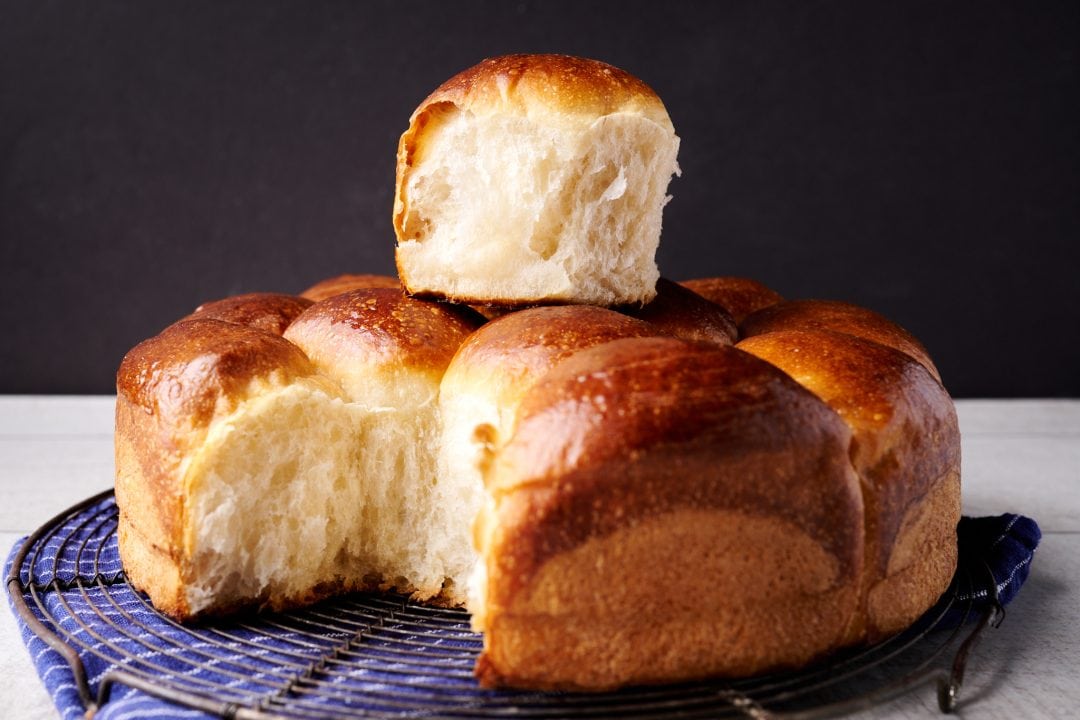
In this how to make tangzhong guide, we’ll look at a method for bringing extra tenderness and keeping quality to your sourdough bread by pre-cooking a portion of the flour. Pre-cooking some of the flour and liquid in your formula gelatinizes the starches in the flour, transforming the two ingredients into a viscous paste that’s then added directly to your bread dough.
The remarkable thing about tangzhong, also called yudane or water roux, is how the overall dough hydration can be kept relatively low, with fewer fats and oils, and still result in incredibly tender bread. In this guide on making a tangzhong, we’ll look at what flour types you can use for the roux, what liquids, and a few different methods to cook the flour and mix it into your bread dough.
Real quick: What are the Benefits of Tangzhong?
- Adds tenderness and an open interior without the use of eggs, butter, or sugar
- The dough can have lower hydration but still achieve a soft texture
- The dough will feel stronger and more cohesive when mixing and handling, even at higher hydration
- Prolongs the shelf life of the bread and delays bread staling
- Because you can make tangzhong/yudane with water as the liquid, you can make it vegan
What is Tangzhong?
Tangzhong, also called yukone in Japan, is an Asian technique that calls for pre-cooking a portion of the raw flour in a recipe with a liquid (usually water or milk) until it forms a paste. Then, this paste can be added to dough, resulting in bread that’s tenderer, more fluffy, and lasts longer before staling.
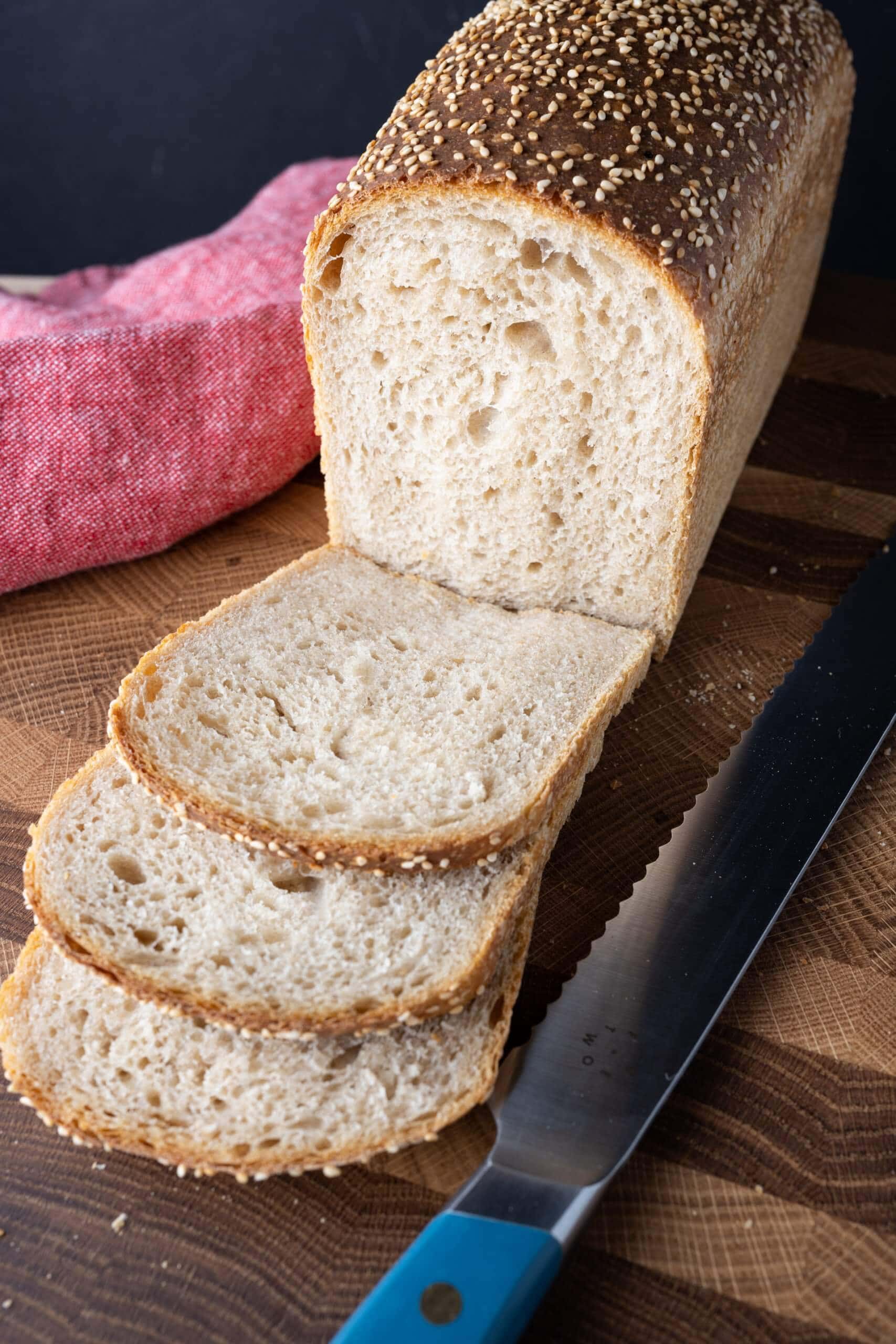
When the flour is cooked to approximately 150°F (65°C), the starches gelatinize as the liquid is absorbed into the starch, which swells as the mixture becomes more viscous and gel-like. This gelatinization is similar to how the exterior of a bagel gelatinizes during boiling. When you do this, the process irreversibly turns the mixture into a sticky starch paste that’s then added to the dough during mixing.
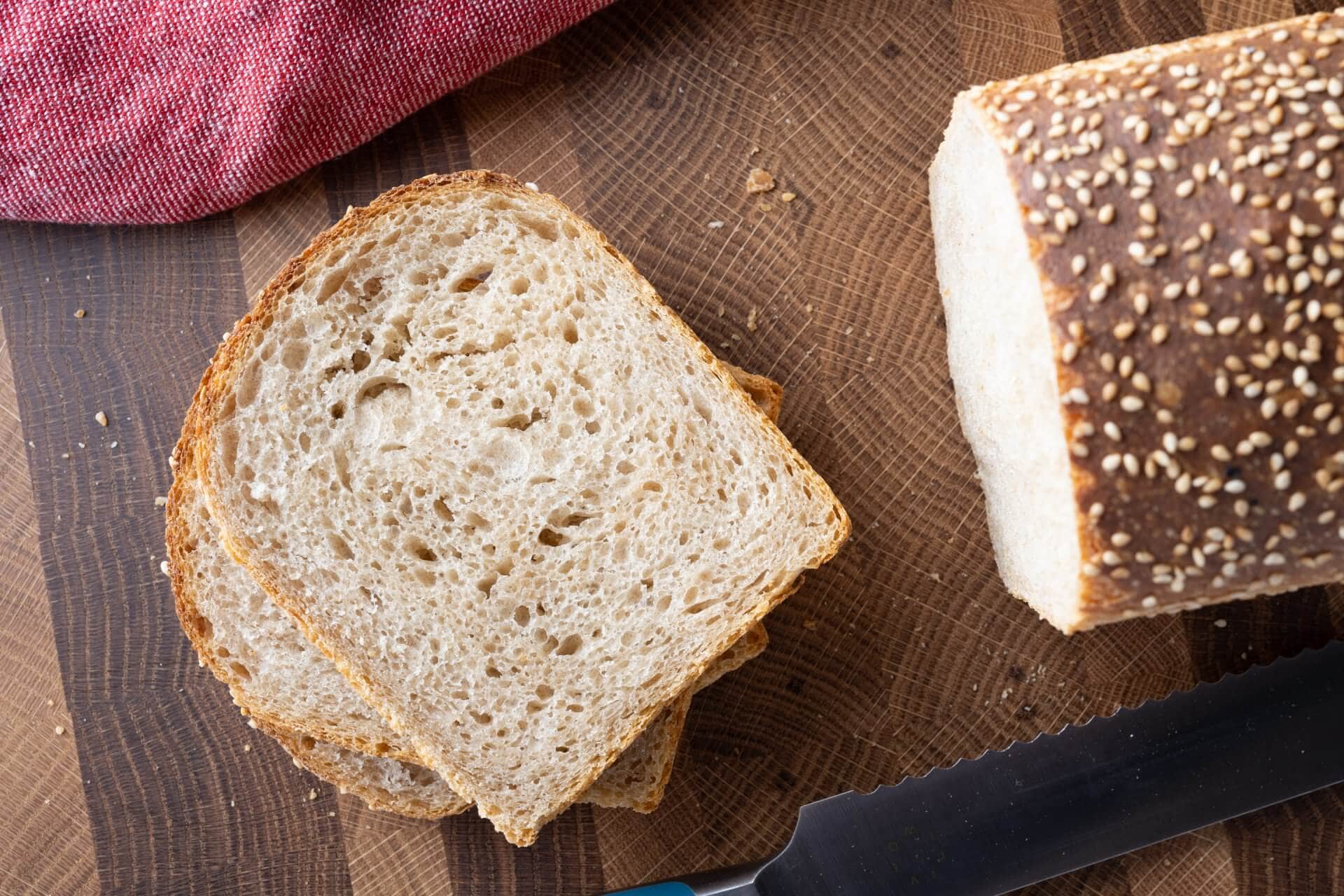
Sometimes, you’ll also see this technique called a “scald.” Often, this is used in German rye breads or modern sourdough recipes, such as our Light Deli Rye. Using rye and a liquid not only brings gelatenized starches but it amplifies the rye flavor in the final loaf.
What Does the Tangzhong Method Do?
Using the tangzhong method of pre-cooking some of the flour adds softness, tenderness, fluffiness, and better shelf life to baked goods like bread and pastry.
What is Yudane (and How is it Different From Tangzhong)?
Yudane is Japanese and essentially means roux (like tangzhong, Chinese). It has the same end goal: to gelatinize the starches in flour with a hot liquid. It differs from tangzhong in that you boil the liquid (usually water) and pour it directly over the flour, stirring to incorporate. After this, you let the mixture rest until it’s at room temperature before mixing it into your dough (or you can let it rest in the fridge until the next morning). At this point, you’ll take the mixture out, let it warm to room temperature, and mix it into your dough as needed.
The yudane method saves a little time since you don’t have to cook the flour at the stove, but it reaches the same end goal. In my experiments, I’ve not seen dramatically different results between the two methods. Because of this, I’ll talk about them interchangeably in this guide.
How to Make Tangzhong
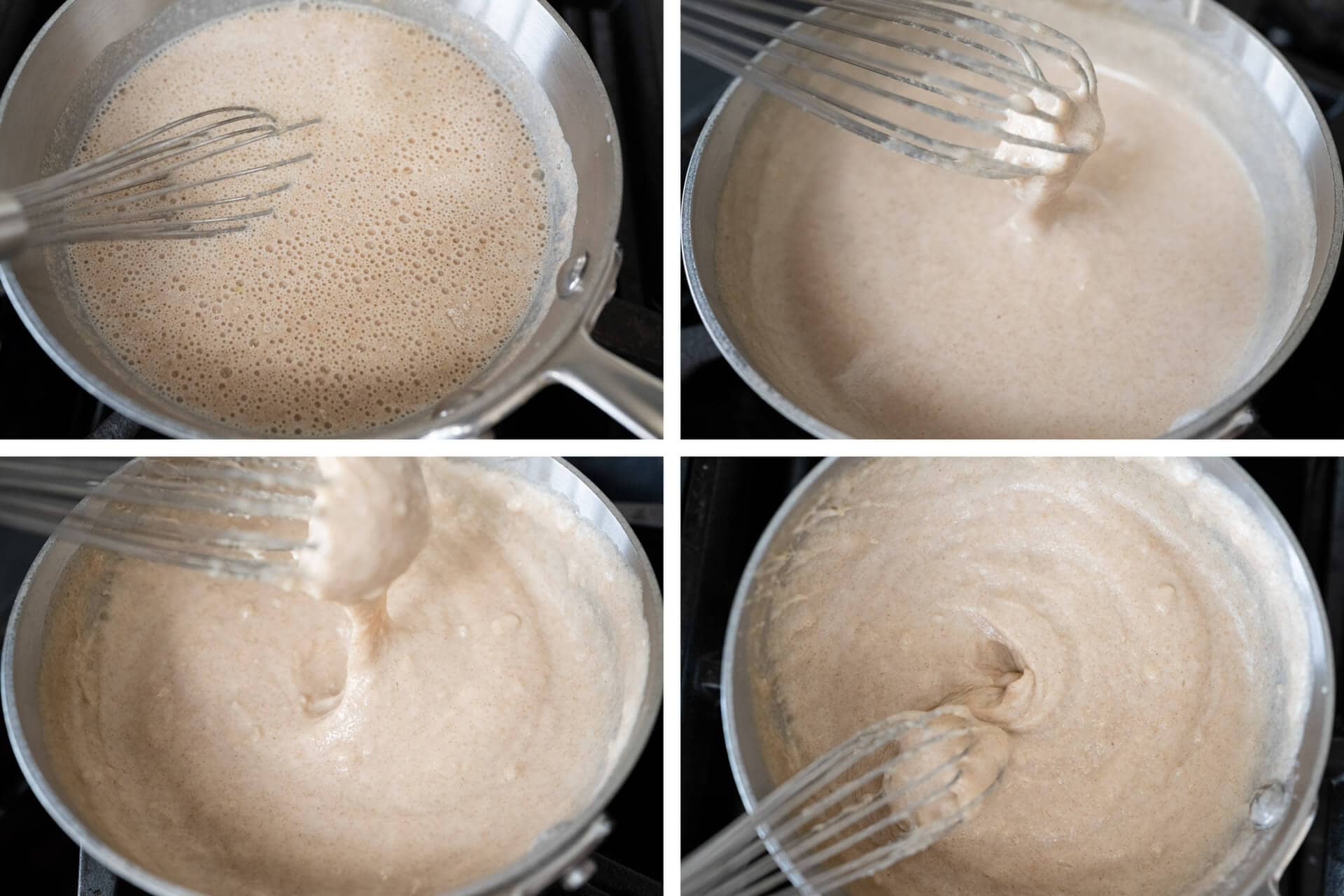
The process to make tangzhong is very simple:
- Use 1 part flour to 5 parts liquid, by weight, and add it to a saucepan
- Heat the saucepan over medium heat, stirring often to prevent scorching, until the mixture thickens and reaches about 150°F (65°C)
- Let the roux cool and mix it directly into a dough as you would any other mix-in
Watch Me Use Tangzhong In This Bread Recipe
Watch me make my high-fiber sourdough sandwich bread using the tangzhong technique. In the video below, you’ll see to what consistency I cook the flour and liquid so it reaches a thick paste.
What Liquids Can Be Used for Tangzhong?
When using the tangzhong technique, whole cow’s milk is typically used, but you can also use 2% milk, lactose-free milk, and low-fat milk. Instead of dairy, you can use full-fat almond, oat, cashew, or other nut-based milk. You can also use water in place of milk.
What Flour Can be Used for Tangzhong?
To make tangzhong, you can use any white flour (all-purpose, high-protein white bread flour, or medium protein bread flour), whole wheat flour, Khorasan flour, einkorn flour, or whole-grain rye flour. Any flour that has sufficient starch can be used to make tangzhong or yudane.
How Much Tangzhong Should I Use?
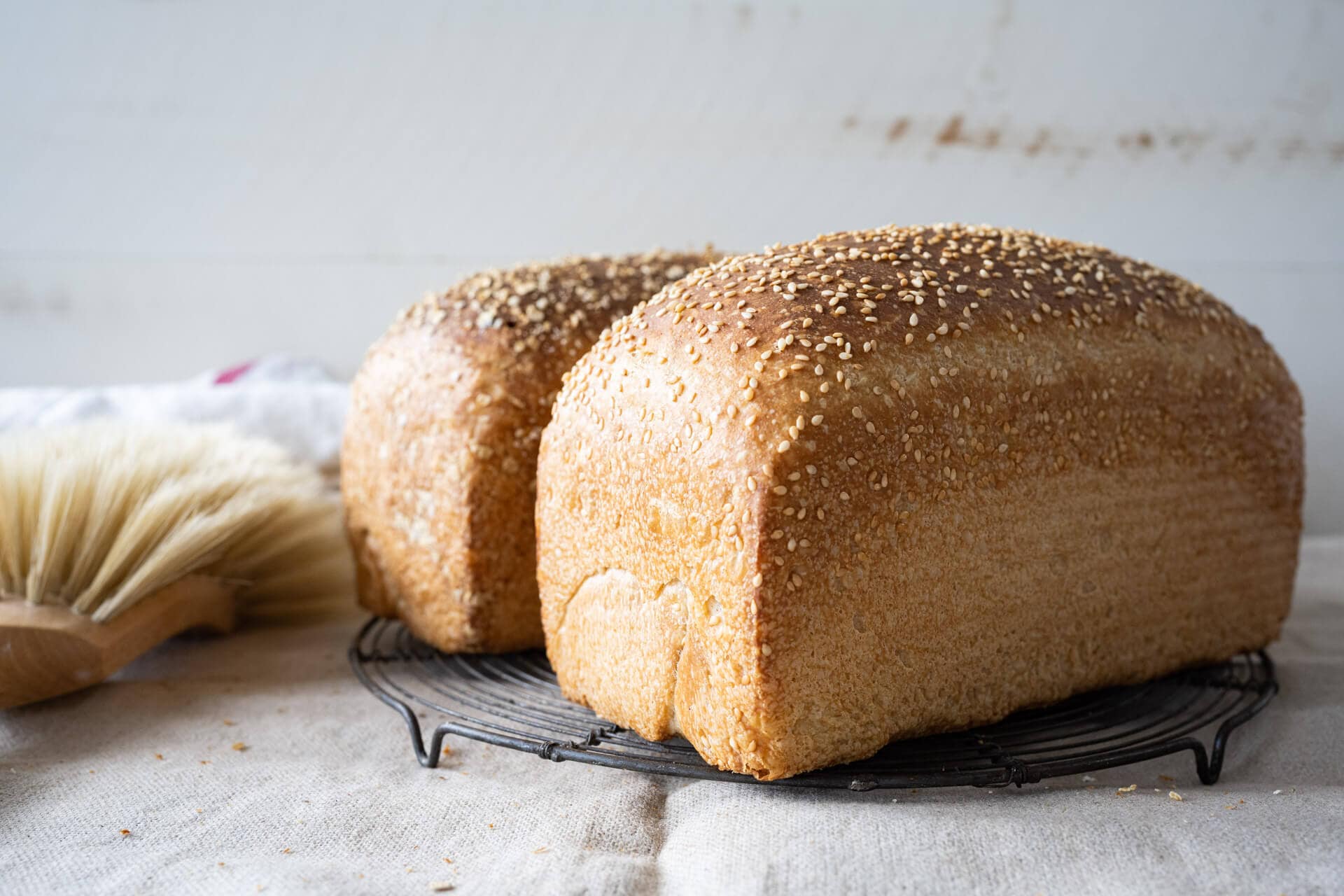
I’ve found using between 4% and 8% of the total flour in the recipe as a roux to be ideal. I think it’s possible to do percentages outside this range, but 8% has been my soft upper limit for my formulas.
Converting a Recipe to Use Tangzhong
When converting a recipe, take some flour and liquid from the recipe ingredients to make the roux. In other words, don’t add extra flour and a liquid to the bread formula for the roux. In doing this, you will change the ratio of ingredients (in baker’s percentages) in the formula.
When converting a recipe to using a tangzhong, you might notice the dough feels stiffer than it might have previously. This is because some of the once “free” liquid mixture into the dough is now bound up in the roux itself.
The Ideal Tangzhong Flour to Liquid Ratio
Tangzhong water to flour ratio
Tangzhong typically has a ratio near 1 part flour to 5 parts liquid (1:5), but this ratio is not absolute. I’ve used various ratios with varying success, and in my tangzhong sandwich bread, I use a ratio of 1 to 4 (74g flour to 296g milk, or 1:4). The additional liquid ensures it doesn’t burn and likely also accounts for evaporation.
Yudane water to flour ratio
Yudane typically has a ratio of 1 part liquid to 1 part flour (1:1).
Preparing Tangzhong or Yudane Ahead of Time
When using tangzhong or yudane, it’s possible to make the mixture the night before or several hours ahead. Prepare the mixture by cooking over the stove or pouring boiling liquid over the flour, then set out to cool. Once slightly cool, cover the roux and place it in the refrigerator until needed.
I like to take it out of the refrigerator to come up to room temperature before mixing the tangzhong into my dough, but this is unnecessary. Ensure the added ingredient is considered when determining your final dough temperature.
Recommended reading: The Importance of Dough Temperature in Baking.
Print
Basic Tangzhong
- Prep Time: 5 minutes
- Cook Time: 10 minutes
- Total Time: 15 minutes
- Yield: 300g
- Category: Baking
- Cuisine: Asian
Description
Tangzhong is flour cooked with a liquid to create a gelatinous paste that brings softness, tenderness, and added shelf life to bread. This basic tangzhong can be used in almost any bread recipe. Be sure to use flour and liquid from the recipe to make this tangzhong.
Ingredients
- 50g flour (all-purpose, bread flour, whole wheat, whole rye, etc.)
- 250g whole milk (or a full-fat nut or oat milk, or water)
Instructions
- Add the flour and milk to a saucepan
- Heat the saucepan over medium heat, stirring often to prevent scorching, until the mixture thickens and reaches about 150°F (65°C)
- Let the mixture cool and mix it directly into a dough as you would any other mix-in
Notes
You can use any full-fat nut or oat milk in place of the water for a thicker tangzhong mixture.
You can use up to 8% of the total flour weight in a recipe to make the tangzhong.
If you need more tangzhong, be sure to keep the ratio 1 part flour to 5 parts liquid.
Tangzhong FAQs
Can I use the microwave to make tangzhong?
Yes. Combine the flour and water in a microwave-safe bowl and heat on high in the microwave until the mixture thickens, about 3 to 4 minutes. Keep an eye on the mixture as it’s heating to prevent splatter.
Why is Japanese Milk Bread so soft?
One of the reasons Japanese Milk Bread is so soft is because it uses the tangzhong technique of pre-cooking a portion of the flour. Adding tangzhong brings a high level of softness and tenderness to this enriched bread.
Which is better, tangzhong or yudane?
They are both effective ways to bring softness to any bread, but yudane is a little easier to prepare since there is no cooking involved. However, I find that tangzhong results in a slightly more tender bread because it ensures all of the flour is fully gelatinized through cooking.
Can I keep tangzhong in the refrigerator?
Yes, you can keep it up to 3 days in the refrigerator. After you’ve made the tangzhong, let it cool to room temperature, transfer to a bowl, cover, and place into the refrigerator.
Tangzhong Recipes To Try
I’ve used the tangzhong technique in many sourdough breads, and it brings ample softness and keeping quality to all of them. Check out any of the tangzhong recipes below to give this easy technique a try.


31 Comments
My daughter is allergic to eggs. Can I use this method to replace eggs in other baking recipes? And if so, what the conversion – 1 egg : x grams tangzhong
It doesn't need to be in the microwave that long to thicken. Mine took 1 minute at 50%. Thank you for the right direction though.
All microwaves are different, yours takes a shorter amount of time, others will take longer.
A few months ago, I accidentally added a Yudane to the Pan de Mie that I was making. I had a request from my partner to add in Buckwheat, (he loves the nutty flavor) but I had already gotten to the butter mix in step. So this is what I did… I took 120g buckwheat flour and added 240g boiling water and about 20g honey to counteract the bitterness of Buckwheat, that also caused the mixture to really smooth out! I let it cool to below 100F and then added it during my 1st set of stretch and folds, I took 1/4 of the paste and applied it to the surface before each stretch and fold. By doing it this way I ended up with a beautiful dark swirl that contrasted so beautifully with the white bread. It also lasts over a week before it starts to stale. Obviously this threw off all of my percentages and I have no idea what they would be, but this has become a staple bread in our house! I know that if I just added 120g buckwheat and 240g of water to my recipe I would never be able to get it mixed! It would be soup! So I've never tried changing it! 🙂 It was totally worth the accident!
Using buckwheat in this way is something I've been playing with a lot lately. I love the swirl idea, Katie!
I am trying this for my sourdough bagels. If original recipe is 315g water and 750g ap flour. To make tangzhoug at 8% is 60g ap flour and 300g water. To alter recipe, I would now use 690g ap flour and 15g water plus all of tangzhoug. Is this correct?
Sounding right, Catherine!
Hi Maurizio! I'm curious, why the Yudane doesn't involve milk even though it's used on milk breads?
While Tangzhong is usually made with milk and also used on milk breads.
Thanks for sharing this article!
That's a good question, and I think you could certainly use milk for it, but maybe it has to do with the fact that you boil the liquid, though it's okay to boil milk!
you’re subtracting the flour and water from the recipe, so 1000g of flour at 8% would be 80g of flour and at a 1:5 ratio, you would be using 400g of the liquid you would be using in the dough.
this begs the question: would you not lose some water to evaporation while making the tangzhong? surely you would lose something of that 400g and your percentages would be thrown off.
as an experiment, you could weigh your tangzhong before and after cooking it to find out how much mass is lost when heating it to 65C.
if there is a significant loss, you could add it back to the reserved liquid and keep your ratios intact.
You're absolutely right, John, you will lose a little of the water to evaporation. To keep things super tight, you'd have to measure the loss or just add a little more in during mixing.
Hi Maurizio,
I’m wondering if you could talk about the difference results you might get from using water vs. milk. I’ve been working on a sandwich roll recipe and have been thinking tangzhong might be a great way to achieve the softness/tenderness I’m after, but I’m hoping to keep the recipe free of any milk (or non-dairy milks). Does using water result in a slightly less tender product than milk? Or are they pretty comparable?
Hi Maurizio,
I’m wondering if you could talk a little bit about the different results one might get from using water vs. milk. I’m experimenting with a sandwich roll recipe and have been thinking tangzhong might be a good way to achieve the texture I’m after, but I’m hoping to keep the recipe free of any milk (or non-dairy milks). Is the final result less tender if you use water instead of milk? Or are they pretty comparable?
Thanks!
Hey there! Either liquid seems to work equally well. I use milk to add more fat into the recipe and bind it up with the flour, which tends to make the dough feel stronger and stiffer, despite the high fat/liquid content. But you can definitely use water!
How far ahead can you make the tangzhong without it affecting the bread quality?
I usually do the day/night before and keep it in the fridge. Then, let it warm to room temp the next day before using (or use from fridge and warm your mixing water a bit).
After cooking my flour with a 5:1 ratio, I lost quite a bit of weight, which I assume is water evaporation. Should I make up the difference by adding extra water when I mix the dough?
Great question, Michael. If you’re following a recipe I have, it’s okay not to make up the difference because I’ve accounted for it. If you’re using this technique elsewhere, then yes, I’d probably add more liquid to compensate (because you’re right, it’s evaporation).
Hi Maurizio,
I’ve read a lot about Tangzhong and was wondering why you use only 4-8% of the total flour weight for Tangzong? Other scientific papers and experiments show that you can use up to 30%, some say 20% is ideal. Of course you would probably change the 1:5 flour-water ratio to get the right hydration. Do loaves not rise properly with more than your 8% Tangzhong suggestion? Or what is the issue here. I can’t figure it out.
And another question. What’s happening if I simply heat up the Tanzhong-slurry pretty fast and not stay in the 65°C range. Does the starch not gelatinize as well? Are there any negative effects on the baked bread? I usually keep the Tangzhong on a very low simmer and haven’t seen any negative effects. Just curious 😉
Great questions, Anna. You can absolutely go higher than 8%, but for me, this has been the sweet spot for bringing all the qualities Tangzhong gets you without going too high (for my preference). I’ve done up to 15% successfully here in my kitchen, but again, you can definitely go higher.
It’s fine to keep it on a low simmer, too, just be careful not to dry the mixture out too much, which has happened to me here (admittedly, it’s very dry here, too).
Thanks so much for your answer, really appreciated! I don’t have enough patience to keep it around 65°C and wait for it to thicken 😉
Hey Maurizio, Quick bread question- can I use tangzhong vs yudan method in your Perfect honey whole wheat bread? On another matter, I’m having trouble logging into my membership. Any tips to login would help. Also, has anyone given thought to start a group that would pool their baking needs for flour so we can purchase in bulk from some of your recommended sources?
Yes, you can use it in that honey whole wheat recipe, especially so because it’s a pan loaf and will really benefit.
If you’re having trouble with the membership, please email me and I’ll get this fixed for you! The login is in the upper right of this webpage (scroll all the way up). Love the idea of pooling to order flour. We should discuss on Discord!
If I want to use almond milk do I assume same weight as water and subtract that amount of water from bread recipe?
That’s correct, Carol!
Can I use this method for the 90 – Rye bread loaf?
Yes, you can use this as a scald for that recipe.
Can you use this method with gluten free flour?
That’s a great question. The flour must contain sufficient starch content for this technique to work. It depends on the “flour” you’re using, but my guess is yes. I would test it: use this method, and if the mixture turns to a thick paste, it’ll work just fine.
If you can use water or whole milk any reason you couldn’t use skim or low fat milk? Only asking as I typically don’t have full fat milk on hand. Seems like skim milk would be better than just water.
Those will work, too!