

This may seem like a mundane post to some, but it’s one of the most common questions I receive: what is the best way to store bread after baking it? And really, it makes sense: we spend considerable time fussing about with our sourdough starter, preparing a levain, mixing dough, and tending to it for hours—and finally, all our work culminates in the oven. But after baking (and eating), there’s still the task of storing the bread, to try and keep it as fresh as possible for as long as possible.
One of the beautiful things about sourdough bread is it will last longer before staling and molding than commercially yeasted bread.
The acidification of the dough by lactic acid bacteria in our sourdough starter and other physical-chemical changes during the breadmaking process help protect against premature bread firming and drying. These acids also help prevent molding, and in my experience (and also that of the WSU Bread Lab), they usually keep a loaf perfectly edible for a week or more—all without any chemical preservatives.
The science: from baking to staling
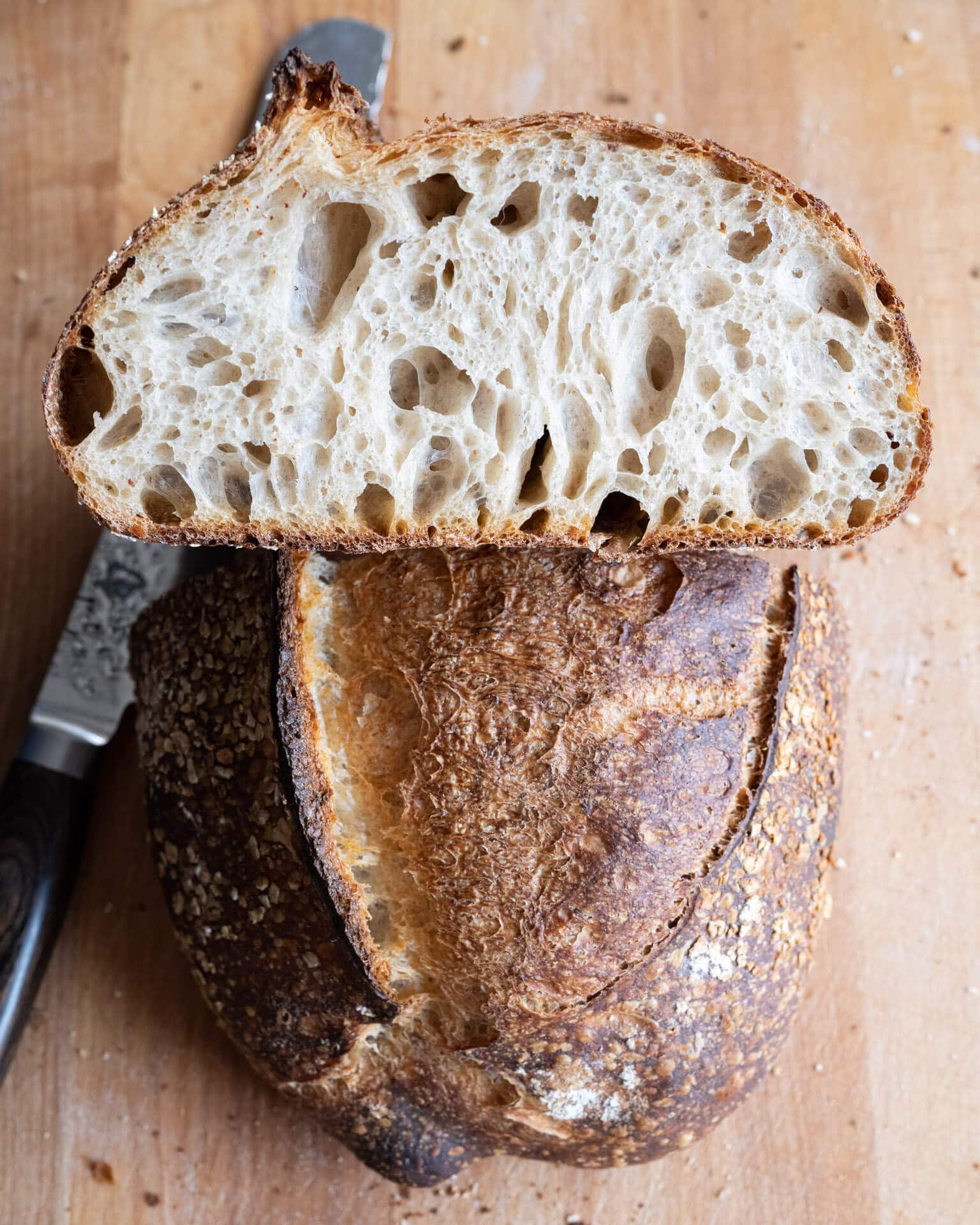
Before we get into solutions for the best way to store bread, we should first briefly talk about stale bread: no one’s favorite, unless we’re making French toast, ribollita, bruschetta, or bread crumbs and croutons, of course. But what happens behind the scenes when the dough is baked, left to cool, and on its way to staleness?
As bread dough is baking, the starch granules (which wheat flour primarily consists of) gelatinize. When they gelatinize, they swell from the moisture in the dough, and their rigid, crystalline structure transforms into a non-crystalline (amorphous) form (very similar to when you make a tangzhong or yudane). When the baked loaf is removed from the oven, it cools. From this point on, the crust and crumb begin to harden over time as starch—and most significantly, amylopectin(J.A. Gray and J.N. Bemiller 2003, Bread Staling: Molecular Basis and Control, p. 3) undergo retrogradation, a re-ordering into a crystalline form.
This retrogradation means a hardening of the crumb as moisture moves out from the starches, eventually taking a loaf of bread from soft and pliable to excessively hard and what we identify as stale. Other processes begin to take effect with the crust as well, as it begins drawing moisture out from the crumb into itself, making the crust rugged and leathery.
In general, staling can be reversed somewhat by reheating the bread to a sufficient temperature (140°F / 60°C), but it can’t completely reverse the effects of staling, and the results from heating will only last a short time. You can see this directly in your kitchen: reheat a slice of stale bread in the oven or toaster, and you’ll think you almost have a slice of fresh-baked bread on your plate—for a few minutes at least.
It’s also worth knowing that doughs containing some percentage of fats (lipids) will typically last longer before staling. The fat present in the dough slows the re-crystallization of the starch granules and reduces the movement of moisture between starches and proteins (de-gelatinization), which causes the crumb to harden.
Staling vs. drying
Note that staling and drying are distinctly different processes at work. Staling can result in a firm, hard loaf of bread but is not necessarily due to the evaporation or loss of water from the crumb and crust; it’s more about the retrogradation process described above. However, drying can also occur and can especially be a problem in arid climates (like where I live in New Mexico).
To avoid excessive drying, it’s important to ensure bread is stored properly (cut-side-down, using a breadbox, etc.—more on this soon, I promise) so it doesn’t prematurely dry to a bone.
Ok, enough science. So how do we put this into practice?
The practice: keep bread fresh longer
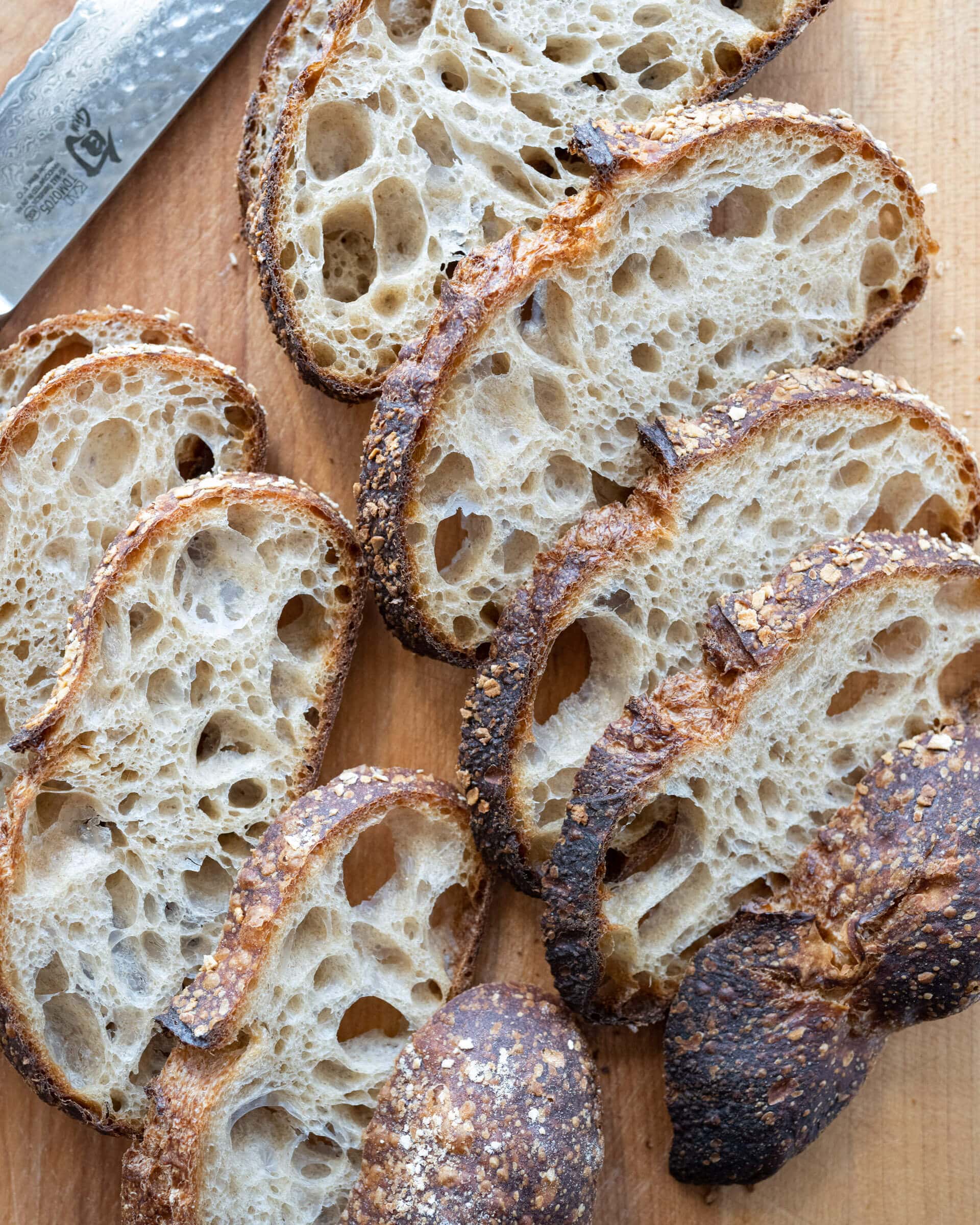
The following steps are loosely how I take a loaf of my baked bread from the oven to cooling, cutting, and long-term storage.
But first, are you using the best bread knife for sourdough bread? If you don’t have a good knife, you’ll squash your loaf instead of cutting it cleanly. If you have a sharp, hefty knife, read on!
After baking sourdough bread, wait to slice until it’s cooled
Slicing a warm loaf of bread too early will result in a gummy and sticky interior.
First and foremost, it’s always best to let fresh bread rest until it’s cool and fully set before slicing. I know, fresh-from-the-oven is hard to resist, but your bread will not only taste better it will keep longer if you wait to cut it for at least an hour—I prefer two or more.
The reason goes back to the science behind all this: starch retrogradation is happening right as the loaf is pulled from the oven, but it hasn’t progressed far enough to firm up and set the interior appropriately. Slicing a warm loaf of bread too early will result in a gummy and sticky interior.
Further, recipes containing a high percentage of whole grains, especially a 100% whole grain loaf (typically highly hydrated), or loaves that are larger (like my 1.5 kg miche), benefit from an even longer rest. In fact, I find their flavor improves 2-3 days after baking with these types of bread.
With rye bread, especially when rye is in a high percentage, it’s common to let the bread rest, wrapped in baker’s linen or a towel, for one or two days before cutting.
After the baked loaf is cooled and fully set, it’s time to cut.
Store bread cut-side down
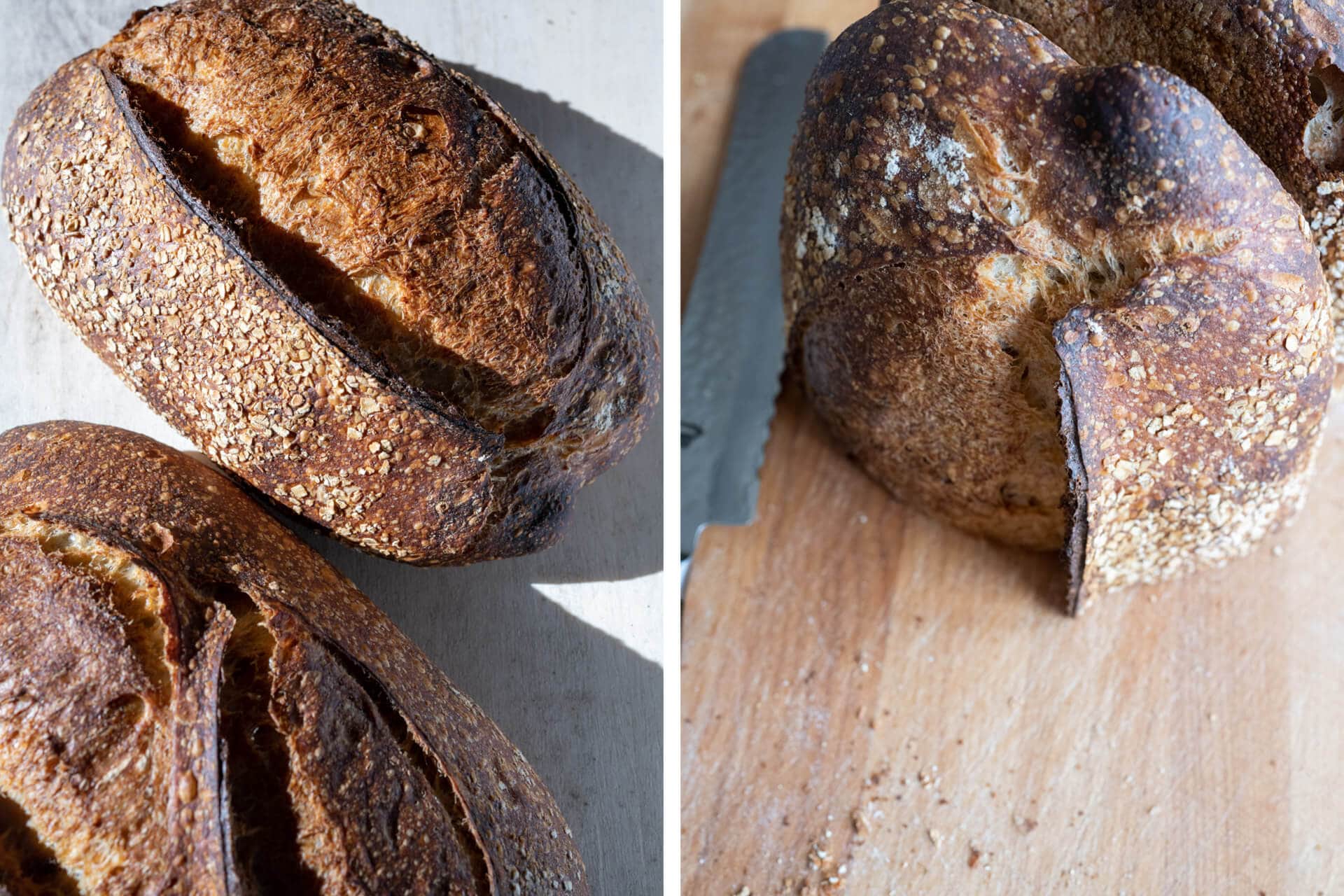
Once cool, I cut the loaf directly down the middle creating two halves (as seen above, right). This way, after slicing from the middle, I can turn the halves so the crumb faces the cutting board. This completely surrounds the interior with the (relatively) thick crust, keeping it from drying out excessively. The crust is a natural bag of sorts, keeping moisture in and dryness out.
I can typically keep my bread like this for a day or two (remember, it’s very dry here) on my cutting board, which I move to a breadbox.
Note that if you live in a very high-humidity environment, you may not be able to keep your sliced bread on the counter for as long; you might have to move it to the refrigerator to prevent molding.
Use a breadbox
This is as simple as it gets: keep your cooled loaves, cut or uncut, in a bread box, and let the box do its job. I like this svelte stainless steel breadbox (seen below) which is well-made and has lasted for years in my kitchen.
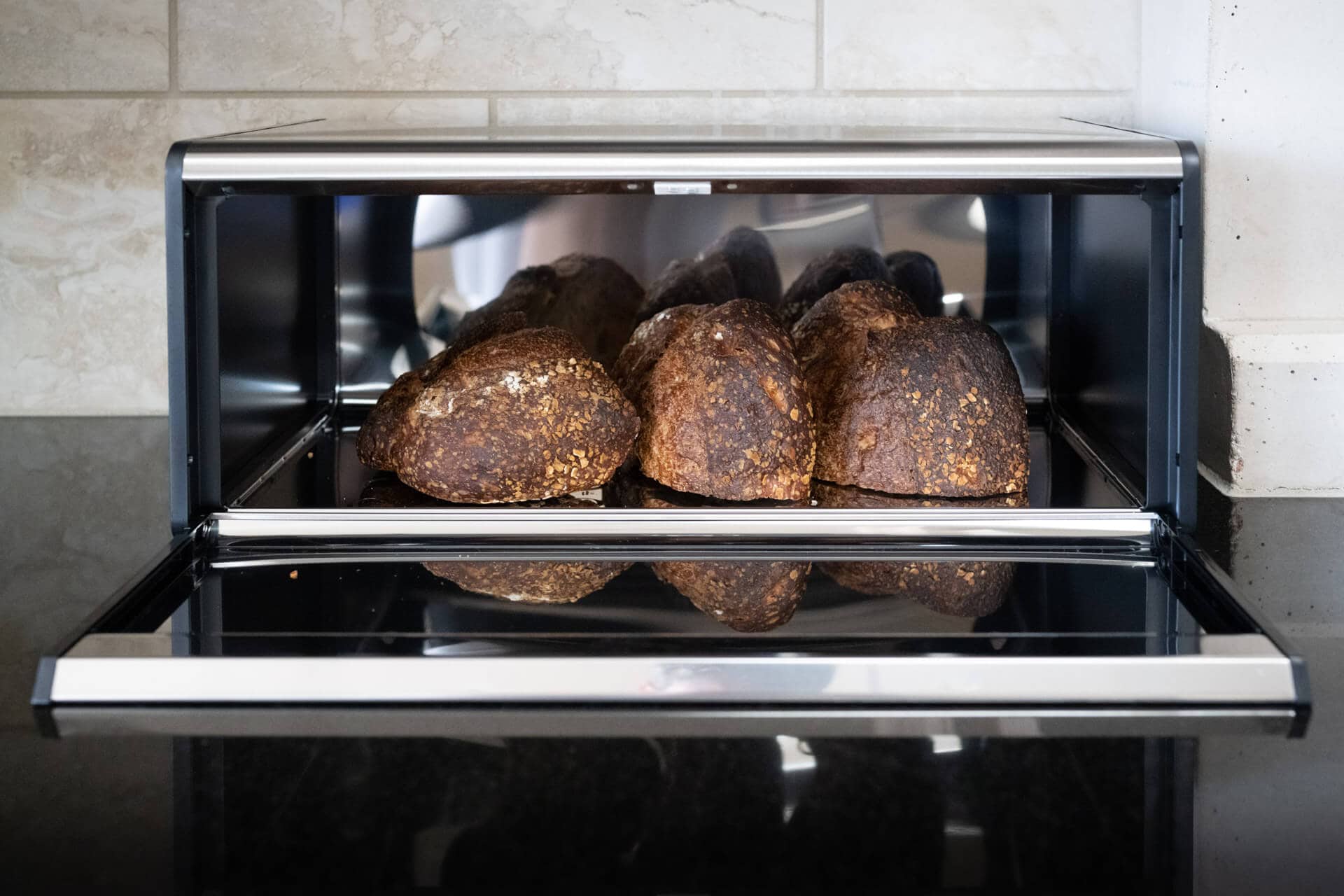
I like that it’s rather large (H: 7.3″ x W: 18.2″ x D: 9.8″), and I can easily store 2-3 whole loaves of bread in there at a time. And because I bake so often at home, I almost always have at least one loaf of bread in the box, ready to be sliced and used straight away.
Use reusable wrap like Bee’s Wrap
Another option is to use a reusable wrap like this bread-sized Bee’s Wrap. This is one of my favorite ways to wrap up longer loaves (like demi-baguettes), and the wrap works extremely well at keeping loaves soft but not too soft.
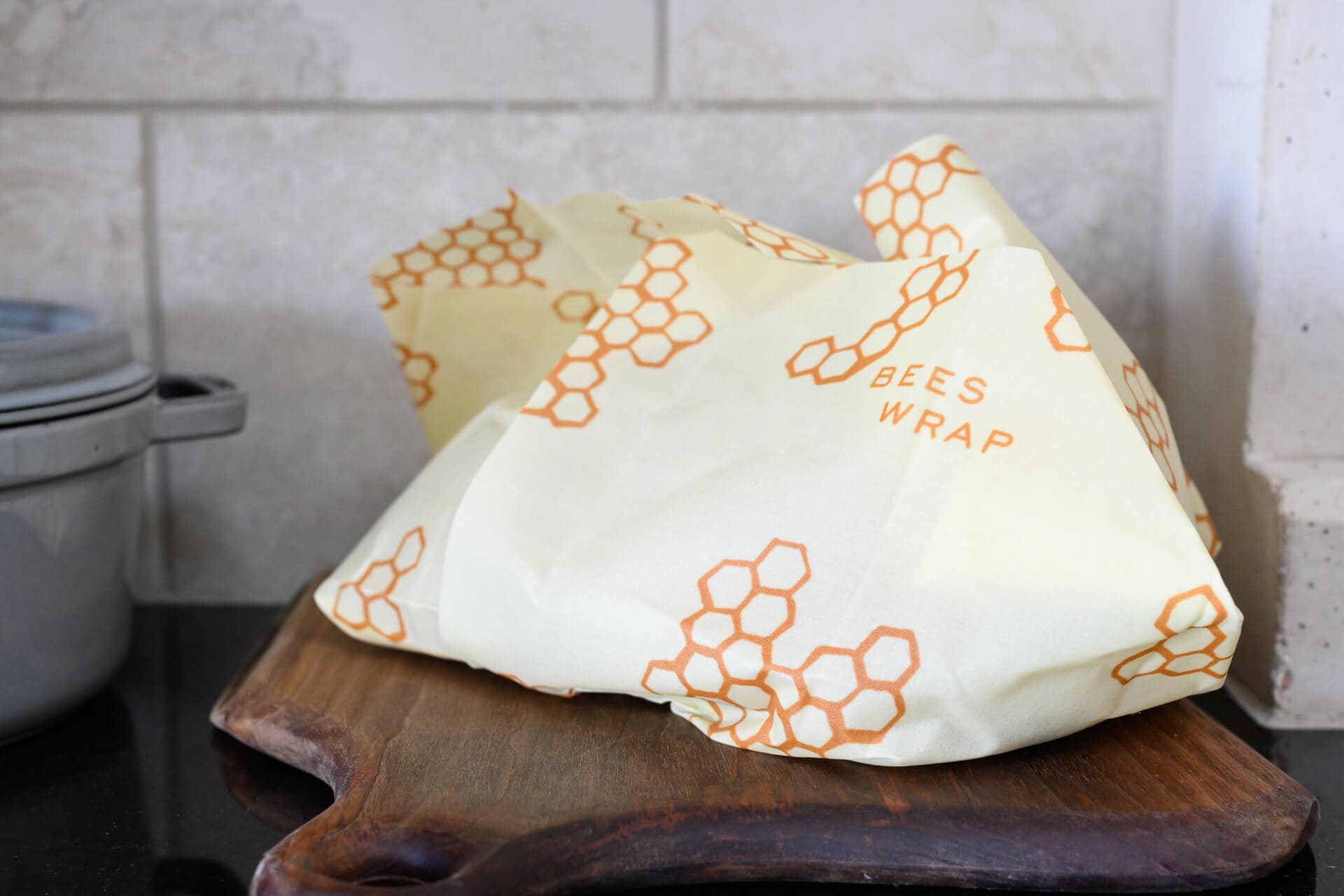
Simply place your bread in the wrap and cover it tightly. The beeswax-lined wrap will deform and wrap around all the nooks and crannies of your loaf as the warmth of your hands molds it to fit.
Paper bags, kitchen towels, and plastic bags
Plain paper bags and kitchen towels also work very well to keep the bread from drying excessively. And while many sources say never to use a plastic bag, sometimes it might be necessary, especially if your climate demands it. In the dead of winter here in New Mexico, humidity levels drop so low my lower-hydration sourdough bread almost has to be placed in a sealed plastic bag to retain some semblance of a soft texture. In this rare case, a sealed plastic bag is necessary and works well.
Don’t place bread in the refrigerator
Finally, and this is very important, don’t store bread in the refrigerator. It might seem counterintuitive since the refrigerator is seen as a food-preserver, but placing your homebaked loaf of bread in the refrigerator will cause it to be stale faster than if it’s kept at room temperature.
The practice: freeze bread for long-term storage
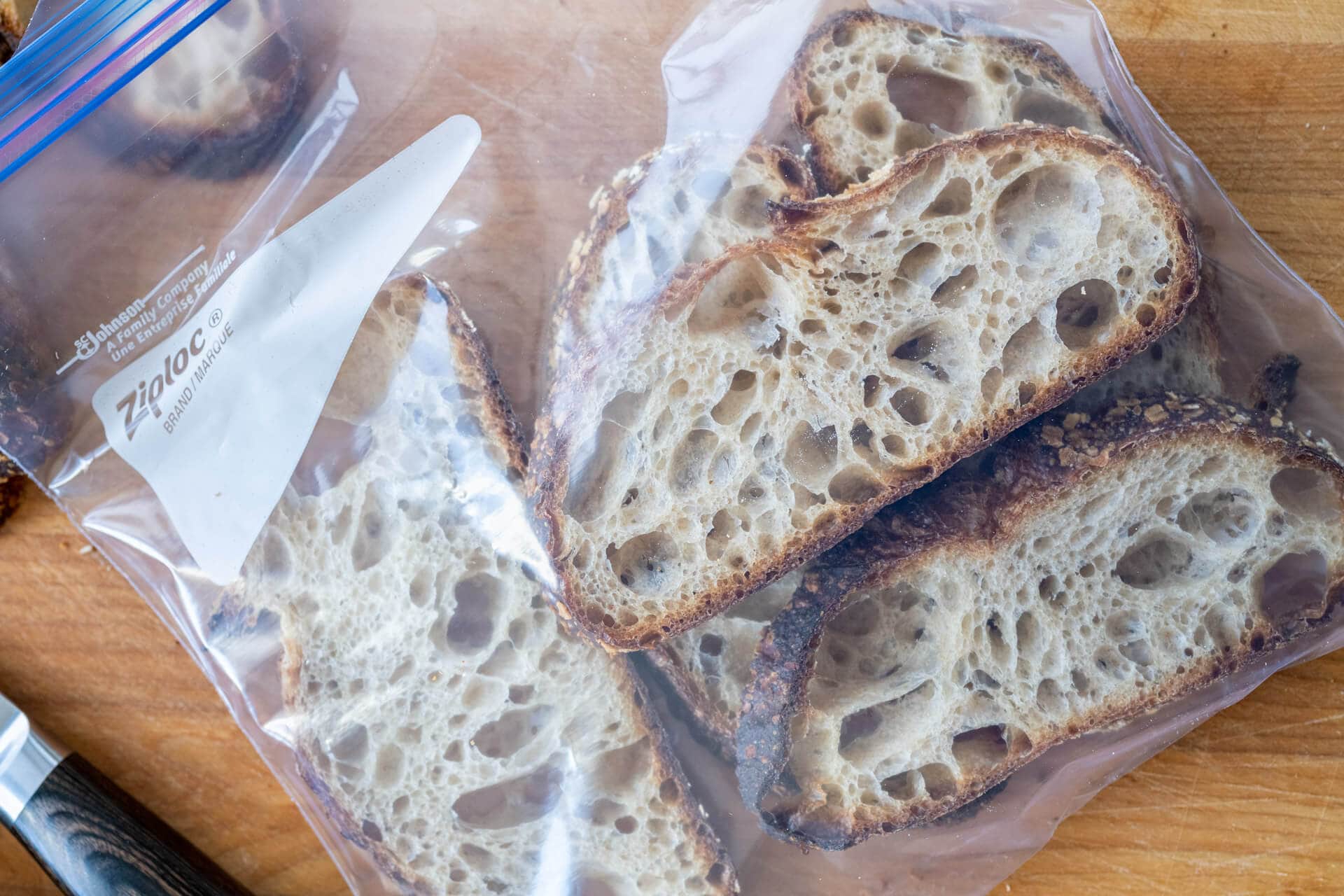
For long-term storage, a freezer is a handy option. The retrogradation process can be mostly halted by subjecting bread to very low temperatures, preventing moisture migration out of starches and their subsequent recrystallization. This means a cooled loaf can be frozen whole or sliced completely, and then the slices are frozen independently (my preference).
First, let’s look at freezing slices.
Freezing Slices
In practice, freezing individual slices of bread is a great way to get the best of both worlds: conveniently sliced bread that can be reheated at a moment’s notice that also keeps for a very long time in the freezer (I’ve done a month or so, but this could probably go longer). When reheated, the bread comes out like freshly baked bread that’s perfectly toasted.
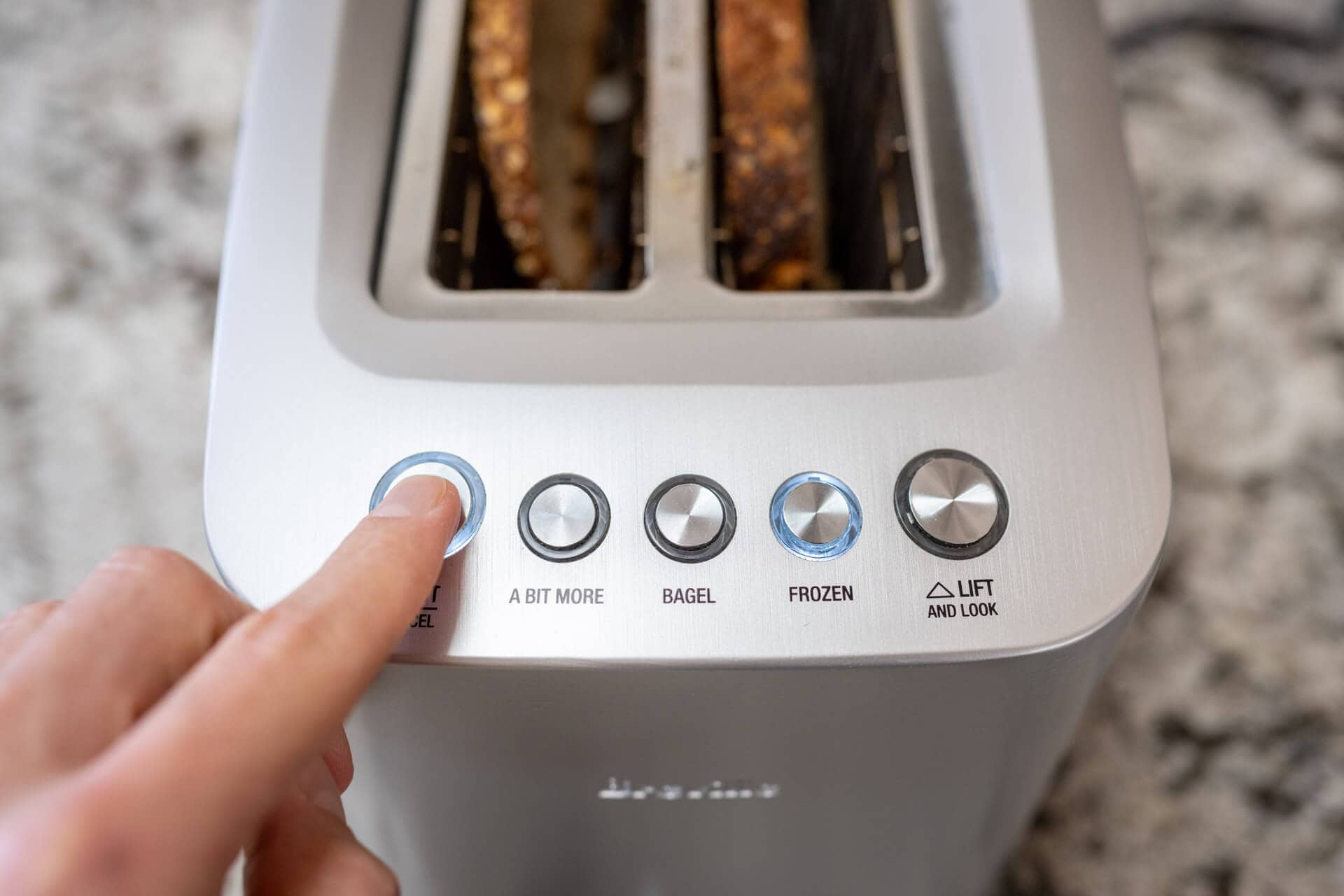
Years ago, when I first started baking bread, I searched for the perfect toaster. After going through a few, I found the Breville Smart Toaster, which is the best toaster I’ve found: not only does it take extra long slices (like the ones from sourdough boules or batards), but it has a frozen function that works perfectly to reheat a frozen slice of bread to just the right amount. It’s expensive for a toaster, but the amount of bread I go through in my kitchen justifies the expense.
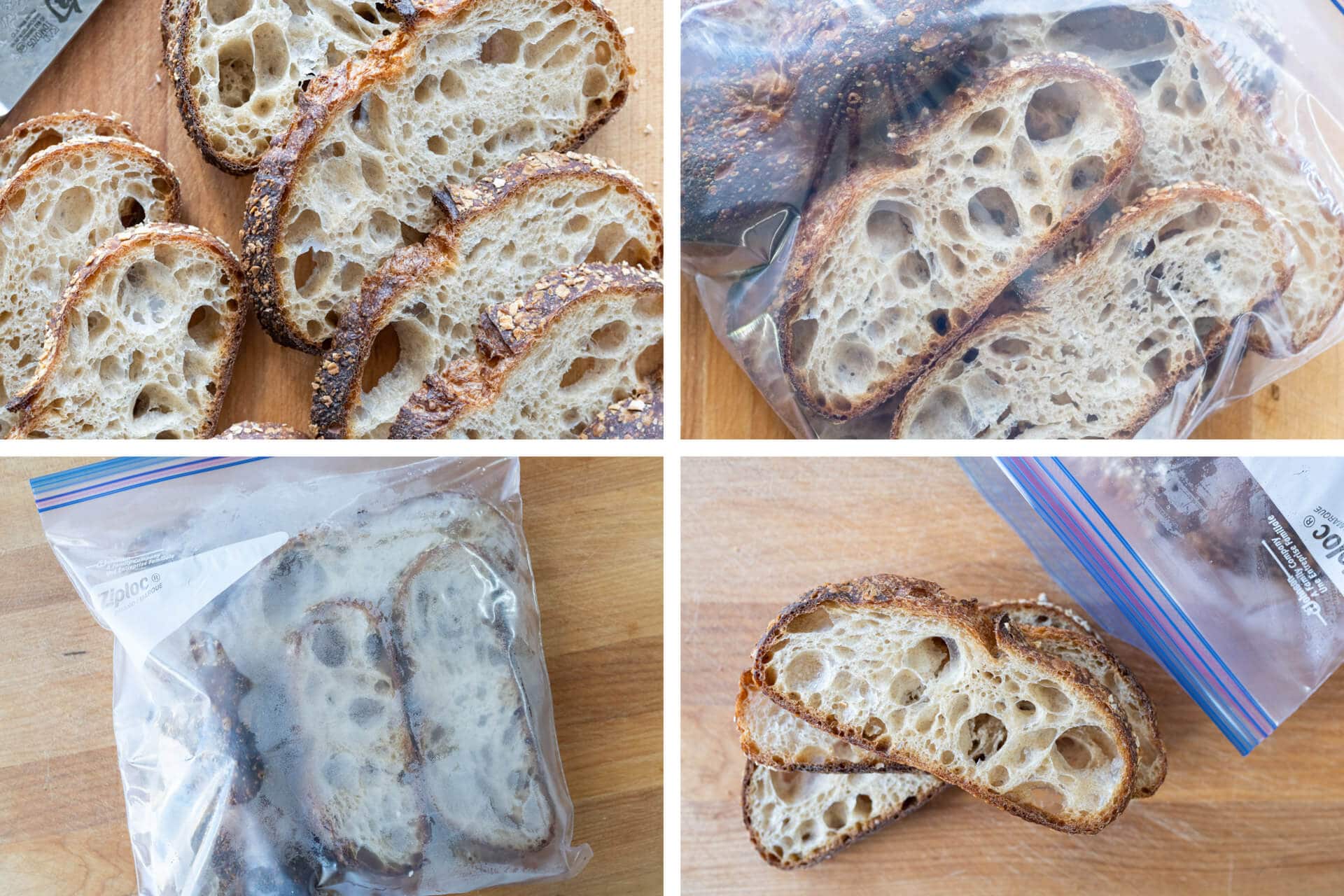
The process is simple: once your loaf of bread is cooled thoroughly, slice it completely from end to end. Then place the pieces in a freezer Ziploc bag, one on top of the other, in an alternating pattern (place a layer on the bottom from side to side, then place slices on top of the bottom layer turned 90°) and press out as much air as possible. Then, place the bag in the freezer until the slices are frozen. At this point, take one or two slices out and reheat them in the toaster to your liking. The plastic freezer bag can be used many times without discarding.
Freezing whole loaves
This method uses a little more material to work, but it’s a great option if you want an entire loaf of bread for some use in the future. A good example might be if you bake two loaves at one time, plan to eat one this coming week, but want the second loaf for the week or two after.
Once the baked bread is fully cool, wrap it in plastic. Then, take the wrapped loaf and put it into a freezer Ziplock bag. Press out as much air as possible, then stick the bag in the freezer. When you want to eat the bread, take it out to defrost in the fridge for a few days or on the counter overnight. Once it thaws completely, store it on the counter via one of the methods described above.
What next?
I’d love to hear your best way to store bread and keep your sourdough fresh. I know here in my kitchen, with the various options for storing and using bread, there’s hardly ever a loaf wasted—and I bake a lot of bread!
For other practical baking guides, see how to store a sourdough starter (for short and long term) and my guide to how to store flour to keep it fresh.
If you’re looking for a recipe to start baking sourdough (and freezing!), check out my simple weekday bread—a delicious bread that couldn’t be easier.
Happy baking!


200 Comments
I too bake a lot and my great grandfather did put into production a nationally known rye bread loaf in Denmark, Europe, and my grandfather took over the bakery. I have just entered the World of sourdough and my start is to cook my bread in Le Creuset in the oven. I love my Smeg, the toaster has 6 browning levels and 3 programmes: defrost, reheat and bagel – or pizza 😉
That’s quite a baking lineage, Camilla, a Danish rye loaf in the family! Welcome to sourdough, the Le Creuset is a great way to start. And a toaster with a dedicated bagel setting is a serious piece of kit 😉
Hello, Maurizio,
As you might remember, I’m a CBB now-retired production baker. I typically slice a cooled loaf into quarters, then put the quarters into heavy freezer bags. To defrost, I heat them for 6-8 minutes in a 375 F oven. If I have saved frozen slices, I spray them lightly with water and reheat them for a few minutes.
Your website always looks good. I appreciate your efforts.
Stephen Knight
Of course I remember, Stephen! Quartering the loaf is smart, it thaws faster and you’re never committing to the whole thing. And the spritz of water on frozen slices is a trick I use too, it brings the crust right back. Thanks for the kind words!
Can one par bake the loaves to freeze and then finish them off in the oven when needed? How will that work?
Yes, par-baking works well. Bake the loaf about 75% of the way, until the crust is set and lightly colored but still pale, then cool completely, wrap tight, and freeze. When you want it, put the frozen loaf straight into a 400°F oven for 15-20 minutes until the crust is deeply browned and it sounds hollow. The crust comes out nearly as good as fresh. The one thing to watch is pulling it early enough on the first bake, if it’s fully browned, the second bake will overdo it.
To defrost whole loaves, put them in the oven and heat to 200 deg C. Once that temperature is achieved, turn the oven off and leave the bread to defrost. Works like a charm.
That’s a good one, Linda, the residual heat does the work without drying out the crust. Thanks for sharing!
Guess I'm lazy. I just pop the sliced loaf into a zip lock bag, stacked so no two slices face each other (and freeze together). I pull x slices out, micro zapp them for 12 seconds, then toast them in my toaster oven for 2 ½ minutes. Crisp crust, soft crumb, like fresh.
To sort of vacuum seal, I zip the the bag around a soda straw, suck the air out and finish sealing the bag as I pull the straw out. Works for me.
Not lazy, efficient 🙂 Offsetting the slices so they don’t freeze together is a great tip, Jake, and the straw trick is a clever stand-in for a vacuum sealer. Microwave then toaster oven is a solid combo for bringing a slice back.
We live in a dry climate, I've found that bread, inside a thick cotton bag (better than a paper bag), inside a plastic bag, stores well. I sewed a bread sized bag out of thick unbleached cotton, but you might be able to find a cotton shopping bag, like from Lee Valley, and just fold it over.
Lisa, that cotton-in-plastic combo works well in dry air. The cotton keeps the crust from going soft against the plastic, and the plastic stops the moisture from escaping entirely. I’m in a dry climate too and the plain cotton bag alone never lasts more than a day here. Thanks for the tip on sewing your own.
I was given a wax-lined cotton bag with a zipper and a buckle for my birthday. It's wonderful for keeping the bread fresh for days! I too am trying to rid as much plastic from my life, and this is a great option.
I bought a beeswax lined bag $35 a few months ago….the pieces of bread I put in that bag within a day was hard as a brick. I messaged the company I bought it from and she told me they do not work in dry climates where I live in Tucson AZ…A plastic lined bread bag works perfectly…I have had that one for a few years and it came with some flour I bought…so it was basically free and it has a velcro closure on the top…
Denise, that matches my experience in New Mexico. Wax and beeswax bags are built for climates with some humidity in the air. Out here they’re basically a slow dehydrator. A plastic-lined bag or a cotton bag tucked inside a plastic one is the practical answer, and there’s nothing wrong with reusing the same bag for years.
Gina, the wax-lined bags work well in more humid spots. One caveat for anyone reading in a dry climate, and Denise points this out below: on their own they let too much moisture out, and the bread goes hard fast. If you’re in the desert, pair it with a plastic bag or keep the bread cut-side down on the board for the first day. Still a good step away from plastic where the air allows it.
I always slice full loaves, then divide them into however many slices I want, wrap in tin foil, and the put in a gallon ziploc bag. That way, I can pop several slices into the toaster oven still wrapped in foil, bake the foiled slices for 30-40 minutes (depending on if I’ve defrosted them partially or not) at 450 degrees and it comes out pretty darned close to a fresh loaf. The moisture is maintained between the slices too, which is a bonus!
That’s a smart system, Laura. Slicing before freezing is the way to go, and the foil-wrapped reheat is a nice trick for keeping the slices from drying out in the toaster oven. The sealed foil basically steams the bread back to life. Good one.
Hi, I just would like to point out that I freeze my slices of bread now between unbleached waxed paper and then freeze in a plastic freezer zip lock. That way none of the plastic touches the bread. This is based on recent articles that document how any plastic touching our food is not a good thing because the plastic leeches onto the food it touches. Getting rid of all the plastic in my life is impossible sadly but every bit helps I hope since we all have so much plastic in our bodies!
Joan, great suggestion on using wax paper as a barrier between the bread and plastic bag! A thoughtful way to minimize plastic contact while still getting the benefits of freezer storage. Thanks for sharing the tip!
I contribute $50 a year to this site. So it would be great if there was an option to op out of all those ads constantly flashing on & off distraction my attention and each time causing the page t0 jump.
Hey, Hall! If you're a member, you should not be seeing any ads. Please be sure you're logged in at the very top right of the website.
I'm concerned about the jumping issue, too. Can you send me an email with details and I can also help you get logged in? Sorry about this trouble!
I was given the gift of a reusable bread bags by the company “Grin by Grin.” (Think of a dry bag with a BPA free liner and zipper. ) I push out most of the air as I’m zipping the bag , then the final roll of the zipped end and clip seals it well. Since I live in Utah where the climate is almost as dry as New Mexico, it’s been great to keep the bread tasting fresh after that first day of glorious crust. I’m not going through single use bags like I used to and so no guilt! (Amazon has the above brand and others.)
Will check those out, Carolyn! Yes, it's hard to keep bread just moist enough in a dry climate, though, those in super humid areas have trouble too (just a different kind) 🙂 Happy baking!
The Bees wrap you suggested, is wonderful. I have used a brown bag inside of a plastic bag for storage but the wax wrap is better!
It works so well!
There has been some interest in vacuum packing expressed here. This is a tip I picked up from sous vide cooking which utilises vacuum sealed low temperature controlled slow cooking. Get a very large zip lock type bag. Don’t use the “slider” model. They do not seal as well. Put whatever you want “pseudo vacuum packed” in the bag. Seal from one edge but keep the last 5 cm. (2″) un-sealed. Have a large pot of water that will hold your entire bag, and tilt the bag, holding between thumb and finger from the unsealed corner, with the sealed end at a lower angle into the water. You can see the air being pressed upward by the pressure of the water. with your other hand, you can “encourage” any bubbles to rise. Continue lowering until you almost reach the unsealed edge. Now use your bubble chasing fingers to slowly seal the rest of the baggie until you can seal and dip the last bit in, and “all” air is removed. Part of any staling process , of any food item, is oxidation. As the word implies, oxygen is pretty good at doing that, and heat then speeds that process. As a rule of thumb, about every 10C (18F) doubles the rate of reaction. Removing the air (1/5th oxygen) from the bread storage, and then popping the loaf in the freezer should improve storage times.
I have not done a side-by-side comparison to actually prove to myself that this is so, but since learning the baggie trick from sous vide cooking, it is so incredibly easy to do, that I simply follow the “logic” of why it should be so.
BTW: Brilliant post Maurizio!
Whoa, that's a stellar method for sealing up the bag, far better than I could do by trying to press out the air. I'm going to try this next time, I don't have a vac sealer! Thank you 🙂
I often freeze whole or half loaves, wrapped first in foil then freezer bags. I reheat FROM FROZEN directly on the oven rack at 350F for 30-40 minutes depending on size and thickness of loaf. The crust turns out crisp and the loaf is as good or better than fresh baked! For slightly less crispy crust, leave the foil loosely wrapped around the loaf. Or for halved loaves, set the cut side down on the foil while reheating. I hope you try it!
Fantastic idea here, Rosemary. Definitely going to give this a try soon 🙂
question that is related, but not necessarily about storing … what is the best way to ‘revive’ bread once it gets hard (after more than 2 or 3 days)? I have put water on the bread and put it back in the over to warm, but this is using a larger chunk of bread that I may not want to use all of; However, at this point the bread is impossible (or dangerous) to cut and only do a slice. Thanks!
That's the best method I've found, too. You can pre-slice the bread and then spritz the bread with some water before toasting (works best in a toaster oven or home oven).
Thanks for this post! Two questions: (1) What does the bread box
actually *do* functionally to preserve the bread? As in, does it simply
have a good seal? Does that control temp or moisture? Does it somehow
wick air/moisture away? Is there any real difference from a big piece of
tupperware (if one existed)? You explain the science of bread staling
well so I’d love to understand the bread box solution part better too.
(2) Does storage approach change for other types of breads such as
sourdough sandwich loaf?
The breadbox simply keeps some (but not all) of the moisture inside! Yes, the storage choice can changed based on the type of bread. For example, a high hydration loaf may not need to be kept as humid (and it can make it sag some, too).
Oh sorry. Nevermind. I see the toaster in this post. duh! Thank you