

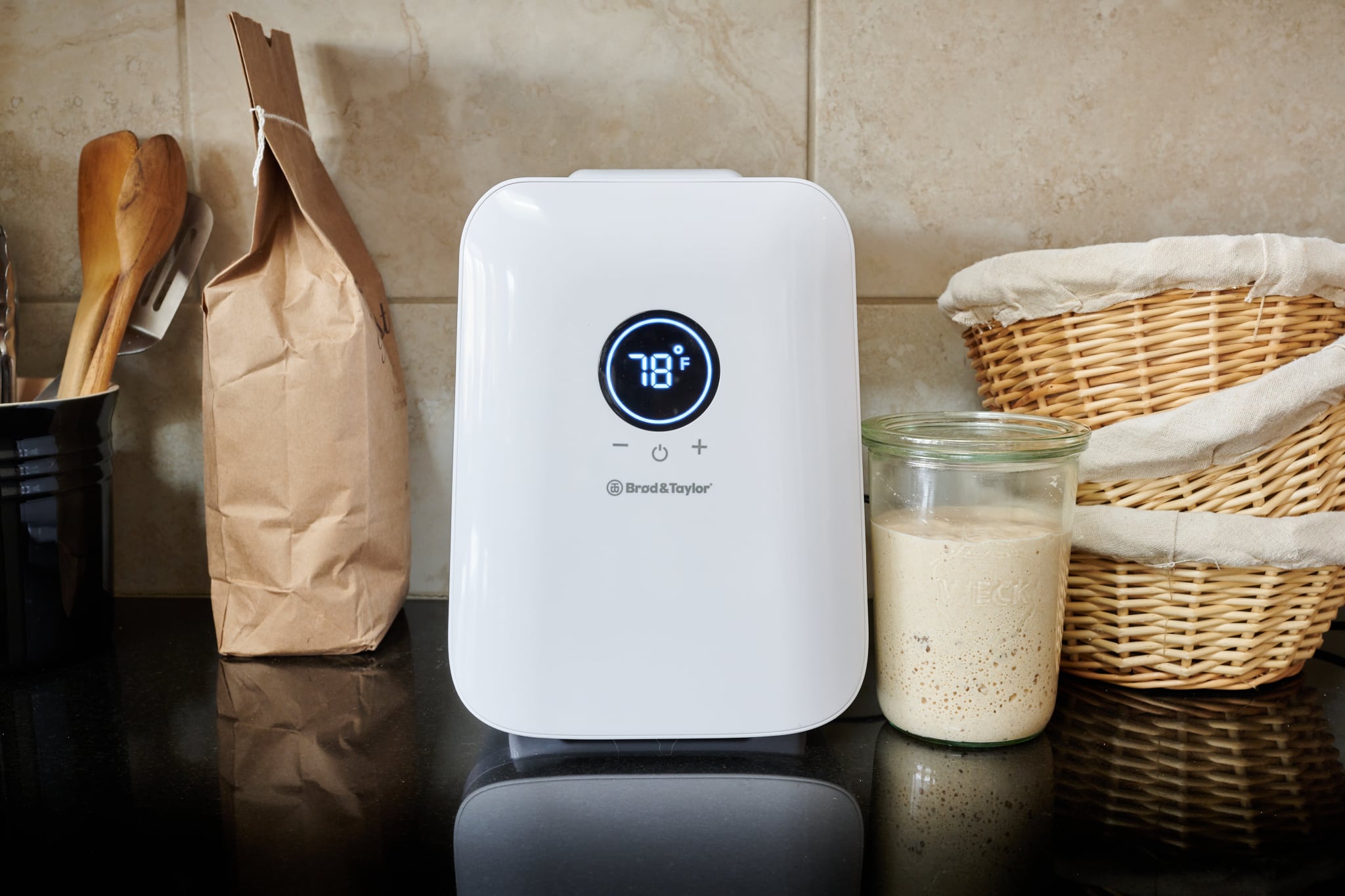
I often say to bake great sourdough bread, you need a strong sourdough starter. Our bubbling culture of beneficial bacteria and wild yeasts have the burden of leavening and flavoring our bread dough. If our starter is sluggish because it’s been in the refrigerator for too long or has been neglected on the counter, it can negatively impact the entire fermentation process. This might mean underproofed or lackluster bread.
To bake great sourdough bread, you need a strong starter.
So I set out to help Brød & Taylor design a small home unit that will make starter maintenance much simpler. And we did just that—the Sourdough Home takes the guesswork out of keeping your starter strong, healthy, and ready for baking when you are.
In my experience, the typical issues home bakers encounter revolve around their sourdough starter. Usually, it’s a starter that wasn’t properly cared for or it wasn’t used at the right time. These root causes can result in a dough that was underproofed, and believe me, I’ve been there!
So, we designed the Sourdough Home to heat and cool to keep your sourdough starter at precisely the right temperature to suit your baking schedule.
A quick disclosure: I helped B&T design the Sourdough Home, all the way from the initial design sketches to testing final prototypes, and I’m working with them on its promotion and will be financially compensated.
Real Quick: Why Do I Love the Sourdough Home?
- It lets me keep my starter at the perfect temperature to suit my baking schedule.
- When it’s cold outside, it heats for strong fermentation and more flavor.
- When it’s warm outside, it cools to slow fermentation.
- The interior is incredibly easy to clean. If something spills, just wipe it with a cloth.
- It uses low power, is quiet, and is small enough to stash anywhere in the kitchen.
- It takes the guesswork out of sourdough starter maintenance.
Ultimately, because I can dial in the temperature of my starter to precisely what I want to maximize bacteria and yeast activity and have my starter ripe when I want.
What is the Sourdough Home?
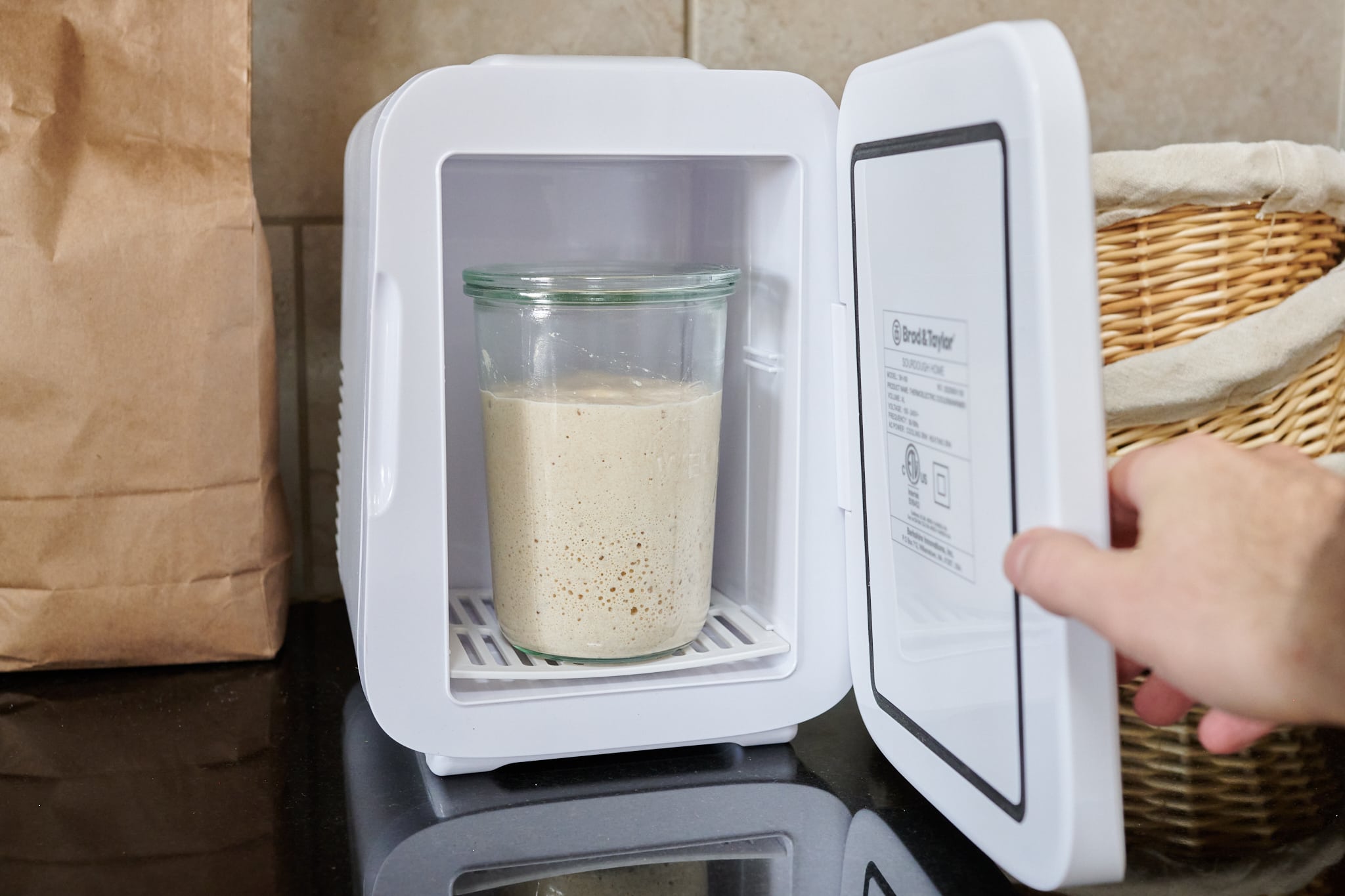
The Sourdough Home is a small appliance designed to hold a sourdough starter at a precise temperature. The unit can heat and cool and be set to any temperature between 41 to 122°F (5 to 50°C). This lets you control your starter’s ripening schedule and adjust the balance of yeast and bacteria to change the flavor, aroma, and texture of your sourdough bread.
Why is the Sourdough Home Useful?
You all know how I’m a stickler for paying attention to temperatures during the entire bread-making process, and for good reason. Temperature is incredibly important because it’s the driving force behind fermentation. If the temperature your starter is kept at is too cool, it will take a long time to ripen and is usually used in an under-ripe state. And conversely, if the temperature your starter is kept at is too warm, it will ripen too quickly and become overly acidic.
You can use the Sourdough Home to keep your sourdough starter at whatever temperature you need to ensure it’s ready to use when you want.
Sourdough Home Specs
Since the Sourdough Home is a small unit, I like to keep it inside my pantry. Similarly, it can also fit just about anywhere on your kitchen counter without taking up much space. It has a small fan inside that runs quietly, similar in sound to a small computer fan running idle.
The Sourdough Home is designed to be just large enough to fit your sourdough starter, but you can comfortably fit a variety of other jars inside if you’re into other types of fermentation (more on this below).
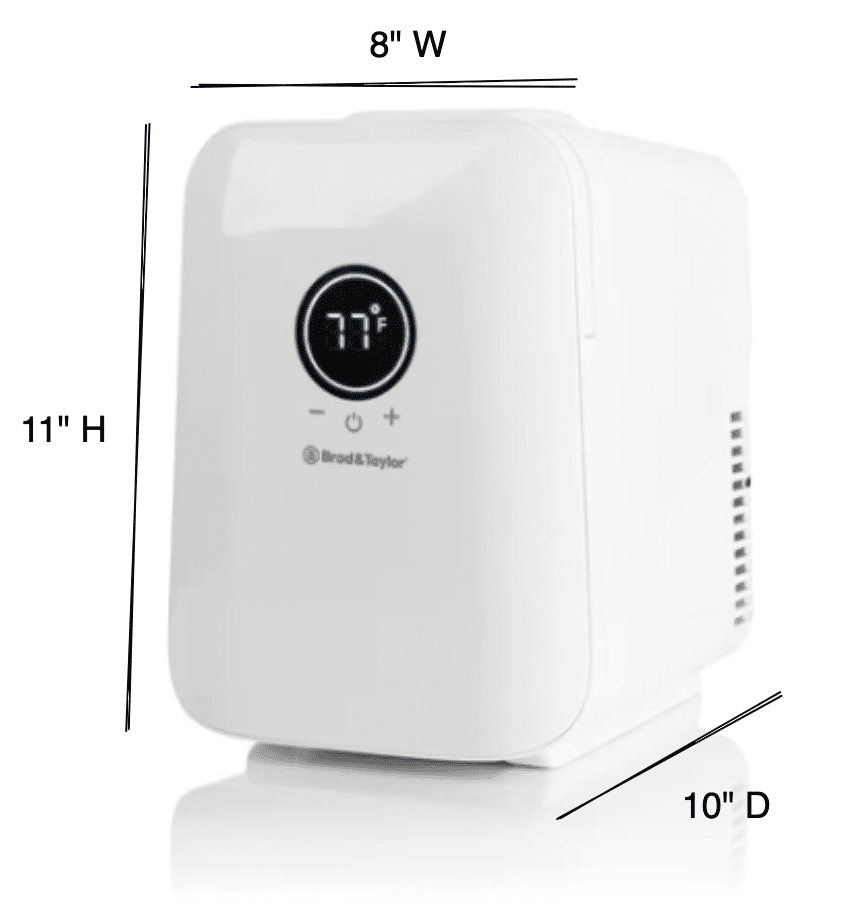
Outside dimensions
| Height | Width | Depth |
|---|---|---|
| 11-inches (28 cm) | 8-inches (23cm) | 10-inches (25cm) |
Inside dimensions
| Height | Width | Depth |
|---|---|---|
| 7 1/2-inches (19cm) | 5 1/8-inches (13cm) | 5 1/2-inches (14cm) |
What Can Fit Inside The Sourdough Home?
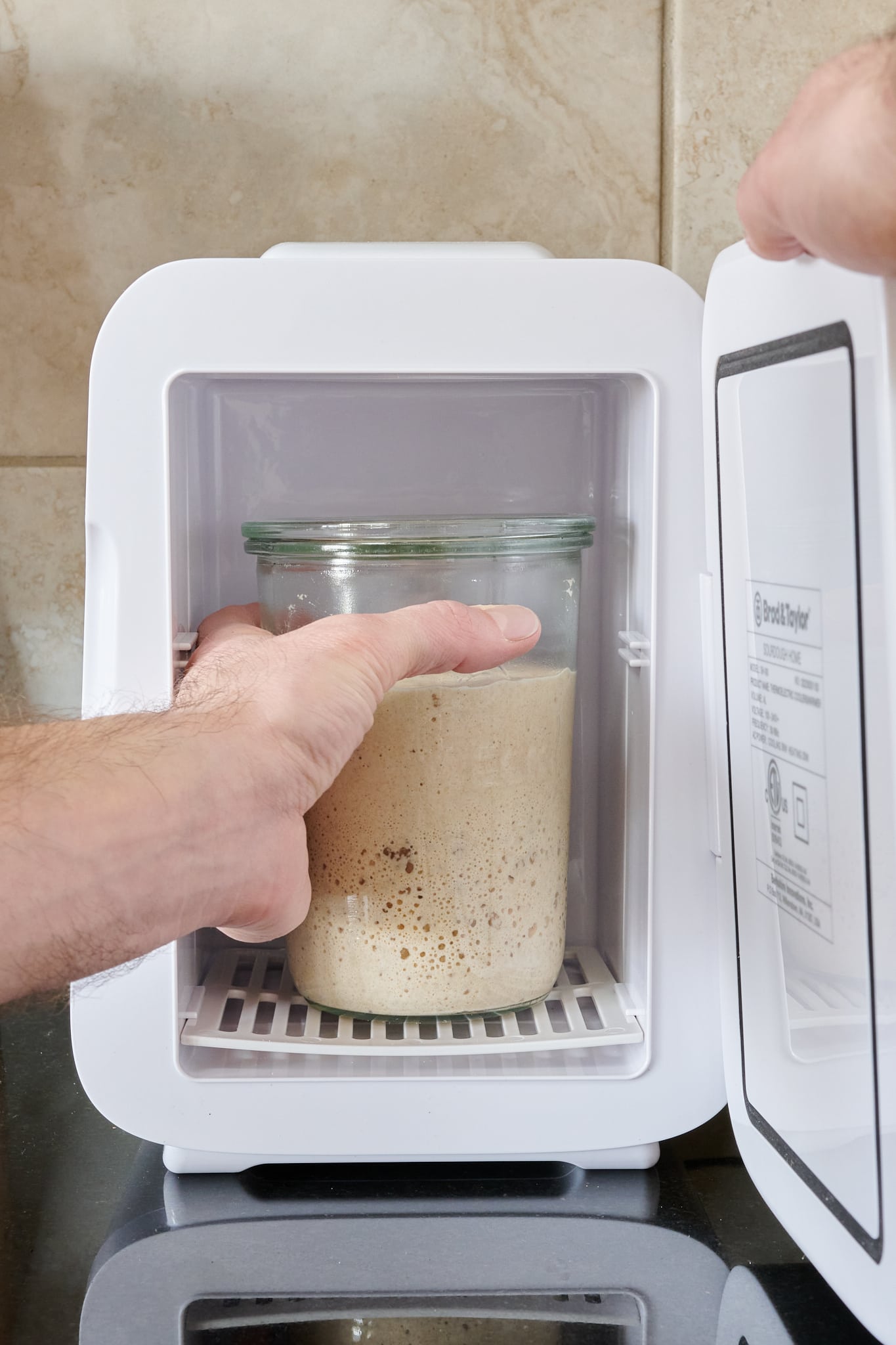
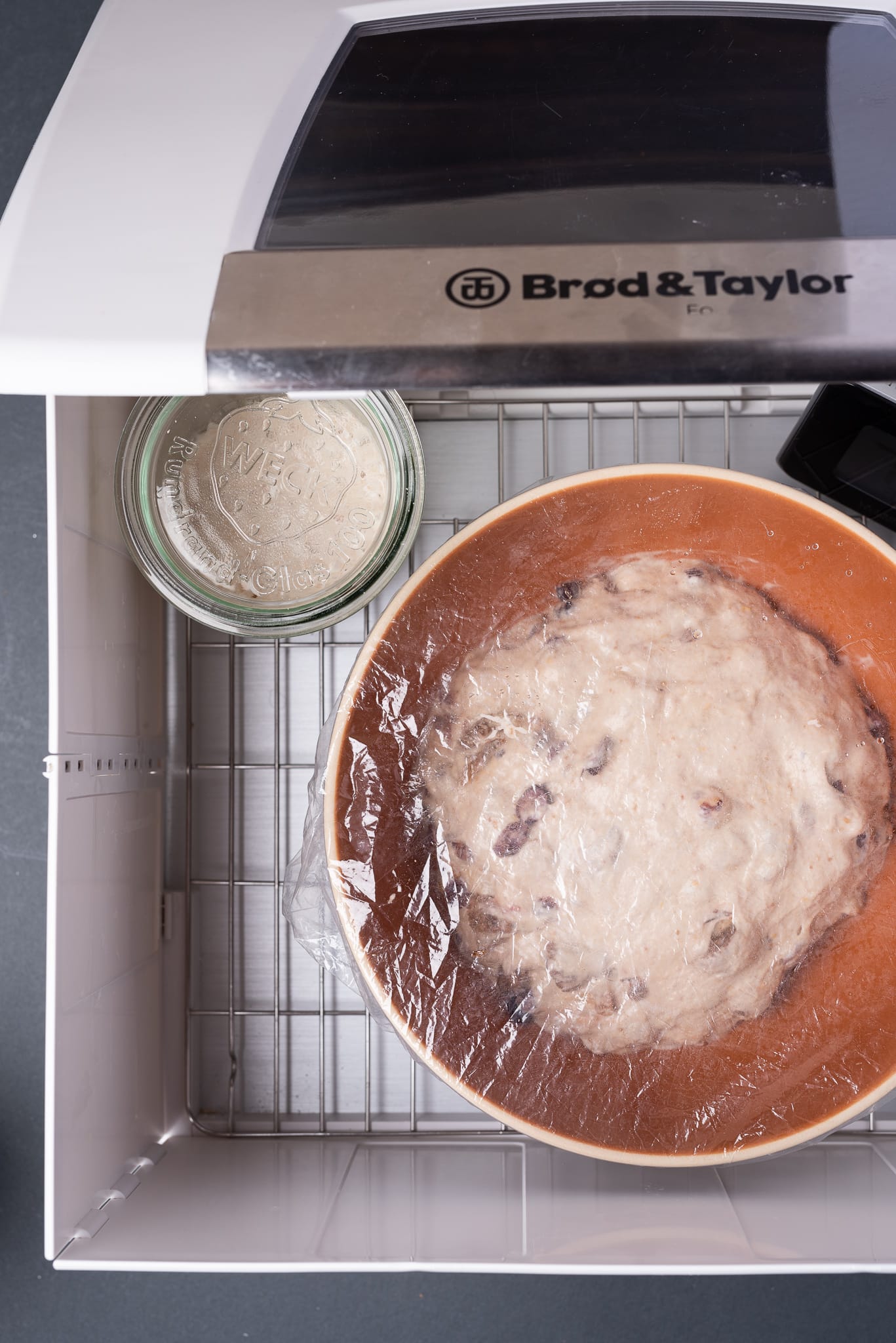
You can fit a single 1-liter (1-quart) jar inside or use the provided shelf to fit two smaller jars. As you can see below, there’s plenty of room to keep my favorite 3/4-liter sourdough starter jar inside. If you use smaller jars, say a 1/2-liter Weck jar, you can fit that on the bottom, insert the shelf, and place a smaller jar on top (two 1/2-liter Weck jars will not fit).
How to Use The Sourdough Home
Using it really is as simple as set-and-forget.
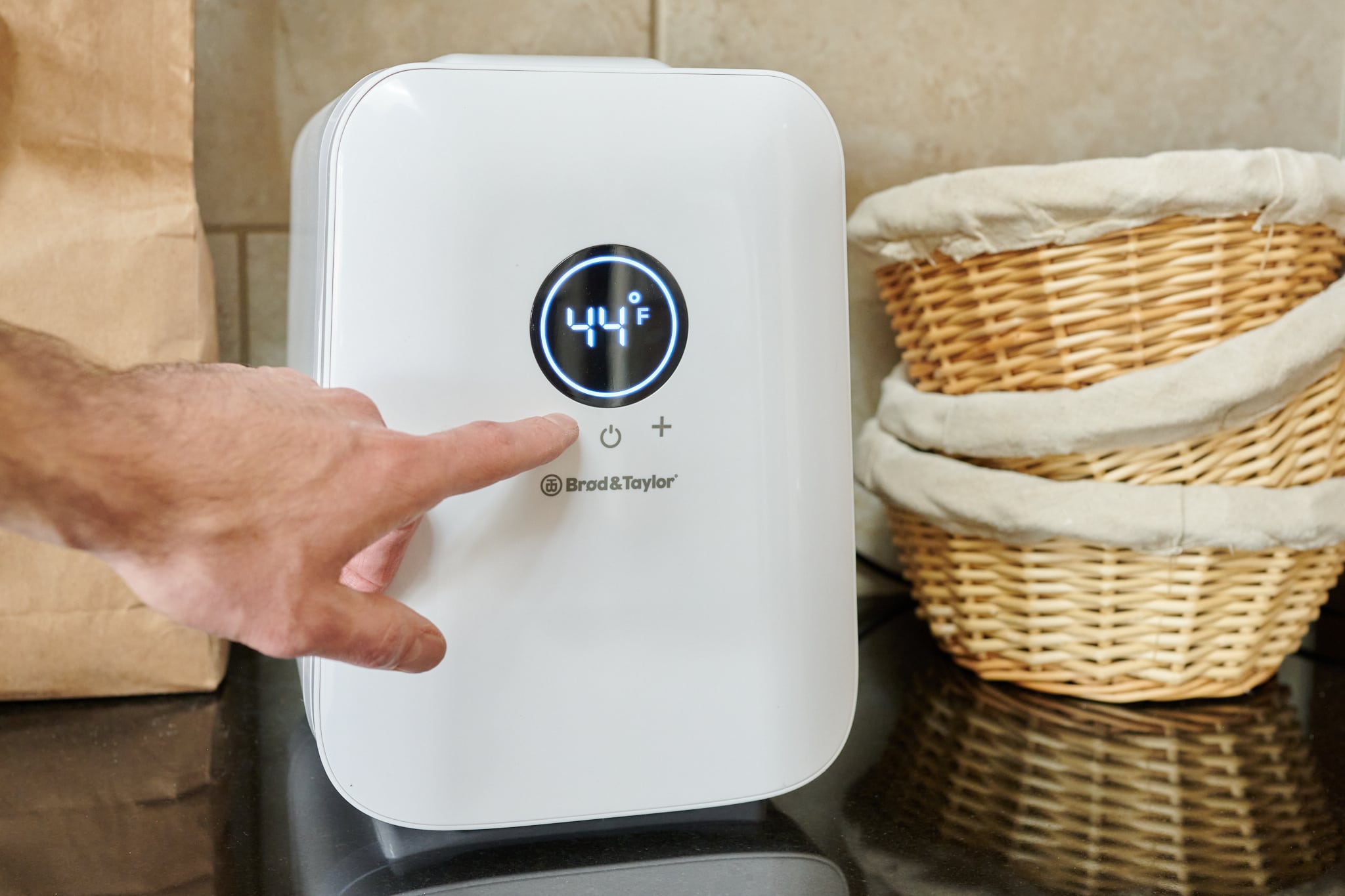
Setting the temperature is as simple as you might think: press the “+” or “-” buttons to change the inside temperature to whatever you desire. I set the temperature to 78°F (25°C) to keep my starter warm and ready for feeding every 12 hours, consistent with how I feed my sourdough starter. Using it really is as simple as set-and-forget.
If you want to feed your starter less, you can keep the same ratio of ingredients and reduce its maintenance temperature.
How Can I Feed My Starter Once a Week?
Many home bakers prefer baking only on the weekend. This can mean many sourdough starter feedings during the week to keep it healthy and active. Or, you can keep your starter in the refrigerator and take it out a day or two before using it. However, the cold temperatures of a refrigerator (usually around 38°F/3°C) result in a sluggish starter that needs a few feedings to regain full strength.
Instead of keeping your starter at super cold refrigerator temperatures, the Sourdough Home can be set to 44-48°F (6-8°C), which is cold but not too cold. This will slow fermentation in your starter, so you need only one feeding a week, but keep it warm and active enough to be ready for weekend baking without the need to feed it beforehand.
Of course, this highly depends on your sourdough starter’s makeup, so adjust as necessary to achieve the feeding schedule you’re after. For instance, you can play with 10%, 20%, or more (in baker’s percentages) starter carryover at each feeding and see how long it takes to ripen. Additionally, your starter may benefit from one room-temperature feeding before mixing it into bread dough, or making a levain.
Read how I feed my starter once every five days in my Sourdough Home user guide.
How to use the Sourdough Home to Make a Levain
You can use the Sourdough Home to provide the right conditions for your levain for a particular bake. Since a levain is the same thing as a starter, set the temperature control to whatever a recipe says and let it ripen for however long the recipe indicates. While this is happening, I’ll set my starter to the side to wait its turn to go back into the Sourdough Home once the levain is removed.
For instance, with my Beginner’s Sourdough Bread recipe, mix together the levain ingredients (flour, water, and ripe sourdough starter), set the Sourdough Home to 75°F (23°C), and slide in your jar. Then, return in 5 to 6 hours to find a perfect ripe levain ready for use.
Should I Still Buy the Folding Dough Proofer?
I do plan to use both the Sourdough Home and the Folding Dough proofer in my baking. The Sourdough Home and the Folding Dough Proofer are complementary tools used at different parts of the sourdough bread-making process. You use the Sourdough Home to keep your starter or levain at precisely the right temperature by heating and cooling, whereas you use the Folding Dough Proofer to keep larger batches of dough warm for strong fermentation.
See my guide to using the dough proofer for more on how I use it →
What Else Can I Use the Sourdough Home For?
Since the Sourdough Home can heat and cool, it can be used for other culinary purposes besides sourdough bread. You can use it for:
- Panettone: Maintain your pasta madre (lievito made) for panettone at the perfect cool temperature.
- Kombucha: Keep your SCOBY happy and fermenting lively, even in the winter.
- Yogurt: Use the Sourdough Home to keep your yogurt culture at the right temperature and ready to use.
Really, any type of culture can benefit from being kept inside the Sourdough Home at the optimal temperature for its type of fermentation.
How Does the Sourdough Home Heat and Cool?
The Sourdough Home is built around a Peltier module (thermoelectric module) that can both cool and heat. When an electric current is passed through the module, a plate will heat. If the current is reversed, the plate will cool. There are several advantages to using this technology, including energy efficiency, high precision temperature control (+/- 1°C), it’s compact, noiseless (except for the fan to help cool the heatsink), and vibration-free.
Watch Me Use the Sourdough Home
In the video below, you can watch me use the Sourdough Home and discuss why it’s so helpful for starter maintenance and, ultimately, for baking a fantastic loaf of bread.
Sourdough Home FAQs
How do I change the Sourdough Home to Celsius or Fahrenheit?
Press and hold the “+” and “-” buttons simultaneously until the display changes from Fahrenheit to Celsius.
Is the Sourdough Home loud?
The unit has a small fan inside, and I’d say it’s about as loud as a quiet computer fan.
Does the Sourdough Home use a lot of power?
Brød & Taylor lists the unit as low power, and it uses a max 30W of power when actively heating or cooling. Once the unit reaches the desired temperature, it will cycle on and off to keep the interior at the set temperature, which means it isn’t always cooling or heating. By comparison, the minimum power usage of a TV set-top box is between 50 to 200 watts. Ultimately, the amount of power it uses will be dependent on the ambient temperature around the unit (i.e., if it’s very cold outside and you want to heat, it will use more energy to reach the desired temperature).
What is the bump on the top of the Sourdough Home?
It’s a handle for carrying the unit around!
Does the display stay lit up all the time?
Yes, but it dims significantly after a short time when no buttons are pressed.
What’s Next?
To see how I use the Sourdough Home to feed my starter less often (2, 3, and even 5 days!), see my guide to using the Sourdough Home.
If you’d like to look at more of the best tools for making sourdough bread at home, see my best baking tools roundup.
💬 Have any questions about the Sourdough Home? Let me know in the comments below!


110 Comments
I have been using my Sourdough Home for a while now, but I think B&T missed a great opportunity to name it the Starter Home.
Hi Maurizio! Question. I have 2 Weck jars that can fit into the Home (one on top of another, both covered with the glass top). The shelf won’t fit with these sizes. Is that ok? Can the jars still “breathe” this way? Thank you!
Hi Maurizio,
My husband just got me a home for Mother’s Day!
I’m relatively new to this sourdough life, so am confused on the process.
I typically feed my starter, take what I need to make my dough and put the rest back in the fridge. I keep my starter at 50 degrees in the home, remove it and feed it- then put it back in the home at 78 degrees and then once done taking what I need for dough – put the remaining back in the home at 50 degrees again until ready to back?
Thanks so much for the insight, my tired mom brain is having issues comprehending!
Why is there water sitting in the bottom of my sourdough home? I've been using it for several weeks. I just noticed the inside looked damp. When I turned it on it's side a significant amount of water drained out. I live in a very arid area with little moisture in my house.
My Sourdough Home sat in a box for over a year. Two weeks ago, I pulled it out because my son was complaining about the terrible sourdough here in the Southeast. We’re originally from the San Francisco Bay Area, so SF sourdough is our benchmark for good bread.
I set the Sourdough Home to 78°F and used the starter formula from The Perfect Loaf cookbook. Within 24 hours, the starter bubbled up to three-quarters of the way up the Weck jar. After one feeding and another 48 hours, it reached the top. On Day 3, I lowered the temperature to 75°F. By Day 10, I started using it while maintaining a once-a-day feeding schedule, then dropped the temperature further to 60°F.
Since I’ll only be baking two loaves a week, I just switched to the small starter featured in a recent The Perfect Loaf newsletter.
The Sourdough Home has been a godsend—it maintains the exact temperature I need for my schedule, and I haven’t had any issues with contamination. Back in California, I lived in the middle of a vineyard, and despite using a thoroughly cleaned Weck jar sterilized with boiling water at every feeding, I lost my starter to contamination more than once. I believe the Sourdough Home provides an additional level of food hygiene that I can't get by leaving the starter on the counter. Cannot believe it took me so long to pull it out of the box.
Hello!
I just got the Sourdough Home today and I understand it cycles on and off, but does the screen go black or is that the home turning itself off? Or should it just be dim if still on?
Thank you,
Heidi G.
Hmm. My screen never turns off. It does dim, though!
Does the Sour Dough Home eliminate the need to discard?
You'll still need to discard if you don't use it to bake with. But you could get into a schedule where you use the Home to delay feeding, and when you do feed, you take the discard and use it in a bread dough directly (in place of any levain I call for).
How can I use my sourdough home to revive dry starter?
Set the temp nice and warm and keep it in there while you're feeding. It should kickstart the revival process!
I received my SDH the other day and have already used it for my starter. I will feed it again today and plan to bake on Saturday. Right now I have it set for 68 degrees. On Friday night when I feed it, should I bump up the temp to 77 degrees to use for Saturday morning?
I almost always leave mine set to 74F and just leave it there all the time 🙂
Hi Maurizio: what suggestions do you have for a DIY sourdough starter home until Brod and Taylor’s is back in stock? Thanks!
You could use your home oven with light on, or put in your microwave (where there's some insulation) and use a bowl of warm water to regulate temp!
Hi Maurizio,
I’m tempted to get one, but I really need two half liter Weck jars to fit, and it’s about an inch too short for that.
That’s right, it won’t fit two, sadly. I hate to say it, but I bought two SDH’s to solve this problem (one for my regular starter, one for my panettone starter). The need was there for me!
Hi. I’m looking at the Home as I’m going away for two weeks at the beginning of October and am wondering what to do with Freddy (my starter). Would there be any benefit for me getting the Home, Maurizio, please?
Hey there! For 2 weeks, I would stick my starter in my normal refrigerator at a cold temp of 39F. That’ll keep it cold enough to be just fine for that duration. Check out my guide to this, here:
https://www.theperfectloaf.com/the-best-way-to-store-bread/
The SDH is much more useful for the shorter term!
Hi Maurizio! I’ve got the Sourdough Home and I am making some first experiment. For now I am working just with low T. ( 8-10°C) and I am unfortunately quite disappointed because I’ve checked the internal temperature and realised that it is very different from the set temperature (ca. 5°C higher, which is a lot). How can it be? I’ve bought because I want reliably and precisely control the temperature of my starter, and now Iam realising that this is not possible, and I do not need it if I cannot trust it☹️
Can you tell me something about it? Do you check the real internal temperature, and if so, and how?It’s just a problem of my appliace or it is a standard prolem of it?
Thank you very much in advance for your answer,
Marina
Hey Marina! What you’re seeing is normal. If you set the SDH to a very low temp (like you’ve done) and it’s quite warm outside, it’ll have a hard time cooling that low. You can try setting the temp of the unit lower so it reaches your target, but at the extremes of its cooling capability you’ll run into larger deviations!
I just got my Sourdough Home and am curious –
Is there a reason the two shelves aren’t the same height? I can fit a Bonne Maman preserve jar on the bottom shelf, but not the top.
A related question – why isn’t the unit quite tall enough to accommodate two 1/2 liter Weck jars?
The Sourdough Home will accommodate two Bonne Maman preserve jars, if you you set one on top of the other rather than using the shelf in the unit.
And, finally, is it necessary to use the bottom shelf? If you take it out, the unit is more than 1/4 taller internally.
Thanks,
Mike
Great questions here, Mike. I think it just came down to manufacturing and the size limits for the unit.
Day 3 of my new sourdough starter (Doug, since all pets require names.) and he’s a beast! My new starter is overflowing the Weck container. I’m setting the Sourdough Home to 80 F. Is that too high?
Also, thanks for the suggestion of the SHD…it fits nicely on my counter … and as it turns out, it’s a conversation starter, too!
80F is just fine, if you’d like!
Will the Weck tulip 1 liter size jar fit into the Sourdough Home?
What if you are away for longer than 7 days..can you use it?
No, I use only the 3/4L jar in there.
I have a guide coming on how to use the SDH for different durations!
Which lid to use? Does the glass one fit too tightly without clamps etc for fermentation. Recipes call for loose fitting lid.
Use glass lid for discard is ok?
Thank you
Glass lid is just fine!
Glass lid is nice – I don’t clamp though
Just got the Sourdough Home. I have been keeping my starter in the fridge. I want to use 44f and feed every five days. Right now I am about 7 days from needing to bake. How much starter should I transfer from the fridge jug to the Sourdough Home to begin this process
You know, I’ve only ever tested putting a well-fed and maintained starter that’s been kept on the counter into the Sourdough Home (SDH), not one from the fridge. I would probably prefer to starter with a lively and active starter first, then put it in there at a reduced temp.
You could let your starter come to room temp, feed it for a few days to get it back to full strength, then put it in the SDH at a cool temp.
Here’s what I ended up doing. (1) Took the starter out of the fridge and let come to room temperature. (2) Then, using a multiple of the 1:4:4 ratio + one tablespoon of water, mixed that and put it in the Sourdough Home at 80f. (3) After about 3 hours, there were signs of life, so back into the Home but at 74f overnight – during which time the starter doubled. (4) In the morning, fed the starter at the same ratio, placed it back in the Home and lowered the temp to 44f. I’ve got about 5 days before I need to bake, so I’m hopeful!
That’s just how I’m using it….feed to a nice active state, then suspend at 50 degrees F for 4 days….I pull it out – bring to room temp….feed and voila! Only takes one round of nourishment to be “bread worthy”. I really hesitated buying another (!) gadget, but I’m loving it!