

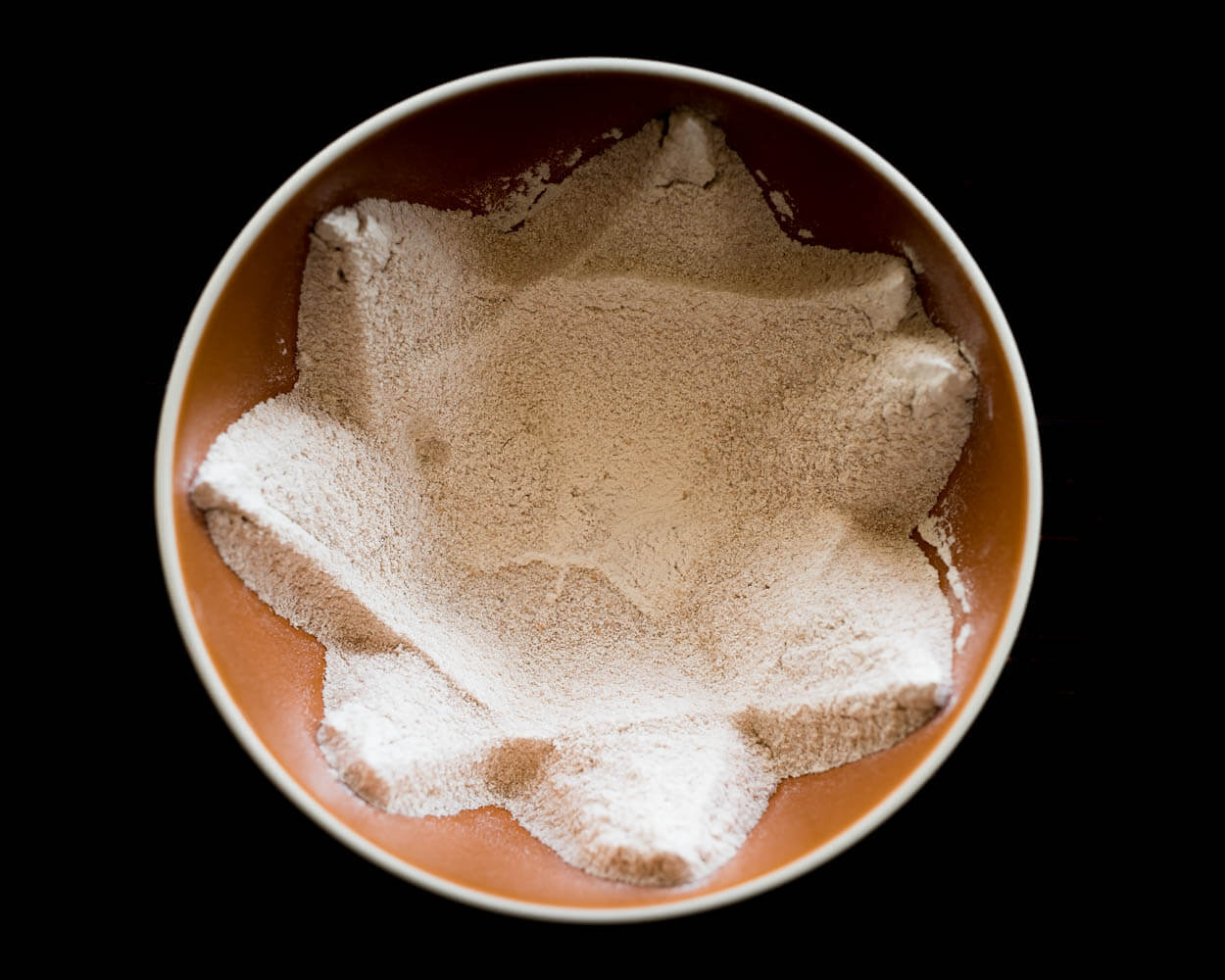
“You’re so crazy,” I heard my wife whisper in the background as I unearthed the great red beast from its box marked “Extremely Heavy.” The beast, a GrainMaker Model No. 116 hand-cranked mill, was carefully packaged and shipped across the country from a small place in the Midwest where everything was made and assembled by hand. It exuded quality and craftsmanship. As I placed the large, shiny apparatus on my kitchen counter, I tried to hold back my excitement and eagerness to start baking sourdough with freshly milled flour.
But is my wife right: am I crazy to have a flour mill in our kitchen? Throughout history, communities were centered on the flour mill. People would gather when the mill was finished grinding berries into wheat and pick up their fresh flour to bake with it straight away. These mills were life-giving to the community. Is it so different to have a mill in your own home and bake with fresh flour? While the importance of bread may or may not be the same today as it was back then, there’s certainly a list of things to be gained by baking with freshly milled flour, and for me, the taste is at the top.
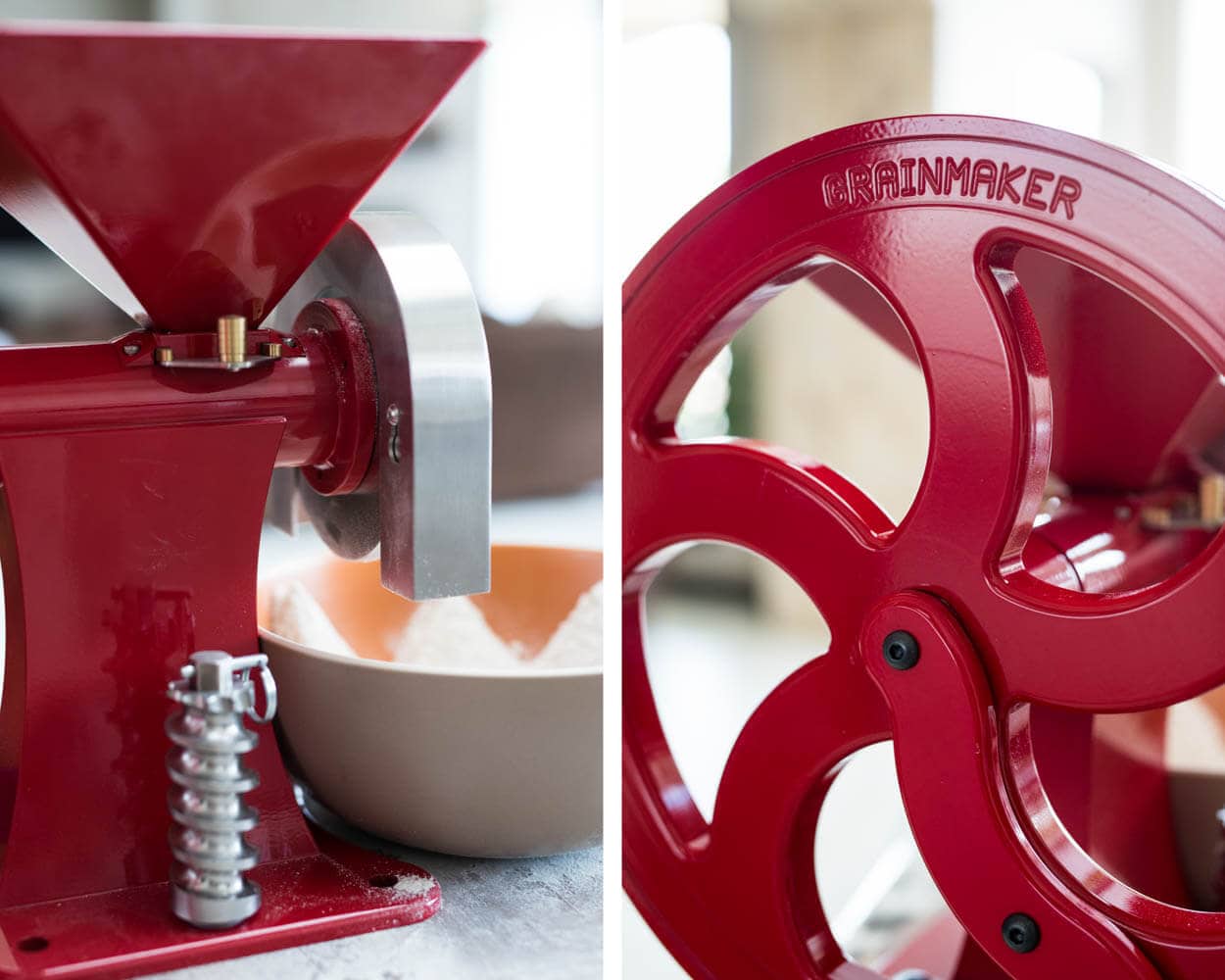
The GrainMaker allows me to produce some incredibly fine flour, but milling is not a speedy process: it takes me between 10 and 20 minutes to mill about 1 kilogram of flour (depending on how fine I decide to grind, and how strong I’m feeling that morning). While my proficiency improves each time I use the mill, the physical process of milling is part of the enjoyment for me. It’s that missing step in baking, the transformative part that takes each seed from field to bread. But perhaps most importantly, the resulting flour is spectacularly fine, light, and the aroma, it’s intoxicating. Milling that first batch of flour was a real awakening: who knew flour could smell like this?
What was my motivation for milling my flour? Several things captivated me after reading numerous articles and first-hand accounts of people milling at home: economics, the overall increase in freshness, health benefits, and king of them all, the taste.
Benefits of Freshly Milled Flour
The benefits of milling your wheat are numerous. First, buying whole, raw berries makes financial sense compared to milled sacks of wheat: not only are they cheaper but buying in bulk typically will save you even more. When stored properly (a cool, dry pantry devoid of light) the shelf life of raw wheat berries is incredibly long—years long, so ordering an excess is never a problem. For a home baker like me, this can be a real advantage as I can store 50 pounds of wheat berries almost indefinitely and not have to worry one bit about them spoiling. I typically bake two to three times per week, and I have no problem churning through a 50-pound sack of flour, but it’s nice to have fresh flour and mill only what I need for the next bake. But if you are a sporadic baker it might make even more sense, mill what you need and the rest will stay fresh long into the future.
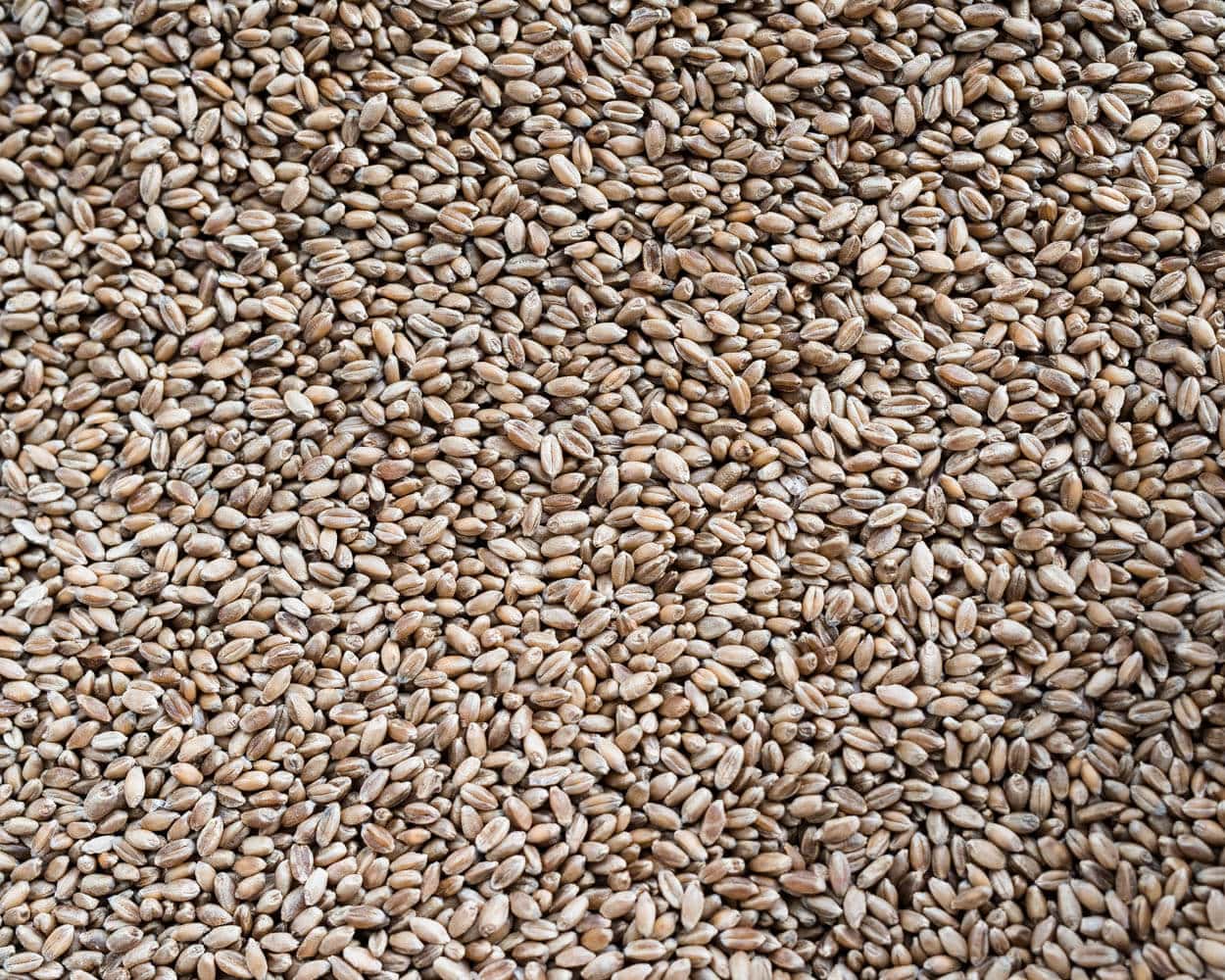
Milling your own flour, without sifting, means you will retain 100% of the same wheat berry in your end product. Many mills will indicate on their packaging that you’re buying whole wheat, but that doesn’t always mean whole grain. Additionally, they will sometimes perform several milling passes, especially on the germ and bran which are sifted out and then later added back in, reconstituting back to 100% of its original weight. I’ve read several accounts where bakers say there is something different about the taste, nutrition—and it simply does not perform the same as freshly milled flour milled in a single pass (see Peter Reinhart’s latest book, Bread Revolution).
Studies show that freshly milled flour provides added nutrients to your diet compared to aged flour. To start, bread baked with freshly milled flour has higher vitamin and fiber levels. Further, foods exposed to oxygen (oxidization) for prolonged periods will result in nutrient loss, and in this case beneficial minerals and oils.
Once the wheat berry is milled, breaking open that protective bran layer, oxidization begins which causes nutrients to degrade slowly. While we do not eat bread primarily for its vitamin content (compared to say, spinach), but rather more for proteins, fiber, and carbohydrates, it is great to know that bread baked with freshly milled flour retains more vitamins and nutrients than we might otherwise get.
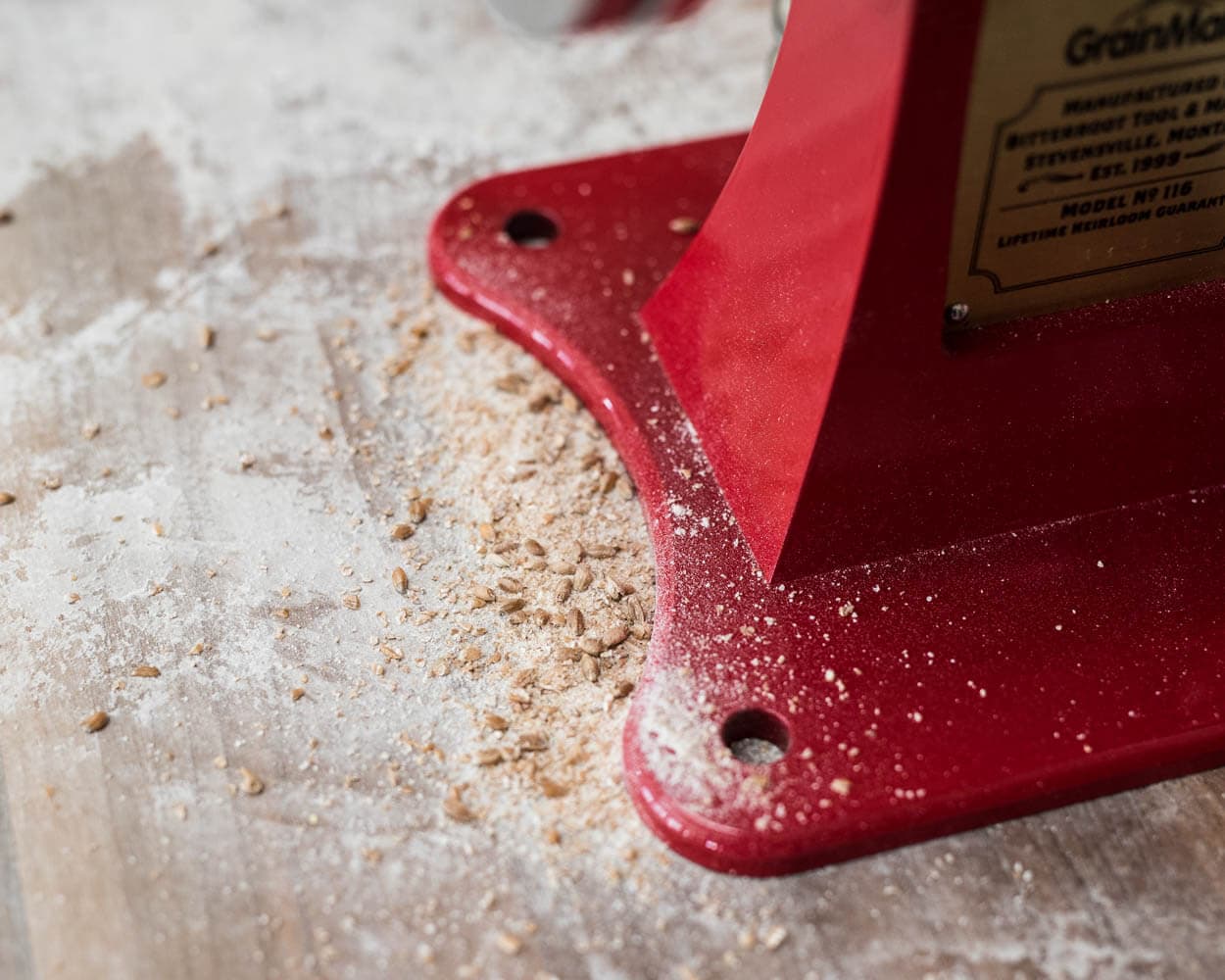
With all that said, it’s easy to get caught up in a debate on the exact percentage of vitamin and fiber retention, but to me, those are beneficial side effects of a more substantial motivating factor: taste. It’s much better to focus on the fact that this bread is just plain delicious (and, in some possibly unquantifiable way, healthier). Let’s talk about the taste.
The Taste of Freshly Milled Flour
Great taste is, of course, something we always strive for when baking, irrespective of what flour we are using, but the bread I’ve baked with freshly milled flour is a world apart from other bakes. It starts with the smell during milling—an aroma that reminds me of heavy cream or panna cotta. I never knew wheat could smell like this and it’s captivating. When you smell aged flour, it might have a particularly sweet smell, but there’s something more here, something I wasn’t expecting the first time I milled. You’re hit a second time with this beautiful aroma right when you get your hands in and mix with water, it wafts up from the cream-colored mixture and lingers with you through the mix.
I like to equate milling flour to grinding your own coffee beans. Once you taste the results there’s no alternative.
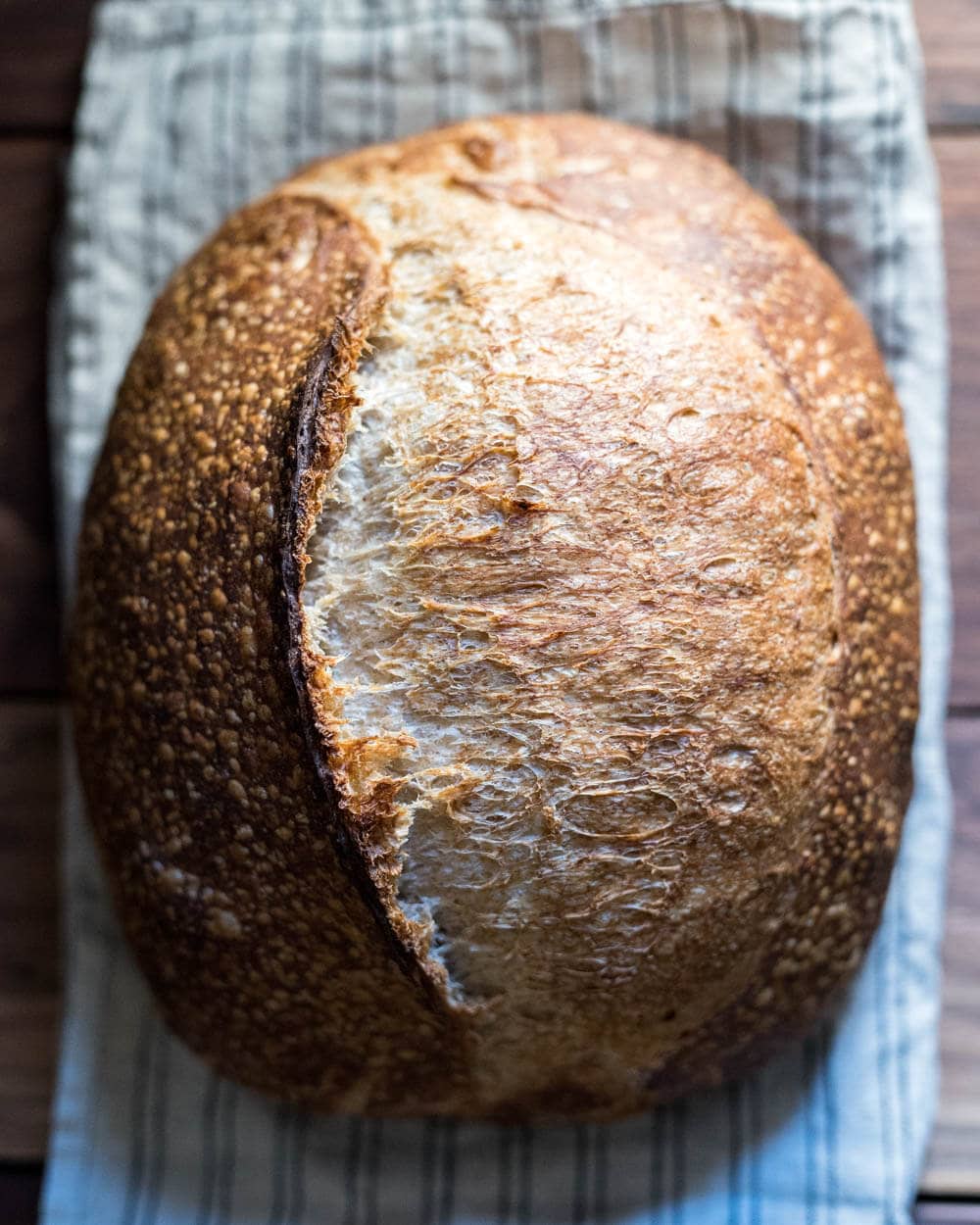
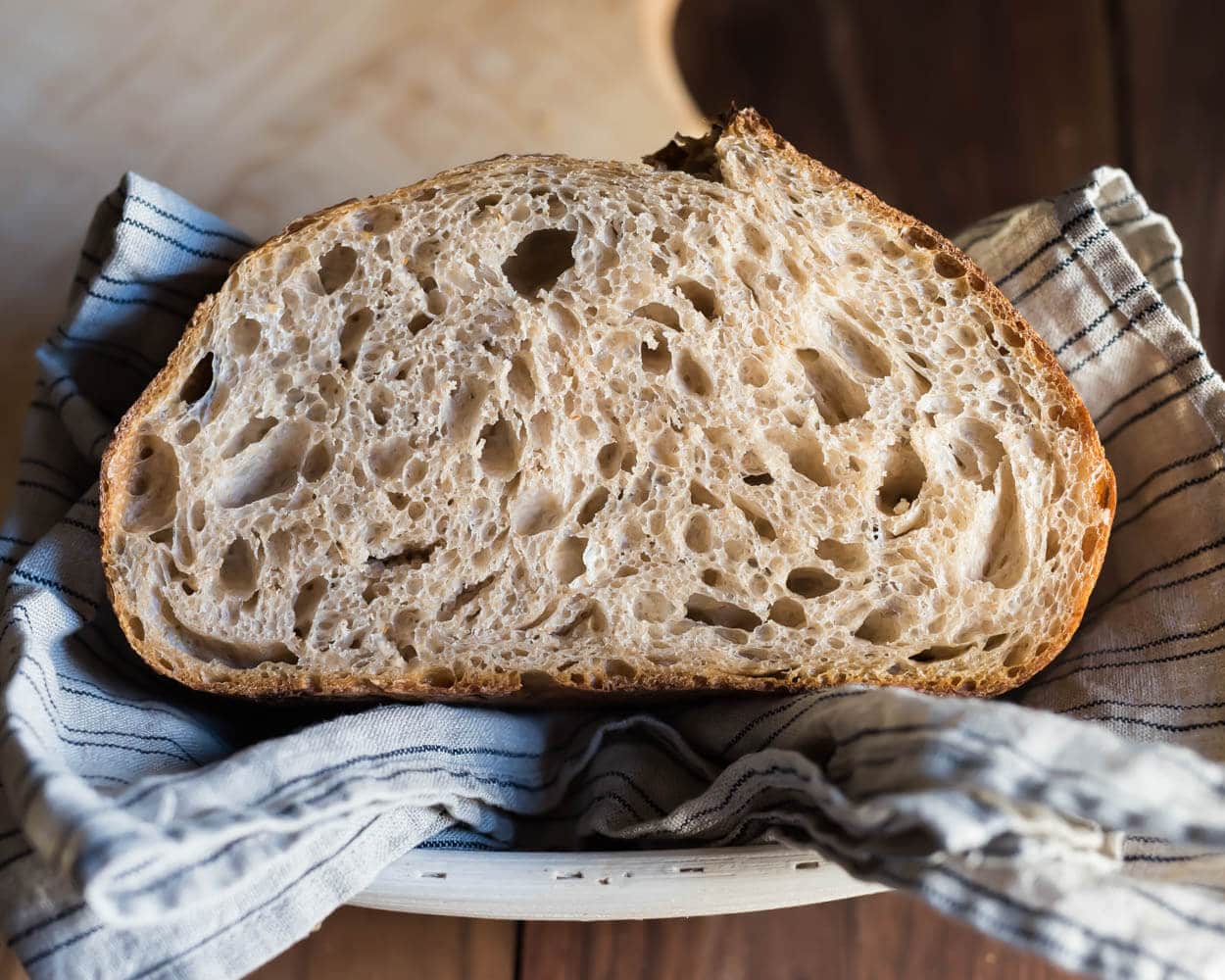
When I bake my typical sourdough bread with added freshly milled flour, it takes on added levels of flavor complexity, a taste that is hard to capture in words but brings a smile to my face. The crust becomes incredibly thin and crackly with a forward shine to it, a shine that almost looks as if I had smeared the bread with olive oil and then baked it. The interior of my loaves are tender, light, and with a vibrant flavor. I’ve read others describe this flavor as “nutty” or “grassy,” and I’d agree, it’s fresh and alive.
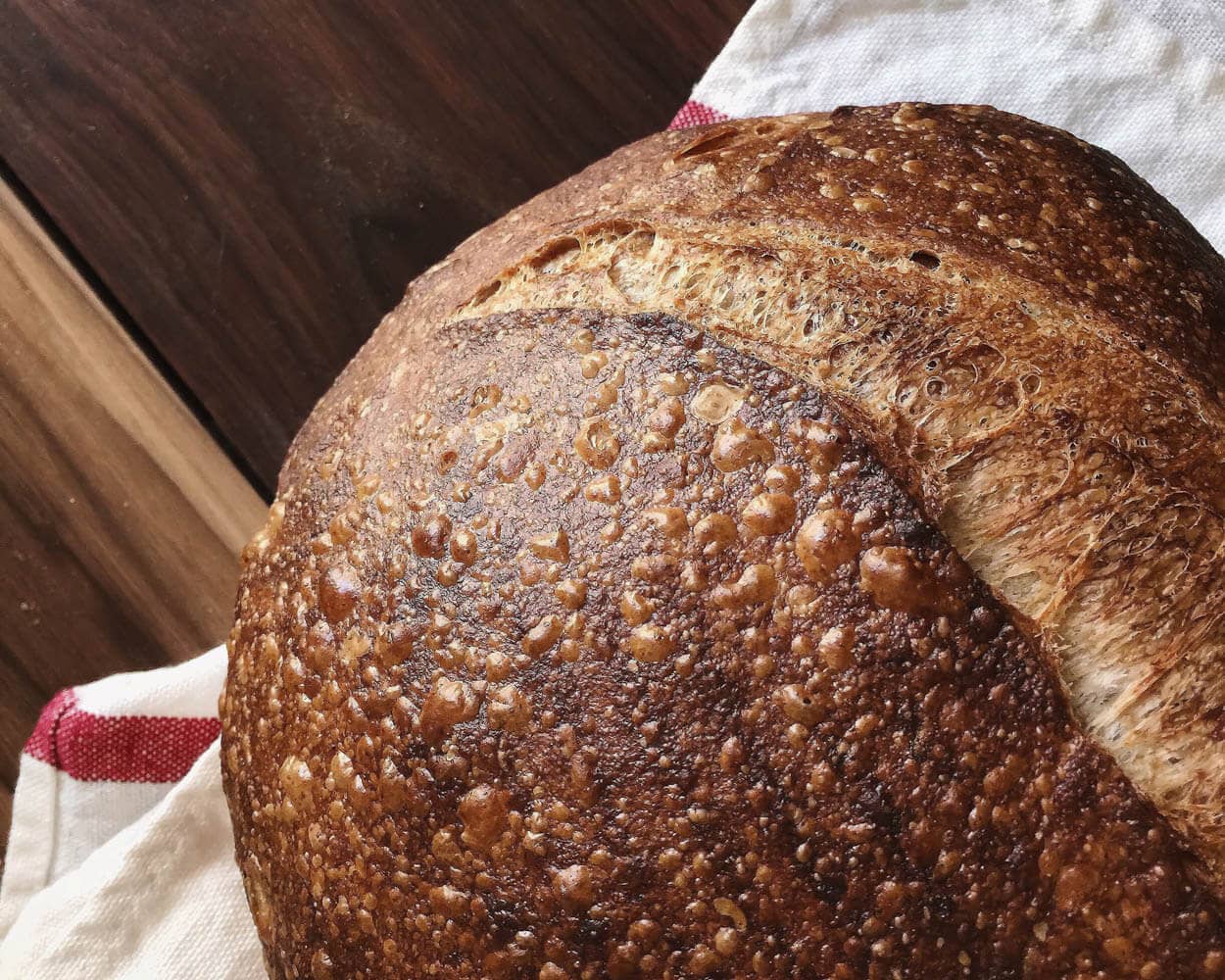
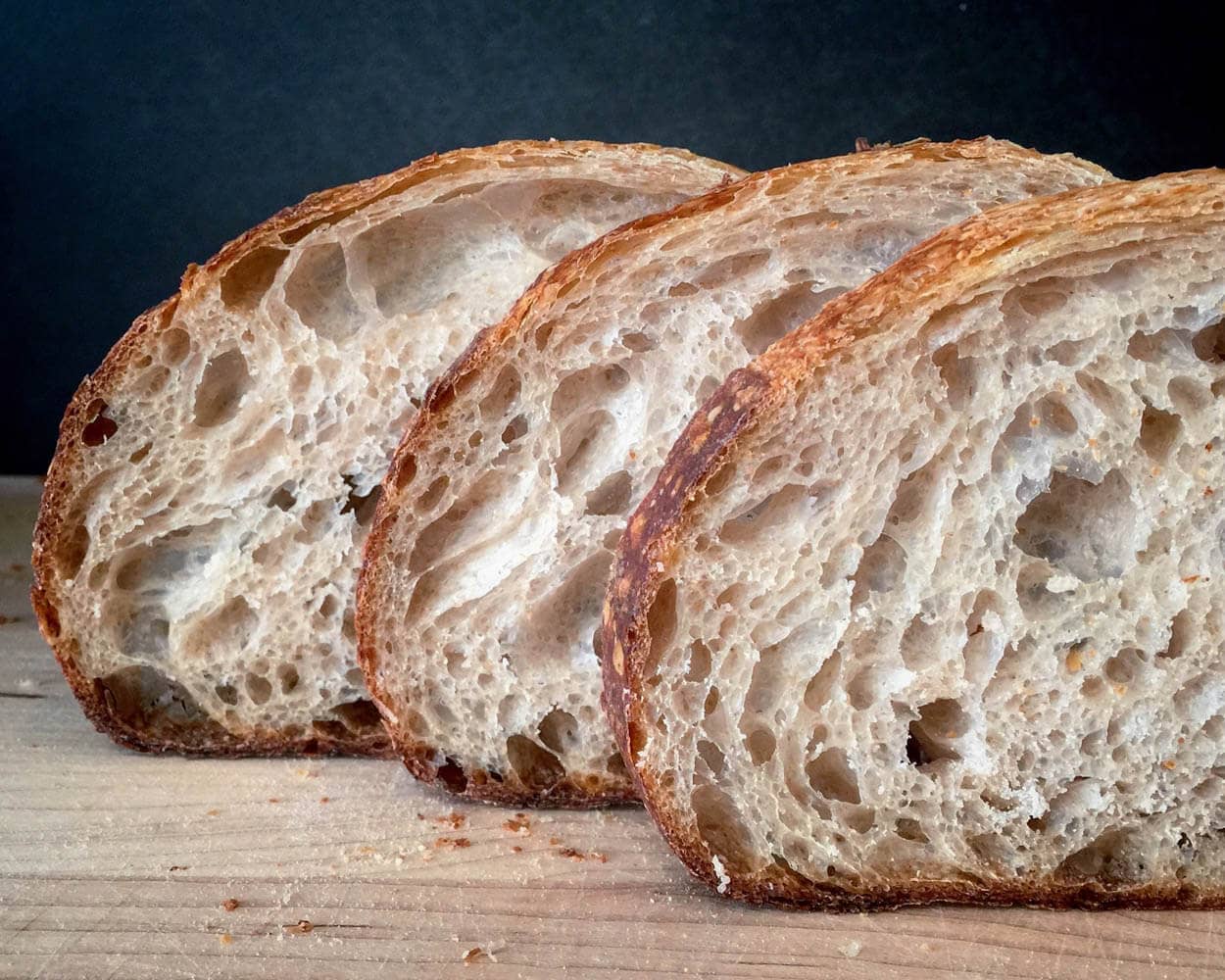
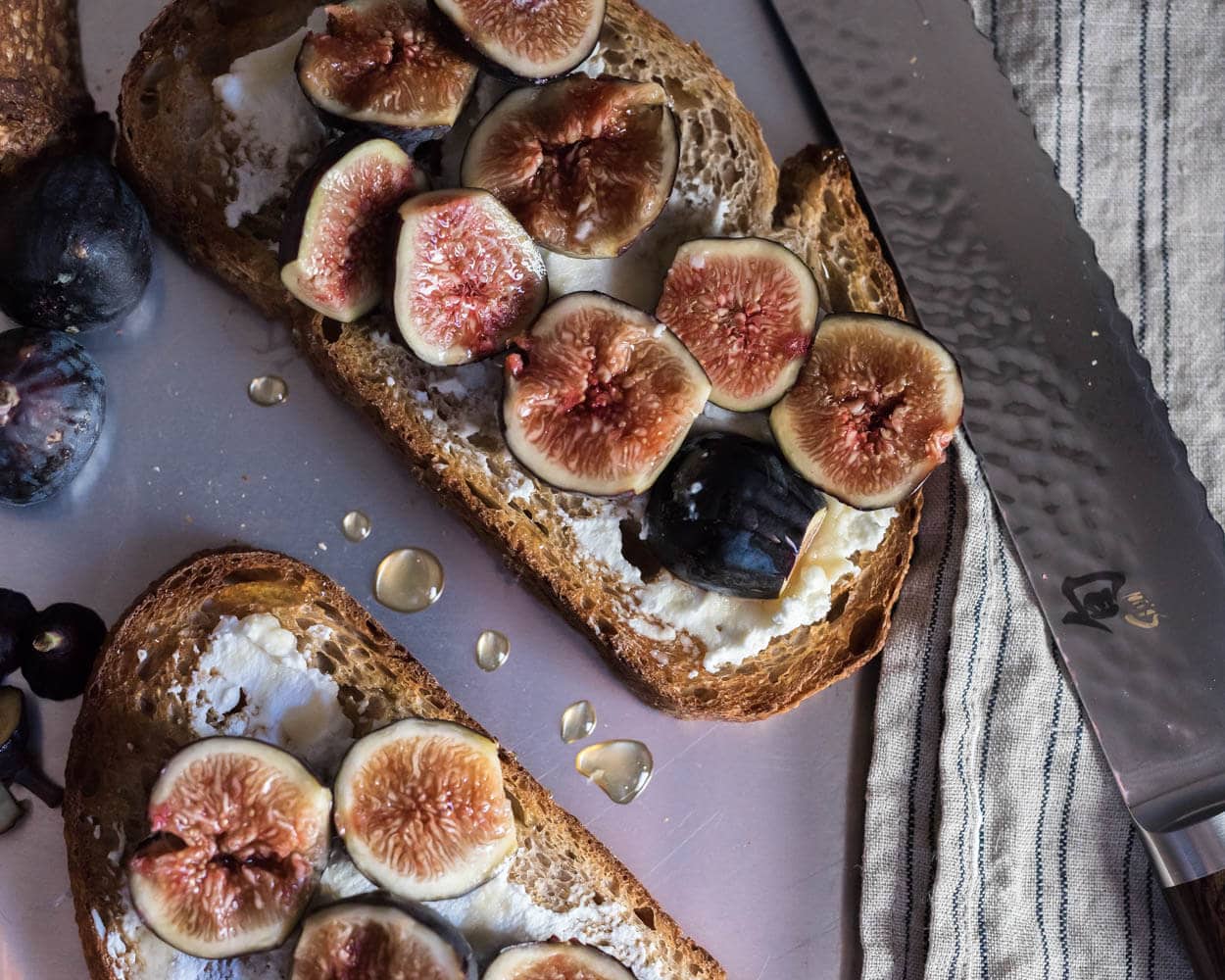
Surprisingly these loaves with fresh flour are almost better a few days after baking. That thin and crackly crust and open interior crisps up even further in the toaster, providing the perfect crunchy vessel for bruschetta, ricotta, and honey or even just a good slather of salted butter (you’ll see what I mean in just a bit). Incredibly simple but exquisitely delicious.
Freshly Milled flour vs. Store Bought
Using the whole grain berry and transforming it into freshly milled flour results in flour that’s free of bleaches, stabilizers, and other chemicals—just 100% of the wheat berry and nothing else. Freshly milled flour is reported to result in a “weaker” dough structure due to lack of oxidization, but I’ve found as long as the flour is used within a week of milling, it performs perfectly well in my baking.
Milled, store-bought flour is not always consistent either, of course. There are variations in each sack that every baker must account for and adjust for because flour is not a static input, it is an ever-changing component of baking. Each growing season for the farmer is different, and therefore each batch of flour will have different properties. One season might be full of rain, and the next might be very dry, the flour will then require different hydration and might even be stronger or weaker.
Since flour is such an essential part of baking (it is the most significant ingredient after all), it is incredibly important we look for the best flour we can reasonably afford.
Wheat Berry Selection
I like to source organic wheat when possible. There are many great resources out there for local wheat that is farmed sustainably, why not take advantage of these great products? For my first bulk order of raw wheat berries, I settled on a 25-pound sack of Great River Organic Hard Red Spring Wheat grown up north of me near the northern part of the Mississippi River.
Good food depends almost entirely on good ingredients.
Alice Waters
I had plans to use local wheat grown a few hours north of me but they sadly dropped their organic rating. I still plan on trying their wheat in the future with the hopes that they return to their original plans of farming wheat organically. Organic or not is a personal preference, I choose organic whenever possible to support farmers who are able and want to grow in an environmentally friendly and sustainable way.
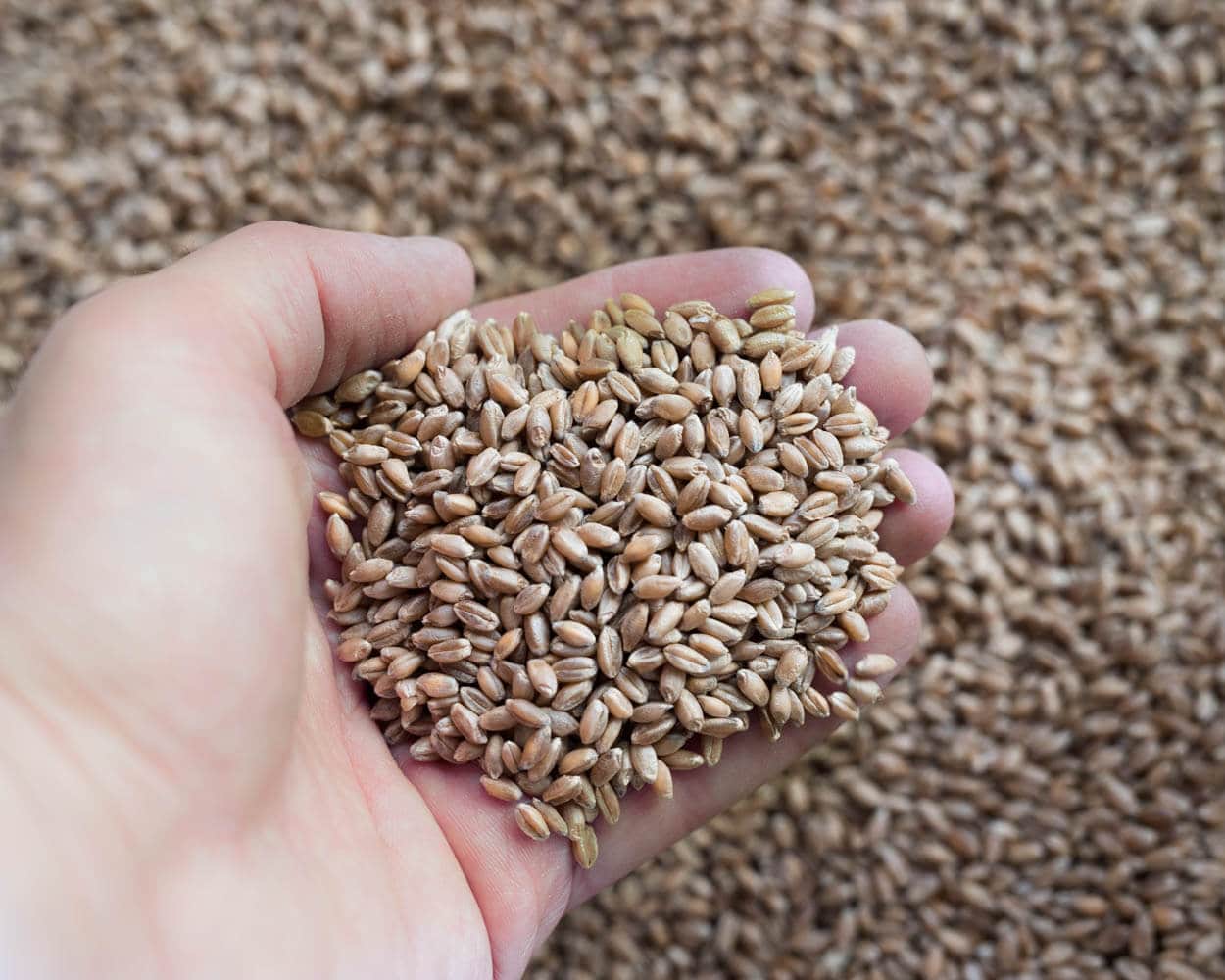
I selected hard red spring wheat with intention. Hard wheat is typically chosen for bread here in North America because it has a higher protein content than soft wheat, which is used primarily for cake and pastry flour. Red wheat gets its name from its reddish husk and is darker than other varieties. I’ve found red wheat to have a more assertive “wheaty” flavor that carries through beautifully to the finished loaf of bread.
For an even deeper look into using fresh flour, see my guide on how to freshly mill flour at home for baking.
Milling
For the home baker, there are several options for mills, hand-operated and motor-driven alike, and some with incredible build quality to boot. The GrainMaker is my go-to hand-operated mill when I have more time to spend in the kitchen, but a Mockmill is an excellent choice that mills fine flour at the flip of a switch.
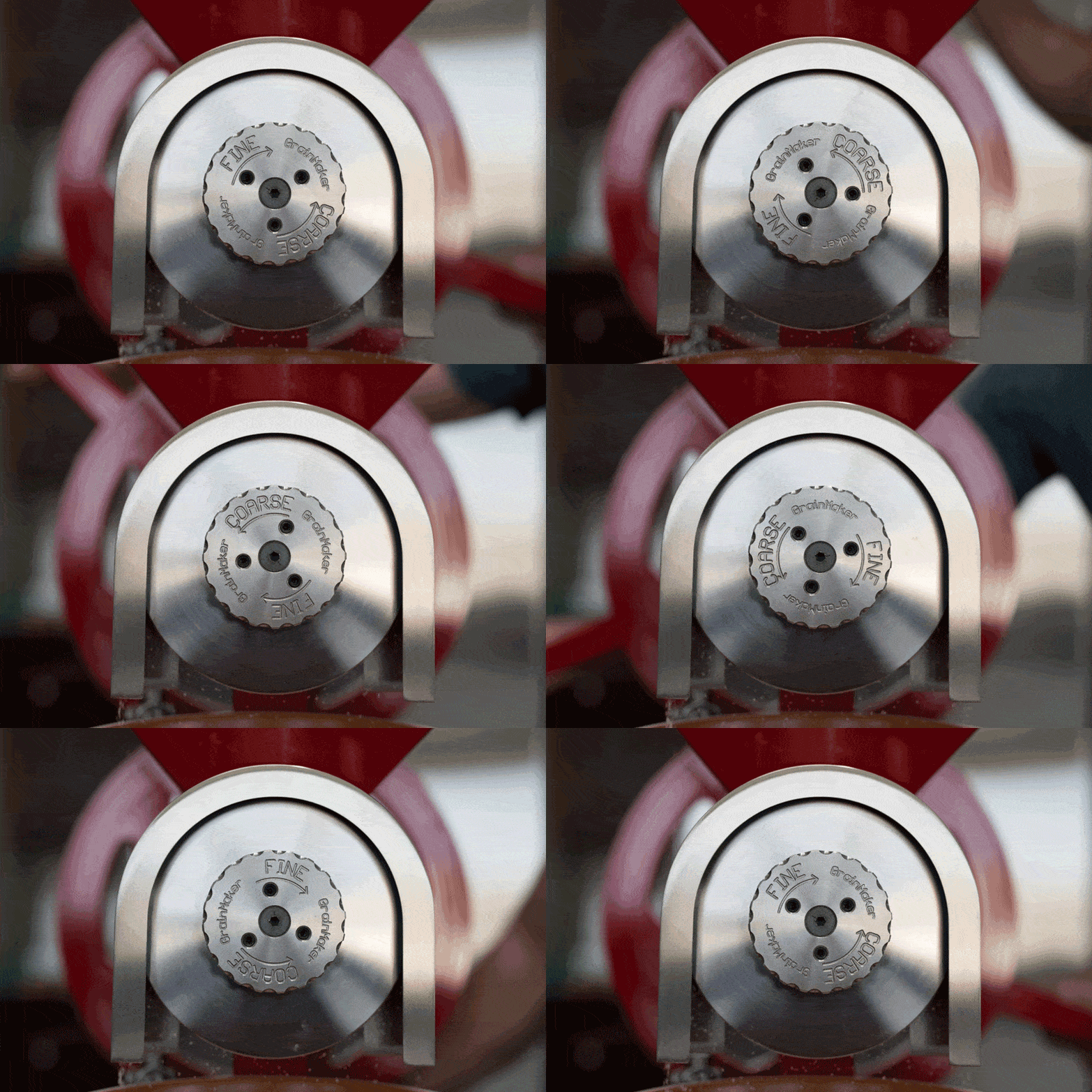
I always start milling early in the morning. The house is still asleep, and it’s just my mill and I in the kitchen as the sun comes up. I find it convenient to mill all the flour needed for the day’s bake first, then build my levain with 100% fresh milled flour. Finally, the rest of the day is baking as usual. I will typically bake two loaves, sometimes four, and I can comfortably mill enough flour in the morning to cover them.
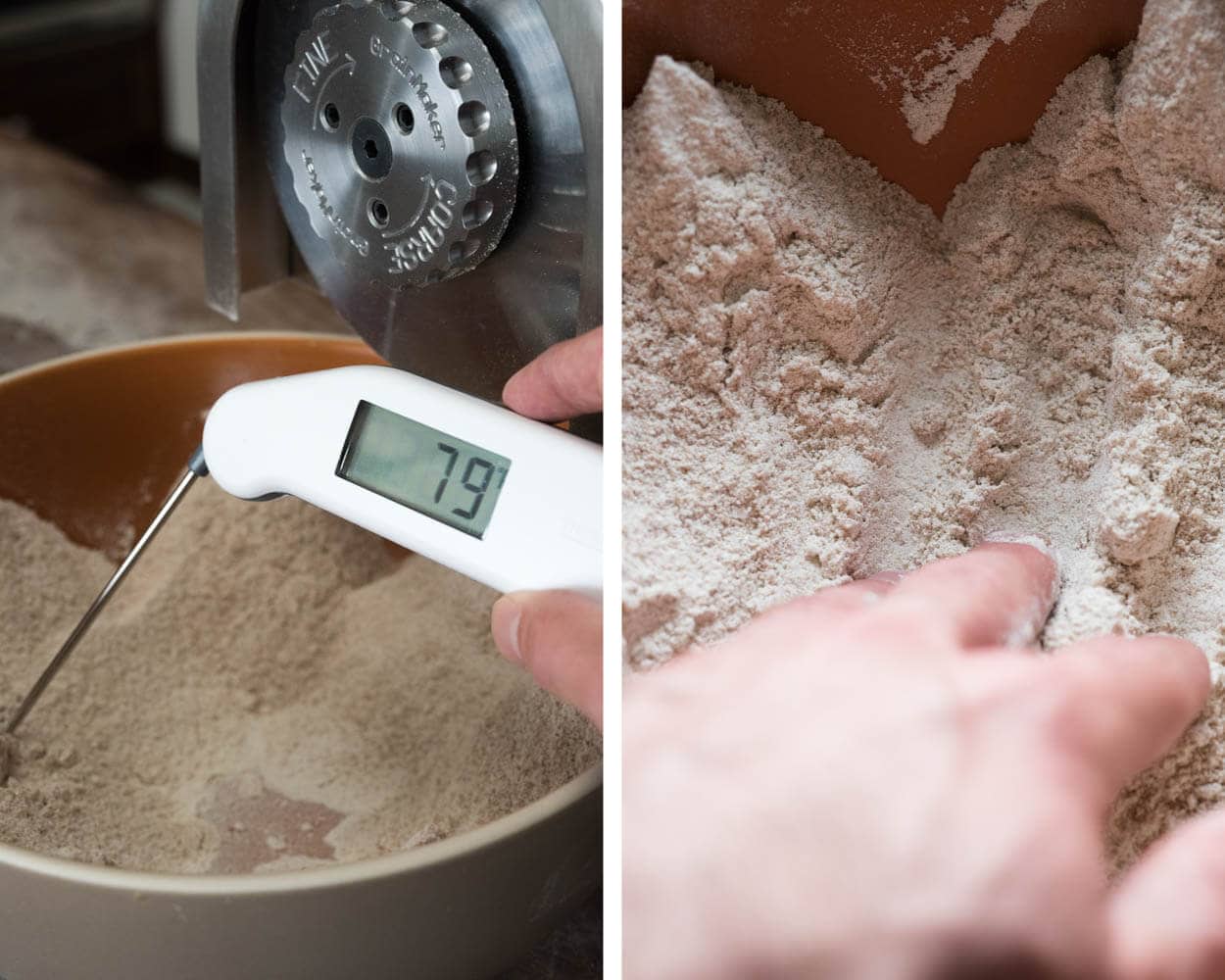
Before I start milling, I work out how fine I am going to mill the wheat berries on hand. I can turn the dial at the front of the mill clockwise to head more towards a finer flour, or counterclockwise to get a more coarse grind. This turning action moves the two stainless steel burrs closer or farther apart, respectively. I am still experimenting with varying levels of granularity, but currently, I start by turning the dial until it is at a medium level and then I begin milling grain slowly with a handful of grain to start. I turn the dial clockwise to go finer, inspecting the output at each turn. I’ve become attuned to the sound the mill makes and the vibration of the arm and handle when the grind is at just the right level to get the granularity I want.
When I first experimented with the mill I used my whole wheat flour on hand as a guideline, I placed the two side-by-side and inspected the differences. I obtained my results empirically, but by merely taking flour and pressing it between my fingers I can garner a surprising amount of data: how large are the bran particles? Does the flour cake and stick when squished? How does the flour fall when it’s run through my fingers? All very tactile and visceral tests, but these types of tests are vital in baking after all.
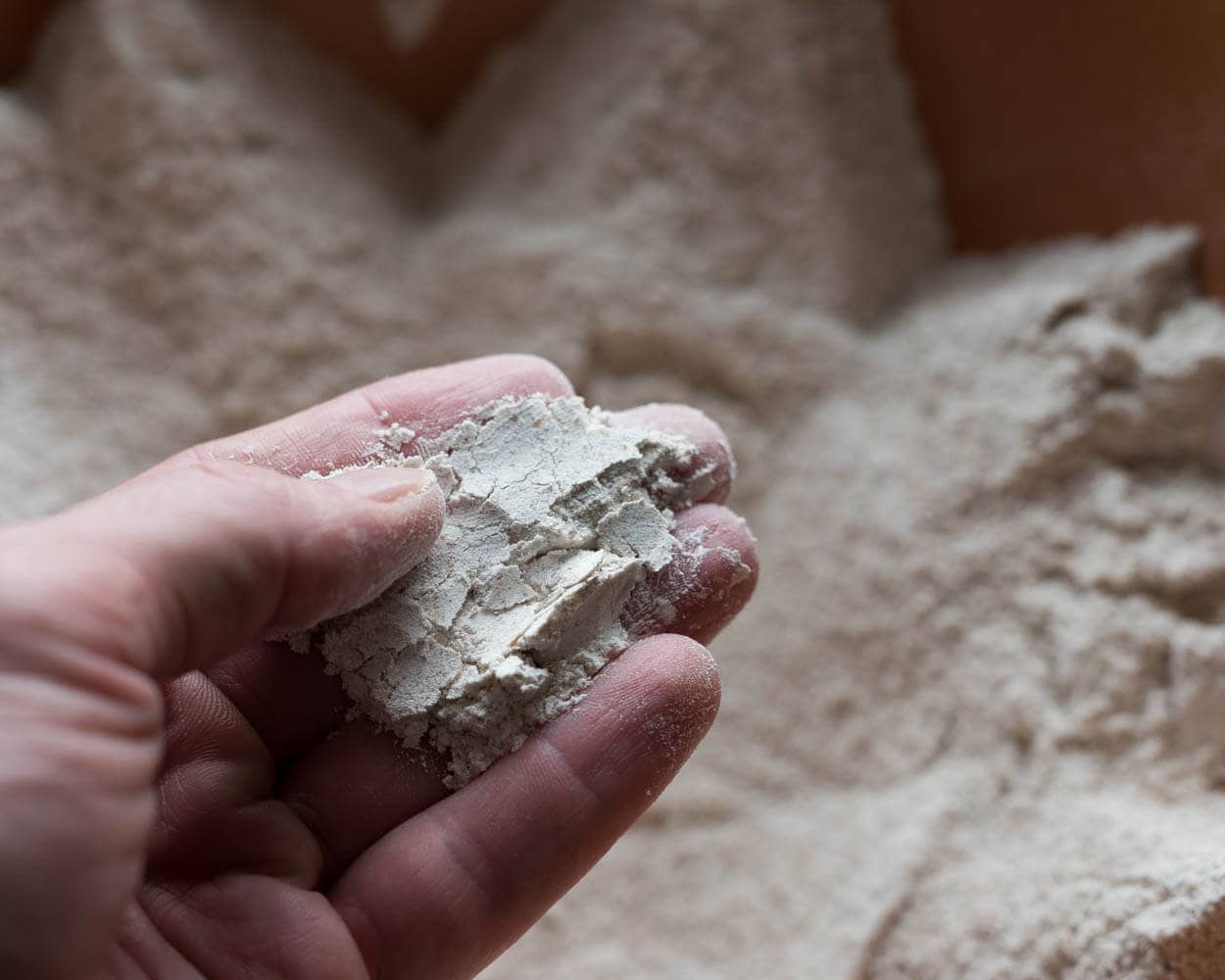
Using a manual mill is not a fast process, but with the right music playing through my headphones, hand-milling becomes a very meditative process. As I turn the crank it gives me time to step back from the hustle of the day and think about the upcoming bake, what am I going to test? What do I seek to learn? And maybe most importantly, how can I work this bread into each meal of the day?
With my bowl of freshly milled flour, I’m then ready to build my levain and later in the day start mixing.
The Perfect Loaf Country Sour with Fresh Milled Flour
I’ve been working on a formula that has a balance between enough freshly milled flour to bring out the flavor and enough white flour to get a beautiful and lofty rise. The following produces some of the best-tasting bread I’ve ever made and it is now my go-to when I plan to mill flour. I’ve also baked a few 100% freshly milled loaves and those are equally incredible, if not more; you can see those recipes and results here.
Overview
| Total dough weight | 1900 g |
| Pre-fermented flour | 7% |
| Hydration | 84% |
| Yield | 2 x 950 g loaves |
Levain Build
| Weight | Ingredient | Baker’s Percentage |
|---|---|---|
| 43g | Mature stiff starter (at 65% hydration) | 65% |
| 66g | Freshly Milled Organic Great River Hard Red Spring Whole Wheat | 100% |
| 43g | Water | 65% |
Formula
Note that the baker’s percentages listed below are with respect to the final dough ingredients and do not take into account the levain.
Target final dough temperature is 75°F (23°C). See my post on the importance of dough temperature in baking.
| Weight | Ingredient | Baker’s Percentage |
|---|---|---|
| 664g | Central Milling Organic Artisan Baker’s Craft, Malted (~11.5% protein) | 70% |
| 189g | Fresh Milled Organic Great River Hard Red Spring Whole Wheat | 20% |
| 102g | Central Milling Organic Type 70 | 10% |
| 815g | Water | 85% |
| 20g | Fine sea salt | 2% |
| 143g | Ripe, stiff levain | 15% |
Method
1. Levain – 8:00 a.m.
Build the levain in the morning after milling fresh flour. Store somewhere warm around 78°F (25°C) ambient.
2. Autolyse – 11:00 a.m.
Mix flour and water (reserve 50g water for the mix, later) very well in a bowl and cover. Ensure all dry flour is hydrated. Store near levain.
3. Mix – 2:00 p.m.
Using about 30g of the reserved water, incorporate levain build into autolyse and hand-mix thoroughly. Slap and fold for 6 to 8 minutes until dough holds shape well. Place dough back into the bowl and let rest for 5 minutes. Then, use remaining water, if necessary/desired, to incorporate salt into mixture. The dough will initially break apart and then come back together. Slap and fold an additional 3 to 6 minutes until the dough starts to catch air and strength is built enough to keep dough relatively in shape on the counter.
Transfer dough to a tub or thick-walled bowl for bulk fermentation.
4. Bulk Fermentation – 2:20 p.m.
At 80ºF bulk fermentation typically takes me somewhere between 3.5 and 4 hours. Watch the dough near the end–as I mentioned earlier, fermentation can quickly get out of control.
Perform four sets of stretch and folds (each set is a stretch and fold at North, South, East & West), one every 30 minutes.
5. Divide & Preshape – 6:20 p.m.
Divide the dough into two masses; each scaled at 950 grams. Lightly shape each mass into a round, cover with an inverted bowl or moist towel, and let rest for 25 minutes.
6. Shape – 6:45 p.m.
Shape each mass into a boule or batard, whatever your preference may be. For more instruction on how to shape this dough as an oblong loaf, see my post on how to shape a batard (with video!).
Once shaped, place the dough into a banneton lightly dusted with white rice flour, or into a basket with no flour but lined with a cotton tea towel (if you want a serious shine on the crust).
7. Proof – 6:50 p.m.
Retard immediately into the refrigerator at 39°F (3°C) for 12 hours.
8. Bake – Preheat oven at 6:00 a.m., bake at 7:30 a.m. (next day)
In the morning, preheat your oven to 450°F (232°C). You can bake these loaves in a Dutch oven or combo cooker or with my method for steaming your home oven.
Bake for 20 minutes at 450°F (232°C) with steam, and an additional 35 minutes without steam, until done to your liking.
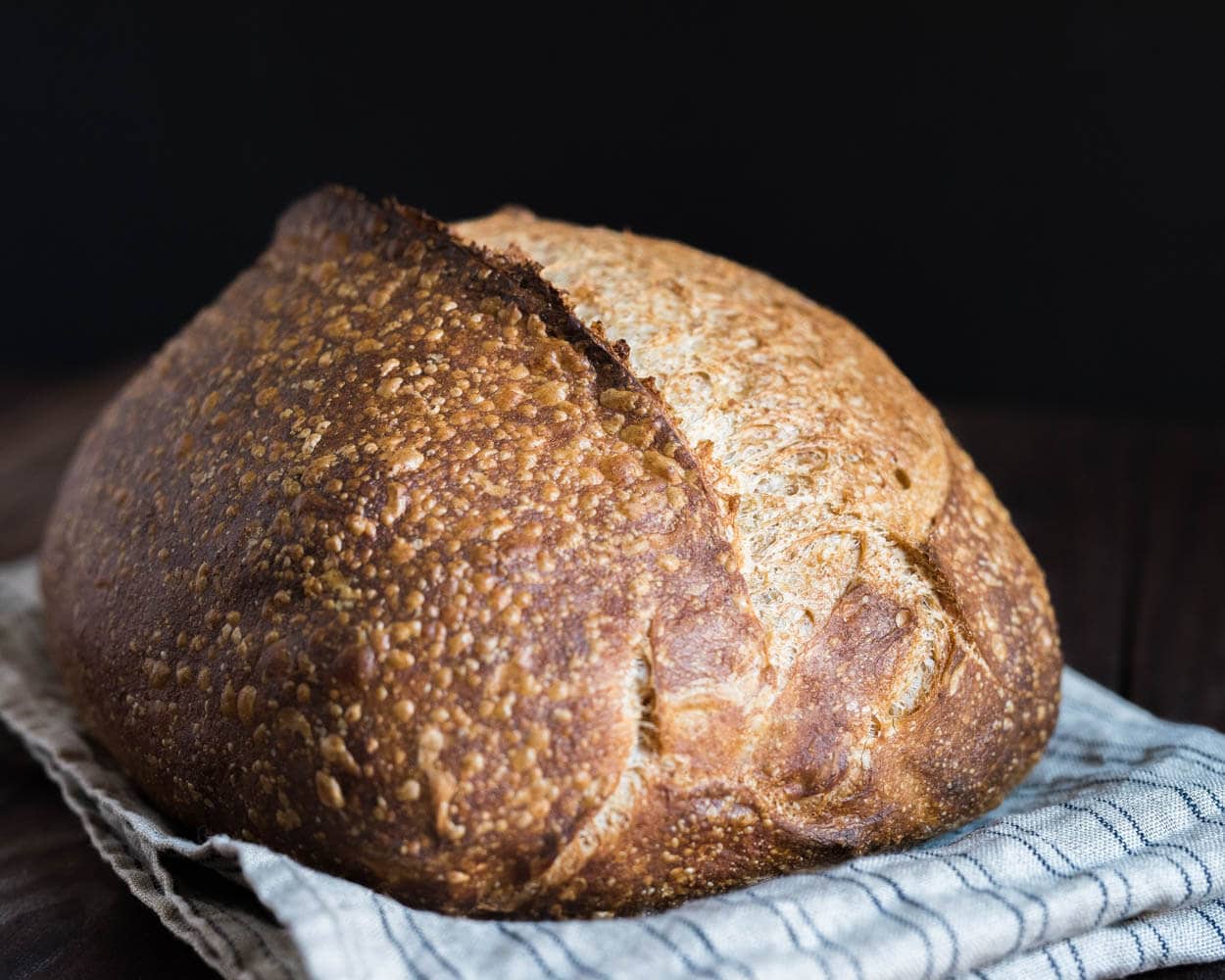
The resulting crust is incredibly thin, crunchy and wonderfully colored. You can see how much shine is brought forward by using freshly milled flour—just an immense amount of enzymatic activity. The crumb is soft and tender; it has a wonderfully complex flavor with a hint of sourness and a creamy hue throughout. The taste, well, I’ve already spoken at length on the flavor of this bread with freshly milled flour, it’s just delicious.
Parting Words
I’ve only just begun to scratch the surface of milling fresh flour at home, but thus far I’m incredibly excited about the results. I bake bread that genuinely tastes vibrant and fresh; it has levels of flavor that I’ve never experienced with my sourdough. The laborious act of hand-milling flour may not be possible, or desirable, for everyone but for me this part of the enjoyment: the transformation from berry to flour to bread—incredible.
After tasting the results I think my wife has finally accepted the sizeable red beast into our kitchen, and my “crazy” status has been downgraded to “normal”—well as normal as one can be when they wake before the sun rises to turn their kitchen into a flour mill.
In the same vein as my last post, and given the seasonality of these little gems, I toasted several slices of my sourdough using the recipe above and added organic figs, ricotta, and a light drizzle of local honey. Perfetto.


130 Comments
Yes definitely. I recently bought a Mockmill 200 but I have had a lot of trouble making a sourdough loaf rise. Not a lot out there to help. I am going to try this recipe ASAP
How did it turn out?
The first recipe that worked for me!
I will say I used 100% hard white wheat berries and I messed up on some of the timing but the bread is AMAZING and I love the very thin hard crust. My husband was so impressed! Thank you!
I have some questions:
1. Was I supposed to bake them right out of the fridge? Because I did.
2. Do you have a recipe for all hard white fresh milled wheat sourdough starter?
Thank you!
So glad it worked out! To your questions: yes, baking straight from the fridge is exactly right. The cold dough holds its shape better when you score it. As for the starter, you don’t need a separate recipe, just start feeding your existing starter with your freshly milled hard white wheat instead of whatever you’re using now. Within a few feeds, it’ll adapt. I’d do a 1:5:5 ratio (starter:flour:water by weight) once or twice a day, and within a week it’ll be fully transitioned.
Starting 43 years ago I ground many varieties of grains and made yeast bread for 25+ years. Then I switched to making only sourdough bread. I'd heard that the bran needed to be sifted out in order for sourdough to work. I then bought bread flour. I've been very successful at sourdough bread baking. BUT my thoughts always went back to . . . yeast is new, all breads for eons of time were made with levain, and whole grains, and no fancy machines . . . So for a month I've been grinding all sorts of grains I've had stored for decades and making only sourdough breads. They are working great and we are loving the whole grain taste we had for so many years, but even better quality now that the process is with my 20 year old sourdough starter and the slow ferment of at least 2 days. I find it all better if I autolyse at least 2 hours, while my sourdough starter is activating from the refrigerator. Loving spelt, kamut, and einkorn mixed with with all hard white wheat, or half and half white and red wheat. Just did a red and white wheat with half rye and some buckwheat and soaked currants. I've been getting most recipes from Breadtopia, some from Tartine 3, and love the science info from the Living Bread book.
That’s a serious grain history! 43 years of milling is no small thing. And you’re right, the idea that bran has to be sifted out for sourdough to work is outdated. Whole grain and sourdough are natural partners; the long fermentation breaks down the bran and phytic acid in ways that short yeast ferments can’t. A 20-year-old starter and a two-day ferment with freshly milled grain is about as good as it gets. That rye-buckwheat-currant combination sounds fantastic.
Made this beauty second time using this recipe.
Tried to add a pic but keep getting network error message
Sorry James, unfortunately I dont have a way to upload images at the moment, I had to disable the feature!
When I use Central Milling Organic Type 70 malted flour as the main flour for my loaf, it doesn't seem to build great gluten structure or an ear after baking. Should I not be using Type 70 malted flour for a sourdough loaf? Ty
That flour is really great, actually, so I’m not sure what you’re running into. I would see if it performs poorly in other recipes to make the call. It’s possible, though unlikely, you have a bad batch!
Central milling has a 70 malted and 70 pastry. I’m assuming you used the 70 malted?
That's right, malted. It's great flour!
Why is there barely any fresh milled flour in this recipe? I've been grinding my own grain and making tons of various breads for about 7 years but just starting to try an artisanal sourdough loaf with no success. My goal is a boule with all fresh ground flour. Why does it seem impossible?!
It's absolutely possible. Check out more of my freshly milled flour recipes , many with 100% FMF.
I'm working to update this with a printable recipe! I use a stiff levain usually with loaves that call for lots of fresh flour, I find it's very resilient and helps keep the dough's fermentation in check.
I just milled my own flour and baked my loaves and they’re so dense. Hard as a rock. What did I do wrong? I used my same recipe that normally comes out perfect! Do I need a higher hydration with freshly milled? Help!
You almost always need more water when working with freshly milled flour, yes!
My fresh milled flour starter doubles with no problem. Has beautiful texture… but my loaves still keep coming out gummy at the bottom. Temp is 209⁰ . The crust is beautiful. It’s not underproofed… it usually is about 30-50% rise. I’ve seen it said it is still immature. How do I get it… Mature!? No one know fmf that I’ve seen except you. Thank you
I have been doing sourdough for about 6 months now in the DFW area of Texas. I was/am using King Arthur bread and wheat flours and have been kicking out really good loaves with good rise, nice ears, and great crumb. At first it was a huge challenge, but with each loaf I gained experience, and knowledge as I continued researching hundreds of sites and channels. I made numerous Jalapeño cheddar loaves, cinnamon raisin, roasted garlic and rosemary, and chocolate variations. Now I am milling my own grain and it’s a whole new level, and I feel like I did when I first started trying to produce my first decent sourdough loaf, but I know that I can do it. It will just take time, trial and error and hundreds of hours of more research/education. It gives me such satisfaction and I don’t know why really, maybe because only one in 10,000 Americans are taking it to this level, if that.
Hi Gordon, would you mind sharing your bread recipe?
I’ve been trying to make your sourdough starter from scratch, but haven’t had much luck. It never bloomed or doubled in size. I had some bubbles but that’s it. It could be that my house is not warm enough? The starter I have now hasn’t been fed in a couple days. Do you think I need to toss it and start over? Do you have any tips to get my starter moving?
Thanks
Mary
Have you found a mix of freshly milled flour to eliminate using a store-bought white flour? I currently use hard red spring + bread flour but would love to eliminate the bread flour (without compromising loftiness and texture).
I use freshly ground 100% in my sourdough. Works great. My recipe is 120g starter, 290g water, 400g freshly milled white hard wheat flour, 9 g salt. Hope it works for you!
Hello, where is the recipe for this bread ? I’d like to try it out. Thank you.
In the article:
664g Central Milling Organic Artisan Baker’s Craft, Malted (~11.5% protein) 70%
189g Fresh Milled Organic Great River Hard Red Spring Whole Wheat 20%
102g Central Milling Organic Type 70 10%
815g Water 85%
20g Fine sea salt 2%
143g Ripe, stiff levain 15%
so what grind (I’m using a Mockmill 200) for the wheat berries do you end up using for this recipe?
Go with the finest you can possibly set your mill 🙂
Made this bread today I think its my favorite so far. Everything Maurizio Said is true great flavor tender crust even though it gets darker we loved it. I love The Perfect Loaf cookbook love the favorite sourdough and the Yecora loaf. I really love the addition of fresh milled flour it truly is a game changer.
Can this recipe use 100% hard red wheat berry flour?
It does have a lot to do with the mill. What’s nice about having large bran/germ particles is they are very easy to sift out, if you’re going that route! Another option is you could try milling at a coarse level, then pass the milled bits through a second time at a finer setting.
Yes, you’re right, it’s hard to tell from a picture! Let me know how it turns out. Even if sticky, might be totally fine!
I’m so excited my Mockmill will be arriving today! I was using my Kitchen Aid mill attachment but the high speed was a bit aggressive and killed my Kitchen Aid. I have Hard wheat red and white berries, rye, einkorn and spelt to make some amazing sourdoughs. Any suggestions on these combinations of berries or should I just stick to one wheat berry for my sourdough? Thanks for all the great tips, advise and recipes!! Shannon
Any of them will work well, Shannon! A blend sounds great. Check out the recipes page, lots of items there can be made with fresh flour!
I agree with the post about 48 oxidation. You might be not apparent, but it’s there. Same goes for shelled nuts and majority of oils.
As far as nutritional profile and effect on a human body of fresh milled flower vs white flower it’s like night and day!
When I moved to US, I gave up on bread altogether. I went from eating bread pretty much with every meal to zero bread in my diet for years! That how disappointed I was in US supermarkets and my local bakeries.
I bought an electric mill and have been baking bread and making pasta from fresh milled flower for about a year now. The only issue I have with the mill – it heats up the flower in a process. I was wondering, if anyone else is having the same problem?
I am yet to try sourdough. Thank you so much for all the info. I am a bit
overwhelmed, but inspired! ))))
You’re very welcome, Margo! Yes, totally, freshly milled flour is like playing a completely new game 🙂
I’ve always worked under the rule that freshly ground, whole grain flour will begin to go rancid after 48 hours. Never, ever use flour after that. I grind what I want for a days baking and that’s it. To keep my start going I grind a decent amount (5-6 cups) and put it in the freezer to be used as needed. Start goes in the fridge and I use about a half cup a week on it, these days.
I’ve not seen fresh flour go rancid that quickly, but I am with you, use it soon after milling! I’ve never placed my starter in the freezer either, I feel like with my starter, it might not recover super quickly after that, but I’ve been surprised at its resiliency in the past!
I was able to join a very local grainshare in my area where they mill flour grown onsite, so I use relatively freshly milled flour for baking with really satisfying results. Over the summer we remodeled our kitchen so I left off baking for about 4 months. During this period, I paused the delivery of flour from my grainshare but I had some flour left over. Now that the kitchen is complete I’m back to baking but the results are terrible. I am trying to use the flour I had from before the remodel (which varies from 4-8 months old) and my starter is sluggish and the loaves are flat. I understand that older flour will taste worse, but will it also affect the performance of the rise and ultimate quality of the loaves or is there something amiss with my process? Love TPL, btw. I share it with anyone who is interested in getting started with sourdough.
Sorry for the late reply, Kent! I prefer using freshly milled flour shortly after milling it for the best flavor and baking performance. However, aged flour should actually perform better because the flour is given time to oxidize which will improve the gluten characteristics. The issue there, though, is how much time should it be aged? I’ve never found a single source that indicates the appropriate amount of time to age freshly milled flour to see these benefits. This is typically what most larger millers do, and I’m sure they have a way of determining this time systematically, but I am not sure 🙂
I hope that helps (though I’m not sure I’ve answered your Q). Thanks for spreading the word about my site, I do appreciate that, Kent!
Hi I’m just about to start to mill my own wheat to make sourdough and I have a quick question: will I still have to buy bread flour to avoid a heavy loaf or can I just Sift the freshly ground flour?
i used to do that, and also added vital wheat gluten. then i stopped, because at some point it clicked that i was doing it wrong because my bread was coming out dense and flat. i use a WonderMill, the old model, so i get a super nice fine flour. i use 3 cups of unsifted milled flour. 1.5 cups warm water in a bowl, with 1.25 teaspoon yeast, and a a small packet of sugar to feed it. once it grows in 2 minutes, i add 2 tbsp olive oil, 1 teaspoon Himalayan salt and mix to dissolve. it wont completely dissolve because natural silica doesnt dissolve. i put the flour in my kitchen aid mixer, add the liquid mixture, and mix for 10 minutes on speed 4. i take out the hook and cover 75% with a plastic bag, and put a towel over the whole bowl. 1 hour later,mix again for 10 minutes on speed 4. and again 1 hour later the same, mix again and once done, i take it out and shape it in to my pan and put a giant bowl over the pan for the final rise before baking.
You can certainly sift if you’d like, John! It’s totally up to you. Using all freshly milled wheat at 100% extraction (meaning, the entire wheat berry) will mean a denser loaf, but still so much more flavorful!
I’m just about to start milling my own grain to make sourdough
I love your perfect loaf recipe so much. I made the recipe with freshly milled hard red spring wheat and the crumb was a little tighter but it overall worked well. Would you not recommend this and instead go back to a stiff leaven. Like in the recipe above?
Thank you, Karen! That’s totally up to you. I’d say as long as the bread had a nice texture and flavor, keep going with what you did! The stiff levain will help bring strength to the dough—and perhaps a tinge of added flavor, depending—but if your dough felt plenty strong and the flavor was great, I’m not sure I’d change unless you wanted to experiment 🙂
Great article and guidance. I just milled my first bag of berries and are in the stretch and fold. It feels a lot different and is taking more time..seems quite wet…is this normal with fresh milled flour? Should I just continue the stretch and fold?Thanks!!
Hard to say! Give the dough as many sets as needed until it feels strong and elastic. It should show defined edges at the end of bulk fermentation.
Hello! I have enjoyed your site immensely over the past few months. I just baked loaf with flour from a local organic mill. Hard wheat bolles with a little bit of their wheat flour too. High protein. I noticed also some craziness during the bulk! After my folds I let it bulk for an additional 2 hours and the growth was nuts. I then cold proofed overnight and had never seen it grow like that. Previously I was using KA bread flour. Overall the bread was fine but one thing I was disappointed in was the flavor. It didn’t seem to develop a sourish type flavor. I will try on my next bake to warm proof for less time at a lower temp. It was 80 in the brod machine. I’m not sure what else to do to develop more flavor in the bread. I want to stick with local flour. Thanks!
I don’t have type 70 flour. Replacement? Deciding between this recipe and another of yours. Thanks again.
Robin—you could go with any medium protein bread flour (11-12% protein) or all-purpose flour. If using all-purpose, be sure to hold back a bit of the water during mixing, adding it in if the dough feels like it’s cohesive and can handle it. Let me know how it goes and happy baking!
Hi Maurizio,
I love your site and have found some of the most useful information here about milling grain, so thanks for that! I just got my own milling machine, the Mockmill 100. I know it’s an entry level grain mill but I wanted to see if milling was for me. My first loaf a big disappointment, to say the least! I used 100% winter red wheat berries and there was basically no gluten development at all! The consistency was like frothy pudding. I tried to rescue it by adding more water to the dough. I calculated the amount by weighing the dough and subtracting it from the total amount of grams in the entire recipe. Then I punched it down and let it rise again. There was basically no change in the consistency. To “save” the loaf I poured it into a Pullman loaf pan and baked the nicest brick o bread ever!
To say the least, I was very discouraged and am thinking about returning the mill. My idea was that I would just grind my own white bread flour, similar to KA flour, add fresh ground whole grain and save lots of aggravation trying to buy flour during the “Covid bread crisis”. But now I find that making white flour is a laborious task, much more complex than grinding whole berries! After much research on the internet i found your site and am grateful for all your information.
My question is: am I able to make a 100% whole grain loaf with a good gluten structure and! if so, how can I do this? I really love the idea of freshly ground, nutritious grain.
Thanks for your great site!
-Sarah
So sorry to hear this, Sarah! I wouldn’t jump to returning the mill, give it another couple test bakes and see if you can improve things. First, be sure to mill as finely as you can on the mill. Second, expect that freshly milled flour might need increased water in the dough, but if it feels soupy or too wet, dial that back. I also find it helpful to have a lower final dough temperature, say 76F/24C, when baking with a high percentage of freshly milled flour.
It’s definitely an adjustment when you move to baking with fresh flour, but I really feel it’s worth it—both for flavor and nutrition. Please keep me posted on how it’s going and so sorry for the late reply!
Hello Maurizio,
I’m curious what makes you decide to use a stiff starter / levain vs a standard 100% hydration starter? Could you elaborate a bit on that decision. If this has already been covered somewhere else a link to that would also be great.
Thanks!
It really depends on the formula. When I’m baking with a large percentage of freshly milled flour, I’ll typically use a stiff starter as I find it helps retain strength in the dough due to the reduced protease activity in the levain. I also typically use a stiff levain if my formula has a high pre-fermented flour percentage (for the same reason).
Hey Maurizio, is the brand getting sifted out like the bran you get at the store, as in – it should keep well? I’m milling on a Komo, almost fine setting and sifting about 15% out with a #40 mesh sifter. I had heard something about there being some stuff that gets sifted out we might not want to keep. Also, do you have any good uses for spare bran aside from the common muffin recommendation? Thanks for all your work on the blog.
Hello! Newbie sourdough baker here- I am lucky enough to have a neighbor who grinds locally grown, heirloom grains (wheat and corn so far) to order. I am working with freshly milled frassinetto whole wheat flour. I am wondering, mainly, on the bake for this loaf, you mention getting the thinner crust, which I would love! I see the recommendation for steam, but it doesn’t say if you are baking on a sheet, or in the traditional dutch oven (which is enclosed, so I’m assuming not, or you wouldn’t benefit from that steam you are working so hard for!). Thank you for this great website- you have been immensly helpful on the beginning of my sourdough journey!
-Heather
I second that it’s worth checking. I worked on a farm that was like 99% organic in practice, but they couldn’t be certified as “organic” because of one little technicality. There are a lot of farms like that where just because of one little thing, they can’t be *officially* certified as organic even though in practice they really are.