

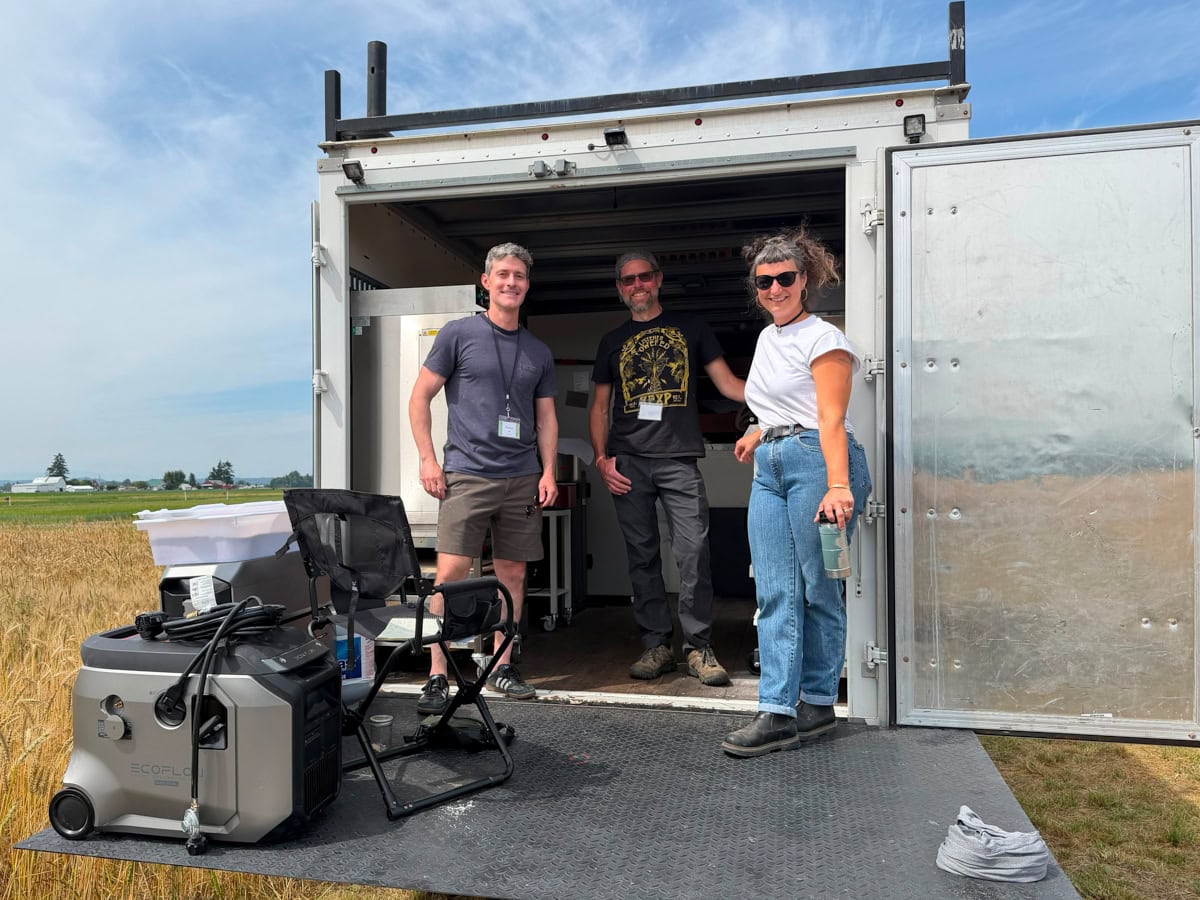
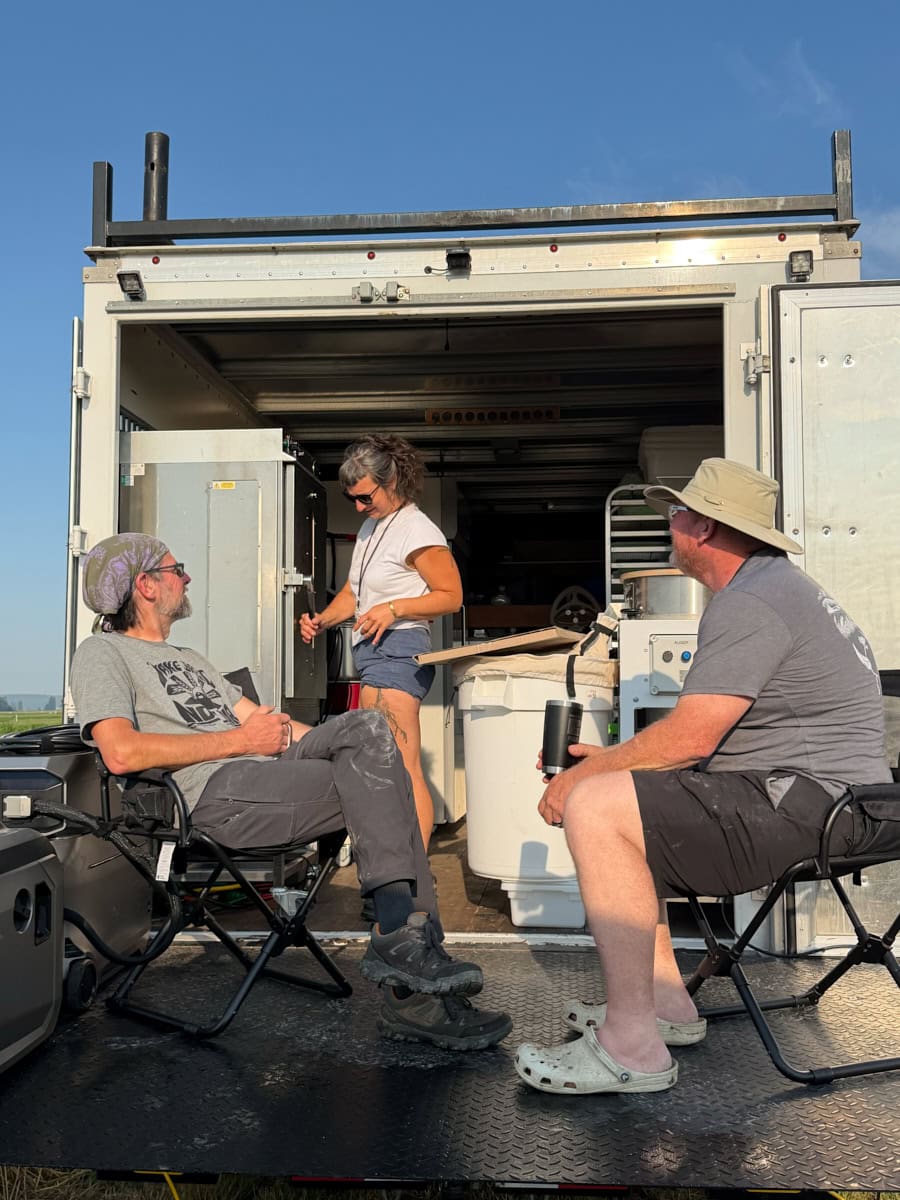
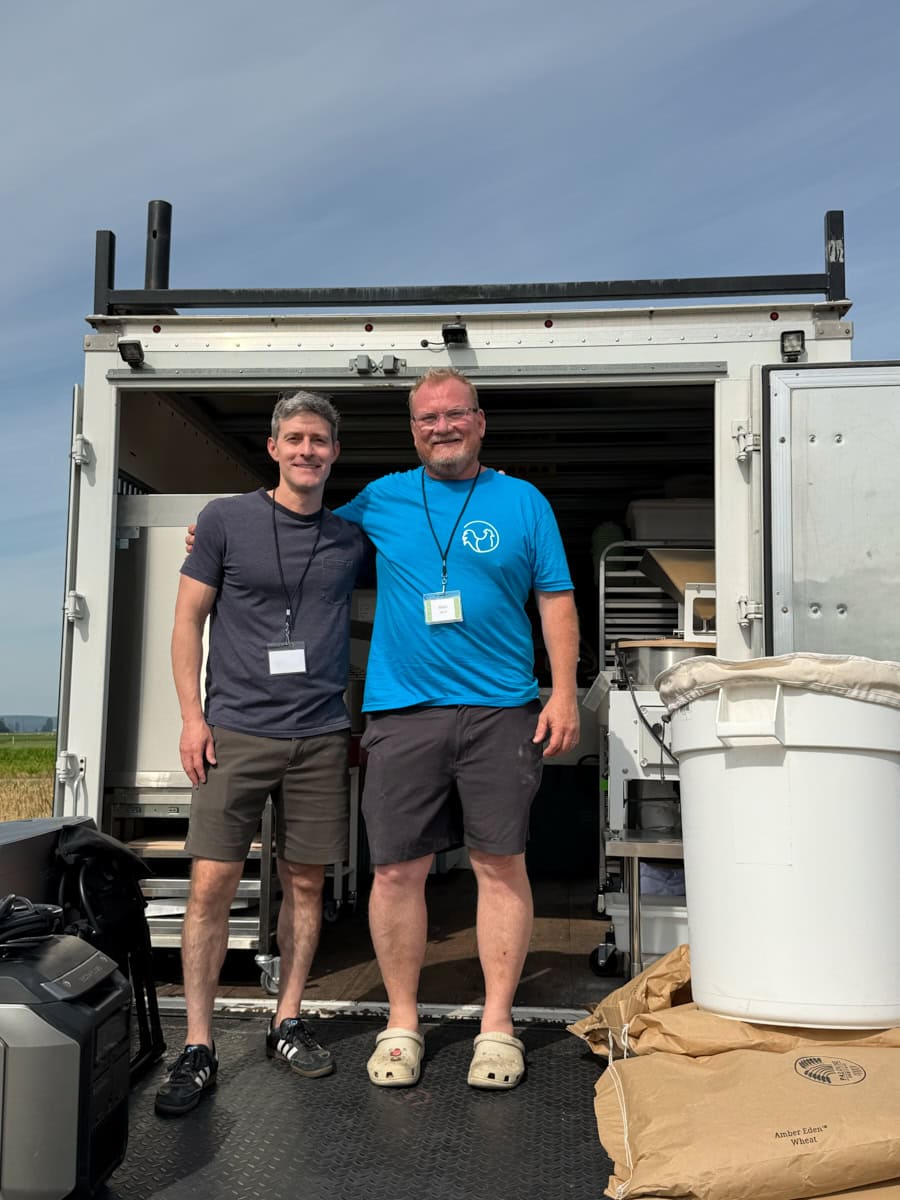
I was riding about five feet off the ground in the back of a truck, sharing the bed with a bread oven, mill, mixer, and workbench—all powered by a solar array on the roof. By day three of the Grain Gathering, this seemed like a perfectly reasonable place to be.
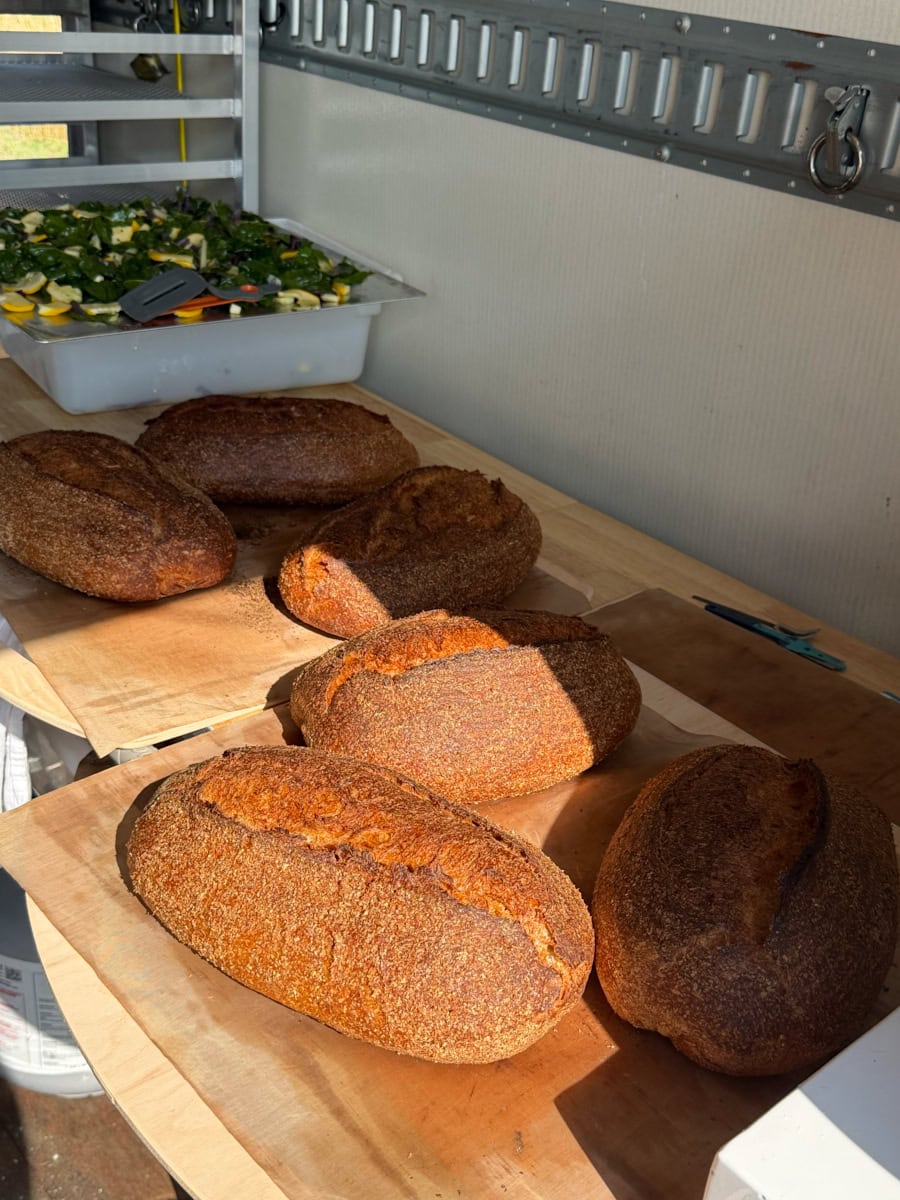
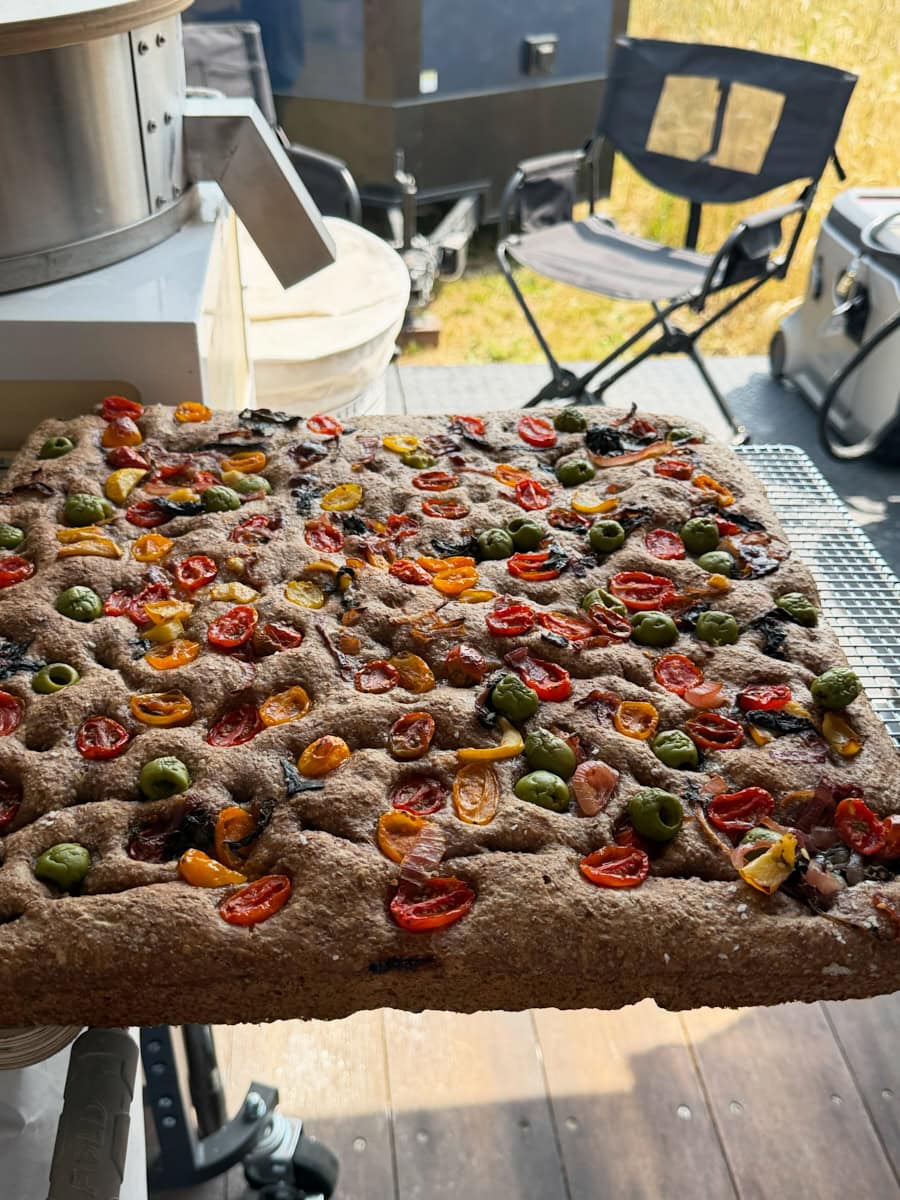
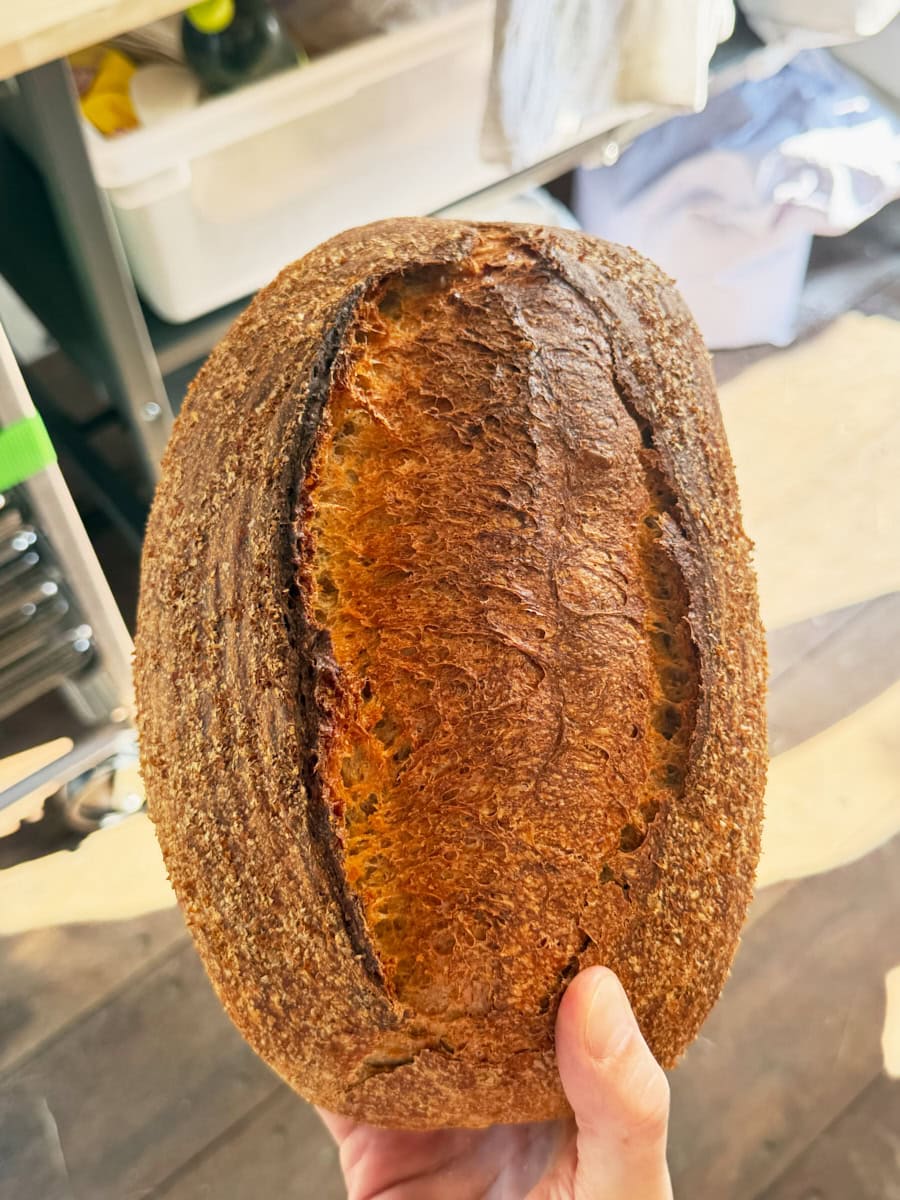
Marc Benoit built the mobile bakery and mill to shorten the chain from field to loaf and to push more of what a loaf costs back to the farmer who grew the grain in the first place. The truck buildout was a standout, but it was the crew—Marc, Baylin Speidel, and Thomas Vroom—that made the weekend for me. We milled and baked with Moon Family Farms’ Hollis, Chimacum Confluence, and Palouse Heritage Elwha River Spelt: twenty-odd loaves, three large-format focaccia, an armada of baguettes, and bialys topped with sesame and roasted vegetables. And the oven (a workhorse RackMaster) was still at temp when we quit.
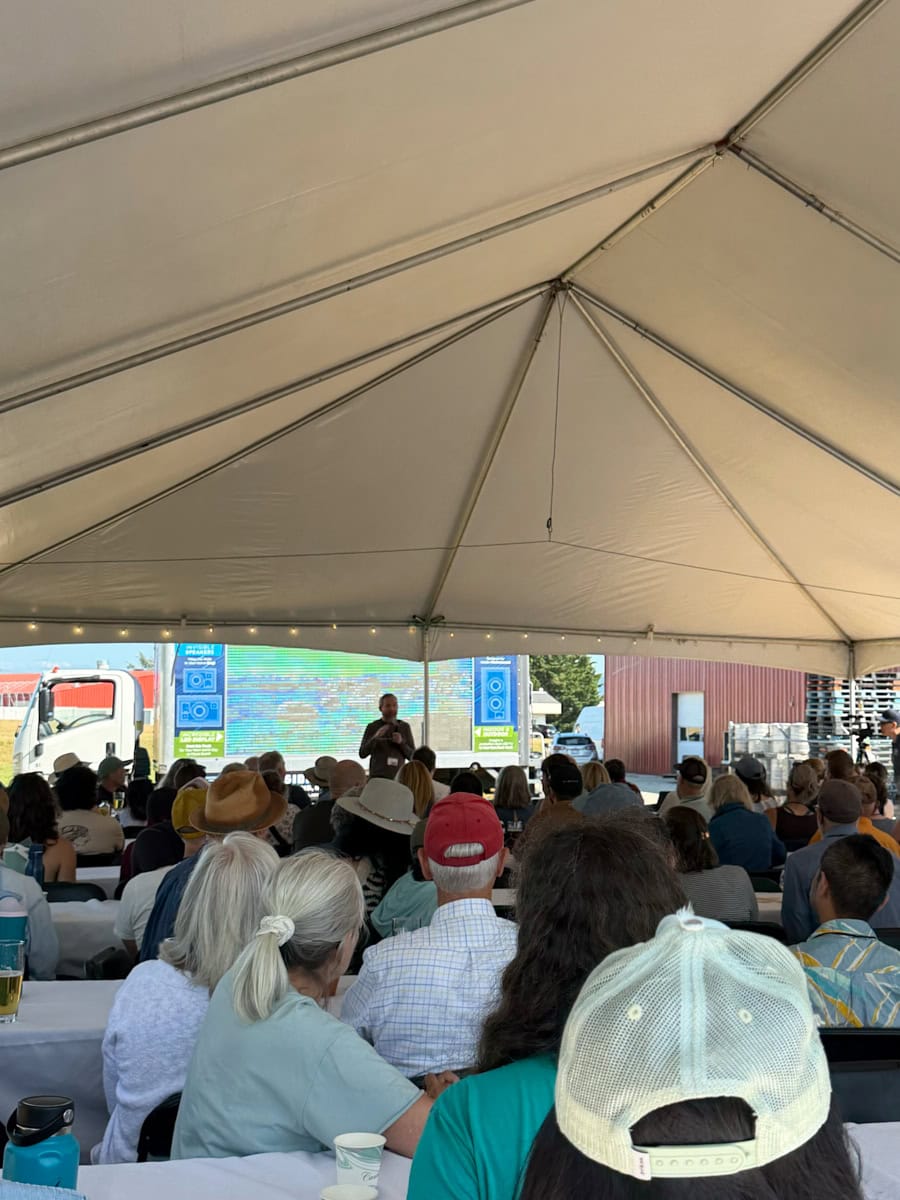
The chain from breeder to farmer to miller to baker is longer than I had appreciated. But for three days, every pair of hands in the chain stood under one tent.
When I signed up for my first Grain Gathering, my worry was that it would lean too far into farming and wheat breeding—that it’d be industry folks talking to industry folks, with no place for a home baker. Then I started hopping between conversations and found bakers of every kind, from “two-loafer” home bakers to pros, geeking out about falling numbers, mixing techniques, and how best to run a community bakery.
But everything these people breed, grow, and mill ends up, eventually, in somebody’s oven, and often an oven like mine. The chain from breeder to farmer to miller to baker is longer than I had appreciated. For three days, every pair of hands in the chain stood under one tent. I’ve spent many years at the last link; it was something else to meet the rest.
The Grain Gathering is less a conference than a congregation of the grain-obsessed under this year’s theme, “Nourishing Communities.” The WSU Breadlab and the WSDA hosted the event July 19–21 in Washington’s Skagit Valley—the first gathering in eight years.
Over those three days, in and out of talks, masterclasses, and wheat fields, I kept running into the same few ideas.
Who Gets Paid for a Loaf of Bread
An “artisanal” loaf of sourdough bread runs $6 to $12 (and maybe higher?) these days. You could argue that bread is a staple and should be priced as one, that is, cheap enough for anyone to afford. While I agree, there’s a lot more happening in the field. The commodity grain system takes in grain and anonymizes it: all wheat turned into a single, static element with no identity and no price differential. Great for feeding the masses, which is important, but once the grain hits the pile, the care, attention to soil health, and the farmer’s growing obsession go unpaid.
The mobile mill and bakery is an unbroken chain of custody as grain goes in with a farmer’s name and comes out as bread that can be directly traced back to its grower. Think about the novelty of that for a moment: the farmer finally gets a spot on the bag alongside the baker.
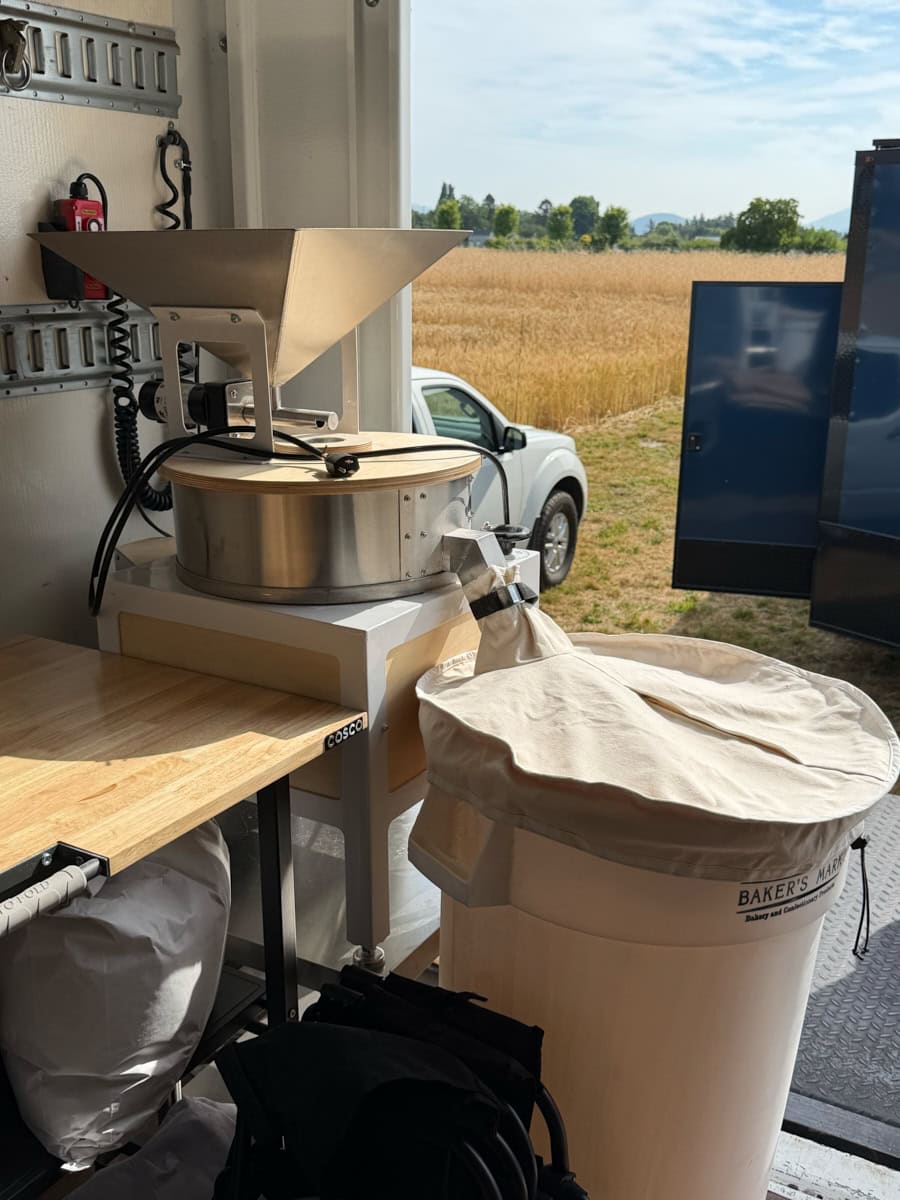
And milling and baking in one place means the operator keeps the miller’s, distributor’s, and retailer’s margins. Put a trailer like this in the hands of the farmer, and suddenly it becomes a revenue stream that otherwise scatters down the chain.
As a home baker, when you buy identity-preserved grain directly from a farm or small mill—better yet, milling it fresh at home—you’re playing the same game to compress the supply chain.
What a Wheat Breeder Optimizes For, and Why Grocery Flour Tastes the Way It Does
Almost every wheat variety grown is a pile of decisions someone made about what mattered at the time: yield, uniformity, disease resistance, baking performance, and ease of harvest. But what’s missing from that list? Flavor and nutrition.
This came up in nearly every conversation I had with breeders and bakers alike: how do you grow grain that still checks the farmer’s boxes (yield and performance) and get flavor and nutrition back into the loaf? Certainly what I’m always harping about—proper fermentation—but also using more whole grains and, frankly, the right grains to begin with.
The WSU Breadlab’s answer is to put flavor and nutrition on the scorecard. They breed varieties like Skagit 1109, Salish Blue, and Ruth (on my list to source and test!), to name a few, suited to thrive in specific growing conditions—not all conditions. Then they do the part most skip: mill and bake the candidates to see how they perform in a loaf.
In the home kitchen, this means you can have a bag labeled with a variety name and unique baking characteristics, because it’s precisely the opposite of the anonymous pile. The flavor has a name, and so does the farmer who grew it.
What Changes Back Home
It’s easy to come away beaming with energy from three days of fervent fermentation, claiming you’re going to overhaul your entire baking life.
To make a difference, it doesn’t have to be a complete upheaval of all you know and do. It can start small: swap one of your grains for an identity-preserved variety like Ruth, or source some grain directly from a farmer and mill it yourself.
If you traced my baking from start until now, you’d spot a trend toward more whole grains, more named varieties, and more freshly milled flour. Not everything I bake is along these lines (there’s a case to be made for high-quality sifted flour, too), but my goal is to keep pushing this evolution in my baking farther and farther.
Not because I feel like I “should,” but because I’m after the best flavor, the highest nutrition. And just maybe, with the right grain, you don’t have to choose between them.
The People
There were so many talented, passionate, and accomplished folks at the gathering it’s impossible for me to recount all our conversations and happenstance encounters, but here are a few:
Baylin Speidel, Head Baker, Chimacum: baking alongside you is always a pleasure, as was the running argument over why Star Trek is the work of a genius.
Thomas Vroom, who bakes on Vashon Island: we finally meet. I’m coming to see that island soon.
Marc Benoit: part madman, part renaissance man. The trailer speaks for itself, but thank you for who it speaks for—the farmers, millers, and everyone else who makes bread possible.
Crystie and Keith Kisler of Chimacum Valley Grainery: always inspiring and ever positive. Growing, milling, (and baking with and malting and…) some of the best grain anywhere.
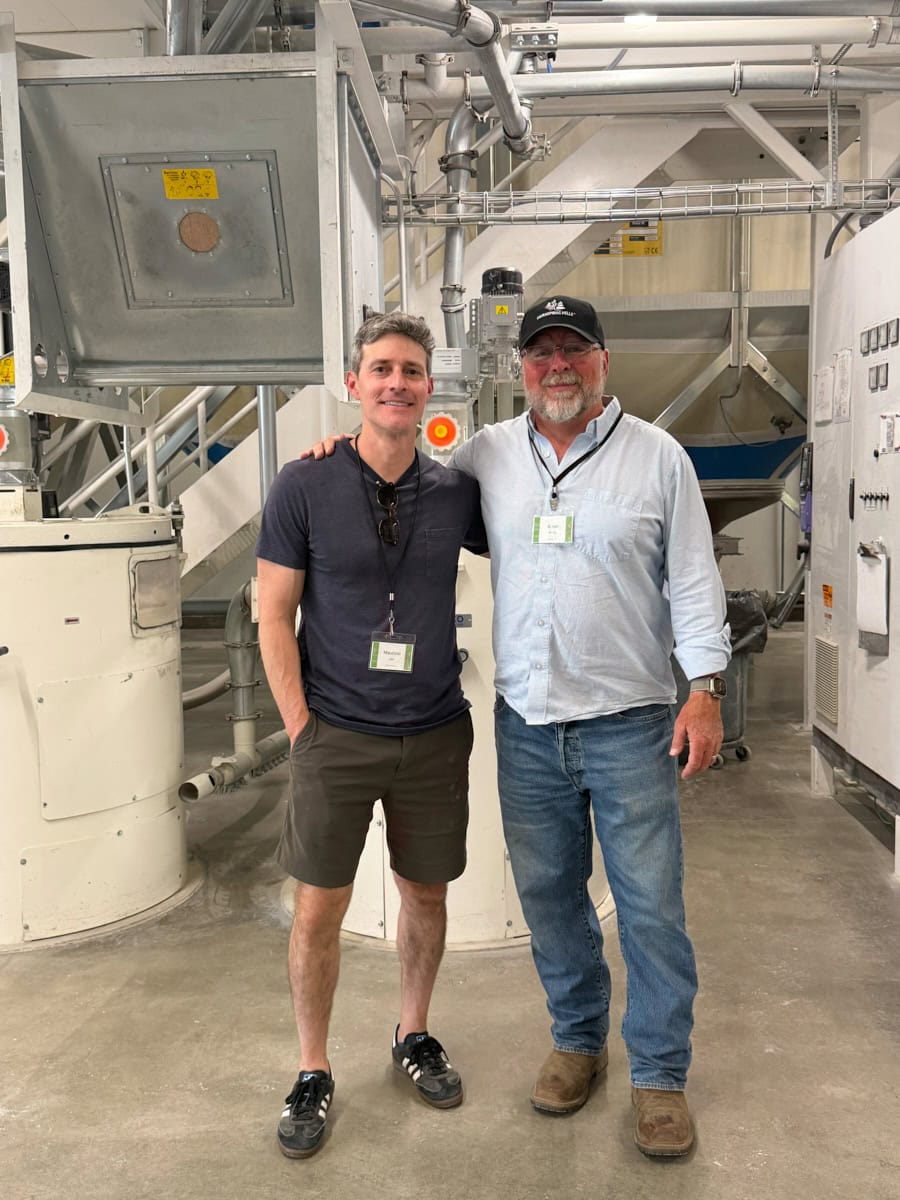
Kevin Morse, Meech Crowley, and Jon Feldman of Cairnspring Mills: thank you for the mill tour, and for getting Skagit grain into kitchens like mine.
Andrew Heyn and Blair Marvin of Elmore Mountain Bread: I’ve followed your baking as long as I’ve been a baker. Talking milling, growing, and community with you both was a long time coming.
Jeffrey Hamelman: your book has been a north star since my earliest bakes. Meeting you continues to confirm everything it suggested about its author.
Andrew Ross: we finally meet! So great to talk wheat, buckwheat, bread, and pizza with you. Inspiring as always.
Katie Phelan: my handwriting-obsessed friend. Thanks for the chats about France and wood-fired baking—until the next adventure.
Brandon Buza: always a pleasure traveling and baking with you. Next trip, we’re capping the luggage count.
Cat Cox of Country Bird Bakery: thanks for our talks around community and what it means to make bread people love.
And thanks to Sandy A. and Ran C. for the help in the bakery and the hikes, and to everyone who stopped by the truck for a slice and a hello.
Parting
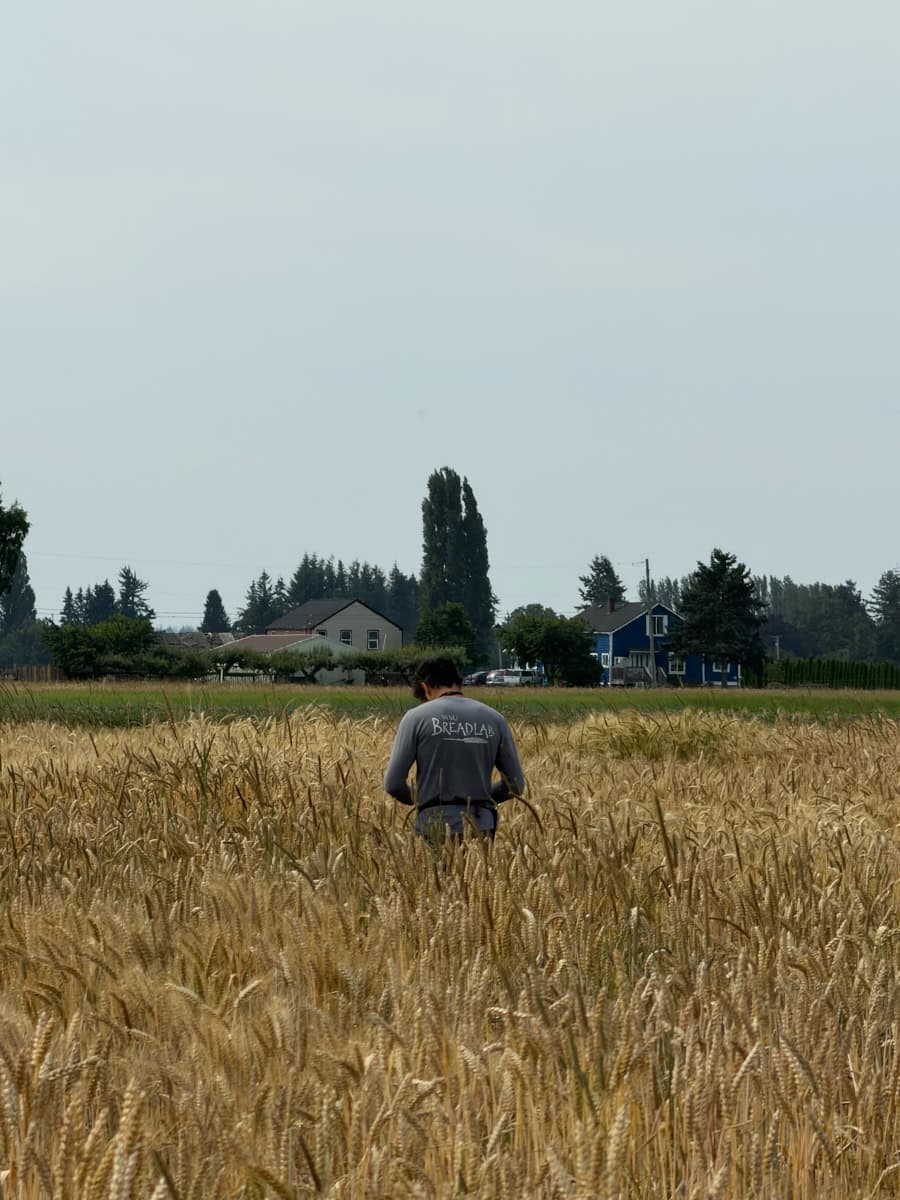
The Grain Gathering surprised me. But the theme had it right, too: it nourished. What I found was a congregation of the grain-obsessed, focused on feeding the people who eat their bread, whether they bake two loaves at a time or a hundred.
I don’t have a mobile bakery and mill, but what I do have is a small electric mill on the counter. When I flip the switch, the flour it makes comes from farmers I’ve now met, baked beside, and toured a wheat field with. After three days in the Skagit with this bunch of grain-heads, it really does seem like a perfectly reasonable place to end up.


32 Comments
This confirms my experience: for years I thought AP flour felt silky and soft whenever I handled it for baking. Two years ago I began buying whole grains (some from local farmers) to mill & bake our two loaves a week & pretty much everything else that called for flour.
This past winter I baked something that relied on a nationally hailed high quality AP flour. I was alarmed that it felt artificial. There was no sweet aroma, it felt dry and friable, & I imagined it must have an additive or something to prevent clumping. Wow, what a wake up call.
Home ground (local if possible, or sourced from reliable farms online) makes an enormous difference. Home milling is not at all difficult or time consuming. The difference is real, and getting whole grains from local or regional farmers is one more way to support a healthy community.
Hey Melissa! Once you’ve experienced truly fresh flour, there’s no going back, is there? That aroma difference alone tells you so much about what’s lost in the months between industrial milling and your kitchen. And you’re right that home milling is far more approachable than most people think. The community aspect resonates with me too; supporting local grain farmers keeps these varieties and farms alive. Thanks for sharing your experience; it might nudge someone else to try fresh milling!
What divine timing. I was reading an article last night that most wheat grown in the US these days are modern dwarf or semi-dwarf varieties that were selected for yield and disease resistance, but contain far fewer nutrients than older varieties. I was trying to think of how I could find out if there were any growers in the US that grow older, more nutrient dense, tall wheat (other than Barton Springs and Janies, I know they both do heirloom varieties). Most of the farms I have worked with will label the bads hard red winter or soft white spring, etc, but don’t really go into the variety. Did this subject come up at all? Do you know anyone else doing confirmed heirloom wheat?
Yes, this came up quite a bit at the Grain Gathering! Beyond Barton Springs Mill and Janie’s Mill (both great), look into Camas Country Mill in Oregon, Bluebird Grain Farms in Washington (they focus on heritage varieties like einkorn and emmer), and Sunrise Flour Mill in Minnesota, which specializes in heritage Turkey Red. Grist & Toll in California is another good one. The Bread Lab at WSU also maintains lists of regional growers working with older varieties. You’re right that many farms only label by class, so asking directly about varieties is usually the way to go. The good news is more farmers are bringing back these older wheats every year. Thanks for the comments, Bethany!
Nice posting about the Grain Gathering. I attended the last one (2018) and enjoyed it thoroughly. I love the mobile bread trailer – awesome.
Thanks, Bryan! It was an incredible experience, and yes, the trailer really was something to behold. Everyone in the community is just exceptional, and I’d say for those who haven’t been: go!
Hi Maurizio!
I recently started buying locally grown and milled flours here in NY, the latest from growers in the upstate Finger Lakes region. It’s like a CSA for grains, I can taste the difference and love supporting the local growers. But, I’m finding hydration for these flours to be a challenge. The loaves have been rather flat whether it’s rye, spelt, whole wheat or AP, despite how well I think I read the dough. It still tastes pretty good though. I’ll continue to buy locally and direct, but it looks like I’ll have a learning curve to get back to nicer looking loaves. I have 3 loaves cold proofing at the moment. They were a little slack during bench rest. I’ll keep trying!
Wow that sounds lovely, Carol. What a great program. Yes, fresh flour can be tricky to work with. I would try removing maybe the spelt, then add it back in slowly as you get a feel for the flours. It can quickly overhydrate, but fresh flour does tend to benefit from more water (generally).
Also, check out my fresh flour guide which may help, too:
https://www.theperfectloaf.com/how-to-freshly-mill-flour-at-home-for-baking/
Thanks for the comments and happy baking!
Based on the region and varieties, I assume you are using Farmer Ground? Bench rest and shape half an hour before you think you need to. I find their flour, and even the flour I mill from their berries, to be more active than expected, but with smaller bubbles. Took me 6 months to figure out that I was overproofing because I couldnt see the air in the dough, even though the sides and bottom looked like they were still not ready.
Thanks Bethany! I will definitely give that a try!
So glad you got to attend. Your notes are the next best thing to going. I went a few yrs back and had an amazing time, even attended a class with Jeffrey Hamelman and pizza with Anrew Ross. Wish I had known about it as I definitely would have tried to attend. Thanks for sharing.
It was an event I’ll never forget, that’s for sure. I also had the opportunity to chat with Hamelman and Ross, both still as great as ever! Maybe I’ll see you there next time, Sandy.
I attended the Grain Gathering in 2014 and it blew me away. So many grain and bread lovers and such a wealth of information. As a home baker it opened my eyes to so many things. Fascinated by Dr. Steve Jones and the wheat breeding. The Breadlabs grain testing quality of wheat and use practices. Have also indulged in classes at the King Arthur Baking School, a definite jewel in the PNW.
You’re right about that, a jewel up there to be sure. I love the work everyone in that area of the USA is doing!
Great post, Mauricio.
Those loaves look absolutely amazing. The color!! Can only imagine how great they tasted.
I do mill my own sometimes. I also get a lot of my flours from Azure Standard. I especially like their unifine milled products. Both are terrific. Any thoughts on the unifine milled flours?
Lately, I have been trying different “local” mills (within a state or two away). Some of these mills are really trying hard to offer superior products, and I think we should all consider looking as close to home as we can to support the local agricultural community.
Thanks again!
Great comments here, Dave! Appreciate it. I can’t say I’ve worked with “unifine” flours, or maybe I have and didn’t realize it. I’m going to look into this some more and report back!
Over the past six months, I’ve gradually replaced commercial steel roller-milled wheat flour with stone-ground and Unifine-milled flours from local mills that either grow and mill wheat in my home state, purchase wheat from farmers within my state, or are family farms that grow, mill, and sell their flour directly to consumers.
The learning curve involved in working with very fresh flours—some whole wheat, some high extraction—milled using methods that preserve more of the wheat kernel’s flavor and nutritional properties has been steep and challenging to navigate.
Things progressed well in the beginning as I gradually transitions from 100% commercially produced flour to 70:30 commercial flour:stoneground/unifine.
My initial approach of simply tweaking my existing formulas and mixing methods collapsed when I changed the commercial flour in my blend with 75% extraction local wheat and locally milled flour. Instead of my usual big-bellied batards, I pulled loaf after loaf of dense, flat disks from the oven. So I set aside everything I understood and used with commercial flour formulas and started from scratch.
I stopped with blending for now. I am now testing hydration tolerance of the wheat flours individually, using 50 g of flour and evaluating how the unleavened dough develops with added water from 65% to 85% in 5% increments. I am also sieving 100% whole wheat flour to extraction rates of 75%, 80%, and 85%, then testing each extraction level separately.
With commercial roller-milled flour, I rarely had to consider anything beyond protein content when deciding how much water a flour could absorb and still produce the necessary gluten strength.
With both the local stone ground wheat flour and the unifine milled heritage wheat flours I find protein content doesn’t tell me much about the flours’ potential. Instead, I have had to learn how the wheat variety, milling method, extraction rate, and the number of days since milling all interact to determine how much water the flour can absorb and how much gluten strength the flour can ultimately develop.
Unifine flours are really IMHO. I’m surprised more mills aren’t catching on to the benefits!
I would love to hear how your experiments have gone. I, too, have found hydration a real challenge. I’ve found myself going more by texture and feel these days.
For example, I’ve found that using Azure Ultra-Unifine Unbleached Bread Flour, which has approximately 88% extraction, the ideal hydration level is usually 2-3% higher (USUALLY-lol). However, I’m still working on perfecting it when adding other flours, such as Unifine whole-grain spelt.
Good luck with your experiments! I’m on The Perfect Loaf Discord (usedrname: dm_sourdough) message me anytime
What a fantastic journey you’re on, Cate! You’ve discovered something important: fresh, stone-ground flours play by completely different rules than commercial roller-milled flour. Your systematic approach of testing hydration tolerance and extraction rates individually is exactly right. Protein content alone means little with these flours; the variety, milling method, and freshness all matter enormously. Keep going, those lofty batards will return!
Progress is slow. But there is some progress.
I’m really excited about your pizza book. I pre-ordered it to ensure I get a copy upon its release. We relocated from the Napa Valley to the southeast a few years ago, and sadly, Dominos is about as good as it gets around here. So my family is begging me to make pizza.
Oh my, well, I’m confident my book is going to help you there. Lots of great recipes with different grains, styles, and even quite a few focaccia 🙂 Thanks for preordering, Cate!
Hello, Maurizio,
Thanks for your summary. Scheduling prevented me from attending this year, although, since I live in Seattle–easy driving distance from Burlington–I have been to their facility a few times. During the pandemic I drove up to buy flour from Cairnspring next door when groceries had none, and I took a week-long class with Jeffrey Hamelman several years ago–a snowstorm both ways and very icy roads in rural Skagit County.
Keep up the good work!
Stephen Knight, CBB
Seattle
My class with Hamelman up there a number of years ago left me wanting to return, so I’m glad I could make it happen. I hope to see you at the next one, then, Stephen!
It all starts in the fields, from ancient until now. Keep baking, keep trying new and old, keep it all alive, it was LOAVES & fishes not just fishes. I’ll keep grinding and trying and with your guidance something good will come out. It always has.👍
Well said, John. Baking definitely requires repetition, but the good thing is that every mix is a new chance to get better and keep pushing. Happy baking 🙂
You are so right!
What an awesome trip! I am happy that you are following your passion. We get to benefit from what you learn. I have used Cairnspring flour and am motivated to use it again!
I love bread!
Super fortunate to have gone, it really was an inspiring gathering. Cairn flour is so fantastic, a really great team doing the good work out there.
Thanks for sharing. I can taste these beautiful grains. I recall when I first tasted the nutty toasted crust of a French bread from a bakery in Fresno. Now I am baking my own delicious sourdough loafs, thanks to your insights and fun recipes. As an old engineer, I really appreciate the precision you add to the art.
Amazing to hear that, Dan! The grain up there was truly special. And now I have some here to bake with!
OH you lucky DUCK! I’m only 5 hrs away from there. Grain heads indeed, so glad you got to go. 🙂
Very lucky, and what a magical place filled with magical people. You should go next time!