

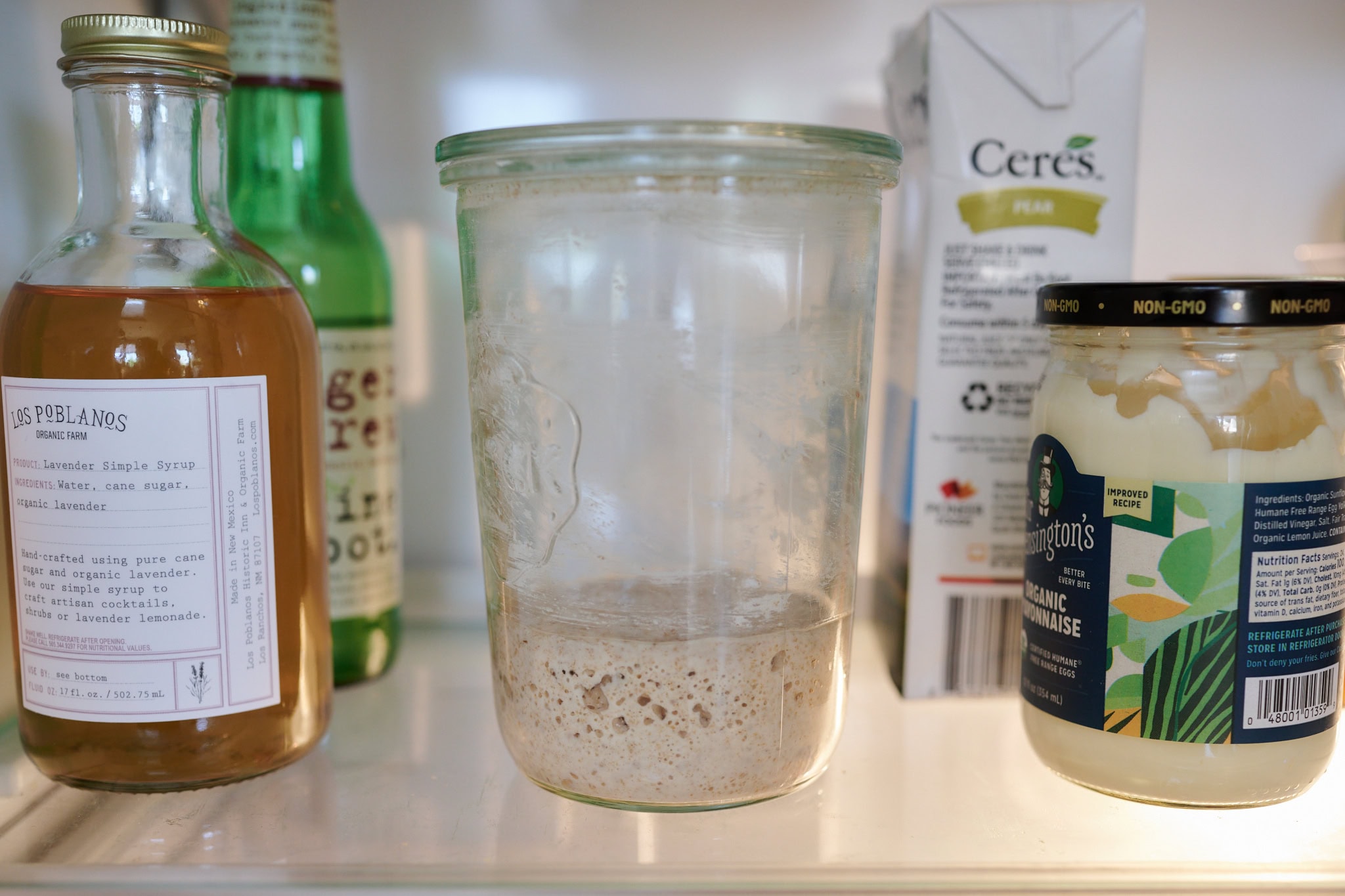
If you’re a proud parent of a sourdough starter, much as you love caring for the culture of wild yeast, you know there will come a time when you’ll have to take a little break. Whether it’s because you’re headed out on a multi-week vacation, you get too busy with other responsibilities, or you don’t feel like baking for a bit, you need not stress about feeding your sourdough starter, as long as it’s properly stored. Rest assured, your refrigerator—and this guide to storing your sourdough starter in the fridge—has you covered.
…you need not stress about feeding your sourdough starter, as long as it’s properly stored.
This is a pragmatic guide to feeding your starter so it stays healthy in the fridge—and how to revive it when you are ready to get baking again. The steps are straightforward, but there are a few important bits that’ll help ensure your starter doesn’t dry out or get moldy during its rest.
But most importantly, how is it even possible to store a sourdough starter in the fridge for an extended period of time?
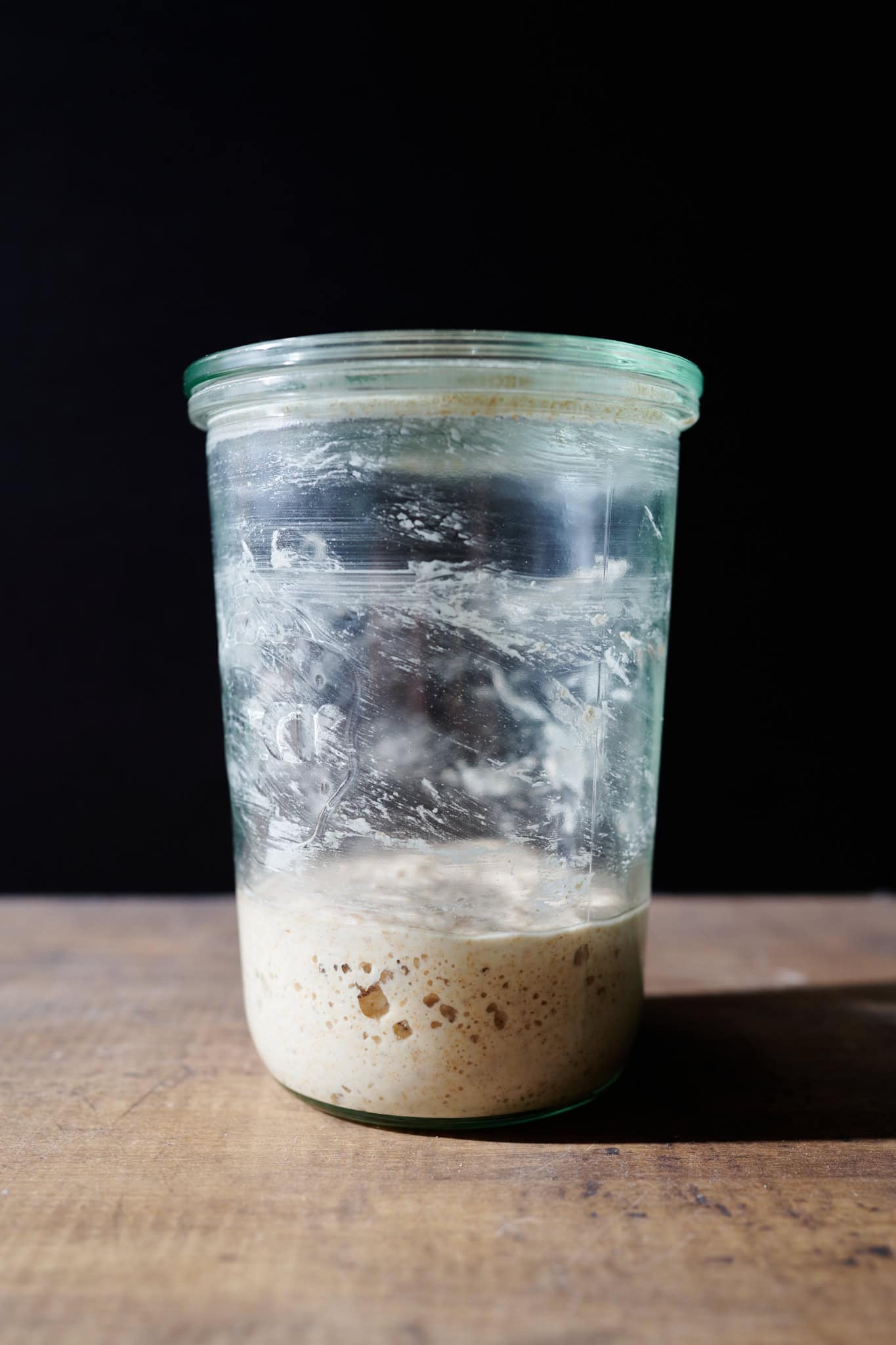
Can I Store a Sourdough Starter in the Fridge?
Yes, you can store your sourdough starter in the fridge! A sourdough starter is very resilient. However, the cold temperatures of a typical home fridge can be stressful for your starter. Being in the fridge won’t harm your starter, but it does mean that after you take it out, it usually takes a few feedings at room temperature to ramp back up to full strength.
Read on for my tips for quickly and effectively reviving a sourdough starter. First, let’s look at how to put it into the fridge before a period of time away.
Storing a Sourdough Starter in the Fridge, Step by Step
It’s best to store your sourdough starter in a closed container to prevent it from drying out. I like to use the same jars I use to maintain my starter.
Here are my steps for storing a sourdough starter in the fridge:
- Start with your ripe (unfed) sourdough starter and give it a feeding (discard ripe starter, add fresh flour and water). It can help to reduce the hydration, but it’s not mandatory. For instance, with my 100% hydration sourdough starter, I will typically feed it with 20% less water than normal to stiffen it.
- Place the lid on top and seal it shut. Set a timer for 1 hour.
- After an hour of room-temperature fermentation, place the jar in the refrigerator for up to three weeks without feedings.
Is a Liquid or Stiff Starter Best for the Fridge?
I have found that a stiffer starter, or one with less water to total flour, can handle the cold temperatures of the refrigerator a little better than those with 100% hydration. Reducing the water can help ensure it doesn’t over-ferment while in the refrigerator, and like with a stiff levain, it has proven to be more resilient for me. Less water in the mixture ultimately prevents excessive acidification and breakdown.
What is a stiff sourdough starter, exactly? By stiff, I’m referring to a starter with less water than flour, usually between 45 and 65% hydration. For example, if a starter has 100g of flour, it will have only 50g of water.
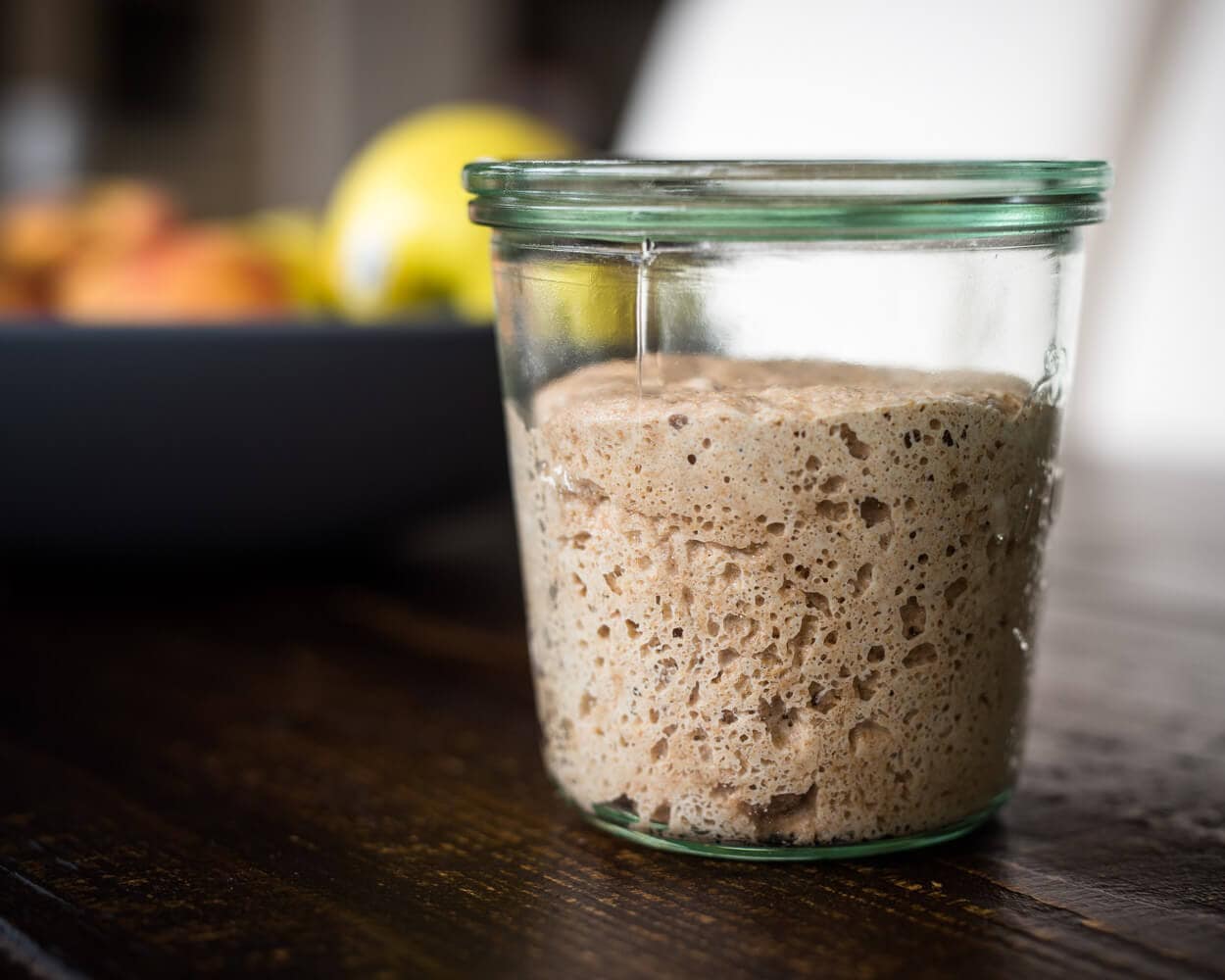
While many sourdough starters are maintained at 100% hydration—equal amounts of water and flour—it’s also possible to keep them at another hydration ranging from about 45% to over 100%. The hydration can affect the flavor profile, fermentation activity, and other characteristics—a topic for another guide in the future.
How Long Can I Keep My Sourdough Starter in the Fridge?
Generally, I have found that a starter will keep for up to three weeks in the refrigerator without a feeding. Two weeks is easy; three weeks is a little dicey, though not impossible; but for anything over three weeks, I’ll usually dehydrate my starter.
A dehydrated starter is simply when all its water is removed, resulting in a dry powder. Since yeast and bacteria require water for metabolic activity—fermentation—removing the water puts them in a safe state of hibernation. You can learn how to dehydrate your starter in the guide linked above.
Can I Store a Sourdough Starter in the Freezer?
Unlike many foods, which can be stored in the freezer to extend their life, this logic cannot be applied similarly to sourdough starters. In testing, I’ve found that very low freezer temperatures can adversely affect the bacteria and yeast balance in a sourdough starter. Instead of freezing, use the fridge for up to three weeks, or dehydrate the starter for longer storage.
While it’s possible to get a starter to bounce back from the freezer, when I tested this, it took almost a week of regular feedings and care before I started to see signs of sufficient fermentation activity to use for making sourdough bread.

How to Revive a Sourdough Starter From the Fridge
Reviving a sourdough starter in the fridge is easy, the key is to keep it warm and give it regular feedings to nurse it back to full strength.
These are the most important things you need to do to revive your starter from the fridge:
- Warm the mixture on the kitchen counter (or another warm spot)
- Feed it at least once a day, preferably twice (once in the morning and once in the evening)
- Feed your starter for at least one full day before using it to make sourdough bread
Note that when you’re reviving your starter, fermentation activity might be sluggish throughout the first or second feeding after coming out of the fridge. If you don’t see a lot of bubbles after the first feeding, try a little whole-grain rye flour with the next feeding. Whole rye flour has high nutrients and minerals that help spur fermentation.
So many feedings obviously produces a lot of starter discard. Luckily, you can use the discard from your starter at any time to make quick discard recipes like this tangy lemon poppyseed loaf or starter discard scones.
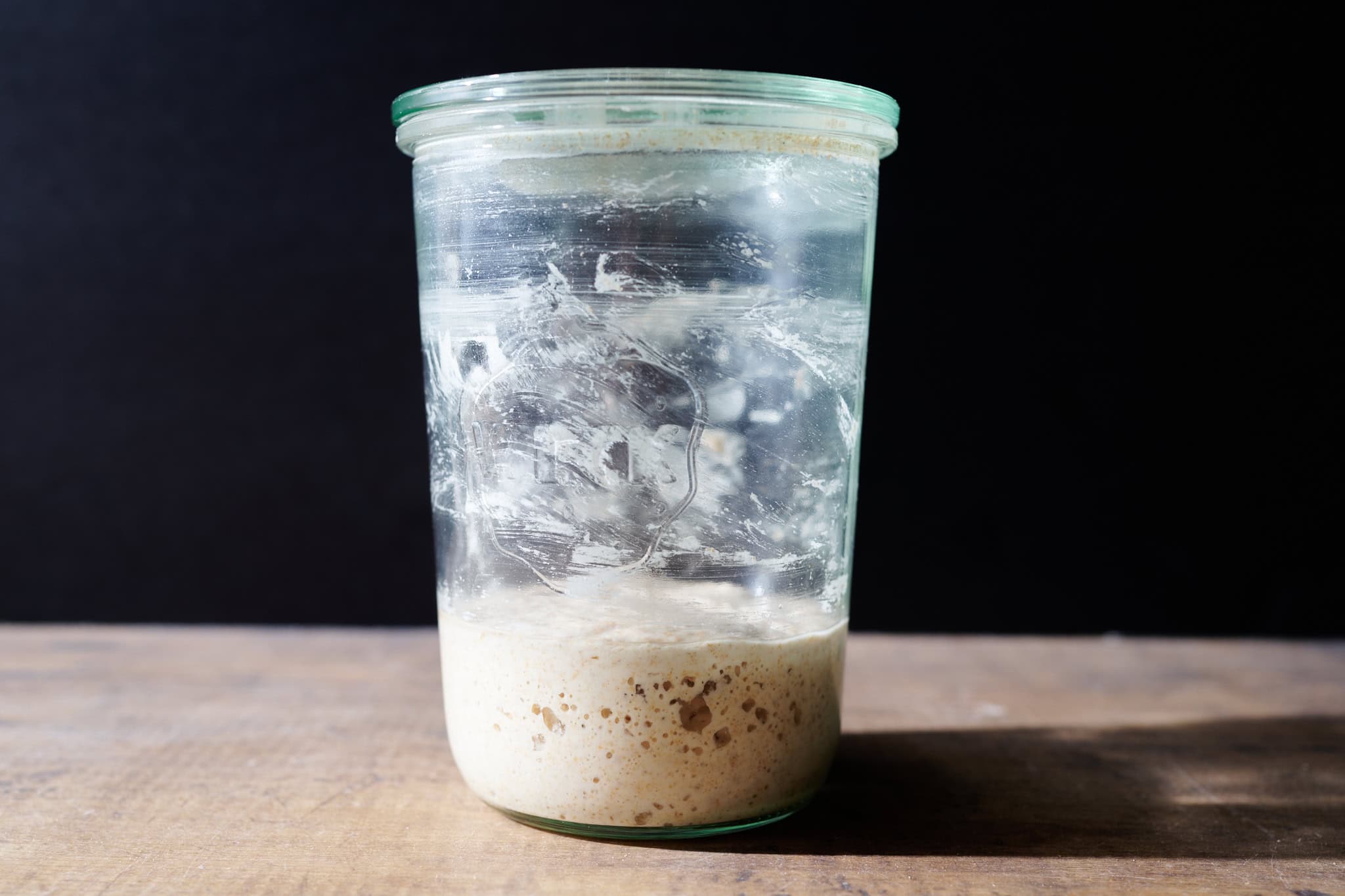
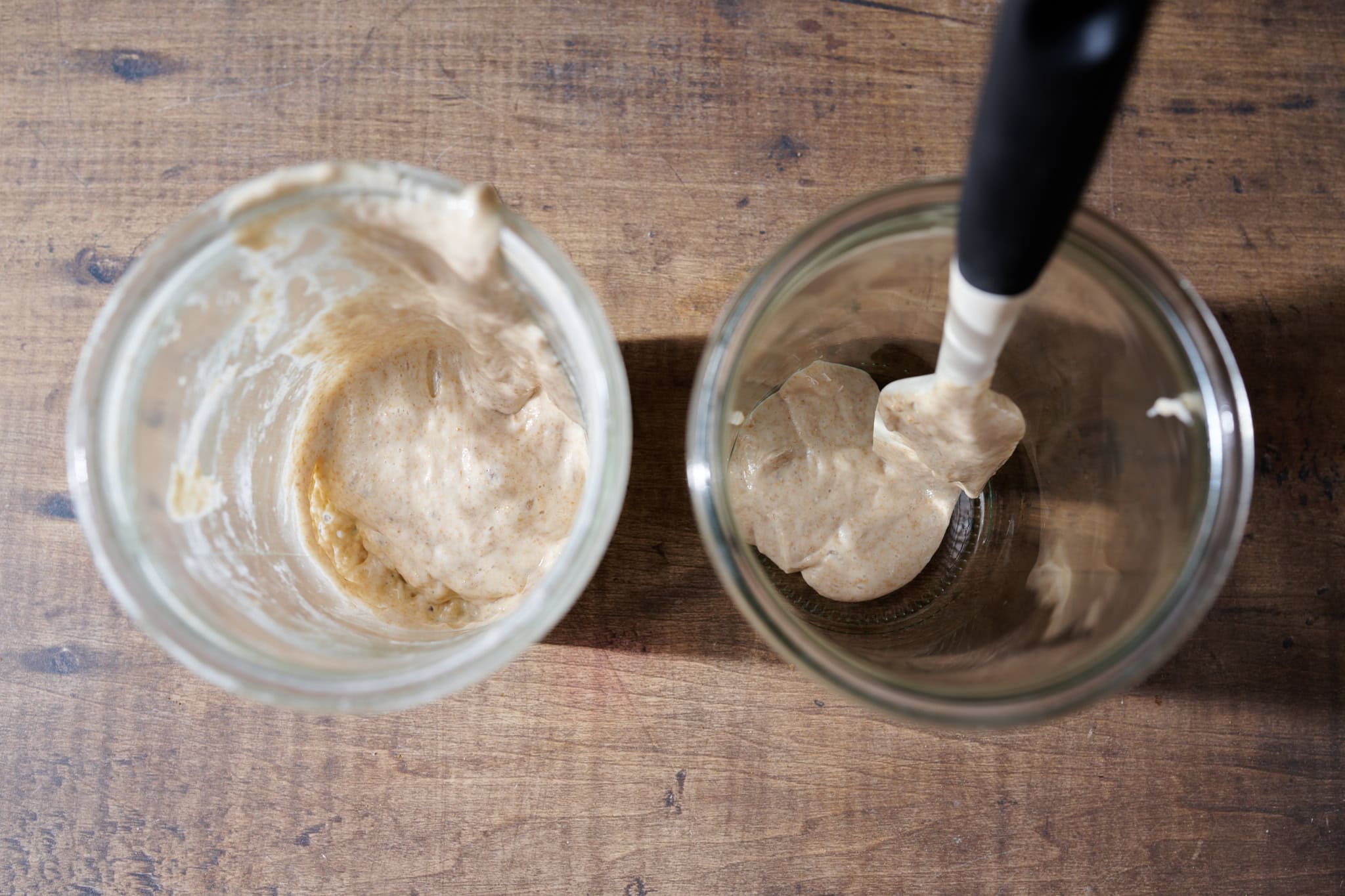
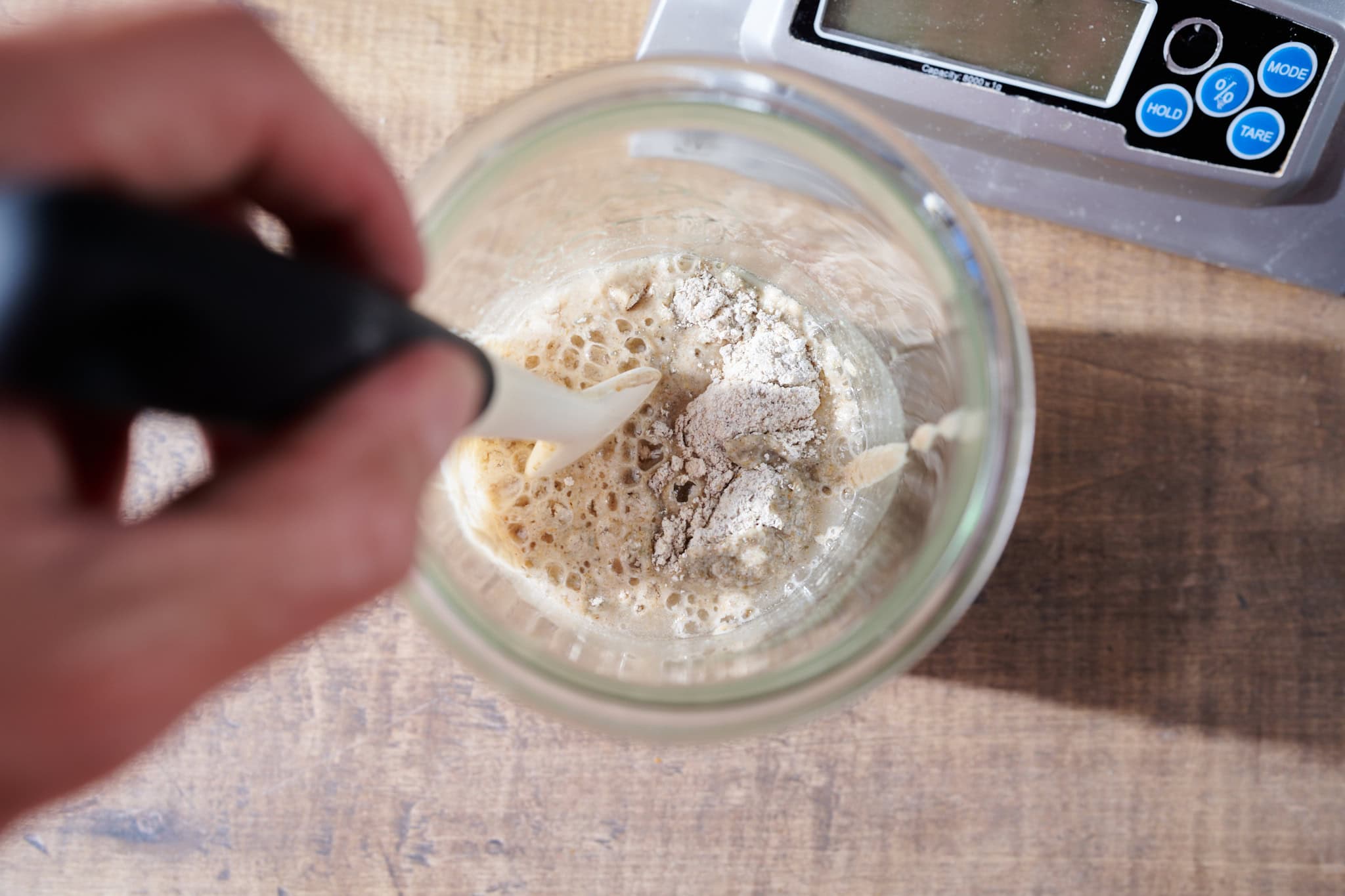
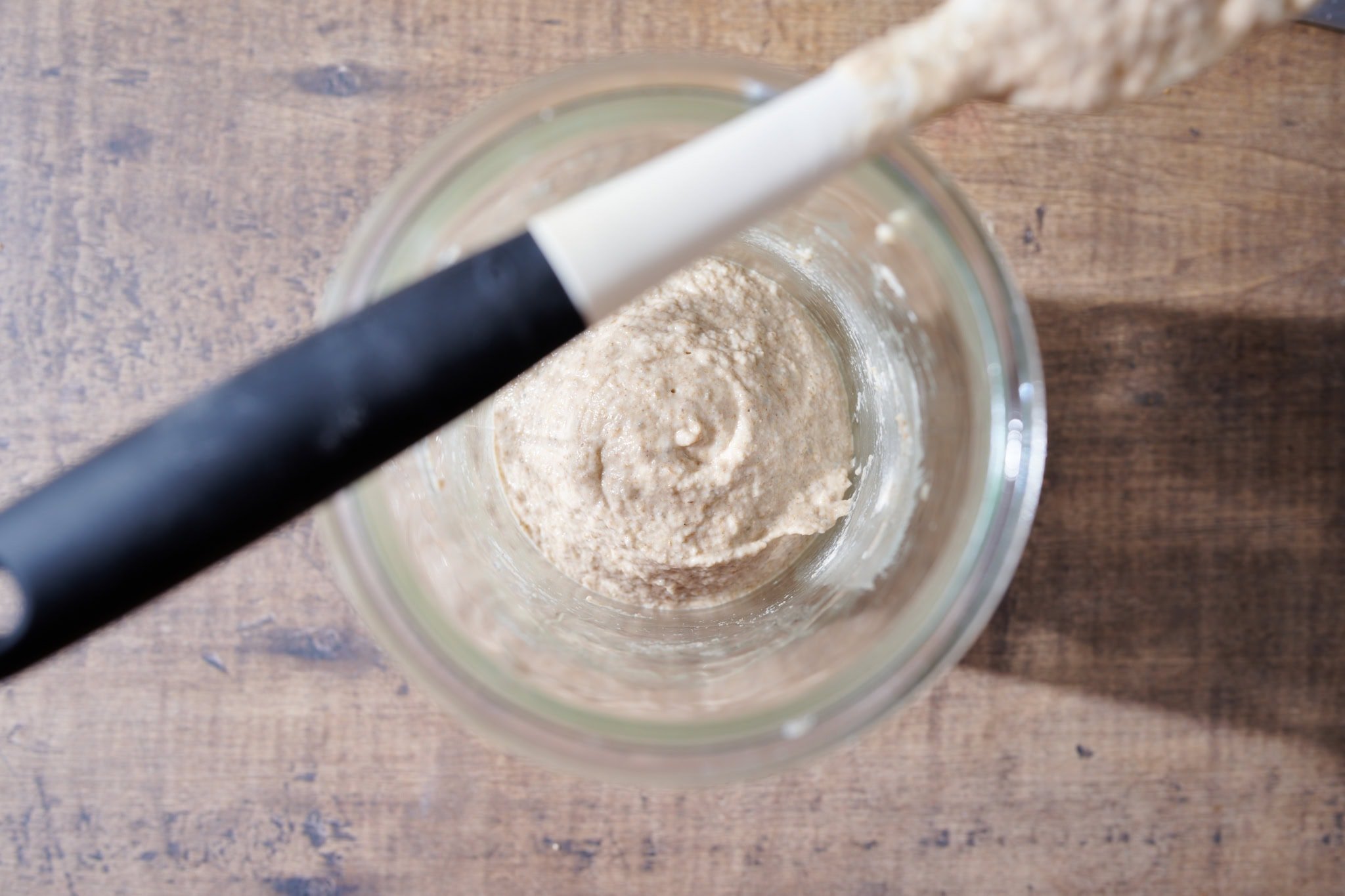
Here’s how I revive my refrigerated starter:
- Take the cold starter out of the fridge and let it warm up for 1 hour on the counter (upper-left image, above)
- Get a clean jar and scoop out about 20g of the stored starter into the new jar (upper-right image, above)
- Add fresh flour and water to the starter in whatever ratios you typically maintain your starter, mix, and let ferment on the counter for 12 hours (lower left image, above)
- Repeat the feeding process one more time and let it ferment for 12 hours
- Use to make a levain, mix directly in a batch of bread dough, or continue feeding the starter as usual
For example, this would be the sourdough starter revival schedule I use if I got home from vacation on Monday:
| Day | Starter Location | Action |
|---|---|---|
| Monday, returning from vacation | Fridge | Take it out of the fridge, let it warm up for 1 hour, then discard and feed it. Let it ferment overnight on the kitchen counter |
| Tuesday | Kitchen counter | Feed the starter in the morning and at night |
| Wednesday | Kitchen counter | In the morning, make a levain to bake with that day or continue feeding it at room temperature |
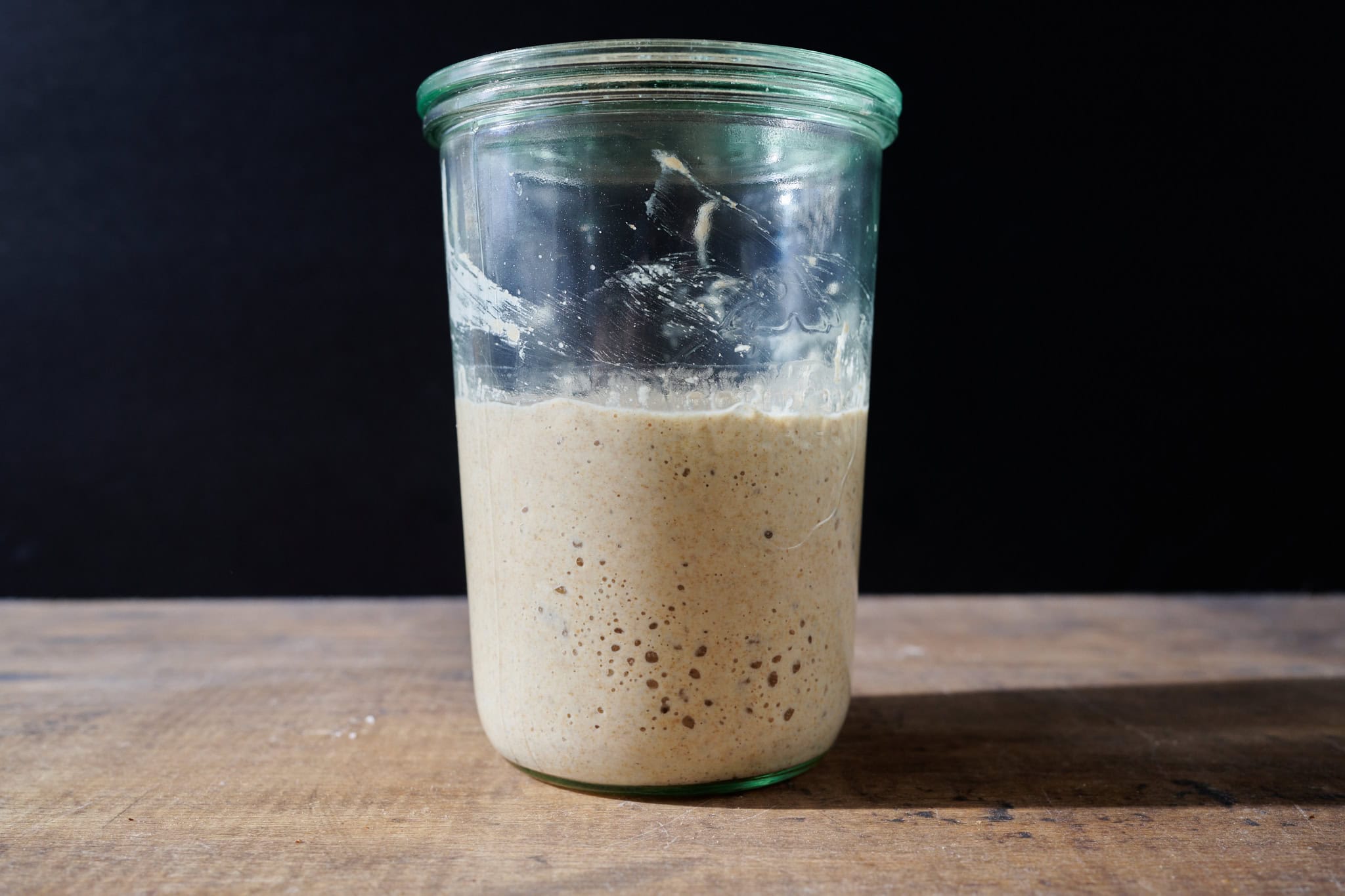
Can I Use My Sourdough Starter Straight From the Fridge?
I do not like to use my sourdough starter straight from the fridge, even if I were using the fridge to store my starter regularly, but especially after an extended period of time away. I get much better sourdough bread—in terms of flavor, volume, and texture—when my starter is kept at room temperature and fed regularly. When I take it out of the fridge, I give it at least two room-temperature feedings before using it to make bread.
My Refrigerated Starter Has Hooch On Top
If your starter has a clear liquid on top that smells like acetone, this “hooch,” as it’s sometimes called, can be safely poured out into the sink. It’s normal to see this accumulation at the top of a starter, especially if it’s at a high hydration level and stored in the fridge without feedings. If the liquid is dark, it should still be OK to use, but see the FAQ section below for how to proceed.
The Top of My Starter Is Grey
If your starter has a thick layer of grey-looking flour, this is also normal. When I see this, I scrape off the top layer and use the starter beneath.
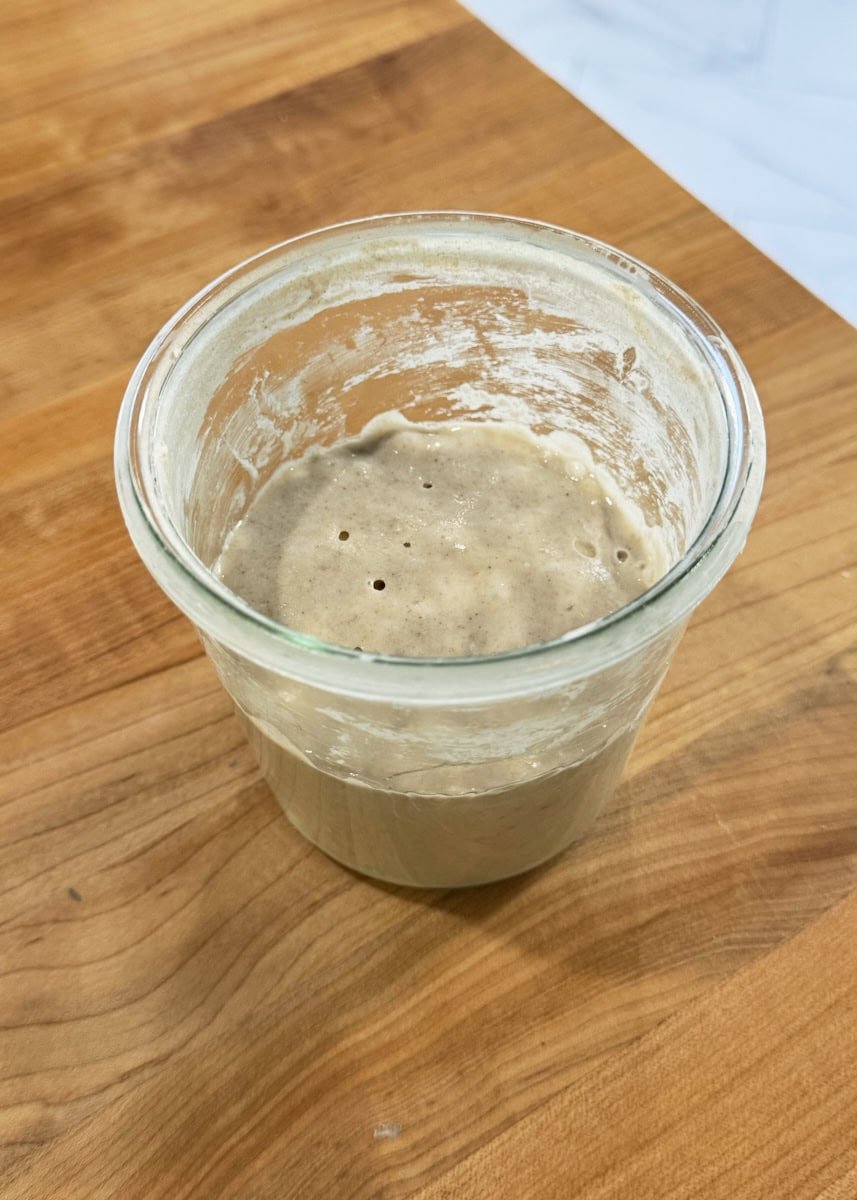
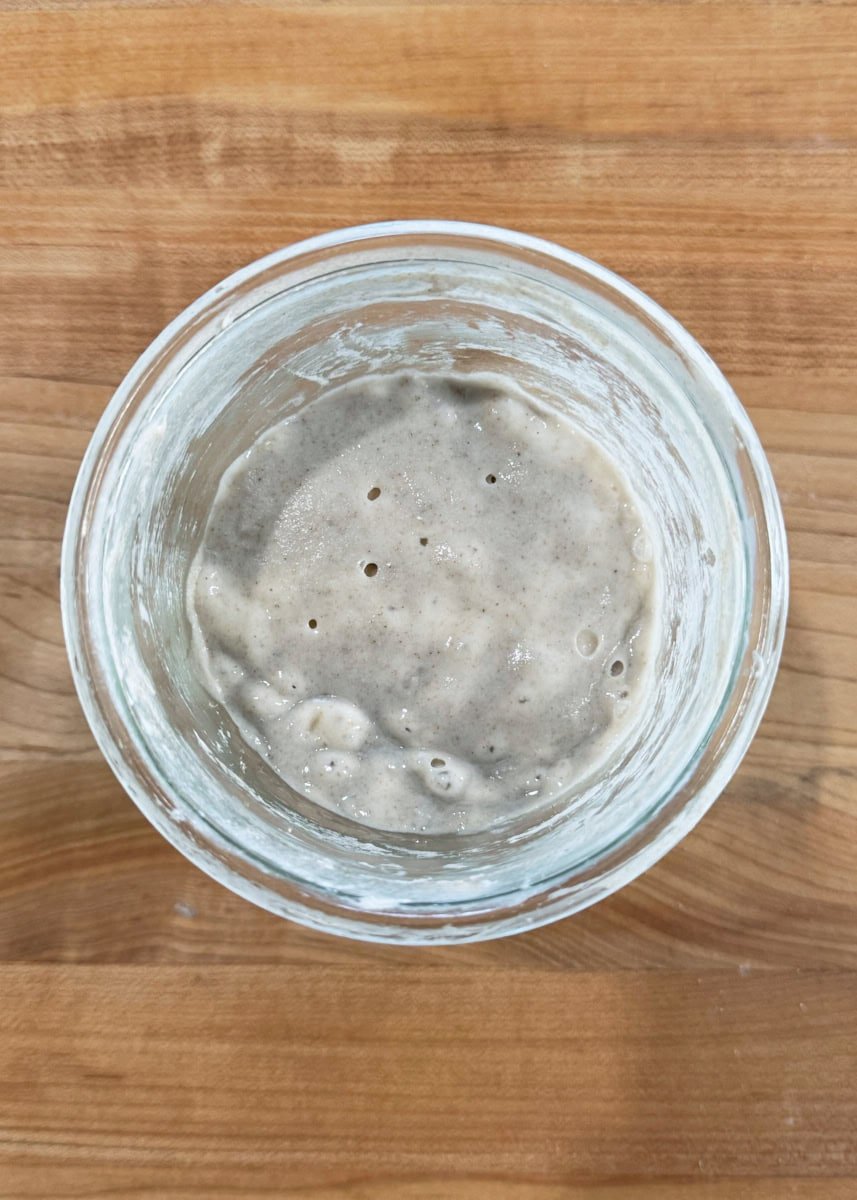
The layer of grey is not harmful as long as you don’t see signs of mold (a green or pink color or white fuzzy buildup).
See our roundup of the 21 most common sourdough starter problems with solutions for more.
Sourdough Starter Vacation FAQs
Do you store sourdough starter in the fridge in an airtight container?
Yes, I like to use an airtight container to ensure nothing gets into the sourdough starter jar and to prevent the mixture from drying out.
After being in the fridge, my sourdough starter has a dark liquid on top, is it okay?
Yes, scrape the dark liquid or flour off the top into the compost and keep the starter below that in the jar, then feed it as usual. However, if you see signs of mold (white fuzzy, pink, or red), I would toss the entire starter and create a new one.
How do you store a gluten-free sourdough starter in the fridge?
You can store your gluten-free starter in the fridge in the exact same way as a starter containing gluten. The same principles of fermentation apply: Colder temperatures reduce fermentation activity, and a home fridge is cold enough to keep a gluten-free starter on pause for up to three weeks.
What’s Next?
Are you having issues with your sourdough starter? Join the TPL Membership to ask questions, post pictures, and chat with other members!
For more tips on keeping your sourdough starter strong and healthy, including a process for exactly how I feed my starter each day, head over to our ultimate guide to keeping a sourdough starter.


39 Comments
My starter is 20 years old and has been left MULTIPLE times in my fridge for 2 months at a time without any issues at all. I obviously have to feed it several times before using it again, but it is just fine and makes great bread.
I appreciated your help storing my starter while on vacation. Most of all, your discussion of the benefits of a stiff starter. Better resilience by preventing excess acidification and “breakdown” (maybe you mean collapse).
Finally, I have tried to fine the glass jar and lid you show containing your starter. Can you tell me what it is called and maybe where I can purchase it?
Thanks so much from a woman pretty new to the craft… Ann
It appears that he is using a Weck branded jar which can be purchased at many different places including Amazon where I was able to get mine. The Weck 743 is a great size for starter maintaining and levain creation.
Help! I’ve been doing this but my starter keeps going really acidic and smells like vinegar. I take it out from the fridge Saturday pm, feed it and leave it overnight. Then Sunday I give it a little feed to pep it up, wait till it peaks, use most of it to bake, and put the reminder in the fridge. Seems really similar to your recommendation ie I am putting a small amount of recently peaked starter in the fridge for a week. What’s going wrong 😭
For those who are apprehensive about storing your starter in the refrigerator, I've been making sourdough bread for 35 years. I've always kept my starter in the fridge. While I wouldn't recommend it, there have been times when I've neglected it for months, and I was easily able to revive it. These days, I bake once a week or every other week. In either case, I feed my starter once a week. It's beautiful and healthy.
What is the process to dehydrate and then rehydrate my starter?
I tried this method when you first published it and it worked perfectly. Even last year when I was sick and it sat on the back of the fridge for 5 months. It was hooched and gray but it survived.
Poured off the hooch, scraped off the gray and took a bit and began revival. Fed it twice after revival and had a perfect loaf.
Moral of the story is to never give up on the starter.
Thank you for all the bread love.
Do we discard the original cold starter after we have scooped out 20 grams to feed in a clean jar? That 20 grams becomes our starter as we revive it and the rest of the 3-week-old starter in the fridge is discarded?
I also had the same question in mind when I read the first step: "Start with your ripe (unfed) sourdough starter and give it a feeding (discard ripe starter, add fresh flour and water)."
Would be amazing with clarification but I think that your description makes a lot of makes sense! 🙂
I have accidentally left my starter in the frig for over a month and it revives easily. I have never seen anything funky other than some greyish liquid on top.
Yes, I've done tests with lengthy times in there too… It's quite resilient! But you never know, sometimes things go wrong. 🙂
What ratio do you usually use ?
I normally feed mine 1:5:5.
When reviving my starter, do I have to use my usual 100g flour, 100g water to feed even if I know I’ll be discarding twice before using it? Or can I minimize the waste and feed it less for these two feedings? Thank you
Yes, I use the same ratio when reviving!
I love your blog and read it all the time! Just a note – I've left my starter in the fridge for 3 months and it was perfectly fine. Yes, that's right! I went to France for a few months and before departing I fed my starter and just put it in the fridge at home in NYC. When I returned after three months, I discarded 3/4 of it, fed it at night, discarded and fed it again the next morning, and baked bread in the afternoon (well, I prepared the dough, etc and put it in the fridge to proof at night for baking the next morning). Absolutely delicious and beautiful. My starter has been around for years so it's very strong and I was happy to see that after a long three month nap it was ready to go back to work!
Thanks for sharing! Yes, mature starters are incredibly resilient – yours clearly proved that after its 3-month rest. While I typically recommend shorter storage periods, a well-established starter can absolutely bounce back with proper care. Your double feeding approach before baking was exactly right. Happy baking!
Over the years I've done a lot of experiments with refrigerator storage. That means I've taken several starter discards out them in a jar and forgot about them. I'd peek when I thought about it and found that they could last for several months.
This last time I made an extra stiff starter with the intent of long-term cold storage. After the hour or so on the counter after mixing, I sealed it up tight and placed it in the upper back of the fridge. That was 6 months ago. Just before new year's eve, I took it out, scraped of the grey top, fed it and a few hours later life was confirmed. I fed it 2 more times and confirmed it was ready.
On new years day I baked 2 loaves with great success. My point in all this is to experiment with your own environment and see what's possible.
btw I do have 2 packets of vacuum sealed dehydrated starter. ☺️
Thanks for sharing these great experiments! Yes, starters are remarkably hardy, and you're absolutely right about stiff starters being more resilient – they typically handle both temperature extremes better than liquid ones. Your 6-month success story with a stiff starter shows this perfectly. I love your approach of testing and discovering what works in your own environment. Smart backup plan with those dehydrated starters too! Happy baking!
In one article, you say not to use an airtight container to allow the gases to escape. In this article, you suggest using an air tie container to prevent dry out in the fridge. Should I completely seal my starter while on a week vacation, or would it be OK to just keep my week jar lid lightly on top?
Yes, both are correct. My jars are airtight, but not screwed on. The glass lid just rests on the Weck jars.
Airtight is fine, even screwing it on is okay if it's large enough and you aren't worried it'll be overly pressurized. I always opt to let gasses escape by just resting the lid on top (without letting contents dry out).
Hi, I thought I'd add in my experience with extended periods of not being able to feed my starter. I keep starter at my home and also my vacation cottage. As I am leaving, I feed the starter a normal amount of flour and water (1:1:1) and pop it in the refrigerator. I have left it unattended for 3+ months in a sealed Ball canning jar. While it took four feedings to fully pop back to full performance, it works beautifully! I do have dehydrated starter set aside for a serious crisis; I have never had to use it.
Fantastic, Joy! This is great to hear. They're quite resiliant!
Can you do a video tutorial on using the B&T Sourdough Home for maintaining your starter? Lately, I find myself baking less SD breads these days. I followed instructions feeding my starter a 1:4:4 feed once a week at 41F temp. because I am only baking once every few months. I don't know if this is practical to use my B&T Sourdough Home at this point. By the end of each week, my stater has collapsed 1/4". Is this OK that it has collapsed before next feed? How do you know if your starter is too acidic?
Hey, DB! Yes, will work on this. Totally fine that your starter collapsed. You could try a slightly cooler temp, say 40F, which may help alleviate that a bit. As far as too acidic, really only if it smells extremely pungent, like acetone or fingernail polish. Then, you may want to go a little colder with the SDH, or feed it a day or so earlier. Once you find the right cadence, you should be fine feeding it once a week!
Is it possible to safely maintain my starter if we are going on a 2-3 day road trip? I am new to sourdough baking and would love to take my starter with me to continue baking bread when we drive down from Michigan to Florida in January through April. Your thoughts?
Oh yes, absolutely. I’ve done this many times. Pack some flour and a water bottle and feed it once a day. Try to keep it on the cool side (somewhere shady if driving). It’ll work just fine!
Yeah, I’ve tested longer than 3 weeks, and for my starter it usually takes several days, up to a week, to get back to full strength (where I notice the same aromas, consistency, flavor).
I’m going to do an experiment by vacuum sealing and freezing some active starter just after feeding it. My starter is robust and lives in a 60-68 Degree environment and does quite well in the NC mountains. I’m interested to see if my starter bacteria strain is immune to freezing, being developed in a colder culture.
Gosh, that’s the kind of testing I love. I don’t have a vac sealer, though I’ve wanted one for a long time. Please let me know how it works out!
FOLLOWING UP! I also sent you an email w/ pics.
Maurizio,
You asked me to follow up on my FROZEN SD Starter experiment !
Below is the update of the starter I have frozen since May 2024. Below is a timeline of exactly what I did to get her going. I’m not sure if all the steps were necessary, but this is a very robust starter.
Additionally, it’s somewhat young so it’s not too sour.
Happy New Year and Blessings to you and yours,
Joe (aka- SmokinJoe682
5/20/2024 10g ripe starter, vac sealed, frozen.
1/25/2025 thawed 60 deg room temp, mix in 20g flour 20 water. 50g total
1/26/2025 add 10g rye 10 water. 70g total 64 deg.
1/28/2025 volume doubled. Discard down to 15g, feed 1-2-2. 69 deg.
1/29/2025 volume tripled.
2/5/2025 'baked your ‘My best SD recipe' 2 incredible loaves, great spring & cumb
2/9/2025 baked ‘Jalapeño-Cheddar Sourdough Bread' 2 fantastic loaves
Discussion below:
https://www.theperfectloaf.com/how-to-store-a-sourdough-starter-in-the-fridge-for-vacation/
I've replied the results of my frozen starter experiment and it's pending your approval. I also emailed you with pics. Blessings, Joe
Hi, did you ever manage to run the experiment above? I am very interested in the results. Thanks in advance,
Daniela
Daniela, I haven’t tried it yet because I wanted to let it freeze for at least 6 months to insure it will work long term.
I made a gf sourdough loaf and it came out gummy. On day 8 and 9 I fed once per day instead of twice. What do you think is the problem? When I toast the bread it tastes normal.
If your dough’s hydration is too high, it can lead to an overly wet or gummy interior. If the dough feels “soupy” or very “slack,” try reducing the water percentage by 5% and see if that helps.
Bake your loaves completely. The interior should register around 204-206°F (95-96°C) or higher.
If your loaf is underproofed, then this will typically lead to a gummy or “wet” textured interior. Make sure your starter and levain are very vigorous and strong when you use them. This is very important! From there, make sure to bulk ferment your dough fully (use the images you see in my posts to guide you on what the dough should look/feel like). You want the dough to be alive and aerated before you divide and shape. From there, a full and complete proof is also very important.
Thank you! Just in time.
Time for travel! 🙂