

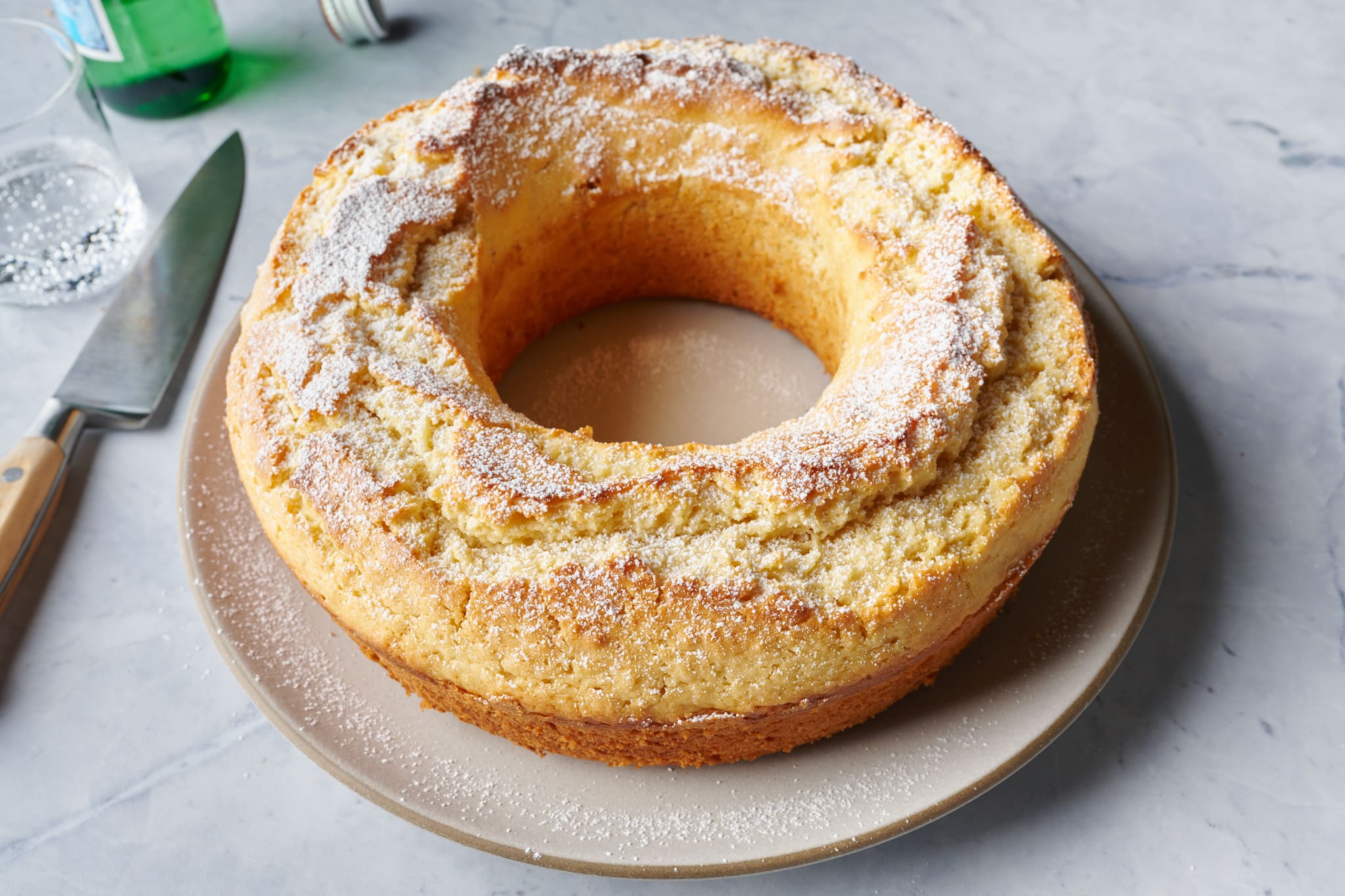
The alluring aromas of sweetness and lemon drew me to the empty kitchen. The oven was cooling and to the side rested a whisk and two mixing bowls, their rims painted with golden batter. Instinctively, I ran my finger across the counter the way a mother might inspect the cleanliness of a bedroom. Looking down, my finger was covered with white powder, and looking even closer, I noticed the counter held the silhouette of a dusted white ring.
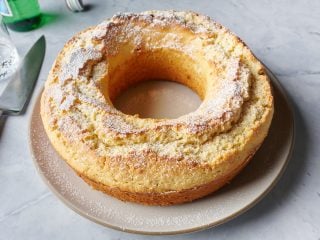
On a plate nearby sat a freshly baked ciambella (cham-bel-uh)—a classic Italian cake similar to a pound cake. The pungent fragrance of lemon, the craggy crust, and the snow-mantled top wasn’t fancy or elaborate. Yet, the enticement of this simple cake was always impossible to ignore. Yes, the flavor and texture were sublime, but it was also the amazement that something so wonderful could be made from a few simple ingredients, without a recipe, and with hardly any effort.
Note: If you don’t have a sourdough starter, you can make this cake without one. See the note in the recipe. However, if you keep a sourdough starter discard cache in the refrigerator, you’ll always have some on hand!
A moment later, my nonna (grandmother) walked into the kitchen with her apron on, folded at the waist, her thick glasses dusted at the edges with powdered sugar, and said: “there’s ciambella there.” As if this magic of conjuring deliciousness from a little flour, a few eggs, a scoop of sugar, lemon, some berries if we had them (I’m imagining the strawberries from our strawberry shortcake recipe drizzled on top), and a splash of limoncello, sambuca, or Grand Marnier was nothing. She’d often whip this cake together without thought, squeezing the work (and lemons) between making other things in the kitchen.
Of course, my sourdough starter discard ciambella isn’t exactly like my nonna’s. She wasn’t a sourdough baker, so she didn’t have starter discard. And she never wrote anything down; I only remember a few scattered papers in the kitchen for obscure recipes she didn’t make often. So this is my version, recreated from the memory of her ciambella that I ate a million times.
The sourdough starter discard doesn’t bring any sourness to this classic cake, but I like including it because the mixture results in a tenderer crumb thanks to the well-fermented flour. Plus, it’s a way to use flour and water that would normally go into the compost. The overall flavor is sweet but not too sweet and decidedly lemony. The interior is very tender, and the crust—especially where it ruptures on the top so beautifully—has crispness, bringing structure to the cake. I sometimes serve it with a mix of berries, and a dollop of ricotta never hurts, though the cake certainly doesn’t need anything extra.
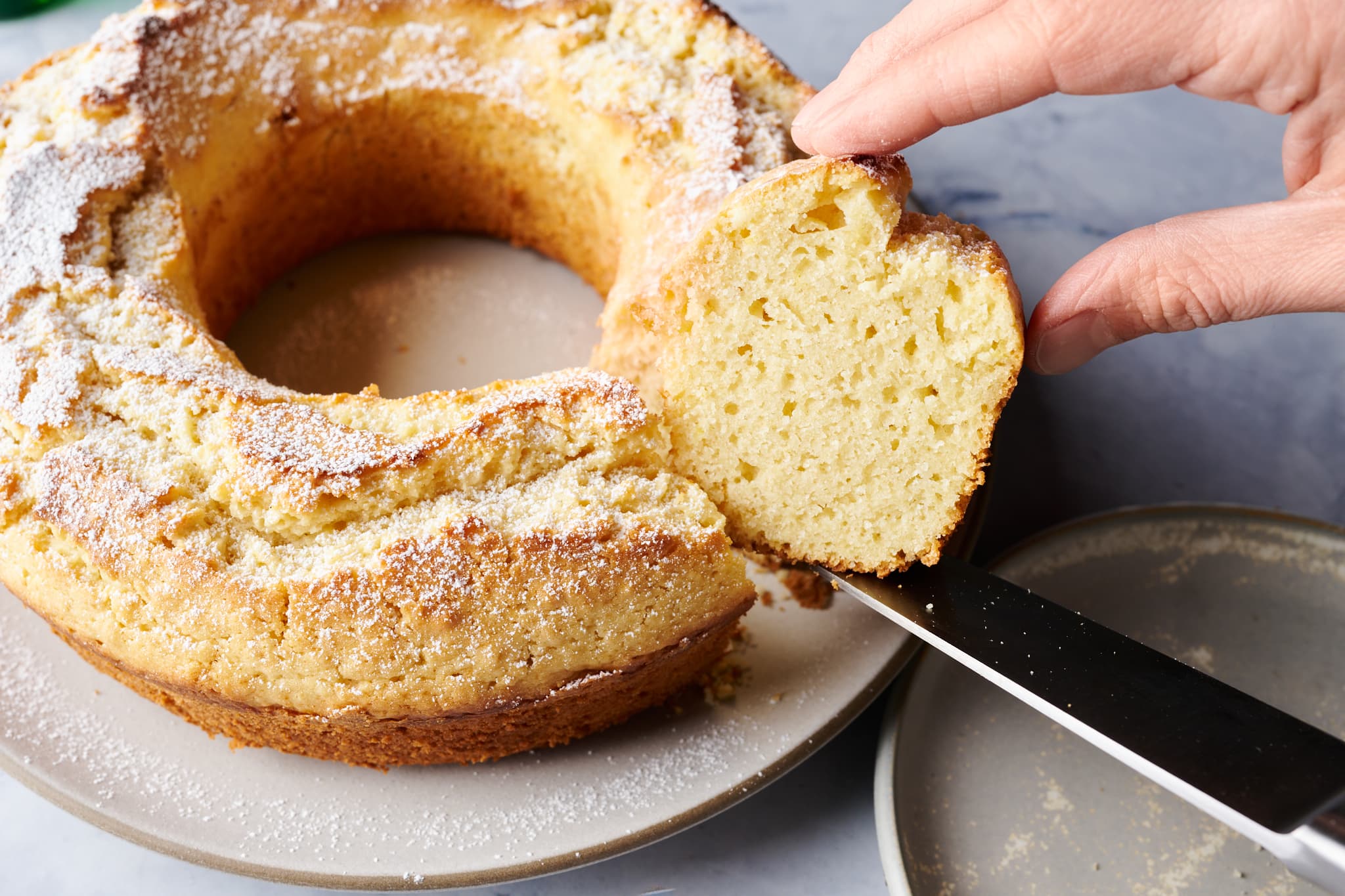
This sourdough starter discard cake is perfect when accompanying a breakfast cappuccino, to have as a snack after lunch, or to enjoy for dessert after dinner.
What is Ciambella?

Ciambella is an Italian cake often baked in a ring mold pan and typically prepared with flour, oil (sometimes butter), baking powder, milk, salt, sugar, and vanilla extract. Flavors include lemon, orange, cocoa, or anise. Ciambella is similar in taste and texture to an American pound cake, though it’s less sweet.
What is Sourdough Starter Discard?
Sourdough starter discard is ripe sourdough starter removed from a starter during daily feeding, when fresh flour and water are added to keep the naturally fermenting culture going. Though often thrown away, you can use discard to make other non-bread recipes. It’s a good way to use fermented flour that would otherwise go into the compost or trash, and it lends subtle sourness and tenderness to whatever it’s mixed into.
Sourdough Starter Discard Cake Tools
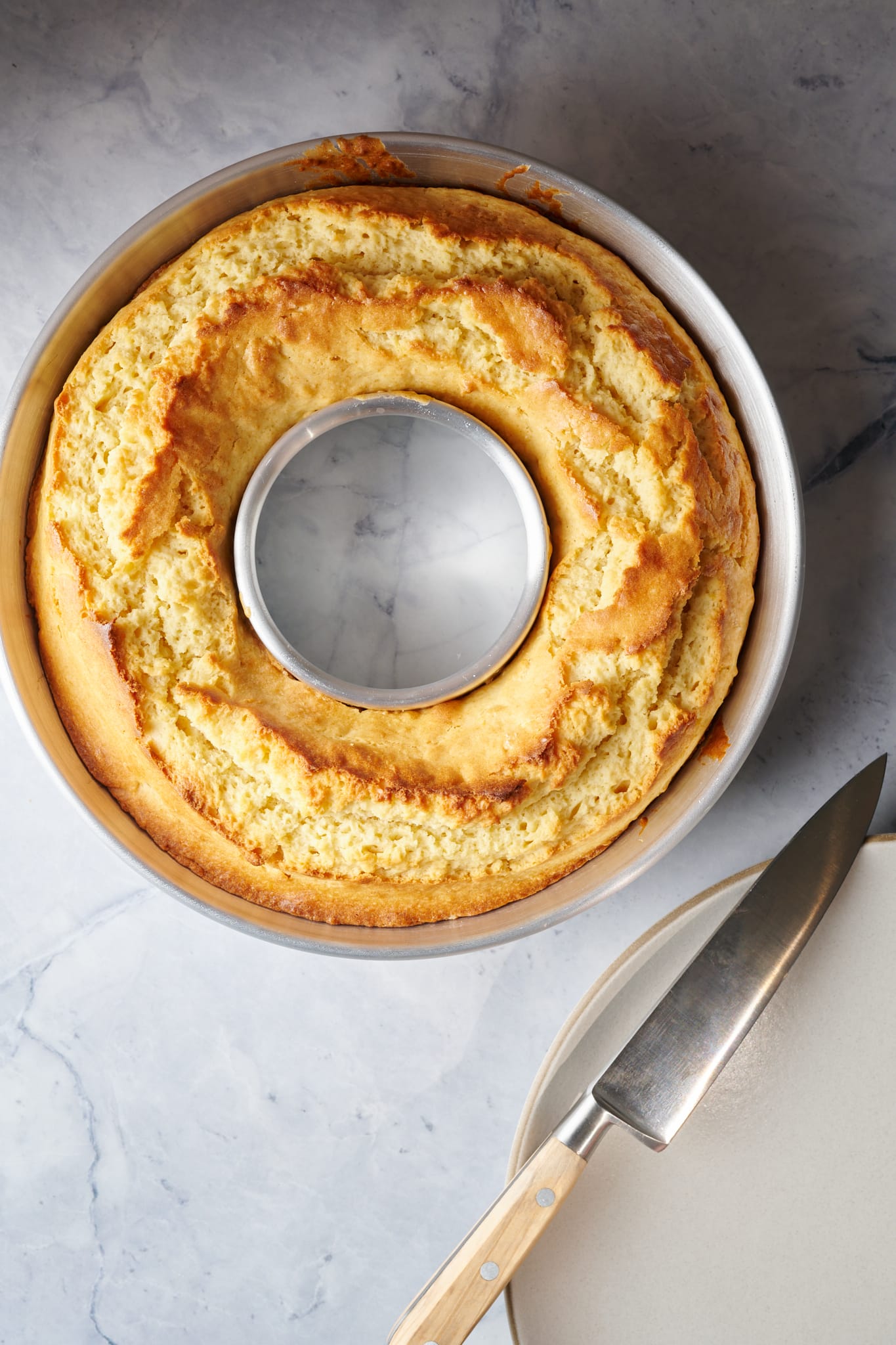
Traditionally, ciambella is made in a ring mold pan (tube pan). I’ve searched and searched and finally found the perfect ring mold pan that isn’t too tall (so it gets a nice color on top), wide, or with a center hole too large.
This 9.5-inch aluminum ring mold pan is ideal for making ciambella. Using this pan results in a cake with a tall rise thanks to even and efficient heating, and it cleans up easily.
If you don’t have a ring mold pan, you can use an angel food cake pan or any traditional bundt pan.
How to Make Ciambella, Step by Step
This is probably one of the easiest and most delicious cakes I make, and the fact that it’s a sourdough starter discard cake makes it even better. There’s no need for a stand mixer; you can mix this all by hand.
Preheat the oven with a rack in the middle to 350°F (180°C). Grease a 9-inch ring mold pan with neutral oil.
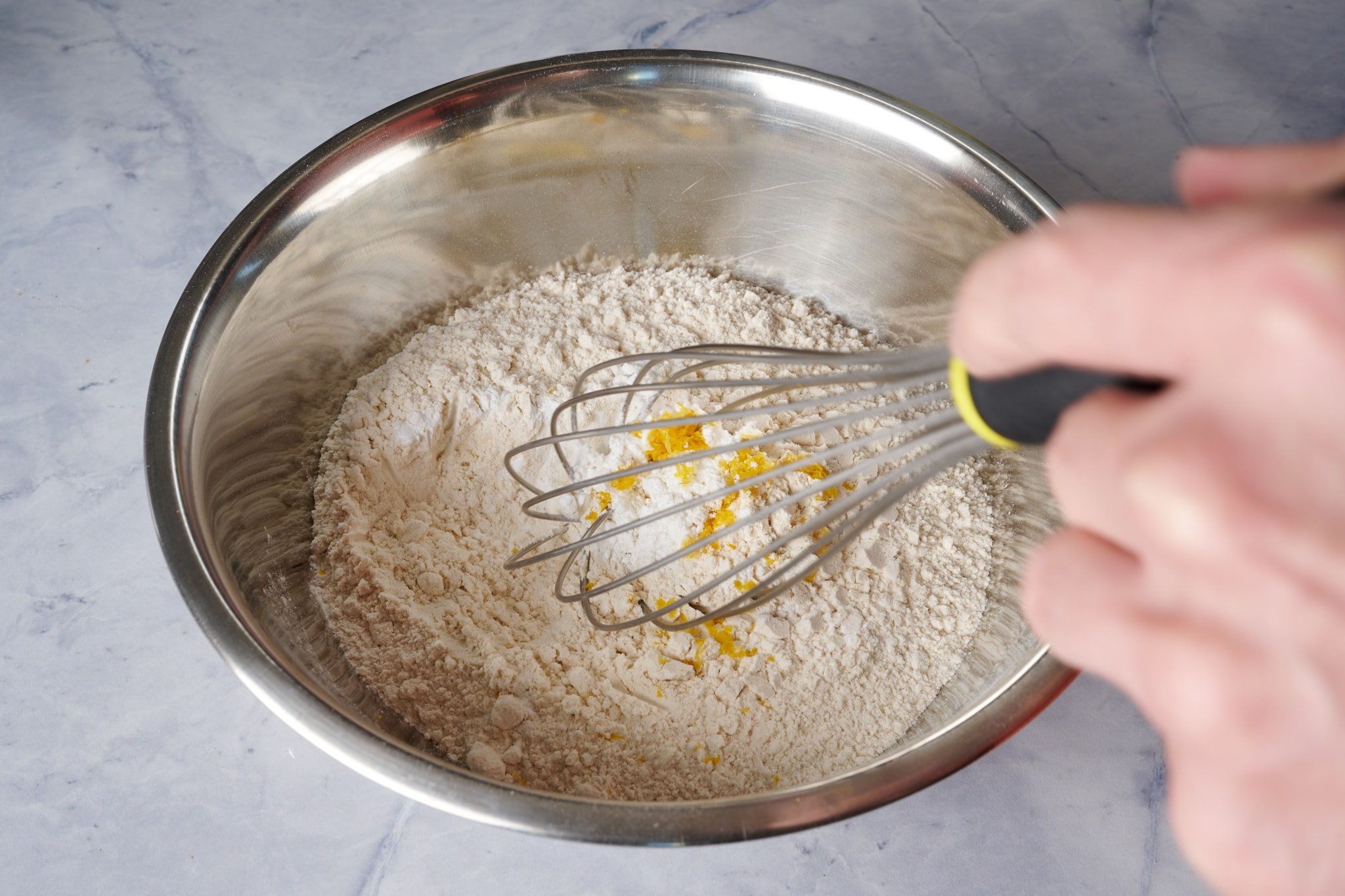
Then, in a medium bowl, whisk together the flour, baking powder, salt, and lemon zest.
NOTE: After feedback from several readers, I’ve adjusted the baking temperature down to 350°F (180°C) and recommend baking for a few minutes longer.
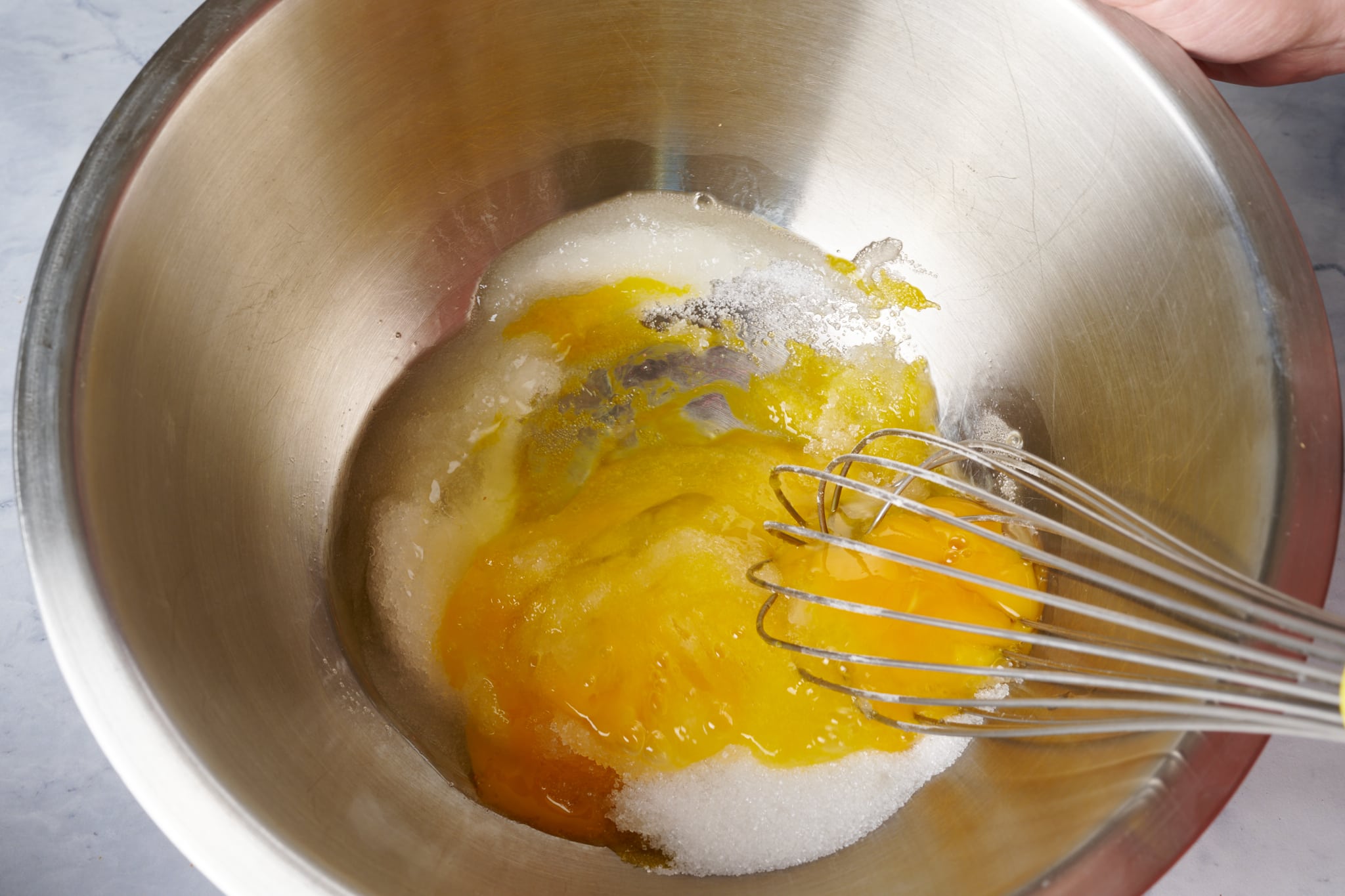
In a separate large bowl, whisk together the sugar and eggs until the sugar dissolves and the mixture turns slightly bubbly, 2 minutes.
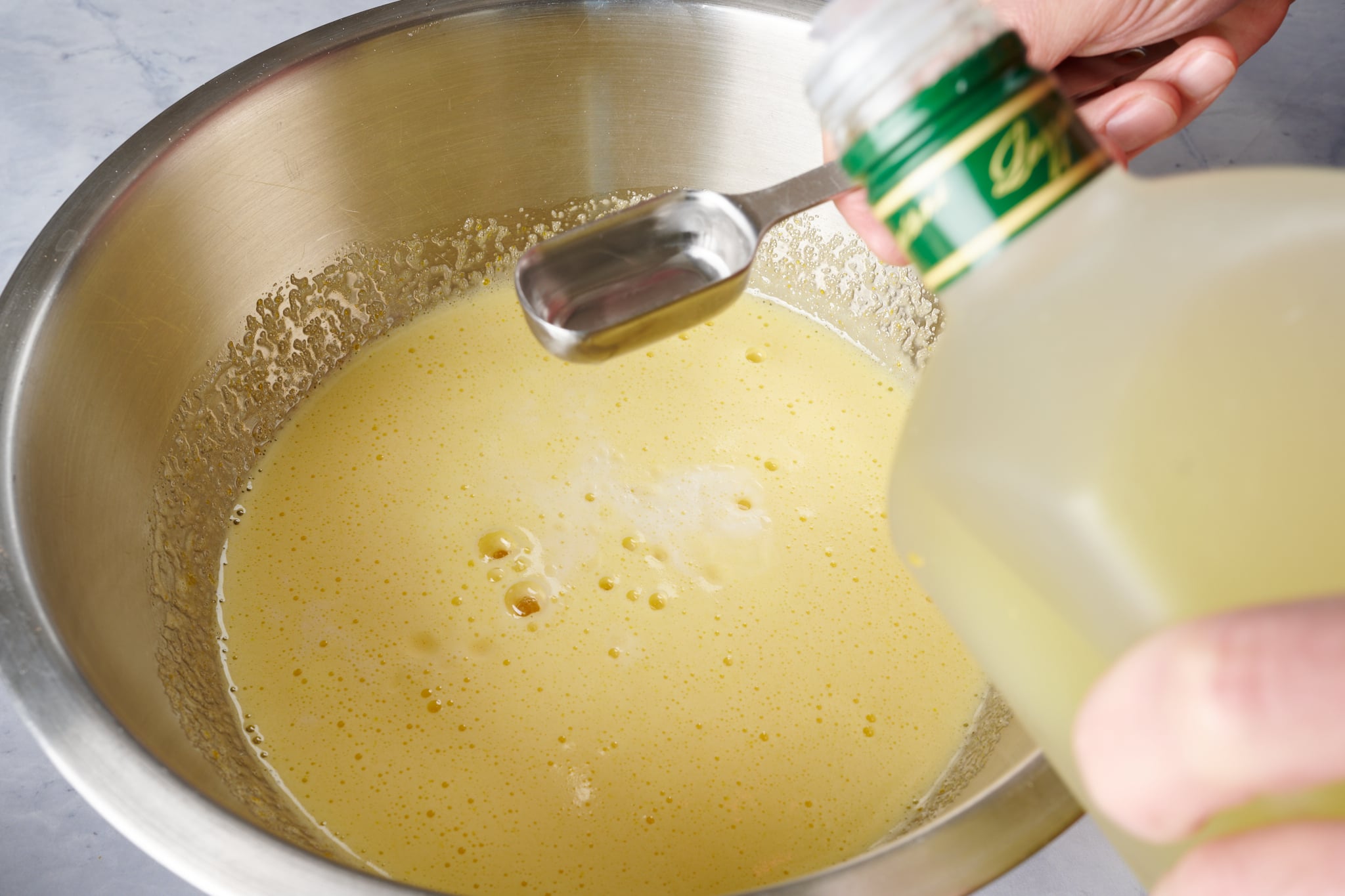
Add the oil, milk, limoncello, sourdough starter, and vanilla. Whisk vigorously until everything is combined and the mixture becomes frothy.
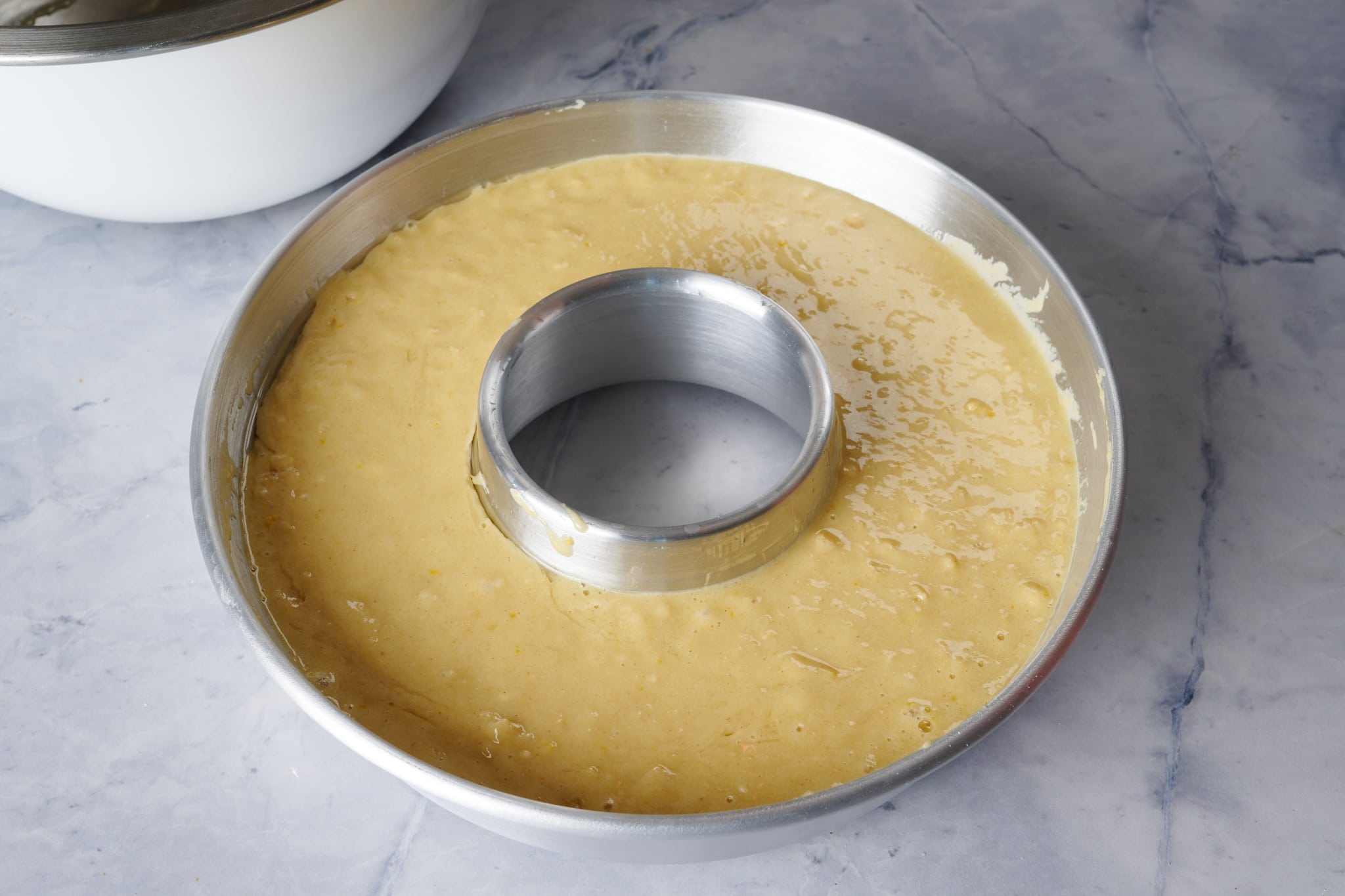
Add the flour mixture and stir with a rubber spatula until just combined (avoid overmixing). Pour the batter into the prepared pan. Place the pan on a sheet pan.
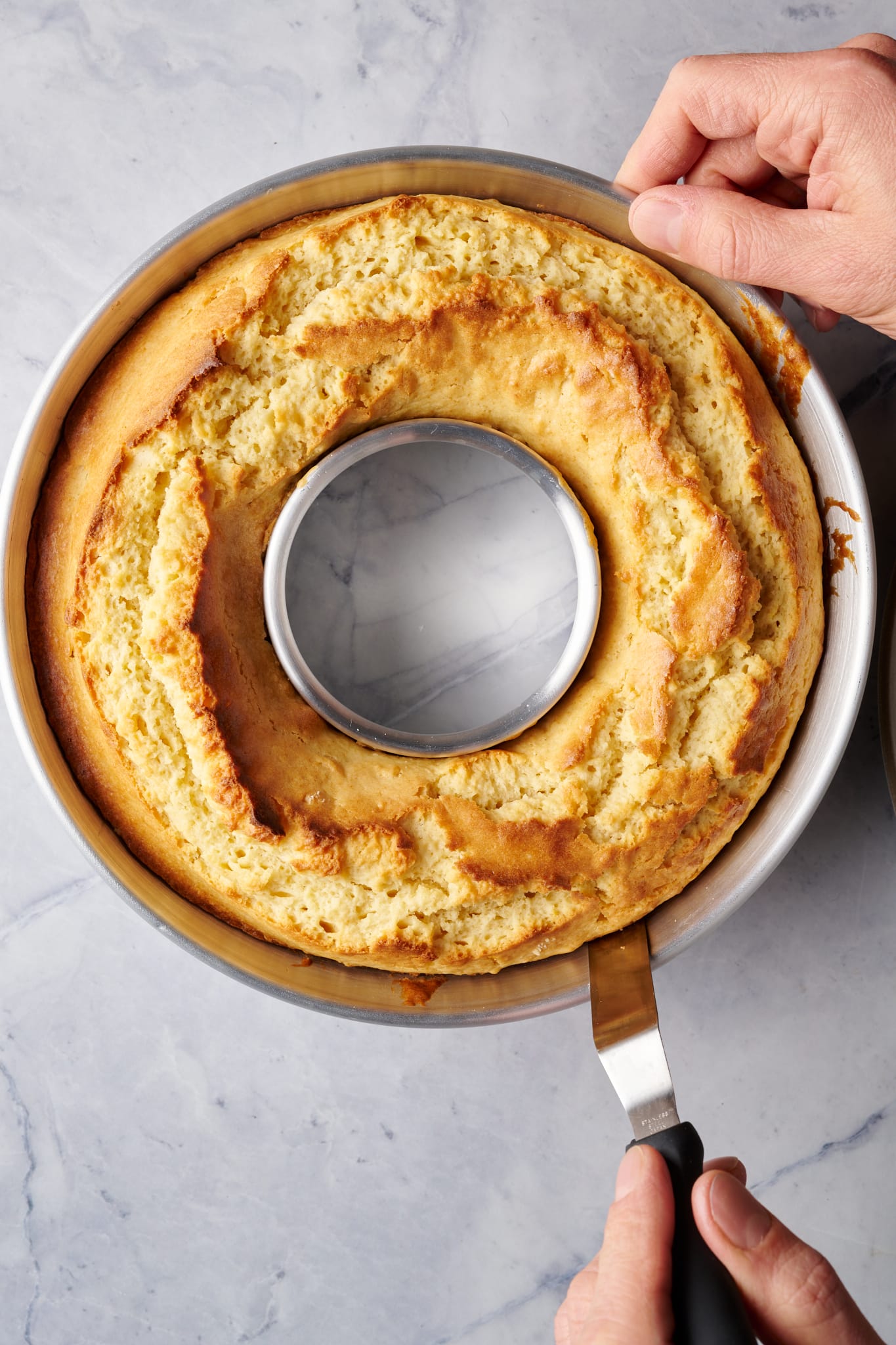
Bake until a knife inserted into the cake comes out clean, 40 to 45 minutes. Remove the pan from the oven and let cool for 10 minutes. Use an offset spatula or knife to gently release the edges of the cake from the pan, turn the cake out onto a wire rack, and let cool. Once completely cool, dust the top with powdered sugar (if desired).
The cake will keep well for several days on the kitchen counter, covered.
Watch Me Make This Sourdough Starter Cake
Sourdough Starter Discard Cake Ciambella
- Prep Time: 15 minutes
- Cook Time: 35 minutes
- Total Time: 50 minutes
- Yield: 1 cake
- Category: Dessert
- Cuisine: Italian
Description
This sourdough starter discard cake is an Italian treat that’s made in minutes. Intensely lemony, a little sweet, and ultra-tender, it’s perfect any time.
Ingredients
- 177g neutral-flavored oil, such as canola or a very mild olive oil, plus more for greasing
- 423g all-purpose flour (Cairnspring Mills Edison All-Purpose Flour)
- 7g baking powder (1 ½ teaspoon)
- 3g fine sea salt (½ teaspoon)
- Zest of 1 large lemon
- 232g granulated sugar (I like to use superfine sugar)
- 171g (3 large) eggs, at room temperature
- 211g whole milk
- 28g limoncello (2 tablespoons; see Note)
- 100g ripe sourdough starter (100% hydration) discard (see Note)
- 7g vanilla extract (1 ½ teaspoons)
- Powdered sugar, for topping (optional)
Instructions
- Preheat the oven with a rack in the middle to 350°F (180°C). Grease a 9-inch ring mold pan with neutral oil.
- In a medium bowl, whisk together the flour, baking powder, salt, and lemon zest.
- In a separate large bowl, whisk together the sugar and eggs until the sugar dissolves and the mixture turns slightly bubbly, 2 minutes. Add the oil, milk, limoncello, sourdough starter, and vanilla. Whisk vigorously until everything is combined and the mixture becomes frothy. Add the flour mixture and stir with a rubber spatula until just combined (avoid overmixing). Pour the batter into the prepared pan. Place the pan on a sheet pan.
- Bake until a knife inserted into the cake comes out clean, 40 to 45 minutes. Remove the pan from the oven and let cool for 10 minutes. Use an offset spatula or knife to gently release the edges of the cake from the pan, turn the cake out onto a wire rack, and let cool. Once completely cool, dust the top with powdered sugar (if desired). The cake will keep well for several days on the kitchen counter, covered.
Notes
To make this ciambella vegan, substitute the milk for a full-fat nut or oat milk, and instead of the eggs, use a “flax egg.”
The juice of 1 lemon can be used in place of the limoncello.
If you don’t have any sourdough starter discard, use 50g flour and 50g whole milk in its place.
Sambuca (anise-flavored) ciambella: Substitute the limoncello for 2 tablespoons of sambuca.
Orange ciambella: Substitute the lemon zest for the zest of 1 orange and the limoncello for Grand Marnier.
Poppyseed ciambella: Omit the vanilla extract. Add 1 ½ tablespoons of poppy seeds to the dry ingredients, and swap in the zest of 1 orange for the lemon zest.
Ciambella variations
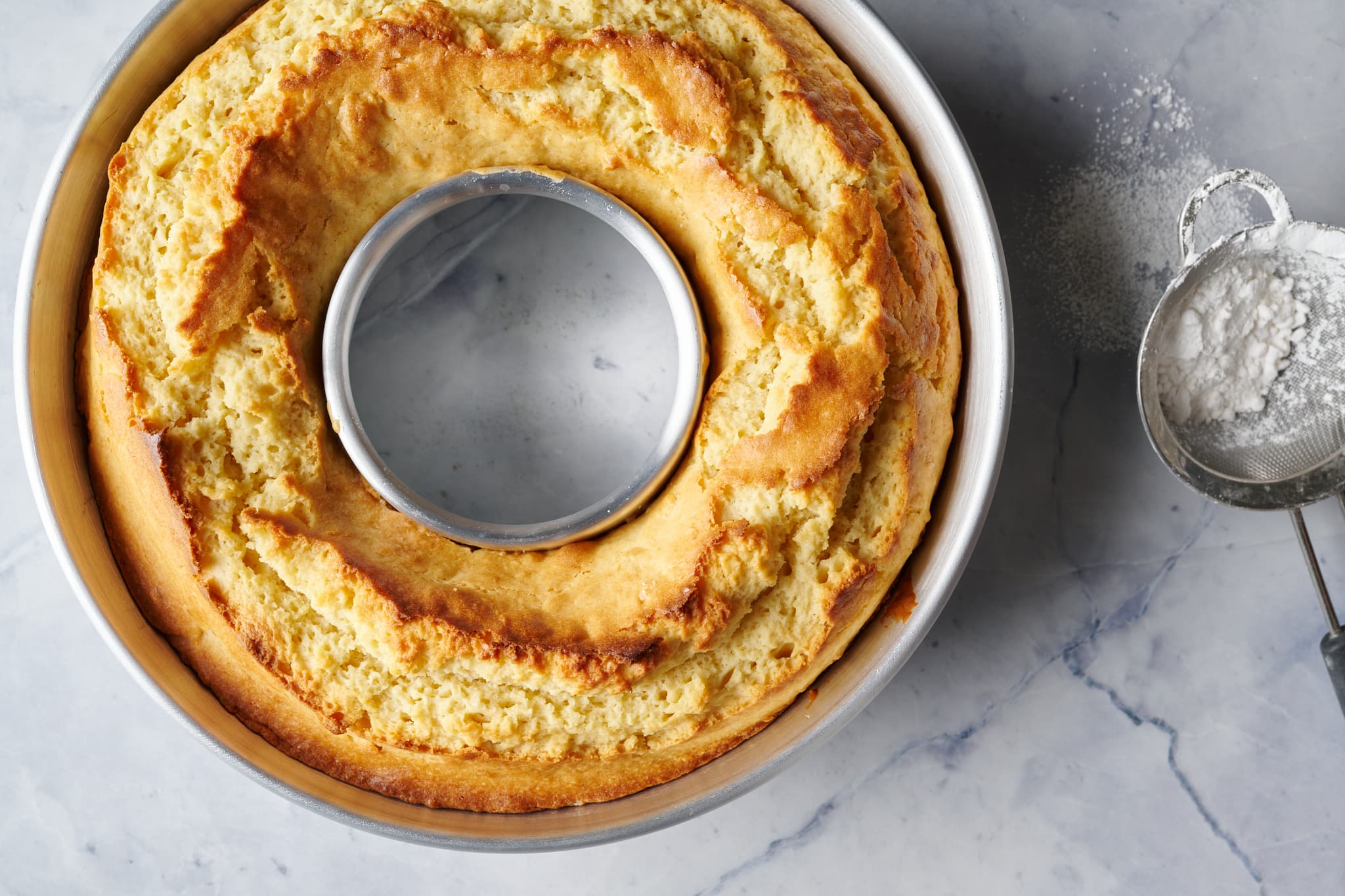
This sourdough starter cake recipe can be the base for many variations in the same way a ciambella varies across Italy, taking on regional differences and adapting to what’s in season and the pantry. Here are a few of my favorites:
Sambuca (anise-flavored) ciambella
Substitute the limoncello for 2 tablespoons of sambuca.
Orange ciambella
Substitute the lemon zest for the zest of 1 orange and the limoncello for Grand Marnier.
Poppyseed ciambella
Omit the vanilla extract. Add 1 ½ tablespoons of poppy seeds to the dry ingredients, and swap in the zest of 1 orange for the lemon zest.
(And if you have leftover poppyseeds, use them and some lemon in our tangy lemon poppyseed loaf next!)
Sourdough Starter Discard Cake FAQs
What makes ciambella different from pound cake?
Typically, ciambella is typically made with oil instead of butter, the latter common in pound cakes. Additionally, the ratio of ingredients (fat to sugar to flour) is different: pound cake has equal parts of each, whereas ciambella typically has much less sugar (usually around 50% to total flour), fat (oil), and egg.
Do I need a ring mold pan to make ciambella?
If you don’t have a ring mold pan, use an angel food cake pan or classic bundt pan.
Can I leave out the alcohol in this ciambella?
Instead of using limoncello, use the juice of 1 lemon.
Why are room-temperature eggs used when baking cake?
Since this cake is mixed by hand with a whisk, using room-temperature eggs makes them easier to incorporate with the sugar and other ingredients. Additionally, room-temperature eggs will provide a little more rise to the cake versus cold eggs from the fridge, which are more viscous. To quickly warm eggs to room temperature, put them in a bowl filled with warm water for 5 minutes.
Can I use a hand mixer instead of a whisk?
Yes. Instead of whisking the ingredients by hand, use a hand mixer (this is my favorite hand mixer) set to medium speed.
How do I store ciambella?
Ciambella will keep well in a sealed container for several days at room temperature, or for one week when refrigerated.
Can you freeze ciambella?
Yes, you can freeze ciambella for up to 3 months. Once the cake has fully cooled, cut it into sections, wrap each with plastic, and place the wrapped pieces inside a zip-top freezer bag. Thaw overnight in the refrigerator before serving.
Is ciambella a donut?
Technically, yes, it is a donut because it’s a ring-shaped cake that has a hole in the middle. However, the term donut in the United States typically refers to dough that’s been deep fried, whereas a ciambella is only baked.
What’s Next?
After making this sourdough starter discard cake, if you’re in the mood for even more cake, you’ll enjoy the rich flavor of this date and banana tea cake with whole grain spelt. Or another easy and delicious recipe using discard is my recipe for sourdough blueberry muffins and sourdough sugar cookies.
Look at all the sourdough starter discard recipes for more ways to use your discard each day.
Buon appetito!


150 Comments
Baked this last night – I even had a bag of the Cairnspring Edison AP flour!! Now I need to check your recipes that use the Cairnspring Edison flour.
I zested the lemon directly into the sugar and rubbed the zest into the sugar (it’s a technique I like to use with any bake that uses zest/sugar). I didn’t have any limoncello, so went with fresh lemon juice and used vanilla bean paste instead of vanilla.
Baked in a Bundt cake pan – worked just fine. Allowed to cool overnight, dusted with powdered sugar, sliced and packed them up to share with friends today. The last slice was a bit wonky so of course I had to sample it – wow, such a lovely bake – a wonderful crumb, light lemon flavor with a hint of sweet from the powdered sugar.
Thanks for sharing your version for Ciambella. Photos have been posted o n IG (jeepy2)
Rubbing the zest into the sugar is the way to do it, Lan, pulls all the oils out. And the Edison flour is perfect here, it’s one of my favorites for cakes like this. Love that the Bundt worked, too. Going to check out your photos now 🙂
I’ve made this recipe more times than I can count now. Always amazing. I leave my batter out on the counter for a few hours to ferment and then bake. Exceptional. Everyone including the kids and company love it. Thanks!
That counter rest is a great move, Kristen, it brings out a bit more depth in the crumb. So glad it’s become a regular at your house, thanks for letting me know!
Completely inedible. Checked at 40 minutes, then 45. Continued to 60 minutes. Still knife does not come out clean. Then baked another 15 minutes and still area towards center is liquid. Sadly a huge waste of time and ingredients.
Whoa, hey Pat! Really surprised to hear this. What kind of pan did you use to bake this?
I made this yesterday, in a Bundt pan. It’s lovely…not too sweet, not too lemon-y. Thank you for the recipe, and for the suggestions to use up sourdough discard. Now, if I could just be successful with making a sourdough loaf of bread!!!
So great to hear, Jacqui! This really is an easy cake, and I personally love that it’s not overly sweet. Let me know how the bread is going. Keep after it, it will come!
Hello, I am about to make this and will have to use the version without discard. I do have some sour cream on hand and wanted to know if you have a suggestion to incorporate that for a moister crumb? Also just curious about this~ I saw some other recipes beating the egg whites separately then folding in. Does this alter the texture much?
Planning to serve with your strawberry shortcake-style berries and much looking forward to baking 🙂
Sour cream would work well to bring some complexity and tenderness, yes. Just don’t go too wild with it! I have tried beating the egg whites and it does result in slightly more lightness, but for me, it wasnt worth the effort.
Can I make this in a baked doughnut pan?
This batter is super flexible and I think it would work in that pan—I’d love to experiment with that!
Can't wait to make this! Any reason not to flour the pan as well as greasing it?
You can absolutely do that, I just dont find it necessary.
Finally tried this recipe — came out looking just like yours. Nice light lemon flavour, not too sweet. But my partner is trying to lose weight, so 1/3 of the ring went to our upstairs neighbour who has three teenage boys…
(The total calories in the cake is about 4,600, mostly because of the oil, so even a small slice is a couple of hundred calories!)
[Trying to upload photos, but keep getting Network Error 🙁 ]
It's so worth it, though 🙂
I made this cake as soon as I saw the newsletter post in my inbox. I made the vegan version using 3 tbsps of Bob’s Red Mill Egg replacer with 6 tbsps of water and also added a 1/4 cup of unsweetened apple sauce as I find this adds more moisture to the crumb. This was a success!
Next time I will add another tablespoon of limoncello and more zest as I personally prefer a stronger presence of lemon in the cake. I think I will also use a 1/2 cup of unsweetened apple sauce and 2 tbsps of the egg replacer to get more moisture in the crumb.
Amazing, love the swaps Alejandro. I agree, move lemon is never a bad thing!
Can this cake be baked in a bundt cake pan? thanks
Yes, absolutely can!
Hi! I am planning on making this tomorrow but was wondering if I wanted to do the anise flavoring… you said to substitute the limencello for sambuca… but would you still use the lemon zest and vanilla extract? OR would you omit the zest and substitute the vanilla for anise extract? Thanks!
Id still use both 🙂
Could berries be added to the batter before baking?
Yes, toss them in some flour before adding to the batter to prevent sinking.
Can berries be added to the batter before baking?
I made this with the zest of three lemons, lemon juice & replaced the oil with melted, cooled butter (so, not sure if this can be a true Italian cake!). I needed to split the batter between two loaf pans and baked at 350 for 45 minutes. It is absolutely delicious! I’m looking forward to trying this with an overnight ferment with the suggestions listed below. Grazie!
Do you have any suggestions for a chocolate version? I remember eating chocolate cake for breakfast in Italy 🙂
I haven't tried chocolate but I'd be tempted to swirl in some ganache maybe?
Love those changes. Need to try this soon. Did you ever get to the overnight ferment?
I truly appreciate you sharing your recipes! Learning the benefits of sourdough bread, I just need to learn how to make, that’s when I’ve found you. Since I need to cut down on sugar, I used monk fruit with erythritol and einkhorn all purpose flour with orange zest and juice because they’re organic. It’s an amazing cake to have with coffee. We tried the pancakes too. They’re all awesome. Next will be the brownies 😍.
Love the swaps there, Eileen, sounds great. The brownies are… Fantastic. Hope you love em!!
This got rave reviews from dinner guests! Tight crumb; not overly sweet. As another person mentioned, in the comments the lemon flavor was very subtle. Next time I make it (and there will be another time!), I will double the lemon zest or perhaps give it a post-bake lemon drizzle!
I like the idea of both of those! Yes, subtle lemon was the goal here, but by all means, adjust to suit. Enjoy, Carry!
Hi Maurizio, first off, I am a huge fan of your methodology & recipes! I am planning to bake this cake. One of the comments I read mentioned about fermenting the batter. I was wondering whether I could do the same for like a couple of hours just before baking. Wanted your advice on that. Thank you!
Thank you so much, Seema! Yes, read below about fermentation. For a few hours, it should be no problem at all. Let me know how it goes, I love this cake 🙂
Thank you so much 😊
I always have leftover pineapple pulp from making a pineapple ginger juice. Can I incorporate the puree into this cake similar to pineapple pound cake?
That sounds amazing. And yes! I might consider kind of marbling it through, would be awesome this way.
This recipe is fantastic! Wanted to share my experience with fermenting the flour overnight before baking, which was very successful and would recommend trying. I combined pastry flour, sourdough starter, milk and oil (100g olive oil, 77g avocado oil) the night before baking. From my understanding lactic acid bacteria can metabolize fatty acids just as they can carbohydrates, so the addition of oil shouldn't impede fermentation but rather add another food source for your bacteria. The next morning, my flour mixture definitely smelled like fermentation occurred but not in an overly sour way. Cake took 10 minutes longer to cook than the non-fermented version and had noticeably more gas bubbles form on top. The crumb was definitely more tender (had a little breakage removing from tin), and the texture was slightly coarser like semolina but in a good way. The lemon taste still comes through (added double the limoncello), but with an added savory, buttery taste. Very pleased with the outcome although a bit more crumbly. I may go back to AP flour in next version to see if that helps make it less crumbly.
Oh my that sounds amazing Mark, I need to try this. Did you ferment it in the fridge overnight?
Going to add this to my list to try asap.
Yes, fermented in the fridge overnight. Forgot to mention, the fermented version seems to produce a more moist cake as well. Can't thank you enough for your website, methodology, and recipes – my first sourdough bread didn't rise and left me discouraged. My starter needed a few more days to get consistent rising/falling, and I had success with the ciambella cake in the interim. Now my bread is coming out great, and the ciambella cake variations are making a bunch of Italians very happy over here!
Super great to hear all that. I still havent tried fermenting this batter, but doing it soon. Thanks, Mark!
I made this cake last night, but it doesn't taste like lemon at all—it just tastes like a simple cake. How much should I increase the limoncello to get a stronger lemon flavor?
I would try doubling it or adding more lemon zest. It should be bright lemon flavored!
Hi Maurizio! Will this only work with fresh 100% hydration discard, or will discard that has been sitting in the fridge for a few days work as well?
You can absolutely use some from the fridge. I talk about how I do this in my post on keeping a sourdough starter "cache ." I do it often!
What changes do I need to make to substitute with AP einkorn flour?
I'd just try it as-is!
Made this recipe when my sourdough starter was at peak, perfect timing and it turned out amazing. I even made the trip to the liquor store and bought the lemoncello and we ended up enjoying a shot or two of that after dinner as well. It was a win-win, thank you. I wanted to ask do you convection bake for this. I assume not otherwise I think the baking temp would be lower. You top browned just a bit more than mine. Probably another 2 minutes would have done it for me. I do have some dark peaks just not as much as your photo. Nonetheless, it’s perfect! 👍🏼
Happy to hear that, Robin!
Had great success making your SD version of Ciambella! My husband and I had a relative visit recently from Italian descent who fondly remembered his grandmother’s Ciambella he enjoyed as a child! I made it ahead of time and froze it well wrapped for a few days. I served it with homemade whipped cream, fresh strawberries from our garden, and some yummy blueberries. He was so delighted and the cake only got better over the next several days! He even requested it again for breakfast the very next morning! I followed the recipe as directed using the Limoncello and lemon zest. It had a very mild, delicate flavor, and had a lovely crumb–one worth savoring with a nice cup of tea or coffee! Next time I’d probably add even more lemon zest for more of a punch, but it was perfect as written! Thank you for blessing our guest with a lovely trip down memory lane! PS I also made your Simple SD Focaccia topped with roasted garlic, cherry tomatoes, fresh rosemary & thyme, and Maldon sea salt. He was over the moon and said, “Focaccia is all about the taste, and that was DELICIOUS!” Made me feel so pleased and grateful to bring him much joy! He is my mother-in-law’s full time (boyfriend and) caregiver in her advanced Alzheimer’s. I was able to say “thank you for all you do for her” through making your easy to follow, reliable, and incredibly delicious recipes! I cannot thank you enough, Maurizio!
Makes me so happy to read all that, Pamela. This was/is a special cake for me, too. Brings back so many childhood memories. Enjoy and thank you for the comments!
I really enjoy your expertise, your recipes and insights! I also love using olive oil in baking! My dietary constraints require I avoid many foods, including wheat, dairy and sugar. I’ve been successfully experimenting with alternative flour combinations (cassava, teff, sweet rice). Acceptable sweeteners are challenging. Date sugar doesn’t dissolve in liquids. Maple syrup and honey require adjusting liquid quantities in recipes. Certain flours absorb more liquid than others. I’m also experimenting with an alternative sourdough starter which includes rye flour. For this cake, do you have any thoughts on swapping out alternative sweeteners, honey…? Or flours? Thank you.
Hey Michele! You could try honey, but I've not tried this and haven't played with any alternatives!
Absolutely delicious!!
Happy you liked it, Scott!
Such a lovely snacking cake! I make every week with discard. It’s nice to vary with your suggested flavor profiles. I always have homemade lemon curd ( or other fruit curds) that dollop on the side to enhance the serving. Thanks loads Maurizio for this recipe!
So glad you like this, Pilar. Love the idea of lemon curd on the side! One can never have too much lemon 🙂
Made the lemon juice version yesterday with excellent results! Hard to beat a quick & easy recipe that yields a beautiful & delicious result. Thanks, Maurizio, for another winner!
Happy to hear that!!
You’ve got the oven temp. in F and C…but not ingredients which are only in grams and milligrams. I don’t have time to figure out ounces cups etc. Could would you be so kind to include those measurements?
I don’t have volumetric for this one, but I’ll work on it!
My husband and I love this recipe! I make it now every time it’s my sourdough bread baking day. It freezes very well too. Thank you!
So glad you guys enjoy this one, Michaela!
This looks great but my family are not fans of citrus or anise. How would you modify to be chocolate? Thank you in advance!
I think it would be fantastic with chocolate!
Hi Maurizio,
If I’m doing a vegan option (kids allergic to eggs), would you replace each egg with a flax seed egg, or are your instructions saying to use one flax seed egg for all of them?
Thanks!
I would say this will work with a flax egg, the quantity needed for each egg.
Hi Maurizio,
Tried another way around and it worked great! I mixed the milk, flour, oil and ripe starter and had it wait overnight in the fridge. With that much oil, I am not sure if the flour was fermented but that was the aim 🙂 Mixed with the other ingredients in a mixer the next day. Baked in a muffin pan. Wow! 🙂
Cheers
Oh my, I need to try that, Dide!