
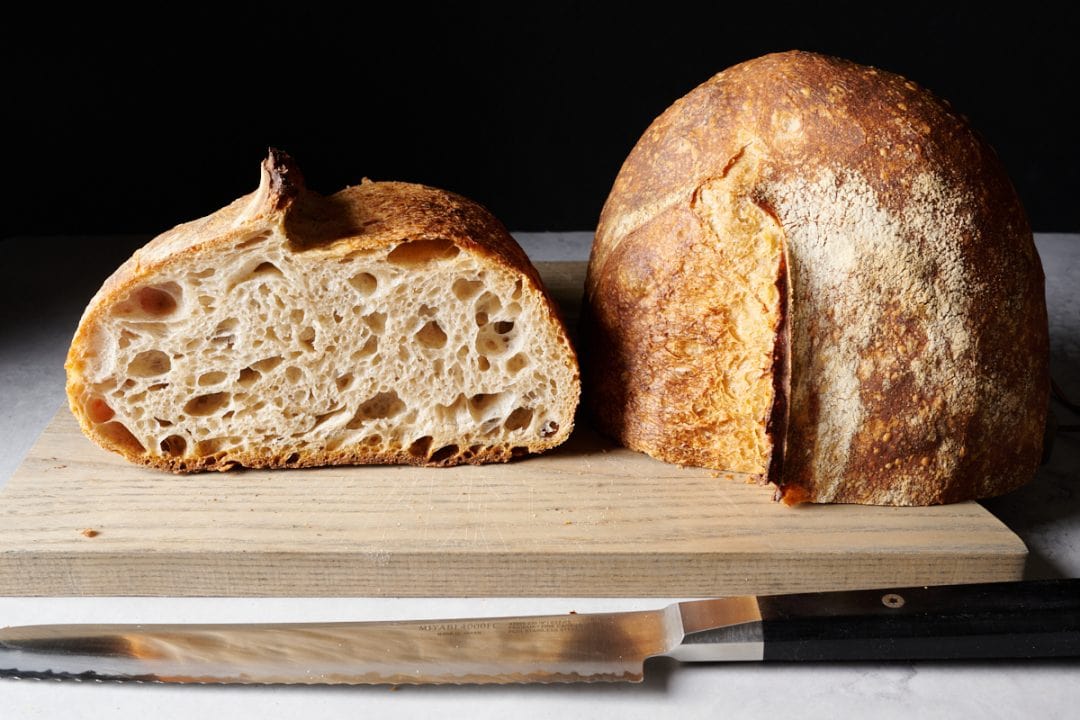
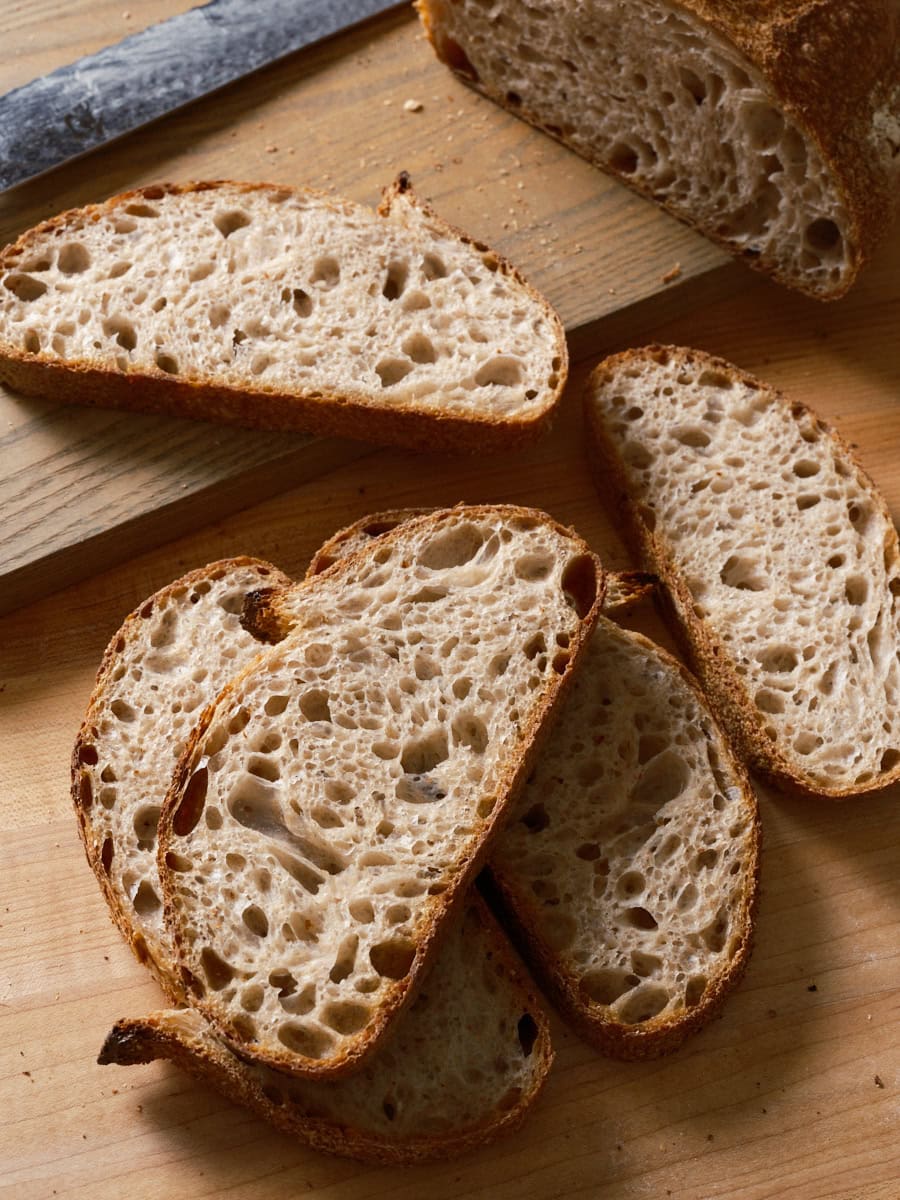
One question I receive most often goes like: “How do I control the sourness in my bread?” Some bakers want an assertive, mouth-puckering tang that makes sourdough, well, sour. Others prefer a milder, more nuanced acidity that lingers in the background (I’m usually in this camp). Thankfully, sourness is something you can control at nearly every stage of the breadmaking process to dial in your loaves just how you want ’em.
Over years of baking, I’ve come to understand that the “sour” in sourdough is really the result of a conversation between time, temperature, and the microorganisms living in your starter. Once you understand how these factors interact, you can push your bread in whichever direction you prefer.
Now that I’ve written and codified this guide, I look back on my baking over the past decade and realize I’ve kind of made these decisions instinctively to alter my bread’s flavor profile. If you’re a frequent reader here, you’ll see the same themes running throughout (e.g., young, fast levain for mild flavor; super-ripe levain and more whole-grains for more sourness, etc.).
In this guide, I’ll share what I’ve learned, both from the science side and from the countless loaves I’ve baked in my own kitchen, to help you adjust the sourness of your sourdough bread.
Keep in mind that there are many ways to increase/decrease sourness, and these are the steps I use in my baking.
Real Quick: Sourdough Sourness at a Glance
| To Increase Sourness | To Decrease Sourness |
|---|---|
| Use starter past its peak ripeness (collapsed, strong sour aroma, loose consistency, frothy) | Use starter/levain at peak ripeness (risen, mild sour aroma, some small bubbles) |
| Extend cold proof (24-48+ hours) | Shorten cold proof (10-12 hours) or skip it |
| Use a stiff levain (50-65% hydration) | Use a liquid levain (100% hydration) |
| Ferment warmer for more total acid (78-82°F) | Ferment cooler and shorter for less total acid |
| Increase whole grain percentage (especially rye) | Use more white flour |
| Let levain ripen longer | Use a young levain |
| Use a smaller levain (10-15% pre-fermented flour) | Use a larger levain (25-35% pre-fermented flour) |
Now, let me explain why these adjustments work and share what I’ve learned about the fascinating science happening inside your dough.
The Science of Sourness in Sourdough (In Brief)
Before we get into the practical adjustments, it helps to understand what’s actually creating that sour flavor. The tang in sourdough comes primarily from two organic acids produced during fermentation: lactic acid and acetic acid.
Lactic acid produces a smooth, mild, almost yogurt-like sourness. It’s the gentler of the two acids and contributes to that creamy quality you taste in well-made sourdough.
Acetic acid is sharper and more pungent—it’s the same acid found in vinegar. This is what gives sourdough its more assertive, tangy bite. Interestingly, acetic acid has a much higher vapor pressure than lactic acid, which means it’s the only acid you can actually smell in your dough. When your starter smells sharp and vinegary, that’s acetic acid at work.
The bacteria in your starter—primarily lactic acid bacteria (LAB)—produce these acids in different ratios depending on conditions. And the conditions we can control as bakers (temperature, time, flour choice, and how we manage our starter) all influence how much total acid the bacteria produce and what type dominates.
Here’s the key: bacteria are sensitive to their environment, especially pH (how acidic the dough is). As they produce acid, the pH of the dough drops, and eventually it drops low enough that bacterial activity slows considerably. Think of it as a self-limiting process in which the bacteria’s own output eventually shuts them down.
This is why so many of the levers for controlling sourness work the way they do. Anything that lets bacteria function longer before hitting that low pH floor—whether it’s more buffering from whole grains, more time through extended fermentation, or warmer temperatures that keep bacteria in their comfort zone—results in more total acid and a more sour-tasting loaf.
How to Make Your Sourdough Bread More Sour
If you want to push your bread toward more assertive sourness, here’s what to do:
Use A Really Ripe Starter
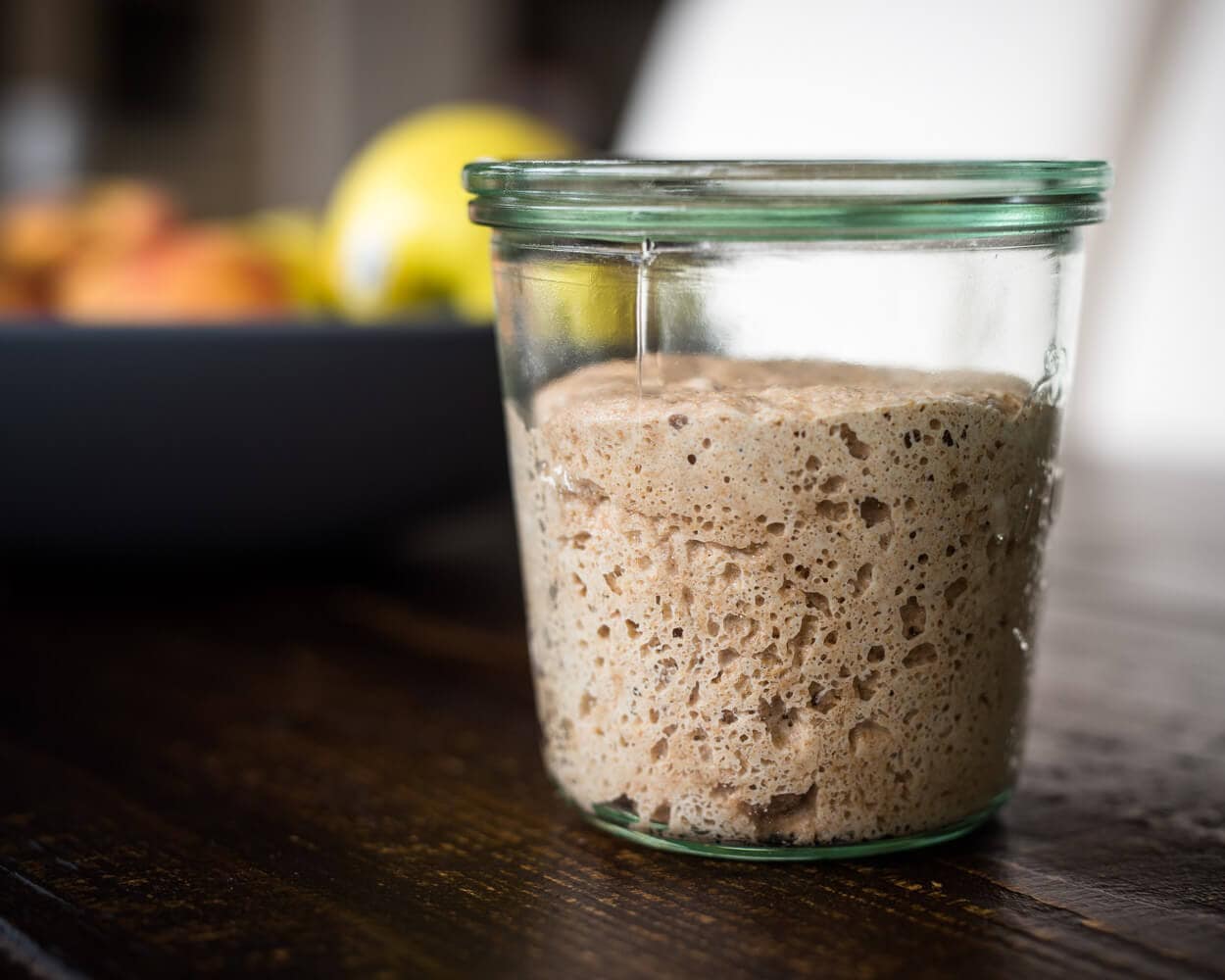
The easiest way to increase sourness is to use your starter when it’s past its peak ripeness when it has a pungent sour aroma, loose consistency, lots of bubbles on top and bottom, and possibly has fallen in the jar (see picture below). I’ve directly observed this in my own baking: when I catch my starter right at its peak ripeness (or before, in the case of a young starter—more to come on this soon), the resulting bread has a milder flavor. But if I let it go a few hours longer, that accumulated acidity carries through to the final loaf.
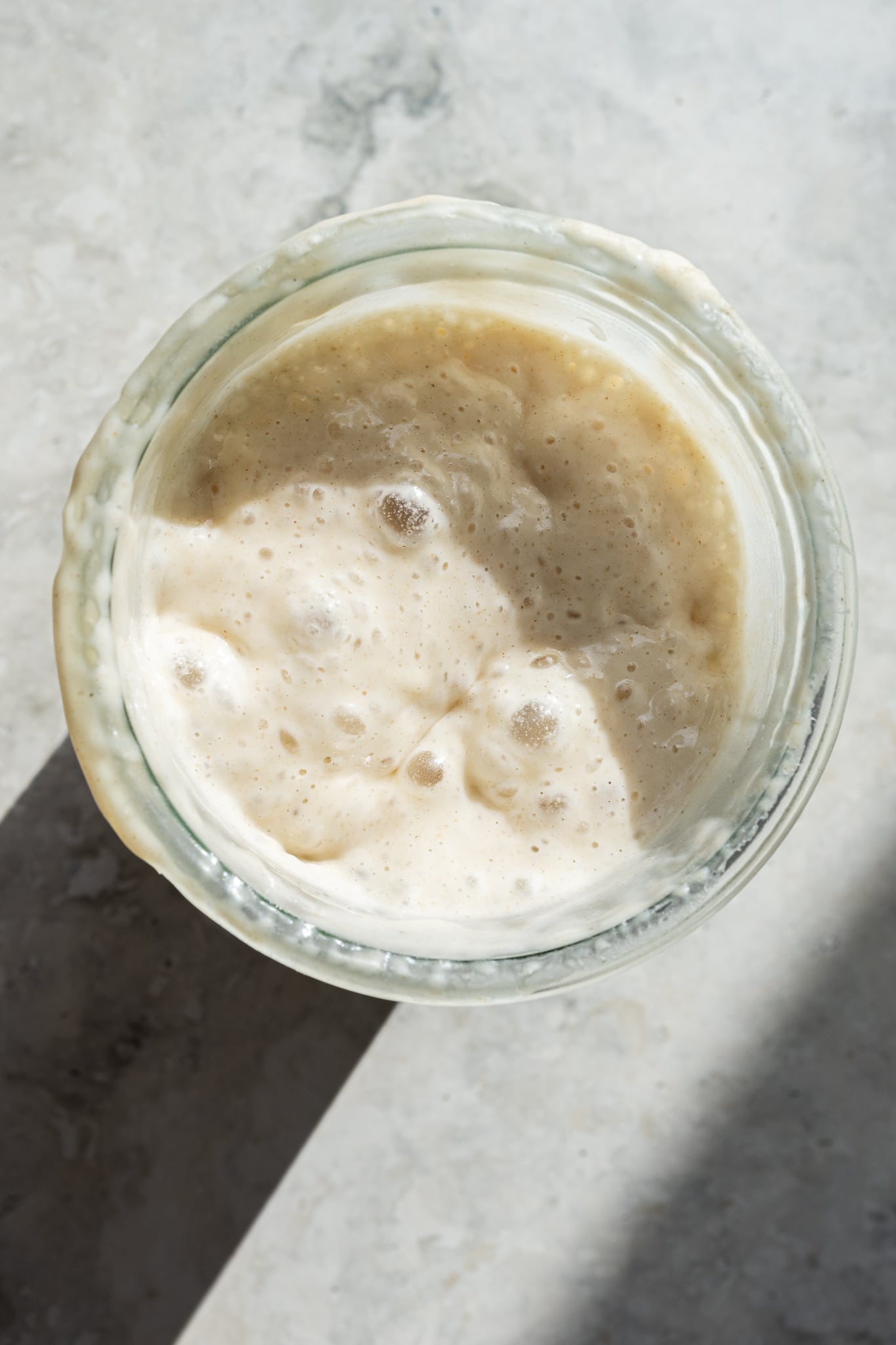
When your starter has consumed most of its food, it has already produced more acid. You’ll notice the aroma shifts from mild and pleasantly yeasty to sharper and more vinegar-like. Using your starter at this stage—or building your levain from a starter at this stage—will increase the overall acidity in your dough.
Extend Your Cold Proof (Retard)
This is probably the most reliable way to develop more sour flavor and the one I use most often.
When your dough is in the refrigerator, cold temperatures slow bacteria, but they don’t stop, and acid continues to accumulate over hours. At the same time, yeasts are slowed less than bacteria, and because yeasts remain relatively active, they keep releasing sugars that bacteria prefer to use for acetic acid production. It’s an energy preference where bacteria get more out of producing acetic acid when those raw materials (sugars) are available, and cold conditions make them more available. The result is a double effect: more total acid building up over time, and a higher proportion of it as acetic acid, contributing a sharper, vinegar-like tang.
I typically proof my loaves overnight in the refrigerator for 12–16 hours. But I’ve experimented with pushing this to 24, 48, and even 72 hours. The longer the cold proof, the more pronounced the sour flavor becomes. This is why in my Sour Sourdough Bread recipe in my cookbook, I call for over 2 days of cold fermentation.
The tradeoff is reduced oven spring because over time naturally occurring enzymes break down gluten structure, leaving the dough with less strength to rise in the oven.
Use a Stiffer Levain
The hydration of your levain affects the type of acid produced, and the mechanism is similar to cold temperatures. Lower hydration slows bacteria more than it slows yeast. This shifts the balance toward acetic acid production in the same way that cold does.
The key word here is time because stiffness alone doesn’t guarantee more sourness.
A stiff levain (around 50-65% hydration) that’s given enough time to ripen creates conditions where more acetic acid can be produced. The key word here is time because stiffness alone doesn’t guarantee more sourness. If you’ve ever worked with a lievito madre (the stiff starter used in panettone), you know that a stiff starter fed frequently and kept on a tight schedule produces very mild bread. The frequent feeding constantly dilutes acid before it can accumulate. Here, though, it’s the combination of low hydration and a long ripening time that pushes toward sharper tang.
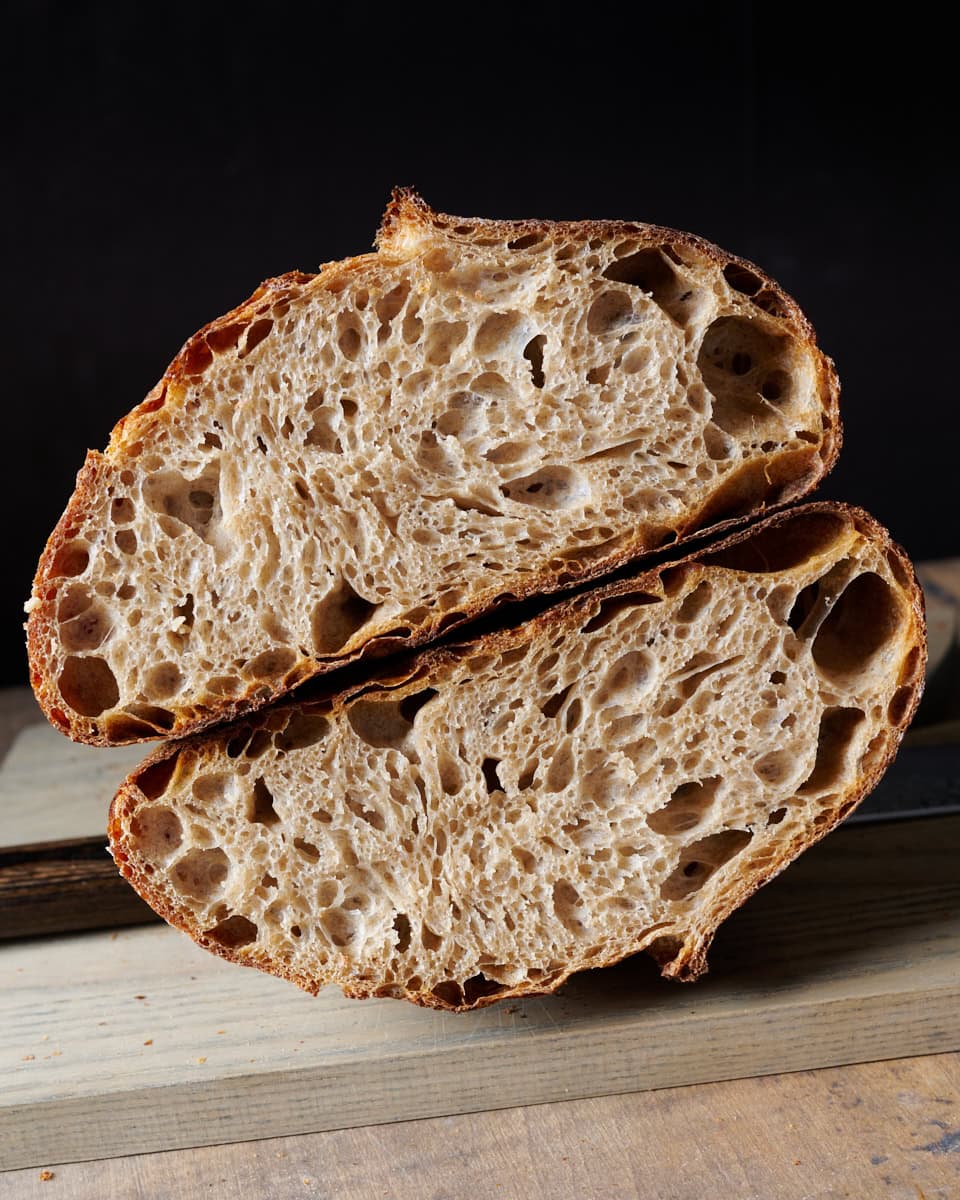
In contrast, my liquid levains (100% hydration or higher) tend to produce bread with a smoother, less aggressive sourness. I’ve noticed this directly when comparing my Fifty-Fifty recipe, which uses a stiffer levain (and more whole grains), to My Best Sourdough, which uses a more liquid, white-flour levain—the Fifty-Fifty is considerably more sour (in a good way).
Increase Whole Grain Flour (Especially Rye)
Whole-grain flours increase sourness, and the primary reason is ash content. Ash corresponds to a flour’s mineral content, and these minerals form a natural buffer system in the dough. The higher the ash level, the more acid the dough can absorb (buffer) before the pH drops low enough to slow or stop the bacteria.
Think of it this way: as bacteria produce acid, the pH drops, and eventually their own output shuts them down. Whole-grain flours raise the ceiling on how much acid can accumulate before that happens. In a low-ash refined white flour, bacteria simply can’t produce as much total acid as they can in a high-ash whole grain flour.
And in this way, rye is particularly effective—even small percentages in your levain or dough can noticeably increase tang.
My 100% Whole Wheat loaf has a much more pronounced tang than a loaf made with mostly white flour, even when I follow the same fermentation timeline. And when I add rye to the mix, the effect is even more dramatic.
Ferment at Warmer Temperatures
Temperature affects both how much acid is produced and what kind.
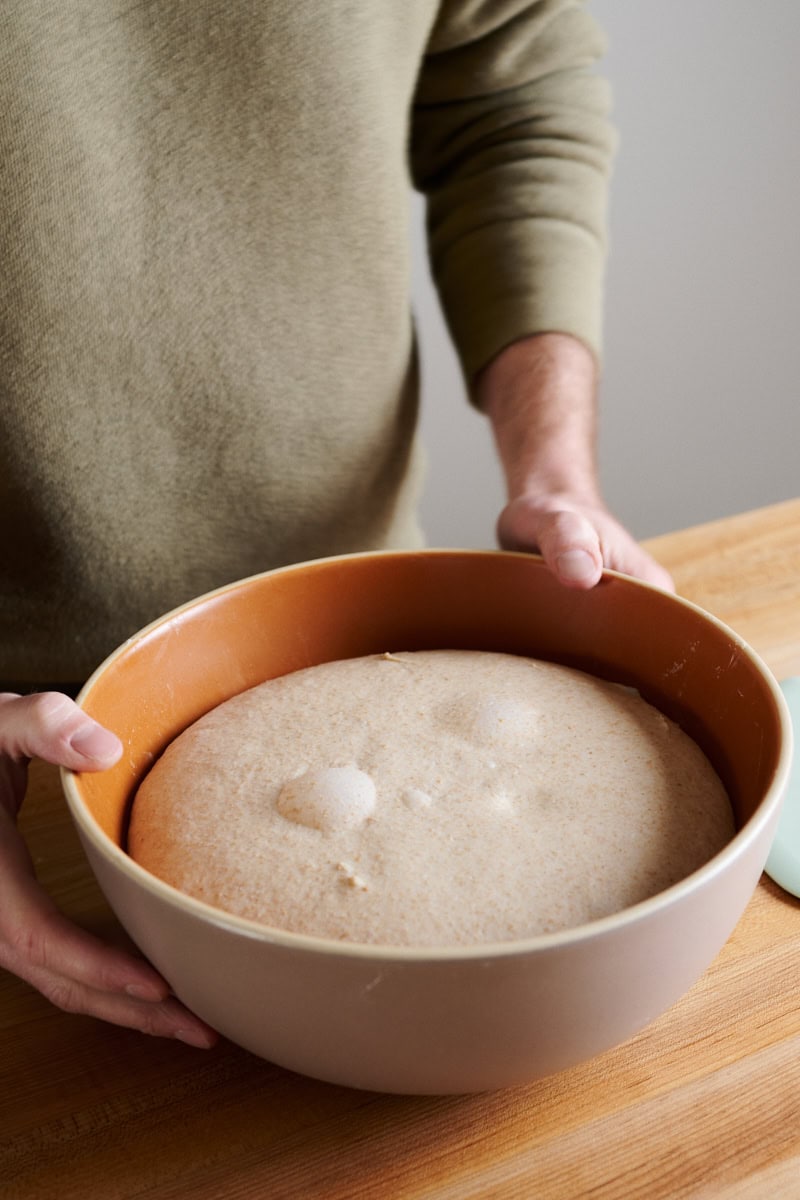
Warmer dough temperatures (78-82°F / 25-28°C) encourage greater bacterial activity overall. Most sourdough bacteria have optimal growth around 89-91°F (32-33°C), so warmer dough keeps them in their comfort zone and allows them to produce more total acid.
But here’s the twist: cooler temperatures shift the type of acid toward acetic—the sharper, more vinegar-like tang. Cooler conditions slow bacteria more than yeast, and this imbalance favors acetic acid production even though total acid output is lower.
So what kind of sour are you after? If you want more overall sourness with a rounder, lactic character, ferment warmer. If you want that sharp, assertive tang, cooler and longer is the way to go. In practice, I find that a moderately warm bulk (DDT around 78°F / 25°C) followed by an extended cold proof gives you the best of both worlds.
And keep in mind that since temperature is so important in sourdough, you may need to adjust your levain percentage or fermentation time to avoid under- or overproofing when you shift the temperature for flavor control.
Use a Smaller Levain Percentage
This runs counter to common advice. Many bakers assume more starter or levain means more sour bread, but it’s more nuanced than that.
A large, well-ripened levain drops the dough’s pH quickly from the start. The problem is that, as we’ve already discussed, bacteria are sensitive to low pH (high acidity), and their growth slows as acidity rises. So a dough that starts more acidic actually gives bacteria less runway to produce additional acid.
A smaller levain starts the dough at a higher pH, letting bacteria function longer and accumulate more acid gradually. You’ll need to extend your fermentation times to compensate, but the total acid production can actually be greater.
How to Make Your Bread Less Sour
Not everyone wants assertive tang in their bread. Many—and honestly, I count myself among them most days—prefer a bread with sourness that’s present but subtle, more of a gentle backdrop than the main event. Here’s how to dial it back:
Keep Your Starter Well-Fed
The single most effective way to reduce sourness is to maintain a healthy, frequently-fed starter. When you feed your starter regularly (here’s how I feed my starter each day), you’re constantly diluting the acid that has built up, giving the yeasts and bacteria fresh food to consume.
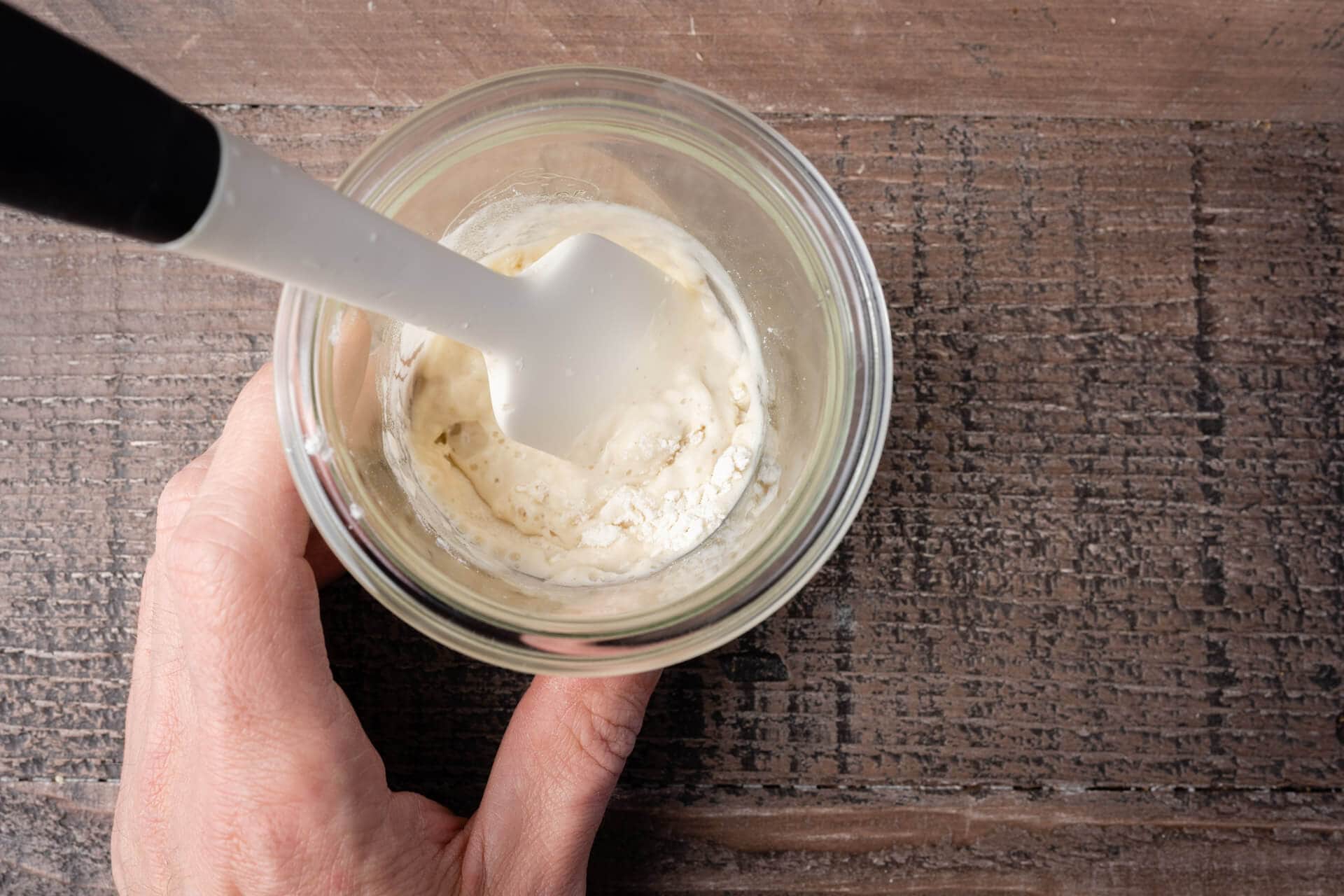
A well-fed starter at its peak ripeness—risen, bubbly, and dome-shaped on top—has consumed its food but hasn’t yet started producing excessive acid. Using your levain at this stage, rather than when it’s past peak and developing a strong sour aroma and loose consistency, will result in a milder-flavored bread.
I’m not a huge fan of overly sour bread, and I’ve found that keeping my starter fed frequently is a reliable way to make bread with a subtle, nuanced sourness I prefer.
Use a Young Levain
Timing your levain is crucial. A “young” levain—one that’s risen but hasn’t yet reached its absolute peak ripeness—will contribute less acid to your final dough than one that’s been left to ferment for many hours past its peak. Sometimes you’ll hear bakers refer to this as a “booster levain,” but the goal is the same: high yeast activity and minimal sourness.
When I use a young levain, I often make one with equal parts flour, starter, and water (1:1:1 ratio). I’ll keep this levain quite warm, around 78 to 80°F (25 to 27°C), for 3 to 4 hours. It’s ready when the leavening has risen, there are some bubbles on top and along the sides, a gentle sweet/sour aroma, and it’s still cohesive in consistency.
In fact, this type of young levain is the only levain I use for sourdough pizza, and it’s featured prominently in my new pizza cookbook.
Shorten the Cold Proof
If your bread is coming out more sour than you’d like, try reducing your cold proof time. Instead of 16-18 hours in the refrigerator, try 10-12 hours. You can also skip the cold proof entirely and proof your shaped loaves at room temperature for 2-4 hours (depending on your kitchen temperature) until your dough passes the poke test and is ready for baking.
When I skip the overnight cold proof, my bread has a much milder flavor that’s still quite flavorful, but in a different way: less tangy, more grain-forward.
Use a Liquid Levain
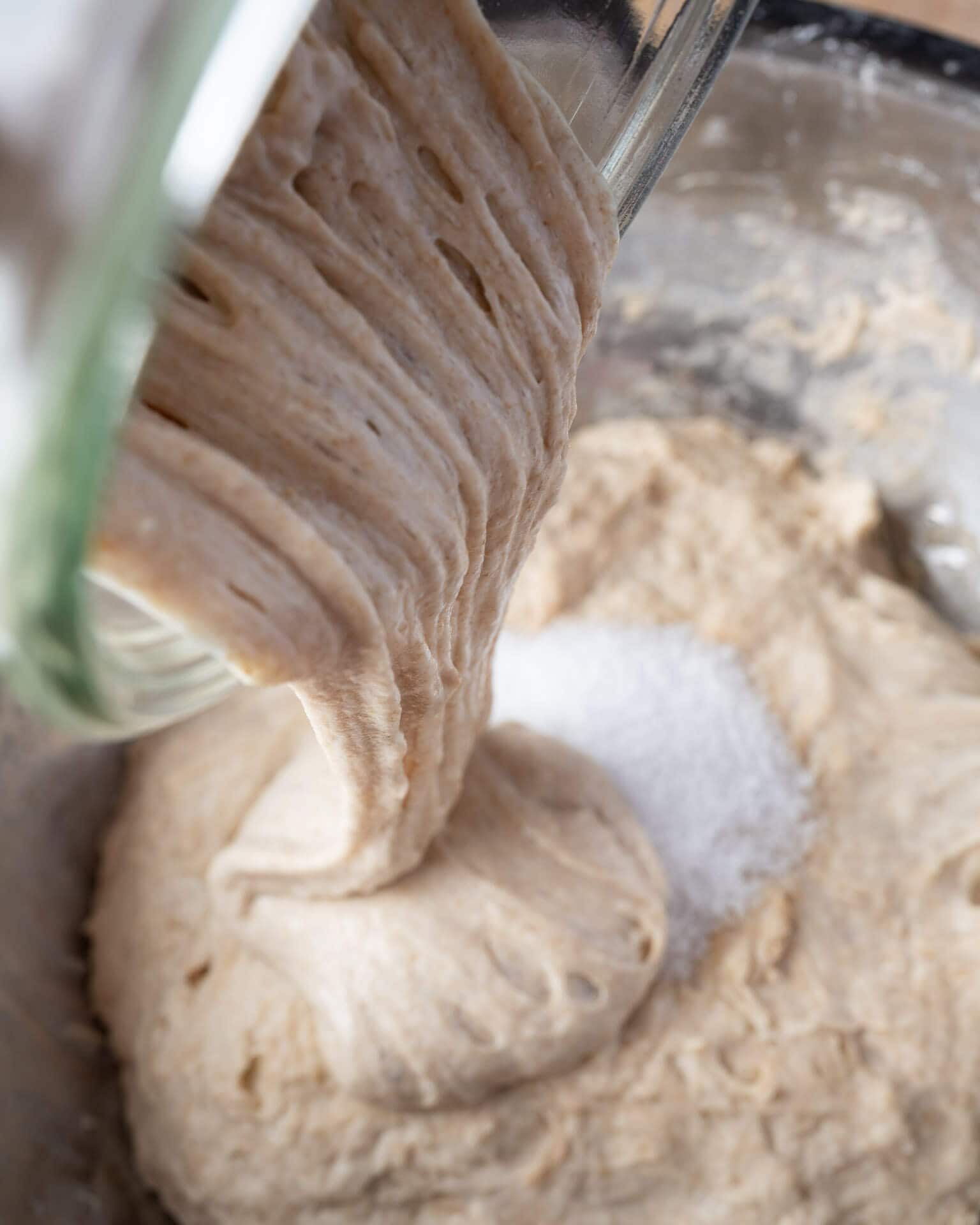
Higher hydration levains keep bacteria active relative to yeast, which favors lactic acid production—the smoother, yogurt-like sourness—over acetic acid. A liquid levain (100% hydration, equal parts flour and water by weight) produces a gentler, less sharp flavor compared to a stiff levain.
I use a 100% hydration levain for most of my baking, and I find it (along with other parameters) gives me exactly the flavor profile I’m looking for: sourdough character without aggressive tang.
Ferment Cooler (For Less Total Acid)
While cooler temperatures shift acid production toward acetic acid (sharper tang), they also slow bacteria significantly, producing less total acid overall. If your bread is too sour, a cooler, shorter bulk fermentation followed by a shorter proof will produce a milder loaf. Just be careful not to underproof.
Use a Larger Levain Percentage
A larger levain introduces more pre-fermented flour with a lower pH into the dough, which means the dough starts in a more acidic state. Bacteria are sensitive to this—their growth slows as pH drops.
So even though you’re adding more acid up front, the bacteria have less room to produce additional acid during bulk fermentation. More levain also means faster fermentation, so you’ll generally shorten your bulk to compensate, which means even less time for additional sourness to develop.
More on this nuanced topic (more or less starter/levain to control sourness) in a minute.
Does a Longer Cold Proof Make Bread More Sour?
Yes, and here’s why.
When your dough is in the refrigerator, the cold temperature affects yeast and bacteria differently. While both slow down, yeast are slowed less by cooler temperatures than bacteria. Because bacteria are fermenting sugars more slowly while yeast keep working, the balance shifts toward more acetic acid production (sharper tang). Even though overall fermentation is slower, a higher percentage of it produces acetic acid rather than just lactic acid.
I’ve experimented extensively with cold proof times. At 12 hours, my bread has subtle, well-integrated sourness. At 18-24 hours, the tang becomes more noticeable. After 48 hours, the sourness is quite pronounced; while not unpleasant, it’s definitely assertive.
The key is finding the sweet spot to suit your taste. I typically land around 14-16 hours for most of my loaves, which gives me the flavor complexity I want without overwhelming sourness.
One important note: extended cold proofing can eventually lead to overfermentation, where the dough loses structure and won’t hold its shape or achieve good oven spring. If you’re pushing beyond 24 hours, watch your dough closely (you may need to adjust other parameters).
Does Using More Starter or Levain Increase Sourness?
This is a common assumption, but the relationship is more nuanced. In my experience, only increasing the pre-fermented flour (PFF) percentage won’t bring ample sourness on its own. Other important factors must also be considered, such as flour choice, temperature, total fermentation time, and starter maintenance.
Here’s why: a large, super ripened levain carries a lot of acid with it. When you mix that into your dough, the pH drops quickly from the start. Bacteria are sensitive to low pH, and their growth decreases as acidity rises. So a dough that starts at a lower pH can actually give bacteria less runway to produce additional acid before they’re shut down.
A smaller levain starts the dough at a higher pH, which preserves dough structure longer and allows bacteria to function and accumulate acid more gradually. This is why my Sour Sour Sourdough Bread recipe in my cookbook actually uses a very small levain percentage—it gives the dough more room for acid to build over the long fermentation.
I’ve found that keeping my levain percentage relatively consistent (most of my recipes fall in the 15-22% range) and adjusting other variables such as when the starter is used, the dough’s total proof time, and the final dough temperature gives me more predictable results.
Why Does My Bread Have No Tang at All?
This is actually a common frustration, especially for newer bakers who expect that classic sourdough flavor and end up with bread that tastes… just like bread. Here are the most likely causes:
Your Starter Isn’t Mature (As In Age) Enough
A brand-new starter (less than 2-3 weeks old) often doesn’t have the established bacterial population needed to produce significant acid. The flavor develops over time as your starter matures and the acid-producing bacteria that dominate traditional starters become established. If you’re working with a new starter, be patient and keep feeding it consistently; the flavor will develop.
You’re Using Your Levain Too Young
If you build your levain and use it before it’s fully ripened, there hasn’t been enough fermentation time for acid to accumulate. Make sure your levain has at least doubled in volume, shows plenty of bubbles throughout, and smells sweet with just a hint of tang before you use it.
Your Fermentation Is Too Short
Both bulk fermentation and proofing contribute to flavor development. If you’re rushing through these stages, or if your kitchen is very warm and fermentation happens quickly, there may not be enough time for acids to develop.
Try extending your bulk fermentation by 30-60 minutes and see if that helps. Or, if you’re not already doing a cold proof, try an overnight refrigerator proof to give those flavor-producing bacteria more time to work.
Your Kitchen Is Very Warm
In a hot kitchen (above 80°F / 27°C), fermentation moves so fast that the dough can reach full proof before enough acid has time to develop. The bread may be perfectly leavened but taste relatively bland because fermentation simply didn’t last long enough for flavor to build. Try using cooler mixing water to bring your DDT down, or shorten your bulk and move to an extended cold proof where sourness can develop more slowly.
You’re Using Mostly Refined White Flour
Remember that ash content sets the ceiling on total acidity. Low-ash refined flours simply can’t hold as much acid before the pH drops and slows fermentation. If you’re using entirely white flour and want more tang, try incorporating even a small percentage of whole wheat or rye.
Final Thoughts
The beautiful thing about sourdough is that it’s endlessly adjustable. Unlike commercial yeast breads, where the flavor is relatively fixed, naturally leavened bread gives you dozens of ways to shape the final result. Sourness is just one dimension of flavor, but it’s one that home bakers have tremendous control over.
My advice is to experiment deliberately. Change one variable at a time—try a longer cold proof, or use your levain at a different stage of ripeness—and pay attention to how it affects your bread. Take notes. Over time, you’ll develop an intuition for exactly how to produce the flavor profile you love.
And remember: there’s no “correct” level of sourness. Some of my favorite bakeries produce bread with barely any tang, while others lean into assertive acidity (the famous Tartine Bread is much more sour in person than I originally expected!). It’s all about what tastes good to you and the people you’re feeding.
Happy baking!
What’s Next?
Now that you have a grip on how to sway your loaf towards one that’s more or less sour, check out my steps to the entire bread-making process to dive into techniques for making the best bread at each step.
This sourness guide is heavily based on the science of sourdough in my cookbook, The Perfect Loaf. If you’re interested in going deeper, that’s the place!