
In the evening before dinner, around 6:45 p.m., surrounded by my fellow bread-heads, I had more or less (probably more) six pieces of ethereal focaccia, a flaky croissant bun topped with bresaola, copious chunks of creamy cheese, and a glass of mineral-forward white wine.
This wasn’t dinner, but rather, an aperitivo—a pre-dinner “snack” that’s a ritualistic Italian moment feeling both unavoidable and slightly decadent, like all the best things do. By all measures, it could have been my dinner on any other normal night. But this was our farewell day after two weeks of extravagant traveling in Emilia-Romagna, and that certainly wasn’t the time to hold back.

In September 2025, following last year’s trip to Puglia, Italy, I joined my friends Matt Rodbard from TASTE and Food Time, our returning and very wonderful Italian tour director Angela, and a new crew of enthusiastic bakers to travel through northern Italy for two weeks. Starting with the first week in Bologna, I led a proper sourdough workshop where I taught baguettes, country loaves, ciabatta, and pizza using a range of Italian flours. The second week was spent touring from Bologna to Milan, taking travelers through classic and contemporary food spots in a few of my favorite Italian cities, with mini-workshops along the way: sourdough piadine, an introduction to panettone, and making pasta sfoglia.
Both groups were curious, energetic, passionate, and eager to explore—and taste—all this region had to offer. Mix in some hands-on time with dough here and there, and you have the makings of a trip not soon forgotten.
This is how Italy should be experienced. As Bourdain once said, not as a tourist, but as a traveler—and I might add, as a baker, too.

Preparing My Sourdough Starter for International Travel
As always when traveling, I mixed up my sourdough starter to a stiff consistency (50% water to total flour) to carry on the plane in my bag. To be extra sure for this trip, I mixed up a second batch and tossed it into my suitcase to be checked.
When I landed in Bologna, my first stop was at Carrefour to pick up a bag of flour, then I headed to my hotel, where I fed my starter equal parts flour, starter, and warm water for a fast 3-hour ripening time. This helped to get it ramped up before another feeding at night, and then it was ready to use by the next morning.
And I put it to use: first up was a test batch of sourdough baguettes to test the equipment and flour. But let me step back for a moment and talk about Bologna.
Week 1 in Bologna: A Bread and Pizza Workshop
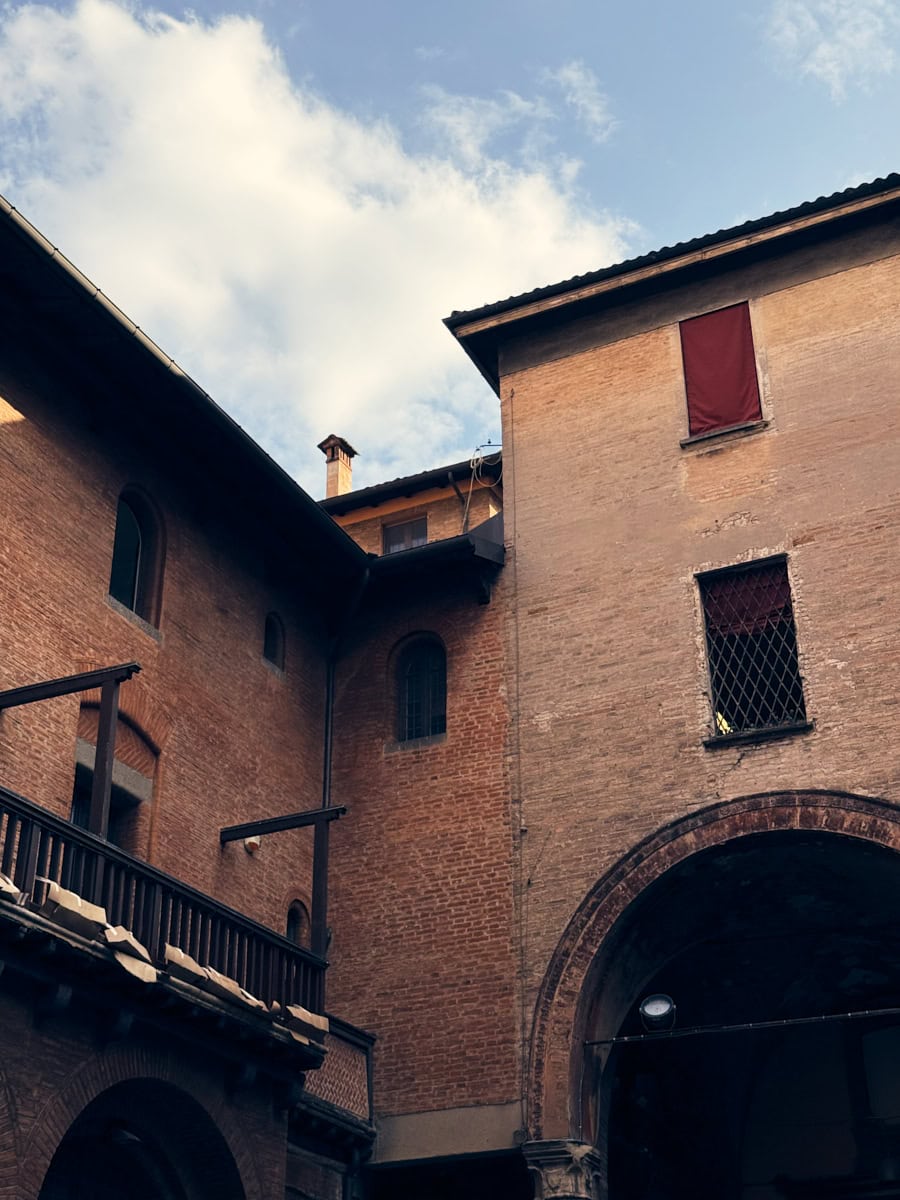
Bologna, Italy, is a special place I’ve visited many times through the years. Both because my family lives just outside in a small town, and also because my brother attended university there. I’d visit, eat my way through the city (IMO, some of the best gelato to be found anywhere), and try to improve my Italian language skills as best I could.
Given my experience, I knew featuring this city on this trip would be a great culinary move, and I was so right, as you’ll soon see.
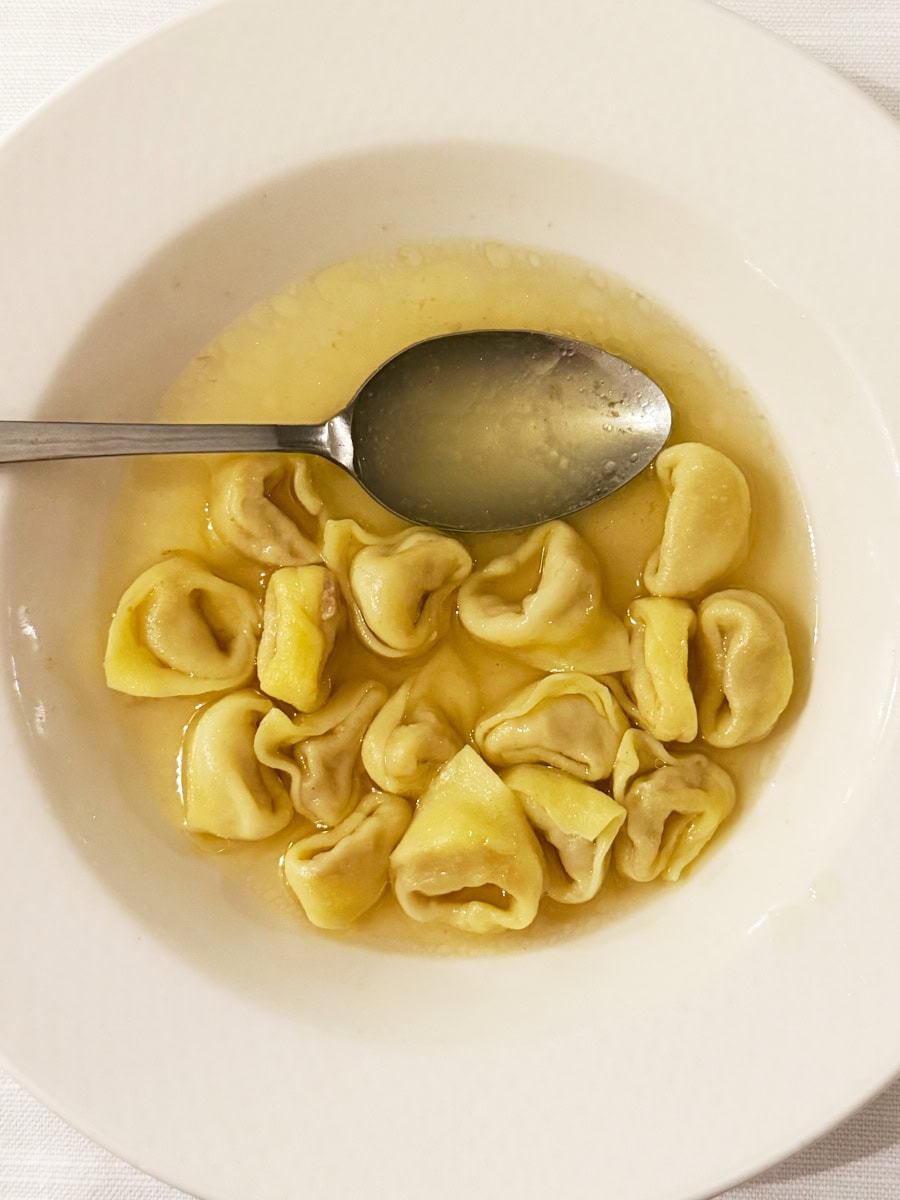
Before the class started, Matt and I headed out to Antica Osteria del Mirasole, serving some of the best traditional dishes, including tagliatelle with ragù and the iconic tortellini in brodo. This early dinner got us primed for the class and served as a prelude to the wonderful set of lunches planned for the group excursions each day.

Sourdough Bread and Pizza Workshop
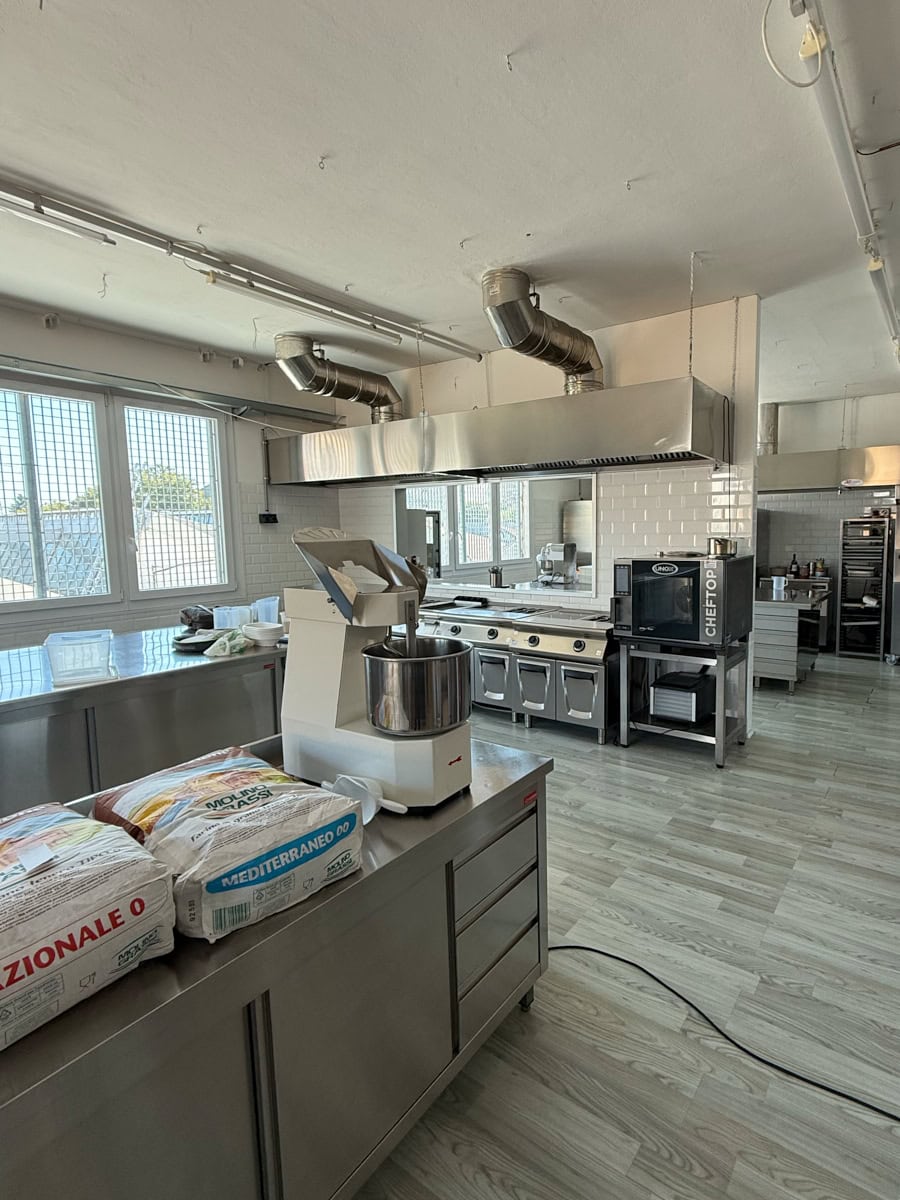
My workshop took place in a cooking school with bread-making capabilities, although some of the equipment was smaller than I’d anticipated for our group size. Fortunately, locals Maolo and Fabiola helped us navigate these challenges and get everything running smoothly.
As they say, poking dough with your own finger is worth a thousand words.
The premise for the first week was maximizing hands-on time with dough—creating everything from large, crusty country loaves to thin-crusted, delicate baguettes. I’ve spent years writing about how dough should look, feel, and even smell, but teaching in person really sharpens students’ intuition. There’s something irreplaceable about watching someone work with dough in the same room, about learning through direct observation and touch. As they say, poking dough with your own finger is worth a thousand words.
To complement the hands-on instruction and dough work, the class was balanced with a midday break to visit local producers and taste their products, source ingredients for the class, and enjoy excellent lunches with new friends.

The varied sourdough bread and pizza menu for the workshop consisted of:
- Rustico
- Olive (a variant of Rustico but with local olives, herbs, and lemon zest)
- Ciabatta
- Baguettes
- Sourdough pizza baked in the bread oven
This menu featured a diverse range of doughs, each with distinct mixing techniques, fermentation timelines, and shaping styles. But in addition to the breads, I also discussed sourdough starter maintenance and troubleshooting, how and why I typically make a levain, and how to troubleshoot when things go a little sideways—literally (more on this in a moment!).
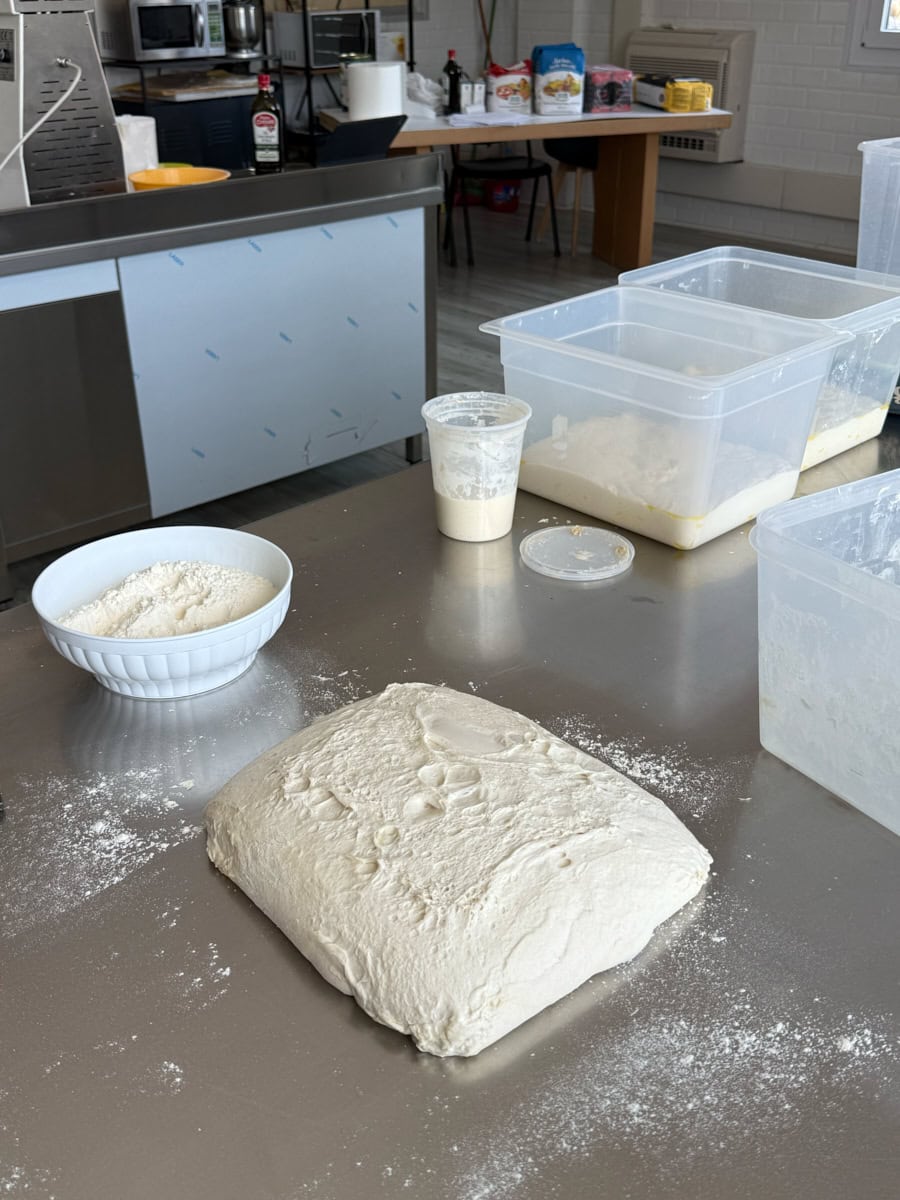
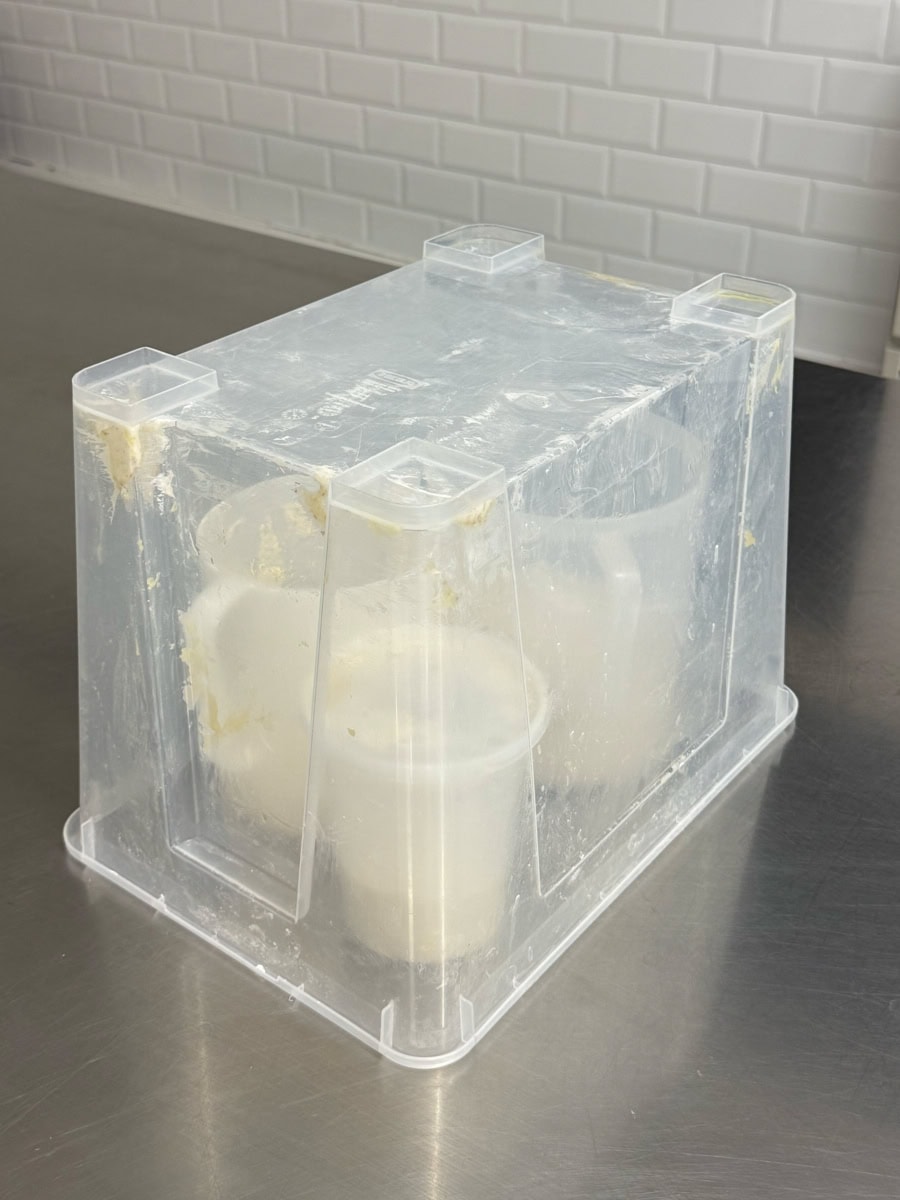
Part of my message for the workshop was to highlight the versatility of a single, base dough for multiple products—what I call my Rustico, featured in my cookbook—a country-style dough that’s forgiving and adaptable. You can swap the lower percentage grains (such as spelt for whole wheat or Khorasan), increase the hydration for a creamy crumb and ultra-thin crust, or even push the hydration higher and shape the dough into a pan loaf. In the class, I used the same base dough for a lean loaf (no enrichments or add-ins), but also as a base for adding local olives, herbs, and lemon zest.

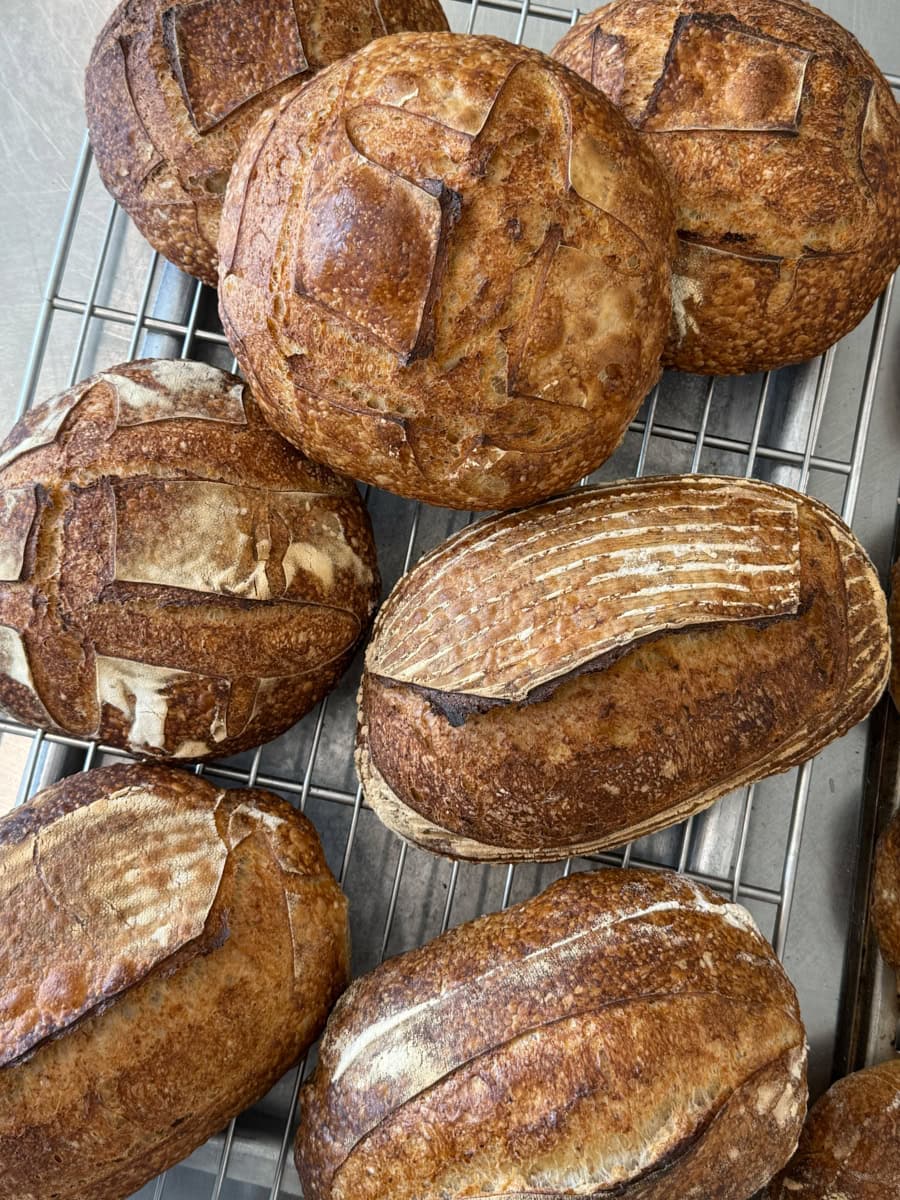
One thing I discovered when working with the local Type 00 flour of the area is that it cannot handle high hydration whatsoever. I was prepared for this, having adjusted all my bread and pizza recipes down by at least 5%, but honestly, it needed even more. The humid environment, soft flour (with low protein content), and the absence of a mixer with a second speed resulted in dough that simply needed further reduction in hydration, more intensive mixing, or both.
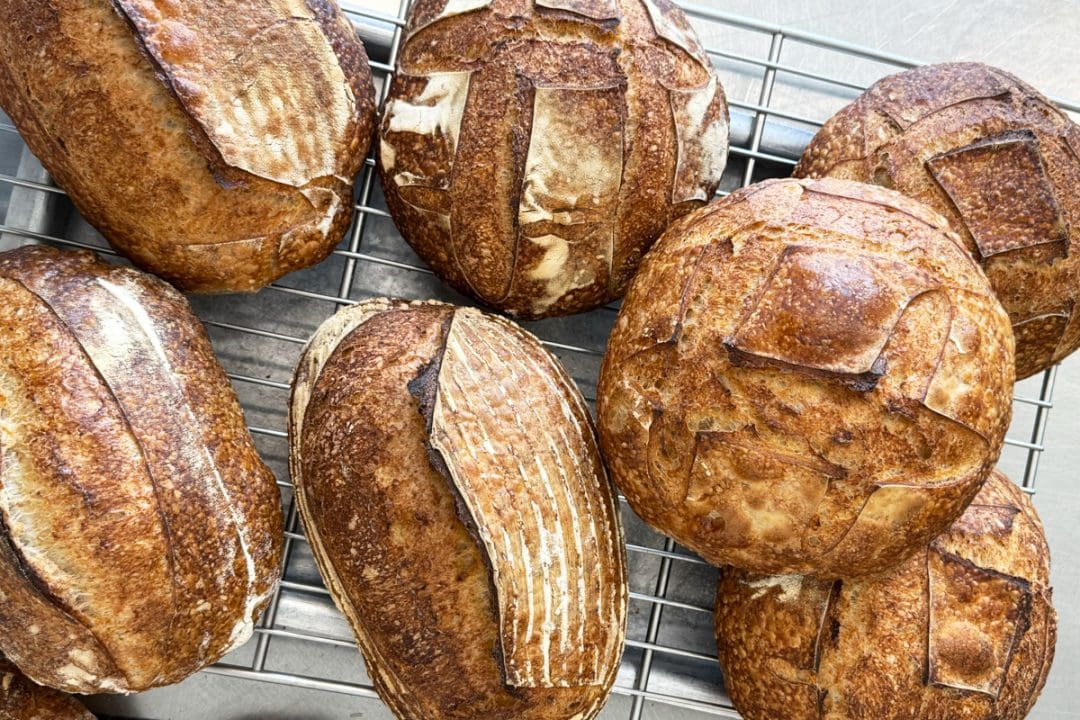
While shaping the first set of dough was a challenge for the students, the results turned out great (see above), and it became a teaching opportunity for me, illustrating how a baker can strengthen a dough later in the process by adding more folds during bulk fermentation, or, as we did in the class, perform a second preshape.
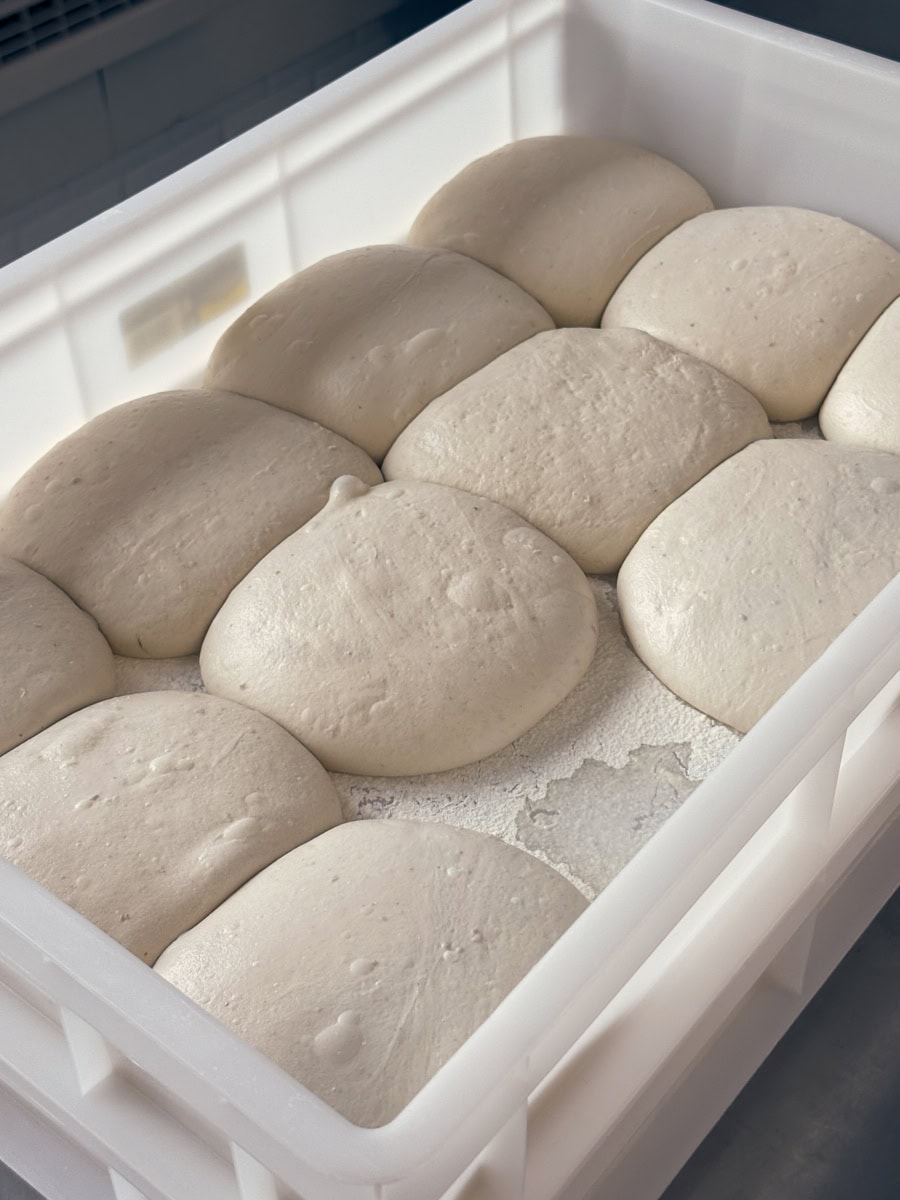
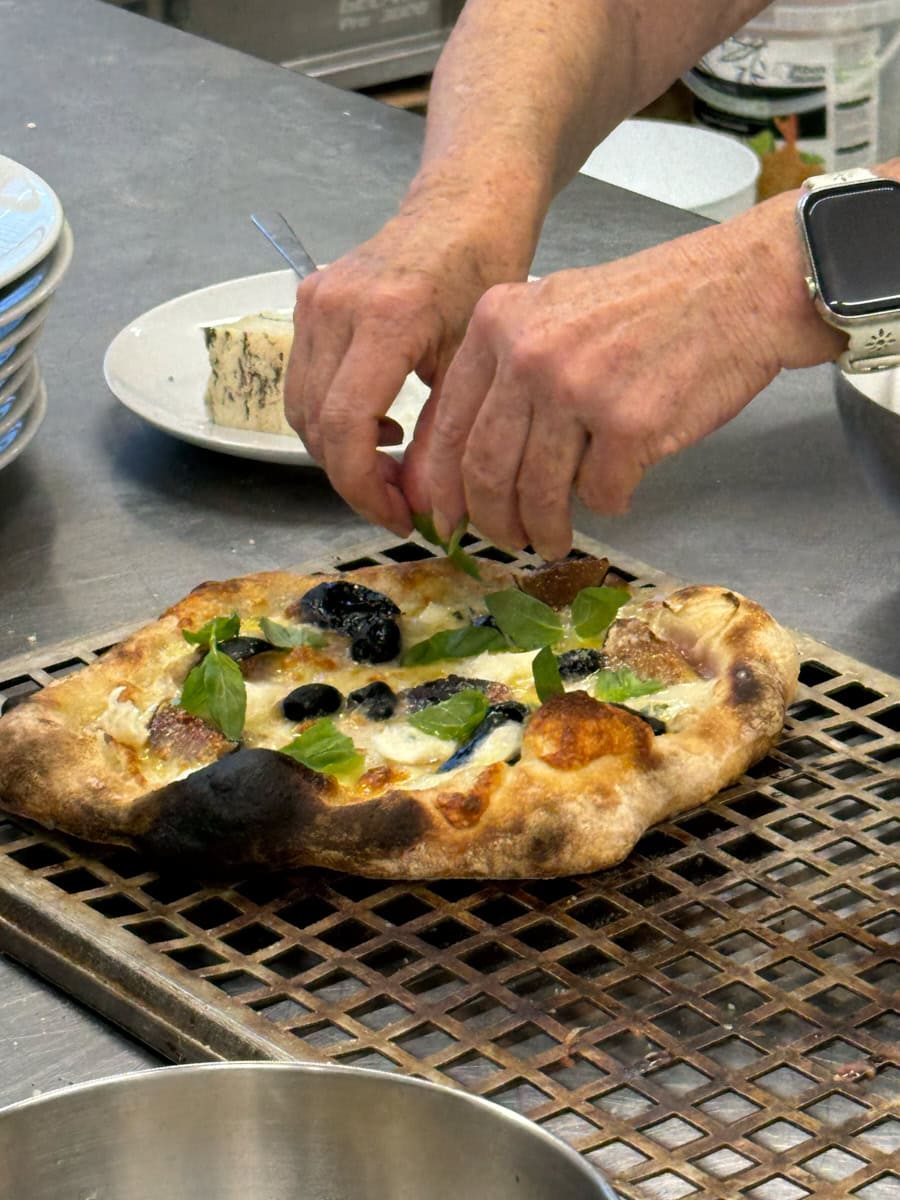
On our final day, we threw a pizza party at the school as our farewell celebration. We fired up the bread oven and made over twenty pizzas, everyone stretching their own dough and choosing from an incredible spread of local ingredients—fresh fior di latte mozzarella, creamy gorgonzola, prosciutto, ripe figs, and more.
The workshop wrapped up with smiles, new friendships, and what I hope was a deeper understanding of fermentation, dough handling, and the art of adjusting when things don’t go exactly as planned. After all, in bread baking, every day offers a fresh start.
After a brief two-day break—during which Matt and I squeezed in a visit to Olivieri, a renowned panettone baker near Verona—we were ready to welcome a new group of travelers (including a few adventurous souls who’d booked both trips) for our second week of touring, pasta-making, panettone workshops, and guided exploration.
Week 2 in Bologna, Riolo di Terme, and Milan: Touring and Making Panettone
This six-day touring trip had a packed itinerary with numerous exclusive events. Tours of producers, bakeries, and retailers that are not normally open to the public were a great opportunity to see a behind-the-scenes look at the wonderful food they produce for their community.
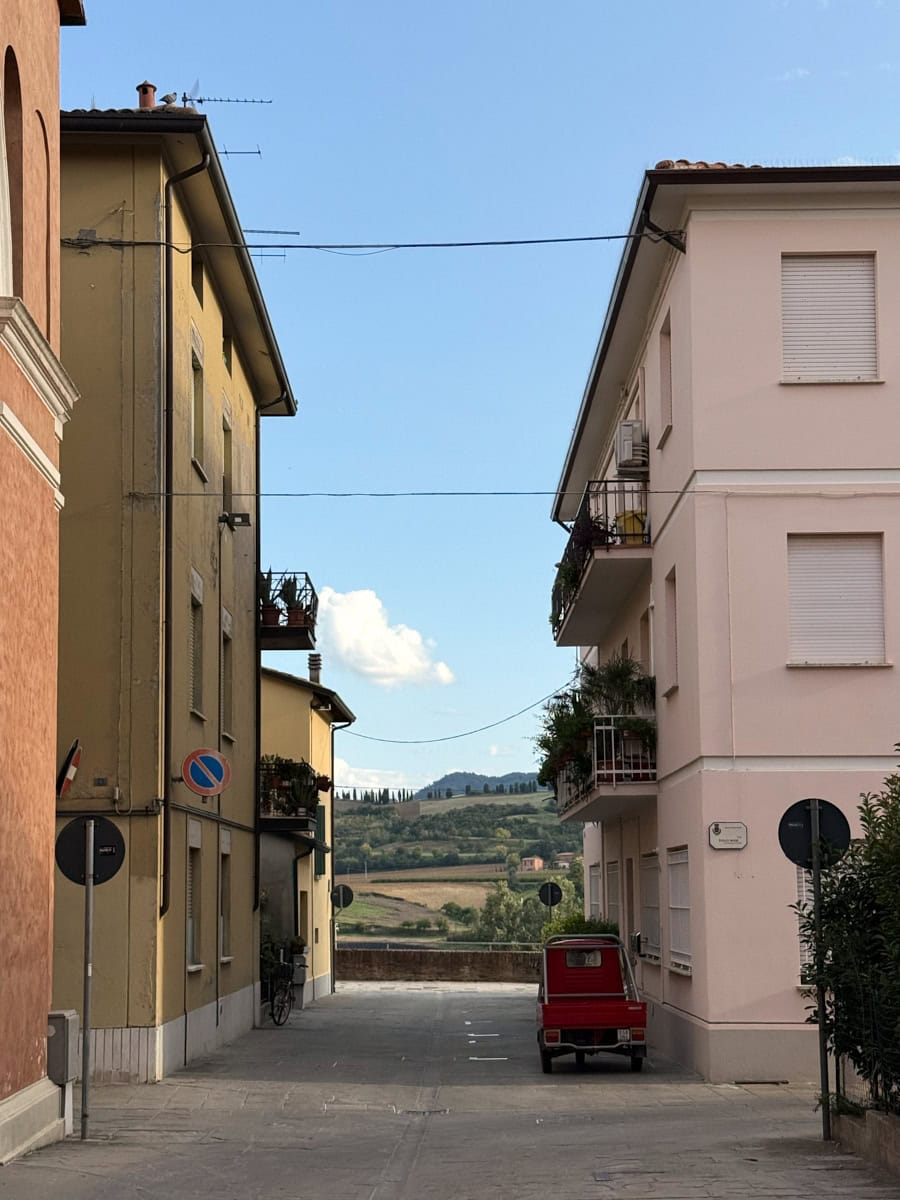
The tour started in Riolo di Terme, a spa and welness hotel outside of Bologna. Definitely a low-key vibe running through the place—except for Sunday evening, when the music is played loud, the spritz plentiful, and the elderly come out for a good old fashion thrown down.
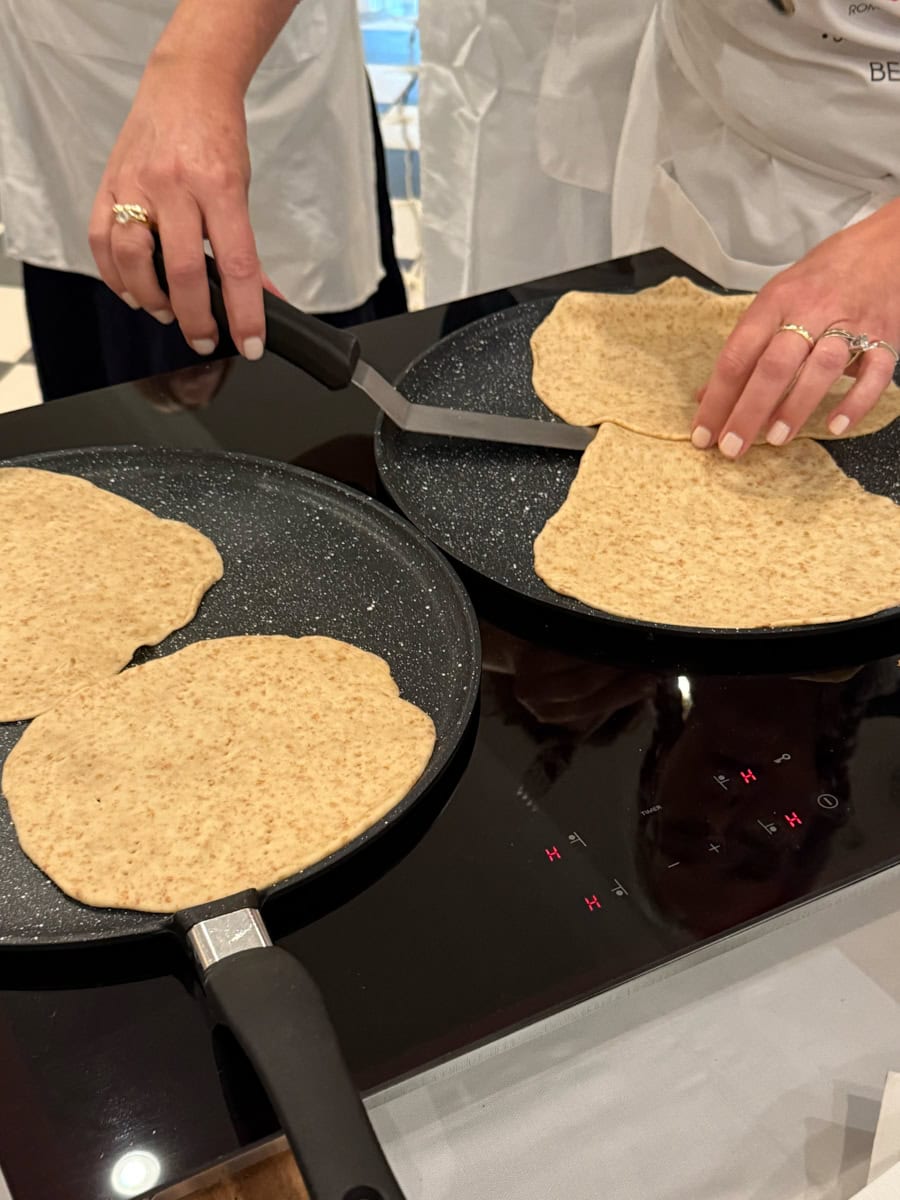
At the start of the tour in the evening, I led a piadine workshop, my sourdough version of the local flatbread, served with prosciutto and other local meats and cheeses. A fun way to break the ice with the travelers.
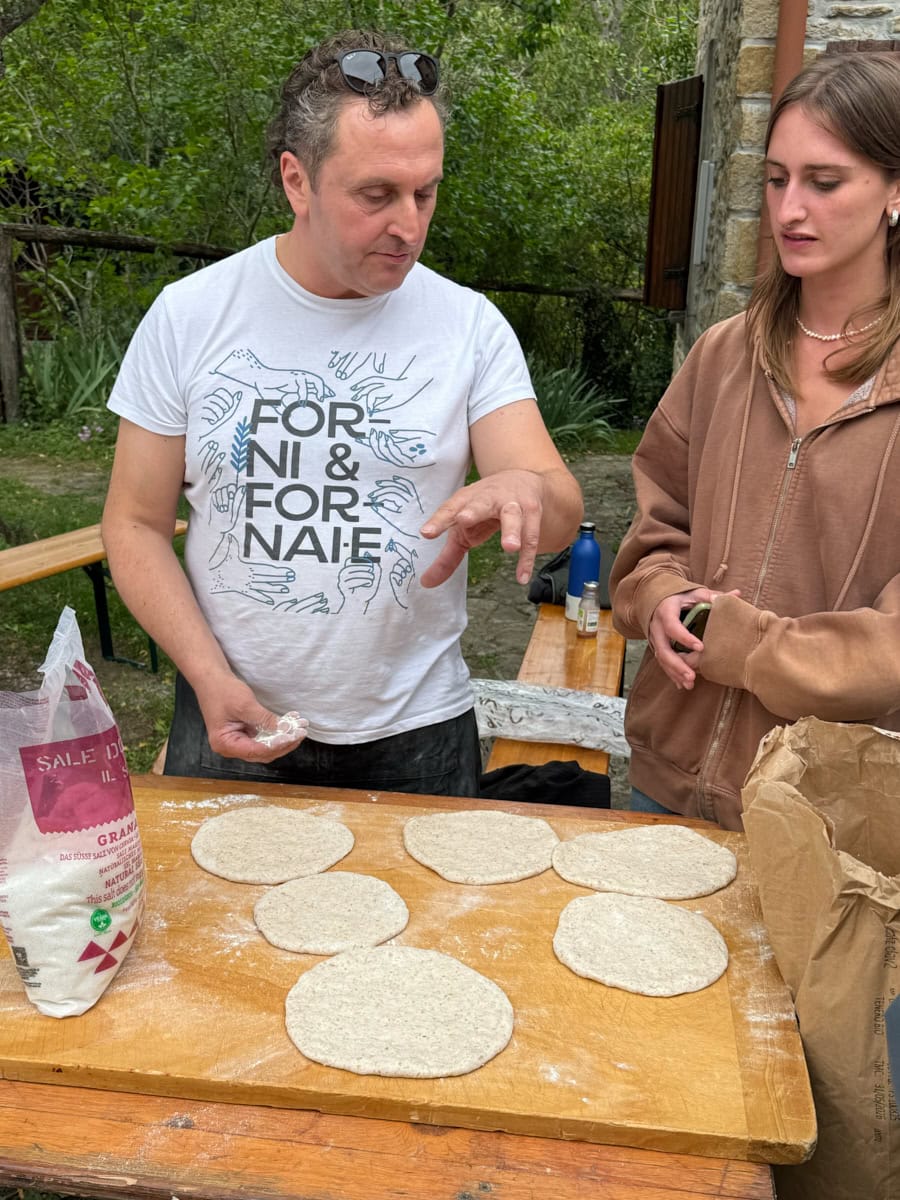
After a delightful dinner out in the countryside and a solid night of sleep, the next day we ventured out to Monghidoro to visit an ancient chestnut flour mill, and a short walk to visit stone flour mills. While out in the country, Matteo and family from a local bakery, Forno Calzolari, hosted us for a short sourdough starter workshop, dough shaping session, and bake-off in a wood-fired oven.
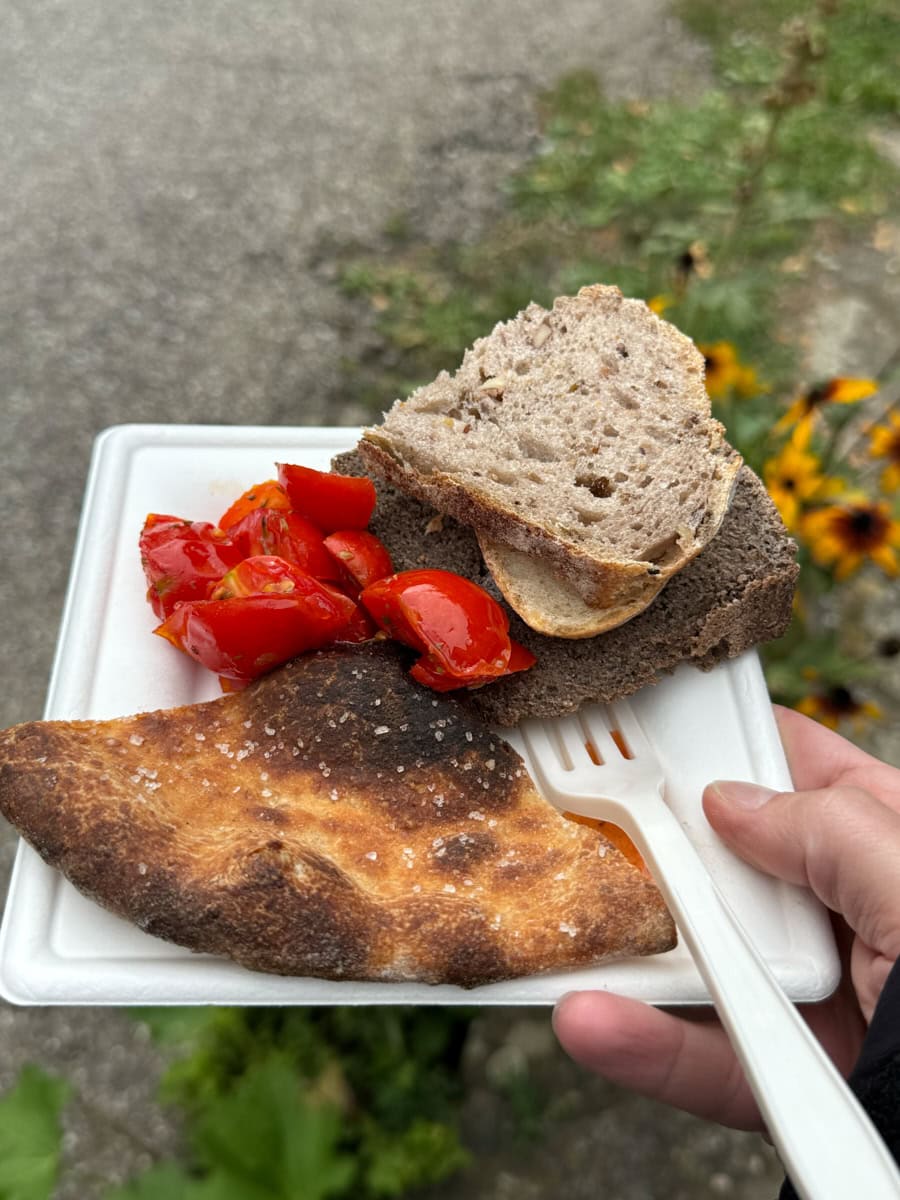
This was such a delightful look at a family baking operation focusing on locally grown and milled grains sticking to their ideals, providing healthful bread for their community. I found myself going back for seconds to taste each of their breads, but also the tomatoes you see below, cooked in the wood-fired oven and were just out of this world.


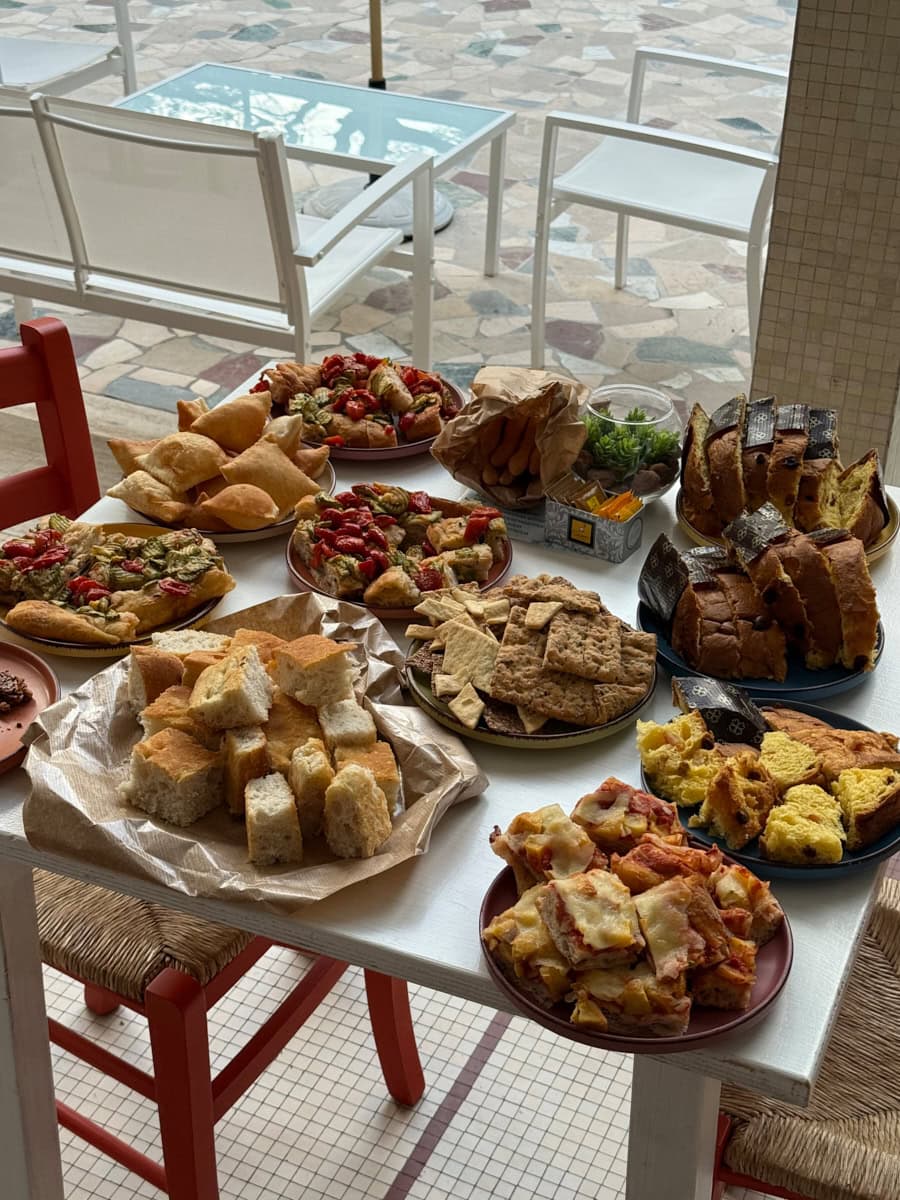
That evening, Matt, Angela, and I gathered a spread of bakery goodies (see below) and brought along a panettone from our visit to Olivieri to share with the guests. We set up an impromptu aperitivo at the hotel, sipping spritz after spritz and nibbling salty focaccia and pizza while a DJ spun music for the aforementioned dancing locals nearby.
Tagliatelle, Tortellini & Tortelloni, Emilia Romagna’s Queens
The next day, we were in for a change of pace at VSB (Vecchia Scuola Bolognese) to learn the art of rolling sfoglia (pasta dough) from Maestra Spisni and family. Granted, this craft—as deep as bread-making, dare I say—takes years to master, but it was fun to have a workshop and make some delightful pasta for our group lunch.

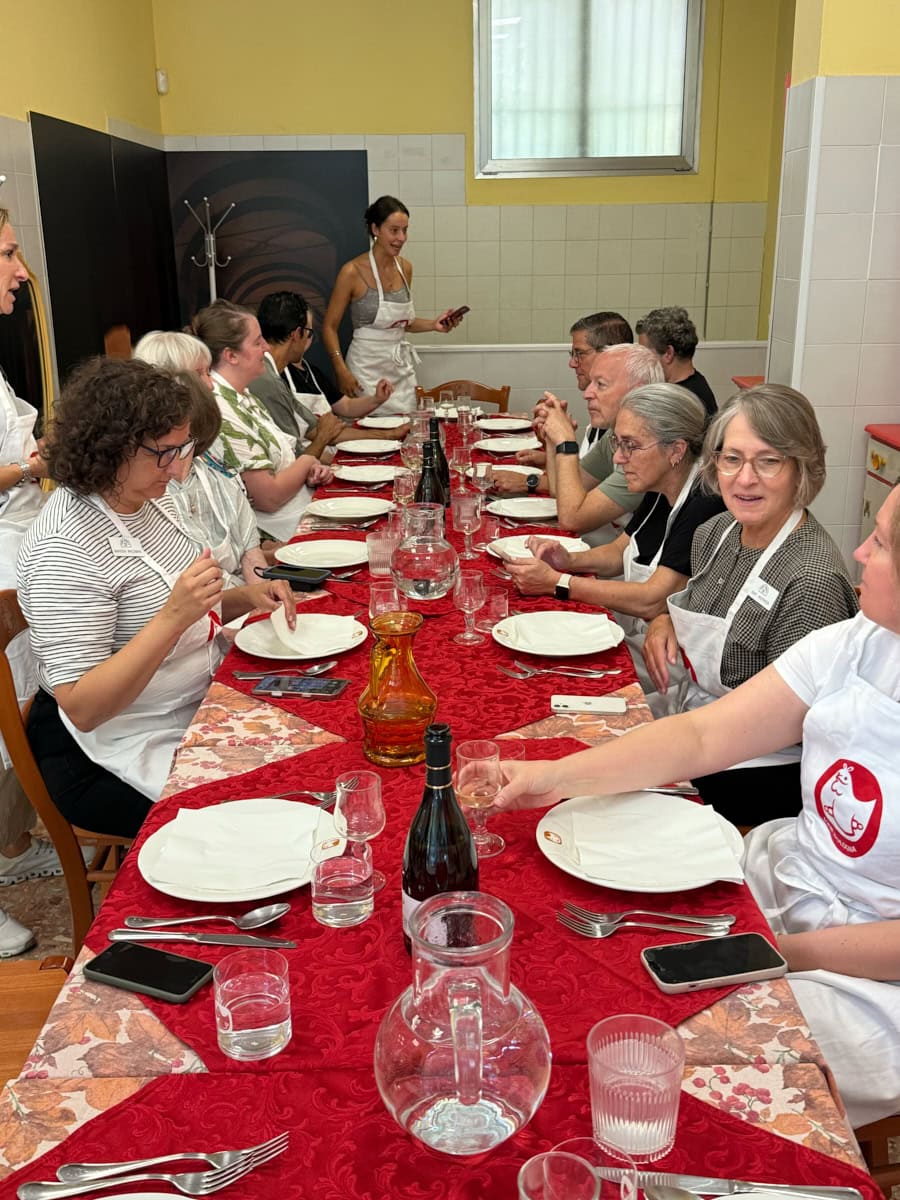
After the pasta workshop, we walked through Bologna with a tour guide, who showed us historical sites, fresh food markets, and even stopped in to have yet more freshly made tortellini and tortelloni. I was beyond full at this point, and yet, who can resist a perfectly made tasting of pasta with butter and sage?
To finish off the afternoon, we stopped by a gelateria I had yet to visit: Cremeria La Vecchia Stalla, boasting one of the largest menus I’ve ever seen. A great spot, to be sure, but it’s hard to top Cremeria Cavour as my favorite gelato institution in Bologna (and if you’re like Matt and I, a visit as late as 11:30 p.m. is never a wrong choice).
That night, we enjoyed a delightful meal at Ristorante Da Cesari, where we savored excellent pasta with ragu as we carb-loaded in preparation for tomorrow’s full day of cheese and balsamic vinegar.
Parmigiano Reggiano and Aceto Balsamico

After a private bus ride out from Bologna to the cow-laden countryside, we had a private tour of Latteria La Grande, a large Parmigiano Reggiano producer. Led by a super-enthusiastic and quite chic tour guide, it was fascinating to watch as the workers coerced raw milk into large wheels of cheese.
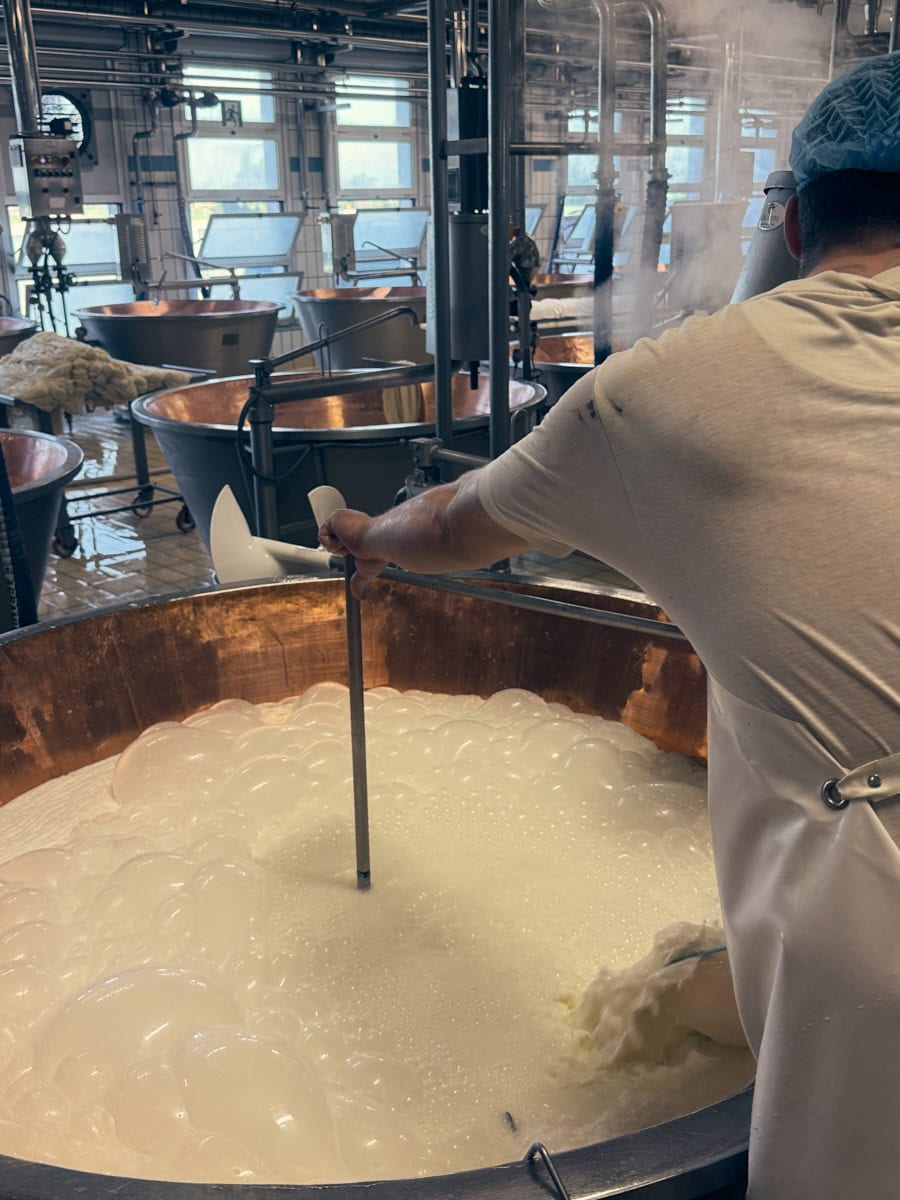

After the tour, we all stocked up on copious amounts of cheese, of course, as well as other local goods. It was at this point in the trip that many attendees rightly decided to purchase a second suitcase for their return trip.
Next up was a tour at Acetaia Leonardi for a balsamic vinegar tasting and lunch, featuring excellent dishes that showcased balsamic vinegar on cheese, bread, pasta, and even panettone.
Walking Tour and Milanese Panettone Workshop
The next day, we said arrivederci to Bologna and transferred to Milan for a walking history tour and the start of our two-day panettone workshop. Milan is a fascinating city, equal parts industry, fashion, and excellent cuisine—you see a distinct shift from the traditional meat and pasta-heavy Bologna to contemporary Milan, with a focus on risotto, cotoletta, and innovative restaurants featuring trendy aperitivo scenes.
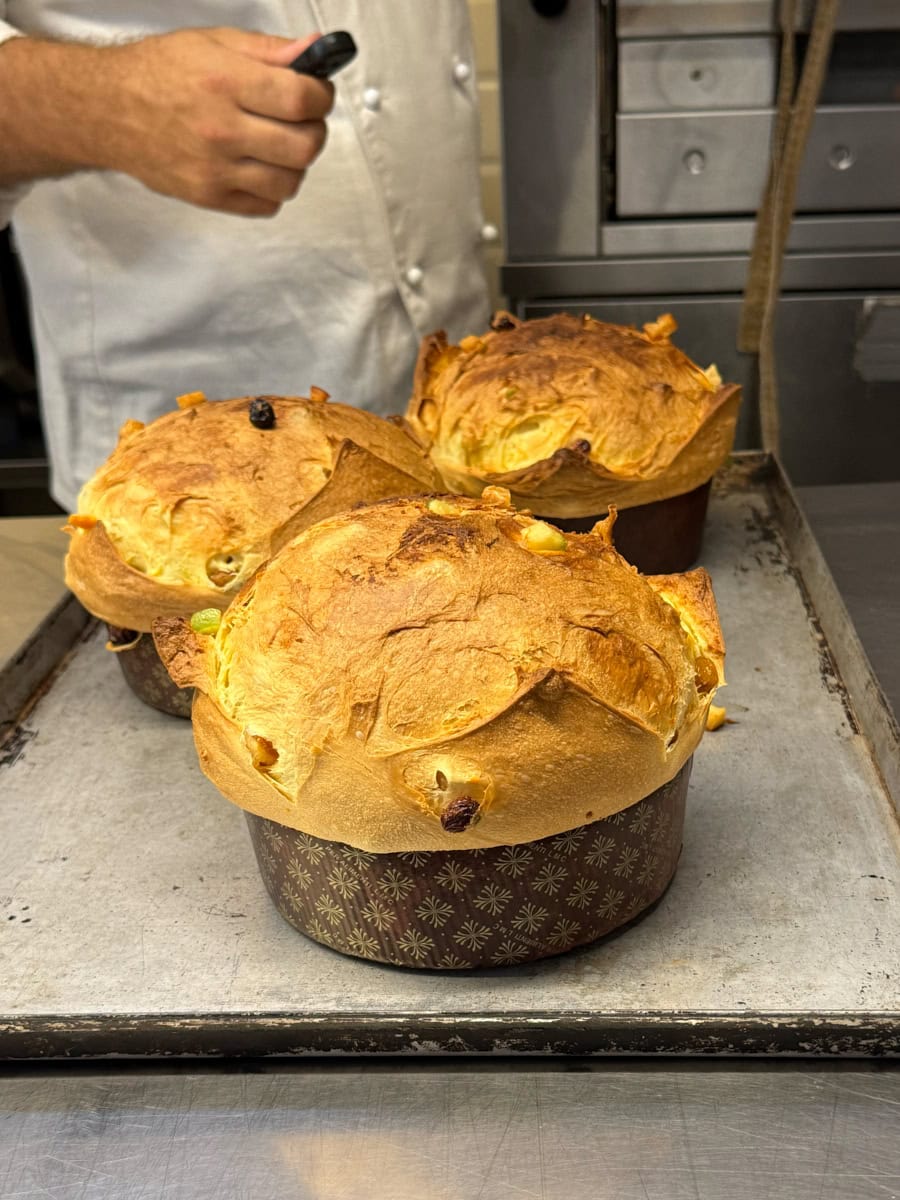
Before heading to our panettone workshop, we stopped by Pasticceria Marchese for an espresso and a slice of truly excellent panettone. While the coffee was quite bitter—in that Italian style that is unfortunately still so common—the panettone might have been one of the best I’ve tasted in Italy. Light and open with a soft crumb, high-quality candied fruit in just the right proportion, and no glaze on top, as is my preference and common in Milan. Really just a no-frills panettone setting a high bar.
The panettone workshop was more of an introduction to what I consider one of the most difficult breads to make (as I learned quite acutely in France). The chef provided us with an overview of the entire process, incorporating a few hands-on points along the way, including dividing, shaping, and scoring the dough.

A Bakery Visit and Farewell
The last day of the tour, we completed our panettone workshop, had a casual lunch, and visited the bakery of Davide Longoni. I’ve known about this bakery for some time, inspired by the grain they grow, mill, and use in their breads.
The tour began with a look at their efficient baking space, which felt more like a bit like a laboratory than a traditional bakery, in the best way possible. What caught my attention was the prototype mill they’d set up for milling grain into flour in-house—a new commitment to controlling every aspect of their process from grain to finished loaf. Our guide was genuinely enthusiastic and knowledgeable, the kind of person who clearly believed in what they were making. You could sense it in the way they spoke about their work: a welcoming attitude combined with an unwavering focus on crafting exceptional products.

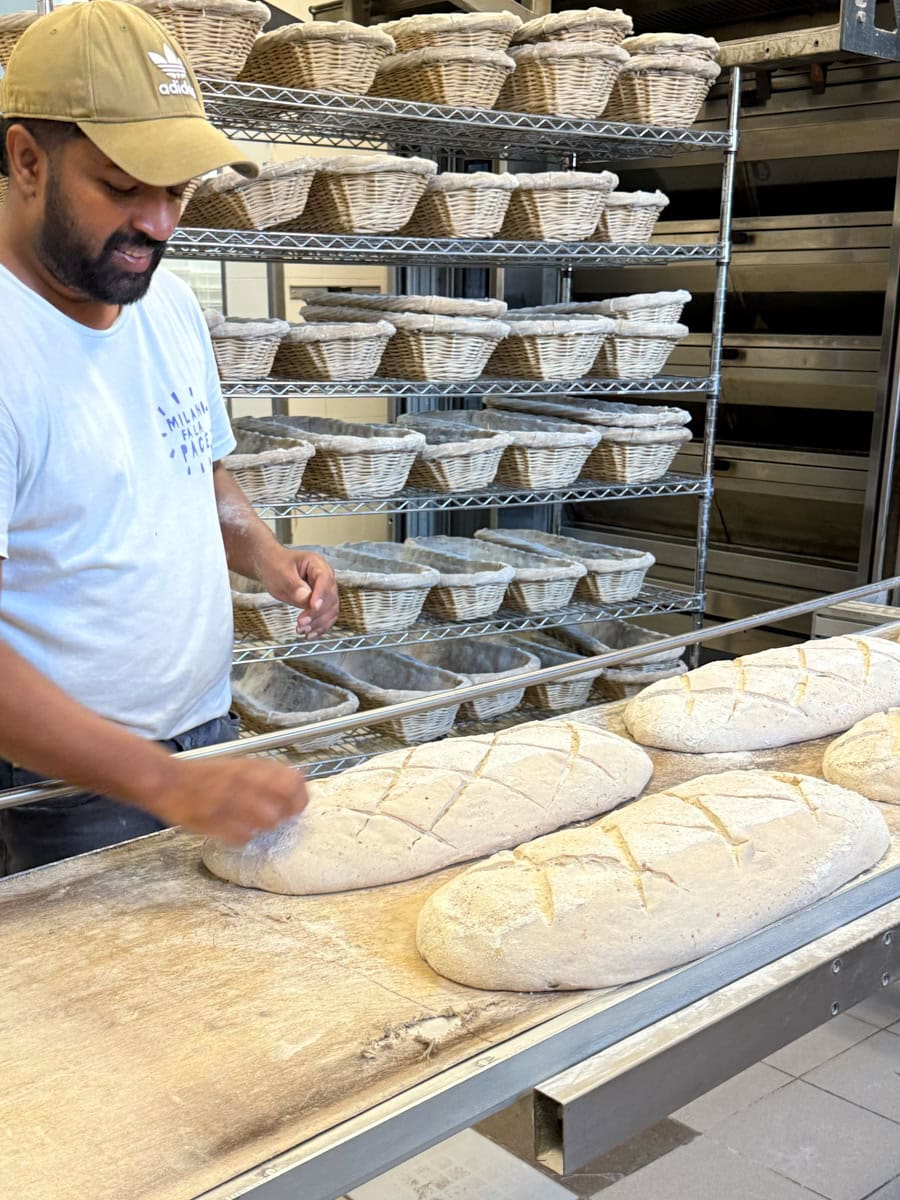
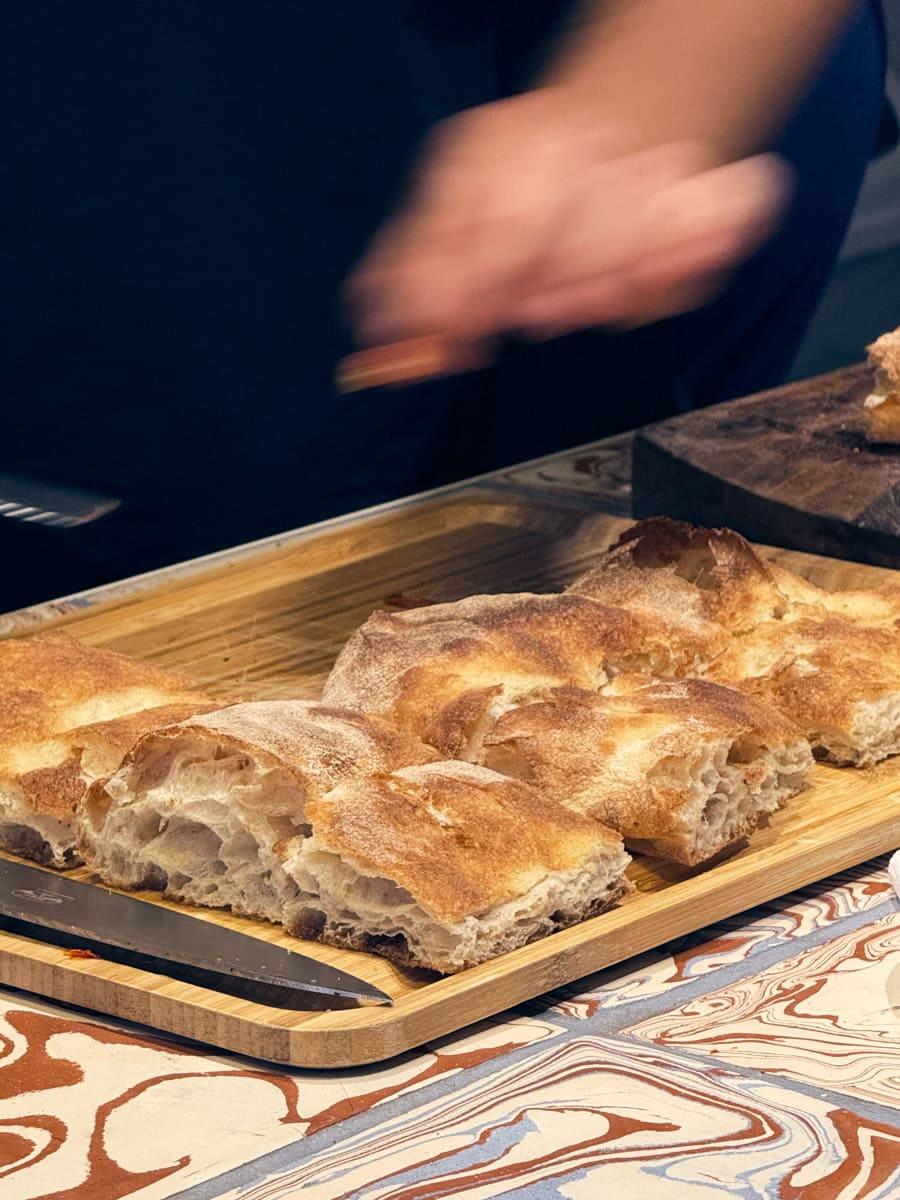
I left the bakery inspired, and we concluded with a group tasting of the various breads they produce, paired with local cheeses, meats, and wines. It was a wonderful afternoon talking bread and absolutely reveling in the spread they prepared for us—everything so very delectable. Specifically for me, their “pizza alla palla,” or what I might call focaccia (see below), was the perfect blend of light and airy texture with a delicate bite. Just superb.

After our aperitivo, we quickly headed to our final group meal at Bistrot Da Giacomo—a very classy joint with wood-paneled walls, mirrored backdrops, and graceful staff.
This was the meal I’ll remember most, not only for the elevated, perfectly executed food, but for the way it crystallized just how tight the group had become. There’s something about traveling with people who share your passions that collapses time—friendships that should take years happen in days.

More on Instagram
If you want to see more photos and videos from the entire trip, check out my Instagram highlights collection.
Where To Next?
Plans are already underway for more trips. It looks like we’ll be taking a break for 2026, but I plan to return with one (or possibly two) trips for 2027. Keep an eye on the Travel Page for more information on upcoming trips, workshops, and more.
Where would you like to go on a future bread trip? Let me know in the comments. A presto!