

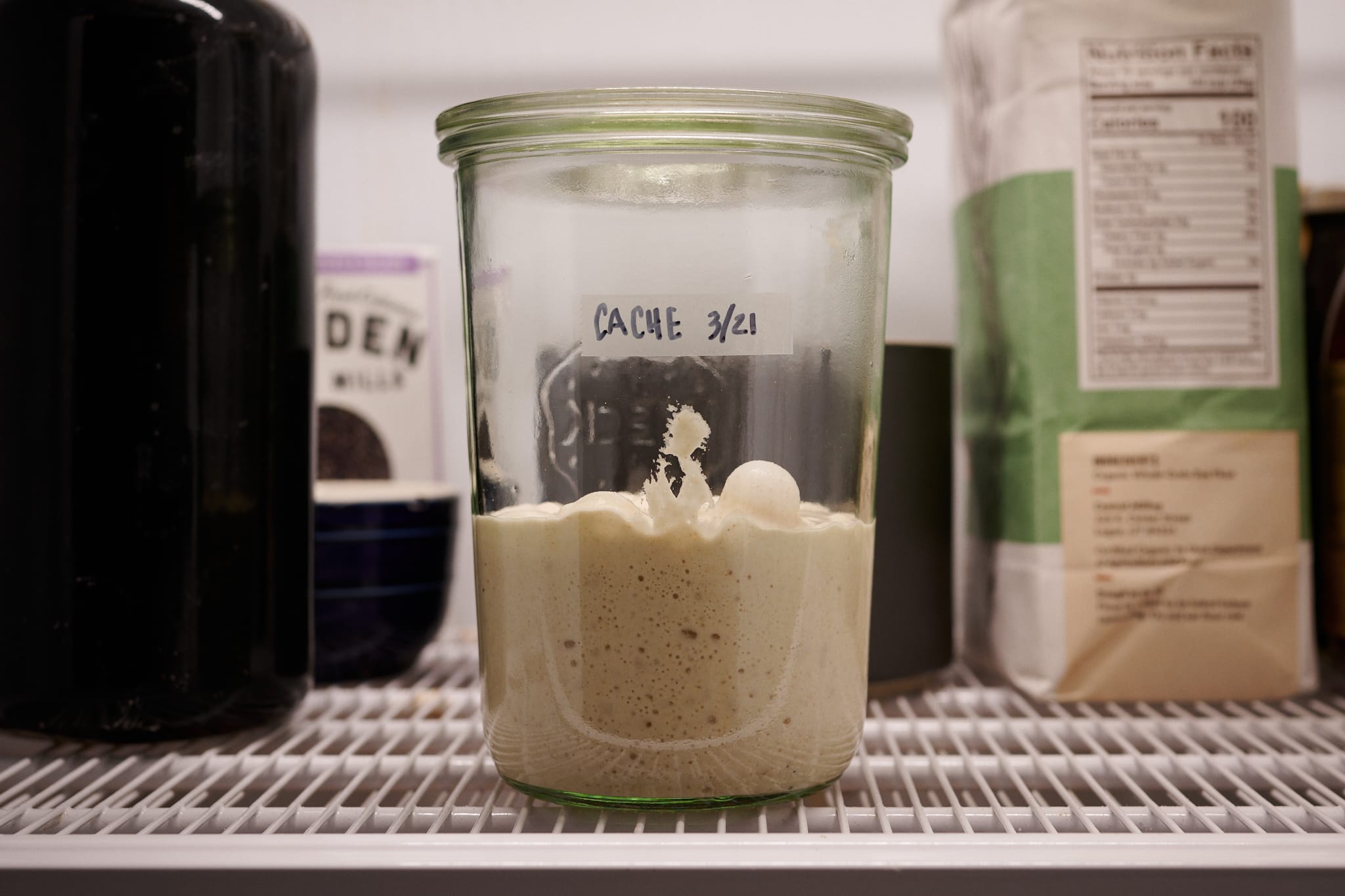
One sleepy morning many years ago I sauntered into the kitchen, opened the fridge, and after a blast of wake-the-heck-up cold air, I saw a jar of sourdough starter I put in the day before. Due to life circumstances, I couldn’t bake with it, and in an attempt to always avoid waste, I put it in the fridge. Well, at that moment, it dawned on me that keeping a jar of discard in the fridge at all times might actually be a good idea—a sourdough starter cache to draw from when I needed it.
Mind you, I’m not a fan of using sourdough starter straight from the fridge. It’s far too cold, making it a hostile environment for the bacteria and yeasts inhabiting a culture. Over the years, I’ve tried keeping my starter in the fridge and using it for baking an easy, standard sourdough loaf that day, but the resulting bread didn’t compare to a well-fed and maintained starter with all its room temperature-vigor.
But for those days when you’re not baking long-fermented bread or pastry, sourdough starter discard from the fridge cache is perfect. You get all the flavor created through long fermentation, the convenience of having it ready in the fridge, and you avoid wasting sourdough starter to boot. Such a starter-stockpile will stay the most fresh for about two weeks, and it’s the perfect place to draw from for sourdough starter discard cookies, scones, a tart lemon loaf, or pie crust.
Real quick, why is a sourdough starter discard cache useful?
- It’s a quick place to turn for starter discard, always at the ready
- It helps avoid waste by saving starter that would normally be thrown away
- Discard has lots of flavor, might as well put it to good use
- It’s easy!
What is a Sourdough Starter Discard Cache?
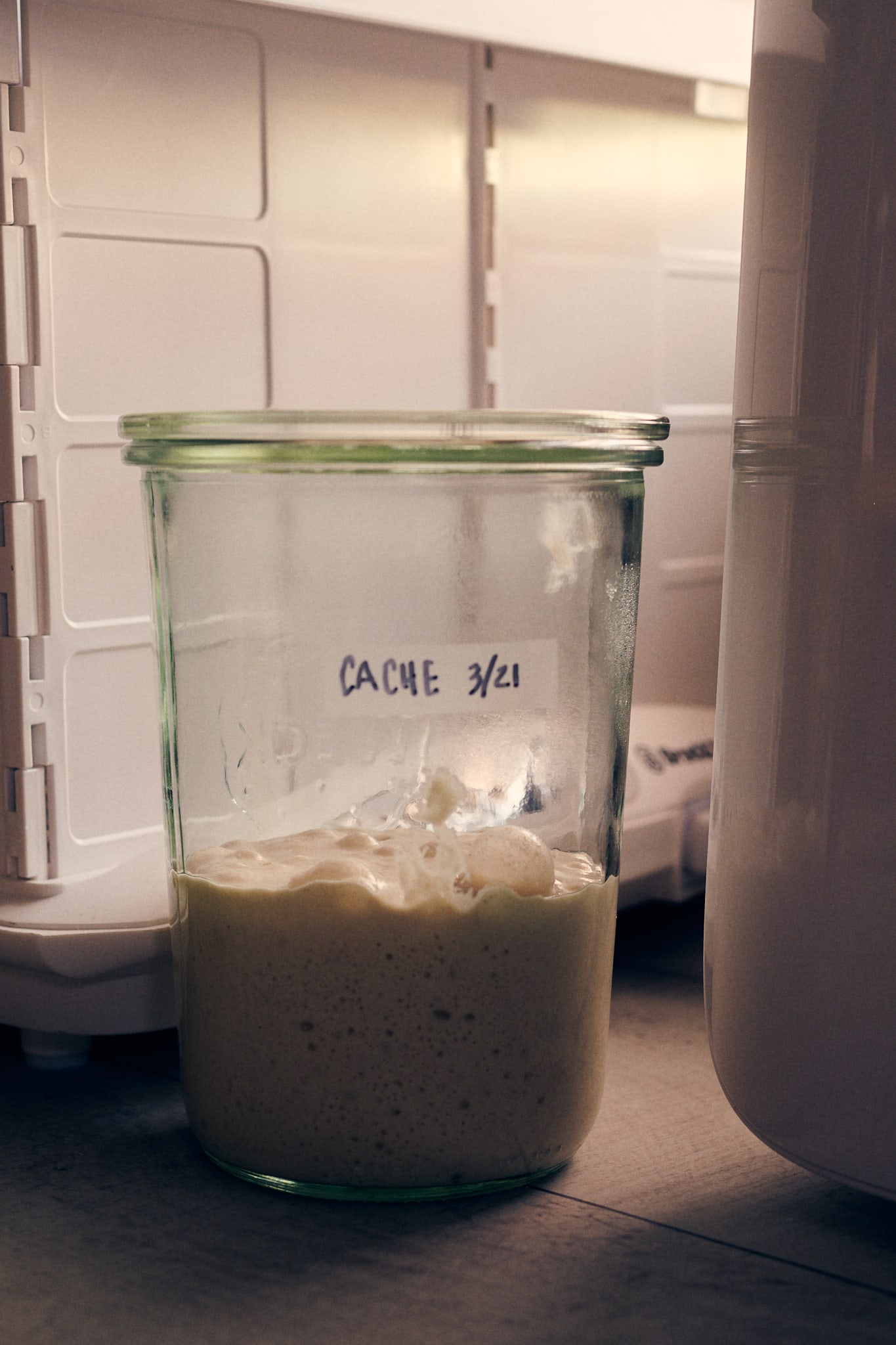
I call this a “sourdough starter cache” as a tongue-in-cheek reference to my software engineering days. In computer science, a cache stores data that can later be quickly accessed from the fast cache instead of slower hardware memory. I see a sourdough starter cache as exactly that: Keep a jar of accumulated discard in the fridge and pull from it when you need quick access to a flavor boost in whatever you’re baking.
But also, the cache serves as a means for reducing waste. Sourdough starter discard that might have otherwise gone into the compost or trash goes into the cache, instead.
How Soon After Creating My Starter Can I Make a Discard Cache?
If you’ve just created your sourdough starter, wait until it’s reliably rising and falling each day with signs of fermentation—some rise, bubbles, a progressive sour aroma—before storing discard in your cache. Consistent signs of fermentation each day signal that your starter has a stable mix of good bacteria and yeasts.
How to Keep Sourdough Starter Discard in the Fridge
Starting with a clean jar, put a piece of tape on the side and write the date two weeks into the future (officially the “expiration date”; see explanation below). Then, every day you feed your starter, instead of putting the discard in the compost, add it to the jar, place the lid on top, and put it back into the fridge. Weigh out some discard from this jar whenever you need to use some in a sourdough starter discard recipe and put the covered jar back into the fridge.
How Long Can I Keep Sourdough Starter Discard?
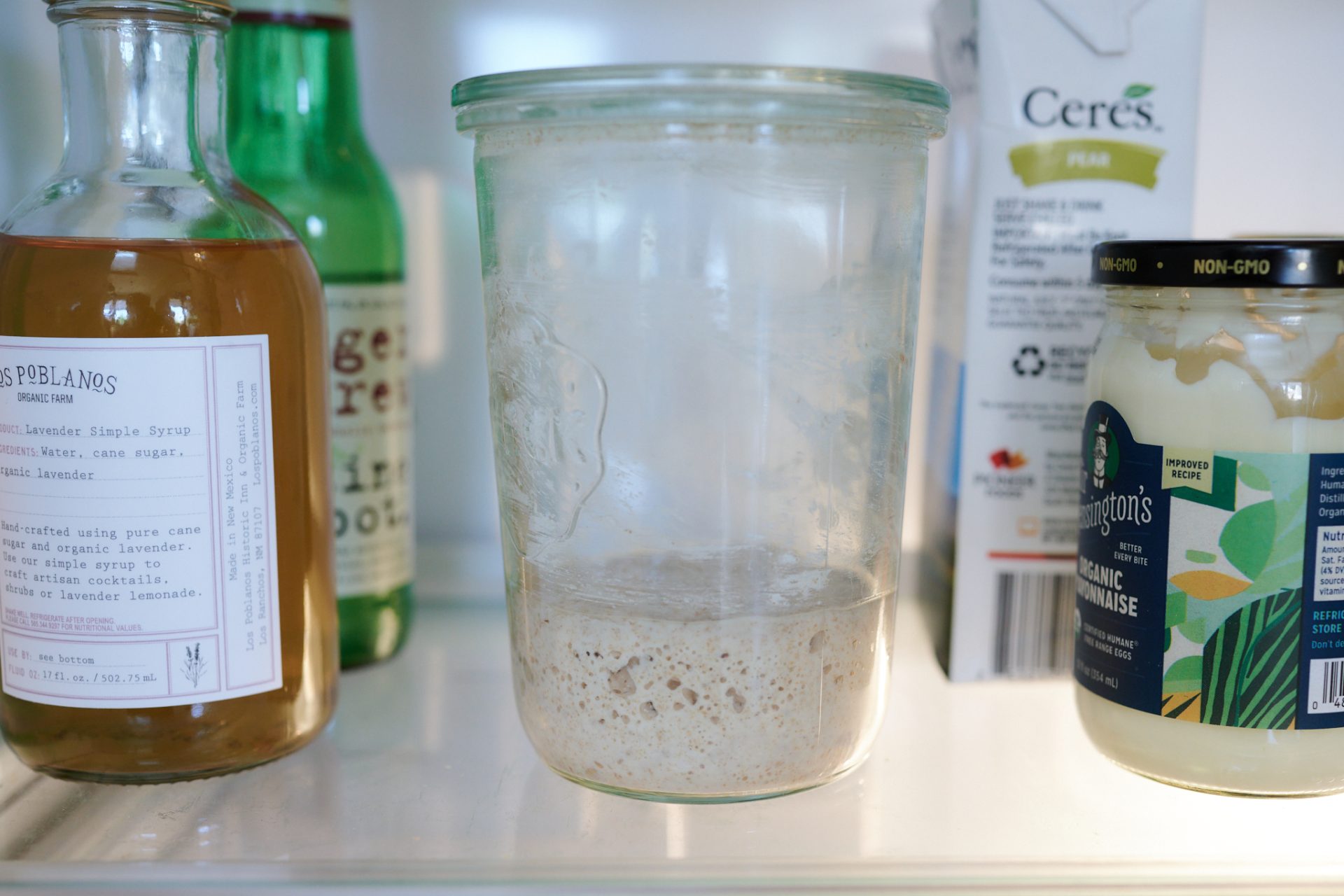
Generally, I keep my sourdough discard cache for up to 2 weeks. Theoretically, you could keep it for far longer, even up to a month, but I’ve found that after this time, the mixture starts to separate, get overly acidic, and the jar sometimes gets a little funky overall.
After 2 weeks, try to use all the discard in the jar. If any is left, scrape it into your compost bin, clean the jar, and prepare it again for a new cycle.
Can I Use Sourdough Starter Discard to Make Bread?
I don’t recommend using starter discard from the fridge to make sourdough bread. Why? The discard could be sitting in the fridge for several days, up to 2 weeks, which is far too long without feeding in an environment that’s too cold. The mixture is likely overly acidic and won’t be properly balanced—in terms of bacteria and yeast populations—for leavening dough.
My Favorite Container to Hold Sourdough Starter Discard
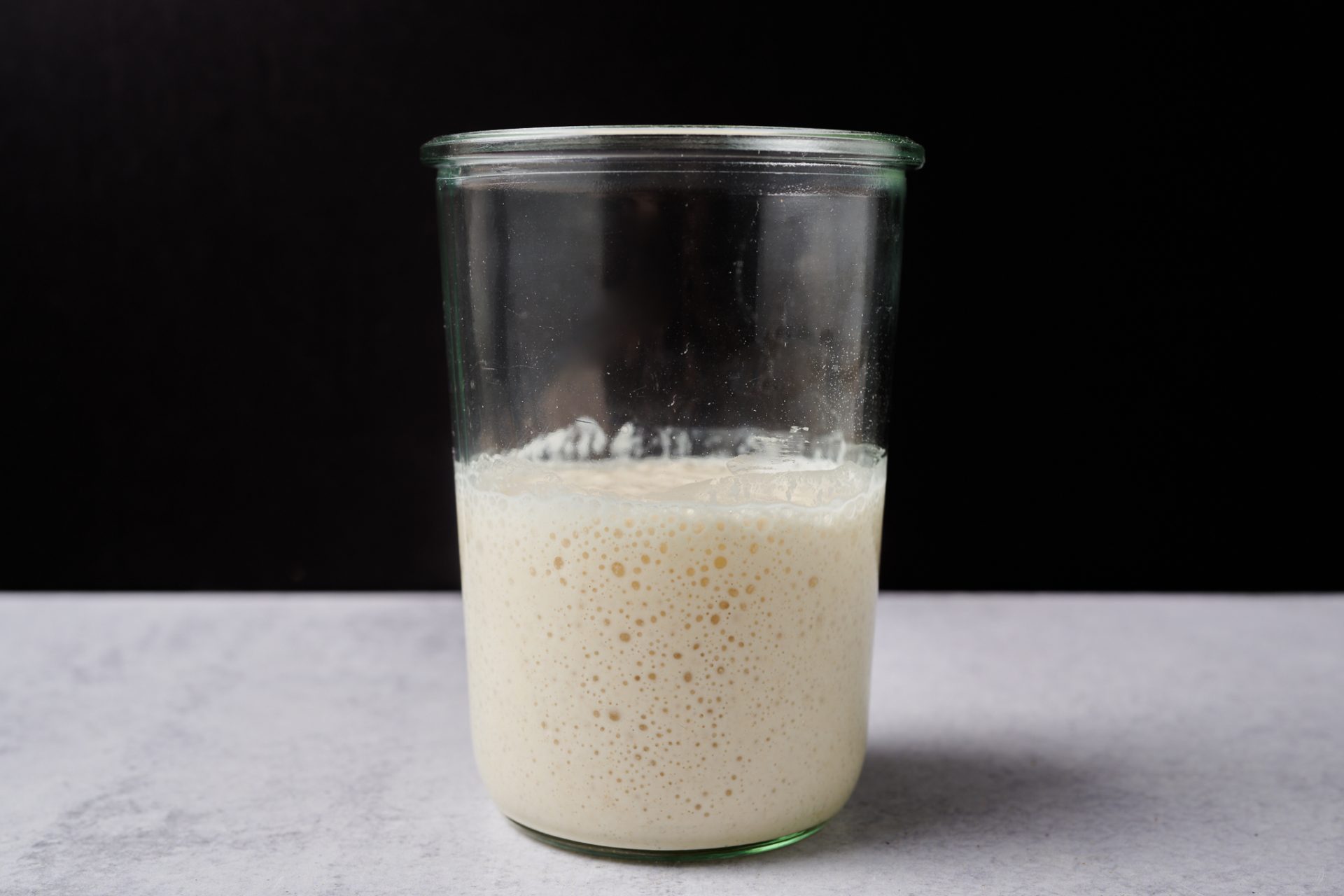
Just like with my sourdough starter, my favorite container to keep starter discard in the fridge is a 3/4 liter glass Weck jar. I like that these jars are glass (acidic stuff in plastic is a turn-off for me) and very strong. Plus, I use them for just about anything in my kitchen anyway.
See more about why I love Weck jars and why they’re perfect for your starter and discard →
See How I Feed My Sourdough Starter
In the video below, you’ll see how I feed my sourdough starter and how the discard can be collected and saved in your starter cache.
Use Your Starter Cache: Sourdough Starter Discard Recipes
The following recipes are the perfect place to pull from your sourdough starter discard cache and use it straightaway.
Sourdough Starter Discard Cache FAQs
Can I keep sourdough starter discard in the fridge?
Yes! Using a sourdough starter cache, as I like to call it, is a way to store starter discard through the week or two and use it in recipes when convenient.
Can I keep my sourdough starter discard at room temperature?
The longer the sourdough starter discard sits at room temperature, the more acidic it becomes until the mixture becomes inhospitable for microbes to function. At warm room temperature, this happens quickly compared to the cooler temperatures inside the refrigerator. I would say after 3 to 4 days, it would become overly acidic, begin to separate, and have a pungent nail polish-like aroma. Too much of a good thing.
What if I think I see mold on my starter discard cache?
If you see white fuzzy, pink, or green in your starter discard cache, you’ve kept it too long (be sure to write an expiration date on the jar!). I would throw out the entire cache and create a new one. Thankfully, this isn’t your main sourdough starter and simply just a collection of discard—no harm done.
What’s Next?
See our guide to sourdough starters to learn everything you need to know about creating, maintaining, and using your sourdough starter in your baking.


36 Comments
Help! I saved starter per your method of crumbling in dry flour back in Feb. Ready to wake it up, 6 days ago I opened the jar and it smelled great. Added the fresh flour and water as instructed and the next day it did nothing but smelled like acetone. Have fed every day, putting discard in the fridge. Starter continues to smell. Yesterday it finally barely doubled and had tiny bubbles, still smelled. Today after feeding, put the discard container out, intending to toss but didn’t yet. 7 hours later I saw the discard was super active, possibly doubled and smelled fine. Starter in 7 hours hasn’t moved and is beginning to smell already. Both happen to be at 76 degrees today cause its warm here tho the starter is in a Brod and Taylor SD home. What am I doing wrong? Thank you!
sorry, first message said it didn’t send from Safari so I changed to Chrome.
Donna
I am reviving a starter that I saved by your starter in flour method back in Feb. When I opened the jar it smelled really nice. I added flour and water as instructed. the next day it hadn’t done a thing except get that nail polish smell. I keep using the proportions of starter, flour and water and after 6 days it still smells and 1 day it finally barely doubled. The discard is in the fridg and I’ve added to it every day. Today put it on the counter intending to toss and after 7 hours is super active,doesn’t smell badly. The starter I’m trying to get going, in those 7 hours ((in a Brod and Taylor sourdough home) is inactive. and getting the nail polish smell already. It is warm here today so both happen to be at the same temp, 76. What am I doing wrong? thank you
Does it matter whether you stir in the new discard or just plop it on top of the jar? Thanks!
I just plop it in and give the whole thing a single stir (or don’t, it’s not mandatory).
Hi – I prefer to use a stiff starter (⅔ flour, ⅓ water). To use the discard from this starter in a recipe (e.g. sourdough discard crackers) is it as simple as ensuring the amount of flour & water in the your recipe is the same using the stiff starter or is there some characteristic of the liquid starter that needs to be accounted for?
Yup, you called it exactly there, George! You just have to account for that (very small) water discrepancy.
Ugh bless you for this article! Gave me everything I needed. Thank you! Happy baking ☺️
Happy to help, Paige!
I do put my SD starter in fridge. When making, say banana bread, I add a little discard to my recipe. Seems to make it really moist. And sometimes to my pancakes.
Super versatile and an easy way to put it to use. I do the very same.
I always freeze my discard cache. I have no issues with using the discard cache for waffles, muffins or crackers.
Freezing is a great way!
Do you use the cache for recipes straight from the fridge? Or do I have to feed it first?
Straight from the fridge.
Love this tip for the cache! What type of lid do you use for your starter in the Weck jars? You’ve motivated me to wake up my starter this weekend….he’s been a little neglected in the fridge lately. Thank you! You always have great info.
I use the glass lid that comes with the Weck jar – simple and effective! Hope your starter wakes up nicely from its winter rest. Take your time with a few feeds to get it back to full strength!
Thank you. Very nice article.
I tend to use my discard right away for: pancakes, crackers, more loaves of bread (I experiment with those). But this is a great method in case I'm not able to use the discard right away.
My "regular" sourdough starter is now about ten years old. I feed it once a week, minimum. I leave the crock out for a few hours at room temperature after each feeding, until I can see vigorous bubbling. Then back in the fridge. When we travel, part of the duties of the person housesitting is to keep my sourdough alive.
Hah, love that. I haven't entrusted anyone to feed my starter yet, but I like the sharing of responsibility here. I use my discard pretty soon after as well, but sometimes it's nice to store some up for a large weekend pancake breakfast. Thanks for the comments!
I’ve been saving my discard in one container. I usually save the discard from my 3rd or 4th feeding. I place it in the fridge & I’ll pull small amounts of the discard from the tub, feed it usually 3-4 times before I make sourdough bread (oops). I do 20 grams of discard, 10 grams of h2o, 10 grams of rye/bread flour. After the 3rd or 4th feeding I’ll use it to make a levain. My breads always taste great, but I had no idea I wasn’t suppose to use the discard to make sourdoughs. That tub I keep in the fridge smells fruity and has been in my fridge for over a month. I have an other jar of my actual starter. I feed it a couple times a month. Since I started using the discard I haven’t pulled from my starter to make bread. Im also new to making sourdough bread and feel way in over my head at times. Maybe I should just toss the discard and take from my actual starter.
Eventually I do like to toss the discard, usually after a few weeks. But yes, it sounds like you could just use your starter here!
Once you start the cache I assume it is okay to add your starter discard daily for the subsequent 13-days is that correct? Then at 14 days it is best to start fresh again. Put another way, the cache isn't just one days discard held for 2-weeks, but the accumulation (if not used) of discard over a 14-day period. Am I understanding correctly? Thanks!
You are understanding it correctly, Tony. Technically, the discard you add near the end of the 2 weeks will still be okay for 2 weeks after that… But if I don't use the jar by then, I just throw out whatever is left. Otherwise, you'll have a complicated first in last out queue situation or multiple jars 🙂
I enjoy your site a lot as I am just starting to explore it. In your Sourdough Discard Banana Bread you say to “use a ripe sourdough starter: It has fermented for some number of hours (overnight for me),……………”. You then say, “If you keep a sourdough starter discard cache in the fridge, you’ll always have ripe discard at the ready…..”. Are you using starter from the discard cache straight away or taking it out (feeding it???) and let it sit out a certain number of hours before using it? Otherwise how is it “ripe”?? Thanks. Jeff
Hey Jeff, I answered you over there!
https://www.theperfectloaf.com/bakers-sourdough-discard-banana-bread/
The other way is to keep in on your bench but only use tiny amounts – 1 tsp or less of starter (5g)…. Then feed it
10g flour and 10 g water… less waste and just build with larger volume/ amounts leading up to wanting to bake
Yes, that'll work too, Frank! I'm just always very cautious to do this, especially if I'm gone, because temps in the kitchen can change drastically here. But it will work!
If you only bake bread once a week, then do you still have to feed your starter everyday and keep discarding. This is a lot of waste of good expensive flour. How do you keep your starter healthy if you only bake once a week. Thank you!
Hey, Neera! I have a guide to baking only once a week!
I have aways kept my starter in the frig since I only bake every couple of weeks. I feed it once per week. I tend to feed it at least x3 over 36hrs before I bake. I realize from your video it is way too sour smelling and you would be horrified. Bread still tastes and looks great. If I am only baking every 2 weeks, do you suggest room temperature (69F) and feed it daily or could I keep it in frig and feed it every few days? Daily feeding seems a lot more than I would do. Thx! Robin
Hey Robin! I don’t know, I’m not sure I’d be horrified—I talk to a lot of bakers who do similar schedules like yours, and their bread tastes great to them and they’re happy with it! That’s what really matters in the end 🙂
I personally keep my starter on the counter and feed it every day, but you do not have to do this. You can keep it in the fridge like you’re saying, give it a feeding once a week, then when you want to use it for bread, take it out the day before and give it two feedings, once in the morning and once in the evening. After you use it, feed it, put it back in the fridge.
Try that once or twice and see how your bread tastes. If you like it better, it’s another way to go about things, otherwise, sticking with what works for you now is not a bad thing!
I keep my discard in the refrigerator. It’s only about 2 weeks old and smells like nail polish remover. Should I throw it out? My fed sourdough starter has a faint similar smell.
Thank you
It’s okay if it’s very pungent like that, as long as you don’t see mold you’re okay to use it. But I prefer to try and use the cache up before it gets overly acidic like that (just a personal pref!).
What ratio of flour and water are you feeding your sourdough. i was feeding mine 2 times a day at 1:1:1 and i became quite acidic. after some research, i now feed 1:3:3 one a day and it never smells so harsh!
When storing in the fridge can I mix my starter discards ? I have separate white and rye starters.
Yes, absolutely. In fact, when I have a levain I make with different flour and cant use it, I just add that in, too.