

Maurizio’s note:
When I received Rebecca Firkser’s Galette! I knew I was going to love it. It’s your kitchen manual for all things flour + butter in galette form, and if you’re a fan of these two like I am, you’ll love it too. What strikes me most about her book (besides the smart design and wide range of recipes) is just how thoroughly considered it is—Rebecca starts with the fundamentals but then methodically addresses every question you might encounter when working with galette dough. For a flour nerd like me, I was most excited about the crust variations, ways to use alternative flours like buckwheat, cornmeal, whole wheat, and the focus of today’s recipe: cocoa.
My cookbook, Galette!, which was published in June, is a celebration of butter and flour. As you’ve probably assumed, it’s all about galettes, the rustic open-faced pastry baked freeform on a sheet pan. With 50-plus sweet and savory recipes, one might think nothing possibly could be missing in its pages when it comes to the topic of galettes. There is, however, no variation of the book’s crust recipe made with sourdough starter discard. An accidental omission? Certainly not! There was simply a page limit, and I had to cut myself off somewhere. Still, as we all know sourdough starter is flour and water—two main ingredients in pastry crust—it feels only natural that I should share a sourdough galette crust recipe, and there’s no better place to publish that than here on The Perfect Loaf.
You may know Maurizio already has developed a sourdough pie crust recipe, which works wonderfully in galettes. While my ratios are different, we wanted to share one that was different enough in flavor to make both worth your while. Galette! (the book) includes a handful of variations on the base crust recipe (A Good Crust) with other grains, pseudocereals and flavorings, including whole wheat, buckwheat, cornmeal, black pepper, warm spices, and cocoa powder. I decided to adapt the latter to share here, so please meet A Good Crust With Sourdough Discard and Cocoa. Let’s chat about how to make it.
Swap Some All-Purpose Flour for Cocoa Powder
My crust recipe is made with all-purpose flour (AP), and to adapt it to incorporate some cocoa powder, I reduced some, but not tons, of the AP. Cocoa, which is not a grain, actually absorbs more liquid than flour, so you may need to add a bit more water to properly hydrate the dough, but not too much as it can quickly get sticky and hard to work with (we’ll get to that).
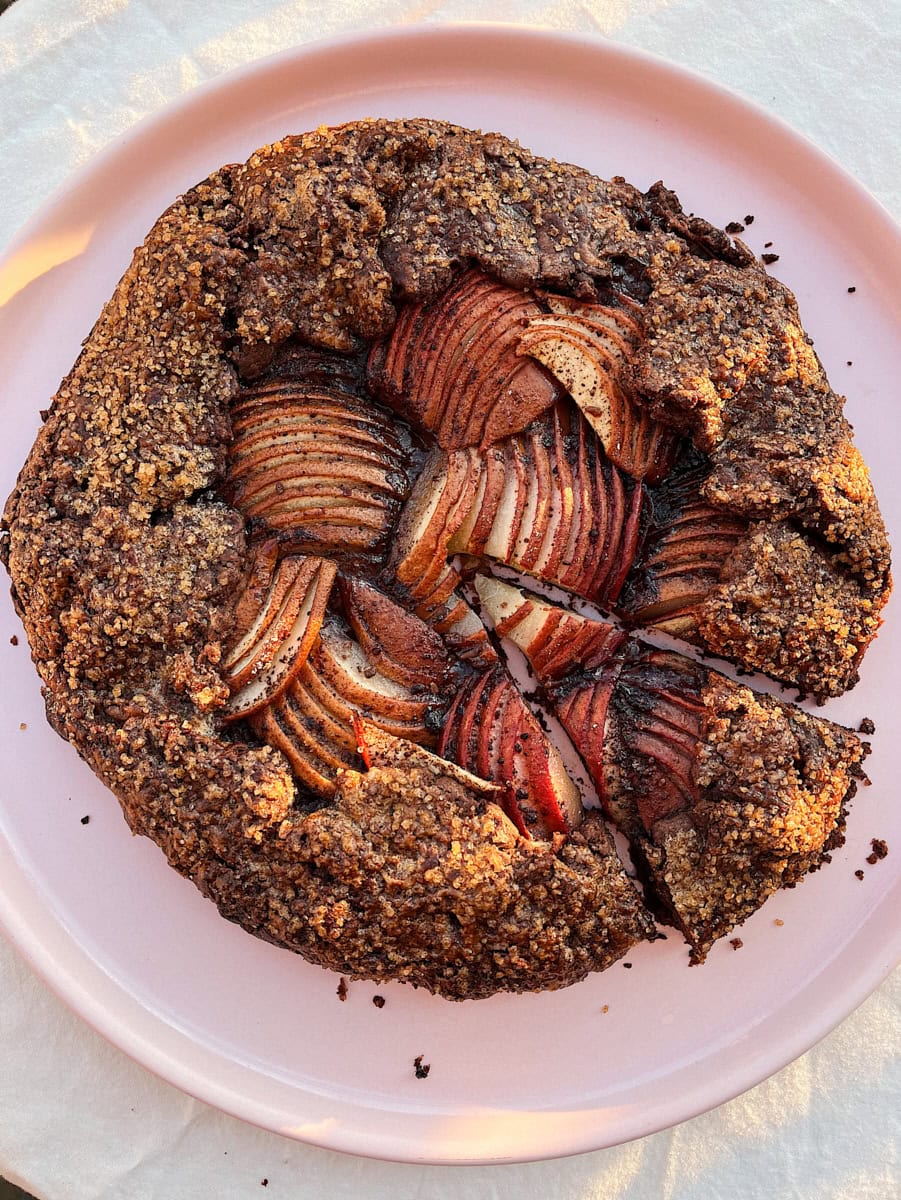
For the original recipe in Galette! I replaced a scant ¼ cup (25 grams to be exact) with 30 grams (⅓ cup) natural or Dutch-process cocoa powder. The resulting flavor isn’t deeply chocolatey, but offers a toasty-fruity bitterness. I think it works especially delightfully in galettes made with fall fruit—the photos are of the book’s Pear with Sumac and Ginger galette.
To Avoid Lumps in the Cocoa, Sift It
Cocoa powder tends to clump up, which no one wants in their delicate galette dough. To mitigate this, sift the cocoa before adding it to the dry ingredients. I typically just measure it out, then pass through a fine mesh sieve. That said, if you forget to sift it, get into the dry mix with your hands before adding the butter to break up any pebbles of cocoa.
American- or European-Style Butter Are Welcome
There are benefits and drawbacks to both American and European-style butters. American butter tends to be more affordable, but it has a slighter higher water content, which means less rich flavor. However the lower fat content also means the butter will stay a bit more firm, which can be easier to work with for those who are less experienced making dough. European-style butter will cost a bit more per pound, but offers a phenomenal flavor. Its soft, pliable texture will be appreciated by those who are used to working with pastry dough, but it can go so soft that (especially if it’s warm in the kitchen) it may be beneficial to give the dough some extra chilling time in between rolling, filling, and crimping the crust.
While many of my sourdough discard recipes involve browning butter to remove some of its water content for starter discard, in this recipe we’re leaving the butter as-is.
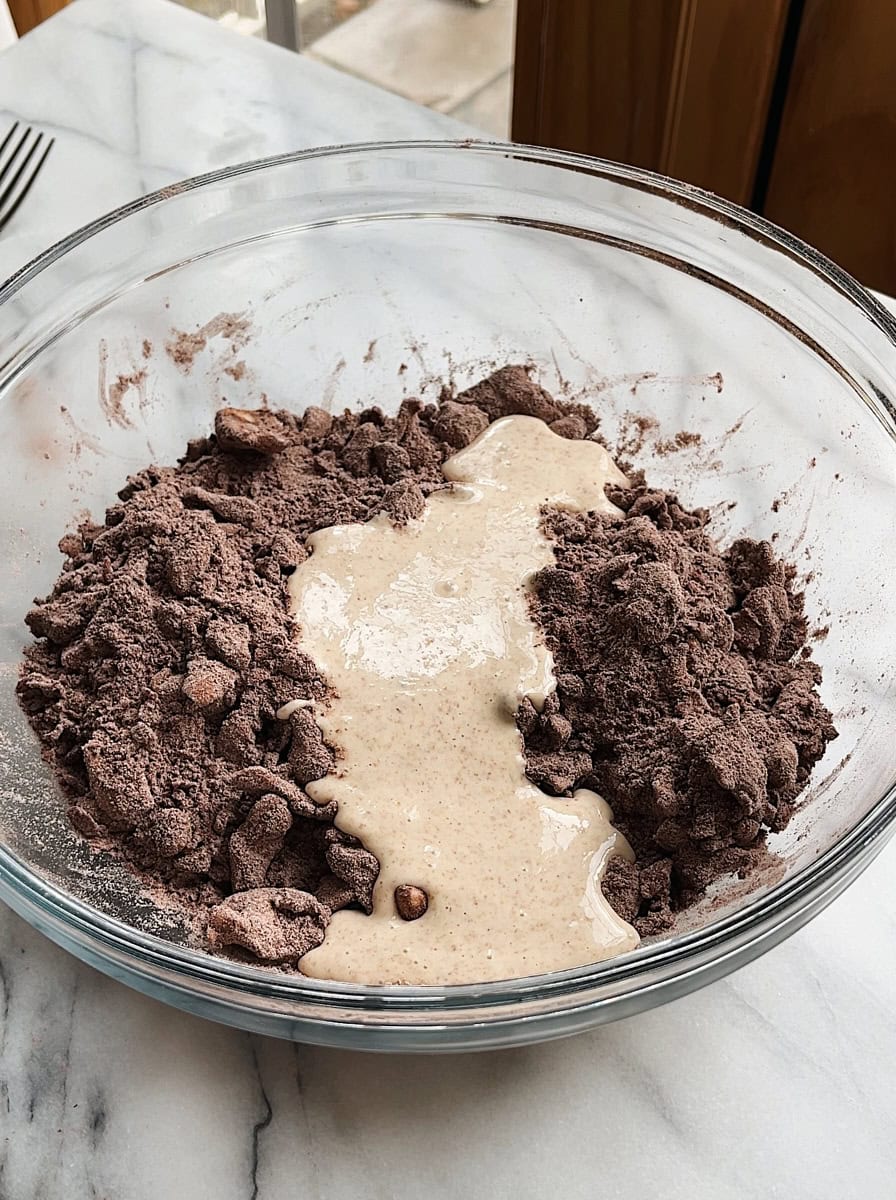
Replace Some More of the Flour and Most of the Water With Sourdough Starter Discard
I tried a couple ratios of sourdough starter discard, water, all-purpose flour, and cocoa powder. You can push the starter discard amount up to 138 grams (1/2 cup plus 2 tbsp), adding very little additional water. The dough also works with as little as 55 grams (¼ cup). Ultimately, a cocoa crust will be slightly less flaky and a bit more delicate than one made with all-grain flours, but it will be no less successful.
If Adding Water, Do So a Little At a Time
As I mentioned earlier, cocoa powder hydrates differently than all-purpose flour, so it craves more liquid; but add even a splash too much and the dough can get sticky, which is challenging to work with when it comes to folding the dough over itself to form those lovely flaky layers of galette crust. The dough will likely need a little additional water—about 14 grams (1 tablespoon). I use fresh water instead of pushing the sourdough starter discard amount higher because ultimately the exact amount of total water needed to hydrate galette dough will always change. Everything from room temperature to style of butter to brand of flour (and in this case, cocoa) will affect exactly how much water you need for any galette dough, including those made with sourdough starter discard. Start adding it slowly: you may not need the full tablespoon; or you may need a bit more.
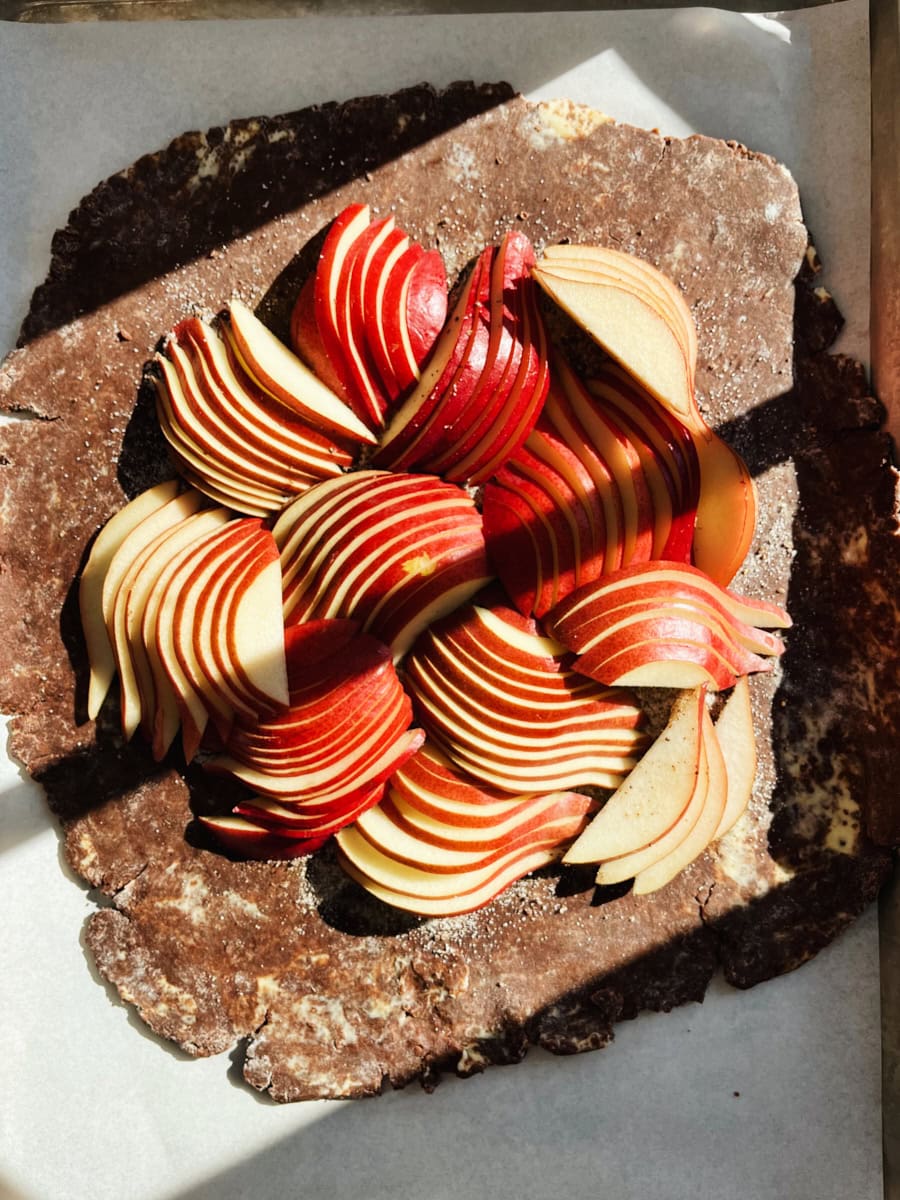
Just about Any Sweet Fillings Work Here
During the fall, I like to make Pear with Sumac and Ginger (pg. 75), Gingery Cranberry Sauce (pg. 90), or Crumble-Topped Kabocha Squash (pg. 140)—any would be phenomenal on a Thanksgiving dessert table. In the winter, try Creamy Pistachio and Citrus (pg. 70) or Cocoa and Toasted Pecan (pg. 125) Those are actually great for Thanksgiving too. Spring is the time for Apricot and Pepita-Sesame Frangipane (pg. 58, and over the summer you can’t beat Blue and Black Berries (pg. 88)
Print
A Good Crust With Sourdough Discard and Cocoa
- Prep Time: 30 minutes
- Total Time: 30 minutes
- Yield: 2 crusts
- Category: Dessert, snack
- Cuisine: American
Description
This cocoa sourdough discard crust offers a hint of chocolatey, toasty-fruity bitterness. Perfect for your next galette or pie, especially with fall fruit (like pears!).
Ingredients
- 250 grams (2 cups) spooned and leveled all-purpose flour, plus more as needed
- 30 grams (⅓ cup) sifted natural or Dutch-process cocoa powder
- 13 grams (1 tablespoon) sugar
- 4 grams (1 ½ teaspoons Diamond Crystal or ¾ teaspoon Morton) kosher salt
- 285 grams (2 ½ sticks) unsalted butter, cut into ½-inch cubes, chilled
- 138 grams (½ cup plus 2 tablespoons) sourdough starter discard (100% hydration), preferably refrigerated
- 14 grams (1 tablespoon water) plus more as needed
Instructions
- In a large bowl, use your fingers or a fork to combine the flour, cocoa, sugar, and salt.
- Add the butter to the large bowl and use your fingers or a fork to gently toss around the butter to coat it in the flour mixture. Use your fingers to smash and rub the butter into the flour mixture until it forms flat pieces mostly the size of cannellini beans (about 3/4 inch) with some smaller (think chickpeas and lentils; about 1/2 and 1/4 inch). The mixture should still look dry and crumbly.
- Drizzle the sourdough starter discard over the flour-and-butter mixture. Working from the bottom of the bowl up, use your fingers or a fork to gently toss the mixture together, as if you were tossing a salad. Drizzle half of the water over the dough, continuing to toss until a shaggy, chunky mixture forms. It should not be completely combined yet, but there also should be no totally dry areas of flour (look for pebbles of moistened flour, not pure powder).

- You may need to add a bit more water; you may not. When in doubt, err on the dry side: You can always add liquid, but you can’t take it away.
- Here’s how to know if you’re in a good place: Pick up a handful of the mixture and squish it. It should mostly hold its stuck-together shape; if not, drizzle an additional tiny splash of water on the driest areas and toss again, repeating until it holds together.
- Dump the mixture onto a clean work surface and use your hands to pat it together into a rectangular mass about 1 inch (2.5 cm) thick. If you find any more areas that look totally dry, drizzle them with another 1 teaspoon water (but you may not need to!).
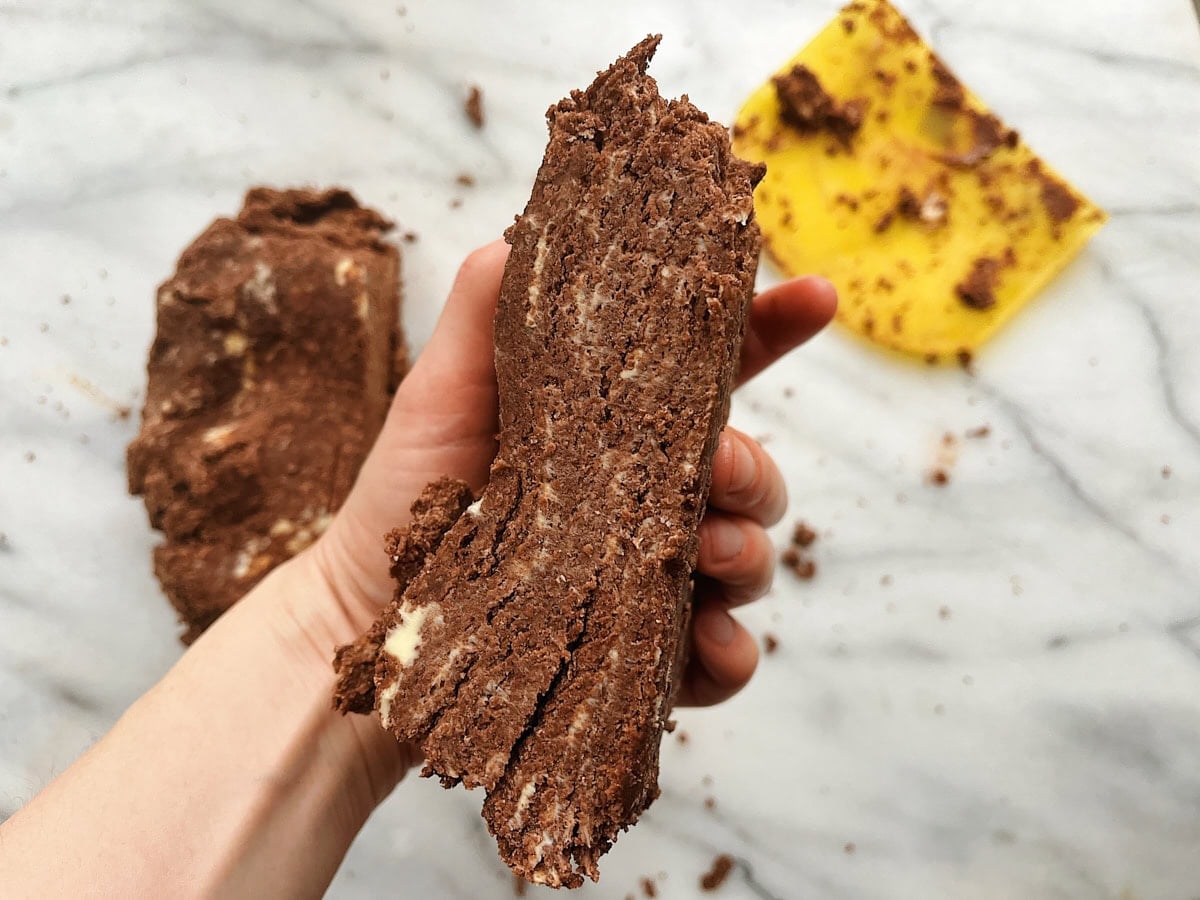
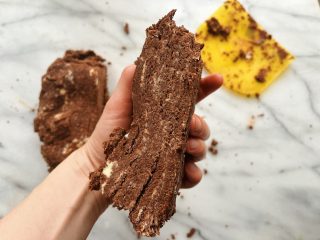
- Use your hands or a bench scraper to fold the mass of dough over itself. Press down the dough until it’s about 1 inch thick again. (The dough shouldn’t be moist or sticky, but if so, sprinkle it with a bit of flour as you fold.) Repeat folding and pressing down the dough two or three times. As you fold the dough over itself, the shaggy mass will form into a cohesive dough (this is also going to help the crust bake off extra-flaky). The butter should not blend all the way in, and the surface of the dough should look like marble or wood grain.
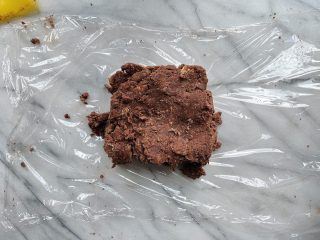
- Divide the dough in half, placing each half on a piece of plastic wrap.
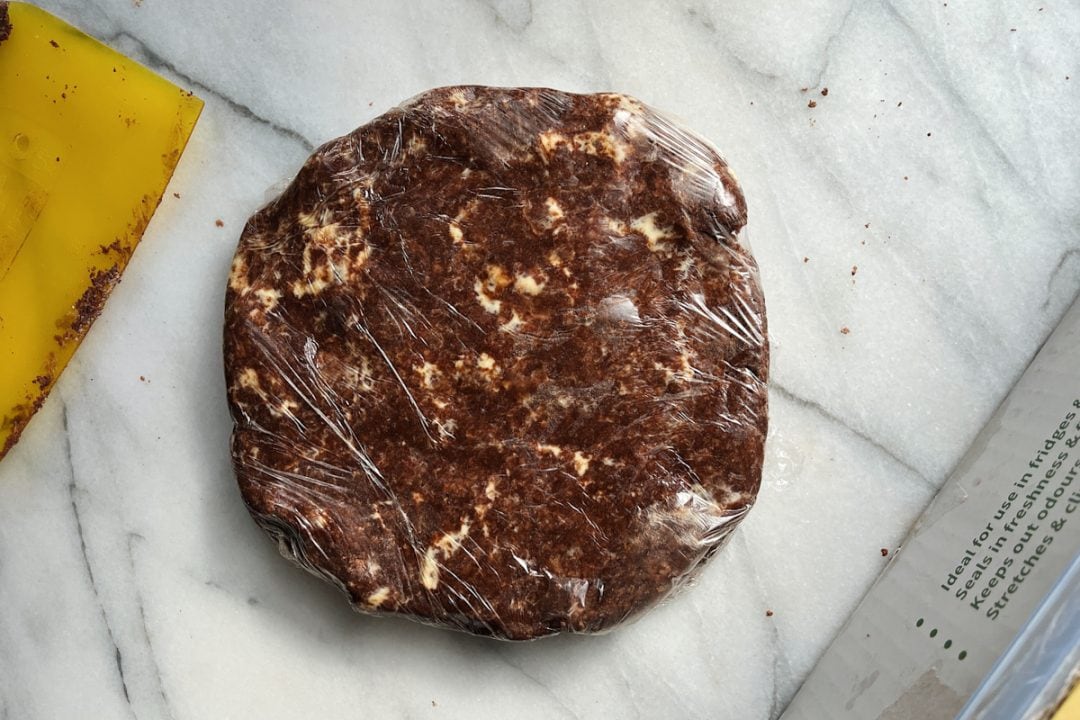
- Wrap each piece of dough in the plastic wrap, then press into a round about 3/4 inch thick. Refrigerate for at least 2 hours and up to 5 days. (Save the other disk of dough in the freezer for up to 3 months.)
Sourdough Discard Cocoa Galette Crust FAQs
Can I use a Dutch process or natural cocoa powder?
Yes! While some recipes will call for Dutch process (alkalized) or natural cocoa (acidic) depending on the leavener—the former will typically require baking powder and the latter soda to properly activate. As galette dough doesn’t use any chemical leavener, you can use whatever cocoa you have on hand. Dutch process will produce a darker-colored, mildly earthy cocoa-flavored dough; natural cocoa will yield a tawny-brown dough with a slight citrusy-bitter flavor profile.
Can I use cacao powder instead of cocoa?
Cacao powder is made from unroasted cocoa beans, which can produce a stronger, more bitter flavor. It’s also more absorbent than cocoa powder. While I wouldn’t swap cacao and cocoa powders 1:1 in most baking recipes, for such a small amount in the crust it should be OK.
Can I use bread flour to replace the all-purpose?
High-protein flours like bread flour can create more gluten, which, while desired in doughs like bread or pizza for a chewy texture, can lead to a tough, less flaky galette dough. I generally don’t recommend it!
Can I use a heritage grain flour to replace the all-purpose?
Heritage grain flours provide a more robust flavor, but absorb more water than all-purpose. You can swap in your preferred heritage flour here, but keep in mind it may need a little extra water to properly hydrate.
Why is this crust more crumbly than others I’ve made?
Since cocoa powder absorbs more moisture than all-purpose flour, the crust can bake off more crumbly and less tender than other variations. But what you may lose in flakiness you make up for in rich cocoa flavor.
Can I use more (or less) sourdough starter discard here?
I don’t recommend using more—while I typically end up adding up to 1 tablespoon or of water to the crust after mostly working in the starter discard, that last little bit of hydration isn’t always necessary, so adding more right from the jump via starter is a swift way to wind up with an overly sticky dough that’s hard to work with and could bake off tough. However, if you don’t have the full amount of discard called for, you can use any smaller amount—just make sure to compensate with fresh flour and water.
Can I add sourdough starter discard to other crust variations in Galette!?
Yes! Any crust recipe in the book can be adapted to incorporate starter. Start with 110 grams (½ cup) starter, omitting equal amounts of dry flour and water to make sure the crust doesn’t overhydrate.
Do savory fillings work with this cocoa crust?
While this crust isn’t especially chocolatey, savory fillings simply aren’t as good with this crust.
What’s Next?
For a more traditional pie or galette, see our flaky sourdough discard pie crust. And if you don’t yet have Rebecca’s Galette!, be sure to grab a copy!