Description
This cocoa sourdough discard crust offers a hint of chocolatey, toasty-fruity bitterness. Perfect for your next galette or pie, especially with fall fruit (like pears!).
Ingredients
- 250 grams (2 cups) spooned and leveled all-purpose flour, plus more as needed
- 30 grams (⅓ cup) sifted natural or Dutch-process cocoa powder
- 13 grams (1 tablespoon) sugar
- 4 grams (1 ½ teaspoons Diamond Crystal or ¾ teaspoon Morton) kosher salt
- 285 grams (2 ½ sticks) unsalted butter, cut into ½-inch cubes, chilled
- 138 grams (½ cup plus 2 tablespoons) sourdough starter discard (100% hydration), preferably refrigerated
- 14 grams (1 tablespoon water) plus more as needed
Instructions
- In a large bowl, use your fingers or a fork to combine the flour, cocoa, sugar, and salt.
- Add the butter to the large bowl and use your fingers or a fork to gently toss around the butter to coat it in the flour mixture. Use your fingers to smash and rub the butter into the flour mixture until it forms flat pieces mostly the size of cannellini beans (about 3/4 inch) with some smaller (think chickpeas and lentils; about 1/2 and 1/4 inch). The mixture should still look dry and crumbly.
- Drizzle the sourdough starter discard over the flour-and-butter mixture. Working from the bottom of the bowl up, use your fingers or a fork to gently toss the mixture together, as if you were tossing a salad. Drizzle half of the water over the dough, continuing to toss until a shaggy, chunky mixture forms. It should not be completely combined yet, but there also should be no totally dry areas of flour (look for pebbles of moistened flour, not pure powder).
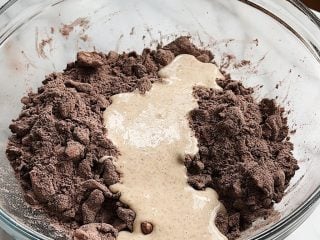
- You may need to add a bit more water; you may not. When in doubt, err on the dry side: You can always add liquid, but you can’t take it away.
- Here’s how to know if you’re in a good place: Pick up a handful of the mixture and squish it. It should mostly hold its stuck-together shape; if not, drizzle an additional tiny splash of water on the driest areas and toss again, repeating until it holds together.
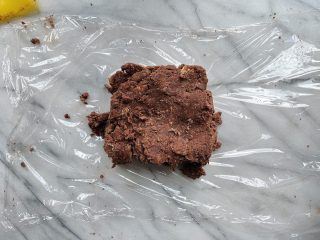
- Dump the mixture onto a clean work surface and use your hands to pat it together into a rectangular mass about 1 inch (2.5 cm) thick. If you find any more areas that look totally dry, drizzle them with another 1 teaspoon water (but you may not need to!).
- Use your hands or a bench scraper to fold the mass of dough over itself. Press down the dough until it’s about 1 inch thick again. (The dough shouldn’t be moist or sticky, but if so, sprinkle it with a bit of flour as you fold.) Repeat folding and pressing down the dough two or three times. As you fold the dough over itself, the shaggy mass will form into a cohesive dough (this is also going to help the crust bake off extra-flaky). The butter should not blend all the way in, and the surface of the dough should look like marble or wood grain.
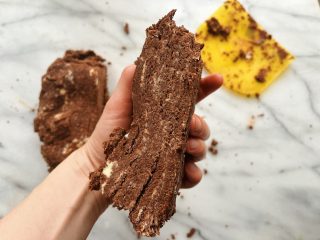
- Divide the dough in half, placing each half on a piece of plastic wrap.
- Wrap each piece of dough in the plastic wrap, then press into a round about 3/4 inch thick. Refrigerate for at least 2 hours and up to 5 days. (Save the other disk of dough in the freezer for up to 3 months.)
